L. Stack
Staal, Boele (b. Dec. 18, 1947, Apeldoorn, Netherlands), queen's commissioner of Utrecht (1998-2007) and Overijssel (acting, 2017-18). He was acting mayor of Arnhem in 2016-17.
Staal, Gerard Johan (b. Sept. 5, 1870, The Hague, Netherlands - d. Nov. 15, 1936, The Hague), governor-general of Dutch Guiana (1916-19, 1920).
Staal, Henri, byname of Hendrik Pieter Staal (b. June 17, 1845, Zwolle, Netherlands - d. Oct. 15, 1920, The Hague, Netherlands), war minister of the Netherlands (1905-07).
Staargaard, Christiaan Frederik (b. Feb. 28, 1885, Soerabaja, Netherlands East Indies [now Surabaya, Indonesia] - d. April 18, 1951, Laren, Noord-Holland, Netherlands), provincial commissioner of Groningen (1942-45).
Stabell, Lars Bastian Ridder (b. April 27, 1798, Copenhagen, Denmark - d. Jan. 13, 1860, Kragerø, Bratsberg amt [now Telemark fylke], Norway), governor of Nordlands amt (1834-47).
Stace, Edward Vincent (b. 1841, Ireland - d. May 6, 1903, Ireland), political agent of British Somaliland (1889-93).
Stacey, Graham (Edward) (b. Sept. 1, 1959, London, England), administrator of the British Sovereign Base Areas in Cyprus (2010-13).
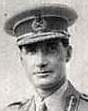
Stack, Karl, interior minister of Papua New Guinea (1991-92). He was also minister of commerce and industry (1982-85) and forests (1988-91).
L. Stack |
Stackelberg, (Göran Bernt) Magnus friherre (b. May 10, 1788 - d. Nov. 17, 1833, Malmö, Sweden), governor of Malmöhus (1831-33).
Stadinger, István (b. Jan. 27, 1927, Keszthely, Hungary - d. Jan. 26, 2018, Budapest, Hungary), Hungarian politician. He was president of the National Assembly (1988-89).
Stadion(-Warthausen), Johann Philipp (Karl Joseph) Graf von (b. June 18, 1763, Mainz, Archbishopric of Mainz [Germany] - d. May 15, 1824, Baden, near Vienna, Austria), foreign minister (1805-09) and finance minister (1815-24) of Austria. He was also minister to Sweden (1787-89), Great Britain (1790-93), and Prussia (1801-03) and ambassador to Russia (1803-05).
Staehelin, Jenö (Charles Albert) (b. Jan. 14, 1940, Basel, Switzerland), Swiss diplomat. He was ambassador to the Vatican (1991-93) and Japan (1993-97) and permanent observer (1997-2002) and permanent representative (2002-04) to the United Nations.
Staël von Holstein, Georg Bogislaus friherre (b. Dec. 6, 1685 - d. Dec. 6, 1763, Malmö, Sweden), governor of Kalmar (1734-54) and Malmöhus (1754-63). He was made friherre (baron) in 1731.
Staf, Kees, byname of Cornelis Staf (b. April 23, 1905, Ede, Gelderland, Netherlands - d. Sept. 10, 1973, Arnhem, Gelderland), war and navy minister of the Netherlands (1951-59). He was also acting minister of overseas parts of the realm (1956-57) and agriculture, fisheries, and food provision (1958, 1958-59).
Stafford, (Martin) Douglas (b. Sept. 29, 1933, Syracuse, N.Y. - d. Feb. 1, 2015), acting United Nations high commissioner for refugees (1990-91). He was deputy high commissioner in 1990-93.
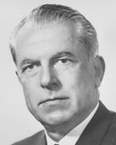
Stafford, Sir Edward William (b. April 23, 1819, Edinburgh, Scotland - d. Feb. 14, 1901, London, England), premier of New Zealand (1856-61, 1865-69, 1872); knighted 1879. He was also treasurer (1865-66) and postmaster-general (1865-66, 1869).
 R.T. Stafford |
 Stagno |
 Ståhlberg |
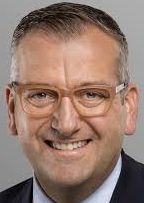 Stähli |
Stahovitsh, Mihail Aleksandrovitsh, Russian Mikhail Aleksandrovich Stakhovich (b. Jan. 20 [Jan. 8, O.S.], 1861, Palna, Oryol province, Russia - d. Sept. 10, 1923, Aix-en-Provence, France), governor-general of Finland (1917). He was also a member of the Russian State Duma (1906, 1907) and Russian ambassador to Spain (1917).
Staikos, Ioannis (b. 1793 - d. 1868), military minister of Greece (1849-50).
Staikouras, Christos (Konstantinou) (b. Aug. 12, 1973, Lamia, Greece), finance minister of Greece (2019-23). He was also minister of infrastructure and transport (2023-25).
Staikov, Petur (Staikov) (b. July 17 [July 5, O.S.], 1859, Vidin, Ottoman Empire [now in Bulgaria] - d. Aug. 18, 1926, Sofia, Bulgaria), justice minister of Bulgaria (1904-05). He was also chairman of the National Assembly (1903-04).
Stainback, Ingram M(acklin) (b. May 12, 1883, Somerville, Tenn. - d. April 12, 1961, Honolulu, Hawaii), governor of Hawaii (1942-51).
Stainov, Petko (Stoyanov) (b. May 19, 1890, Kazanluk, Bulgaria - d. July 24, 1972, Varna, Bulgaria), foreign minister of Bulgaria (1944-46). He was also minister of railways, posts, and telegraphs (1930-31) and minister to France (1934-35) and Belgium (1934).
Stais, Spyridon (b. 1859, Kythira, Greece - d. Sept. 24, 1931, Athens, Greece), interior minister of Greece (1921-22). He was also minister of ecclesiastical affairs and public education (1900-01, 1903-04, 1908-09), a minister without portfolio (1921, 1922), and general administrator of Thessalonica (1921, 1922).
Stakhovich, Pavel (Aleksandrovich) (b. Jan. 14, 1865 - d. 1930), Russian official; brother of Mihail Aleksandrovitsh Stahovitsh. He was head of the Chief Administration of State Horse Breeding (1915-17).
Stakun, Mikhail (Osipovich) (b. 1893, Nedzyany, Vilna province, Russia [now in Lithuania or Belarus] - d. [in prison] April 27, 1943, Tambov, Russian S.F.S.R.), chairman of the Central Executive Committee of the Belorussian S.S.R. (1937).
Stal, Karl (Fyodorovich), German Karl Gotthard von Staal (b. July 10, 1774, Haehl, Russia [now in Estonia] - d. July 27, 1824), governor of Georgia province (1815-18).
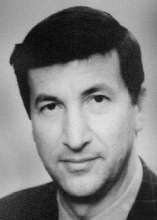 Stalev |
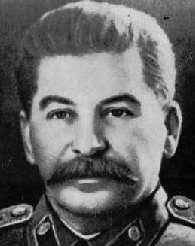 I. Stalin |
 M.K. Stalin |
Staliyski, Aleksandur (Aleksandrov) (b. Aug. 4, 1925, Sofia, Bulgaria - d. Jan. 13, 2004, Sofia), defense minister of Bulgaria (1992); son of Aleksandur (Tsankov) Staliyski. He joined the centre-right Union of Democratic Forces after the fall of the Communist government in 1989. He was elected to parliament in 1991 and served as defense minister from May to December 1992 in a minority government of anti-Communists which was ousted after losing a confidence vote.
Staliyski, Aleksandur (Tsankov) (b. Sept. 10 [Aug. 29, O.S.], 1893, Vidin, Bulgaria - d. [executed] Feb. 1, 1945, Sofia, Bulgaria), justice minister of Bulgaria (1944).
Stallard, Sir Peter (Hyla Gawne) (b. March 6, 1915 - d. Oct. 25, 1995), governor of British Honduras (1961-66) and lieutenant governor of the Isle of Man (1966-74); knighted 1961.
Stamate, Olesea (b. Dec. 20, 1983, Kishinev, Moldavian S.S.R. [now Chisinau, Moldova]), justice minister of Moldova (2019).
Stamatelopoulos, Nikitas, bynames Tourkophagos ("Turk-eater") and Nikitaras (b. 1782, Tourkolekas, Ottoman Empire [now in Greece] - d. Sept. 25, 1849, Piraeus, Greece), Greek politician; nephew of Theodoros Kolokotronis. He was president of the Vouli (1844-45).
Stamatis, Georgios (b. 1915, Paravola, Greece - d. May 3, 1986, Agrinio, Greece), justice minister of Greece (1977-81). He was also minister of labour (1967) and public order (1976-77).
Stamatis, Konstantinos (E.) (b. 1919, Samos, Greece - d. April 20, 1992, Athens, Greece), justice minister of Greece (1989, 1989-90).
Stamatov, Porfiry (Hristoforovich) (b. March 9 [Feb. 26, O.S.], 1840, Akkerman, Russia [now Bilhorod-Dnistrovskyy, Ukraine] - d. June 11, 1925, Sofia, Bulgaria), justice minister of Bulgaria (1881). He was also chairman of the Supreme Court of Cassation (1880-86).
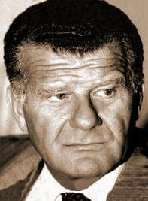 I. Stambolic |
Stambolic, Petar (b. May 12, 1912, Brezova village, near Ivanjica, Serbia - d. Sept. 21, 2007, Belgrade, Serbia), secretary (1948-57) and chairman (1968) of the Central Committee of the Communist Party/League of Communists, prime minister (1948-53), and president of the National Assembly (1953-57) of Serbia and president of the Federal Assembly (1957-63), of the Federal Executive Council (1963-67), and of the Presidency (1982-83) of Yugoslavia. He was also Yugoslav minister of agriculture and forests (1947-48).
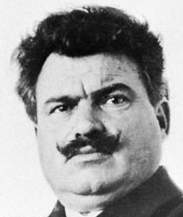 Stamboliyski |
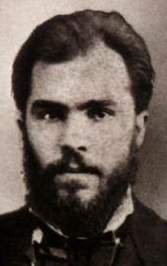 Stambolov |
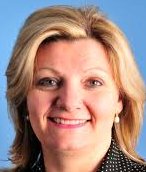 Stamm Hurter |
Stammati, Gaetano (b. Oct. 4, 1908, Naples, Italy - d. Feb. 11, 2002, Rome, Italy), finance minister (1976) and treasury minister (1976-78) of Italy. He was also minister of public works (1978-79) and foreign trade (1979-80).
Stammberger, Wolfgang (b. July 14, 1920, Coburg, Bayern, Germany - d. May 1, 1982, Coburg), justice minister of West Germany (1961-62). He was also lord mayor of Coburg (1970-78).
Stamoulis, Konstantinos (b. 1881 - d. 19...), justice minister of Greece (1924). He was also minister of agriculture (1925-26), hygiene, welfare, and assistance (provisional, 1925), commerce and industry (1926), and economy (provisional, 1926).
Stämpfli, Jakob (b. Feb. 23, 1820, Wengi, Bern, Switzerland - d. May 15, 1879, Bern, Switzerland), president of Switzerland (1856, 1859, 1862). He was also president of the government of Bern (1849-50), president of the National Council (1851, 1875), and minister of justice and police (1855), finance (1857-58), and military (1860-61, 1863).
Stampfli, Walter (b. Dec. 3, 1884, Büren, Solothurn, Switzerland - d. Oct. 11, 1965, Zürich, Switzerland), president of Switzerland (1944). He was also economy minister (1940-47).
Stanbery, Henry (b. Feb. 20, 1803, New York City - d. June 26, 1881, New York City), U.S. attorney general (1866-68).
Stanchov, Dimitur (Yanev) (b. May 9, 1864, Svishtov, Bulgaria - d. March 23, 1940, Sofia, Bulgaria), foreign minister (1906-08) and prime minister (1907) of Bulgaria. He was also diplomatic agent in Romania (1894-95), Austria-Hungary (1895-96), and Russia (1896-1906) and minister to the United Kingdom (1908, 1920-24), France (1908-15), Belgium (1910-15, 1921-22), Italy (1915), Spain (1915), and the Netherlands (1922-24).
Stanchov, Ivan (Ivanov) (b. April 1, 1929, Sofia, Bulgaria - d. Nov. 24, 2021, Scotland), foreign minister of Bulgaria (1994-95); grandson of Dimitur Stanchov. He was also ambassador to the United Kingdom and Ireland (1991-94).
Stanculescu, Victor Athanasie (b. May 10, 1928, Tecuci, Galati county, Romania - d. June 19, 2016, Bucharest, Romania), defense minister of Romania (1990-91).
Stanczyk, Janusz (b. Jan. 22, 1955, Tarnów, Poland), Polish diplomat. He was permanent representative to the United Nations (2000-04) and ambassador to the Netherlands (2007-12).
Staneke, Emmanuil (Yakovlevich), German Emanuel von Stanecke (b. Jan. 28, 1750, Gdansk, Poland - d. June 6, 1838, Mitava, Russia [now Jelgava, Latvia]), governor of Courland (1816-24).
Stanescu, Ion, original surname Silaghi (b. Jan. 23, 1929, Ghercesti, Dolj county, Romania - d. [hit by train] June 5, 2010, Peris, Ilfov county, Romania), interior minister of Romania (1972-73). He was also president of the State Security Council (1968-72), a deputy premier (1977-78), and minister of tourism and sports (1984-89).
Stanev (Nenchev), Nencho (b. Nov. 15, 1925, Radyuvene, Bulgaria), Bulgarian politician. He was first secretary of the Communist Party committees of Lovech (1966-71) and Gabrovo (1971-73) okruga and education minister (1973-77).
Stanfield, Frank (b. April 24, 1872, Truro, N.S. - d. Sept. 25, 1931, Halifax, N.S.), lieutenant governor of Nova Scotia (1930-31).
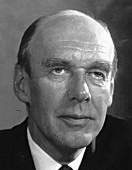 R.L. Stanfield |
Stanford, (Amasa) Leland (b. March 9, 1824, Watervliet, N.Y. - d. June 21, 1893, Palo Alto, Calif.), governor of California (1862-63).
Stanford, Rawghlie C(lement) (b. Aug. 2, 1879, Buffalo Gap, Texas - d. Dec. 15, 1963, Phoenix, Ariz.), governor of Arizona (1937-39).
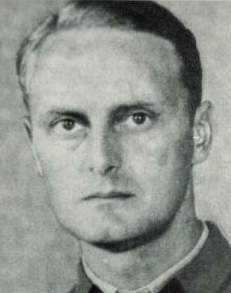 A. Stang |
Stang, Emil (b. June 14, 1834, Christiania [now Oslo], Norway - d. July 4, 1912, Kristiania [now Oslo]), prime minister of Norway (1889-91, 1893-95); son of Frederik Stang. He was also chairman of the Conservative Party (1884-89, 1891-93, 1896-99).
Stang, Emil (b. Sept. 22, 1882, Kristiania [now Oslo], Norway - d. Dec. 21, 1964, Oslo), Norwegian politician; son of the above. He was chairman of the Labour Party (1922-23) and chief justice (1946-52).
Stang, Frederik, until the early 1830s Friederich Stang (b. March 4, 1808, Stokke, Jarlsberg og Laurvigs amt [now Vestfold fylke], Norway - d. June 8, 1884, Bærum, Akershus, Norway), governor-general (1861-73) and prime minister (1873-80) of Norway. He was also mayor of Christiania (1861).
Stang, Fredrik (b. Dec. 27, 1867, Christiania [now Oslo], Norway - d. Nov. 15, 1941, Oslo), Norwegian politician; son of Emil Stang (1834-1912); son-in-law of Christian Homann Schweigaard. He was chairman of the Conservative Party (1907-11), justice minister (1912-13), and chairman of the Storting's Nobel Committee (1922-41).
Stang, (Hans) Georg (Jacob) (b. Feb. 17, 1858, Christiania [now Oslo], Norway - d. Sept. 11, 1907, Kristiania [now Oslo]), defense minister of Norway (1900-03); son of Jacob Stang.
Stang, (Hans Georg) Jacob (b. Nov. 17, 1830, Nannestad, Norway - d. March 1, 1907, Kristiansand, Norway), justice minister of Norway (1887-88) and governor of Vest-Agder (1889-1906). He was also minister in Stockholm (1888-89).
Stange Oelckers, Rodolfo (b. Sept. 30, 1925, Puerto Montt, Chile - d. Nov. 26, 2023), Chilean junta member (1985-90). He was director-general of the military police (Carabineros) in 1985-95.
Stanhope, Edward (b. Sept. 24, 1840, London, England - d. Dec. 21, 1893, Chevening, near Sevenoaks, Kent, England), British secretary of state for war (1887-92). He was also president of the Board of Trade (1885-86) and secretary of state for the colonies (1886-87).
Stanhope, James Stanhope, (1st) Earl (b. 1673, Paris, France - d. Feb. 5, 1721, London, England), British secretary of state for the Southern Department (1714-16) and the Northern Department (1716-17, 1718-21) and chancellor of the exchequer (1717-18). He was created Baron and Viscount Stanhope in 1717 and earl in 1718.
 J. Stanhope |
Stanic, Nikola (b. 1937, Ivanusa, Yugoslavia [now in Croatia]), a deputy prime minister of Serbia (1991).
Stanic, Slavoljub, finance minister of Serbia (1993-94).
Stanik, Syuzanna (Romanivna) (b. Sept. 27, 1954, Lvov [Lviv], Ukrainian S.S.R.), justice minister of Ukraine (1997-2002). She was also minister of family and youth affairs (1996-97) and ambassador to Switzerland (2003-04).
Stanikzai, (Mohammad) Masoum (b. 1958, Mughul Khel village, Logar province, Afghanistan), acting defense minister of Afghanistan (2015-16). He was also minister of telecommunications and information technology (2002-04), secretary of the High Peace Council (2010-14), and director of the National Directorate of Security (2016-19).
 Stanishev |
Stanislaus, Sir Lamuel A(rnold) (b. April 22, 1921, Petite Martinique island, Grenada - d. Sept. 18, 2016, New York City), Grenadian diplomat; knighted 2016. He was permanent representative to the United Nations (1985-90, 1998-2004).
 Stanislaw I |
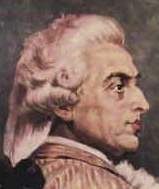 Stanislaw II |
Stanisoara, Mihai (b. June 11, 1962, Craiova, Romania), defense minister of Romania (2008-09).
Stanjura, Zbynek (b. Feb. 15, 1964, Opava, Czechoslovakia [now in Czech Republic]), finance minister of the Czech Republic (2021-25). He was also minister of transport (2012-13).
Stank, Jozef (b. Oct. 26, 1940, Nitra, Slovakia - d. March 7, 2005, Bratislava, Slovakia), defense minister of Slovakia (2001-02). He was also ambassador to the Czech Republic (1998-2001).
 C. Stankevicius |
 L.M. Stankevicius |
Stankov, Anton (Iliev) (b. Feb. 17, 1966, Yambol, Bulgaria - d. Aug. 13, 2026, Sofia, Bulgaria), justice minister of Bulgaria (2001-05).
Stankovic, Ljubisa (b. June 1, 1960, Andrijevica, Montenegro), Montenegrin politician. He was a presidential candidate (1990), rector of the University of Montenegro (2003-08), and ambassador to the United Kingdom (2011-15).
Stankovic, Zoran (b. Nov. 9, 1954, Trgoviste village, near Vladicin Han, southern Serbia - d. Oct. 5, 2021, Belgrade, Serbia), defense minister of Serbia and Montenegro (2005-06) and Serbia (2006-07). He was a presidential candidate in Serbia in 2012 and health minister of Serbia in 2011-12.
Stanley, Augustus O(wsley) (b. May 21, 1867, Shelbyville, Ky. - d. Aug. 12, 1958, Washington, D.C.), governor of Kentucky (1915-19). He was also a U.S. representative (1903-15) and senator (1919-25) from Kentucky.
Stanley, George F(rancis) G(illman) (b. July 6, 1907, Calgary, Alta. - d. Sept. 13, 2002, Sackville, N.B.), lieutenant governor of New Brunswick (1981-87). He was a historian and in 1964 was instrumental in designing the Canadian (maple-leaf) flag.
Stanley, Sir George Frederick (b. Oct. 14, 1872 - d. July 1, 1938), governor of Madras (1929-34); knighted 1929; son of Frederick Arthur Stanley, Earl of Derby.
Stanley, Henry Sydney Herbert (Cloete) (b. March 5, 1920 - d. Dec. 29, 1995), British high commissioner of the New Hebrides (1976-77); son of Sir Herbert Stanley. He was also high commissioner to Ghana (1970-75) and Trinidad and Tobago (1977-80).
Stanley, Sir Herbert (James) (b. July 25, 1872, Manchester, England - d. June 5, 1955, Cape Town, South Africa), governor of Northern Rhodesia (1924-27), Ceylon (1928-31), and Southern Rhodesia (1935-42) and high commissioner for Southern Africa (1931-35); knighted 1924.
Stanley, Martin (b. 1948), acting governor of the Turks and Caicos Islands (2011). He was chief executive in 2011-12.
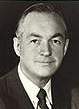 Stans |
Stansgate, William Wedgwood Benn, (1st) Viscount, byname Wedgie Benn (b. May 10, 1877, London, England - d. Nov. 17, 1960, London), British politician. He was secretary of state for India (1929-31) and air (1945-46). He was created viscount in 1941.
Stanton, Edwin M(cMasters) (b. Dec. 19, 1814, Steubenville, Ohio - d. Dec. 24, 1869, Washington, D.C.), U.S. attorney general (1860-61) and secretary of war (1862-68).
Stanton, Frederick P(erry) (b. Dec. 22, 1814, Alexandria, Va. - d. June 4, 1894, Stanton, Fla.), acting governor of Kansas (1857, 1857).
Stapledon, Sir Robert (b. Feb. 6, 1909 - d. Aug. 30, 1975), governor of Eastern region, Nigeria (1956-60), and the Bahamas (1960-64); knighted 1956.
Starcevic, Feodor (b. June 30, 1942, Split, Croatia), Serbian diplomat. He was United Nations chief representative in Georgia (1992-95) and Serbian permanent representative to the United Nations (2009-13).
Starchak, Ivan (Nikolayevich) (b. Jan. 3, 1902 [Dec. 21, 1901, O.S.], Shelkovskoy, Terek oblast, Russia - d. Aug. 25, 1985, Grozny, Chechen-Ingush A.S.S.R., Russian S.F.S.R.), chairman of the Executive Committee of Grozny oblast (1944-49). He was also minister of water of the Chechen-Ingush A.S.S.R. (1958-63).
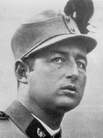 Starhemberg |
Staribacher, Andreas (b. Jan. 7, 1957, Vienna, Austria), finance minister of Austria (1995-96); son of Josef Staribacher.
Staribacher, Josef (b. March 25, 1921, Vienna, Austria - d. Jan. 4, 2014, Vienna), Austrian politician. He was chairman of the food workers' union (1960-89) and minister of trade and industry (1970-83).
Stark, Lloyd C(row) (b. Nov. 23, 1886, Louisiana, Mo. - d. Sept. 17, 1972, Clayton, Mo.), governor of Missouri (1937-41).
Starke, Heinz (b. Feb. 21, 1911, Schweidnitz, Schlesien, Prussia, Germany [now Swidnica, Poland] - d. Jan. 31, 2001, Bonn, Germany), finance minister of West Germany (1961-62).
Starlinger, Thomas (b. Jan. 27, 1963, Gmunden, Oberösterreich, Austria), defense minister of Austria (2019-20).
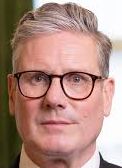 Starmer |
Starodubtsev, Vasily (Aleksandrovich) (b. Dec. 25, 1931, Volovchik, Lipetsk oblast, Russian S.F.S.R. - d. Dec. 30, 2011, Novomoskovsk, Tula oblast, Russia), head of the administration of Tula oblast (1997-2005). He was also one of the members of the "State Committee for the State of Emergency" that tried to depose Soviet president Mikhail Gorbachev in 1991.
Staroselsky, Dmitry (Semyonovich) (b. May 27 [May 15, O.S.], 1832 - d. March 23 [March 11, O.S.], 1884, Tiflis, Russia [now Tbilisi, Georgia]), governor of Baku (1872-76).
Staroselsky, Vladimir (Aleksandrovich) (b. Nov. 15 [Nov. 3, O.S.], 1860, Chernigov, Russia [now Chernihiv, Ukraine] - d. Aug. 26, 1916, Paris, France), acting governor of Kutaisi (1905-06).
Starotorzhsky, Aleksandr (Pavlovich) (b. Aug. 26 [Aug. 14, O.S.], 1895, Denisovo, Kostroma province [now in Kostroma oblast], Russia - d. May 25, 1950, Bryansk, Russian S.F.S.R.), Soviet politician. He was chairman of the Executive Committees of Kalinin (1938-44) and Bryansk (1946-50) oblasti and a deputy premier of the Russian S.F.S.R. (1944-46).
Starova, Arjan (Avni) (b. Sept. 26, 1954), foreign minister of Albania (1997).
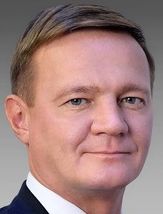 Starovoyt |
 Starr |
Starrin, Karin (Margareta) (b. Oct. 28, 1947), governor of Halland (1997-2004).
Stary, Grigory (Ivanovich), original surname Borisov (b. Dec. 9 [Nov. 27, O.S.], 1880, Boziyeni, Bessarabia province, Russia [now in Moldova] - d. [executed] Oct. 11, 1937), chairman of the Central Executive Committee (1925-26) and chairman of the Council of People's Commissars (1926-28, 1932-37) of the Moldavian A.S.S.R. He was also people's commissar of food (1919) and labour (1919) of the Bessarabian S.S.R. and chairman of the Moldavian Revolutionary Committee (1924-25).
Starynkevich, Konstantin (Sokratovich) (b. Sept. 17, 1858 - d. [assassinated] Oct. 6 [Sept. 23, O.S.], 1906, Simbirsk, Russia), governor of Tomsk (1903-04), Kharkov (1904-06), and Simbirsk (1906); son of Sokrat Starynkevich.
Starynkevich, Sokrat (Ivanovich), Polish Sokrat Starynkiewicz (b. Jan. 1, 1821 [Dec. 20, 1820, O.S.], Taganrog, Russia - d. Aug. 23 [Aug. 10, O.S.], 1902, Warsaw, Poland), governor of Kherson (1868-71) and mayor of Warsaw (1875-92).
Starzewski, Jan (b. Jan. 26, 1895, Wadowice, Poland - d. Jan. 25, 1973, London, England), foreign minister of Poland in exile (1972-73). He was also Polish chargé d'affaires in Estonia (1933-34) and ambassador to Denmark (1936-40).
Starzynski, Mieczyslaw (Alfons) (b. July 22, 1891, Warsaw, Poland - d. 1941/42), acting governor of Stanislawowskie województwo (1936).
Starzynski, Stefan (Bronislaw) (b. Aug. 19, 1893, Warsaw, Poland - d. [shot by Gestapo] between Dec. 21 and 23, 1939, in or near Warsaw), Polish politician. He was mayor of Warsaw (1934-39).
Stashevsky, Stanislav (Telisforovych) (b. March 10, 1943, Maryanovka [now Maryanivka], Kiev oblast, Ukrainian S.S.R.), first deputy prime minister of Ukraine (2005-06). He was also minister of fuel and energy (2001).
Stasiak, Wladyslaw (Augustyn) (b. March 15, 1966, Wroclaw, Poland - d. [plane crash] April 10, 2010, near Smolensk, Russia), interior minister of Poland (2007). He was also head of the National Security Bureau (2006-07, 2007-09) and the presidential chancellery (2009-10).
 Stasinopoulos |
Stasinskas, Vladas (b. Oct. 10, 1874, Dameliai, Russia [now in Lithuania] - d. March 11, 1944, Kedainiai, Lithuania), interior minister (1918) and justice minister (1938) of Lithuania. He was also a member of the Russian State Duma (1907) and governor of the Bank of Lithuania (1930-38).
Stassart, Goswin Joseph Augustin, baron de (b. Sept. 2, 1780, Mechelen, Austrian Netherlands [now Belgium] - d. Oct. 10, 1854, Brussels, Belgium), Belgian politician. He was prefect of the French départements of Vaucluse (1810) and Bouches-de-la-Meuse (1811-13), governor of Namur (1830-34) and Brabant (1834-39), chairman of the Senate (1831-38), and minister to Sardinia (1840).
 Stassen |
Statescu, Eugeniu (b. Dec. 25, 1836, Bucharest, Walachia [now in Romania] - d. Dec. 30, 1905, Bucharest), foreign minister of Romania (1881-82). He was also minister of justice (1876-77, 1877-79, 1881-82, 1882-83, 1885-88, 1895-96, 1902-03) and interior (1881) and president of the Senate (1897, 1901-02).
Statham, Sir Charles Ernest (b. May 10, 1875, Dunedin, N.Z. - d. March 5, 1946, Wellington, N.Z.), New Zealand politician; knighted 1926. He was speaker of the House of Representatives (1923-35).
Stathopoulos, Michalis(-Konstantinos) (b. July 4, 1938, Athens, Greece), justice minister of Greece (2000-01). He was also rector of the University of Athens (1983-91).
Statius van Eps, Johan Marin (b. Jan. 18, 1894 - d. ...), administrator of Bonaire (1935-39).
Stattin, (Johan) Ragnar (b. Nov. 13, 1886, Överlännäs, Västernorrland, Sweden - d. June 10, 1962), governor of Västernorrland (1944-53).
 Sir D. Steel | 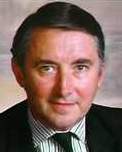 Baron Steel |
Steel of Aikwood (of Ettrick Forest in the Scottish Borders), David (Martin Scott) Steel, Baron (b. March 31, 1938, Kirkcaldy, Scotland), British politician. He became the youngest member of Parliament in 1965 when he was elected from Scotland. He was leader of the Liberal Party from 1976 to 1988. He was instrumental in creating the Liberal-Social Democratic alliance of 1981 and the merger between the two parties to form the Social and Liberal Democrats in 1988. He was knighted in 1989. At the 1997 election Steel retired from the House of Commons. He was subsequently created a life peer. In 1999 he was elected as presiding officer of the first Scottish parliament for almost 300 years. Within the Scottish parliament he was referred to as Sir David Steel. He retired in 2003.
Steele, George W(ashington) (b. Dec. 13, 1839, near Connersville, Ind. - d. July 12, 1922, Marion, Ind.), governor of Oklahoma (1890-91).
Steele, Sir James Stuart (b. Oct. 26, 1894, Ballycarry, County Antrim, Ireland [now in Northern Ireland] - d. July 24, 1975, Stourpaine, Dorset, England), high commissioner of the British zone of Austria (1946-47); knighted 1946.
Steele, John H(ardy) (b. Jan. 4, 1789, Salisbury, N.C. - d. July 3, 1865, Peterborough, N.H.), governor of New Hampshire (1844-46).
 N. Steele |
Steele, Robert W(illiamson) (b. Jan. 14, 1820, near Chillicothe, Ohio - d. Feb. 7, 1901, Colorado Springs, Colo.), provisional governor of Jefferson Territory (1859-61).
Steen, Johannes Wilhelm Christian (b. July 22, 1827, Christiania [now Oslo], Norway - d. April 1, 1906, Voss, Søndre Bergenhus amt [now in Vestland fylke], Norway), prime minister (1891-93, 1898-1902), finance minister (1891-93), and interior minister (1900-02) of Norway. He was also mayor of Tromsø (1857-59, 1860-62, 1864-65) and Stavanger (1872, 1874-77, 1879-83, 1885, 1890-91), president of the Storting (intermittently in 1881-88 and 1895-98), and minister of auditing (1898-1900).
Steen, Robert (Ashley) (b. Aug. 12, 1933 - d. May 10, 1979), mayor of Winnipeg (1977-79).
Steenberghe, Max(imilien Paul Léon) (b. May 2, 1899, Leiden, Netherlands - d. Jan. 22, 1972, Goirle, Noord-Brabant, Netherlands), acting finance minister of the Netherlands (1941). He was also minister of economic affairs (1934-35, 1937-39, 1939-40), trade, industry, and shipping (1937, 1940-41), and agriculture and fisheries (1937 [acting], 1941 [acting]).
Steenkamp, Piet, byname of Petrus Antonius Josephus Maria Steenkamp (b. March 8, 1925, Uithoorn, Noord-Holland, Netherlands - d. Jan. 8, 2016, Eindhoven, Noord-Brabant, Netherlands), Dutch politician. He was chairman of the First Chamber (1983-91).
Stefan, secular name Simeon (Ivanovich) Yavorsky (b. 1658, Jaworów, Poland [now Yavoriv, Lviv oblast, Ukraine] - d. Dec. 8 [Nov. 27, O.S.], 1722, Moscow, Russia), Locum Tenens (1701-21) and head of Synod (1721-22) of Moscow and All Russia. He was metropolitan of Ryazan (1700-22).
Stefan, Pavel (b. Dec. 16, 1914, Bucharest, Romania - d. 1984), interior minister of Romania (1952-57). He was also minister of forestry (1951-52) and transport (1969-71).
Stefan, Viorel (b. July 26, 1954, Mitoc, Botosani county, Romania), finance minister of Romania (2017). He was also a deputy prime minister (2018-19).
Stefanakis, Konstantinos (Georgiou) (b. 1917, Chania, Crete, Greece - d. 1992, Athens, Greece), justice minister of Greece (1965-66, 1974-77). He was also minister of the presidency of the government (1965).
Stefanchuk, Ruslan (Oleksiyovych) (b. Oct. 29, 1975, Ternopol [Ternopil], Ukrainian S.S.R.), Ukrainian politician. He is chairman of the Verkhovna Rada (2021- ).
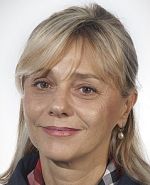 Stefanelli |
Stefanescu-Amza, Constantin ("Amza" added 1904) (b. July 23, 1875, Budesti, Calarasi county, Romania - d. Feb. 13, 1964, Bucharest, Romania), war minister of Romania (1931-32).
 A. Stefani |
Stefani, Simon (b. Jan. 3, 1929, Përmet, Albania - d. Aug. 2, 2000), interior minister and a deputy premier of Albania (1989-90). He was also first secretary of the party committees of Përmet (1972-76) and Tiranë (1976-79) districts and chairman of the People's Assembly (1978-82).
Stefanich, Juan (b. May 3, 1889, Asunción, Paraguay - d. Feb. 9, 1975, Buenos Aires, Argentina), foreign minister of Paraguay (1936-37). He was also ambassador to Argentina (1946-47).
Stefanis, Alkiviadis (b. Oct. 7, 1959, Athens, Greece), defense minister of Greece (2023). He has also been chief of the Army General Staff (2017-19) and governor of Mount Athos (2024- ).
Stefanishyna, Olha (Vitaliyivna) (b. Oct. 29, 1985, Odessa, Ukrainian S.S.R.), a deputy prime minister (2020-25) and justice minister (2024-25) of Ukraine. She was also ambassador to the United States (2025-26).
Stefanov (Mateev), Ivan (b. March 3, 1899, Varna, Bulgaria - d. Oct. 11, 1980), finance minister of Bulgaria (1946-49). He was also administrator (1944-45) and governor (1945-46) of the Bulgarian National Bank.
Stefanov, Stefan (Georgiev) (b. July 6, 1876, Sliven, Ottoman Empire [now in Bulgaria] - d. March 25, 1946), finance minister of Bulgaria (1931-34).
Stefanovic, Danilo (b. May 20 [May 8, O.S.], 1815, Temesvár, Hungary [now Timisoara, Romania] - d. Dec. 2 [Nov. 30, O.S.], 1886, Belgrade, Serbia), prime minister and interior minister of Serbia (1875).
Stefanovic, Milenko (b. 1932), foreign minister of Montenegro (1985-87). He was also Yugoslav ambassador to Bulgaria (1987-96).
Stefanovic, Nebojsa (b. Nov. 20, 1976, Belgrade, Serbia), interior minister (2014-20), a deputy prime minister (2016-22), and defense minister (2020-22) of Serbia. He was also president of the National Assembly (2012-14).
Stefanovic, Svetislav, byname Ceca (b. April 8, 1910, Kucevo, Serbia - d. Jan. 9, 1980, Belgrade, Serbia), interior minister of Yugoslavia (1953-63).
Stefanovic Tenka, Stefan (b. 1797, Porec, Ottoman Empire [now Donji Milanovac, Serbia] - d. Sept. 2, 1865, Belgrade, Serbia), prime minister of Serbia (1836-39). He was also minister of justice and education (1839-40, 1848), member of the Regency (1843), and president of the State Council (1848-57).
 Stefanson |
Stefánsson, Stefán Jóhann (b. July 20, 1894, Dagverdareyri, Iceland - d. Oct. 20, 1980, Reykjavík, Iceland), member of the Regency (1940-41), foreign minister (1941-42), and prime minister (1947-49) of Iceland. He was also chairman of the People's Party (1938-52), minister of social affairs (1939-42, 1947-49), and ambassador to Denmark and Ireland (1957-65) and Turkey (1958-65).
Steger, Norbert (b. March 6, 1944, Vienna, Germany [now in Austria]), vice chancellor of Austria (1983-87). He was also chairman of the Freedom Party (1980-86) and minister of trade and industry (1983-87).
Steichen, René (b. Nov. 27, 1942, Diekirch, Luxembourg), Luxembourg politician. He was mayor of Diekirch (1974-84), minister of agriculture, viticulture, and rural development (1989-92), and European commissioner for agriculture and rural development (1992-95).
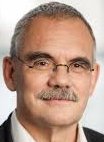 Steiert |
Steiger, (Alfred Armand) Adolf von (b. July 25, 1859, Bern, Switzerland - d. March 1, 1925, Bern), federal chancellor of Switzerland (1919-25).
Steiger, (Adolf) Eduard von (b. July 2, 1881, Langnau im Emmental, Bern canton, Switzerland - d. Feb. 10, 1962, Bern), justice minister (1941-51) and president (1945, 1951) of Switzerland.
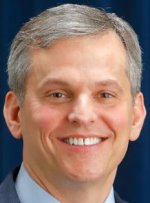 J. Stein |
 E. Stein |
Steinberg, Karl-Hermann (b. June 22, 1941, Heiligenstadt [now Heilbad Heiligenstadt], Thüringen, Germany - d. Oct. 17, 2021), Landesbevollmächtigter of Sachsen-Anhalt (1990). He was also East German minister of environment, nature protection, energy, and reactor safety (1990).
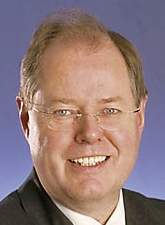 Steinbrück |  Steiner |
Steincke, Karl Kristian (Vilhelm) (b. Aug. 25, 1880, Viskinge, Denmark - d. April 8, 1963, Frederiksberg, Denmark), justice minister of Denmark (1924-26, 1935-39, 1950). He was also minister of social affairs (1929-35) and speaker of the Landsting (1948-50, 1951-52).
Steiner, Michael (b. Nov. 28, 1949, Munich, West Germany), administrator of Kosovo (2002-03). He was also German ambassador to the Czech Republic (1998), Italy and San Marino (2007-10), and India (2012-15).
Steinhauer, Ralph Garvin (b. June 8, 1905, Morley, N.W.T. [now in Alta.] - d. Sept. 19, 1987, Edmonton, Alta.), lieutenant governor of Alberta (1974-79).
Steinhoff, Fritz (b. Nov. 23, 1897, Wickede, Prussia [now in Nordrhein-Westfalen], Germany - d. Oct. 22, 1969, Hagen, Nordrhein-Westfalen, West Germany), minister-president of Nordrhein-Westfalen (1956-58).
Steinhoff, Janusz (Wojciech) (b. Sept. 24, 1946, Gliwice, Poland), a deputy prime minister of Poland (2000-01). He was also minister of economy (1997-2001).
Steinhoff, Karl, Karl also spelled Carl (b. Nov. 23, 1892, Herford, Prussia [now in Nordrhein-Westfalen], Germany - d. July 19, 1981, Wilhelmshorst, East Germany [now part of Michendorf, Brandenburg, Germany]), minister-president of Brandenburg (1945-49) and interior minister of East Germany (1949-52).
Steinitz, Yuval (b. April 10, 1958, Israel), finance minister of Israel (2009-13). He was also minister of intelligence, international relations, and strategic affairs (2013-15), national infrastructure, energy, and water resources (2015-20), and energy (2020-21).
Steinmann, Peter Frederik (b. July 8, 1812, Copenhagen, Denmark - d. Feb. 16, 1894, Tybjerg, Denmark), war minister of Denmark (1874-75).
 Steinmeier | 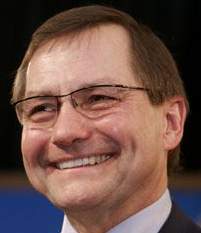 Stelmach |
Steinmetz, (Sebastian) Maurice, Luxembourg diplomat. He was permanent representative to the United Nations (1961-64) and ambassador to the United States (1964-69).
Steinmetz, Pierre (b. Jan. 23, 1943, Sainte-Colombe, Rhône, France), prefect of Réunion (1995). He was also prefect of the French départements of Haute-Marne (1988-89), Pyrénées-Orientales (1992-93), Haute-Savoie (1993-94), Côte-d'Or (1997-98), and Vienne (1998-2000).
Stejskal, Jan (b. Nov. 7, 1933, Mokrosuky, Czechoslovakia [now in Czech Republic] - d. July 12, 2013), finance minister of Czechoslovakia (1988-89). He was also chairman of the State Bank (1981-88).
Stelian, Toma (b. April 3, 1860, Craiova, Walachia [now in Romania] - d. Oct. 25, 1925, Bucharest, Romania), justice minister (1907-11) and war minister (1909) of Romania.
Stelle, John (Henry) (b. Aug. 8, 1891, McLeansboro, Ill. - d. July 5, 1962, St. Louis, Mo.), governor of Illinois (1940-41).
Stelmach, Ed(ward Michael) (b. May 11, 1951, Lamont, Alberta), premier of Alberta (2006-11).
 Steltzer |  Stelzer |
Stelzer, Thomas (b. Feb. 21, 1967, Linz, Austria), Landeshauptmann of Oberösterreich (2017- ).
Stemann, Poul Christian (b. April 14, 1764, Copenhagen, Denmark - d. Nov. 25, 1855, Herlufsholm, near Copenhagen), minister of state of Denmark (1842-48). He was also justice minister (1827-48).
Stemerdink, Bram, byname of Abraham Stemerdink (b. March 6, 1936, Winterswijk, Gelderland, Netherlands), defense minister of the Netherlands (1976-77).
Stenbäck, Pär (Olav Mikael) (b. Aug. 12, 1941, Porvoo, Finland), foreign minister of Finland (1982-83). He was also education minister (1979-82).
 Stenberg |
Stenberg, Steno (Johannes) (b. June 26, 1870, Stockholm, Sweden - d. Nov. 1, 1940), justice minister of Sweden (1917).
Stenbock, Magnus greve (b. May 12, 1664, Stockholm, Sweden - d. [in captivity] Feb. 23, 1717, Frederikshavn fortress, Copenhagen, Denmark), governor-general of Skåne (1705-11).
Stengel, Hermann Freiherr von (b. July 19, 1837, Speyer, Bavaria [now in Rheinland-Pfalz, Germany] - d. May 4, 1919, Munich, Germany), finance minister of Germany (1903-08).
Stenhagen, Fredrik von (b. July 18, 1732, Stockholm, Sweden - d. May 24, 1816, Köping, Västmanland, Sweden), governor of Västerbotten (1782-89).
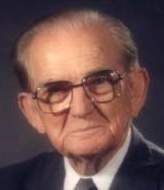 Stennis |
Stenroth, Otto (Eliel) (b. May 13, 1861, Saarijärvi, Finland - d. Dec. 16, 1939, Kirkkonummi, Finland), foreign minister of Finland (1918). He was also governor of the Bank of Finland (1918-23).
Stenström, (Carl) Jan (b. Dec. 9, 1906, Stockholm, Sweden - d. Dec. 19, 1991), Swedish diplomat; son of Karl Stenström. He was minister to Portugal (1953-55) and Brazil (1955-56) and ambassador to Brazil (1956-60), Turkey (1964-68), and Spain (1969-72).
Stenström, Karl (Johan) (b. Dec. 14, 1869, Lerbäck, Örebro, Sweden - d. July 21, 1933, Stockholm, Sweden), governor of Västernorrland (1918-31).
Stepanenko, Dmitry (Aleksandrovich) (b. March 8, 1976, Klintsy, Bryansk oblast, Russian S.F.S.R.), chairman of the government of Yaroslavl oblast (2016-21).
Stepanenko, Ion (Lukich) (b. 1895, Yeysk, Kuban oblast [now in Krasnodar kray], Russia - d. 1965, Moscow, Russian S.F.S.R.), first secretary of the Communist Party committee of the Yakut A.S.S.R. (1939-43).
Stepaniuc, Victor (b. July 13, 1958, Costesti, Ialoveni district, Moldavian S.S.R.), a deputy prime minister of Moldova (2008-09).
 P. Stepanov |
Stepanov, Vasily (Aleksandrovich) (b. 1872, Tiflis, Russia [now Tbilisi, Georgia] - d. Aug. 29, 1920, aboard ship en route from Constantinople, Ottoman Empire [now Istanbul, Turkey], to Marseille, France), acting commerce and industry minister of Russia (1917). He was also a member of the State Duma (1907-17).
Stepanov, Viktor (Nikolayevich) (b. Jan. 27, 1947), chairman of the Presidium of the Supreme Soviet (1989-90), chairman of the Supreme Council (1990-94), and chairman of the government (1994-98) of Karelia.
Stepanov, Vladimir (Sevastyanovich) (b. March 21, 1927, Kavgora, Karelian A.S.S.R., Russian S.F.S.R. - d. June 14, 2022), first secretary of the Communist Party committee of the Karelian A.S.S.R. (1984-89). He was also Soviet ambassador to Finland (1973-79) and first deputy premier of the Karelian A.S.S.R. (1979-84).
Stepanyan, Vahe (Vardani) (b. April 6, 1948, Stepanakert, Nagorno-Karabakh autonomous oblast, Azerbaijan S.S.R.), justice minister of Armenia (1990-96).
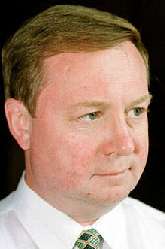 Stepashin |
Stephan, Léopold François (b. Oct. 14, 1815, Brest, France - d. ...), acting governor of Senegal (1861).
 K. Stephanopoulos |
Stephanopoulos, Stephanos (Christou) (b. 1820, Pyrgos, Ottoman Empire [now in Greece] - d. May 7, 1887), Greek politician. He was president of the Vouli (1886).
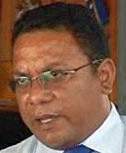 M. Stephen |
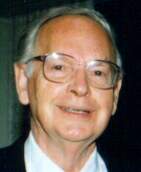 N. Stephen |
Stephens, Alexander H(amilton) (b. Feb. 11, 1812, near Washington, Ga. - d. March 4, 1883, Atlanta, Ga.), vice president of the Confederate States of America (1861-65) and governor of Georgia (1882-83).
Stephens, Tan Sri Benedict (b. July 3, 1926, Kudat, North Borneo [now Sabah, Malaysia] - d. Sept. 4, 2003, Kota Kinabalu, Sabah, Malaysia), Malaysian politician; brother of Tun Mohd Fuad Stephens. He was president of the Dewan Negara (1985-88). He was awarded the title Tan Sri in 1982.
Stephens, George Washington (b. Aug. 3, 1866, Montreal, Canada East [now Que.] - d. Feb. 6, 1942, Los Angeles, Calif.), president of the Commission of Government of the Saarbecken (1926-27).
Stephens, Lon V., byname of Lawrence Vest Stephens (b. Dec. 21, 1858, Boonville, Mo. - d. Jan. 10, 1923, St. Louis, Mo.), governor of Missouri (1897-1901).
Stephens, Michael (Leslie), acting administrator of Norfolk Island (2003).
Stephens, Tun (Haji) Moh(ama)d Fuad, original name (before conversion to Islam Jan. 5, 1971) Donald (Aloysius Marmaduke) Stephens (b. Sept. 14, 1920, Kudat, North Borneo [now Sabah, Malaysia] - d. [plane crash] June 6, 1976, off Sembulan, near Kota Kinabalu, Sabah, Malaysia), chief minister (1963-64, 1976) and head of state (1973-75) of Sabah. He was also Malaysian high commissioner to Australia, New Zealand, and Fiji (1968-73). He was awarded the titles Tan Sri in 1970 and Tun in 1975.
Stephens, Robert Porritt (b. Feb. 20, 1905, Laingsburg, Cape Colony [now in Western Cape, South Africa] - d. Dec. 13, 2001, Eswatini), finance minister of Swaziland (1972-79).
Stephens, Stan(ley Graham) (b. Sept. 16, 1929, Calgary, Alta. - d. April 3, 2021, Kalispell, Mont.), governor of Montana (1989-93).
Stephens, William D(ennison) (b. Dec. 26, 1859, Eaton, Ohio - d. April 24, 1944, Los Angeles, Calif.), governor of California (1917-23).
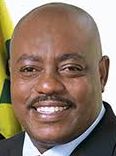 F. Stephenson |
Stephenson, Sir Hugh (Lansdown) (b. April 8, 1871, London, England - d. Sept. 6, 1941, Oxted, England), governor of Bihar and Orissa (1927-32) and of Burma (1932-36); knighted 1924.
Stephenson, Sir Hugh (Southern) (b. Nov. 29, 1906 - d. Sept. 23, 1972, London, England), British high commissioner for Southern Africa (1963-64); knighted 1956; son of Sir Hugh (Lansdown) Stephenson. He was ambassador to South Vietnam (1954-57) and South Africa (1963-66).
Stepovich, Michael A(nthony), byname Mike Stepovich (b. March 12, 1919, Fairbanks, Alaska - d. Feb. 14, 2014, San Diego, Calif.), governor of Alaska (1957-58). He resigned in 1958 to run in Alaska's first contest for U.S. Senate. After a spirited uphill campaign, he lost to Ernest Gruening by a small margin. He was the Republican nominee for governor in 1962, narrowly losing to William E. Egan. He vied for the office again in 1966 but was defeated in the primary by Walter J. Hickel.
Ster, Andrej (b. June 12, 1958, Kranj, Slovenia), interior minister of Slovenia (1994-97).
Sterbet, Valeria (b. Nov. 15, 1946, Miciurin, Moldavian S.S.R.), justice minister of Moldova (1999-2001). She was also president of the Supreme Court of Justice (2001-07).
Steriopoulos, Sotirios (b. May 1, 1892, Athens, Greece - d. 1967), defense minister of Greece (1956, 1958). He was also general administrator of Northern Greece (1950, 1950-51, 1952).
Steriotis, Petros (Ioannou) (b. March 13, 1914, Zakynthos, Greece - d. 1999), finance minister of Greece (1966-67). He was also minister of commerce (1963-64).
Sterling, Ross (Shaw) (b. Feb. 11, 1875, Anahuac, Texas - d. March 25, 1949, Fort Worth, Texas), governor of Texas (1931-33).
Sterndale, Robert Armitage (b. June 30, 1839 - d. Oct. 3, 1902), governor of Saint Helena (1897-1902).
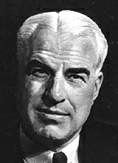 Stettinius |
Steunenberg, Frank (b. Aug. 8, 1861, Keokuk, Iowa - d. [bomb attack] Dec. 30, 1905, Caldwell, Idaho), governor of Idaho (1897-1901).
Steur, Ard van der, byname of Gerard Adriaan van der Steur (b. Oct. 7, 1969, Haarlem, Netherlands), security and justice minister of the Netherlands (2015-17).
Stevanovic, Nemanja, Serbian diplomat. He was permanent representative to the United Nations (2021-24).
Steven, Davis (Madava) (b. Nov. 19, 1969), deputy prime minister of Papua New Guinea (2019-20). He was also minister of civil aviation (2012-17), justice (2017-20), and labour and industrial relations, agriculture and livestock, and lands and physical planning (2019).
Steven Iatika, Morkin (b. 1965? - d. April 19, 2016, Vila, Vanuatu), finance minister of Vanuatu (1999-2001). He was also minister of ni-Vanuatu business (2004), health (2004-08, 2015-16), and youth and sports (2010-11, 2011, 2011-12).
Stevens, Sir Charles Cecil (b. July 5, 1840 - d. March 24, 1909), acting lieutenant governor of Bengal (1897); knighted 1899.
Stevens, Henry Herbert, byname Harry Stevens (b. Dec. 8, 1878, Bristol, England - d. June 14, 1973, Vancouver, B.C.), acting interior minister of Canada (1926). He was also minister of trade and commerce (1921, 1926 [acting], 1930-34), mines and agriculture (acting, 1926), and customs and excise (1926).
Stevens, Isaac I(ngalls) (b. March 25, 1818, near Andover, Mass. - d. [in civil war] Sept. 1, 1862, Chantilly, Va.), governor of Washington (1853-57).
Stevens, (Moli) Jimmy (Tubou Patuntun) (b. June 15, 1927 - d. Feb. 28, 1994, Fanafo, Vanuatu), New Hebrides (Vanuatu) rebel leader. Born of mixed European-Islander descent, he had the ability to articulate the grievances of ordinary villagers. In the early 1960s he joined a small group of Espíritu Santo islanders opposing the encroachment of a cattle industry into "dark bush land." They called their movement Nagriamel (after two plants, nagaria and namele), and by 1970 it had a large following (he claimed 10,000). It rejected colonial control over New Hebridean land, championed "custom," and repudiated many of the highly suspect land sales of the early colonial period. In the 1970s the anticolonial initiative passed from Stevens to the Vanua'aku Party under Walter Lini. Stevens found himself heading a regional movement that was increasingly allied with pro-French and pro-settler groups opposed to decolonization and to the anglophone groups that dominated the new government. He was encouraged (and funded) by them and also by U.S. business interests that had invested heavily and speculatively in land. For example, the Phoenix Foundation, a group of libertarian U.S. businessmen hoping for a tax haven and a free hand in commercial development, backed Stevens and provided a constitution for his Vemarana (after a traditional Santo name) secessionist government launched on the eve of Vanuatu's independence (1980). French settlers imported arms through New Caledonia and drilled Stevens's force of bow-and-arrow-wielding tribesmen. But within a month of independence, Fanafo village, his headquarters, fell to Papua New Guinea troops called in by the new Vanuatu government. He was arrested and put on trial and on November 21 was sentenced to 14½ years' imprisonment. He was released in 1991.
 R.L. Stevens |
Stevens, Samuel, Jr. (b. July 13, 1778, Talbot county, Md. - d. Feb. 7, 1860, near Trappe, Talbot county), governor of Maryland (1822-26).
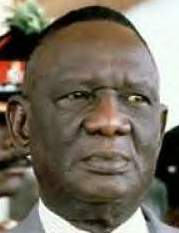 S. Stevens |
Stevens, Thaddeus (b. April 4, 1792, Danville, Vt. - d. Aug. 11, 1868, Washington, D.C.), U.S. politician. He first achieved political prominence as an Anti-Mason and in 1833-42 served intermittently in the Pennsylvania legislature. An aggressive, uncompromising man possessing a formidable, sardonic wit, he helped defeat a bill abolishing the state's public school system and was a vigorous proponent of a protective tariff. He became a dominant member of the U.S. House of Representatives (1849-53, 1859-68). A Whig in his first two terms, he quit in disgust at the party's moderate stand on the slavery issue. Returning as a Republican in 1859, he became chairman of the Committee on Ways and Means. He secured huge appropriations for the Union forces during the Civil War (1861-65). A firm believer in equality, he was a leader of the Radical Republicans during Reconstruction, arguing that Pres. Andrew Johnson's policies were too moderate and that the Southern states should be seen as "conquered provinces." He proposed the Fourteenth Amendment and sponsored Reconstruction measures which used military rule to guarantee black suffrage in the South. He also introduced the resolution to impeach Johnson in 1868. However, his plan for the confiscation of southern plantations to be divided among freedmen failed to gain congressional support.
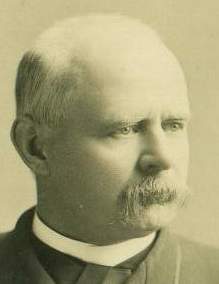 Stevenson (1835-1914) |
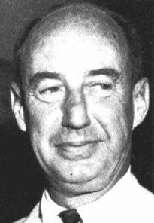 Stevenson (1900-1965) |
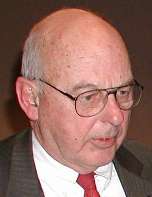 Stevenson (1930-2021) |
Stevenson, Andrew (b. March 23, 1784, St. Mark's parish, Culpeper county, Va. - d. Jan. 18, 1857, Blenheim estate, Albemarle county, Va.), speaker of the U.S. House of Representatives (1827-34). He was also minister to the United Kingdom (1836-41).
Stevenson, Charles C(lark) (b. Feb. 20, 1826, Phelps, Ontario county, N.Y. - d. Sept. 21, 1890, Carson City, Nev.), governor of Nevada (1887-90).
Stevenson, Coke R(obert) (b. March 20, 1888, Mason county, Texas - d. June 28, 1975, San Angelo, Texas), governor of Texas (1941-47).
Stevenson, Edward A(ugustus) (b. June 15, 1831, Lowville, N.Y. - d. [suicide] July 6, 1895, Paraiso Springs, Calif.), governor of Idaho (1885-89); brother of Charles C. Stevenson.
Stevenson, Sir Hubert Craddock (b. January 1888 - d. June 13, 1971), governor of Sierra Leone (1941-47); knighted 1941.
Stevenson, John W(hite) (b. May 4, 1812, Richmond, Va. - d. Aug. 10, 1886, Covington, Ky.), governor of Kentucky (1867-71); son of Andrew Stevenson.
Stevenson, Sir Malcolm (b. March 25, 1878, Lisburn, Ireland [now in Northern Ireland] - d. Nov. 27, 1927), high commissioner (1918-25) and governor (1925-26) of Cyprus and governor of Seychelles (1927); knighted 1923.
Stevenson, William E(dwards) (b. Oct. 25, 1900, Chicago, Ill. - d. April 3, 1985, Fort Myers, Fla.), U.S. diplomat. He was ambassador to the Philippines (1962-64).
Stevenson, William E(rskine) (b. March 18, 1820, Warren, Pa. - d. Nov. 29, 1883, Parkersburg, W.Va.), governor of West Virginia (1869-71).
Steward, David (Whitefoord), byname Dave Steward (b. May 23, 1945, Nairobi, Kenya), South African diplomat. He was permanent representative to the United Nations (1981-82).
Steward, Vernon Rudston Whitefoord (b. April 10, 1931, Empangeni, Natal [now KwaZulu-Natal], South Africa), South African diplomat. He was ambassador to Italy (1982-87) and permanent representative to the United Nations (1991-95).
Steward, Sir William Jukes (b. Jan. 20, 1841, Reading, England - d. Oct. 31, 1912, Wellington, N.Z.), New Zealand politician; knighted 1903. He was speaker of the House of Representatives (1891-93).
Stewart, Andrew Charles (b. April 22, 1907 - d. Jan. 1, 1979), British political agent and consul in Muscat and Oman (1945-47, 1947-48). He was also minister to South Korea (1954-56) and ambassador to Iceland (1959-61).
Stewart, Charles (A.) (b. Aug. 26, 1868, Strabane, Ont. - d. Dec. 6, 1946, Ottawa, Ont.), premier of Alberta (1917-21) and interior minister of Canada (1921-26, 1926-30). He was also superintendent-general of Indian affairs (1921-26, 1926-30), minister of mines (1921-26, 1926-30), and acting minister of immigration and colonization (1922-23, 1925-26, 1929-30).
Stewart, Christine (Susan), née Leishman (b. Jan. 3, 1941, Hamilton, Ont. - d. April 25, 2015), environment minister of Canada (1997-99).
Stewart, David (b. 1772 - d. Dec. 18, 1829, Saint Lucia), governor of Saint Lucia (1829).
Stewart, Sir Donald Martin, (1st) Baronet (b. March 1, 1824, near Forres, Moray, Scotland - d. March 26, 1900, Algiers, Algeria), acting superintendent (1872) and chief commissioner (1872-75) of the Andaman and Nicobar Islands. He was knighted in 1879, created baronet in 1881, and made a field marshal in 1894.
Stewart, Sir Donald William (b. May 22, 1860 - d. Oct. 1, 1905), commissioner of the British East Africa Protectorate (1904-05); knighted 1902.
Stewart, Douglas Roy (b. 1886 - d. Feb. 2, 1939, Basseterre, Saint Christopher), administrator of Saint Christopher-Nevis (1931-39).
Stewart, Duncan George (b. Oct. 22, 1904, Witkleifontein, Transvaal [now in South Africa] - d. Dec. 10, 1949, Singapore), governor of Sarawak (1949). He died as a consequence of a stabbing attack made on him on Dec. 3, 1949, by two Malays at Sibu, Sarawak.
Stewart, Henry Cockburn (b. July 21, 1844 - d. June 5, 1899), administrator of the Seychelles (1895-99).
Stewart, Hugh (b. Nov. 5, 1872 - d. June 26, 1931), British political agent and consul in Muscat and Oman (1915-16, 1916) and political agent in Bahrain (1916).
Stewart, Sir James Marshall (b. Aug. 9, 1861 - d. July 20, 1943), political resident of Aden (1916-21); knighted 1919.
Stewart, John W(olcott) (b. Nov. 24, 1825, Middlebury, Vt. - d. Oct. 29, 1915, Middlebury), governor of Vermont (1870-72).
Stewart, Sir (John Henry) Keith (b. Aug. 31, 1872, India - d. May 30, 1955, Wigtownshire, Scotland), political resident of Aden (1925-28); knighted 1927.
Stewart, Robert M(arcellus) (b. March 12, 1815, Truxton, N.Y. - d. Sept. 21, 1871, St. Joseph, Mo.), governor of Missouri (1857-61).
Stewart, Sir Robert Macgregor (b. 1842 - d. Oct. 22, 1919), governor of Bermuda (1904-07); knighted 1902.
Stewart, Sam(uel) V(ernon) (b. Aug. 2, 1872, Monroe county, Ohio - d. Sept. 15, 1939, Helena, Mont.), governor of Montana (1913-21).
Stewart, Sir Thomas Alexander (b. Feb. 26, 1888 - d. May 11, 1964), governor of Bihar (1939-43); knighted 1937.
Stewart, William Downie (b. July 29, 1878, Dunedin, N.Z. - d. Sept. 29, 1949, Dunedin), finance minister of New Zealand (1926-28, 1931-33). He was also mayor of Dunedin (1913-14), minister of internal affairs (1921-23), customs (1921-28, 1931-33), and industries and commerce (1923-26) and attorney-general (1926, 1931-33).
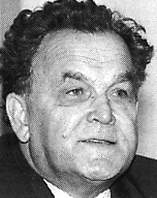 Stich |  Stier |
Stickney, William W(allace) (b. March 21, 1853, Plymouth, Vt. - d. Dec. 15, 1932, Sarasota, Fla.), governor of Vermont (1900-02); cousin of Calvin Coolidge.
Stier, Davor Ivo (b. Jan. 6, 1972, Buenos Aires, Argentina), foreign minister and a deputy prime minister of Croatia (2016-17).
Stierncrantz, Per friherre (b. Nov. 4, 1681 - d. April 30, 1737, Helsingfors [now Helsinki], Finland), governor of Nyland och Tavastehus (1719-37). He was made friherre (baron) in 1720.
Stierneld, Gustaf Nils Algernon Adolph friherre (b. July 12, 1791, Stockholm, Sweden - d. Nov. 14, 1868, Stockholm), prime minister for foreign affairs of Sweden (1838-42, 1848-56). He was also chargé d'affaires in the Netherlands (1814-18) and minister to the United Kingdom (1818-27).
Stiernstedt, Carl Johan friherre (b. Sept. 29, 1686, Viborg, Finland [now Vyborg, Russia] - d. Nov. 20, 1753, Stockholm, Sweden), governor of Nyslott och Kymmenegård (1741-46); son of Johan friherre Stiernstedt.
Stiernstedt, Johan friherre, original name Johan Thesleff (b. Nov. 1, 1653, Viborg, Finland [now Vyborg, Russia] - d. Feb. 7, 1722, Åbo [now Turku], Finland), governor of Österbotten (acting, 1706) and Åbo och Björneborg (1714-22). He was ennobled under the name Stiernstedt in 1697 and made friherre (baron) in 1719.
Stiglic, Sanja (b. March 10, 1970, Kranj, Slovenia), Slovenian diplomat. She was permanent representative to the United Nations (2007-12) and president of the UNICEF Executive Board (2011).
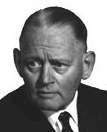 Stikker |
Stilwell, Joseph W(arren) (b. March 19, 1883, Palatka, Fla. - d. Oct. 12, 1946, San Francisco, Calif.), military governor of Okinawa (1945).
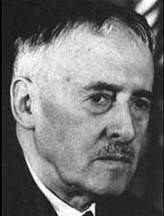 H.L. Stimson |
Stimson, Robert Frederick (b. May 16, 1939), governor of St. Helena (1988-91).
Stino, Kamal Ramzi (b. 1910, Cairo, Egypt - d. ...), a deputy prime minister (for supply and internal trade) of the United Arab Republic (1964-66). He was also minister of supply (1958-65).
Stirbei, Alexandru B(arbu) (b. 1837, Bucharest, Walachia [now in Romania] - d. March 1, 1895, Bucharest), interior minister (1888-89) and finance minister (1891) of Romania; son of Barbu Dimitrie Stirbei. He was also minister of public works (1888).
Stirbei, Prince Barbu (Alexandru) (b. Nov. 4, 1872, Buftea, Romania - d. March 24, 1946, Bucharest, Romania), prime minister, foreign minister, and interior minister (1927) and finance minister (1927) of Romania; son of Alexandru B. Stirbei.
Stirbei, Barbu Dimitrie (b. 1799, Craiova, Walachia [now in Romania] - d. April 13, 1869, Nice, France), prince of Walachia (1849-53, 1854-56).
Stirbei, George B(arbu) (b. April 1, 1832, Bucharest, Walachia [now in Romania] - d. 1925, Paris, France), foreign minister of Romania (1866-67); son of Barbu Dimitrie Stirbei.
Stirling, Sir Alexander John (Dickson), byname Alec Stirling (b. Oct. 20, 1926, Rawalpindi, India [now in Pakistan] - d. July 16, 2014, London, England), British political agent in Bahrain (1969-71); knighted 1984. He was also ambassador to Bahrain (1971-72), Iraq (1977-80), Tunisia (1981-84), and Sudan (1984-86).
Stirling, Grote (b. July 31, 1875, Tunbridge Wells, England - d. Jan. 18, 1953, Kelowna, B.C.), defence minister of Canada (1934-35). He was also acting minister of fisheries (1934-35).
Stirling, Sir James (b. 1791 - d. April 22, 1865, Guildford, Surrey, England), lieutenant governor (1829-32) and governor (1832, 1834-39) of Western Australia; knighted 1833.
Stishinsky, Aleksandr (Semyonovich) (b. June 30 [June 18, O.S.], 1851, Tiflis, Russia [now Tbilisi, Georgia] - d. Jan. 11, 1922, Constantinople, Ottoman Empire [now Istanbul, Turkey]), Russian official. He was head of the Chief Administration of Land Organization and Agriculture (1906).
Stisted, Sir Henry William (b. 1817, Saint-Omer, Pas-de-Calais, France - d. Dec. 10, 1875, Upper Norwood, Surrey, England), lieutenant governor of Ontario (1867-68); knighted 1871.
Stitt, (Thomas) Clive Somerville (b. Jan. 1, 1948 - d. Jan. 13, 2017), administrator of the British Indian Ocean Territory (1986-88).
Stitt, (John) Kevin (b. Dec. 28, 1972, Milton, Fla.), governor of Oklahoma (2019- ).
Stix, Karl (b. Oct. 24, 1939, Wiener Neustadt, Germany [now in Austria] - d. July 5, 2003, Hornstein, Austria), Landeshauptmann of Burgenland (1991-2000).
Stobart, Patrick Desmond (b. Feb. 14, 1920 - d. Dec. 3, 1991), British acting political agent and consul in Muscat and Oman (1948) and political officer in the Trucial States (1948-50).
Stobbe, Dietrich (b. March 25, 1938, Weepers, Prussia, Germany [now Wieprz, Poland] - d. Feb. 19, 2011, Berlin, Germany), governing mayor of (West) Berlin (1977-81).
Stobée, Lorentz Kristoffer, original surname Stobæus (b. May 10, 1676, Lund, Skåne, Sweden - d. April 30, 1756, Råda socken, Skaraborg [now in Västra Götaland], Sweden), governor of Göteborg och Bohus (1741-49). He was ennobled under the name Stobée in 1707.
Stoby, Sir Kenneth (Sievewright) (b. Oct. 19, 1903, Georgetown, British Guiana [now Guyana] - d. July 10, 1985), acting governor-general of Guyana (1966); knighted 1961. He was chief justice of Barbados in 1959-65.
Stock, Christian (b. Aug. 28, 1884, Darmstadt, Hessen, Germany - d. April 13, 1967, Seeheim [now part of Seeheim-Jugenheim], Hessen, West Germany), minister-president of Hessen (1947-51).
Stockdale, James B(ond) (b. Dec. 23, 1923, Abingdon, Ill. - d. July 5, 2005, Coronado, Calif.), U.S. politician. In the Vietnam War, he was a Navy fighter pilot based on the aircraft carrier Oriskany and flew 201 missions before he was shot down on Sept. 9, 1965. The highest-ranking naval officer captured in the war, he spent more than seven years as a prisoner before his release in 1973. He received 26 combat decorations, including the Medal of Honor, the nation's highest medal for valor, in 1976. He retired from the military in 1979. In the 1992 presidential election, Ross Perot, who was running as an independent, selected Admiral Stockdale initially as a stand-in on the ticket but later as the formal vice presidential candidate. Stockdale gave a stumbling performance in the nationally televised vice presidential debate against Dan Quayle and Al Gore and later said he did not feel comfortable in the public eye. Perot and Stockdale received 19% of the popular vote. When Perot ran again in 1996 as the candidate of the Reform Party, his running mate was Patrick Choate, an economist. Stockdale had rejoined the Republican Party.
 C. Stocker | 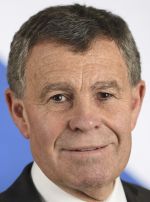 E. Stocker |
Stocker(-Rusterholz), Ernst (Walter) (b. April 20, 1955, Wädenswil, Zürich, Switzerland), president of the government of Zürich (2015-16, 2022-23).
Stockley, Charles C(lark) (b. Nov. 6, 1819, Georgetown, Del. - d. April 20, 1901, Millsboro, Del.), governor of Delaware (1883-87).
Stöckli, Clemens (b. July 24, 1927, Therwil, Basel-Land, Switzerland - d. Dec. 4, 2012, Liestal, Basel-Land), president of the government of Basel-Land (1975-76, 1980-81, 1985-86, 1988-89).
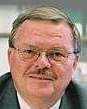 Stöckling |
Stockton, John P(otter) (b. Aug. 2, 1826, Princeton, N.J. - d. Jan. 22, 1900, New York City), U.S. politician; son of Robert F. Stockton. He was minister to the Papal State (1858-61) and a U.S. senator (1865-66, 1869-75).
Stockton, Robert F(ield) (b. Aug. 20, 1795, Princeton, N.J. - d. Oct. 7, 1866, Princeton), military governor of California (1846-47). He was also a U.S. senator (1851-53).
Stockton, Thomas (b. April 1, 1781, New Castle, Del. - d. March 2, 1846, New Castle), governor of Delaware (1845-46).
Stoel, Max van der (b. Aug. 3, 1924, Voorschoten, Zuid-Holland, Netherlands - d. April 23, 2011, The Hague, Netherlands), foreign minister of the Netherlands (1973-77, 1981-82). He was also permanent representative to the United Nations (1983-86) and OSCE high commissioner on national minorities (1993-2001).
Stoessel, Bernard (b. Oct. 21, 1954), acting president of the Regional Council of Alsace (2009).
Stoessel, Walter J(ohn), Jr. (b. Jan. 24, 1920, Manhattan, Kan. - d. Dec. 9, 1986, Washington, D.C.), acting U.S. secretary of state (1982). He was also ambassador to Poland (1968-72), the Soviet Union (1974-76), and West Germany (1976-81).
 Stoev | 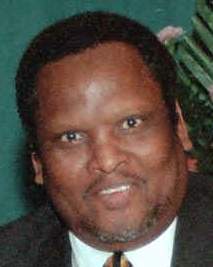 Stofile |
Stoeva, Lachezara (Stoyanova) (b. 1977, Sofia, Bulgaria), Bulgarian diplomat. She was permanent representative to the United Nations (2021-25).
Stofile, Makhenkesi (Arnold) (b. Dec. 27, 1944, Winterberg, Cape province [now in Eastern Cape], South Africa - d. Aug. 15, 2016, Alice, Eastern Cape), premier of Eastern Cape (1997-2004). He was also South African sports minister (2004-10) and ambassador to Germany (2011-15).
Stoian, Ion (b. Nov. 28, 1927, Telega, Prahova county, Romania - d. Dec. 21, 2012, Bucharest, Romania), foreign minister of Romania (1989).
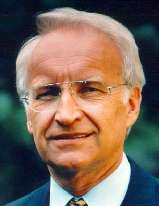 Stoiber |
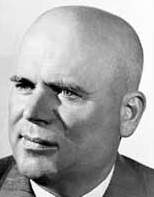 C. Stoica |
Stoica, Gheorghe (b. Feb. 13, 1935, Tomsani, Prahova county, Romania), a deputy prime minister of Romania (1982). He was also first secretary of the party committees and chairman of the executive committees of Vrancea (1979-84) and Dolj (1984-87) counties and minister of technico-material supply and control of fixed-assets management (1988-89).
Stoicescu, Constantin I. (b. Jan. 15, 1852, Ploiesti, Walachia [now in Romania] - d. May 11, 1911, Bucharest, Romania), foreign minister of Romania (1896-97). He was also minister of public works (1895-96, 1902), justice (1898-99, 1901-02), and agriculture, industry, commerce, and domains (1902-04).
Stoichkov, Grigor (Georgiev) (b. Feb. 2, 1926, Gorna Malina, Bulgaria - d. July 23, 2016), a deputy premier of Bulgaria (1977-89). He was also first secretary of the Communist Party committee of Sofia district (1961-69) and minister of transport (1969-73), construction and architecture (1973-77), agriculture and food industry (1978-79), and construction and settlement planning (1984-86).
Stoilkovic, Ivan (b. Feb. 15, 1962, Kumanovo, Macedonia [now North Macedonia]), North Macedonian politician. He has been a deputy prime minister and minister of inter-community relations (2024- ).
Stoilov, Konstantin (Stoilov) (b. Sept. 23, 1853, Plovdiv, Ottoman Empire [now in Bulgaria] - d. March 23, 1901, Sofia, Bulgaria), foreign minister (1881 [acting], 1883, 1886, 1896-99), justice minister (1883-84, 1886-88), prime minister (1887, 1894-99), finance minister (1887), and interior minister (1894-96) of Bulgaria.
Stoilov, Yanaki (Boyanov) (b. Sept. 8, 1958, Turnovo [now Veliko Turnovo], Bulgaria), justice minister of Bulgaria (2021).
Stojadinovic, Milan (b. Aug. 4 [July 23, O.S.], 1888, Cacak, Serbia - d. Oct. 24, 1961, Buenos Aires, Argentina), finance minister (1922-24, 1924-26, 1934-35) and prime minister and foreign minister (1935-39) of Yugoslavia.
Stojanovic, Ljubomir (b. Aug. 18 [Aug. 6, O.S.], 1860, Uzice, Serbia - d. June 16, 1930, Prague, Czechoslovakia [now in Czech Republic]), prime minister of Serbia (1905-06). He was also minister of education (1903, 1903-04, 1905-06, 1909), interior (1905), and war (acting, 1909).
Stojicic, Radovan, byname Badza Stojicic (b. 1951, Nis, Serbia - d. [assassinated] April 11, 1997, Belgrade, Serbia), acting interior minister of Serbia (1997).
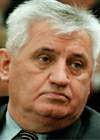 Stojiljkovic |
Stojkovic, Milutin (b. Aug. 19, 1942, Mijatovac, Serbia), president of the Assembly of Vojvodina (1993-97) and a deputy prime minister of Serbia (1997-98).
Stojkovic, Zoran (b. Oct. 7, 1946, Belgrade, Serbia - d. July 6, 2020, Belgrade), justice minister of Serbia (2004-07).
Stojmenov, Boris (b. April 4, 1940), finance minister of Macedonia (1998-99).
Stojsic, Djordje (b. May 28, 1928, Jarak, Yugoslavia [now in Vojvodina, Serbia] - d. Aug. 8, 2014, Novi Sad, Vojvodina, Serbia), chairman of the Vojvodina Provincial Committee of the League of Communists of Yugoslavia (1985-88).
Stokenbergs, Aigars (b. Aug. 29, 1963, Riga, Latvian S.S.R.), justice minister (2010-11) and acting interior minister (2011) of Latvia. He was also minister of economy (2006) and regional development and local government (2006-07).
Stokes, Carl B(urton) (b. June 21, 1927, Cleveland, Ohio - d. April 4, 1996, Cleveland), mayor of Cleveland (1967-71). The first African-American mayor of a major U.S. city, he was also U.S. ambassador to Seychelles (1994-95).
Stokes, Edward C(asper) (b. Dec. 22, 1860, Philadelphia, Pa. - d. Nov. 4, 1942, Trenton, N.J.), governor of New Jersey (1905-08).
Stokes, Sir Gabriel (b. July 7, 1849 - d. Oct. 22, 1920), acting governor of Madras (1906); knighted 1909.
Stokes, John Day (b. 1802, Ireland - d. Dec. 11, 1862, Lassinagh, County Kerry, Ireland), resident in Mysore (1836-42).
Stokes, John William (b. Feb. 1, 1910, Melbourne, Vic. - d. Aug. 3, 1995), official representative in the Cocos Islands (1958-60) and Christmas Island (1960-66).
Stokes, Montfort (b. March 12, 1762, Lunenburg county, Va. - d. Nov. 4, 1842, Fort Gibson, Indian Territory [now in Okla.]), governor of North Carolina (1830-32). He was also a U.S. senator from North Carolina (1816-23).
Stolfi, Fiorenzo (b. March 11, 1956, San Marino), interior minister (2001-02), finance minister (2002), and foreign minister (2002-03, 2006-08) of San Marino. Earlier he was minister for tourism and sport (1983-86) and industry (1992-2000).
Stolk (Mendoza), Carlos Eduardo (b. April 4, 1912, Caracas, Venezuela - d. 1995?), Venezuelan diplomat. He was permanent representative to the United Nations (1946-50).
Stolojan, Anastase (b. Aug. 17 [Aug. 5, O.S.], 1836, Craiova, Walachia [now in Romania] - d. Aug. 7 [July 25, O.S.], 1901, Bucharest, Romania), interior minister of Romania (1880, 1896). He was also minister of justice (1879-80) and agriculture, industry, commerce, and domains (1885-86, 1897-99).
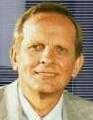 Stolojan |
Stolpe, Manfred (b. May 16, 1936, Hökendorf, Pommern, Prussia, Germany [now part of Szczecin, Poland] - d. Dec. 29, 2019, Potsdam, Germany), minister-president of Brandenburg (1990-2002). He was also German minister of transportation and construction (2002-05).
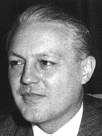 G. Stoltenberg |
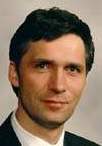 J. Stoltenberg |
Stoltenberg, Thorvald (b. July 8, 1931, Oslo, Norway - d. July 13, 2018, Oslo), foreign minister of Norway (1987-89, 1990-93) and UN high commissioner for refugees (1990). He was also defense minister (1979-81) and permanent representative to the UN (1989-90).
Stolypin, Nikolay (Arkadyevich) (b. June 27, 1814 - d. Feb. 1, 1884), Russian diplomat; son-in-law of Aleksey Sverchkov; grandson of Graf Nikolay Mordvinov. He was chargé d'affaires in Baden (1854-65) and minister to Württemberg (1865-71) and the Netherlands (1871-84).
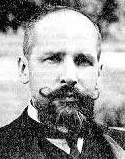 P. Stolypin |
Stone, David (b. Feb. 17, 1770, Hope plantation, Bertie county, North Carolina - d. Oct. 7, 1818, near Raleigh, N.C.), governor of North Carolina (1808-10). He was also a U.S. representative (1799-1801) and senator (1801-07, 1813-14) from North Carolina.
Stone, Sir Edward Albert (b. March 9, 1844, Perth, Western Australia - d. April 2, 1920, Western Australia), acting governor of Western Australia (1901, 1902-03, 1909, 1913, 1917); knighted 1902. He was chief justice (1901-06) and lieutenant governor (1906-20).
Stone, Ellery W(heeler) (b. Jan. 14, 1894, Oakland, Calif. - d. Sept. 18, 1981, Montclair, N.J.), chief commissioner of the Allied Commission in Italy (1944-47).
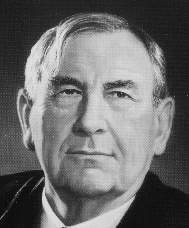 H.F. Stone |
Stone, John H(oskins) (b. 1745, Charles county, Maryland - d. Oct. 5, 1804, Annapolis, Md.), governor of Maryland (1794-97); great-great-grandson of William Stone.
Stone, John M(arshall) (b. April 30, 1830, Milan, Tenn. - d. March 26, 1900, Holly Springs, Miss.), governor of Mississippi (1876-82, 1890-96).
 S. Stone |
Stone, William (b. 1605, England - d. 1660?, Charles county, Maryland), governor of Maryland (1648-55).
Stone, William A(lexis) (b. April 18, 1846, near Wellsboro, Tioga county, Pa. - d. March 1, 1920, Philadelphia, Pa.), governor of Pennsylvania (1899-1903).
Stone, William Joel (b. May 7, 1848, Madison county, Ky. - d. April 14, 1918, Washington, D.C.), governor of Missouri (1893-97).
Stone, William M(ilo) (b. Oct. 14, 1827, Jefferson county, N.Y. - d. July 18, 1893, Oklahoma City, Okla.), governor of Iowa (1864-68).
Stonehaven, John Lawrence Baird, (1st) Viscount (b. April 27, 1874, London, England - d. Aug. 20, 1941, Stonehaven, Kincardineshire [now in Aberdeenshire], Scotland), governor-general of Australia (1925-30). He was also British minister of transport (1922-24). He was created Baron Stonehaven in 1925 and raised to viscount in 1938.
Stoneman, George (b. Aug. 8, 1822, Busti, N.Y. - d. Sept. 5, 1894, Buffalo, N.Y.), governor of California (1883-87).
Stoney, Bowes Ormonde (b. 1878, Knaresborough, Yorkshire, England - d. Oct. 16, 1910), acting British resident in Brunei (1909).
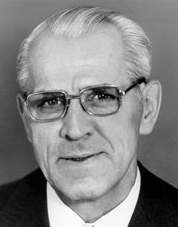 Stoph |
Storani (Acquaroli), Conrado (Hugo) (b. July 13, 1922, Río Cuarto, Córdoba, Argentina - d. Aug. 10, 2003, San Isidro, Buenos Aires, Argentina), health minister of Argentina (1986-87).
Storani (Zabala), Federico (Teobaldo Manuel) (b. Aug. 5, 1950, Hernando, Córdoba, Argentina), interior minister of Argentina (1999-2001); son of Conrado Storani.
Storberget, Knut (b. Oct. 6, 1964, Elverum, Hedmark [now in Innlandet], Norway), justice minister of Norway (2005-11) and governor of Hedmark and Oppland (2019) and Innlandet (2020- ).
 Støre |
Storks, Sir Henry Knight (b. April 5, 1811, London, England - d. Sept. 6, 1874, London), lord high commissioner of the Ionian Islands (1859-63) and governor of Malta (1864-67) and Jamaica (1865-66); knighted 1857.
Storm van 's Gravesande, Jonathan Samuel (d. 1761), commander of Demerara (1750-61); son of Laurens Storm van 's Gravesande; brother-in-law of Laurens Lodewijk van Bercheijk.
Storm van 's Gravesande, Laurens (d. Aug. 14, 1775), governor of Essequibo (1742-50) and director-general of Demerara-Essequibo (1750-72).
Storrs, Sir Ronald (Henry Amherst) (b. Nov. 19, 1881, Bury St. Edmunds, Suffolk, England - d. Nov. 1, 1955, London, England), governor of Cyprus (1926-32) and Northern Rhodesia (1932-34); knighted 1924.
Story, Marguerite (Nora Eikura Kitimira), née Henry (b. May 5, 1922, Mangaia, Cook Islands - d. Sept. 25?, 2009, Rarotonga, Cook Islands), Cook Islands politician; sister of Albert Henry. She was speaker of parliament (1965-78).
 Stott |
Stournaras, Yannis (b. Dec. 10, 1956, Athens, Greece), finance minister of Greece (2012-14). He has also been minister of development, competitiveness, and shipping (2012) and governor of the Bank of Greece (2014- ).
Stout, Jacob (b. 1764, near Leipsic, Delaware - d. November 1855, near Leipsic), acting governor of Delaware (1820-21).
Stout, Sir Robert (b. Sept. 28, 1844, Lerwick, Shetland, Scotland - d. July 19, 1930, Wellington, N.Z.), premier (1884, 1884-87), acting governor (1910, 1912), and acting governor-general (1920) of New Zealand; knighted 1886. He was also attorney general (1884, 1884-87), minister of education (1885-87), and chief justice (1899-1926).
Stoutt, H(amilton) Lavity (b. March 7, 1929, Long Bay, Tortola, British Virgin Islands - d. May 14, 1995), chief minister of the British Virgin Islands (1967-71, 1979-83, 1986-95). A member of the Legislative Council from 1957, he was the longest-serving parliamentarian in the region.
Stow, Sir Alexander (Montague) (b. 1873 - d. June 27, 1936), chief commissioner of Delhi (1926-28); knighted 1930.
Stow, Sir John Montague (b. Oct. 3, 1911 - d. March 16, 1997), administrator of Saint Lucia (1947-53) and governor (1959-66) and governor-general (1966-67) of Barbados; knighted 1959; son of Sir Alexander Stow.
Stow Hill (of Newport in the County of Monmouthshire), Frank Soskice, Baron (b. July 23, 1902, Geneva, Switzerland - d. Jan. 1, 1979, London, England), British politician. He entered Parliament at the 1945 election that brought Labour to power at the end of the war and was successively solicitor general (1945-51) and attorney general (April-October 1951). In 1950 he was Britain's delegate to the UN General Assembly. Under Prime Minister Harold Wilson he was home secretary (1964-65) and lord privy seal (1965-66). He was knighted in 1945 and created a life peer in 1966.
Stoyanchov, Yanko (Dimitrov) (b. May 30 [May 18, O.S.], 1881, Turnovo [now Veliko Turnovo], Bulgaria - d. June 11, 1927, Sofia, Bulgaria), justice minister of Bulgaria (1923-24). He was also minister of public works and communications (1923-26).
Stoyanov, Dimitur (Zhelyazkov) (b. Oct. 28, 1968, Svilengrad, Bulgaria), defense minister of Bulgaria (2022-23, 2026- ).
Stoyanov, Hristo (Todorov) (b. Jan. 18 [Jan. 6, O.S.], 1845, Sofia, Ottoman Empire [now in Bulgaria] - d. July 13 [July 1, O.S.], 1895, Sofia), justice minister (1880, 1883) and foreign minister (1886) of Bulgaria. He was also chairman of the Supreme Court (1879-80)/Supreme Court of Cassation (1887-95).
Stoyanov, Kalin (Georgiev) (b. April 28, 1981, Burgas, Bulgaria), interior minister of Bulgaria (2023-24).
Stoyanov, Petko (Hristov) (b. Dec. 12 [Nov. 30, O.S.], 1879, Rahovo [now Oryahovo], Bulgaria - d. Dec. 7, 1973, Sofia, Bulgaria), finance minister of Bulgaria (1944-45).
 Petur Stoyanov |
Stoyanov, Zahari, original name Dzhendo (Stoyanov) Dzhedev (b. 1850, Medven, Ottoman Empire [now in Bulgaria] - d. Sept. 2, 1889, Paris, France), Bulgarian politician. He was chairman of the National Assembly (1888-89).
Stracár, Slavomír (b. Feb. 7, 1935, Chtelnica, Czechoslovakia [now in Slovakia] - d. Aug. 21, 1990, Brasília, Brazil), Czechoslovak politician. He was minister of metallurgy, engineering, and electrical engineering (1990) and foreign trade (1990).
Strache, Heinz-Christian (b. June 12, 1969, Vienna, Austria), vice chancellor of Austria (2017-19). He was also chairman of the Freedom Party (2005-19) and minister of civil service and sport (2018-19).
Strachey, Sir John (b. June 5, 1823, London, England - d. Dec. 19, 1907, London), chief commissioner of Oudh (1866-67), acting viceroy of India (1872), and lieutenant governor of the North-Western Provinces (1874-76); knighted 1872.
Strachey, (Evelyn) John (St. Loe) (b. Oct. 21, 1901, Merrow, Surrey, England - d. July 15, 1963, London, England), British secretary of state for war (1950-51). He was also minister of food (1946-50).
Stradbroke, George Edward John Mowbray Rous, (3rd) Earl of (b. Nov. 19, 1862, London, England - d. Dec. 20, 1947, Henham Hall, Suffolk, England), governor of Victoria (1921-26). He succeeded as earl in 1886.
Strahan, Sir George Cumine (b. Dec. 9, 1838, Fraserburgh, Aberdeenshire, Scotland - d. Feb. 17, 1887, Bournemouth, Dorset, England), governor of the Bahamas (1871-73), the Gold Coast (1874-76), Barbados and the Windward Islands (1876-80), Cape Colony (acting, 1880-81), and Tasmania (1881-86) and administrator of Lagos (1874); knighted 1880.
 Straker |
Strakhov, Aleksey (Leonidovich) (b. Oct. 26, 1942), head of the administration (1994-95) and chairman of the government (1994-95) of Sverdlovsk oblast.
Strakhovsky, Ivan (Mikhailovich) (b. June 21, 1866 - d. 1918), governor of Turgay oblast (1908-10), Vyatka (1910-14), and Tiflis (1914-16).
Stråle af Ekna, Wilhelm (b. Feb. 22, 1816, Stockholm, Sweden - d. March 23, 1902, Stockholm), governor of Stockholm (1867-88).
Stralen, Hein van, byname of Hendrik van Stralen (b. Oct. 20, 1751, Hoorn, Netherlands - d. Nov. 6, 1822, The Hague, Netherlands), interior minister of the Batavian Commonwealth (1805-06) and the Netherlands (1813-14).
 Strandman |
 Stráský |
Strasser, Ernst (b. April 29, 1956, Grieskirchen, Oberösterreich, Austria), interior minister of Austria (2000-04).
 G. Strasser |
Strasser, Hellmuth (b. April 5, 1934, Sierning, Oberösterreich, Austria - d. Oct. 16, 2019), Austrian diplomat. He was ambassador to East Germany (1981-85) and Greece (1986-90) and director-general (1990-99) and president (1999-2002) of the Danube Commission.
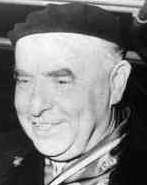 O. Strasser |
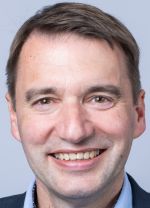 P. Strasser |
 V. Strasser |
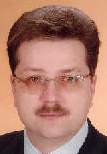 Stratan |
Straten-Waillet, François-Xavier (Georges Joseph Marie Ghislain) baron van der (b. Jan. 22, 1910, Antwerp, Belgium - d. Feb. 15, 1998, Woluwe-Saint-Lambert [now in Brussels-Capital region], Belgium), Belgian politician. He was minister of external trade (1947-48) and health and family (1948-49), minister to Argentina (1952-53), and ambassador to Argentina (1953-55), the Netherlands (1955-66), and Italy (1969-74).
Stratenus, Anthony Jan Lucas baron (b. July 22, 1807, The Hague, Netherlands - d. April 18, 1872, The Hague), acting foreign minister of the Netherlands (1862). He was also minister to Hanover and the Hanse cities (1854-64).
Stratigopoulos, Anastasios (b. 1885 - d. 19...), justice minister of Greece (1923-24). He was also provisional minister of ecclesiastical affairs and public education (1923-24).
Stratos, Andreas (Nikolaou) (b. 1905, Athens, Greece - d. Aug. 30, 1981), Greek politician; son of Nikolaos Stratos. He was minister of labour (1946, 1954-55) and social welfare (1958-61, 1961-62) and general administrator of Northern Greece (1952-54).
Stratos, Christophoros (Stamouli) (b. Oct. 7, 1924, Patras, Greece - d. April 15, 1982), interior minister of Greece (1966-67, 1974, 1977-81). He was also minister of national education and religious affairs (1961, 1963), communications (1963-64), and public works (1974-77).
Stratos, Georgios (b. 1887 - d. 1973), military minister of Greece (1947-48). He was also minister of communications (1932-33) and public works and reconstruction (provisional, 1947).
Stratos, Nikolaos (Andreou) (b. May 28 [May 16, O.S.], 1872, Athens, Greece - d. [executed] Nov. 28 [Nov. 15, O.S.], 1922, Athens), prime minister of Greece (1922). He was also minister of interior (1909, 1922), marine (1912-13, 1915), military (1922), and foreign affairs (provisional, 1922) and president of the Vouli (1911).
Stratton, Charles C(reighton) (b. March 6, 1796, Swedesboro, N.J. - d. March 30, 1859, Swedesboro), governor of New Jersey (1845-48).
Stratton, Sir Richard (James) (b. July 16, 1924 - d. July 26, 1988), British high commissioner for the New Hebrides (1977-80) and governor of Pitcairn Island (1980-84); knighted 1982. He was British ambassador to Congo and Zaire (1974-77), Burundi (1975-77), and Rwanda (1977) and high commissioner to New Zealand and Western Samoa (1980-84).
Stratton, William G(rant) (b. Feb. 26, 1914, Ingleside, Ill. - d. March 2, 2001, Chicago, Ill.), governor of Illinois (1953-61).
Stratulat, Oleg, (b. Feb. 22, 1957, Slobozia-Horodiste, Moldavian S.S.R.), a deputy prime minister of Moldova (1998-99).
Straub, Brunó Ferenc (b. Jan. 5, 1914, Nagyvárad, Hungary [now Oradea, Romania] - d. Feb. 15, 1996, Budapest, Hungary), chairman of the Presidential Council of Hungary (1988-89).
 Straujuma |  Straumann |
Straumann, Erich (b. Sept. 6, 1945), president of the government of Basel-Land (2003-04).
Straus, Jesse I(sidor) (b. June 25, 1872, New York City - d. Oct. 4, 1936, New York City), U.S. diplomat; nephew of Oscar S. Straus. He was ambassador to France (1933-36).
Straus, Oscar S(olomon) (b. Dec. 23, 1850, Otterberg, Bavaria [Germany] - d. May 3, 1926, New York City), U.S. secretary of commerce and labor (1906-09). He was the first Jewish member of the U.S. cabinet. He was also minister (1887-89, 1898-99) and ambassador (1909-10) to the Ottoman Empire.
 F.J. Strauss |
 Strauss-Kahn |
Strautmanis, Peteris, Russian Pyotr (Yakubovich) Strautmanis (b. April 24, 1919, Latvia - d. June 27, 2007), chairman of the Presidium of the Supreme Soviet of the Latvian S.S.R. (1974-85). He was also minister of state farms (1956-58) and first deputy premier (1965-74).
Straw, Ezekiel A(lbert) (b. Dec. 30, 1819, Salisbury, N.H. - d. Oct. 23, 1882, Manchester, N.H.), governor of New Hampshire (1872-74).
 J. Straw |
Stray, Svenn (Thorkild) (b. Feb. 11, 1922, Arendal, Aust-Agder [now in Agder], Norway - d. May 20, 2012), foreign minister (1970-71, 1981-86) and acting prime minister (1984) of Norway. He was also president of the Nordic Council (1968).
Strechaj, Rudolf (b. July 25, 1914, Cachtice, Hungary [now in Slovakia] - d. July 28, 1962, Prague, Czechoslovakia [now in Czech Republic]), a deputy premier of Czechoslovakia and chairman of the Slovak National Council (1960-62).
Streeruwitz, Ernst, until 1919 Ernst Streer Ritter (knight) von Streeruwitz (b. Sept. 23, 1874, Mies, Austria [now Stríbro, Czech Republic] - d. Oct. 19, 1952, Vienna, Austria), chancellor (also in charge of foreign affairs and interior) of Austria (1929).
Street, Anthony (Austin), byname Tony Street (b. Feb. 8, 1926, Melbourne, Vic. - d. Oct. 25, 2022), foreign minister of Australia (1980-83). He was also minister of labour and immigration (1975), employment (1975-78), and industrial relations (1975-80).
Streeting, Wes(ley Paul William) (b. Jan. 21, 1983, London, England), British defence secretary (2026- ). He was also secretary of state for health and social care (2024-26).
 Streibl |
 Streicher |
Streit, Georgios (Stephanou) (b. Sept. 25, 1868, Patras, Greece - d. Dec. 27, 1948), foreign minister of Greece (1914); son of Stephanos Streit. He was also ambassador to Austria-Hungary (1910-13).
Streit, Stephanos (b. 1837, Patras, Greece - d. April 26 [April 13, O.S.], 1920, Athens, Greece), finance minister of Greece (1897-98). He was also governor of the National Bank (1896-1910).
Strelbitsky, Arkady (Yevgenyevich) (d. [suicide] March 31, 1926, Sofia, Bulgaria), governor of Erivan (1916-17).
 Strelet |
Strelyukhin, Aleksandr (Mikhailovich) (b. July 4, 1958, Engels, Saratov oblast, Russian S.F.S.R.), chairman of the government of Saratov oblast (2019-20).
Stremayr, Karl (Borromäus Anton Franz Seraphin) Ritter (knight) von (b. Oct. 30, 1823, Graz, Austria - d. June 22, 1904, Pottschach, Niederösterreich, Austria), prime minister of Austria (1879). He was also minister of education and worship (1870, 1870-71, 1871-80) and justice (1879-80) and president of the Supreme Court (1891-99).
Strens, Martin Pascal Hubert (b. March 28, 1807, Roermond, Limburg, Holland [now Netherlands] - d. July 22, 1875, Maastricht, Netherlands), justice minister (1852-53) and acting foreign minister (1861-62) of the Netherlands. He was also minister of affairs of Roman Catholic worship (1852-53, 1861-62).
 Stresemann |
Streshnev, Tikhon (Nikitich) (b. 1644 - d. Jan. 26 [Jan. 15, O.S.], 1719, St. Petersburg, Russia), governor of Moscow (1709-11).
Streshny, Georgy (Yermolayevich) (b. 1900 - d. May 1940), acting chairman of the Central Executive Committee (1937-38) and chairman of the Council of People's Commissars (1938-40) of the Moldavian A.S.S.R.
Streuli, Hans (b. July 13, 1892, Zürich, Switzerland - d. May 23, 1970, Aarau, Aargau, Switzerland), president of Switzerland (1957). He was also president of the government of Zürich (1941-42, 1946-47, 1951-52) and minister of finance and customs (1954-59).
Strezov, Aleksandur (Krustev) (b. March 13, 1935, Ruse, Bulgaria - d. Aug. 11, 2007), Bulgarian diplomat. He was permanent representative to the United Nations (1988-90) and ambassador to Sweden (1991-92).
Stríbrný, Jirí (b. Jan. 14, 1880, Rokitzan, Austria [now Rokycany, Czech Republic] - d. Jan. 21, 1955, Valdice, Czechoslovakia [now in Czech Republic]), defense minister of Czechoslovakia (1925-26). He was also minister of posts and telegraphs (1918-19) and railways (1919, 1920, 1922-25).
 Baron Strickland |
Strickland, Mabel (Edeline) (b. Jan. 8, 1899, Malta - d. Nov. 29, 1988, Lija, Malta), Maltese politician; daughter of Gerald Strickland, Baron Strickland. She was editor of the Times of Malta (1935-50) and founder and leader of the Progressive Constitutional Party (1953-88).
Strickland, Ted, byname of Theodore Strickland (b. Aug. 4, 1941, Lucasville, Ohio), governor of Ohio (2007-11).
Strickland, Sir William, (4th) Baronet (b. c. 1686 - d. Sept. 1, 1735), British secretary at war (1730-35). He succeeded as baronet in 1724.
 Strijdom |
Stringher, Bonaldo (b. Dec. 18, 1854, Udine, Italy - d. Dec. 24, 1930, Rome, Italy), treasury minister of Italy (1919). He was also director-general (1900-28) and governor (1928-30) of the Bank of Italy.
 Ströbele |
Stroe, Radu (b. Aug. 31, 1949, Osoi, Iasi county, Romania - d. June 12, 2025, Bucharest, Romania), interior minister of Romania (2012-14).
 Stroessner |
Stroganov, Graf Aleksandr (Grigoryevich) (b. Jan. 11, 1796 [Dec. 31, 1795, O.S.], St. Petersburg, Russia - d. Aug. 14 [Aug. 2, O.S.], 1891, Odessa, Russia [now in Ukraine]), interior minister of Russia (1839-41); son of Graf Grigory Stroganov; brother of Graf Sergey Stroganov. He was also governor-general of Chernigov, Poltava, and Kharkov (1836-39), St. Petersburg (1854), and Novorossiya and Bessarabia (1855-62).
Stroganov, Graf Aleksey (Grigoryevich) (b. March 26 [March 15, O.S.], 1797, St. Petersburg, Russia - d. Dec. 29, 1879, Paris, France), Russian diplomat; son of Graf Grigory Stroganov; brother of Graf Aleksandr Stroganov and Graf Sergey Stroganov. He was chargé d'affaires (1842-45) and minister (1845-48) to Portugal.
Stroganov, Graf Grigory (Aleksandrovich) (b. Sept. 24 [Sept. 13, O.S.], 1770, St. Petersburg, Russia - d. Jan. 19 [Jan. 7, O.S.], 1857, St. Petersburg), Russian diplomat. He was minister to Spain (1805-10), Sweden (1812-16), and the Ottoman Empire (1816-21). He was made Graf (count) in 1826.
Stroganov, Graf Sergey (Grigoryevich) (b. Nov. 19 [Nov. 8, O.S.], 1794, Moscow, Russia - d. April 9 [March 28, O.S.], 1882, St. Petersburg, Russia), acting governor-general of Moscow (1859); son of Graf Grigory Stroganov.
Strøm, Boye Christian Riis (b. June 18, 1847, Grue, Hedemarkens amt [now in Innlandet fylke], Norway - d. July 2, 1930), governor of Tromsø amt (1889-1914).
Ström, Carl Mathias (b. May 28, 1849, Ljusdal, Gävleborg, Sweden - d. July 11, 1926), acting governor of Gävleborg (1908-11) and governor of Västernorrland (1911-18).
Strøm-Erichsen, Anne-Grete (Hjelle) (b. Oct. 21, 1949, Bergen, Norway), defense minister of Norway (2005-09, 2012-13). She was also mayor of Bergen (1999-2000) and minister of health and care services (2009-12).
Stromar, Predrag (b. Jan. 13, 1969, Varazdin, Croatia), a deputy prime minister of Croatia (2017-20). He was also prefect of Varazdin (2009-17), minister of construction and physical planning (2017-20), and president of the Croatian People's Party (2017 [acting], 2020).
Stromberg, Alexander friherre, originally Alexander Brattman (b. Sept. 11, 1647, Jönköping, Sweden - d. Feb. 2, 1718, Nydala socken, Jönköping, Sweden), governor of Västernorrland (1704-16); brother of Niels Jönsson greve Stromberg. He was ennobled under the name Strömberg in 1674 and made friherre (baron) Stromberg in 1699.
Stromberg, Nils Jönsson greve, originally Nils Brattman (b. March 25, 1646, Jönköping, Sweden - d. Aug. 16, 1723, Östra Vingåker socken, Södermanland, Sweden), governor-general of Estonia (1706-09). He was ennobled under the name Strömberg in 1674 and made friherre (baron) Stromberg in 1699, then greve (count) in 1706.
Stromberg, Per Adam friherre (b. Feb. 14, 1751, Forsby, Gävleborg, Sweden - d. Dec. 14, 1838, near Umeå, Västerbotten, Sweden), governor of Västerbotten (1795-1811); grandson of Alexander friherre Stromberg.
Strömfelt, Carl Harald friherre (b. May 20, 1709, Jönköping, Sweden - d. June 7, 1775, Torönsborg, Östergötland, Sweden), governor of Blekinge (1752-69) and Östergötland (1769-75); grandson of Harald friherre Strömfelt.
Strömfelt, Fredrik Georg greve (b. Dec. 25, 1738 - d. Aug. 14, 1814, Helsingborg, Malmöhus [now in Skåne], Sweden), governor of Östergötland (1783-1810); son of Carl Harald friherre Strömfelt.
Strömfelt, Harald friherre (b. 16... - d. April 20, 1707), governor of Skaraborg (1695-1707). He was made friherre (baron) in 1696.
Strömfelt, Otto Reinhold friherre (b. Jan. 15, 1679 - d. April 3, 1746, Stockholm, Sweden), governor of Västerbotten (1719) and Kopparberg (1719-23). He was made friherre (baron) in 1720.
Strömmer, Gunnar (Sören Folke) (b. Sept. 19, 1972, Örnsköldsvik, Västernorrland, Sweden), justice minister of Sweden (2022- ).
Strong, Caleb (b. Jan. 9, 1745, Northampton, Massachusetts Bay [now Mass.] - d. Nov. 7, 1819, Northampton), governor of Massachusetts (1800-07, 1812-16).
Strong, John Clifford (b. Jan. 14, 1922 - d. Sept. 24, 2003), governor of the Turks and Caicos Islands (1978-82).
Strong, John F(ranklin) A(lexander) (b. Oct. 15, 1856, Salmon Creek, N.B. - d. July 27, 1929, Seattle, Wash.), governor of Alaska (1913-18).
Stronski, Stanislaw (b. Aug. 18, 1882, Nisko, near Sandomierz, Poland - d. Oct. 3, 1955, London, England), deputy prime minister of Poland in exile (1939). He was also minister of information (1940-43).
 Stropnický |
Strougal, Lubomír (b. Oct. 19, 1924, Veselí nad Luznicí, Czechoslovakia [now in Czech Republic] - d. Feb. 6?, 2023), prime minister of Czechoslovakia (1970-88). He was also minister of agriculture, forestry, and waterways (1959-61) and interior (1961-65) and a deputy premier (1968).
Stroyev, Aleksey (Ivanovich) (b. 1886, Kishinev, Russia [now Chisinau, Moldova] - d. [executed] 1937), chairman of the Council of People's Commissars of the Moldavian A.S.S.R. (1925-26).
 Ye. Stroyev |
Struck, Peter (b. Jan. 24, 1943, Göttingen, Germany - d. Dec. 19, 2012, Berlin, Germany), defense minister of Germany (2002-05).
Struensee, Johann Friedrich greve (b. Aug. 5, 1737, Halle, Prussia [now in Sachsen-Anhalt, Germany] - d. [executed] April 28, 1772, Copenhagen, Denmark), minister of state of Denmark (1770-72).
Struve, Berngard (Vasilyevich), German Bernhard von Struve (b. 1827, Dorpat, Russia [now Tartu, Estonia] - d. Feb. 24 [Feb. 12, O.S.], 1889, St. Petersburg, Russia), governor of Astrakhan (1857-61) and Perm (1865-70).
Struve, Kirill (Vasilyevich), German Karl von Struve (b. Nov. 26 [Nov. 14, O.S.], 1835, Dorpat, Russia [now Tartu, Estonia] - d. June 23, 1907, Germany), Russian diplomat; brother of Berngard Struve; son-in-law of Nikolay Annenkov. He was minister-resident (1874-76) and minister (1876-82) to Japan and minister to the United States (1882-92) and the Netherlands (1892-1905).
Struve, Pyotr (Berngardovich) (b. Feb. 7 [Jan. 26, O.S.], 1870, Perm, Russia - d. Feb. 26, 1944, Paris, France), foreign minister of Russia ("White" government) (1920); son of Berngard Struve. He was a member of the State Duma in 1907.
 Struycken |
Struye, Paul (Victor Antoine) (b. Sept. 1, 1896, Ghent, Belgium - d. Feb. 16, 1974, Ixelles [now in Brussels-Capital region], Belgium), justice minister of Belgium (1947-48). He was also chairman of the Senate (1950-54, 1958-73).
Struyev, Aleksandr (Ivanovich) (b. Feb. 23 [Feb. 10, O.S.], 1906, Alchevsk, Yekaterinoslav province, Russia - d. Dec. 12, 1991, Moscow, Russian S.F.S.R.), Soviet politician. He was chairman of the Executive Committee of Stalino oblast (1944-47), first secretary of the party committees of Stalino (1947-53) and Molotov/Perm (1954-58) oblasti, a deputy premier of the Russian S.F.S.R. (1958-62), and chairman of the State Committee for Trade (1962-65) and minister of trade (1965-83) of the U.S.S.R.
Struzik, Adam (Krzysztof) (b. Jan. 1, 1957, Kutno, Poland), Polish politician. He was marshal of the Senate (1993-97).
Strzoda, Patrick (b. Jan. 5, 1952, Thann, Haut-Rhin, France), personal representative of the French co-prince of Andorra (2017-24). He was also prefect of the French départements of Hautes-Alpes (2002-04), Deux-Sèvres (2004-05), Hauts-de-Seine (2009-11), Corse-du-Sud (2011-13), and Ille-et-Vilaine (2013-16).
Stuart, Andrew (Christopher) (b. Nov. 30, 1928 - d. Jan. 27, 2014), British resident commissioner of the New Hebrides (1978-80). He was ambassador to Finland in 1980-83.
Stuart, Edwin S(ydney) (b. Dec. 28, 1853, Philadelphia, Pa. - d. March 21, 1937, Philadelphia), mayor of Philadelphia (1891-95) and governor of Pennsylvania (1907-11).
 F. Stuart |  Stubb |
Stuart, Henry C(arter) (b. Jan. 18, 1855, Wytheville, Va. - d. July 24, 1933, Elk Garden, Va.), governor of Virginia (1914-18).
Stubb, (Cai-Göran) Alexander (b. April 1, 1968, Helsinki, Finland), foreign minister (2008-11), prime minister (2014-15), finance minister (2015-16), and president (2024- ) of Finland. He was also minister of European affairs and foreign trade (2011-14) and leader of the National Coalition Party (2014-16).
Stubbs, Sir (Reginald) Edward (b. Oct. 13, 1876, Oxford, England - d. Dec. 7, 1947, Bearsted, Kent, England), governor of Ceylon (1913 [acting], 1915-16 [acting], 1918 [acting], 1933-37), Hong Kong (1919-25), Jamaica (1926-32), and Cyprus (1932-33); knighted 1919.
Stubbs, Walter R(oscoe) (b. Nov. 7, 1858, near Richmond, Ind. - d. March 25, 1929, Topeka, Kan.), governor of Kansas (1909-13).
Stuckart, Wilhelm (b. Nov. 16, 1902, Wiesbaden, Germany - d. [car accident] Nov. 15, 1953, near Hannover, West Germany), interior minister of Germany (1945).
Stücklen, Richard (b. Aug. 20, 1916, Heideck, Bayern, Germany - d. May 2, 2002, Weissenburg, Bayern), German politician. He was West German minister of post and telecommunications (1957-66) and president of the Bundestag (1979-83).
Stucky, Georg (Heinrich) (b. Oct. 6, 1930 - d. Aug. 29, 2020), Landammann of Zug (1983-84).
 Studeman |  Sturanovic |
Stukalin, Boris (Ivanovich) (b. May 4, 1923, Chupovka, Tambov province, Russian S.F.S.R. - d. July 28, 2004, Moscow, Russia), Soviet politician. He was chairman of the State Committee for Publishing, Printing, and Book Trade (1972-82) and ambassador to Hungary (1985-90).
Sturanovic, Zeljko (b. Jan. 31, 1960, Niksic, Montenegro - d. June 30, 2014, Paris, France), prime minister of Montenegro (2006-08). In 2001-06 he was justice minister.
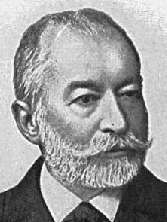 D. Sturdza |
Sturdza, (Print [Prince]) Mihail (R.) (b. Aug. 28, 1886 - d. Feb. 5, 1980, Madrid, Spain), foreign minister of Romania (1940). He was also minister to Latvia, Estonia, and Finland (1932-35) and Denmark (1938-39).
Sturdza, Skarlat (Dmitriyevich) (b. May 8, 1750 - d. April 8, 1816), governor of Bessarabia (1812-13); grandson of Grigore II Matei Ghica.
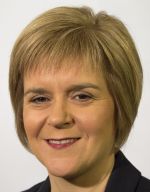 Sturgeon |
Sturges Bourne, William, original surname (until 1803) Sturges (b. Nov. 7, 1769 - d. Feb. 1, 1845, Testwood House, near Southampton, England), British home secretary (1827). He was also first commissioner of woods and forests (1827-28).
Stürgkh, Karl Reichsgraf von (count of) (b. Oct. 30, 1859, Graz, Austria - d. [assassinated] Oct. 21, 1916, Vienna, Austria), prime minister of Austria (1911-16). He was also education minister (1909-11).
Sturm, Lovro (b. May 19, 1938, Ljubljana, Yugoslavia [now in Slovenia] - d. Dec. 2, 2021), justice minister of Slovenia (2004-08). He was also president of the Constitutional Court (1997-98) and minister of education and sport (2000).
Sturrock, (Frederick) Claud (b. May 25, 1882, Newport, Scotland - d. Aug. 4, 1958, Cape Town, South Africa), finance minister of South Africa (1948). He was also minister without portfolio (1936-38) and minister of railways and harbours (1939-43) and transport (1943-48).
Sturrock, Sir John (Christian Ramsay) (b. March 20, 1875 - d. Feb. 13, 1937), acting governor of Uganda (1924-25) and resident commissioner of Basutoland (1926-35); knighted 1934.
Stürtz, Emil (b. Nov. 15, 1892, Wiebs, Ostpreussen, Prussia, Germany [now in Poland] - d. [in Soviet captivity] Dec. 31, 1945), Oberpräsident of Brandenburg (1936-45) and of Grenzmark Posen-Westpreussen (1936-38).
Sturua, Georgy (Fyodorovich) (b. June 18 [June 6, O.S.], 1884, Kulashi, Kutaisi province, Russia [now in Georgia] - d. April 1, 1956, Tbilisi, Georgian S.S.R.), chairman of the Presidium of the Supreme Soviet of the Georgian S.S.R. (1941-48). He was also executive secretary of the Communist Party committee of Abkhazia (1925-28) and people's commissar of justice (1929-31) and first deputy premier (1938-41) of the Georgian S.S.R.
Sturza, Eugen (b. Dec. 15, 1984), defense minister of Moldova (2017-19).
Sturza, Ioan Alexandru, byname Ionita Sandu Sturza (b. 1762 - d. Feb. 3, 1842, Iasi, Moldavia [now in Romania]), prince of Moldavia (1822-28).
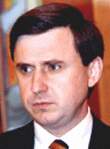 I. Sturza |
Sturza, Mihai Grigore (b. April 14, 1795, Iasi, Moldavia [now in Romania] - d. May 8, 1884, Paris, France), prince of Moldavia (1834-49).
Sturza, Vasile (b. March 13, 1953, Cabalesti, Moldavian S.S.R.), justice minister of Moldova (1994-98). He was also ambassador to Bulgaria, Albania, Serbia and Montenegro, and Macedonia (2003-05), Russia (2005-08), and Kazakhstan (2006-08).
Stuttaford, Richard (b. June 13, 1870, Cape Town, Cape Colony [now in South Africa] - d. Oct. 19, 1945, Stellenbosch, Cape [now in Western Cape], South Africa), interior minister of South Africa (1936-39). He was also minister without portfolio (1933-36) and minister of health (1936-39) and commerce and industries (1939-42).
Styles, John (Michael), acting governor of Saint Helena (2004).
Stylianidis, Christos (b. June 26, 1958, Nicosia, Cyprus), Cypriot/Greek politician. He was EU commissioner for humanitarian aid and crisis management (2014-19) and Greek minister of climate crisis and civil protection (2021-23) and shipping and island policy (2023-25).
Stylianidis, Evripidis (Stylianou) (b. April 8, 1966, Komotini, Greece), interior minister of Greece (2012-13). He was also minister of national education and religious affairs (2007-09) and transport and communications (2009).
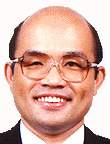 Su |
Suárez (Aranzolo), (José) Eduardo (Daniel Felipe) (b. Jan. 3, 1895, Texcoco, México, Mexico - d. Sept. 19, 1976, Mexico City, Mexico), finance minister of Mexico (1935-46). He was also ambassador to the United Kingdom (1965-70).
 Elías Suárez |
Suarez, Francis X(avier) (b. Oct. 6, 1977, Miami, Fla.), mayor of Miami (2017-25); son of Xavier Suarez. In June 2023 he joined the race for the 2024 Republican presidential nomination, dropping out already in August.
Suárez, Marco Fidel (b. April 23, 1855, Hatoviejo [now Bello], Antioquia, Colombia - d. April 3, 1927, Bogotá, Colombia), foreign minister (1891-95, 1914-17) and president (1918-22) of Colombia. He was also minister of education (1911-12).
Suarez, Xavier (Louis) (b. May 21, 1949, Las Villas, Cuba), mayor of Miami (1985-93, 1997-98).
Suárez Bastidas, Jaime (León) (b. Aug. 23, 1931, San Bernardo, Chile - d. Oct. 28, 1993, Santiago, Chile), interior minister of Chile (1972). He was also secretary-general of government (1970-72).
Suárez del Toro Rivero, Juan Manuel (b. Sept. 28, 1952, Las Palmas, Canarias, Spain), president of the International Federation of Red Cross and Red Crescent Societies (2001-09).
Suárez Fernández, Miguel (Ángel) (b. July 5, 1903, Placetas, Las Villas, Cuba - d. Jan. 22, 1968, New York City), foreign minister of Cuba (1951). He was also president of the Senate (1945-50).
Suárez Flamerich, Germán (b. April 10, 1907, Caracas, Venezuela - d. June 24, 1990, Caracas), chairman of the military junta of Venezuela (1950-52). He was ambassador to Peru in 1950.
 A. Suárez |
Suárez Inclán y González Villar, Félix (b. June 23, 1854, Avilés, Asturias, Spain - d. 1939, Madrid, Spain), finance minister of Spain (1912-13, 1923). He was also minister of agriculture, industry, commerce, and public works (1902).
Suárez Maldonado, José Manuel (b. June 17, 1966), acting governor of La Guaira (2021).
Suárez Mujica, Eduardo (b. April 23, 1859, Santiago, Chile - d. April 22, 1922, Santiago), foreign minister of Chile (1917-18). He was also minister of justice and education (1908-09), minister to Mexico and Cuba (1910-11), and minister (1911-14) and ambassador (1914-16) to the United States.
Suárez Pertierra, Gustavo (b. Feb. 27, 1949, Cudillero, Oviedo province, Spain), defense minister of Spain (1995-96). He was also minister of education and science (1993-95).
Suassuna, Francisco de Paula Cavalcanti de Albuquerque, barão e visconde de (b. June 10, 1793, Jaboatão [now Jaboatão dos Guararapes], Pernambuco, Brazil - d. Jan. 28, 1880, Recife, Pernambuco), president of Pernambuco (1826-27 [acting], 1828 [acting], 1832 [acting], 1834 [acting], 1835-37, 1838 [acting]) and war minister of Brazil (1840-41). He was made baron in 1841 and viscount in 1860.
Suassuna, João (Urbano Pessoa de Vasconcellos) (b. Jan. 19, 1886, Catolé do Rocha, Paraíba, Brazil - d. [assassinated] Oct. 9, 1930, Rio de Janeiro, Brazil), president of Paraíba (1924-28).
Suazo (Fernández), Marco Antonio (b. April 3, 1956, Santa Barbara, Honduras), Honduran diplomat. He was chargé d'affaires at the United Nations (2002, 2007-08).
 P. Subianto |
Subin Pinkayan (b. June 16, 1934, Chiang Mai, Siam [now Thailand]), foreign minister of Thailand (1990). He was also minister of university affairs (1986-88) and commerce (1988-90).
Subotsin, Alyaksandr (Mikhailavich), Russian Aleksandr (Mikhailovich) Subbotin (b. May 23, 1976, Ruba, Vitebsk oblast, Belorussian S.S.R. [now Vitsebsk voblasts, Belarus]), a deputy prime minister of Belarus (2020-21). He was also chairman of the Executive Committee of Vitsebsk voblasts (2021-26).
Subowo, Eko (b. March 21, 1960, Yogyakarta, Indonesia), acting governor of Papua Barat (2017) and Sumatera Utara (2018).
 Subramaniam |
Subroto (b. Sept. 19, 1928, Surakarta, Netherlands East Indies [now Indonesia] - d. Dec. 20, 2022, Jakarta, Indonesia), secretary-general of OPEC (1988-94). He was also Indonesian minister of resettlement and cooperatives (1971-73), manpower, transmigration, and cooperatives (1973-78), and mines and energy (1978-88).
Suchai Charoenratanakul (b. Feb. 1, 1955), a deputy prime minister of Thailand (2005-06). He was also minister of public health (2005) and information and communication technology (acting, 2006).
Sucharda, Bohumil (b. April 20, 1914, Tuhan, Austria [now in Czech Republic] - d. February 2009), finance minister of Czechoslovakia (1967-69).
Sucharipa, Ernst (b. July 24, 1947, Vienna, Austria - d. June 20, 2005, Vienna), Austrian diplomat. He was permanent representative to the United Nations (1993-98) and ambassador to the United Kingdom (2004-05).
Suchart Chomklin (b. July 15, 1974), a deputy prime minister of Thailand (2025-26). He has also been minister of labour (2020-23) and natural resources and environment (2025- ).
Suchart Jaovisidha (b. April 21, 1940, Chiang Mai, Thailand - d. Oct. 22, 2009, Bangkok, Thailand), finance minister (2003-04) and a deputy prime minister (2004) of Thailand.
Suchart Thadathamrongvech (b. Aug. 8, 1952), finance minister of Thailand (2008). He was also leader of the Pheu Thai Party (2008) and minister of education (2012).
 Suchinda |
 Suchocka |
Suciu, Vasile-Daniel (b. Nov. 7, 1980, Bistrita, Romania), Romanian politician. He was president of the Chamber of Deputies (2024).
 Sucuoglu |  Sudani |
Sudani, Muhammad Shia al- (b. 1970, Baghdad, Iraq), prime minister of Iraq (2022-26). He was also governor of Maysan (2009-10) and minister of human rights (2010-14) and labour and social affairs (2014-17).
Sudarenkov, Valery (Vasilyevich) (b. June 13, 1940, Nizhny Gorky, Kaluga oblast, Russian S.F.S.R.), governor of Kaluga oblast (1996-2000). He was also first secretary of the party committees of Kaluga city (1984-86) and Kaluga oblast (1990-91) and a deputy premier of the Uzbek S.S.R. (1986-90).
Sudarsono (b. May 9, 1911, Salatiga, Netherlands East Indies [now in Jawa Tengah, Indonesia] - d. June 6, 1976, Jakarta, Indonesia), home affairs minister of Indonesia (1946). He was also a minister of state (1946-47) and ambassador to India (1950-53).
 J. Sudarsono | 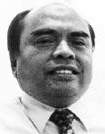 Sudibyo |
Sudharmono (b. March 12, 1927, Gresik, Netherlands East Indies [now in Jawa Timur, Indonesia] - d. Jan. 25, 2006, Jakarta, Indonesia), vice president of Indonesia (1988-93). He was also acting minister of information (1977-78) and home affairs (1982-83) and chairman of Golkar (1983-88).
Sudibyo, Bambang (b. Oct. 8, 1952, Temanggung, Jawa Tengah, Indonesia), finance minister of Indonesia (1999-2000). He was chairman of the economic advisory board of the National Mandate Party and a member of the board of directors of the Centre for Strategy and Policy Studies in Yogyakarta. He was also on the board of the leading Muslim organization Muhammadiyah. In 2004-09 he was minister of national education.
Sudiro (b. April 24, 1911, Yogyakarta, Netherlands East Indies [now Indonesia] - d. April 12, 1992, Jakarta, Indonesia), governor of Sulawesi (1951-53) and Jakarta (1953-60).
Sudiyenko, Iosif (Mikhailovich) (b. Aug. 8 [July 27, O.S.], 1830, Ochkino, Chernigov province, Russia [now in Sumy oblast, Ukraine] - d. Dec. 17 [Dec. 5, O.S.], 1892, Moscow, Russia), governor of Vladimir (1876-92); grandson of Mikhail Miklashevsky.
Sudrajat, Edi (b. April 22, 1938, Jambi, Netherlands East Indies [now Indonesia] - d. Dec. 1, 2006, Jakarta, Indonesia), defense minister of Indonesia (1993-98). Earlier in his career, he fought Communist activists and separatist insurgencies in Irian Jaya and Maluku. He was once considered a prime candidate to become Suharto's vice president, but the staunch nationalist was destined to remain a military man. He was army chief of staff in 1988-93. He won praise for calling on soldiers to remain professional in their duties, to protect citizens and not to use their power to pursue business interests.
Sudre, Camille (b. 1948), president of the Regional Council of Réunion (1992-93).
Sudre, Margie, byname of Marguerite Sudre, née Demaiche (b. Oct. 17, 1943, Vinh, Vietnam), president of the Regional Council of Réunion (1993-98); wife of Camille Sudre.
Sudreau, Pierre (b. May 13, 1919, Paris, France - d. Jan. 22, 2012, Paris), president of the Regional Council of Centre (1976-79). He was also French minister of construction (1958-62) and education (1962) and mayor of Blois (1971-89).
Sudsai Hasdin (b. 1920? - d. Aug. 12, 2001), Thai political figure. A major general in the cavalry, he founded the Red Gaurs in 1974 after student protests toppled military dictator Thanom Kittikachorn and forced him into exile. It was one of several vigilante groups backed by conservatives in the military and the ruling class afraid of a Communist takeover. The Red Gaur, made up mostly vocational school students, served as shock troops in attacking left-wing activists and breaking up their meetings. The group also took part in a raid on Thammasat University in October 1976, when students were protesting Thanom's return from exile. About 100 protesters were lynched, shot, or burned to death, and the disorder was used as an excuse for the military to oust a democratically elected government. Security agencies mostly turned a blind eye to the often activities of the Red Gaurs and other vigilantes. Dozens of left-wing activists were assassinated in the 1973-76 period. The Red Gaur gradually faded from the political scene after 1976, and Sudsai later served as head of the Express Transportation Organization, a state enterprise, as a cabinet minister, and as a senator.
Suebu, Barnabas, byname Bas Suebu (b. April 29, 1946, Sentani, Netherlands East Indies [now in Papua, Indonesia]) governor of Irian Jaya (1988-93) and Papua (2006-11). He was also Indonesian ambassador to Mexico, Honduras, and Panama (1999-2002).
Sued Ismail, Amri: see Ismail, Amri Sued.
Suematsu, Kencho, in full Shishaku (Viscount) Kencho Suematsu (b. Sept. 30 [Aug. 20, lunar calendar], 1855, Buzen province [in present Fukuoka prefecture], Japan - d. Oct. 5, 1920), home affairs minister of Japan (1900-01); son-in-law of Hirobumi Ito. He was also minister of communications (1898). He was made baron (1895) and viscount (1907).
Sueno, Ismael (Dres), byname Mike Sueno (b. July 23, 1947, Koronadal, Cotabato [now in South Cotabato], Philippines), interior secretary of the Philippines (2016-17). He was also mayor of Koronadal (1980-86) and governor of South Cotabato (1986-92).
Suescún Monroy, Eduardo (b. April 4, 1934, El Cocuy, Boyacá, Colombia - d. Nov. 7, 2019, Bogotá, Colombia), justice minister of Colombia (1986-87). He was also ambassador to Switzerland (1987-88) and Hungary (1988-91).
Suetsugu, Nobumasa (b. June 30, 1880, Yamaguchi prefecture, Japan - d. Dec. 29, 1944, Tokyo, Japan), home affairs minister of Japan (1937-39).
Sufahriadi, Rudy (b. Aug. 23, 1965, Cimahi, Jawa Barat, Indonesia), acting governor of Papua Selatan (2024-25).
Sufian Ahmed (Beker) (b. May 10, 1958, Asbe Teferi, Ethiopia), finance minister of Ethiopia (1995-2015). He was also economic advisor of the prime minister (2015-17).
Suga, Tatsuro (b. Sept. 29, 1924 - d. Jan. 17, 2015), governor of Kagoshima (1996-2004).
 Y. Suga |
Suger (Cofiño), (José) Eduardo (b. Nov. 29, 1938, Zürich, Switzerland), Guatemalan presidential candidate (2003, 2007, 2011).
Sugihara, Arata (b. Aug. 28, 1899, Yamauchi [now part of Takeo], Saga, Japan - d. Jan. 20, 1982), director-general of the Defense Agency of Japan (1955).
Sugimoto, Tatsuji (b. July 31, 1962), governor of Fukui (2019-25).
 Sugiono |
Sugita, Teiichi (b. June 30 [June 2, lunar calendar], 1851, Echizen [now in Fukui prefecture], Japan - d. March 23, 1929, Tokyo, Japan), Japanese politician. He was governor of Hokkaido (1898) and speaker of the House of Representatives (1906-08).
Sugito (b. June 2, 1972, Ponorogo, Jawa Timur, Indonesia), acting governor of Bangka Belitung (2024-25).
Sugiura, Seiken (b. July 26, 1934, Okazaki, Aichi, Japan), justice minister of Japan (2005-06).
Sugiyama, Gen, also called Hajime Sugiyama (b. Jan. 2, 1880, Kokura, Fukuoka, Japan - d. [suicide] Sept. 12, 1945, Tokyo, Japan), war minister of Japan (1937-38, 1944-45). He was also chief of the general staff (1940-44).
Sugiyama, Peter L(awrence Naoya) (b. April 19, 1943 - d. June 10, 2007), Palauan presidential candidate (2000). He was Senate president in 1993-96.
Suhak, Lyudmyla (Petrivna) (b. Jan. 6, 1987, Bershad, Vinnitsa oblast, Ukrainian S.S.R. [now Vinnytsya oblast, Ukraine]), acting justice minister of Ukraine (2025-26).
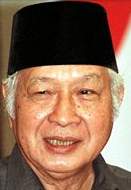 Suharto |
Suherman, Gatot (b. Jan. 1, 1929, Yogyakarta, Netherlands East Indies [now Indonesia] - d. Feb. 16, 2007, Mataram, Nusa Tenggara Barat, Indonesia), governor of Nusa Tenggara Barat (1978-88).
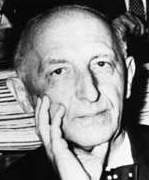 Suhr |
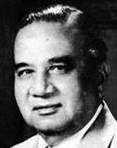 Suhrawardy |
Suica, Dubravka, née Luetic (b. May 20, 1957, Dubrovnik, Croatia), Croatian politician. She has been mayor of Dubrovnik (2001-09), a vice president of the European Commission (2019-24), and EU commissioner for the Mediterranean (2024- ).
Suissa, Eli(yahu) (b. 1956, Morocco), interior minister of Israel (1996-99). He was also minister of religious affairs (1996-97, 1998-99), national infrastructure (1999-2000), and Jerusalem affairs (2001-02, 2002-03).
Suja, Stanislav (b. Nov. 13, 1940, Víglas, Slovakia), Czechoslovak diplomat. He was permanent representative to the United Nations (1981-83) and ambassador to the United States (1983-85).
Suk Chati Nakrob, also called Luang Chati Nakrob (b. 1892 - d. ...), defense minister of Thailand (1947-49).
Sukala, Valyantsin, Russian Valentin (Olegovich) Sukalo (b. Aug. 16, 1942, Minsk, Belorussian S.S.R.), justice minister of the Belorussian S.S.R. (1988-89) and Belarus (1994-97). From 1997 he is chairman of the Supreme Court.
Sükan, Mehmet Faruk (b. 1921, Karaman, Turkey - d. Jan. 3, 2005, Ankara, Turkey), interior minister of Turkey (1965-69). He was also mayor of Eregli (1957-60), minister of health (1965), and a deputy prime minister (1978-79).
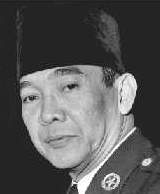 Sukarno |
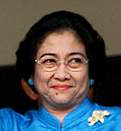 Sukarnoputri |
Sukati, Samuel Thornton Msindazwe (b. June 11, 1910, Manzini district, Swaziland [now Eswatini] - d. March 22, 1977), Swazi official. He was speaker of the House of Assembly (1967-68), permanent representative to the United Nations (1968-70), ambassador to the United States and high commissioner to Canada (1968-73), and ambassador to Mozambique (1975-77).
Sukavich Rangsitpol (b. Dec. 5, 1935, Bangkok, Siam [now Thailand]), a deputy prime minister of Thailand (1994, 1996-97). He was also minister of education (1995-97).
Suker, Ivan (b. Nov. 12, 1957, Gornji Rujani, Bosnia and Herzegovina - d. Sept. 5, 2023), finance minister of Croatia (2003-10). He was also a deputy prime minister (2009-10).
Sukhadia, Mohan Lal (b. July 31, 1916, Jhalawar [now in Rajasthan], India - d. Feb. 2, 1982, Bikaner, Rajasthan, India), chief minister of Rajasthan (1954-67, 1967-71) and governor of Karnataka (1972-76), Andhra Pradesh (1976), and Tamil Nadu (1976-77).
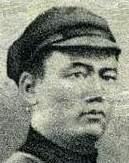 Sükhbaatar |
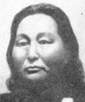 Sükhbaataryn |
Sukhee, Sukhbold (b. Oct. 30, 1976, Orkhontuul soum, Selenge province, Mongolia), Mongolian diplomat. He was permanent representative to the United Nations (2015-20). In 2024 he was appointed ambassador to South Korea.
Sukhikh, Valery (Aleksandrovich) (b. May 29, 1965, Perm, Russian S.F.S.R.), chairman of the government of Perm kray (2008-11).
Sukhodolsky, Sergey (Petrovich) (b. 1845 - d. af. 1907), governor of Volyn (1892-96) and Kovno (1896-99).
Sukhomlinov, Nikolay (Aleksandrovich) (b. Aug. 8 [July 27, O.S.], 1850, Volyn province, Russia [now in Ukraine] - d. 1918), governor-general of the Steppes (1915-17); brother of Vladimir Sukhomlinov. He was also governor of Orenburg (1911-15).
Sukhomlinov, Vladimir (Aleksandrovich) (b. Aug. 16 [Aug. 4, O.S.], 1848, Telsze, Russia [now Telsiai, Lithuania] - d. Feb. 2, 1926, Berlin, Germany), governor-general of Kiev, Podolia, and Volyn (1905-08) and war minister of Russia (1909-15). He was also chief of the General Staff (1908-09).
Sukhorukova, Vera (Nikolayevna) (b. Aug. 10, 1951, Vydrikha, Vostochno-Kazakhstan oblast, Kazakh S.S.R. - d. Dec. 19, 2020), acting head of Vostochno-Kazakhstan oblast (1997). She was also mayor of Ust-Kamenogorsk (1999-2003).
Sukhotin, Nikolay (Nikolayevich) (b. Nov. 9 [Oct. 28, O.S.], 1847 - d. 1918), governor-general of the Steppes (1901-06).
Sukhov, Aleksey (Nikolayevich) (b. 1903, Moscow, Russia - d. Nov. 11, 1974), Soviet politician. He was people's commissar/minister of agriculture (1939) and social security (1943-52) and a deputy premier (1939-43) of the Russian S.F.S.R.
Sukhozanet, Nikolay (Onufriyevich) (b. 1794 - d. July 22, 1871, near Kaluga, Russia), war minister of Russia (1856-61). He was also acting viceroy of Poland (1861).
 Sukhu |
Sukich Nimmanheminda (b. Nov. 25, 1906, Chiang Mai, Siam [now Thailand] - d. Feb. 2, 1976, Bangkok, Thailand), a deputy prime minister of Thailand (1958, 1973-74). He was also minister of industry (1949-52), economic affairs (1957-58), and education (1969-71) and ambassador to India, Nepal, Ceylon, and Afghanistan (1959-63) and the United States (1963-67).
 Suklje |
Suknarov, Nikola (Hristov) (b. Dec. 21, 1848, Svishtov, Ottoman Empire [now in Bulgaria] - d. Oct. 10, 1894, Sofia, Bulgaria), interior minister of Bulgaria (1885). He was also chairman of the National Assembly (1880) and mayor of Sofia (1883).
Sukovic, Mijat (b. Feb. 13, 1930, Lipovo, near Kolasin, Yugoslavia [now in Montenegro] - d. [following traffic accident] Nov. 16, 2011, Podgorica, Montenegro), a deputy premier of Yugoslavia (1982-86).
Sukrija, Ali, Albanian Ali Shukri (b. Sept. 12, 1919, Kosovska Mitrovica, Yugoslavia [now in Kosovo, Serbia] - d. Jan. 6, 2005, Belgrade, Serbia), chairman of the Executive Council (1963-67) and president of the Presidency (1981-82) of Kosovo and president of the Presidium of the League of Communists of Yugoslavia (1984-85).
Sukselainen, Vieno Johannes, byname Jussi Sukselainen (b. Oct. 12, 1906, Paimio, Finland - d. April 6, 1995, Espoo, Finland), finance minister (1950-51, 1954), interior minister (1951-53), prime minister (1957, 1959-61), and acting foreign minister (1961) of Finland. He was also speaker of parliament (1956-57, 1958, 1968-70, 1972-76) and president of the Nordic Council (1972, 1977).
Sukthankar, Yeshwant Narayan (b. Aug. 24, 1897 - d. 1973), governor of Orissa (1957-62). He was also cabinet secretary of India (1953-57).
Sukumpol Suwanatat (b. Aug. 17, 1951), defense minister of Thailand (2012-13). He was also minister of transport (2011-12).
Sukys, Raimondas (b. Oct. 27, 1966, Siauliai, Lithuanian S.S.R.), interior minister of Lithuania (2006-07 and [acting] 2012). In 2007 he resigned along with police commissioner-general Vytautas Grigaravicius a few days after an automobile collision in Skuodas in which a police officer killed three ten-year-old boys. He was minister of health in 2010-12.
Sulaiman, Andi Amran (b. April 27, 1968, Bone, Sulawesi Selatan, Indonesia), Indonesian politician. He has been agriculture minister (2014-19, 2023- ).
Sulaiman, Andi Sudirman (b. Sept. 25, 1983, Bone, Sulawesi Selatan, Indonesia), governor of Sulawesi Selatan (2021-23, 2025- ); brother of Andi Amran Sulaiman.
Sulayman, Hikmat (b. 1889, Baghdad, Ottoman Empire [now in Iraq] - d. 1964), prime minister of Iraq (1936-37). He was also speaker of parliament (1925) and minister of education (1925-26), interior (1926, 1933, 1936-37), and justice (1928-29).
Sule, (Mueen) Olayinka (b. May 4, 1948, in present Ogun state, Nigeria - d. Aug. 23, 2020, Lagos, Nigeria), administrator of Jigawa (1991-92).
Suleiman, Dan (b. July 30, 1942, Guyuk [now in Adamawa state], Nigeria - d. Feb. 1, 2023, Abuja, Nigeria), governor of Plateau (1976-78). He was also Nigerian ambassador to Russia (2004-08).
 M. Suleiman |
Suleiman, Muhammad Sedki, or Mohamed Sidky Soliman, Arabic Muhammad Sidqi Sulayman (b. 1919 - d. March 28, 1996), prime minister of Egypt (1966-67). He was also minister of the Aswan High Dam (1962-66), industry, electricity, and the Aswan High Dam (1967-68), energy and the Aswan High Dam (1968-70), a deputy prime minister (1967-68), and head of the Central Audit Organization (1971-78).
Suleiman bin Dato' Abdul Rahman, Tan Sri (b. Feb. 27, 1912, Johor Bahru, Johor [now in Malaysia] - d. Nov. 6, 1963, Melbourne, Vic.), interior minister (1957-61) and justice minister (1957-59) of Malaya; son of Dato' Abdul Rahman bin Mohamed Yasin. He was also minister of local government, housing, and town planning (1955-57) and high commissioner to Australia (1961-63). He was awarded the title Tan Sri in 1959.
Süleyman Refet Pasha, Arnavud (b. 1807 - d. December 1864), war minister of the Ottoman Empire (1845). He was also ambassador to France (1846-48), minister of commerce (1848-49) and navy (1849-51), and governor of Bursa (1852, 1856-61), Aleppo (1852-54), Aydin (1855-56), Damascus (1856), Adrianople (1861, 1864), and Vidin (1861-64).
Suleymenov, Kairbek (Shoshanovich) (b. May 12, 1949, Novosibirsk, Russian S.F.S.R.), interior minister of Kazakhstan (1995-2000, 2002-03). He was also secretary of the Security Council (2008-09).
Suleymenov, Olzhas (Omarovich) (b. May 18, 1936, Alma-Ata, Kazakh S.S.R. [now Almaty, Kazakhstan]), Kazakh politician. Also known as a writer, he was chairman of the State Committee for Cinematography of the Kazakh S.S.R. (1981-84) and ambassador to Italy, Greece, and Malta (1995-2001).
Suleymenov, Tuleutay (Skakovich) (b. Oct. 1, 1941, Semipalatinsk, Kazakh S.S.R.), foreign minister of Kazakhstan (1991-94). He was ambassador to the United States (1994-96), Hungary (1996-2001, also accredited to Poland, Bulgaria, Czech Republic, Slovakia, and Romania), Belgium (2001-03, also accredited to the Netherlands and Luxembourg), and Poland (2003-05).
Sulík, Richard (b. Jan. 12, 1968, Bratislava, Czechoslovakia [now in Slovakia]), a deputy prime minister and economy minister of Slovakia (2020-21, 2021-22). He was also speaker of the National Council (2010-11) and acting foreign minister (2020).
Sulima, Nikolay (Semyonovich) (b. 1777 - d. Nov. 2 [Oct. 21, O.S.], 1840, St. Petersburg, Russia), governor-general of East Siberia (1833-34) and West Siberia (1834-36).
Sulimov, Aleksey (Yegorovich) (b. 1893, Minyar [now in Chelyabinsk oblast], Russia - d. [suicide] 1938), executive secretary of the Communist Party committee of Votyak autonomous oblast (1923); brother of Danil Sulimov.
Sulimov, Danil (Yegorovich) (b. Dec. 22 [Dec. 10, O.S.], 1890, Minyar [now in Chelyabinsk oblast], Russia - d. [executed] Nov. 27, 1937), chairman of the Council of People's Commissars of the Russian S.F.S.R. (1930-37). He was also mayor of Perm (1918) and chairman of the Executive Committee (1923-26) and first secretary of the Communist Party committee (1926-27) of Uralsk oblast.
Suljkanovic, Jakub (b. Oct. 27, 1964, Srebrenik [now in Federation of Bosnia and Herzegovina]), premier of Tuzla canton (2018-19).
Sulkevich, Suleiman, byname of Matvey (Aleksandrovich) Sulkevich (b. July 20, 1865, Kemeyshi, Vilna province, Russia [now in Hrodna voblasts, Belarus] - d. [executed] July 15, 1920, Baku, Azerbaijan), head of the Crimean government under German occupation (1918).
Sullivan, Dan (b. June 16, 1951), mayor of Anchorage (2009-15); son of George Sullivan.
Sullivan, George (Murray) (b. March 31, 1922 - d. Sept. 23, 2009), mayor of Anchorage (1967-81).
Sullivan, James (b. April 22, 1744, Berwick, Massachusetts Bay [now in Maine] - d. Dec. 10, 1808, Boston, Mass.), governor of Massachusetts (1807-08).
Sullivan, John (b. Feb. 17, 1740, Somersworth, New Hampshire - d. Jan. 23, 1795, Durham, N.H.), president of New Hampshire (1786-88, 1789-90).
Sullivan, John (Joseph) (b. Nov. 20, 1959, Boston, Mass.), U.S. acting secretary of state (2018). He was also ambassador to Russia (2020-22).
Sullivan, Mike, byname of Michael John Sullivan (b. Sept. 22, 1939, Omaha, Neb.), governor of Wyoming (1987-95).
Sullivan, Reginald H. (b. March 10, 1876, Indianapolis, Ind. - d. Jan. 30, 1980, Indianapolis), mayor of Indianapolis (1930-35, 1939-43); son of Thomas L. Sullivan.
Sullivan, Sam (Christopher) (b. Nov. 13, 1959, Vancouver, B.C.), mayor of Vancouver (2005-08).
Sullivan, Thomas L(ennox) (b. Oct. 6, 1846, Indianapolis, Ind. - d. July 9, 1936, Indianapolis), mayor of Indianapolis (1890-93).
Sultan (ibn Abdul Aziz Al Saud) (b. Jan. 5, 1928 [official date], Riyadh, Nejd [now in Saudi Arabia] - d. Oct. 22, 2011, New York City), defense minister (1962-2011) and crown prince (2005-11) of Saudi Arabia; son of Abdul Aziz; brother of Fahd; half-brother of Abdullah. He was also governor of Riyadh (1947-53) and minister of agriculture (1953-55) and communications (1955-60).
Sultan (Ismail), Ahmed (b. April 14, 1923, Port Said, Egypt), a deputy prime minister of Egypt (1976-78). He was also governor of al-Minufiyah (1968-71) and minister of power (1971-76) and electric power and energy (1976-78).
Sultan, Kylychbek (Kamchyyevich), surname until 2018 Sultanov (b. Dec. 7, 1975), Kyrgyz politician. He has been minister of social development (2012-13) and ambassador to Malaysia (2014-16), South Korea (2017-18), and Pakistan (2025- ).
Sultan Abdol Majid Mirza, Prince, styled (from 1892) Ain ud-Daula (b. 1845 - d. Nov. 23, 1926), interior minister (1903-04, 1910-11) and prime minister (1915, 1917-18) of Persia; grandson of Fath Ali Qajar.
Sultan ibn Ahmad (ibn Abdul Aziz Al Saud), Saudi prince; son of Ahmad. He was ambassador to Bahrain (2019-23).
Sultangaziyev, Marat (Yeleusizovich) (b. Feb. 24, 1976, Karaturuk, Alma-Ata oblast, Kazakh S.S.R.), head of Almaty oblast (2022-26).
Sultanov, Bakhyt (Turlykhanovich) (b. Nov. 29, 1971, Alma-Ata, Kazakh S.S.R. [now Almaty, Kazakhstan]), finance minister of Kazakhstan (2013-18) and head of Astana/Nur-Sultan city (2018-19). He was also minister of economy and budget planning (2007-10) and trade and integration (2019-22) and a deputy prime minister (2013-14, 2022).
Sultanov, Fayzulla (Valeyevich) (b. Oct. 15, 1922, Baydavletova, Bashkir A.S.S.R., Russian S.F.S.R. - d. Nov. 24, 1992, Ufa, Bashkortostan, Russia), chairman of the Presidium of the Supreme Soviet of the Bashkir A.S.S.R. (1967-90).
Sultanov, Gamid (Gasan ogly) (b. May 26, 1889, Shinykh-Ayrum, Yelizavetpol province, Russia [now in Azerbaijan] - d. [executed] Jan. 21, 1938), chairman of the Council of People's Commissars of the Nakhichevan A.S.S.R. (1925-27). He was also people's commissar of interior (1920-21), industry and commerce (1923?-24?), and communal services (1930s) and director of the Central Statistic Bureau (1927-29) of the Azerbaijan S.S.R.
Sultanov, Kuanysh (Sultanovich) (b. May 12, 1945, Enbekshi, Taldy-Kurgan oblast, Kazakh S.S.R. [now in Almaty oblast, Kazakhstan]), Kazakh politician. He was minister of press and information (1991-93), a deputy prime minister (1993-94), and ambassador to China (1995-2001).
Sultanov, Marat (Abdyrazakovich) (b. Dec. 5, 1960, Frunze, Kirgiz S.S.R. [now Bishkek, Kyrgyzstan]), finance minister of Kyrgyzstan (1998-99, 2009-10).
Sultanov, Rasul (Dzhanbekovich) (b. July 22, 1973, Astrakhan, Russian S.F.S.R.), chairman of the government of Astrakhan oblast (2017-19).
Sultanov, Suleyman (Mursal ogly) (b. 1902, Derbent [now in Dagestan], Russia - d. July 1975, Baku, Azerbaijan S.S.R.), first secretary of the Communist Party committee of the Nakhichevan A.S.S.R. (1937). He was also first secretary of the party committee of Nukha city (1937).
Sultanov, Yerik (Khamzinovich) (b. March 24, 1956, Sergeyevsky rayon, Severo-Kazakhstan oblast, Kazakh S.S.R.), head of Severo-Kazakhstan oblast (2014-17).
Sultonov, Otkir (Tohtamurodovich), Russian Utkir (Tukhtamuradovich) Sultanov (b. July 14, 1939 - d. Nov. 29, 2015, Tashkent, Uzbekistan), prime minister of Uzbekistan (1995-2003). He was also minister of foreign economic relations (1992-95).
Sultygov, Magomed (Akhmedovich) (b. Jan. 28, 1944), acting head of the Provisional Administration of Ingushetia (1992-93).
 Sulyok |
Sulzer, William (b. March 18, 1863, Elizabeth, N.J. - d. Nov. 6, 1941, New York City), governor of New York (1913).
Sum Hieng (b. March 25, 1898, Triton, Cochinchina, French Indochina [now Chau Doc, Vietnam] - d. c. 1965), interior minister (1945, 1946) and deputy prime minister (1949-50) of Cambodia. He was also minister of religion and fine arts (1945-46) and economic affairs and planning (1949-50).
Sumah, Adikalie Foday (b. May 23, 1960), Sierra Leonean diplomat. He was ambassador to Guinea, Mali, and Niger (2009-16) and permanent representative to the United Nations (2016-18).
Sumaidy, Samir (Shakir Mahmood), also spelled Sumaidaie (b. 1943, Baghdad, Iraq), interior minister of Iraq (2004). He was also permanent representative to the United Nations (2004-06) and ambassador to the United States (2006-12).
Sumangerukka, Andi (b. March 11, 1963, Makassar, Sulawesi Selatan dan Tenggara [now in Sulawesi Selatan], Indonesia), governor of Sulawesi Tenggara (2025- ).
Sumarlin, Johannes B(aptista) (b. Dec. 7, 1932, Ngadirejo, Netherlands East Indies [now in Jawa Timur, Indonesia] - d. Feb. 6, 2020, Jakarta, Indonesia), finance minister of Indonesia (1988-93). He was also minister of state for administrative reforms (1973-83), head of the National Development Planning Agency (1983-88), and chair of the Audit Board (1993-98).
Sumarno (Sosroatmodjo), also spelled Soemarno (b. April 24, 1911, Jember, Netherlands East Indies [now in Jawa Timur, Indonesia] - d. Jan. 9, 1991, Jakarta, Indonesia), governor of Jakarta (1960-64, 1965-66) and home affairs minister of Indonesia (1964-66).
Sumarno, also spelled Soemarno (b. July 4, 1913, Klaten, Netherlands East Indies [now in Jawa Tengah, Indonesia]), finance minister of Indonesia (1963-66). He was also governor of Bank Indonesia (1960-63).
Sumarokov, Pavel (Ivanovich) (b. 1760 - d. Oct. 6, 1846), governor of Vitebsk (1808-12) and Novgorod (1812-13).
Sumarokov-Elston, Graf Feliks (Nikolayevich) (b. Feb. 5 [Jan. 24, O.S.], 1820 - d. Nov. 11 [Oct. 30, O.S.], 1877, Kharkov, Russia [now Kharkiv, Ukraine]), governor of Kuban (1863-69); grandson-in-law of Pavel Sumarokov.
Sumarsono, Soni (b. Feb. 22, 1959, Tulungagung, Jawa Timur, Indonesia), acting governor of Sulawesi Utara (2015-16), Jakarta (2016-17, 2017), and Sulawesi Selatan (2018).
Sumauskas, Motiejus, Russian Motyeyus (Yuozovich) Shumauskas (b. Nov. 15 [Nov. 2, O.S.], 1905, Kovno, Russia [now Kaunas, Lithuania] - d. May 28, 1982, Vilnius, Lithuanian S.S.R.), chairman of the Council of Ministers (1956-67) and chairman of the Presidium of the Supreme Soviet (1967-75) of the Lithuanian S.S.R. He was also people's commissar of local industry (1940-41), a deputy premier (1941-47), chairman of the State Planning Committee (1944-50), first secretary of the party committee of Siauliai oblast (1950-53), and first deputy premier (1953-54).
 Sumaye |
Sumer, (Mustafa) Nurullah Esat (b. 1899, Smyrna, Ottoman Empire [now Izmir, Turkey] - d. Sept. 30, 1973, Istanbul, Turkey), finance minister of Turkey (1944-46).
Sumi, Eisaku (b. May 20, 1920, Uozu, Toyama, Japan - d. Dec. 20, 1986), justice minister of Japan (1983-84).
Sumin, Pyotr (Ivanovich) (b. June 21, 1946, Sanarka, Chelyabinsk oblast, Russian S.F.S.R. - d. Jan. 6, 2011, Chelyabinsk, Russia), chairman of the executive committee (1990-91) and head of the administration (1997-2010) of Chelyabinsk oblast. He was also mayor of Chelyabinsk (1984-87).
 Suminwa |
Sumita, Nobuyoshi (b. Feb. 20, 1935 - d. June 13, 2009), governor of Shimane (1987-2007).
 Summerfield |
Summers, Sir Gerald Henry (b. Oct. 12, 1885 - d. Nov. 29, 1925), governor of British Somaliland (1922-25); knighted 1925.
Summers, Lawrence H(enry) (b. Nov. 30, 1954, New Haven, Conn.), U.S. treasury secretary (1999-2001).
Summers, Susan, formerly Susan Faed, née Williams (b. June 7, 1933 - d. 2015), tenant of Jethou (1964-71).
Sumner, Charles (b. Jan. 6, 1811, Boston, Mass. - d. March 11, 1874, Washington, D.C.), U.S. politician. He took little interest in politics until the threatened extension of slavery over newly acquired territory. In 1848 he joined with others to form the Free Soil Party. Nominated for Congress, he was defeated by the Whig candidate but in 1851 was elected to the U.S. Senate by the combined Free Soil and Democratic votes of the Massachusetts legislature, a post he held for the rest of his life. Alone in the Senate as the uncompromising opponent of slavery, in 1856 he delivered his notable anti-slavery speech called "The Crime against Kansas." A master of invective, he singled out as his special victim Sen. Andrew P. Butler of South Carolina, who was not there to reply. Two days later he was severely beaten with a cane in the Senate chamber by Rep. Preston S. Brooks from South Carolina, a cousin of Butler, leaving him incapacitated for nearly four years. The secession of the southern states left the Republican Party (which he had been important in organizing) in full control of both houses of Congress and in 1861 he was elected chairman of the Senate committee on foreign relations. He supported the Reconstruction policies of the Radical Republicans, favoured the impeachment of Pres. Andrew Johnson (1868), and opposed Pres. Ulysses S. Grant's project for the acquisition of Santo Domingo (1870). His criticisms of Grant's administration created a rift with leading Republican politicians and led to his removal (1871) from the chairmanship of the foreign affairs committee. He then helped organize the short-lived Liberal Republican Party and supported Horace Greeley as candidate for the presidency in 1872.
Sumner, Edwin V(ose) (b. Jan. 30, 1797, Boston, Mass. - d. March 21, 1863, Syracuse, N.Y.), acting military governor of New Mexico (1852).
Sumner, Increase (b. Nov. 27, 1746, Roxbury, Massachusetts Bay [now Mass.] - d. June 7, 1799, Roxbury), governor of Massachusetts (1797-99).
Sumulong, Juan (Marquez) (b. Dec. 27, 1875, Antipolo, Rizal, Philippines - d. Jan. 9, 1942, Manila, Philippines), Philippine presidential candidate (1941).
Sun Baoqi (b. 1867, Hangzhou, Zhejiang, China - d. Feb. 3, 1931, Shanghai, China), military governor of Shandong (1911) and foreign minister (1913-15), acting premier (1914), finance minister (1916), and premier (1924) of China.
Sun Chanthol (b. June 30, 1956, Koh Thom district, Kandal province, Cambodia), a deputy prime minister of Cambodia (2023- ); son of Men Sam An. He was also minister of public works and transport (2004-08, 2016-23) and commerce (2013-16).
Sun Chuanfang (b. April 17, 1885, Licheng [now part of Jinan], Shandong, China - d. [assassinated] Nov. 13, 1935, Tianjin, China), military governor of Fujian (1923-24), Zhejiang (1924-26), and Jiangsu (1925-27).
Sun Chunlan (b. May 24, 1950, Raoyang county, Hebei, China), a vice premier of China (2018-23). She was also secretary of the Communist Party committees of Dalian city (2001-05), Fujian (2009-12), and Tianjin (2012-14).
Sun Daoren (b. Feb. 1, 1867, Cili, Hunan, China - d. August 1932, Xiamen, Fujian, China), military governor of Fujian (1911-13). Having become civil governor of Fujian in the late Qing period, he was forced to declare independence and joined the Chinese Revolutionary Alliance when the revolutionary activists controlled the provincial government. He then was made military governor. In 1912 he was named president's councillor.
Sun Du (b. May 5, 1898, Luliang, Yunnan, China - d. April 1967), governor of Rehe (1948-49).
Sun Duosen (b. Jan. 23, 1867, Shou county, Anhui, China - d. July 6, 1919, Tianjin, China), governor of Anhui (1913). He kept devoting himself to the enterprises of China in the late Qing dynasty, believing this could save the country. Later he became a supporter of Yuan Shikai. His earliest post after the founding of the republic was president of the Bank of China. His governorship of Anhui was a failure as he fled from office when Kuomintang member Bai Wenwei regained control of the province. He then returned to business as general manager of the Zhongfu Bank.
Sun Hongyi (b. Nov. 17, 1872, Tianjin, China - d. March 26, 1936, Shanghai, China), education minister (1916) and interior minister (1916) of China. He was an official subordinated to Yuan Shikai in his early years. After the establishment of the republic, he assisted in the foundation of the Chinese United Republican Party, the Democratic Party, and later the pro-Yuan Progressive Party. He joined the Constitutional movement in 1917, turning against Duan Qirui, who refused to validate the abolished constitution. In 1920, he became a senior adviser in the southern government.
Sun Jian (b. 1936 - d. November 1997, Tianjin, China), a vice premier of China (1975-78).
Sun Joun Yung (b. June 16, 1939), South Korean diplomat. He was ambassador to Czechoslovakia (1990-92) and permanent representative to the United Nations (2000-03).
Sun Liangcheng (b. June 22, 1893, Jinghai, Hebei [now in Tianjin municipality], China - d. May 10, 1951, Suzhou, Jiangsu, China), chairman of the government of Shandong (1928).
Sun Liechen (b. June 12, 1873, Heishan, Liaoning, China - d. April 25, 1924), governor of Heilongjiang (1919-21) and Jilin (1921-24). A general, he was a follower of Zhang Zuolin since his times as a bandit gang member in the late Qing dynasty. He held several important posts in the northeastern region dominated by Zhang after the founding of the republic. He was famous for his outstanding political and military talent and was considered the top adviser of Zhang.
 Sun Yat-sen |
Sun Yue (b. 1878, Gaoyang, Hebei, China - d. May 27, 1928, Shanghai, China), civil governor of Henan (1924-25), military (1925) and civil (1926-27) governor of Shaanxi, and military and civil governor of Hebei (1925-26).
Sun Yun-suan, Pinyin Sun Yunxuan (b. Nov. 11, 1913, Penglai, Shandong, China - d. Feb. 15, 2006, Taipei, Taiwan), premier of Taiwan (1978-84). Previously he served as minister of communications (1967-69) and economic affairs (1969-78). Sun, who oversaw Taiwan's transition from an agricultural society to an export powerhouse, was widely believed to have been handpicked by Pres. Chiang Ching-kuo to be his successor, but suffered a stroke in 1984 that ended his political career.
 Sunak |
 Sunario |
Sunarjo, R(aden) H(aji) A(hmad) (b. May 15, 1908, Sragen, Netherlands East Indies [now in Jawa Tengah, Indonesia] - d. Feb. 14, 1996, Yogyakarta, Indonesia), home affairs minister of Indonesia (1954-56, 1956-57). He was also minister of justice (acting, 1957) and agrarian affairs (1957-59).
Sunawin Wiwat, Luang (b. 1894 - d. ...), interior minister of Thailand (1953-55). He was also minister of agriculture (1952-53) and cooperatives (1955-57).
 Sunay |
Sundarapipit, Phya (b. July 25, 1891, Thonburi [now part of Bangkok], Siam [now Thailand] - d. May 12, 1973), interior minister of Thailand (1947). He was also minister of public health (1946-47).
Sundby, Jon (b. June 8, 1883, Vestby, Akershus, Norway - d. Dec. 14, 1972, Vestby), finance minister of Norway (1932-33). He was also minister of agriculture (1931-32).
Sunde, Arne (Toralf) (b. Dec. 6, 1883, Kristiania [now Oslo], Norway - d. July 30, 1972, Oslo), Norwegian politician. He was minister of justice (1930-31, 1933-35), provisioning (1940-42), and shipping (1942-45) and permanent representative to the United Nations (1949-52).
Sunde, Elias (b. Oct. 2, 1851, Flekkefjord, Lister og Mandal amt [now in Agder fylke], Norway - d. July 2, 1910, Bad Nauheim, Germany), finance minister of Norway (1898-1900, 1901-03). He was also mayor of Kristiania (1895-97).
Sunde, Hjalmar Inge (b. Dec. 29, 1937), governor of Aust-Agder (1995-2007).
Sundelius, Ove (Roger Salomon) (b. June 24, 1921, Kristianstad, Kristianstad [now in Skåne], Sweden - d. May 27, 2015), acting governor of Örebro (1980).
Sunderland, Charles Spencer, (3rd) Earl of (b. April 23, 1675 - d. April 19, 1722, London, England), lord lieutenant of Ireland (1714-17). He was also British secretary of state for the Southern Department (1706-10) and the Northern Department (1717-18), lord privy seal (1715-16), lord president of the council (1717-19), and first lord of the treasury (1718-21). He succeeded as earl in 1702.
Sundlo, Konrad (Bertram Holm) (b. Jan. 1, 1880, Kristiansand, Lister og Mandal amt [now in Agder fylke], Norway - d. 1965), governor of Sogn og Fjordane (1944-45).
Sundlun, Bruce G(eorge) (b. Jan. 19, 1920, Providence, R.I. - d. July 21, 2011, Jamestown, R.I.), governor of Rhode Island (1991-95).
 Sundquist |
Sundqvist, Ulf (Ludvig) (b. Feb. 22, 1945, Sipoo, Finland - d. April 22, 2023, Helsinki, Finland), Finnish politician. He was minister of education (1972-74, 1974-75) and trade and industry (1979-81) and chairman of the Social Democratic Party (1991-93).
Sundstein, Jógvan (b. May 25, 1933, Tórshavn, Faeroe Islands - d. July 8, 2024, Holbæk, Denmark), prime minister of the Faeroe Islands (1989-91). He was also chairman of the Lagting (1980-84, 1988-89) and minister of finance and local government (1991-93).
Sungurlu, (Mahmut) Oltan (b. Aug. 24, 1936, Gümüshane, Turkey), justice minister (1986-87, 1987-88, 1989-91, 1997-98) and defense minister (1996) of Turkey.
 Sunia |
Sunila, Juho (Emil), originally Johan Emil Sunila (b. Aug. 16, 1875, Liminka, Finland - d. Oct. 2, 1936, Helsinki, Finland), prime minister of Finland (1927-28, 1931-32). He was also minister of agriculture (1922-24, 1925-26) and speaker of parliament (1930).
Suntai, Danbaba (Danfulani) (b. June 30, 1961, Suntai village, Bali local government area [now in Taraba state], Nigeria - d. June 28, 2017, Orlando, Fla.), governor of Taraba (2007-15). He survived a plane crash in 2012 and was thereafter incapacitated from running the state.
Sunthorn Hongladarom (b. Aug. 23, 1912, Amphoe Phayuha Khiri, Nakhon Sawan province, Siam [now Thailand] - d. Sept. 16, 2005), finance minister of Thailand (1959-67) and secretary-general of the Southeast Asia Treaty Organization (1972-77). He was also Thai ambassador to Malaya (1957-59), the United Kingdom (1968-69), and the United States (1969-72), economy minister (1959, 1965-68), and a deputy prime minister (1977-79).
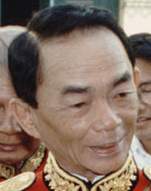 Sunthorn K. |
Sununu, Chris(topher T.) (b. Nov. 5, 1974, Boston, Mass.), governor of New Hampshire (2017-25); son of John Sununu.
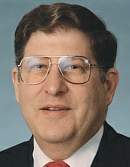 J. Sununu |
Suominen, Ilkka (Olavi) (b. April 8, 1939, Nakkila, Finland - d. May 23, 2022), Finnish politician. He was speaker of parliament (1987, 1991-94), minister of trade and industry (1987-91), and president of the Nordic Council (1992).
Suonio, Kaarina (Elisabeth) (b. Feb. 7, 1941, Helsinki, Finland), governor of Häme (1994-97). She was also Finnish minister of education (1982-86).
Suorttanen, Sulo (Elias) (b. Feb. 13, 1921, Valkeala, Finland - d. Sept. 24, 2005, Kouvola, Finland), defense minister of Finland (1966-70).
Supa, Nathaniel, home affairs minister of Solomon Islands (1995-96). He was also minister of health and medical services (1989-93, 1996-97) and commerce, industries, and employment (1996).
 Supachai |
Supattanapong Punmeechaow (b. 1960?), a deputy prime minister (and minister of energy) of Thailand (2020-23).
Suphajee Suthumpun (b. April 15, 1964), a deputy prime minister of Thailand (2026- ). She has also been minister of commerce (2025- ).
Suphat Suthatham (b. 1915 - d. 1984), finance minister of Thailand (1976-79).
Suphayok Kasem, Prince (b. 1872 - d. 1933), finance minister of Siam (1922-29, 1932).
Supinski, Leon (Wladyslaw) (b. Feb. 16, 1871, Golebiówka, Poland - d. March 2, 1950, Warsaw, Poland), justice minister of Poland (1918-19). He was also chairman of the Supreme Court (1929-39).
Suprajogi, (Dadang) (b. April 12, 1914, Bandung, Netherlands East Indies [now Indonesia] - d. Sept. 13, 1998, Jakarta, Indonesia), a deputy first minister of Indonesia (1962-63). He was also minister of state for economic stabilization (1958-59), minister of production (1959-63) and public works and energy (1962-66), and chairman of the Audit Board (1966-73).
Suprapto (b. Aug. 27, 1929, Jombang, Netherlands East Indies [now in Jawa Timur, Indonesia]), governor of Bengkulu (1979-89).
Supriyadi (b. April 13, 1923, Trenggalek, Netherlands East Indies [now in Jawa Timur, Indonesia] - d. 1945?), Indonesian rebel leader. He led an anti-Japanese revolt in Blitar in February 1945, after which he disappeared. Nevertheless, after the proclamation of Indonesian independence in August, he was appointed minister of security, and in October also commander of the armed forces. As he failed to appear, others were appointed to the positions in November.
Suprunyuk, Yevhen (Volodymyrovych) (b. Sept. 25, 1955, Tuapse, Krasnodar kray, Russian S.F.S.R.), chairman of parliament of Crimea (1995-96).
 Suquet |
Surachai Liengboonlertchai (b. Jan. 15, 1953, Bangkok, Thailand), Thai politician. He was acting speaker of the Senate (2014).
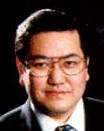 Surakiart |  Surapong |
Surapong Suebwonglee (b. May 2, 1957), finance minister and a deputy prime minister of Thailand (2008). He was also minister of information and communication technology (2002-05).
Surapong Tovichakchaikul (b. May 1, 1953 - d. May 20, 2020, Bangkok, Thailand), foreign minister of Thailand (2011-14). He was also a deputy prime minister (2012-13) and first deputy prime minister (2013-14).
Surasi Wisitsak, Chao Phya (b. April 24, 1863, Thonburi province, Siam [now Thailand] - d. Feb. 9, 1942), interior minister of Siam (1916-22).
Surat, Aleksandr (Vladimirovich) (b. Oct. 12, 1947 - d. Sept. 2, 2016, Gelendzhik, Krasnodar kray, Russia), head of the administration of Amur oblast (1993).
Surayev, Boris (Nikolayevich) (b. Aug. 3, 1949, Vienna, Austria), chairman of the government of Kursk oblast (1998-99).
Suraykin, Maksim (Aleksandrovich) (b. Aug. 8, 1978, Moscow, Russian S.F.S.R.), Russian politician. He was chairman of the Central Committee of the Communists of Russia (2009-22) and a minor presidential candidate (2018).
 Surayud | 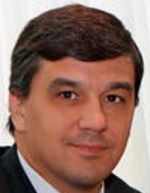 K. Surikov |
Surdin, Nikifor (Grigoryevich) (b. 1896, Staroye Badikovo, Tambov province [now in Mordovia republic], Russia - d. [executed] May 23, 1938, Saransk, Mordovian A.S.S.R., Russian S.F.S.R.), chairman of the Central Executive Committee of the Mordovian A.S.S.R. (1934-37).
Süren, Choynoryn (b. 1932), a deputy premier of Mongolia (1974-89). He was also mayor of Darkhan (19...-72) and minister of light industry (1987-89) and food industry (1987-88).
Surganov, Fyodor (Anisimovich) (b. June 7 [May 25, O.S.], 1911, Sudniki, Russia [now in Vitsebsk voblasts, Belarus] - d. [car crash] Dec. 26, 1976, Brest oblast, Belorussian S.S.R.), joint acting chairman (1967-68, 1971) and chairman (1971-76) of the Presidium of the Supreme Soviet of the Belorussian S.S.R. He was also chairman of the Executive Committee (1954-55) and first secretary of the party committee (1955-56) of Minsk oblast.
Suri, George, Solomon Islands politician. He was minister of health and medical services (1981-84).
Surikov, Aleksandr (Aleksandrovich) (b. Aug. 15, 1940), head of the administration of Altay kray (1996-2004). In 2006-18 he was Russian ambassador to Belarus.
Surikov, Konstantin (Yuryevich) (b. September 1971, Tomsk, Russian S.F.S.R.), prime minister of Ingushetia (2019-20).
Surin Pitsuwan (b. Oct. 28, 1949, Nakhon Si Thammarat, Thailand - d. Nov. 30, 2017, Bangkok, Thailand), foreign minister of Thailand (1997-2001) and secretary-general of ASEAN (2008-13).
Suriya Chindawongse, Thai diplomat. He has been ambassador to Singapore (2020-21) and permanent representative to the United Nations (2021-24). In 2024 he was appointed ambassador to the United States.
 Suriya J. |
Suriyanuvat, Phya (b. April 10, 1862 - d. Sept. 30, 1936), finance minister of Siam (1906-07). He was also ambassador to France, Spain, Italy, and Russia (1896-1905) and minister of public works (1905-06).
Surkin, Nikolay (Prokofyevich) (b. 1910, Mais, Penza province, Russia - d. ...), chairman of the industrial party committee of Crimea oblast (1963-64).
 Susak |
Susanin, Vladimir (Nikolayevich) (b. June 1, 1855 - d. 1917), governor of Fergana oblast (1907-11).
Susanto, Andriko Noto (b. May 15, 1972, Ponorogo, Jawa Timur, Indonesia), acting governor of Nusa Tenggara Timur (2024-25).
 Sushkov |  Suslonova |
Susko, Boris (b. May 26, 1970), justice minister of Slovakia (2023- ).
Suslonova, Nina (Vladimirovna) (b. Aug. 9, 1960, Mamakan, Irkutsk oblast, Russian S.F.S.R.), prime minister of Chuvashia (2010-11). She was also minister of health (2000-10) and social development (2005-10) and deputy prime minister (2007-10).
Suslov, Mikhail (Andreyevich) (b. Nov. 21 [Nov. 8, O.S.], 1902, Shakhovskoye, Russia - d. Jan. 25, 1982, Moscow, Russian S.F.S.R.), Soviet politician. He joined the Communist Party in 1921 and during the 1930s served on the Central Control Commission, a group that worked to eradicate corruption from the party. In 1939 he was appointed first secretary of the party in Stavropol kray. A member of the Central Committee from 1941, he was a political commissar during World War II and was in charge of the party department that carried out purges in Lithuania and Sovietized that Baltic republic in 1944-46. In 1947 he became the Kremlin's top ideologist, a post he held until his death, and participated in the founding of the Communist Information Bureau (Cominform). In 1949-50 he was editor of Pravda. He visited Hungary just before the 1956 revolt that was crushed by Soviet tanks, and Warsaw in 1981 just before the resignation of moderate Communist Party chief Stanislaw Kania. Suslov was said to have owed his rise through party ranks to Lavrenty Beria, the Stalin-era secret police chief who later was executed, and to Georgy Malenkov, who was party leader and premier briefly after Stalin's death but who lost a test of strength to Nikita Khrushchev. Suslov had become a member of the Presidium (as the Politburo was then called) in 1952, was dropped after Stalin's death in 1953, but regained his post under Khrushchev in 1955. He was influential in the defeat of Khrushchev's opponents in 1957 but apparently engineered Khrushchev's 1964 ouster as party chief and Leonid Brezhnev's rise to power. Thereafter he concentrated on interparty relations and was known for his opposition to the Eurocommunist movement, the trend toward ideological independence by Communist parties in Western Europe.
Suslov, Vladimir (Antonovich) (b. Nov. 21, 1939), chairman of the Executive Committee (1987-91) and head of the administration (1991-95) of Kalinin/Tver oblast. He was also first secretary of the party committee of Kalinin city (1984-87).
Süssmuth, Rita, née Kickuth (b. Feb. 17, 1937, Wuppertal, Prussia [now in Nordrhein-Westfalen], Germany - d. Feb. 1, 2026, Neuss, Nordrhein-Westfalen, Germany), (West) German politician. She was minister of youth, family, and health (1985-88) and women (1986-88) and president of the Bundestag (1988-98).
Sustersic, Janez (b. Dec. 29, 1966, Ljubljana, Slovenia), finance minister of Slovenia (2012-13).
Suswam, Gabriel (Torwua) (b. Nov. 15, 1964, Anyiin [now in Benue state], Nigeria), governor of Benue (2007-15).
Sutanovac, Dragan (b. July 24, 1968, Belgrade, Serbia), defense minister of Serbia (2007-12). He was also president of the Democratic Party (2016-18). In 2025 he was appointed ambassador to the United States.
Sutarmidji (b. Nov. 29, 1962, Pontianak, Kalimantan Barat, Indonesia), governor of Kalimantan Barat (2018-23). He was also mayor of Pontianak (2008-18).
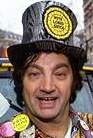 Sutch |
 Suter |
Sutham Patrakom (b. 1917 - d. 1990), justice minister of Thailand (1977-80). He was also president of the Supreme Court (1974-77).
Suthas Ngernmuen (b. May 18, 1945), justice minister (1997-2001) and a deputy prime minister (2000-01) of Thailand.
Suthee Singhasaneh (b. July 22, 1928, Bangkok, Siam [now Thailand] - d. Aug. 3, 2013), finance minister of Thailand (1986-88, 1991-92).
Suthep Thaugsuban (b. July 7, 1949, Surat Thani province, Thailand), a deputy prime minister of Thailand (2008-11). He was also minister of transport (1997-2000).
Sutherland, Donald Matheson (b. Dec. 3, 1879, Norwich, Ont. - d. June 4, 1970, Woodstock, Ont.), defence minister of Canada (1930-34). He was also minister of pensions and national health (1934-35).
Sutherland, Peter (Denis) (b. April 25, 1946, Dublin, Ireland - d. Jan. 7, 2018), director-general of the General Agreement on Tariffs and Trade/World Trade Organization (1993-95). He was also attorney general of Ireland (1981-82, 1982-84), European commissioner for competition (1985-89), chairman of Goldman Sachs International (1995-2015), and UN special representative for migration and development (2006-17).
Suthern, Cecil William (b. Sept. 5, 1927 - d. Aug. 7, 2013), official representative in the Cocos Islands (1969-72).
Sutin Klungsang (b. March 9, 1961, Chiang Yuen district, Maha Sarakham province, Thailand), defense minister of Thailand (2023-24).
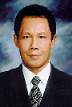 Sutiyoso |
Sutkus, Jonas (b. April 15, 1893, Kovno, Russia [now Kaunas, Lithuania] - d. [executed] Dec. 10, 1942, Sverdlovsk, Russian S.F.S.R. [now Yekaterinburg, Russia]), finance minister of Lithuania (1939).
Suto, Hideo (b. Jan. 27, 1898, Otsu district [now part of Nagato city], Yamaguchi prefecture, Japan - d. Aug. 8, 1981), Japanese politician. He was minister of agriculture and forestry (1948-49, 1960-61) and local autonomy (1960) and director-general of the Hokkaido Development Agency (1951).
Sutran, also spelled Soetran (b. April 5, 1921, Sidoarjo, Netherlands East Indies [now in Jawa Timur, Indonesia] - d. July 1, 1987, Surabaya, Indonesia), governor of Irian Jaya (1975-81).
Sutresna (Sastradidjaja), Nana (b. Oct. 21, 1933, Ciamis, Netherlands East Indies [now in Jawa Barat, Indonesia] - d. Jan. 27, 2011, Singapore), Indonesian diplomat. He was permanent representative to the United Nations (1988-92) and ambassador to the United Kingdom (1999-2002).
Sutrisno, Try (b. Nov. 15, 1935, Surabaya, Netherlands East Indies [now Indonesia] - d. March 2, 2026, Jakarta, Indonesia), vice president of Indonesia (1993-98). He was also army chief of staff (1986-88) and commander-in-chief of the Indonesian Armed Forces (1988-93).
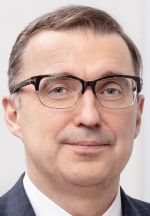 Sutt |
Sutton, Sir George Morris (b. July 8, 1834, Crowland, Lincolnshire, England - d. Nov. 30, 1913, Howick, Natal [now KwaZulu-Natal], South Africa), prime minister of Natal (1903-05); knighted 1904.
Sutton, Sir John (Matthias Dobson) (b. July 9, 1932 - d. Nov. 21, 2014), lieutenant governor of Jersey (1990-95); knighted 1985.
Sutton, Percy (Ellis) (b. Nov. 24, 1920, San Antonio, Texas - d. Dec. 26, 2009), borough president of Manhattan (1966-77).
Sutu, Mihai Dracon (b. 1730 - d. 1803, Constantinople, Ottoman Empire [now Istanbul, Turkey]), prince of Walachia (1783-86, 1791-93, 1801-02) and Moldavia (1793-95); son-in-law of Ioan Teodor Callimachi; brother-in-law of Alexandru Ioan Callimachi and Grigore Ioan Callimachi. He was also grand dragoman of the Porte (1782-83).
Sutu, Mihai Grigore, Greek Michail Soutsos (b. 1784 - d. June 24 [June 12, O.S.], 1864, Athens, Greece), prince of Moldavia (1819-21); grandson of Mihai Dracon Sutu; son-in-law of Ioan Gheorghe Caragea. He was also grand dragoman of the Porte (1815-19) and Greek minister to France (1833-34), Russia (1834-37), and the United Kingdom (1838-39).
Suurhoff, Ko, byname of Jacobus Gerardus Suurhoff (b. July 23, 1905, Amsterdam, Netherlands - d. March 14, 1967, Amsterdam), Dutch politician. He was minister of social affairs and health (1952-58), interior (acting, 1956), and transport and water management (1965-66).
Suursööt, Oskar (Albert) (b. May 30, 1893, Saku parish, Harju county, Russia [now in Estonia] - d. 1950, Magadan, Russian S.F.S.R.), economic affairs minister of Estonia (1932). He was also governor of Harju county (1920-22).
Suvar, Stipe (b. Feb. 17, 1936, Zagvozd village, near Imotski, Dalmatia, Yugoslavia [now in Croatia] - d. June 28, 2004, Zagreb, Croatia), president of the Presidium of the League of Communists of Yugoslavia (1988-89).
Suve, Sosefo (b. Sept. 25, 1952, Hihifo, Wallis and Futuna), president of the Territorial Assembly of Wallis and Futuna (2012-13).
Suvorov-Rymniksky, Knyaz Aleksandr (Arkadyevich) (b. July 13 [July 1, O.S.], 1804, St. Petersburg, Russia - d. Feb. 12 [Jan. 31, O.S.], 1882, St. Petersburg), governor of Kostroma (1847-48) and governor-general of Livonia, Estonia, and Courland (1848-61) and St. Petersburg (1861-66).
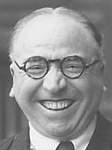 Suwaidi |
Suwandi, Wang (b. Dec. 8, 1929, Yogyakarta, Netherlands East Indies [now Indonesia] - d. Feb. 26, 2011, Jakarta, Indonesia), acting governor of Nusa Tenggara Timur (1978).
Suwaphan Tanyuvardhana (b. Dec. 23, 1953), justice minister of Thailand (2016-17). He was also director of the National Intelligence Agency (2009-14) and a minister attached to the Prime Minister's Office (2014-16, 2017-19).
Suwat Liptapanlop (b. Feb. 9, 1955, Ratchaburi province, Thailand), a deputy prime minister of Thailand (2004-05, 2005-06). He has also been minister of science, technology, and environment (1994-95), transport (1996-97), industry (1998-2000), university affairs (2002), labour (2002-03), and justice (2005), a minister attached to the Prime Minister's Office (2002), and leader of the Chart Pattana Party (2003-04).
Suwirjo, (Raden) (b. Feb. 17, 1903, Surakarta, Netherlands East Indies [now in Jawa Tengah, Indonesia] - d. Aug. 27, 1967, Jakarta, Indonesia), deputy prime minister of Indonesia (1951-52). He was also mayor of Jakarta (1945-47, 1950-51) and chairman of the Indonesian National Party (1956-60).
Suwit Khunkitti (b. Oct. 17, 1957), a deputy prime minister of Thailand (1997-99, 2001, 2002-04, 2008). He was also minister of justice (1992-93, 1996-97), agriculture and cooperatives (1996), science, technology, and energy (1998-99), education (2001-02), natural resources and environment (2004-05, 2008-11), information and communication technologies (2005), and industry (2008) and leader of the Social Action Party (1999-2000).
Suyerkulov, Abdy (Suyerkulovich) (b. Dec. 25 [Dec. 12, O.S.], 1912, Torkent, Russia [now in Jalal-Abad oblast, Kyrgyzstan] - d. Oct. 10, 1992), chairman of the Council of Ministers of the Kirgiz S.S.R. (1950-58). He was also chairman of the Executive Committee of Dzhalal-Abad oblast (1941-42), chairman of the Supreme Soviet (1947-50), and trade minister (1959-69).
Suyetin, Mikhail (Sergeyevich) (b. 1906, Bryansk, Oryol province [now in Bryansk oblast], Russia - d. 1986), first secretary of the Communist Party committee of the Udmurt A.S.S.R. (1950-57).
Suynaliyev, Ruslan (Myrzabekovich) (b. Jan. 14, 1975, Ken-Bulun, Chuy rayon, Kirgiz S.S.R. [now in Issyk-Ata rayon, Kyrgyzstan]), finance minister of Kyrgyzstan (2026- ).
Suyumbayev, Akhmatbek (Suttubayevich) (b. Dec. 17, 1920, Orto-Alysh, Russian S.F.S.R. [now in Kyrgyzstan] - d. Feb. 14, 1993), chairman of the Council of Ministers of the Kirgiz S.S.R. (1968-78). He was also minister of finance (1955-60) and public utilities (1978-84), and chairman of the Executive Committee (1960-62) and first secretary of the party committee (1962-68) of Osh oblast.
Suyunov, Nazar (Toyliyevich) (b. Aug. 23, 1936, Nebit-Dag, Turkmen S.S.R. [now Balkanabat, Turkmenistan] - d. March 25, 2021, Moscow, Russia), foreign minister and deputy premier of the Turkmen S.S.R. (1979-85). He was also chairman of the State Committee for Geology of the Turkmen S.S.R. (1967-78) and a deputy prime minister (1992-93) and minister of oil and gas (1993-94) of Turkmenistan.
Suzuki, Eikei (b. Aug. 15, 1974), governor of Mie (2011-21).
Suzuki, Junji (b. April 7, 1958, Seto, Aichi, Japan), interior minister of Japan (2023).
Suzuki, Kantaro, in full (from 1935) Danshaku (Baron) Kantaro Suzuki (b. Dec. 24, 1867, Izumi province [now part of Osaka prefecture], Japan - d. April 17, 1948, Tokyo, Japan), prime minister of Japan (1945). He was also president of the Privy Council (1944-45, 1945-46) and minister of foreign affairs and Greater East Asia (1945).
Suzuki, Keisuke (b. Feb. 9, 1977, London, England), justice minister of Japan (2024-25).
Suzuki, Kenta (b. Aug. 24, 1975), governor of Akita (2025- ).
Suzuki, Kisaburo (b. Nov. 6 [Oct. 11, lunar calendar], 1867, Kawasaki, Japan - d. June 24, 1940), justice minister (1924, 1931-32) and home affairs minister (1927-28, 1932) of Japan; son-in-law of Kazuo Hatoyama; brother-in-law of Ichiro Hatoyama.
Suzuki, Naomichi (b. March 14, 1981), governor of Hokkaido (2019- ).
Suzuki, Seigo (b. Aug. 7, 1911, Kagamiishi, Fukushima, Japan - d. Oct. 4, 1999), justice minister of Japan (1985-86).
Suzuki, Shunichi (b. Nov. 6, 1910, Tokyo, Japan - d. May 14, 2010), governor of Tokyo (1979-95).
Suzuki, Shunichi (b. April 13, 1953, Tokyo, Japan), finance minister of Japan (2021-24); son of Zenko Suzuki; brother-in-law of Taro Aso. He was also environment minister (2002-03) and minister in charge of the Tokyo Olympics (2017-18, 2019).
Suzuki, Yoshio (b. Jan. 17, 1894, Shirakawa, Fukushima, Japan - d. Aug. 25, 1963), justice minister (1947-48) and attorney-general (1948) of Japan.
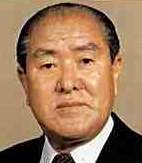 Z. Suzuki |
Suzzi Valli, Leonida, captain-regent of San Marino (1944-45, 1963).
Svaleryd, (Anders) Uno (b. Oct. 6, 1943), acting governor of Jämtland (2001-02, 2006-07, 2008).
Svane, Jess (Kristian) (b. May 5, 1959, Qasigiannguit, Greenland), interior minister of Greenland (2022-25). He was also minister of business (2019-20), energy (2019-20), research (2019-21), labour market (2019-21, 2022-25), environment (2020-21), social affairs (2022-25), and family (2023-25).
Svanidze, Aleksandr (Semyonovich) (b. 1886, Badzhi, Kutaisi province, Russia [now in Georgia] - d. [executed] Aug. 20, 1941), foreign and finance commissar of Georgia (1921-23); brother-in-law of Iosif Stalin.
Svanidze, Nikolay (Samsonovich) (b. 1895, Samurzakano, Sukhumi okrug, Kutaisi province, Russia [now in Abkhazia, Georgia] - d. [executed] 1937), executive secretary of the Communist Party committee of Adzharistan (1922-24). He was also executive secretary of the party committee of Tiflis city (1924-25).
Svantesson, (Karin) Elisabeth, née Lundin (b. Oct. 26, 1967, Lycksele, Västerbotten, Sweden), finance minister of Sweden (2022- ). She was also minister of employment (2013-14).
Svarc Pipan, Dominika (b. July 9, 1978, Slovenj Gradec, Slovenia), justice minister of Slovenia (2022- ).
Svatetz de Menéndez, Matilde (Elvira) (b. Nov. 27, 1944), governor of Tierra del Fuego (1991-92).
Svay So (b. 1913, Takeo province, Cambodia - d. ...), finance minister of Cambodia (1949). He was also president of the National Assembly (1953).
 Svec |
Svechin, Aleksandr (Nikolayevich) (b. Aug. 4, 1859 - d. 1939, Rome, Italy), Russian diplomat; great-grandson of Ivan Pestel; great-great-grandson of Graf Ivan Gudovich; great-great-great-grandson of Kyrylo Rozumovsky. He was chargé d'affaires in the Ottoman Empire (1912) and minister to the Netherlands (1912-17).
Svechin, Ivan (Nikolayevich) (b. Feb. 12, 1863, Moscow, Russia - d. March 17, 1930, Marseille, France), governor of Tiflis (1899-1905), Stavropol (1905-06), and Primorye oblast (1910-11); brother of Aleksandr Svechin.
Svedelius, Axel G(abriel Johan) (b. Oct. 14, 1836, Norrköping, Sweden - d. March 15, 1924), governor of Örebro (1893-1904).
Svegfors, (John) Mats (Arvid) (b. Aug. 23, 1948, Bredestad, Jönköping, Sweden), governor of Västmanland (2000-09).
Svehla, Antonín (b. April 15, 1873, Prague, Austria [now in Czech Republic] - d. Dec. 12, 1933, Prague), interior minister (1918-20) and prime minister (1922-26, 1926-29) of Czechoslovakia.
Sveinbjarnardóttir, Thórunn (b. Nov. 22, 1965, Reykjavík, Iceland), Icelandic politician. She has been minister of the environment (2007-09) and president of the Althing (2025- ).
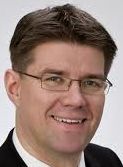 Sveinsson |
Svenningsen, Nils (Thomas) (b. March 28, 1894, Stockholm, Sweden - d. Oct. 20, 1985), acting foreign minister of Denmark (1943-45). He was also minister (1945-47) and ambassador (1947-50) to Sweden and ambassador to France (1950-51), the United Kingdom (1961-64), and Ireland (1962-64).
Svensen, Henrik (b. July 17, 1904, Askøy, Søndre Bergenhus amt [now in Vestland fylke], Norway - d. Aug. 16, 2007), governor of Aust-Agder (1961-74).
Svenson, (Sven) Göte (b. Nov. 2, 1924, Norra Sandsjö socken [now part of Nässjö municipality], Jönköping, Sweden - d. Oct. 6, 2013), governor of Östergötland (1980-87).
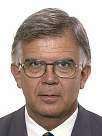 Svensson | 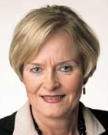 Sverrisdóttir |
Sverbeyev, Aleksandr (Dmitriyevich) (b. March 25, 1835, Moscow, Russia - d. May 9, 1917), governor of Samara (1878-91).
Sverbeyev, Dmitry (Dmitriyevich) (b. 1845 - d. 1920), governor of Courland (1892-1905); brother of Aleksandr Sverbeyev.
Sverbeyev, Sergey (Nikolayevich) (b. April 13, 1857 - d. April 4, 1922, Berlin, Germany), Russian diplomat; nephew of Aleksandr and Dmitry Sverbeyev. He was minister to Greece (1910-12) and ambassador to Germany (1912-14).
Sverchkov, Aleksey (Vasilyevich) (b. 1788 - d. Feb. 16, 1828, Florence, Tuscany [now in Italy]), Russian diplomat; son-in-law of Graf Dmitry Guryev. He was chargé d'affaires at the Portuguese government in Brazil (1815-16) and chargé d'affaires (1818-28) and minister (1828) to Tuscany.
Sverdlov, Yakov (Mikhailovich) (b. June 3 [May 22, O.S.], 1885, Nizhny Novgorod, Russia - d. March 16, 1919, Moscow, Russian S.F.S.R.), chairman of the All-Russian Central Executive Committee (1917-19).
Sverdrup, Johan (b. July 30, 1816, Jarlsberg, Norway - d. Feb. 17, 1892, Kristiania [now Oslo], Norway), prime minister (1884-89) and war minister (1885-89) of Norway. He was also president of the Storting (intermittently in 1871-84).
Sverrisdóttir, Valgerdur (b. March 23, 1950, Lómatjörn, Iceland), foreign minister of Iceland (2006-07). She was also minister of industry and commerce (1999-2006) and Nordic cooperation (2004-05).
Svetlov, Ferdinand (Yuryevich), original surname Shonfeld (b. 1884, Odessa, Russia [now in Ukraine] - d. [in labour camp] 1943, Komi A.S.S.R., Russian S.F.S.R.), executive secretary of the Communist Party of the Turkestan A.S.S.R. (1923-24).
 Svilanovic |  Svinarov |
Svinarov, Nikolay (Avramov) (b. May 6, 1958, Shumen, Bulgaria), defense minister of Bulgaria (2001-05).
 Svinhufvud |
Sviridov, Vladimir (Petrovich) (b. Dec. 7, 1897 - d. May 3, 1963), chairman of the Allied Control Commission in Hungary (1946-47) and Soviet high commissioner of Austria (1949-53).
Svistunov, Aleksandr (Pavlovich) (b. Feb. 26 [Feb. 14, O.S.], 1830 - d. af. 1893), governor of Terek oblast (1875-83).
 C. Svoboda |  I. Svoboda |
Svoboda, Ivo (b. April 6, 1948, Prague, Czechoslovakia [now in Czech Republic] - d. Feb. 23, 2017), finance minister of the Czech Republic (1998-99). He was sacked after being indicted for financial crimes connected to his management of a Czech pram company which went bankrupt. On Feb. 1, 2005, he was sentenced to five years' imprisonment.
 L. Svoboda |
Svyatopolk-Mirsky, Knyaz (Prince) Dmitry (Ivanovich) (b. Oct. 25, 1824 - d. Jan. 18, 1899, Nice, France), governor of Terek oblast (1861-63) and governor-general of Kutaisi (1863-66) and Kharkov (interim, 1881-82).
Svyatopolk-Mirsky, Knyaz (Prince) Nikolay (Ivanovich) (b. July 5, 1833 - d. July 15, 1898), ataman of the Don Cossack Host (1881-98); brother of Knyaz Dmitry Svyatopolk-Mirsky; grandson-in-law of Giorgi XII.
Svyatopolk-Mirsky, Knyaz (Prince) Pyotr (Dmitriyevich) (b. Aug. 30 [Aug. 18, O.S.], 1857, St. Petersburg, Russia - d. May 29 [May 16, O.S.], 1914, St. Petersburg), interior minister of Russia (1904-05); son of Knyaz Dmitry Svyatopolk-Mirsky. He was also governor of Penza (1895-97) and Yekaterinoslav (1897-1900) and governor-general of Vilna, Kovno, and Grodno (1902-04).
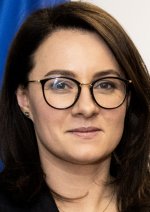 Svyrydenko |
 Swaelen |
Swai, A(santerabi) Z(ephaniah) Nsilo (b. April 20, 1925, Moshi, Tanganyika [now in Tanzania] - d. Oct. 10, 1994), Tanzanian politician. He was minister of commerce and industry (1960-62), health and labour (1962), economic affairs and development planning (1963-65, 1967), industry, mineral resources, and power (1965-67), and East African affairs (1967-68) and permanent representative to the United Nations (1962-63).
Swain, David L(owry) (b. Jan. 4, 1801, near Asheville, N.C. - d. Aug. 27, 1868, Chapel Hill, N.C.), governor of North Carolina (1832-35).
Swainson, John B(urley) (b. July 30, 1925, Windsor, Ont. - d. May 13, 1994, Manchester, Mich.), governor of Michigan (1961-63).
Swalwell, Eric (Michael) (b. Nov. 16, 1980, Sac City, Iowa), U.S. politician. He was a representative from California (2013-26) and a candidate for the 2020 Democratic presidential nomination.
Swamy, Nityanand (b. Dec. 27, 1927, Narnaul [now in Haryana], India - d. Dec. 12, 2012, Dehradun, Uttarakhand, India), chief minister of Uttaranchal (2000-01).
Swamy, Subramanian (b. Sept. 15, 1939, Madras [now Chennai], India), law and justice (and commerce) minister of India (1990-91).
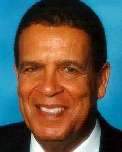 J. Swan |
Swan, Wayne (Maxwell) (b. June 30, 1954, Nambour, Qld.), Australian politician. He was Queensland state secretary of the Labor Party in 1991-93. In 1993 he was elected to the House of Representatives for the Brisbane seat of Lilley. He lost his seat in 1996 but regained it in 1998 and joined the opposition front bench. He became opposition treasury spokesman in 2004. He grew up in the same town as Labor leader Kevin Rudd, and the two were long both friends and rivals. When Rudd won the 2007 elections, Swan became treasurer. In 2010 Rudd was replaced by his deputy Julia Gillard, and Swan became new deputy leader of the Labor Party as well as deputy prime minister (until 2013).
Swann, Thomas (b. Feb. 3, 1809, Alexandria, Va. - d. July 24, 1883, Morven Park estate, near Leesburg, Va.), mayor of Baltimore (1856-60) and governor of Maryland (1866-69).
Swanson, Claude A(ugustus) (b. March 31, 1862, Swansonville, Va. - d. July 7, 1939, Rapidan Camp, Madison county, Va.), governor of Virginia (1906-10) and U.S. secretary of the navy (1933-39).
Swapan, Shafiqul Ghani (b. Sept. 11, 1946, Nilphamari, Bengal, India [now in Bangladesh] - d. Aug. 22, 2009, Dhaka, Bangladesh), Bangladeshi politician; son of Mashiur Rahman; brother-in-law of A.H.G. Mohiuddin. He was minister of civil aviation and tourism (1986) and works (1986-88).
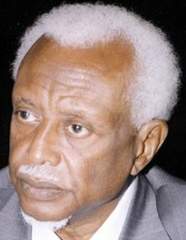 Swar |
 Swaraj |
Swaray, Mohamed Rahman, foreign minister of Sierra Leone (2026- ). He was also minister of information and communications (2018-23) and employment, labour, and social security (2023-26).
 J. Sweeney |
Sweeney, Lindorna (Lambert-), acting governor of Montserrat (2025). She has been deputy governor (2024- ).
Sweerts de Landas Wyborgh, Emile Claude baron (b. May 5, 1852, Nijmegen, Gelderland, Netherlands - d. Jan. 3, 1928, The Hague, Netherlands), queen's commissioner of Zuid-Holland (1911-28). He was also mayor of Arnhem (1899-1904) and The Hague (1904-11).
Sweet, William E(llery) (b. Jan. 27, 1869, Chicago, Ill. - d. May 9, 1942, Denver, Colo.), governor of Colorado (1923-25).
Sweet-Escott, Sir (Ernest) Bickham (b. Aug. 20, 1857, Bath, England - d. April 10, 1941), administrator (1899-1903) and governor (1903-04) of Seychelles and governor of British Honduras (1904-06), the Leeward Islands (1906-12), and Fiji (1912-18); knighted 1904.
Sweetman, (Hugh) Gerard (b. June 10, 1908, Dublin, Ireland - d. [car crash] Jan. 28, 1970, between Kildare and Monasterevin, County Kildare, Ireland), finance minister of Ireland (1954-57).
Swettenham, Sir (James) Alexander (b. 1846 - d. April 19, 1933), governor of the Straits Settlements (acting, 1899-1901), British Guiana (1901-04), and Jamaica (1904-07); knighted 1898.
Swettenham, Sir Frank Athelstane (b. March 28, 1850, Belper, Derbyshire, England - d. June 11, 1946, London, England), resident of Selangor (1882-84) and Perak (1889-96), resident-general of the Federated Malay States (1896-1901), and governor of the Straits Settlements (1901-03); knighted 1897; brother of Sir Alexander Swettenham.
Swiatkowski, Henryk (b. April 2, 1896, Dzierzaznia, Poland - d. March 22, 1970, Warsaw, Poland), justice minister of Poland (1945-56).
Swiderski, Stefan (b. 1895 - d. Dec. 17, 1978, London, England), governor of Nowogródzkie województwo (1932-35).
Swidzinski, Boleslaw Jerzy (b. Dec. 7, 1885, Opatów, Poland - d. March 4, 1972, London, England), governor of Lubelskie województwo (1930-33).
Swiecicki, Marcin (b. April 17, 1947, Warsaw, Poland), Polish politician. He was minister of foreign economic cooperation (1989-91) and mayor of Warsaw (1994-99).
Swiezynski, Józef, h. Korczak (b. April 19, 1868, Wlonice, Poland - d. Feb. 12, 1948, Sandomierz, Poland), prime minister of Poland (1918). He was also a member of the Russian State Duma (1906, 1907-17).
Swift, Henry A(doniram) (b. March 23, 1823, Ravenna, Ohio - d. Feb. 25, 1869, St. Peter, Minn.), governor of Minnesota (1863-64).
 J. Swift |
Swinderen, Petrus Johannes van (b. July 25, 1842, Groningen, Netherlands - d. Dec. 19, 1911, The Hague, Netherlands), king's/queen's commissioner of Drenthe (1888-1903).
Swinderen van Rensuma, Jonkheer Oncko van, (from 1829) heer van Rensuma (b. July 23, 1775, Groningen, Netherlands - d. Nov. 12, 1850, Groningen), Dutch politician. He was chairman of the Second Chamber (1839-40).
Swineford, Alfred P(eter) (b. Sept. 14, 1836, Ashland, Ohio - d. Oct. 26, 1909, Juneau, Alaska), governor of Alaska (1885-89).
 Swinney |
Switala, Kazimierz (Czeslaw) (b. April 21, 1923, Rakoniewice, Poland - d. March 6, 2011), interior minister of Poland (1968-71).
Switalski, Kazimierz (b. March 4, 1886, Sanok, Austria [now in Poland] - d. Dec. 28, 1962, Warsaw, Poland), prime minister of Poland (1929). He was also minister of religious affairs and education (1928-29), marshal of the Sejm (1933-35), and governor of Krakowskie województwo (1935-36).
Swokin, Kala (Griwo) (b. Nov. 22, 1949 - d. Oct. 5, 2018), justice minister of Papua New Guinea (1988). He was also minister of urban development (1982-84), physical planning (1984-85, 1988-91), lands (1987-88, 1988-91), fisheries (1997-98), and civil aviation and tourism (1998-99).
Swope, Guy J(acob) (b. Dec. 26, 1892, Meckville, Pa. - d. July 25, 1969, New York City), governor of Puerto Rico (1941).
Sy, Cheikh Tidiane (b. Jan. 11, 1938, Saint-Louis, Senegal), justice minister (2005-08, 2010-12) and interior minister (2008-09) of Senegal. He was also UN representative to Burundi (1999-2000) and the Central African Republic (2000-01).
Sy, Seydina Oumar (b. Oct. 10, 1937), foreign minister of Senegal (1990-91). He was also ambassador to Belgium (1973-88) and minister of commerce (1988-90).
Sy, Seydou Madani (b. Nov. 16, 1933, Dakar, Senegal - d. Jan. 7, 2026, Dakar), justice minister of Senegal (1986-90). He was also ambassador to the United Kingdom (1991-93) and ombudsman (1997-2003).
Syam, Amin (b. Dec. 12, 1945 - d. Sept. 1, 2023, Makassar, Sulawesi Selatan, Indonesia), governor of Sulawesi Selatan (2003-08).
Syamashka, Uladzimir (Ilich), Russian Vladimir (Ilich) Semashko (b. Nov. 20, 1949, Kalinkovichi, Gomel oblast, Belorussian S.S.R.), first deputy prime minister (2003-14) and a deputy prime minister (2014-18) of Belarus. He was also minister of energy (2001-03) and ambassador to Russia (2018-22).
Syamsuddin, Amir (b. May 27, 1941, Makassar, Netherlands East Indies [now in Sulawesi Selatan, Indonesia]), law minister of Indonesia (2011-14).
Syanko, Uladzimir (Lyavonavich) (b. Aug. 5, 1946, Vishkovichi, Vitebsk oblast, Belorussian S.S.R.), foreign minister of Belarus (1994-97). He was also ambassador to Poland (1992-94), the United Kingdom (1994), France, Spain, and Portugal (1997-2004), and Belgium (2004-11).
 Sybiha |
Sych, Oleksandr (Maksymovych) (b. July 16, 1964, Dert, Rovno oblast, Ukrainian S.S.R. [now Rivne oblast, Ukraine]), a deputy prime minister of Ukraine (2014).
Sychev, Sergey (Aleksandrovich) (b. March 28, 1960, Selo, Vologda oblast, Russian S.F.S.R.), chairman of the government of Samara oblast (2004-07).
Sychou, Alyaksandr (Mikalayevich) (b. September 1951, Gomel, Belorussian S.S.R.), Belarusian diplomat. He was permanent representative to the United Nations (1994-2000) and ambassador to Austria (2005-11).
Sydenham, Charles Edward Poulett Thomson, (1st) Baron (b. Sept. 13, 1799, Wimbledon, Surrey [now part of London], England - d. [following fall from horse] Sept. 19, 1841, Kingston, Canada West [now Ont.]), governor of Lower Canada (1839-41) and Canada (1841). He was created baron in 1840. He was also British president of the Board of Trade (1834, 1835-39).
Sydenham of Combe, George Sydenham Clarke, (1st) Baron (b. July 4, 1848, Swinderby, Lincolnshire, England - d. Feb. 7, 1933, London, England), governor of Victoria (1901-03) and Bombay (1907-13). He was knighted in 1893 and created baron in 1913.
Sydney, Thomas Townshend, (1st) Viscount (b. Feb. 24, 1733, London, England - d. June 30, 1800, Frognal estate, near Chislehurst, Kent, England), British secretary at war (1782), home secretary (1782-83, 1783-89), and president of the Committee for Trade and Plantations (1784-86). He was created baron in 1783 and viscount in 1789. The Australian city of Sydney was named after him.
Sydow, Björn (Gustaf) von (b. Nov. 26, 1945, Solna, Stockholm county, Sweden), defense minister of Sweden (1997-2002). He was also minister of trade (1996-97) and speaker of the Riksdag (2002-06).
Sydow, Gunnar von (b. Aug. 3, 1911, Göteborg, Sweden - d. June 12, 1990), governor of Älvsborg (1970-78).
Sydow, Oscar (Fredrik) von (b. July 12, 1873, Kalmar, Sweden - d. Aug. 19, 1936), governor of Norrbotten (1911-17) and Göteborg och Bohus (1917-34) and interior minister (1914-17) and prime minister (1921) of Sweden.
Sydow, Reinhold (Friedrich) von (b. Jan. 14, 1851, Berlin, Prussia [Germany] - d. Jan. 16, 1943, Berlin), finance minister of Germany (1908-09). He acquired the "von" in 1918.
Syeduzzaman, M. (b. Oct. 27, 1933, Dacca, India [now Dhaka, Bangladesh]), finance adviser (1985-86) and finance minister (1986-87) of Bangladesh.
Syerada, Ivan (Mikitavich) (b. May 1, 1879 - d. af. Nov. 19, 1943), chairman of the Rada (1918) and of the People's Secretariat (1918) of the Belorussian People's Republic.
Sykes, Sir Frederick (Hugh) (b. July 23, 1877, Croydon, Surrey [now part of London], England - d. Sept. 30, 1954, London), governor of Bombay (1928-33); knighted 1919; son-in-law of Bonar Law. He was also British chief of the air staff (1918-19).
Sykes, James (b. March 27, 1761, near Dover, Delaware - d. Oct. 18, 1822, Dover), acting governor of Delaware (1801-02).
Sylla, Albert (b. 1909 - d. [plane crash] July 19, 1967), foreign minister of Madagascar (1960-67).
Sylla, Ibrahima (b. Sept. 9, 1943, Conakry, Guinea), foreign minister of Guinea (1992-94). He was also ambassador to Belgium, the Netherlands, and Luxembourg (1984-89) and minister of planning and cooperation (1989-92) and transport (1994-96).
 J. Sylla |
 Y. Sylla |
Sylva, Timipre (Marlin) (b. July 7, 1964, Okpoma [now in Bayelsa state], Nigeria), governor of Bayelsa (2007-08, 2008-12).
Sylvain, Edmond (b. June 27, 1906, Les Cayes, Haiti - d. ...), Haitian politician. He was minister to Belgium (1948-50), minister of public works (1957), and permanent representative to the United Nations (1957-59).
Sylvain, Franck (b. Aug. 3, 1909, Grand Goave, southern Haiti - d. Jan. 3, 1987, Port-au-Prince, Haiti), provisional president of Haiti (1957).
Sylvander, Josua friherre (b. June 1, 1769, Rödeby, Blekinge, Sweden - d. Aug. 28, 1833, Stockholm, Sweden), governor of Halland (1812-18). He was made friherre (baron) in 1830.
Sylvester, secular name Ivan (Antonovich) Kharun, Latvian Ivans Haruns (b. Nov. 1 [Oct. 19, O.S.], 1914, Dvinsk, Russia [now Daugavpils, Latvia] - d. May 18, 2000, Rawdon, Que.), administrator of the Orthodox Church in America (1974-77). He was bishop of Messina (1952-62) and bishop (1962-66) and archbishop (1966-81) of Montreal.
Sylvester, Lawrence, Belizean diplomat. He has been chargé d'affaires at the United Nations (1996-97) and ambassador to the Caribbean Community (2018- ).
Symes, Sir (George) Stewart (b. July 29, 1882, Wateringbury, Kent, England - d. Dec. 5, 1962, Folkestone, Kent), political resident of Aden (1928-31), governor of Tanganyika (1931-34), and governor-general of the Anglo-Egyptian Sudan (1934-40); knighted 1928.
 F. Symington |
Symington, J(ohn) Fife, Jr. (b. Aug. 27, 1910, Baltimore, Md. - d. Dec. 9, 2007, Baltimore), U.S. diplomat; cousin of Stuart Symington. He was ambassador to Trinidad and Tobago (1969-71).
 S. Symington |
 Symmonds |
Symonenko, Petro (Mykolayovych) (b. Aug. 1, 1952, Stalino, Ukrainian S.S.R. [now Donetsk, Ukraine]), Ukrainian politician. He has been first secretary of the Central Committee of the Communist Party (1993- ) and a presidential candidate (1999, 2004, 2010, 2014; in 2019 his registration was denied).
 V. Symonenko |
 B. Symonette |
 Syse |
Sysoyev, Pyotr (Petrovich) (b. Jan. 22 [Jan. 9, O.S.], 1912, Papanevo, Vyatka province [now in Udmurtia republic], Russia - d. 1986), chairman of the Council of Ministers (1952-59) and chairman of the Presidium of the Supreme Soviet (1959-77) of the Udmurt A.S.S.R.
Sysuyev, Oleg (Nikolayevich) (b. March 23, 1953, Kuybyshev, Russian S.F.S.R. [now Samara, Russia]), Russian politician. He was mayor of Samara (1992-97), a deputy prime minister (1997-98), and minister of labour and social development (1997-98).
Sytzama, Maurits Pico Diederik baron van (b. June 2, 1789, Driesum, Friesland, Netherlands - d. July 15, 1848, Leeuwarden, Netherlands), governor of Friesland (1840-48). He was also chairman of the Second Chamber (1837-38).
Syukiyainen, Iosif (Ivanovich), Finnish Josef Sykiäinen (b. April 10, 1900, Chukhonsko-Vysotskoye, St. Petersburg province, Russia - d. June 30, 1977), foreign minister of the Karelo-Finnish S.S.R. (1944-55). He was also a deputy premier (1947-50).
Syutkin, Albert (Fyodorovich) (b. Sept. 19, 1925, Syktyvkar, Komi autonomous oblast [now republic], Russian S.F.S.R. - d. Sept. 19, 2013), chairman of the Presidium of the Supreme Soviet of the Komi A.S.S.R. (1984-88).
Syzdykbekov, Gabit (Abdimazhitovich) (b. July 8, 1980), head of Shymkent city (2023- ). He was also Kazakh ambassador to Serbia (2019-21).
Szabó, Iván (b. Jan. 8, 1934, Budapest, Hungary - d. Aug. 4, 2005), finance minister of Hungary (1993-94). He was also minister of industry and trade (1991-93).
 J. Szabó |
Szakasits, Árpád (b. Dec. 6, 1888, Budapest, Hungary - d. May 3, 1965, Budapest), president (1948-49) and chairman of the Presidential Council (1949-50) of Hungary. He was also a minister of state (1945-48), a deputy premier (1946-48), and industry minister (1948).
Szalajda, Zbigniew (Karol) (b. May 11, 1934, Wilno, Poland [now Vilnius, Lithuania] - d. May 5, 2024), a deputy premier of Poland (1982-88). He was also minister of metallurgy (1980-81) and metallurgy and engineering industry (1981-82).
Szalamacha, Pawel (Wlodzimierz) (b. Jan. 24, 1969, Gorzów Wielkopolski, Poland), finance minister of Poland (2015-16).
 Szálasi |
Szalay-Bobrovniczky, Kristóf (b. June 6, 1970, Budapest, Hungary), defense minister of Hungary (2022-26). He was also ambassador to the United Kingdom (2016-20).
Szapáry de Szapár, Frigyes gróf (b. Nov. 5, 1869, Buda [now part of Budapest], Hungary - d. March 18, 1935, Vienna, Austria), Austro-Hungarian diplomat; first cousin once removed of Gyula gróf Szapáry de Szapár. He was ambassador to Russia (1913-14).
Szapáry de Szapár, Gyula gróf (b. Nov. 1, 1832, Pest [now part of Budapest], Hungary - d. Jan. 20, 1905, Abbazia, Austria [now Opatija, Croatia]), interior minister (1873-75, 1890-92), finance minister (1878-87), and prime minister (1890-92) of Hungary. He was also minister of public works and transport (acting, 1880), industry and trade (1889), and agriculture (1889-90).
Szarka, Károly (b. Aug. 15, 1923, Újpest [now part of Budapest], Hungary - d. 2005), Hungarian diplomat. He was chargé d'affaires in India (1951-53), minister to the United States (1953-56), ambassador to Egypt and Sudan (1968-70), Yemen, South Yemen, and Libya (1969-70), and Japan (1983-85), and permanent representative to the United Nations (1970-74).
Szászy, Béla (b. Nov. 26, 1865, Pócsmegyer, Hungary - d. June 17, 1931, Budapest, Hungary), justice minister of Hungary (1919).
 Szczepanik |
Szczerski, Krzysztof (b. April 15, 1973, Kraków, Poland), Polish diplomat. He has been permanent representative to the United Nations (2021- ).
Szczurek, Mateusz (b. Aug. 11, 1975), finance minister of Poland (2013-15).
Szczyglo, Aleksander (Marek) (b. Oct. 27, 1963, Jeziorany, Poland - d. [plane crash] April 10, 2010, near Smolensk, Russia), defense minister of Poland (2007). He was also head of the presidential chancellery (2006-07) and head of the National Security Bureau (2009-10).
Széchenyi, Franjo (b. April 28, 1754, Fertöszéplak, Hungary - d. Dec. 13, 1820, Vienna, Austria), ban of Croatia (1783-85).
Széchenyi (de Sárvár-Felsövidék), István gróf (Count) (b. Sept. 21, 1791, Vienna, Austria - d. April 8, 1860, Döbling [now part of Vienna], Austria), Hungarian reformer. Taking part in the Napoleonic wars and traveling extensively in Europe, the modernity of England and France in contrast to his backward homeland impressed him and he resolved to improve Hungary's condition. In 1825 he made a sizable donation to establish the Hungarian National Academy of Sciences. He instigated the Hungarian nobility to form clubs to discuss political affairs. In 1830 he introduced steam shipping on the Danube and published the first of several works voicing Hungary's need for economic advancement. He argued that the aristocracy paid no taxes and wasted its time in a complacent defense of the Hungarian constitution against Vienna. His polemics were effective, and his practical enterprises spurred national development: roads were constructed, the navigability of the Danube extended all the way to the Black Sea, and the first suspension bridge built at Budapest. In the 1840s, however, a more radical younger generation came to the fore under Lajos Kossuth. Loyal to the Habsburgs, Széchenyi believed that liberty would follow economic progress, whereas Kossuth argued the reverse. Entering Lajos Batthyány's cabinet in April 1848 as minister of transport, Széchenyi lost his sanity by his sense of responsibility for the outbreak of revolution in September; he was removed to an asylum near Vienna. Recovering his reason in the early 1850s, he wrote a shattering critique of Austria's absolutist rule in Hungary (published in London in 1859); this brought police investigators to the asylum, which again upset his mental balance, and he committed suicide.
Szefernaker, Pawel (Maciej) (b. Feb. 27, 1987, Szczecin, Poland), interior minister of Poland (2023).
Székely, Béla (b. July 17, 1889, Budapest, Hungary - d. [executed] Jan. 10, 1939, U.S.S.R.), finance commissar of Hungary (1919).
Székely, Ferenc (b. March 11, 1842, Szombathely, Hungary - d. March 17, 1921, Budapest, Hungary), justice minister of Hungary (1910-13). He was also acting minister of worship and education (1910).
Szekér, Gyula (b. Sept. 24, 1925, Szombathely, Hungary - d. Dec. 17, 2015), a deputy premier of Hungary (1975-80). He was also minister of heavy industry (1971-75) and chairman of the Technical Development Committee (1980-84) and of the Office of Standards (1984-89).
Szekeres, Imre (b. Sept. 9, 1950, Szolnok, Hungary), defense minister of Hungary (2006-10).
Széll de Duka et Szentgyörgyvölgy, József (b. Oct. 14, 1880, Szombathely, Hungary - d. Aug. 27, 1956, Budapest, Hungary), interior minister of Hungary (1937-38).
Széll de Duka et Szentgyörgyvölgy, Kálmán (b. June 8, 1845, Gasztony, Hungary - d. Aug. 16, 1915, Rátót, Hungary), finance minister (1875-78) and prime minister and interior minister (1899-1903) of Hungary. He was also acting minister a latere (1900).
Szemere de Szemere, Bertalan (b. Aug. 27, 1812, Vatta, Hungary - d. Jan. 18, 1869, Pest [now part of Budapest], Hungary), interior minister (1848, 1849) and prime minister (1849) of Hungary.
Szende, Pál, surname until 1896 Schwarz (b. Feb. 7, 1879, Nyírbátor, Hungary - d. July 15, 1934, Seini [Szinérváralja], Romania), finance minister of Hungary (1918-19).
Szende de Keresztes, Béla, surname until 1839 Frummer (b. April 4, 1823, Lugos, Hungary [now Lugoj, Romania] - d. Aug. 18, 1882, Gavosdia, Hungary [now Gavojdia, Romania]), defense minister of Hungary (1872-82).
Szeptycki, Stanislaw (Maria Jan Teofil) (b. Nov. 3, 1867, Przylbice, Austria [now Prylbychi, Ukraine] - d. Oct. 9, 1950, Korczyna, Poland), military affairs minister of Poland (1923). He was also governor-general of Lublin (1917-18) and chief of the general staff (1918-19).
 Szijjártó |
Szilágyi, Dezsö (b. April 1, 1840, Nagyvárad, Hungary [now Oradea, Romania] - d. July 31, 1901, Budapest, Hungary), justice minister of Hungary (1889-95). He was also speaker of the House of Representatives (1895-98).
Szlachcic, Franciszek (b. Feb. 5, 1920, Byczyna, Poland - d. Nov. 4, 1990, Warsaw, Poland), interior minister (1971) and a deputy premier (1974-76) of Poland.
Szlávy de Érkenéz et Okány, József (b. Nov. 23, 1818, Györ, Hungary - d. Aug. 8, 1900, Zsitvaújfalu, Hungary), prime minister (1872-74) and finance minister (1873-74) of Hungary and finance minister of Austria-Hungary (1880-82). He was also Hungarian minister of agriculture, industry, and trade (1870-72) and president of the House of Representatives (1879-80) and the House of Magnates (1894-96).
Szmajdzinski, Jerzy (Andrzej) (b. April 9, 1952, Wroclaw, Poland - d. [plane crash] April 10, 2010, near Smolensk, Russia), defense minister (2001-05) and acting interior minister (2004) of Poland.
Szögyény-Marich de Magyar-Szögyén et Szolgaegyháza, László gróf (b. Nov. 12, 1840, Vienna, Austria - d. June 11, 1916, Csór, Hungary), Hungarian politician. He was minister a latere (1890-92) and Austro-Hungarian ambassador to Germany (1892-1914). He was made gróf (count) in 1910.
Sztójay, Döme, until 1935 Demeter Stojakovics (b. Jan. 5, 1883, Versec, Hungary [now Vrsac, Vojvodina, Serbia] - d. [executed] Aug. 22, 1946, Budapest, Hungary), prime minister and foreign minister of Hungary (1944). He was also minister to Germany (1935-44).
Szubin, Adam (Jacob) (b. Dec. 16, 1972), acting U.S. treasury secretary (2017).
Szürös, Mátyás (b. Sept. 11, 1933, Püspökladány, Hungary), interim president of Hungary (1989-90). He was also ambassador to East Germany (1975-78) and the Soviet Union (1978-82).
Szydlak, Jan (Marian) (b. Nov. 24, 1925, Siemianowice Slaskie, Poland - d. Sept. 13, 1997), a deputy premier of Poland (1976-80). He was also first secretary of the party committee of Poznanskie województwo (1960-68).
 Szydlo |
Szymanski, Julian (Juliusz) (b. May 10, 1870, Kielce, Poland - d. June 8, 1958, Bialystok, Poland), Polish politician. Also known as an ophthalmologist, he was marshal of the Senate (1928-30).
 Szynkowski |
Szyr, Eugeniusz (b. April 16, 1915, Lodygowice, Austria [now in Poland] - d. Jan. 15, 2000, Warsaw, Poland), a deputy premier of Poland (1959-72). He was also chairman of the Planning Commission (1954-56) and the Committee for Science and Technology (1963-68) and minister of construction (1956) and materials management (1976-81).