Rulers
Index Sa
Sá, Alfredo (Prates de) (b. Dec. 11, 1878, Teófilo Otoni, Minas Gerais, Brazil - d. July 12, 1960, Teófilo Otoni), federal interventor in Amazonas (1924-26). He was also mayor of Teófilo Otoni (1940-45).
Sá, Filipe Franco de (b. June 2, 1841, Rio de Janeiro, Brazil - d. March 8, 1906, Rio de Janeiro state, Brazil), foreign minister (1882), war minister (1884), and interior minister (1884-85) of Brazil.
Sá, Francisco Teixeira de (b. Nov. 7, 1835, Recife, Pernambuco, Brazil - d. March 7, 1920, Recife), president of Paraíba (1872-73) and Ceará (1873-74).
Sá, Gustavo Adolpho de (b. Aug. 29, 1836, Salvador, Bahia, Brazil - d. Nov. 25, 1909, Rio de Janeiro, Brazil), president of Rio Grande do Norte (1867-68).
Sá, Jesuino Marcondes de Oliveira e (b. June 1, 1827, Palmeira, São Paulo [now in Paraná], Brazil - d. Oct. 7, 1903, Geneva, Switzerland), president of Paraná (1878 [acting], 1879 [acting], 1882 [acting], 1889). He was also Brazilian minister of agriculture and public works (1864-65).
Sá, Joaquim Mariano Franco de (b. Dec. 25, 1807, Alcântara, Maranhão, Brazil - d. Nov. 10, 1851, Rio de Janeiro, Brazil), president of Maranhão (1837 [acting], 1846-48) and Paraíba (acting, 1844); son of Romualdo Antonio Franco de Sá.
Sá, José Felix de Azevedo e (b. March 25, 1781, Fortaleza, Ceará, Brazil - d. Nov. 7, 1827, Soure [now Caucaia], Ceará), president of Ceará (1825-26).
Sá, Mem de Azambuja (b. May 10, 1905, Porto Alegre, Brazil - d. March 14, 1989, Rio de Janeiro, Brazil), justice and interior minister of Brazil (1966).
Sá, Romualdo Antonio Franco de, acting president of Maranhão (1827-28).
Sa-ard Piyawan (b. Dec. 24, 1926, Lampang province, Siam [now Thailand] - d. April 14, 2013, Bangkok, Thailand), justice minister of Thailand (1986-88). He was also a minister attached to the Prime Minister's Office (1990-91).
Sá Cardoso, Alfredo Ernesto de (b. June 6, 1864, Lisbon, Portugal - d. April 23, 1950, Lisbon), member of the Constitutional Junta (1915) and prime minister (1919-20) of Portugal. He was also minister of interior (1919-20, 1923-24) and foreign affairs (1919).
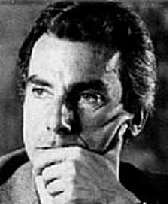
Sá Carneiro |
Sá Carneiro, Francisco (Manuel Lumbrales de) (b. July 19, 1934, Porto, Portugal - d. Dec. 4, 1980, near Lisbon, Portugal), prime minister of Portugal (1980). In 1969 he became a member of the rubber-stamp National Assembly. There he worked for liberalization of the authoritarian government, including a curtailment of the activities of the infamous secret police, but he resigned in early 1973. After the April 1974 military coup he founded the Popular Democrat Party (Partido Popular Democrático) and was its minister without portfolio in the government of Adelino da Palma Carlos during the presidency of Gen. António de Spínola. Sá Carneiro later resigned in protest against the nationalization of heavy industry, banks, and insurance companies. After his Social Democratic Party (Partido Social Democrático; PSD) split in May 1979 on whether to support a Socialist budget, Sá Carneiro left the party and began negotiations with other groups further to the right with a view to forming a coalition to contest the upcoming general and municipal elections. The PSD, needing his charisma, later welcomed him back as leader, and in July the Aliança Democrática (AD) was formed, consisting of the PSD, the Centre Democrats (CDS), the small Monarchist group, and several others, and with Sá Carneiro and Diogo Freitas do Amaral (CDS) as joint leaders. The AD won 45.2% of the votes in the Dec. 2, 1979, elections and would hold a narrow overall majority with 128 seats in the 250-seat Assembly. Sá Carneiro became prime minister on Jan. 3, 1980. He died in a light-plane crash.
Sá da Bandeira, Bernardo de Sá Nogueira de Figueiredo, (1º) marquês, (1º) visconde e (1º) barão de (b. Sept. 26, 1795, Santarém, Portugal - d. Jan. 6, 1876, Lisbon, Portugal), prime minister of Portugal (1836-37, 1837-39, 1865, 1868-69, 1870). He was also minister of marine and colonies (1832-33, 1835-36, 1837, 1838-39, 1856-59, 1865, 1870), interior (1835), finance (1836), foreign affairs (1836-37, 1837-39, 1868-69), war (1836-37, 1838, 1842, 1846, 1857, 1858-59, 1860-64, 1865, 1868-69, 1870), and public works (1856). He became baron in 1833, viscount in 1834, and marquess in 1864.

Sá Machado |
Sá Machado, Vítor (António Augusto Nunes de) (b. November 1933, Cuíma, Angola - d. April 27, 2002), foreign minister of Portugal (1978).
Sa-ngad Chaloryu (b. March 3, 1915, Suphan Buri province, Siam [now Thailand] - d. Nov. 23, 1980, Bangkok, Thailand), defense minister (1976-77) and chairman of the Administration Reform Council (1976-77), the Revolutionary Council (1977), and the National Policy Council (1977-80) of Thailand. He was also commander-in-chief of the navy (1973-76) and supreme commander of the armed forces (1975-76).
Sa Zhenbing (b. March 30, 1859, Fuzhou, Fujian, China - d. April 10, 1952, Fuzhou), navy minister (1917, 1919-21) and acting premier (1920) of China and civil governor of Fujian (1922, 1923-26).
Saá, Luis de, finance minister (1839-42) and foreign minister (1850-51) of Ecuador.
Saab (Halabi), Tarek William, also appearing as Tarek Willians Saab (b. Sept. 10, 1962, El Tigre, Anzoátegui, Venezuela), governor of Anzoátegui (2004-12). He was also ombudsman (2014-17) and prosecutor general (2017-26) of Venezuela.
Saad (ibn Abdul Aziz Al Saud) (b. 1920 - d. July 23, 1993, Jeddah, Saudi Arabia), Saudi prince; son of Abdul Aziz. He was governor of Asir (1941-60).
Saad, Farid (Ali al-) (b. 1908, Umm al-Fahm, Palestine [now in Israel] - d. ...), finance minister of Jordan (1972-73).
Saad (Niyaim), Pedro (Antonio) (b. May 19, 1909, Guayaquil, Ecuador - d. Feb. 26, 1982, Guayaquil), Ecuadorian politician. He was secretary-general of the Ecuadorian Communist Party (1952-81).
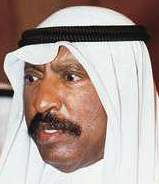
Saad (Kuwait) |
Saad Al Abdullah Al Salim Al Sabah, Sheikh, Arabic Shaykh Sa`d Al `Abd Allah Al Salim Al Sabah (b. 1929 - d. May 13, 2008), interior minister (1962-78), defense minister (1965-78), prime minister (1978-2003), crown prince (1978-2006), and emir (2006) of Kuwait; son of Sheikh Abdullah Al Salim Al Sabah; cousin of Jabir Al Ali Al Salim Al Sabah.
Saad Herrería, Pedro (b. Sept. 16, 1940, Guayaquil, Ecuador - d. June 6, 2014, Quito, Ecuador), Ecuadorian politician; son of Pedro Saad. Also known as an intellectual active in various cultural fields, he was secretary of public information (1990), ambassador to the Soviet Union/Russia (1990-92), and minister of communication (1997-98).
Saad ibn Mansur (ibn Saad ibn Saud ibn Abdul Aziz Al Saud) (b. June 10, 1988, Riyadh, Saudi Arabia), Saudi diplomat; great-grandson of Saud. He has been ambassador to Qatar (2025- ).
Saadi, Abdullah Ali Fadhel al- (b. 1960), Yemeni diplomat. He has been ambassador to Turkey (2016-18) and permanent representative to the United Nations (2018- ).
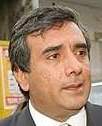
R. Saadi |
Saadi (Cubas), Ramón (Eduardo) (b. Feb. 6, 1949, Mar del Plata, Argentina - d. Feb. 8, 2023), governor of Catamarca (1983-87, 1988-91); son of Vicente Leónides Saadi.
Saadi, Selim (b. 1936, Sétif, Algeria - d. June 26, 2023, Algiers, Algeria), interior minister of Algeria (1993-94). He was also minister of agriculture and agrarian revolution (1979-84), heavy industry (1984-86), water resources (1999-2001), and transport (2001-02).
Saadi (Arce), Vicente Leónides (b. July 19, 1913, Belén, Catamarca, Argentina - d. July 10, 1988, Buenos Aires, Argentina), governor of Catamarca (1949, 1987-88).
Saadun, Abdul Muhsin Bey al- (b. 1879, Nasiriyah, Ottoman Empire [now in Iraq] - d. [suicide] Nov. 13, 1929), prime minister of Iraq (1922-23, 1925-26, 1928-29, 1929). He was also minister of defense (1922), interior (1922, 1922-23, 1924-25), justice (1922-23), foreign affairs (1925-26, 1928-29, 1929), and finance (1925-26).
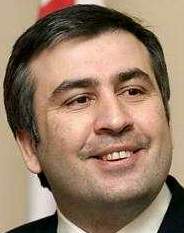
Saakashvili |
Saakashvili, Mikheil (Nikolozis dze) (b. Dec. 21, 1967, Tbilisi, Georgian S.S.R.), president of Georgia (2004-07, 2008-13). He was working in the U.S. before, at the invitation of Zurab Zhvania, he returned in 1995 to become a candidate for the liberal Union of Georgian Citizens (SMK) party, and was elected to parliament. In 1998 he became SMK leader in parliament. Justice minister in 2000-01, he emerged as a strong critic of corruption. Soon after resigning the post, he set up the National Movement, which vowed to close Russian military bases in Georgia. He was seen to have support from the U.S., which had interests in a $3 billion oil pipeline from Azerbaijan to Turkey via Georgia. In November 2003 he led the bloodless "Rose Revolution" which, through popular demonstrations in the wake of rigged parliamentary elections, overthrew Pres. Eduard Shevardnadze, a survivor from the Soviet era. Saakashvili was elected president in a massive landslide in January 2004. Following protests in the capital, he resigned in 2007 in order to renew his mandate in early elections in January 2008, which he won. In August 2008 his attempt to reassert control over the separatist region of South Ossetia backfired when Russia intervened forcefully, penetrating even non-disputed parts of Georgia and ultimately recognizing both South Ossetia and Abkhazia as independent. Not being eligible for a third term as president, he prepared a shift to a parliamentary system which was seen as an attempt to retain power, but in 2012 he lost parliamentary elections to the Georgian Dream party. After leaving the presidency he became an adviser to Ukrainian president Petro Poroshenko, who in May 2015 appointed him governor of Odessa oblast; he was granted Ukrainian citizenship just ahead of the appointment and was later stripped of his Georgian citizenship. He resigned in November 2016, complaining of obstruction in efforts to root out corruption. In July 2017 he was also stripped of his Ukrainian citizenship; it was restored in May 2019. In October 2021 he returned to Georgia and was arrested, having been convicted in absentia in 2018 of abuse of power and sentenced to 6 years in prison. In March 2025 he was additionally sentenced to 9 years for embezzlement and 4½ years for illegally crossing the border in 2021.
Saakyants, Artavazd (Aleksandrovich) (b. June 1895, Gadrut, Yelizavetpol province, Russia [now in Artsakh, Azerbaijan] - d. [executed] Feb. 23, 1939), executive secretary of the Communist Party committee of Nagorny Karabakh (1924-29). He was also first secretary of the party committee of Kustanay oblast (1937) and people's commissar of agriculture of the Armenian S.S.R. (1938).
Saam, Mohammad (b. 1924, Kerman, Persia [now Iran]), interior minister of Iran (1972-74).

Sa'ar |
Sa'ar, Gideon (b. Dec. 9, 1966, Tel Aviv, Israel), interior minister (2013-14), justice minister (2021-22), and foreign minister (2024- ) of Israel. He was also education minister (2009-13) and a minister without portfolio (2023-24).
Saarani |
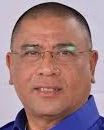
Saarani (bin) Mohamad, Datuk Seri (b. March 13, 1961, Kampung Raban, Lenggong, Perak, Malaya [now in Malaysia]), chief minister of Perak (2020- ). He was awarded the titles Datuk in 2004 and Datuk Seri in 2021.
Saarikko, Annika (Virpi Irene) (b. Nov. 10, 1983, Oripää, Finland), finance minister of Finland (2021-23). She was also minister of family affairs and social services (2017-19) and science and culture (2019, 2020-21), leader of the Centre Party (2020-24), and deputy prime minister (2020-23).
Saavedra (Mallea), Abdón (b. Aug. 6, 1872, La Paz, Bolivia - d. Jan. 6, 1943, La Paz), interior minister (1921-22), foreign minister (1922), and vice president (1926-30) of Bolivia; brother of Bautista Saavedra. He was also president of the Chamber of Deputies (1918).
Saavedra (Mallea), (Rosa) Bautista (b. Aug. 30, 1870, Sorata, La Paz department, Bolivia - d. March 1, 1939, Santiago, Chile), president (1921-25) and defense minister (1934) of Bolivia. He was also minister of justice and education (1909-10) and minister to Peru (1912-13) and Belgium, the Netherlands, and Switzerland (1926-...).
Saavedra (Rodríguez), Cornelio (Judas Tadeo de) (b. Sept. 15, 1759, Otuyo, Viceroyalty of Peru [now in Bolivia] - d. March 29, 1829, Buenos Aires, United Provinces of the Río de la Plata [now Argentina]), president of the First Junta (1810) and the Big Junta (1810-11) of Río de la Plata.
Saavedra (Rodríguez), Cornelio (b. June 26, 1823, Santiago, Chile - d. April 7, 1891, Santiago), war and marine minister of Chile (1878-79); grandson of Cornelio Saavedra (1759-1829); half-nephew of Mariano Saavedra. He was also acting intendant of Valparaíso (1859-60).
Saavedra (Otálora), Mariano (Eusebio) (b. Aug. 15, 1810, Buenos Aires, Río de la Plata [now Argentina] - d. Feb. 9, 1883, Buenos Aires), governor of Buenos Aires (1862-66); son of Cornelio Saavedra (1759-1829).
Saavedra, Pedro José, interior, police, and public works minister of Peru (1867-68). He was also mayor of Lima (1878-79).
Saavedra Acevedo, Jerónimo (b. July 3, 1936, Las Palmas de Gran Canaria, Spain - d. Nov. 21, 2023, Las Palmas de Gran Canaria), president of the government of Canarias (1982-87, 1991-93). He was also Spanish minister of public administration (1993-95) and education and science (1995-96) and mayor of Las Palmas de Gran Canaria (2007-11).
Saavedra Bruno, Carlos (Armando) (b. Dec. 15, 1949, Santa Cruz, Bolivia), interior and justice minister (1991-93) and foreign minister (2002-03) of Bolivia. He was also minister of foreign trade and investment (1999-2000) and economic development (2000-02).
Saavedra L. |
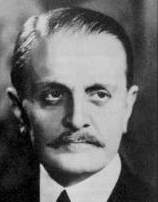
Saavedra Lamas, Carlos (Alberto) (b. Nov. 1, 1878, Buenos Aires, Argentina - d. May 5, 1959, Buenos Aires), Argentine diplomat; grandson of Mariano Saavedra. He became secretary of the municipality of Buenos Aires and in 1908 was elected to parliament as a Liberal. He held numerous posts in the national government, including those of minister of justice and public education (1915) and minister of foreign affairs (1932-38). He was Argentine delegate to conferences on world peace and international law and presided over the International Labour Congress, Geneva (1928); the Pan-American Commercial Conference, Buenos Aires (1935); and the League of Nations Assembly (1936). In November 1932 he proposed an anti-war treaty for South America, later extended to the world, which in the following years was signed by the United States, all 20 Latin American nations, and several non-American nations. He also organized and presided over the international mediation committee (Brazil, Chile, Peru, Uruguay, and the United States) that secured an armistice (June 12, 1935) in the Chaco War fought since 1932 between Bolivia and Paraguay. For this he was awarded the Nobel Prize for Peace in 1936; he also received numerous decorations and honours from Latin American and European governments. After the armistice he was prominent in negotiations which resulted in a permanent peace agreement (July 21, 1938).
Saavedra Montt, Cornelio (b. May 10, 1884, Valparaíso, Chile - d. March 24, 1946, Santiago, Chile), war and marine minister (1916) and interior minister (1923, 1924) of Chile. He was also mayor of Santiago (1907) and minister of industry and public works (1914-15).
Saavedra Nogales, Alberto (b. May 11, 1902, Potosí, Bolivia - d. Jan. 30, 1978, Rio de Janeiro, Brazil), foreign minister of Bolivia (1949-50). He was also ambassador to Paraguay (1947-49), Brazil (1950-52), and Italy (1970-72).
Saavedra Suárez, José, interior and justice minister of Bolivia (1951). He was also minister of agriculture, livestock, and colonization (1946-47) and minister to Italy (1947-50).
Saavedra Weise, Agustín (b. Nov. 19, 1943, Santa Cruz de la Sierra, Bolivia - d. Dec. 26, 2021), foreign minister of Bolivia (1982). He was also chargé d'affaires in Argentina (1975-76, 1979-80) and Chile (1977-78), ambassador to Argentina (1989-93), and acting president of the Central Bank (2020).
Saavedra y Sangronís, Francisco (Arias) de (b. Oct. 4, 1746, Sevilla, Spain - d. Nov. 25, 1819, Sevilla), finance minister (1797-98 and [in Resistance] 1808-09), first secretary of state (1798-99 and [in Resistance] 1809-10), and president of the Supreme Council of Regency (1810, in Resistance) of Spain.
Saba, Daud Shah (b. 1964, Herat, Afghanistan), Afghan politician. He was governor of Herat (2010-13) and minister of mines and petroleum (2015-16).
Saba, Elias (Shukri) (b. July 10, 1932, Lebanon - d. May 22, 2023), finance minister (1970-72, 2004-05), defense minister (1970-72), and deputy prime minister (1971-72) of Lebanon.
Sabah Al Ahmad | 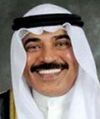
Sabah Al Khaled |
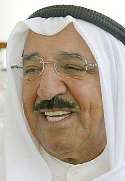
Sabah Al Ahmad Al Jabir Al Sabah, Sheikh (b. July 16, 1929, Kuwait - d. Sept. 29, 2020, Rochester, Minn.), foreign minister (1963-91, 1992-2003), prime minister (2003-06), and emir (2006-20) of Kuwait; son of Sheikh Ahmad Al Jabir Al Sabah. He effectively ran the country since Emir Sheikh Jabir Al Ahmad Al Jabir Al Sabah suffered a brain haemorrhage in 2001.
Sabah Al Khaled Al Hamad Al Sabah, Sheikh (b. March 3, 1953), foreign minister (2011-19), prime minister (2019-22), and crown prince (2024- ) of Kuwait. He was ambassador to Saudi Arabia in 1995-98.
Sabah Al Salim Al Sabah, Sheikh (b. 1913 - d. Dec. 31, 1977, Kuwait, Kuwait), emir of Kuwait (1965-77).
Sabal Lecco, Félix (b. 1920, Lena, French Cameroons [now in Cameroon] - d. Oct. 23, 2010, Yaoundé, Cameroon), Cameroonian politician. He was minister of justice (1970-72) and public service (1972-74) and ambassador to Italy (1984-89).
Sabalat, Jean-Robert (b. Feb. 18, 1939, Port-au-Prince, Haiti - d. March 8, 2002, Madrid, Spain), foreign minister of Haiti (1991).
Sabally, Saihou S(ulayman) (b. Dec. 27, 1947), finance minister (1981-82, 1989-92) and vice president and defense minister (1992-94) of The Gambia. He was also minister of economic planning and industrial development (1978-81) and agriculture and natural resources (1982-89).
Sabanov, Totraz (Bakgeriyevich) (b. 1926, Khristianovskoye, North Ossetian autonomous oblast, Russian S.F.S.R. [now Digora, North Ossetia-Alania, Russia] - d. 2016), chairman of the Presidium of the Supreme Soviet of the North Ossetian A.S.S.R. (1984-87). He was also minister of land reclamation and water management (1977-82).
Sabanovic, Damir, Montenegrin diplomat. He was chargé d'affaires at the United Nations (2024-25).
Sabara, Eddy (b. Feb. 17, 1927, Kendari, Netherlands East Indies [now in Sulawesi Tenggara, Indonesia] - d. Sept. 30, 1995), governor of Sulawesi Tenggara (1967-78 and [acting] 1981-82), Jambi (1979), Sulawesi Tengah (1980-81), Aceh (acting, 1981), and Kalimantan Tengah (1983-84).
Sabará, João Gomes da Silveira Mendonça, visconde de Fanado e marquês de (b. 1781, São Miguel, Minas Gerais, Brazil - d. July 2, 1827, Rio de Janeiro, Brazil), war minister of Brazil (1823-24). He was made viscount in 1825 and marquess in 1826.
Sabará, Manoel Antonio Pacheco, barão de (b. 1783 - d. Jan. 19, 1862, Sabará, Minas Gerais, Brazil), acting president of Minas Gerais (1849-50). He was made baron in 1843.
Sabarno, Hari (b. Aug. 12, 1944, Surakarta, Netherlands East Indies [now Indonesia] - d. May 31, 2019, Jakarta, Indonesia), home affairs minister of Indonesia (2001-04). He was also interim coordinating minister for political and security affairs (2004).
Sábato (Kusminsky), Jorge (Federico) (b. May 25, 1938, La Plata, Buenos Aires province, Argentina - d. [traffic accident] Feb. 10, 1995), justice and education minister of Argentina (1987-89).

B. Sabbagh |
Sabbagh, Bassam (b. Jan. 1, 1969, Aleppo, Syria), foreign minister of Syria (2024). He was also ambassador to Austria, Slovakia, and Slovenia (2010-20) and permanent representative to the United Nations (2021-24).
Sabbagh, Hussein (Rashid) al- (b. 1938), Bahraini diplomat. He was chargé d'affaires in Lebanon (1976-79), ambassador to Iran (1979-82) and China (1989-97), and permanent representative to the United Nations (1982-86).
Sabbagh, Rachid (d. Sept. 15, 2026), defense minister of Tunisia (2013-14).
Sabbaghian, Hashem (b. April 4, 1937, Tehran, Iran), a deputy prime minister (1979) and interior minister (1979) of Iran.
Sabbat |
Sabbat, Kazimierz (Aleksander) (b. Feb. 27, 1913, Bieliny Kapitulne, Russia [now in Poland] - d. July 19, 1989, London, England), prime minister (1976-86) and president (1986-89) of the Polish government-in-exile.
Sabbazd (d. Nov. 14, 1959), metropolitan of the Orthodox Church of Czechoslovakia (1923-48).
Saberbein Chevalier, Gustavo (Alberto) (b. March 31, 1945, Lima, Peru - d. Aug. 19, 2025, Chicago, Ill.), finance minister of Peru (1987-88).

Sabines
Guerrero |
Sabines Guerrero, Juan (José) (b. Aug. 20, 1968, Tepetlaoxtoc, México state, Mexico), governor of Chiapas (2006-12); son of Juan Sabines Gutiérrez. He was also mayor of Tuxtla Gutiérrez (2005-06).
Sabines Gutiérrez, Juan (del Perpetuo Socorro) (b. 1920, Tuxtla Gutiérrez, Chiapas, Mexico - d. March 3, 1987), interim governor of Chiapas (1979-82).
Sabino (Lopes), Mariano Assanami (b. April 12, 1971, Lautém, Portuguese Timor [now Timor-Leste]), a deputy prime minister (and coordinating minister for social affairs and minister of rural development and community housing) of Timor-Leste (2023- ). He was also minister of agriculture and fisheries (2007-15) and mineral resources (2017-18) and a presidential candidate (2022).
Sabiran, Saban, interior minister of Suriname (1993-96).
Sabirov, Mukhammat (Gallyamovich) (b. March 29, 1932, Novokurmashevo, Bashkir A.S.S.R., Russian S.F.S.R. - d. March 9, 2015), prime minister of the Tatar A.S.S.R./Tatarstan (1989-95). He was deputy premier in 1984-89.
Sabirov, Rauf (Akhmetovich) (b. 1894, Aydarovo, Kazan province [now in Tatarstan republic], Russia - d. [executed] Dec. 30, 1937, Kazan, Tatar A.S.S.R., Russian S.F.S.R.), chairman of the Central Executive Committee of the Tatar A.S.S.R. (1921-24).
Sabler, Vladimir (Karlovich) (b. Nov. 25 [Nov. 13, O.S.], 1845, Moscow, Russia - d. Sept. 9, 1929, Tver, Russia), Russian official. He was chief procurator of the Holy Synod (1911-15).
Sabluk, Petro (Trokhimovych) (b. June 22, 1941, Potoki, Vinnitsa oblast, Ukrainian S.S.R. [now Potoky, Vinnytsya oblast, Ukraine]), a deputy prime minister (1994-95, 1995-96) and a first deputy prime minister (1995) of Ukraine.
Sabo, Boukary (b. 1924, Dan-Amario, Maradi, Niger - d. June 22, 2022, Niamey, Niger), foreign minister of Niger (1972-74). He was also minister of information and youth (1965-70) and civil service and labour (1970-72).
Sabo, Nassirou, foreign minister of Niger (2000-01). He was also minister of economic promotion (1990-91).
Sabóia e Silva, João Tomé de (b. Aug. 4, 1870, Sobral, Ceará, Brazil - d. July 27, 1945, Rio de Janeiro, Brazil), governor of Ceará (1916-20).
Saborin, Maurice (Ferdinand Philippe) (b. June 3, 1933, Biol, Isère, France), prefect of Guadeloupe (1984-86). He was also prefect of the French départements of Cantal (1982-84) and Finistère (1988-92).
Saborío (Chaverri), (María) Lineth (de la Trinidad) (b. Nov. 4, 1960, Sarchí, Alajuela, Costa Rica), Costa Rican presidential candidate (2022).

Saboya | 
A. Sabri |
Saboya Sunyé, Gilbert (b. July 28, 1966, Sant Julià de Lòria, Andorra), foreign minister (2011-17) and acting head of government (2015) of Andorra. In 2017-19 he was minister of economy and innovation.
Sabran, Agustiar (b. Aug. 17, 1972, Sampit, Kalimantan Tengah, Indonesia), governor of Kalimantan Tengah (2025- ).
Sabri, Ali (b. 1920 - d. Aug. 3, 1991, Cairo, Egypt), Egyptian politician. He played an active role in the 1952 "Free Officers" revolution against the monarchy of King Faruq. He was not however a member of the Revolutionary Command Council grouping the 12 "Free Officers" who assumed power after Faruq was exiled in July. He was a close colleague of Gamal Abdel Nasser and served as secretary-general of the Arab Socialist Union, the only political party under Nasser. Sabri became director of intelligence for external activities (1956-57), minister for presidential affairs (1960-62), prime minister (1962-65), a vice president (1965-68), and a deputy prime minister (1967-68). He became a vice president again under Pres. Anwar al-Sadat in October 1970, but was removed in May 1971. Charged with plotting a coup against Sadat's government, he was sentenced to death in December, but the sentence was reduced to life imprisonment by Sadat. Sadat pardoned him in 1981.

N. Sabri | 
A. Sabry |
Sabri (Ahmad al-Hadithi), Naji (b. 1951), foreign minister of Iraq (2001-03). He was ambassador to Austria in 1998-2001.
Sabron, Frederik Henri Alexander (b. May 17, 1849, Utrecht, Netherlands - d. May 3, 1916, Utrecht), war minister of the Netherlands (1908-09).
Sabry, (Mohamed Uvais Mohamed) Ali (b. May 1, 1970), justice minister (2020-22, 2024), finance minister (2022), and foreign minister (2022-24) of Sri Lanka.
Sabry Pasha, Hassan, Arabic Hasan Sabri Basha (b. 1879 - d. Nov. 14, 1940, Cairo, Egypt), prime minister and foreign minister of Egypt (1940). He was also minister of finance (1933-34), commerce and communications (1937-38), and defense (1938-40) and minister to the United Kingdom (1935-37).
Sabugosa, Vasco Fernandes César de Meneses, conde de (b. Oct. 16, 1673 - d. Oct. 24, 1741, Lisbon, Portugal), viceroy of Portuguese India (1712-17) and Brazil (1720-35); son of Luís César de Meneses. He was made conde de (count of) Sabugosa in 1729.
Sabumei, Benais, defense minister of Papua New Guinea (1989-92).
Saburov, Aleksandr (Petrovich) (b. Nov. 5, 1870 - d. [shot] January 1919), governor of Petrograd (1916-17); son of Pyotr Saburov.
Saburov, Andrey (Aleksandrovich) (b. Aug. 18, 1837, Pokrovskoye, Tambov province, Russia - d. March 10, 1916), education minister of Russia (1880-81); brother of Pyotr Saburov.
Saburov, Maksim (Zakharovich) (b. Feb. 19 [Feb. 7, O.S.], 1900, Druzhkovka, Yekaterinoslav province, Russia [now in Ukraine] - d. March 24, 1977, Moscow, Russian S.F.S.R.), Soviet politician. He was chairman of the State Planning Commission (1941-42), the State Planning Committee (1949-53, 1953-55), and the State Economic Commission (1955-56), a deputy premier (1941-44, 1947-53, 1953-55), minister of machine building (1953), and a first deputy premier (1955-57).
Saburov, Pyotr (Aleksandrovich) (b. March 22, 1835 - d. March 18, 1918), Russian diplomat. He was chargé d'affaires in Baden (1869-70), minister to Greece (1870-79), and ambassador to Germany (1879-84).
Saburov, Yevhen (Fedorovych), Russian Yevgeny (Fyodorovich) Saburov (b. Feb. 13, 1946, Yalta, Russian S.F.S.R. [now in Ukraine] - d. June 20, 2009, Moscow, Russia), prime minister of Crimea (1994). He was also minister of economy and a deputy premier of the Russian S.F.S.R. (1991).

Saca |
Saca (González), (Elías) Antonio, byname Tony Saca (b. March 9, 1965, Usulután, El Salvador), president of El Salvador (2004-09). He was an unsuccessful presidential candidate in 2014. In 2018 he received a 10-year prison sentence after pleading guilty to charges of embezzlement and money-laundering.
Sacasa (Sacasa), Federico (b. July 24, 1877, León, Nicaragua - d. Nov. 26, 1958), interior minister of Nicaragua (1908-09); son of Roberto Sacasa; brother of Juan Bautista Sacasa.
J.B. Sacasa |
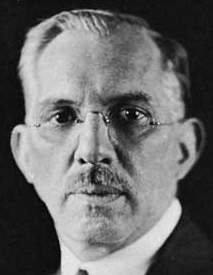
Sacasa (Sacasa), Juan Bautista (b. Dec. 21, 1874, León, Nicaragua - d. April 17, 1946, Los Angeles, Calif.), president of Nicaragua (1933-36); son of Roberto Sacasa. As leader of the Liberal Party he was elected vice president in 1924 on a coalition ticket with Carlos Solórzano of the Conservative Party. However, in March 1926 he was forced into exile by a coup d'état which installed Gen. Emiliano Chamorro Vargas as president. When Chamorro was replaced by Adolfo Díaz in November, Sacasa returned and claimed the presidency. Mexico supported him; the United States, involved in a dispute with Mexico at the time and determined to prevent it from gaining the prestige of backing a winning candidate, sided with Díaz. The unrest led to the U.S. government sending marines to "maintain order" in Nicaragua. On their arrival in April 1927, Sacasa reluctantly accepted a compromise imposed by U.S. special commissioner Henry L. Stimson. Elected president in 1932, he was overshadowed by his nominal subordinates Augusto César Sandino and Gen. Anastasio Somoza García and was ousted in June 1936 by Somoza, his military commander.
Sacasa (Sarria), Roberto (b. Feb. 27, 1840, El Viejo, Chinandega, Nicaragua - d. July 2, 1896, Managua, Nicaragua), president of Nicaragua (1889-91, 1891-93); grandnephew of Mariano Montealegre.
Sacasa Cruz, Noel (José) (b. Jan. 9, 1947, Managua Nicaragua), Nicaraguan politician; son of Noel Sacasa Sevilla; nephew of Arturo Cruz Porras. He was minister of development, industry, and commerce (1997-99).
Sacasa Gómez, Juan Bautista (b. Oct. 22, 1944, Managua, Nicaragua), Nicaraguan diplomat; grandson of Juan Bautista Sacasa; cousin of Carlos Argüello Gómez; brother-in-law of Francisco Aguirre Sacasa. He was ambassador to the United Kingdom (2001-05).
Sacasa Guerrero, Ramiro (b. July 29, 1922, León, Nicaragua - d. Sept. 27, 1981, León), finance minister of Nicaragua (1963-67); grandnephew of Roberto Sacasa. He was also minister of labour (1952-55) and education (1967-69).
Sacasa Sevilla, Noel (b. Dec. 19, 1917, León, Nicaragua - d. April 11, 2001, Managua, Nicaragua), Nicaraguan diplomat; grandson of Roberto Sacasa; nephew of J. Ramón Sevilla; cousin of Guillermo Sevilla Sacasa and Óscar Sevilla Sacasa. He was ambassador to Peru (1967-70) and Argentina (1970-79).
Sacchi, Ettore (b. May 30, 1851, Cremona, Austria [now in Lombardia, Italy] - d. April 6, 1924, Rome, Italy), justice minister of Italy (1906, 1916-19). He was also minister of public works (1910-14).
Saccomanni, Fabrizio (b. Nov. 22, 1942, Rome, Italy - d. Aug. 8, 2019, San Teodoro, Sardegna, Italy), finance minister of Italy (2013-14). He was also director-general of the central bank (2006-13) and chairman of UniCredit bank (2018-19).
Sachar, Bhim Sen (b. Dec. 1, 1893, Peshawar, India [now in Pakistan] - d. Jan. 18, 1978), chief minister of Punjab (1949, 1952-56) and governor of Orissa (1956-57) and Andhra Pradesh (1957-62).
Sachdev, M(ulk) R(aj) (b. Oct. 12, 1903 - d. Dec. 8, 1964, Panjim, Goa, India), lieutenant governor of Goa (1963-64).
Sacher, Richard (b. Sept. 1, 1942, Úpice, Czechoslovakia [now in Czech Republic] - d. Feb. 27, 2014, Cervený Kostelec, Czech Republic), interior minister of Czechoslovakia (1989-90).
Sachinidis, Philippos (b. March 27, 1963, Vancouver, B.C.), finance minister of Greece (2012).
Sachyova, Nadezhda (Ivanovna) (b. 1904 - d. ...), acting chairman of the Presidium of the Supreme Soviet of the Crimean A.S.S.R. (1944-45).
Sacirbey |
Sacirbey, Muhamed, also known as Muhamed Sacirbegovic (b. July 28, 1956, Sarajevo, Bosnia and Herzegovina), foreign minister of Bosnia and Herzegovina (1995-96). He became a U.S. citizen in 1973. From 1992 to 2000 he was Bosnian ambassador to the United Nations. He was arrested in New York on March 25, 2003, and threatened with extradition to his home country where he was accused of stealing more than $2.4 million (about $1.8 million from the nation's Investment Fund Ministry and more than $600,000 from the account of Bosnia's representation at the UN). He was released on bail in July 2004, but remained under house arrest. The dual U.S.-Bosnian citizen denied the accusations, saying they were all part of a smear campaign to discredit him.
Sacko, Soumana (b. Dec. 23, 1950, Nyamina, French Sudan [now Mali] - d. Oct. 15, 2025), finance minister (1987) and interim prime minister (1991-92) of Mali.
Sackville, Charles John Sackville-West, (4th) Baron (b. Aug. 10, 1870 - d. May 8, 1962), lieutenant governor of Guernsey (1925-29). He was knighted in 1919 and succeeded as baron in 1928.

Sadat |
Sadat, (Muhammad Ahmad) Anwar al-, al-Sadat also spelled el-Sadat (b. Dec. 25, 1918, Mit Abu al-Kum, al-Minufiyah governorate, Egypt - d. Oct. 6, 1981, Cairo, Egypt), president of Egypt (1970-81). He became associated with Gamal Abdel Nasser and other like-minded military officers who opposed the British presence in Egypt. He was detained in 1942-44, and in 1945 was again arrested after being implicated in an assassination attempt against Wafd party leader Mustafa an-Nahhas Pasha; he denied the charge, but was imprisoned and, as a result, missed the 1948 war against Israel. In 1950 he was readmitted to the army and joined Nasser's Free Officers organization; he participated in their coup against the monarchy in 1952. He was vice-chairman (1957-60) and chairman (1960-68) of the National Assembly and secretary-general (1957-61) of the National Union party. He served as vice president (1964-66, 1969-70) and became acting president upon Nasser's death on Sept. 28, 1970. He was elected president on October 15, with more than 90% of the votes. In 1973-74 and from 1980 he was also prime minister. After a peace offer to Israel in 1971 was rejected, he launched, with Syria, a joint invasion of Israel in October 1973. The Egyptian army achieved a tactical surprise in its attack on the Israeli-held Sinai Peninsula, and, despite subsequent reverses, Sadat won great prestige as the first Arab leader to actually retake some territory from Israel. In 1977 he made a historic visit to Israel. Together with Israeli prime minister Menachem Begin he was awarded the Nobel Prize for Peace in 1978; their continued negotiations resulted in the signing of a peace treaty on March 26, 1979. He gained a phased withdrawal of Israel from the Sinai and billions of dollars of U.S. aid, but also isolation within the Arab world. He was assassinated while reviewing a military parade commemorating the eighth anniversary of the 1973 war.
Sadayev, Andrey (Vladimirovich) (b. Sept. 19, 1971, Birobidzhan, Yevreyskaya autonomous oblast, Russian S.F.S.R.), acting chairman of the government of Yevreyskaya autonomous oblast (2025). He has been deputy chairman of the government of Yevreyskaya autonomous oblast (2019-25) and Komi republic (2025- ).
Sade, Francis (Motcho Belande), deputy prime minister of the Solomon Islands (2026- ). He has also been premier of Guadalcanal province (2019-24) and minister of public service (2024-26, 2026- ).
Sadek, Mohamed Ahmed (b. October 1917 - d. March 1991), Egyptian minister of war and military production (1971-72) and a deputy prime minister (1972).
Sadeleer, Louis (Marie Joseph) de (b. Oct. 6, 1852, Haaltert, Belgium - d. May 6, 1924, Brussels, Belgium), chairman of the Chamber of Representatives of Belgium (1900-01). He was also minister to Portugal (1910-12).
Sadenov, Yerzhan (Saparbekovich) (b. Oct. 24, 1968, Kuygan, Vostochno-Kazakhstan oblast, Kazakh S.S.R.), interior minister of Kazakhstan (2023- ).
Sadi, René Emmanuel (b. Dec. 21, 1948, Maroua, French Cameroons [now in Cameroon]), Cameroonian politician. He was minister at the presidency in charge of special duties (2009-11) and minister of territorial administration and decentralization (2011-18).
Sadiboko (Mupwedi), Sabin, governor of Bandundu (2004-05).
Sadikin, Ali (b. July 7, 1927, Sumedang, Netherlands East Indies [now in Jawa Barat, Indonesia] - d. May 20, 2008, Singapore), governor of Jakarta (1966-77).

Sadir |
Sadir, Carlos (Alberto) (b. Sept. 24, 1958), governor of Jujuy (2023- ).
Sadler, Sir James Hayes (b. Oct. 11, 1851 - d. April 21, 1922, Saint-Briac, Ille-et-Vilaine, France), British political agent and consul in Muscat and Oman (1892-95, 1895-96), acting political resident in the Persian Gulf (1893, 1893-94), political agent (1897-98) and consul-general (1898-1900) of British Somaliland, commissioner of Uganda (1901-05), commissioner (1905-07) and governor (1907-09) of the British East Africa Protectorate, and governor of the Windward Islands (1909-14); knighted 1907.
Sadler, Reinhold (b. Jan. 10, 1848, Czarnikau, Prussia [now Czarnków, Poland] - d. Jan. 30, 1906, Eureka, Nev.), governor of Nevada (1896-1903).
Sadoul, Numa (François Henri) (b. June 10, 1906 - d. Oct. 4, 1990), governor of Gabon (1944-46, 1947-49), lieutenant governor of Middle Congo (1946-47), and governor of French Somaliland (1950-54).
Sádovský, Stefan (b. Oct. 13, 1928, Vlkas, Nové Zámky district, Czechoslovakia [now in Slovakia] - d. June 17, 1984, Bratislava, Czechoslovakia [now in Slovakia]), prime minister of the Slovak Socialist Republic (1969).
Sadowski, Marek (b. March 22, 1948, Zabrze, Poland), justice minister and prosecutor-general of Poland (2004).
Sadowski, Zdzislaw (Lech) (b. Feb. 10, 1925, Warsaw, Poland - d. Dec. 6, 2018), a deputy premier of Poland (1987-88). He was also chairman of the Planning Commission (1987-88).
Sadr, Javad (b. 1912, Tehran, Persia [now Iran]), interior minister (1964-66) and justice minister (1966-68) of Iran. He was also ambassador to Japan (1959-63).
Saduakasov, Nuraly (Mustafinovich) (b. Nov. 28, 1964, Sholakterek, Kustanay [now Kostanay] oblast, Kazakh S.S.R.), head of Kostanay oblast (2012-15). He was also mayor of Kostanay (2004-06).

Sadulayev |
Sadulayev, Abdul-Khalim (Abu-Salamovich), Chechen Sadulin Abusalamin kant Abdulhalim (b. 1967, Argun, Chechen-Ingush A.S.S.R., Russian S.F.S.R. [now in Chechnya, Russia] - d. [killed in gun battle with Russian police] June 17, 2006, Argun), president of separatist Chechnya (2005-06). He was also vice president (2002-05).
Sadullah (Rami) Pasha (b. 1838, Erzurum, Ottoman Empire [now in Turkey] - d. [suicide] Jan. 18, 1891, Vienna, Austria), Ottoman official. He was commerce minister (1876) and ambassador to Germany (1877-83) and Austria-Hungary (1883-91).
Sadykhov, Hussein-Aga (b. March 14, 1940, Baku, Azerbaijan S.S.R.), foreign minister of Azerbaijan (1988-92). He was also ambassador to Germany (1992-2005).
Sadykov, Dovletgeldy (b. 1965, Ashkhabad, Turkmen S.S.R. [now Ashgabat, Turkmenistan]), finance minister of Turkmenistan (2011-14).
Sadykov, Ildus (Kharisovich) (b. Nov. 28, 1932, Velmo-2, Krasnoyarsk kray, Russian S.F.S.R. - d. Sept. 23, 2001, Kazan, Tatarstan, Russia), chairman of the Council of Ministers of the Tatar A.S.S.R. (1982-85). He was also first secretary of the Communist Party committee of Nizhnekamsk city (1969-82).
Sadykov, Samad, a first deputy prime minister (and economy minister) of Azerbaijan (1993-96).
Sadzhaya, Aleksey (Nikolayevich) (b. February 1898, Papa-Koki, Kutaisi province, Russia [now in Georgia] - d. Nov. 5, 1942), first secretary of the Communist Party committee of the Adzhar A.S.S.R. (1938). He was also first secretary of the party committees of Poti city (1937) and Kutaisi city (1937-38), people's commissar of interior (1938-41) and state security (1941) of the Uzbek S.S.R., and first deputy premier of the Georgian S.S.R. (1941-42).
Sadzius, Rimantas (b. Oct. 8, 1960, Vilnius, Lithuanian S.S.R.), finance minister (2007-08, 2012-16, 2024-25) and acting prime minister (2025) of Lithuania.
Saeed, Fathimath Dhiyana (b. 1974?, southern Maldives), secretary-general of SAARC (2011-12). She was also attorney-general (2008-09) and gender, family, and human rights minister (2012-13) of Maldives. In 2026 she was appointed ambassador to Belgium.
Saemala, Francis (Joseph) (b. June 23, 1944), foreign minister of the Solomon Islands (1993-94). He was also permanent representative to the United Nations (1983-89) and ambassador to the United States (1985-89).
Sáenz (Stiro), Gustavo (Adolfo Ruberto) (b. April 14, 1969, Salta, Salta, Argentina), governor of Salta (2019- ). He was mayor of Salta in 2015-19.
Sáenz, Juan Bautista, war and navy minister of Nicaragua (1899-1903).
Sáenz, Ramón, finance minister of Nicaragua (1869-71).
Sáenz Barsallo, Alcibíades, economy and finance minister of Peru (1977-78).
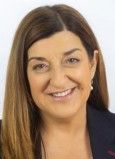
Sáenz de B. |
Sáenz de Buruaga (Gómez), María José (b. June 4, 1968, Suances, Cantabria, Spain), president of the Council of Government of Cantabria (2023- ).
Sáenz de Santamaría, Soraya (b. June 10, 1971, Valladolid, Spain), deputy prime minister of Spain (2011-18). She was also minister of the presidency (2011-18), justice (2014, acting), health and social services (2014, acting), and territorial administration (2016-18).
Sáenz García, Eduardo (b. May 4, 1906, La Paz, Bolivia - d. March 17, 1985, La Paz), economy minister (1946-47) and foreign minister (1946) of Bolivia. He was also mayor of La Paz (1950-52).
Sáenz Garza, Aarón (b. June 1, 1891, Monterrey, Nuevo León, Mexico - d. Feb. 26, 1983, Mexico City, Mexico), foreign minister of Mexico (1921 [acting], 1923-27), governor of Nuevo León (1927-31), and chief of government of the Distrito Federal (1932-35); brother of Moisés Sáenz Garza. He was also minister of education (1930) and industry, commerce, and labour (1930-32).
Sáenz Garza, Moisés (b. Feb. 16, 1888, Apodaca, Nuevo León, Mexico - d. Oct. 24, 1941, Lima, Peru), education minister of Mexico (1928). He was also minister to Ecuador (1934-35) and Denmark (1935-36) and minister (1936-37) and ambassador (1937-38, 1938-41) to Peru.
Sáenz Peña (Dávila), Luis (b. April 2, 1822, Buenos Aires, Argentina - d. Dec. 4, 1907, Buenos Aires), president of Argentina (1892-95). He was also president of the Chamber of Deputies (1874).

R. Sáenz Peña |
Sáenz Peña (Lahitte), Roque (José Antonio del Corazón de Jesús) (b. March 19, 1851, Buenos Aires, Argentina - d. Aug. 9, 1914, Buenos Aires), president of Argentina (1910-14); son of Luis Sáenz Peña. He was elected to parliament in 1876, at a time when Argentina's population and economy were rapidly expanding. In 1877 he resigned on account of political differences with the majority and joined the army in the war then going on with Chile. He was severely wounded and taken prisoner, but was released before the close of the war, returned home, and entered the diplomatic service. He held the office of foreign minister (1890) and served as Argentine delegate to the first International Conference of American States (Washington, D.C., 1889-90), where he opposed the U.S.-sponsored all-American customs union because of Argentina's economic ties to Europe. Later he was ambassador to Spain (1906-07) and to Italy (1907-10). With the opposition Radical Party abstaining, he was elected president in 1910 over Guillermo Udaondo. Regarding himself as nonpartisan, he responded to popular demand for electoral reform. Universal and compulsory male suffrage from age 18 by secret ballot was established (1912) by a statute that he compelled the oligarchy-dominated Congress to pass and that has since been known by his name. It placed Argentina in the vanguard of Latin American democracy. Intended in part to mollify the Radical Party, the reforms made possible the election of Radical leader Hipólito Irigoyen to the presidency in 1916. Sáenz Peña was a strong critic of what he considered the United States' attitude of arrogant superiority over Latin America as expressed by the Monroe Doctrine. He died in office.
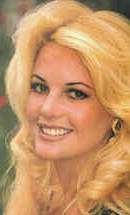
I. Sáez |
Sáez (Conde), Irene (Lailin) (b. Dec. 13, 1961, Caracas, Venezuela), Venezuelan politician. The former (1981) Miss Universe served two widely-praised terms (1992-98) as mayor of Chacao, an upmarket district of Caracas. She reduced crime, corruption, and bureaucracy and won reelection in 1995 with 96% of the vote. On this basis she became the first of several independent presidential candidates to ride a wave of public discontent with traditional parties in 1998. She was the country's most popular political figure at the beginning of the year but began to fade in the polls after accepting the backing of the COPEI party in May. The party ditched her as its nominee in the last week of the campaign in favour of Henrique Salas, leaving her to continue as an independent. Sáez was respected for her strong convictions and popular touch, but critics labeled her a political lightweight who struggled with tough interviewers and was more concerned with image than policy. She plunged to a distant third place in the election. In March 1999, she staged a stunning comeback, winning the governorship of Nueva Esparta state, which includes Margarita Island, a leading tourist resort. Backed by a hodgepodge of political parties, Sáez won 70.8% of the vote compared with 28.9% for her closest rival, local businessman and car dealer Gregorio Boadas. In 2000, when new elections were held after the adoption of a new Venezuelan constitution, she did not run for reelection because she was pregnant.
Sáez Morales, Carlos (b. Jan. 4, 1881, Santiago, Chile - d. [street accident] April 14, 1941, Santiago), war and aviation minister of Chile (1932).
Sáez Sáez, Raúl (b. Feb. 16, 1913, Concepción, Chile - d. Nov. 24, 1992), finance minister of Chile (1968). He was also minister of economic coordination (1974-75).
Sáez y Sánchez Mayor, Víctor Damián (b. April 12, 1777, Budia, Guadalajara province, Spain - d. Feb. 3, 1839, Sigüenza, Guadalajara province), first secretary of state of Spain (1823).
Safa Bey, Abdüllatif (b. 1868 - d. 1931), foreign minister of the Ottoman Empire (1919, 1920, 1920-21). He was also ambassador to Romania (1908-16), Denmark (1916-17), and Bulgaria (1917-18) and minister of commerce (1921-22).

A. Safadi |
Safadi, Ayman (Hussein) (b. 1962, Zarqa, Jordan), foreign minister (2017- ) and a deputy prime minister (2020- ) of Jordan.
Safadi, Mohammad (b. March 28, 1944, Tripoli, Lebanon), finance minister of Lebanon (2011-14). He was also minister of public works and transport (2005-08) and economy and trade (2008-11).
Safanpo, Apolo (b. April 24, 1975, Agats, Irian Jaya [now in Papua Selatan], Indonesia), governor of Papua Selatan (2022-24 [acting], 2025- ).
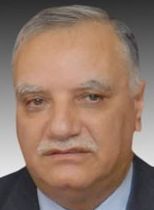
Safar | 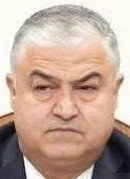
Safarzoda |
Safar, Adel, Arabic `Adil Safar (b. 1953, near Damascus, Syria), prime minister of Syria (2011-12). He was also minister of agriculture (2003-11).
Safarzoda, Sharifkhon (Nurakhmad) (b. Nov. 15, 1980, Matchinsky rayon, Leninabad oblast, Tadzhik S.S.R. [now Mastchokh nokhiya, Sughd viloyat, Tajikistan]), chairman of Gorno-Badakhshan autonomous province (2026- ).
Safayev, Sadyk (Salikhovich), Uzbek Sadyk (Solihovich) Safayev (b. 1954), foreign minister of Uzbekistan (1993, 2003-05). He was also ambassador to Germany (1994-96) and the United States (1996-2001).
Saffa, Jacob Jusu, finance minister (2018-21) and chief minister (2021-23) of Sierra Leone.
Saffar, Salman Muhammad al- (b. 1931, Bahrain), Bahraini diplomat. He was permanent representative to the United Nations (1971-81) and ambassador to France (1982-88) and Russia (1992-94).
Safford, A(nson) P(eacely) K(illen) (b. Feb. 14, 1830, near Hyde Park, Vt. - d. Dec. 15, 1891, Tarpon Springs, Fla.), governor of Arizona (1869-77).
Safikurdski, Aslan Bey (Agalar oglu) (b. Sept. 30, 1881, Safikurd, Russia [now in Azerbaijan] - d. 1937, Baku, Azerbaijan S.S.R.), justice minister of Azerbaijan (1919). He was also minister of posts and telegraphs (1918-19) and labour (1919).
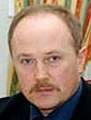
Safonov |
Safonov, Oleg (Aleksandrovich) (b. Aug. 24, 1960), plenipotentiary of the president in Dalnevostochny federal district (2007-09).
Safonovich, Valerian (Ivanovich) (b. 1798 - d. April 8, 1867), governor of Oryol (1854-61).
Safouesse, Lazare Makayat, Congo (Brazzaville) diplomat. He has been ambassador to Ethiopia (2012-21) and permanent representative to the United Nations (2022- ).
Safrizal Z(akaria) A(li) (b. April 21, 1970, Aceh, Indonesia), acting governor of Kalimantan Selatan (2021), Bangka Belitung (2023-24), and Aceh (2024-25).
Safronov, Arseny (Mikhailovich) (b. June 24, 1903, Andronikha, Moscow province, Russia - d. Oct. 13, 1957, Moscow, Russian S.F.S.R.), Soviet politician. He was people's commissar/minister of finance (1939-40, 1945-49) and first deputy premier (1949-57) of the Russian S.F.S.R.
Safvet Pasha, Mehmed Esad (b. June 1815, Constantinople, Ottoman Empire [now Istanbul, Turkey] - d. Nov. 17, 1883, Constantinople), foreign minister (1873, 1875, 1876-77, 1878, 1879, 1882) and grand vizier (1878) of the Ottoman Empire. He was also ambassador to France (1865-66, 1878-79), minister of commerce (1861-63, 1863-65, 1867), education (1868-71, 1874-75, 1875), justice (1872-73, 1876, 1877-78), and public works (1877), and head of the Council of State (1878).
Sagaf, Said Mohamed (b. Dec. 25, 1949, Mitsamiouli, Comoros), foreign minister of the Comoros (1994-95); son-in-law of wife of Said Mohamed Djohar. He was also minister of health and population (1991-92) and information, culture, youth and sports, and posts and telecommunications (1995) and ambassador to the Middle East and Asia (1992-94).
Saganov, Vladimir (Bizayevich) (b. March 7, 1936, Kharbyaty, Tunkinsky rayon, Buryat-Mongol A.S.S.R., Russian S.F.S.R. [now Buryatia, Russia] - d. September 1999), chairman of the Council of Ministers/prime minister of the Buryat A.S.S.R./Buryatia (1977-87, 1990-94). He was also minister of agriculture (1970-72) and first deputy premier (1972-74).

Sagasti |
Sagasti (Hochhausler), Francisco (Rafael) (b. Oct. 10, 1944, Lima, Peru), president of Peru (2020-21). He was elected president of Congress in 2020 only to succeed to the presidency of the country following the resignation of Pres. Manuel Merino.
Sagastume (Morales), Ricardo (b. April 27, 1958, Guatemala City, Guatemala), Guatemalan politician. He was economy minister (2015) and a minor presidential candidate (2023). He is the son of Ricardo Sagastume Vidaurre (1930-2010), president of the Supreme Court (1982-84).
Sagbo, (Félix) Kodjo, interior minister of Togo (1994-95). He was also ambassador to Nigeria (2002-04), the Benelux countries (2004-14), and the Vatican (2005-14).
Sagdiyev, Makhtay (Ramazanovich) (b. May 12, 1929, Undrus, Kazakh A.S.S.R., Russian S.F.S.R. [now in Severo-Kazakhstan oblast, Kazakhstan] - d. Aug. 25, 2012, Almaty, Kazakhstan), chairman of the Presidium of the Supreme Soviet of the Kazakh S.S.R. (1989-90). He was also fisheries minister (1980-83), chairman of the Executive Committee of Kustanay oblast (1983-85), and first secretary of the party committee of Kokchetav oblast (1985-89).
Saget, Louis (Joseph Édouard) (b. April 27, 1915, Paris, France - d. Sept. 6, 2010, Mereville, Essonne, France), administrator-superior of the Comoros (1960-62), governor of French Somaliland (1966-67), and high commissioner of the French Territory of the Afars and Issas (1967-69).
Sagiman, Sainan (b. Feb. 22, 1922, Plaju, Netherlands East Indies [now in Sumatera Selatan, Indonesia] - d. Aug. 1, 2000), governor of Sumatera Selatan (1978-88).
Sagindikov, Yeleusin (Nauryzbayevich) (b. May 1, 1947, Kyzyl-Tu, Aktyubinsk [now Aktobe] oblast, Kazakh S.S.R.), head of Aktobe oblast (2004-11). He was also mayor of Aktobe (1996-2002).
Saghiyyah, Fakhri (George) (b. 1937, Kboula, Lebanon), Lebanese diplomat. He was chargé d'affaires at the United Nations (1982) and ambassador to Brazil (1983-85).
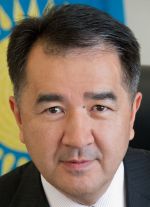
Sagintayev |
Sagintayev, Bakytzhan (Abdirovich) (b. Oct. 13, 1963, Usharal, Dzhambul [now Zhambyl] oblast, Kazakh S.S.R.), head of Pavlodar oblast (2008-12) and Almaty city (2019-22) and prime minister of Kazakhstan (2016-19). He has also been chairman of the Agency for Regulation of Natural Monopolies (2004-07), head of the prime minister's office (2007-08), minister of economic development and trade (2012) and regional development (2013), first deputy prime minister (2013-16), secretary of state (2019), head of the administration of the president (2019), and chairman of the Eurasian Economic Commission (2024- ).
Sagna, Famara Ibrahima (b. Nov. 26, 1938, Ziguinchor, Senegal), interior minister (1990-91) and economy, finance, and planning minister (1991-93) of Senegal. He was also minister of rural development (1986-88) and industrial development and crafts (1988-90).
Sagna, Robert (b. April 17, 1939, Ziguinchor, Senegal), Senegalese politician. He was secretary of state for human promotion (1978-80) and maritime fisheries (1980-83), minister of equipment (1983-88), tourism (1987-88), communications (1988-90), and equipment, transport, and the sea (1991-93), minister of state for agriculture (1993-2000), mayor of Ziguinchor (1985-2009), and a minor presidential candidate (2007).
Saguier (Carmona), Miguel Abdón, byname Tito Saguier (b. June 1, 1945, San Pedro del Ycuamandyju, Paraguay), foreign minister of Paraguay (1999). He was also president of the Senate and of Congress (1996-97, 2007-08).
Saguier Caballero, Bernardino Hugo (b. July 21, 1945), Paraguayan politician. He was permanent representative to the United Nations (1991-93, 1997-99), minister of integration (1994-96), and ambassador to Chile (1996-97) and Brazil (2019).
Saha, Manik (b. Jan. 8, 1953, Agartala, Tripura, India), chief minister of Tripura (2022- ).
Sahak, Bismellah, Afghan official. He was governor of Kabul province (1978-79) and permanent representative to the United Nations (1979-80).
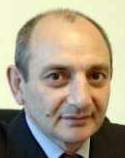
B. Sahakyan |
Sahakyan, Bako (Sahaki), Russian Bako (Saakovich) Saakyan (b. Aug. 30, 1960, Stepanakert, Nagorno-Karabakh autonomous oblast, Azerbaijan S.S.R.), president of Nagorno-Karabakh/Artsakh (2007-20). He was also interior minister (1999-2001) and head of the security service (2001-07).
Sahakyan, Galust (Grigorii) (b. April 8, 1948, Yerevan, Armenian S.S.R. - d. Dec. 18, 2022), Armenian politician. He was chairman of the National Assembly (2014-17).
Sahani, Kidar Nath, Kidar also spelled Kedar (b. Oct. 24, 1926, Rawalpindi, India [now in Pakistan] - d. Oct. 3, 2012, Delhi, India), governor of Sikkim (2001-02) and Goa (2002-04).
Sahardjo (b. June 26, 1909, Surakarta, Netherlands East Indies [now in Jawa Tengah, Indonesia] - d. Nov. 13, 1963, Jakarta, Indonesia), justice minister of Indonesia (1959-63). He was also a deputy first minister (1962-63).
Sahas Banditkul (b. Aug. 1, 1950), a deputy prime minister of Thailand (2008).
Sahay, Bhagwan (b. Feb. 15, 1905 - d. Dec. 6, 1986, New Delhi, India), chief commissioner of Himachal Pradesh (1951-52), Bhopal (1952-54), and Delhi (1959-63) and governor of Kerala (1966-67) and Jammu and Kashmir (1967-73); brother of Vishnu Sahay. He was also Indian ambassador to Nepal (1954-59).
Sahay, Dinesh Nandan (b. Feb. 2, 1936, Madhepur, Bihar, India - d. Jan. 28, 2018, Patna, Bihar), governor of Chhattisgarh (2000-03) and Tripura (2003-09).
Sahay, Krishna Ballabh (b. 1898 - d. [truck accident] June 3, 1974), chief minister of Bihar (1963-67).
Sahay, Vishnu (b. Nov. 22, 1901 - d. June 3, 1989, New Delhi, India), governor of Assam (1960-61, 1962-68) and Nagaland (1963-68). He was also cabinet secretary of India (1958-60, 1961-62).
Sahel, Mustapha, also spelled El Mostafa Sahel (b. May 5, 1946, Oulad Frej, Morocco - d. Oct. 7, 2012, Rabat, Morocco), interior minister of Morocco (2002-06). He was also minister of maritime fisheries and merchant marine (1993-97) and maritime fisheries, administrative affairs, and relations with parliament (1997-98), prefect of Rabat-Salé-Zemmour-Zaër (2001-02), permanent representative to the United Nations (2006-08), ambassador to France (2009-11), and advisor of the king (2011-12).
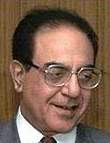
Sahhaf |
Sahhaf, Muhammad Saeed (Kazim) al-, Arabic Muhammad Sa`id Kazim al-Sahhaf (b. 1940, Hilla, Iraq), foreign minister of Iraq (1992-2001). He was also ambassador to India, Nepal, and Burma (1975-77), Sweden (1985-87), and Italy (1987-90), permanent representative to the United Nations (1977-78), and minister of culture and information (2001-03). During the U.S.-led invasion of Iraq in 2003, he became known for his bizarre statements denying the successful progress of the invasion. Until the last moment, he insisted the "American mercenaries" were being "slaughtered by the thousands." He was dubbed "Comical Ali" by Western media (in analogy to another regime figure known as "Chemical Ali"). He finally gave himself up to U.S. troops, was released after questioning, and moved to the United Arab Emirates.
Sahib, Khan, byname of Khan Abdul Jabbar Khan (b. 1882, Utmanzai, North-West Frontier Province, India [now Khyber Pakhtunkhwa, Pakistan] - d. [assassinated] May 9, 1958, Lahore, Pakistan), premier of the North-West Frontier Province (1937-39, 1945-47) and chief minister of West Pakistan (1955-57). His brother Khan Abdul Ghaffar Khan (b. 1890, Utmanzai - d. Jan. 20, 1988, Peshawar, Pakistan) was also a notable political figure, popularly known as the "frontier Gandhi," who long campaigned for an autonomous state in the North-West Frontier Province.
Sahin, Idris Naim (b. June 1, 1956, Ünye, Ordu, Turkey), interior minister of Turkey (2011-13).
Sahin, Mehmet Ali (b. Sept. 16, 1950, Ekincik, Çankiri [now in Karabük] province, Turkey), a deputy prime minister (2002-07) and justice minister (2007-09) of Turkey. He was also speaker of the Grand National Assembly (2009-11).
Sahinovic, Mirsad (b. Oct. 30, 1960, Buzim [now in Federation of Bosnia and Herzegovina]), president of Una-Sana canton (2002).
Sahinovic, Vehid (b. May 14, 1947, Visoko, Bosnia and Herzegovina), premier of Zenica-Doboj (1996-2001).
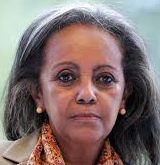
Sahle-Work |
Sahle-Work Zewde (b. Feb. 21, 1950), president of Ethiopia (2018-24). She was also ambassador to Senegal, Mali, Cape Verde, Guinea-Bissau, The Gambia, and Guinea (1989-93), Djibouti (1993-2002), and France, Tunisia, and Morocco (2002-06), head of the United Nations Integrated Peacebuilding Office in the Central African Republic (2009-10), and director-general of the UN Office at Nairobi (2011-18).
Sahli, Ali (b. April 3, 1924, Benghazi, Cyrenaica [now in Libya] - d. May 21, 2004, Amman, Jordan), foreign minister of Libya (1956-57). He was also minister of communications (1954-55, 1967), finance (1955-56), justice (1956), and interior (1967), ambassador to the United Kingdom (1957-58) and Italy (1965-67), and chief of the royal cabinet (1958-65).
Sahlin, Mauritz (Reinhold) (b. Feb. 17, 1860, Lund, Sweden - d. June 4, 1927), governor of Stockholm (1908-19). He was also director-general of Telegrafverket (1902-04) and the Swedish State Railways (1904-07).
Sahloul, Ali (Ahmed) (b. Nov. 22, 1930, Suakin, Sudan), foreign minister of The Sudan (1989-93). He was also ambassador to India (1972-75) and Belgium and the Netherlands (1977-78) and permanent representative to the United Nations (1978-80).
Sahm |
Sahm, Heinrich (Friedrich Wilhelm Martin) (b. Sept. 12, 1877, Anklam, Germany - d. Oct. 3, 1939, Oslo, Norway), lord mayor (1919-20), chairman of the Council of State (1920), and president of the Senate (1920-31) of Danzig, lord mayor of Berlin (1931-35), and German ambassador to Norway (1936-39).
Sahnoun, Mohamed (b. April 8, 1931, Chlef, Algeria - d. Sept. 20, 2018, Paris, France), Algerian diplomat. He was ambassador to West Germany (1975-79), France (1979-82), the United States (1984-89), and Morocco (1989-90), permanent representative to the United Nations (1982-84), and UN special representative in Somalia (1992).
Saho, Lamin Kebba (b. Aug. 9, 1944, Salikene, Gambia - d. May 6, 2007, U.K.), Gambian politician. He was high commissioner to Sierra Leone (1979-81) and minister of information and tourism (1987-90).
Saho, Momadu Lamin (b. Dec. 12, 1932, Bathurst [now Banjul], Gambia - d. Sept. 14, 1993), justice minister and attorney general of The Gambia (1968-82).
Sahoulba, Gontchomé, until 1944 Yérima Sahoulba (b. Oct. 16, 1916, Léré, Chad - d. Nov. 1, 1963), president of the provisional government of Chad (1959). He was also president of the Territorial Assembly (1957-59) and transport minister (1959).
Sahovic, Dejan (b. 1955), Yugoslav/Serbian diplomat. He was permanent representative to the United Nations (2001-04) and ambassador to Hungary (2008-12) and the Vatican (2017-20).
Sahuguet d'Amarzit, (Jean Joseph) François (Léonard) de (b. Oct. 12, 1756, Brive-la-Gaillarde, Corrèze, France - d. Dec. 26, 1802, Tobago), governor of Tobago (1802).

Sai |
Sai, Vishnu Deo (b. Feb. 21, 1964, Bagia village, Raigarh [now in Jashpur] district, Madhya Pradesh [now in Chhattisgarh], India), chief minister of Chhattisgarh (2023- ).
Saibou, Ali (b. 1940, Ouallam, Niger - d. Oct. 31, 2011, Niamey, Niger), president of the Supreme Military Council (1987-89), president of the Supreme Council of National Orientation (1989), and president (1989-93) of Niger. He was also minister of rural economy, environment, climate, and aid to the population (1974).
Said, Ali (b. June 12, 1927, Magelang, Netherlands East Indies [now in Jawa Tengah, Indonesia] - d. June 28, 1996, Jakarta, Indonesia), justice minister of Indonesia (1981-84). He was also attorney general (1973-81), chief justice of the Supreme Court (1984-92), and chairman of the National Commission on Human Rights (1993-96).
Said, Chris (b. 1970, Nadur, Malta), justice (and public dialogue and family) minister of Malta (2012-13).
Said, Fahd ibn Mahmud al- (b. Oct. 5, 1940, Muscat, Muscat and Oman [now Oman] - d. March 12, 2026), foreign minister of Oman (1972-73). He was also minister of information and culture (1973-79) and a deputy prime minister (1979-2026).
Said, Faysal ibn Ali al- (b. 1927, Muscat, Muscat and Oman [now Oman] - d. Jan. 29, 2003), Omani official; grandson of Faysal ibn Turki (1864-1913). He was minister of economy (1972), education (1973-76), national heritage (1976-2002), and culture (1979-2002), permanent representative to the United Nations (1972-73), and ambassador to the United States (1973).
Said, Mahamat Abba (b. 1935, Yao, Chad - d. June 9, 2014, N'Djamena, Chad), interior minister of Chad (1979-82).
Said, Muhammad (b. Sept. 8, 1936, Kandangan, Netherlands East Indies [now in Kalimantan Selatan, Indonesia]), governor of Kalimantan Selatan (1984-95).
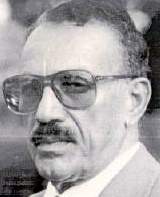
M.O. Said |
Said, Muhammad Osman, Arabic Muhammad `Uthman Sa`id (b. 1922 - d. Dec. 31, 2007, Rabat, Morocco), prime minister of Libya (1960-63). He was also minister of health (1951-60), economy (1960), and finance (1960).
Said, Omar Abdi, interior minister of Djibouti (2026- ). He was also ambassador to the Benelux and Scandinavian countries (2014-22) and minister of labour (2022-26).
Said-Galiyev, Sahib-Garey (b. March 18 [March 6, O.S.], 1894, Ufa, Russia - d. [executed] Oct. 29, 1938), chairman of the Council of People's Commissars of the Crimean A.S.S.R. (1921-24). He was also chairman of the Revolutionary Committee (1920) and of the Council of People's Commissars (1920-21) of the Tatar A.S.S.R.
Said Halim Pasha, (Prince Muhammad) (b. Jan. 18, 1865, Cairo, Egypt - d. [assassinated] Dec. 6, 1921, Rome, Italy), grand vizier (1913-17) and foreign minister (1913-15) of the Ottoman Empire; grandson of Muhammad Ali Pasha. He was also head of the Council of State (1912, 1913).
Said ibn Maktum, Sheikh, Arabic Shaykh Sa`id ibn Maktum (b. 1878 - d. Sept. 10, 1958, Shindagha, Dubai [now in United Arab Emirates]), ruler of Dubai (1912-29, 1929-58).
Sa`id ibn Sultan (b. 1790, Sumail, Muscat and Oman [now Oman] - d. Oct. 19, 1856, at sea off Seychelles), hami of Muscat and Oman (1804-56).
Sa`id ibn Taimur (b. April 13, 1910 - d. Oct. 19, 1972, London, England), sultan of Muscat and Oman (1932-70). Son of Sultan Taimur ibn Faysal, he was educated in Iraq and India. He deposed his father to become sultan in 1932. He continued to rule Muscat and Oman under a treaty of friendship with Great Britain. He refused to use his country's income from oil concessions for the benefit of his subjects. He faced a separatist revolt from the imam of Oman in 1955 and crushed the rebellion with the assistance of the British. He survived another rebellion by the imam in 1957 that was supported by the Saudi Arabian and Egyptian governments. The western province of Dhofar went into revolt in 1965 and the sultan survived an assassination attempt the following year. The revolt in Dhofar continued with the support of Communist China and leftist Arab nationalists. He was ousted by his son, Qabus ibn Sa`id, in a coup in 1970. He was slightly injured in the coup and was sent into British exile, living on a pension at the Dorchester Hotel in London until his death.
Said Pasha (Kürt) (b. 1834, Sulaymaniyah, Ottoman Empire [now in Iraq] - d. Oct. 29, 1907, Constantinople, Ottoman Empire [now Istanbul, Turkey]), foreign minister of the Ottoman Empire (1882, 1885-95, 1895). He was also governor of the Archipelago (1881-82), ambassador to Germany (1883-85), and head of the Council of State (1895-1907).
Said Pasha, Küçük Mehmed (b. 1838, Erzurum, Ottoman Empire [now in Turkey] - d. March 1, 1914, Constantinople, Ottoman Empire [now Istanbul, Turkey]), grand vizier of the Ottoman Empire (1879-80, 1880-82, 1882, 1882-85, 1895, 1901-03, 1908, 1911-12). He was also minister of treasury (1876-77, 1878, 1878-79) and interior (1878), governor of Bursa (1878), and head of the Council of State (1913).

A. al-Saidi | 
Saidi Ali |
Saidi, Abdullah (Muhammad) al- (b. 1947, Beit al-Saidi, Yemen), foreign minister of Yemen (2014-15). He was permanent representative to the United Nations in 2002-11.
Saidi Ali bin Saidi Omar (b. c. 1856 - d. 1915, Tananarive [now Antananarivo], Madagascar), sultan of Bambao (18...-86) and sultani tibe of Ngazidja (1886-1911). He went into exile in 1893, first to Diégo-Suarez (Madagascar), then in 1897 to Réunion. Later he briefly returned to Moroni but then decided to live in Madagascar, where he became a gold digger.
Saidkasimov, Saidmukhtar (Saidgaziyevich) (b. March 1947, Tashkent, Uzbek S.S.R.), foreign minister of Uzbekistan (1993-94). He was also a deputy prime minister (1994-95).

B. Saidov | 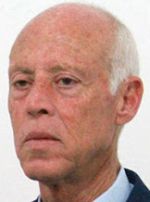
Saïed | 
Saifuddin A. |
Saidov, Bakhtiyor (Odilovich), Uzbek Baxtiyor (Odilovich) Saidov (b. April 22, 1981, Samarkand, Uzbek S.S.R.), foreign minister of Uzbekistan (2022- ). He was also ambassador to China (2017-21) and minister of education (2021-22).
Saidov, Mirkhan (Saidovich) (b. 1906, Kulikhavak, Bukhara [now in Uzbekistan] - d. ...), chairman of the Executive Committee of Gorno-Badakhshan autonomous oblast (193...-39). He was also people's commissar/minister of health (1939-40), agriculture (1940-45), and finance (1945-49) of the Tadzhik S.S.R.
Saidu, Suleiman (b. 1942), administrator of Rivers (1978-79). He was also Nigerian chief of naval staff (1993).
Saïed, Kaïs (b. Feb. 22, 1958, Tunis, Tunisia), president of Tunisia (2019- ).
Saifuddin (bin) Abdullah, Dato' (b. Jan. 27, 1961, Temerloh, Pahang, Malaya [now in Malaysia]), foreign minister of Malaysia (2018-20, 2021-22). He was also minister of communications and multimedia (2020-21).
Saifuddin Nasution (bin) Ismail, Datuk Seri (b. Dec. 7, 1963, Singapore), home affairs minister of Malaysia (2022- ). He was also minister of domestic trade and consumer affairs (2018-20). He was awarded the titles Dato' (2012) and Datuk Seri (2018).
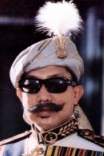
O.A. Saifuddin |
Saifuddin Sa´adul Khairi Waddien, Sir Omar Ali (b. Sept. 23, 1914, Brunei Town [now Bandar Seri Begawan], Brunei - d. Sept. 7, 1986, Bandar Seri Begawan), sultan of Brunei (1950-67). He worked in various government departments in Brunei before becoming grand vizier (first minister) and member of the State Council (1947-50) during the sultanate of his elder brother. As sultan himself, he was less anxious than some of his subjects, and even than the British, that his country should move toward independence. However, he produced a written constitution in 1959, when the British relinquished control of Brunei's internal affairs. During a revolt that year, Saifuddin had no hesitation in calling in British troops to quell it. He refused to take Brunei into the Federation of Malaysia, which was formed in 1963. A poet, a keen sportsman, and an Anglophile, he traveled frequently to Britain and Europe, once to North America, and twice on pilgrimage to Mecca. He abdicated in 1967 and assumed the title Seri Begawan. In 1970 the national capital was renamed Bandar Seri Begawan in his honour. He remained politically influential and was thought to have been responsible for the demand that Brunei should retain the services of a British Army Gurkha battalion after independence in 1984. In the same year, he became minister of defense.
Saigo, Kichinosuke (b. July 20, 1906, Kagoshima prefecture, Japan - d. 1997), justice minister of Japan (1968-70).
Saigo, Tsugumichi, in full Koshaku (Marquess) Tsugumichi Saigo (b. June 1 [May 4, lunar calendar], 1843, in present Kagoshima prefecture, Japan - d. July 18, 1902), army minister (1879-81) and home affairs minister (1890-91, 1898-1900) of Japan. He was also minister of agriculture and commerce (1881-84, 1886) and navy (1885-86, 1887-90, 1893-98). He was made viscount (1884) and marquess (1895).
Saikal, Mahmoud (b. 1962, Kabul, Afghanistan), Afghan diplomat. He was ambassador to Australia and New Zealand (2002-05) and permanent representative to the United Nations (2015-19).
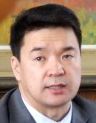
Saikhanbileg |
Saikhanbileg, Chimed(iyn) (b. Feb. 17, 1969, Dornod, Mongolia), prime minister of Mongolia (2014-16). He was also education minister (1998-99).
Saikia, Hiteshwar (b. 1934 - d. April 22, 1996), Indian politician. As chief minister of the northeastern state of Assam (1983-85, 1991-96), the Congress Party member was credited with bringing political stability to the remote state, where insurrection is common. He was also lieutenant governor (1986-87) and governor (1987-89) of Mizoram.
Sailam, S(ayaji) L(achhman) (b. May 18, 1896 - d. ...), lieutenant governor of Pondicherry (1963-68).
Saili, (Falesa Pualagi) Sam, also called Faasootauloa Semu Pualagi (b. May 3, 1936, Alamagoto, Western Samoa [now Samoa]), finance minister of Western Samoa (1973-75, 1985-88).
Sailo, Thenphunga (b. Jan. 1, 1922, Lunglei, Assam [now in Mizoram], India - d. March 27, 2015, Aizawl, Mizoram), chief minister of Mizoram (1978, 1979-84).
Saimon, Esmon, also appearing as Esmon Sae (b. Oct. 28, 1955), acting president of Vanuatu (2017). He was minister of ni-Vanuatu business and cooperatives (2008-09, 2011), infrastructure and public works (2013-15), and justice and community services (2020-22) and speaker of parliament (2016-19).
Saine-Firdaus, Marie (b. April 25, 1973), justice minister and attorney general of The Gambia (2007-10).

Saini |
Saini, Nayab Singh (b. Jan. 25, 1970, Mirzapur Majra, Ambala district, Haryana, India), chief minister of Haryana (2024- ).
Sainovic, Nikola (b. Dec. 7, 1948, Bor, Serbia), prime minister of Serbia (1993-94). He was also minister of energy and mining (1991-93) and a deputy prime minister (1991-93) of Serbia and economy minister (1992, 1994-96) and a deputy prime minister (1994-2000) of Yugoslavia. Accused of crimes against humanity and violations of the laws or habits of war, he went to The Hague on May 2, 2002, and pleaded not guilty. On April 15, 2005, he flew back to Belgrade after prosecutors dropped objections to his release ahead of trial. He was convicted and sentenced to 22 years' imprisonment on Feb. 26, 2009, reduced on appeal to 18 years on Jan. 23, 2014. He was released in August 2015.
Saint, Lucien (Charles Xavier) (b. April 26, 1867, Évreux, Eure, France - d. Feb. 24, 1938, Mérignac, Haute-Garonne, France), resident-general of Tunisia (1921-29) and Morocco (1929-33); son-in-law of Georges Trouillot. He was also prefect of the départements of Nièvre (1906-09), Ille-et-Vilaine (1909-15), Haute-Garonne (1915-18), Bouches-du-Rhône (1918-19), and Aisne (1919-20).
Saint Aimee, Donatus (Keith) (b. April 22, 1944 - d. April 9, 2015, on flight from Miami, Fla., to St. Lucia), Saint Lucian diplomat. He was chargé d'affaires (1982-84) and permanent representative (2008-12) to the United Nations and chargé d'affaires in the United States (1982-84).
Saint-Alary, Jean-François de (b. June 27, 1888, Le Moule, Guadeloupe - d. Dec. 14, 1970, Montigny-lès-Arsures, Jura, France), commissioner of French Togo (1941-42).
Saint Aldwyn, Michael (Edward) Hicks Beach, (1st) Earl (b. Oct. 23, 1837, London, England - d. April 30, 1916, London), British chancellor of the exchequer (1885-86, 1895-1902). He was also chief secretary for Ireland (1874-78, 1886-87), secretary of state for the colonies (1878-80), and president of the Board of Trade (1888-92). He succeeded as (9th) Baronet in 1854 and was created viscount in 1906 and earl in 1915.
Saint Aubyn, Geoffrey Peter (b. June 7, 1858, London, England - d. Aug. 20, 1921, Montego Bay, Jamaica), commissioner of the Turks and Caicos Islands (1899-1901).
Saint-Chaffray, Jean Baptiste Édouard Bourcier (b. June 24, 1870, Chania, Crete, Ottoman Empire [now in Greece] - d. 19...), resident-superior of Tonkin (1917-21).
Saint Clair, Arthur (b. April 3 [March 23, O.S.], 1736, Thurso, Caithness, Scotland - d. [after cart accident] Aug. 31, 1818, Chestnut Ridge, west of Ligonier, Pa.), governor of the Northwest Territory (1788-1802).
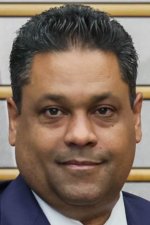
Saint-Cyr |
Saint-Cyr, (Anthony Franck) Laurent, member (2024-26) and president (2025-26) of the Transitional Presidential Council of Haiti.
Saint Germans, Edward Granville Eliot, (3rd) Earl of (b. Aug. 29, 1798, Plymouth, England - d. Oct. 7, 1877, St. Germans, Cornwall, England), lord lieutenant of Ireland (1853-55). He was also chief secretary for Ireland (1841-45) and postmaster-general (1845-46). He succeeded as earl in 1845.
Saint-Hilaire, Patrick, Haitian diplomat. He was chargé d'affaires at the Vatican (2005-09), in Germany (2014-15), and at the United Nations (2019-20).
Saint Jean (Larralde), Alfredo Oscar (b. Nov. 8, 1926 - d. Sept. 2, 1987), interior minister (1981-82) and acting president (1982) of Argentina; brother of Ibérico Manuel Saint Jean.
Saint Jean (Larralde), Ibérico Manuel (b. Sept. 17, 1922, Chascomús, Argentina - d. Oct. 5, 2012, Buenos Aires, Argentina), governor of Buenos Aires (1976-81).
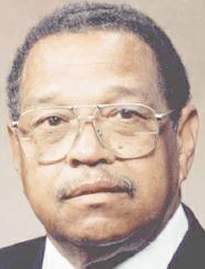
H. Saint John |
Saint John, Sir Harold (Bernard) (b. Aug. 16, 1931 - d. Feb. 29, 2004, Bridgetown, Barbados), prime minister of Barbados (1985-86). A member of the Barbados Labour Party (BLP) since 1959, he sat in the Senate from 1964 to 1966. Elected to the House of Assembly in 1966, he lost his seat in 1971 and returned to the Senate for five years. He was reelected to the House in 1976. He held the key portfolios of trade and tourism since 1976 and as deputy to Prime Minister J.M.G. Adams was the automatic successor when Adams died on March 11, 1985. He was immediately confronted with the task of negotiating a solution to the complex problems of intra-Caribbean Community trade and payments, which were adversely affecting the Barbadian economy. St. John quickly established himself as a blunt and forthright spokesman for his government's position. His threat at the beginning of September to take reprisals against Trinidad and Tobago if the latter did not implement the Nassau agreements on intraregional trade was followed by apparently constructive conversations with Trinidad Prime Minister George Chambers at the Commonwealth heads of government meeting in Nassau, The Bahamas, in October. Although St. John had no difficulty establishing himself as the undisputed leader of the BLP, there was some infighting within the party, which he sidestepped by declining to appoint a deputy prime minister. The party lost the 1986 general elections, but in 1994 it was reelected and he served as deputy prime minister until 1999. He retired from political life in 2003. He was knighted in November 1994, becoming known as Sir Harold, while he was earlier using his second given name, Bernard.
Saint John, Sir (Henry) Beauchamp (b. Aug. 26, 1874 - d. Oct. 5, 1954), chief commissioner of Baluchistan (1927-30); knighted 1930; son of Sir Oliver Beauchamp Coventry Saint John.
Saint John, John P(ierce) (b. Feb. 25, 1833, Brookville, Ind. - d. Aug. 31, 1916, Olathe, Kan.), governor of Kansas (1879-83). He served as a Republican in the state Senate in 1873-74. The son of an alcoholic, he was an early advocate of prohibition and on that issue was elected governor in 1878. In 1880 he secured, besides his own reelection, the popular approval of a prohibition amendment to the state constitution, the first such constitutional ban in history. As governor he inaugurated the first "water banquets," and even for decades beyond his governorship, liquor was never served in the Kansas State House. When large numbers of ex-slaves emigrated to Kansas in 1879, St. John headed a Freedman's State Central Association to assist them. Denied a third term in 1882, he extended his campaign for prohibition to the national level and, in 1884, was nominated as the presidential candidate of the National Prohibition Party. For deserting the Republicans he was called a "traitor" and was burned in effigy more than 500 times. He was twice shot at but escaped unhurt. He won over 150,000 votes. He made his strongest effort in New York, and many thought that he drew sufficient votes away from Republican candidate James G. Blaine to tip the state - and with it the election - to Grover Cleveland. During 1912, he stumped Kansas for woman suffrage, and in 1914 - aged over 80 - he toured the East for prohibition.
Saint John, Sir Oliver Beauchamp Coventry (b. March 21, 1837, Ryde, Isle of Wight, England - d. June 3, 1891, Quetta, Baluchistan, India [now Balochistan, Pakistan]), British resident in Jammu and Kashmir (1883-86), acting chief commissioner of Baluchistan (1887, 1891), and resident in Mysore and chief commissioner of Coorg (1889-91); knighted 1882.
Saint Johnston, Sir Thomas Reginald, original surname Johnston (b. June 8, 1881, Birmingham, England - d. Aug. 29, 1950, Eastbourne, Sussex, England), administrator of Saint Christopher-Nevis (1925-29) and governor of the Leeward Islands (1929-36); knighted 1931.
Saint Jorre |
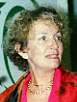
Saint Jorre, Danielle (Marie-Madeleine) de, married name (1965-83) Danielle d'Offay (b. Sept. 30, 1941, Mahe island, Seychelles - d. Feb. 25, 1997, near Paris, France), foreign minister of Seychelles (1989-97). An authority on Kreol (Seychelles Creole) linguistics, she was also non-resident ambassador to France (1983-86), the Soviet Union (1984-89), Cuba (1984-89), Greece (1985-89), and West Germany (1985-89) and high commissioner to the United Kingdom (1983-89) and Canada (1984-89).

Saint Laurent |
Saint Laurent, Louis (Stephen) (b. Feb. 1, 1882, Compton, Que. - d. July 25, 1973, Québec, Que.), prime minister of Canada (1948-57). On Dec. 10, 1941, he became minister of justice and attorney general in W.L. Mackenzie King's administration. As a member of the Liberal Party, he was elected to the Canadian House of Commons from Quebec East on Feb. 9, 1942, and was reelected in all subsequent elections until his retirement. King appointed him secretary of state for external affairs (acting in 1945, regular on Sept. 4, 1946). On Dec. 10, 1946, he relinquished the portfolio of justice. He was deputy chairman of the Canadian delegation to the 1945 San Francisco conference that created the United Nations and served as leader of the delegations at the UN General Assembly sessions in London and New York City in 1946-47. He again served as justice minister in July-November 1948, was persuaded to accept the leadership of the Liberal Party in August 1948, and succeeded King as prime minister in November. Under his leadership Newfoundland became a part of the dominion (1949); his government supported UN intervention in Korea (1950-53) and Suez (1956); and his influence contributed to keeping India and Pakistan in the Commonwealth. He was also one of the main architects of the North Atlantic Treaty Organization. He strengthened the unity and fostered the development of the Canadian nation by instituting measures for the equalization of provincial revenues, enlarged social security, and the establishment of the Canada Council for the promotion of arts and letters. After winning great victories in the general elections of 1949 and 1953, the Liberals were narrowly defeated in June 1957. He announced his retirement and was succeeded in January 1958 as the leader of the opposition by Lester B. Pearson. He withdrew from public life in 1960.
Saint Leonards, Edward (Burtenshaw) Sugden, (1st) Baron (b. Feb. 12, 1781 - d. Jan. 29, 1875), British lord chancellor (1852). He was also solicitor general (1829-30). He was knighted in 1829 and created baron in 1852.
Saint-Lot, Émile (b. Sept. 11, 1904, Port-au-Prince, Haiti - d. Aug. 17, 1976, New York), Haitian politician. He was permanent representative to the United Nations (1945-47, 1957), minister of labour, education, and public health (1947) and justice and labour (1950), and president of the Senate (1957).

Saint Luce | 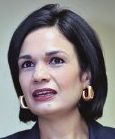
Saint Malo | 
Saint-Mart |
Saint Luce, Sir John (Eugene) (b. July 13, 1940), finance minister (1980-82, 1984-91, 1996-2001) and interior minister (2001-03) of Antigua and Barbuda; knighted 2017.
Saint Malo de Alvarado, Isabel (b. June 27, 1968, Panama City, Panama), vice president and foreign minister of Panama (2014-19).
Saint-Mart, Pierre (Marie) de (b. July 12, 1885, Verdun, France - d. Sept. 16, 1965, Paris, France), governor of Oubangui-Chari (1939-42) and governor-general of Madagascar (1943-46).
Saint-Mleux, André (b. Sept. 25, 1920, Saint-Malo, France - d. Oct. 7, 2012, Roquebrune-Cap-Martin, France), minister of state of Monaco (1972-81).
Saint-Phard, Glodys (C.) (b. Oct. 25, 1937 - d. Nov. 2, 2016, Alabama), Haitian diplomat. He was permanent representative to the United Nations (1988-90).
Saint-Phalle, Edgard Charles, comte de (b. Aug. 21, 1826, Saint-Benin-d'Azy, Nièvre, France - d. March 15, 1913, La Boisse, Ain, France), commandant of Saint-Pierre and Miquelon (1880-86).
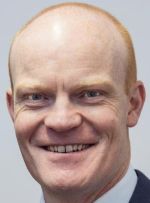
Saint Pier | 
Saint-Quentin |
Saint Pier, Gavin (Anthony) (b. January 1967), president of the Policy and Resources Committee (chief minister) of Guernsey (2016-20).
Saint-Pierre Plamondon, Paul (b. Feb. 17, 1977, Trois-Rivières, Que.), premier of Quebec (2026- ).
Saint-Priest, Emmanuel Louis Marie Guignard, vicomte de (b. Dec. 6, 1789, Paris, France - d. Oct. 27, 1881, château de La Motte, Loir-et-Cher, France), French diplomat; son of François Emmanuel Guignard, comte de Saint-Priest; brother of Graf Karl Sen-Pri. He was minister to Prussia (1825-27) and Spain (1828-31).
Saint-Priest, François Emmanuel Guignard, comte de (b. March 12, 1735, Grenoble, France - d. Feb. 26, 1821, Lyon, France), interior minister of France (1790-91). He was also minister to Portugal (1763-67), ambassador to the Ottoman Empire (1768-84) and the Netherlands (1788), and minister of the king's house (1789-91).
Saint-Quentin, Amaury de (b. Dec. 24, 1960, Sydney, Australia), prefect of Guadeloupe (2011-13) and Réunion (2017-19). He has also been prefect of the French départements of Ardèche (2009-11), Val-d'Oise (2019-22), Corse-du-Sud (2022-24), Ille-et-Vilaine (2024-25), and Bas-Rhin (2025- ).
Saint-Sernin, Frédéric (Marie Joseph Bruno de Laparre) de (b. Feb. 14, 1958, Reims, Marne, France), personal representative of the French co-prince of Andorra (1999-2002).
Saint-Simon, Henri Jean Victor (de Rouvroy), duc de (b. 1782 - d. 1865, Paris, France), governor of French India (1835-40).
Sainte-Marie (Soruco), Osvaldo (Adolfo) (b. Sept. 8, 1913, Santa Cruz, Chile - d. Sept. 25, 1998, Santiago, Chile), foreign minister of Chile (1956-57). He was also minister of mines (1955-57), labour (1955), and justice (1958).
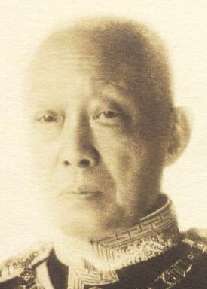
Saionji |
Saionji, Kimmochi (also spelled Kinmochi), in full Koshaku (Duke, or Prince) Kimmochi Saionji (b. Dec. 7, 1849, Kyoto, Japan - d. Nov. 24, 1940, Okitsu, Shizuoka, Japan), prime minister of Japan (1906-08, 1911-12). The son of an imperial noble of the Tokudaiji family, he was adopted by the Saionji family in 1852. He nominally participated in the movement that led to the restoration of imperial rule in 1868, and in 1881 he founded the Toyo jiyu shimbun ("Oriental Free Press"), a newspaper dedicated to popularizing democratic ideas. But as journalism was considered a scandalous profession for a court noble, his colleagues prevailed on the emperor to force Saionji to join government service, and he came to hold many high governmental posts, including minister to Austria-Hungary (1885-87) and Germany (1887-91), minister of education (1894-96, 1898, 1906), foreign affairs (1895-96, 1896, 1906, 1906), and finance (1901), and president of the Privy Council (1900-03). He became one of the principal organizers, and, in 1903, president, of the Rikken Seiyukai (Friends of Constitutional Government), the major political party at that time. As prime minister he attempted to curtail military expenditures and pushed for party control of the cabinet. He removed himself from party politics and government office in 1912, but in 1919 headed Japan's delegation at the Versailles peace conference, which ended World War I. Saionji, who received the titles of marquess in 1884 and duke in 1922, spent his later years as a genro ("elder statesman"), an honour reserved for the exclusive group of leaders who, having participated in the Meiji Restoration and also held high government office, served in retirement as close and trusted advisers of the emperor. Because he tried to moderate the ultranationalistic and militaristic trends in pre-World War II Japan, right-wing fanatics in the 1930s frequently sought to assassinate him. He died as the last genro in 1940.
Saisset (de Mars), Jean-Marie (Joseph Théodose) (b. Jan. 13, 1810, Paris, France - d. May 24, 1879, Paris), governor of the French Settlements in Oceania (1858) and commandant of New Caledonia (1859-60).
Saito, Hiroshi (b. Oct. 18, 1957), governor of Yamagata (2005-09).
Saito, Juro (b. Feb. 5, 1940, Mie prefecture, Japan), Japanese politician. He was minister of health and welfare (1986-87) and president of the House of Councillors (1995-2000).
Saito, Ken (b. June 14, 1959, Tokyo, Japan), justice minister of Japan (2022-23). He was also minister of agriculture, forestry, and fisheries (2017-18) and economy, trade, and industry (2023-24).
Makoto Saito |
Saito, Makoto, in full Shishaku (Viscount) Makoto Saito (b. Nov. 13, 1858, Mizusawa, Japan - d. Feb. 26, 1936, Tokyo, Japan), prime minister of Japan (1932-34). He joined the navy in 1873, graduated from the Naval Academy in 1879, and in 1884 went for study to the United States, where he remained for some years as naval attaché to the Japanese legation. He became a commander in 1897 and a captain later that year and in 1898 was appointed vice-minister of the navy. He served in the Russo-Japanese War and was promoted rear admiral in 1900, vice admiral in 1904, and admiral in 1912. He served as navy minister in 1906-14. Becoming governor-general of Korea in 1919, he was met with hostility and several attempts were made on his life, but his conciliatory policy ultimately won him respect. In 1927 he went to Geneva as head of the Japanese delegation to the naval disarmament conference. Upon his return he resigned his Korean post and became privy councillor to the emperor. He served again as governor-general of Korea in 1929-31 and then was believed to have retired, but in 1932, on the assassination of Prime Minister Tsuyoshi Inukai, the emperor commanded Saito to form a cabinet. He took the controversial steps of recognizing the Japanese-controlled state of Manchukuo (in Manchuria) and withdrawing from the League of Nations, but he also cut the army budget by one-third, much to the disgust of the reactionaries. Financial scandal forced Saito and his cabinet to resign in July 1934. In December 1935 he was appointed lord keeper of the privy seal. He was assassinated by a group of young army officers during the abortive military revolt of Feb. 26, 1936. He was created a baron in 1907 and a viscount in 1925.
Saito, Motohiko (b. Nov. 15, 1977), governor of Hyogo (2021-24, 2024- ).
Saito, Shizuo (b. July 5, 1914, Tokyo, Japan - d. Dec. 20, 1998), Japanese diplomat. He was ambassador to Indonesia (1964-67) and Australia (1970-73) and permanent representative to the United Nations (1973-76).
Saito, Toshitsugu (b. Dec. 27, 1944, Shizuoka prefecture, Japan), director-general of the Defense Agency of Japan (2000-01).
Saitoti |
Saitoti, George (Kinuthia Muthengi)1 (b. 1945, Ngong, near Nairobi, Kenya - d. [plane crash] June 10, 2012, Ngong area), finance minister (1983-93), vice president (1989-98, 1999-2002), interior minister (2001-02, 2008-12), and acting foreign minister (2010-11) of Kenya. He was also minister of planning and national development (1993-99) and education (2003-06, 2006-08) and chairman of the Party of National Unity (2008-12).
1 Born to Kikuyu parents (as evidenced by his middle names), he adopted the Masai name Saitoti in the 1950s to obscure his origins and improve his chances of receiving an education during the Mau Mau rebellion (spearheaded by the Kikuyu).
Saiz, Miguel (Ángel) (b. May 17, 1949, Montevideo, Uruguay - d. Oct. 22, 2019, Buenos Aires, Argentina), governor of Río Negro (2003-11).
Saiz Montoya, Alfonso (b. Dec. 11, 1907 - d. ...), war minister of Colombia (1957-59).
Sajdik, Martin (b. Jan. 14, 1949), Austrian diplomat. He was ambassador to China, Mongolia, and North Korea (2007-11) and permanent representative to the United Nations (2012-15).
Sajjad |
Sajjad (Jan), Wasim (b. March 30, 1941, Jullundur [now Jalandhar], India), acting president of Pakistan (1993, 1997-98). He was minister of justice (1986-88) and interior (1987) and chairman of the Senate (1988-99).
Sajjan, Harjit (Singh) (b. Sept. 6, 1970, Bombeli, Hoshiarpur district, Punjab, India), defence minister of Canada (2015-21). He was the first Sikh defence minister. He has also been minister of veterans affairs (acting, 2019), international development (2021-23), and emergency preparedness (2023- ) and minister responsible for the Pacific Economic Development Agency of Canada (2021-25).
Sajovic, Borut (b. July 18, 1960, Kranj, Slovenia), defense minister of Slovenia (2024-26).
Sak Sutsakhan (b. Feb. 8, 1928, Battambang, Cambodia - d. April 29, 1994, Phnom Penh, Cambodia), defense minister (1957, 1972, 1975) and chairman of the Supreme Committee (1975) of Cambodia.
Saka |
Saka, Hasan (Hüsnü), until Jan. 1, 1935, Hasan Bey (b. 1886, Trebizond, Ottoman Empire [now Trabzon, Turkey] - d. July 30, 1960, Istanbul, Turkey), finance minister (1925-26), foreign minister (1944-47), prime minister (1947-49), and acting defense minister (1948) of Turkey.
Sakai, Takashi (b. Oct. 18, 1887, Hiroshima, Japan - d. Sept. 13, 1946, Nanjing, China), Japanese joint military chief of Hong Kong (1941-42). He served as a military commander in China during the Sino-Japanese war of 1937-45. The British governor of Hong Kong surrendered to General Sakai on Dec. 25, 1941. After the war Sakai was tried and executed in Nanjing for crimes against humanity committed under his command.
Sakaio, Vete, deputy prime minister of Tuvalu (2013-15). He was also minister of works and natural resources (2010) and public utilities (2013-15).
Sakalauskas, Vytautas (Vladovich) (b. April 24, 1933, Kaunas, Lithuania - d. May 29, 2001, Vilnius, Lithuania), chairman of the Council of Ministers of the Lithuanian S.S.R. (1985-90). He was also mayor (1969-74) and first secretary of the party committee (1974-83) of Vilnius city and first deputy premier (1983-84).
Sakaliene, Dovile (b. June 1, 1978, Kaunas, Lithuanian S.S.R.), defense minister of Lithuania (2024-25).
Sakano, Shigenobu (b. July 23, 1917, Hojo, Tottori, Japan - d. April 17, 2002), home affairs minister of Japan (1988-89).
Sakaran |
Sakaran (bin) Dandai, Tun (Datuk Seri Panglima Haji) (b. April 15, 1930, Semporna, North Borneo [now Sabah, Malaysia] - d. Aug. 30, 2021, Kota Kinabalu, Sabah), chief minister (1994) and head of state (1995-2002) of Sabah. He was also Malaysian minister of lands and cooperatives development (1990-94). He was awarded the titles Tan Sri in 1990 and Tun in 1996; in 2000 he was awarded Sabah's highest award, the Seri Panglima Darjah Kinabalu, which carries the title Datuk Seri Panglima.
Sakata, Michita (b. July 18, 1916, Kumamoto prefecture, Japan - d. Jan. 13, 2004), justice minister of Japan (1981-82). He was also minister of welfare (1959) and education (1968-71), minister of state, director-general of the Defense Agency (1974-76), and speaker of the House of Representatives (1985-86).
Sakatani, Yoshiro, in full Shishaku Yoshiro Sakatani (b. March 5 [Jan. 16, lunar calendar], 1863, in present Okayama prefecture, Japan - d. Nov. 14, 1941, Tokyo, Japan), finance minister of Japan (1906-08). He was also mayor of Tokyo (1912-15). He was created Danshaku (baron) in 1907 and Shishaku (viscount) in 1941.
Sakaya, Akira (b. Feb. 13 [Jan. 13, lunar calendar], 1870 - d. 1946), governor of Karafuto (1916-19, 1924-26). He was also governor of Oita (1911-13) and Saitama (1914-16).
Sakellariou, Alexandros (Evangelou) (b. July 1887, Mandra, Greece - d. July 7, 1982, Athens, Greece), deputy prime minister (1941-42; from 1941 in exile) and defense minister (1951-52) of Greece. He was also chief of the Navy General Staff (1937-38, 1938-41) and minister of marine (1941-42 [from 1941 in exile], 1947-48), mercantile marine (1947), and supply (provisional, 1947).
Sakellariou, Vasilios (b. 1880 - d. 1963), justice minister of Greece (1963).
Sakellaropoulos, Loukas (b. 1882 - d. 1958), provisional interior minister of Greece (1923-24). He was also minister of communications (1922-24), posts, telegraphs, and telephones (provisional; 1922-23, 1945), public works (1945), and transport (provisional, 1945) and a minister without portfolio (1950).
Sakellaropoulou |
Sakellaropoulou, Ekaterini (Nikolaou), byname Katerina Sakellaropoulou (b. May 30, 1956, Thessaloniki, Greece), president of Greece (2020-25). She was president of the Council of State (supreme administrative court) in 2018-20.

A. Sakharov |
Sakharov, Andrey (Dmitriyevich) (b. May 21, 1921, Moscow, Russia - d. Dec. 14, 1989, Moscow), Soviet dissident. A nuclear physicist and father of the Soviet hydrogen bomb, he tried but failed to persuade Nikita Khrushchev to cancel atmospheric tests in the late 1950s and championed the 1963 U.S.-U.S.S.R. treaty banning nuclear tests. In 1968 the Soviet invasion of Czechoslovakia prompted him to circulate "Progress, Coexistence, and Intellectual Freedom," an essay highly critical of the increasing repression of Soviet dissidents. He refused to deny authorship and, though he lost top-level security clearance, he was allowed to remain a member of the Academy of Sciences and to keep his academy-assigned apartment and country house, car and driver, and a respectable job. In 1970 he and two other dissidents founded the Committee for Human Rights; in 1971 he was increasingly hounded for his outspokenness. He was awarded the 1975 Nobel Prize for Peace, but was not permitted to travel to Oslo, Norway, to receive it; his wife Yelena Bonner did, and she delivered his speech, characteristically in support of intellectual freedom. He waged an increasingly lonely battle that peaked in December 1979, when he urged other nations to protest the Soviet invasion of Afghanistan by boycotting the 1980 Moscow Olympics. In January 1980 he was stopped by Soviet security officers, told he was stripped of state honours, and exiled to Gorky, an industrial city. Two hunger strikes and occasional letters smuggled by Bonner kept Sakharov in the world's eye until Soviet leader Mikhail Gorbachev invited him to return to Moscow in December 1986. In March 1989 he was elected a deputy to the Congress of People's Deputies, where he became a leader of dissident deputies.
Sakharov, Viktor (Viktorovich) (b. Aug. 1 [July 20, O.S.], 1848 - d. [assassinated] Dec. 5 [Nov. 22, O.S.], 1905, Saratov, Russia), war minister of Russia (1904-05). He was also chief of the General Staff (1898-1904).
Sakho, Mamadou, interior minister of Mauritania (1978). He was also minister of civil service and labour (1977-78).
Sakho, Papa Ousmane, or Pape Ousmane Sakho (b. 1943, Dakar, Senegal), economy, finance, and planning minister of Senegal (1993-98).
Sakhyanova, Mariya (Mikhailovna) (b. Jan. 5, 1896, Shabartay ulus, Irkutsk province, Russia - d. January 1981, Moscow, Russian S.F.S.R.), executive secretary of the Communist Party committee of the Buryat-Mongol A.S.S.R. (1924-28).
Sakias, Robert (Ali) (d. January 2023), governor of Sandaun (2000-02). He was also Papua New Guinean minister of environment and conservation (1997).
Sakine, Ahmat Awad, finance minister of Chad (2004-05). He has also been ambassador to the Benelux countries and the United Kingdom (2010-13), Ethiopia (2013-16), and South Africa (2016-17) and permanent representative of the African Union to the European Union (2018- ).
Sakir Pasha, Ottoman official. He was governor of Adana (1890-91), Shkodra (1901-03), and Kosovo (1903-05).
Sakizli, Muhammad (b. 1892 - d. Jan. 14, 1976, Benghazi, Libya), prime minister and foreign minister of Libya (1954). He was also prime minister (1950-51) and governor (1951-52) of Cyrenaica and education minister (1952-53) and chief of the royal cabinet (1953-54) of Libya.
Saklecha, Virendra Kumar, also spelled Sakhlecha or Sakhalecha (b. March 4, 1930, Jawad, Mandsaur district, Gwalior [now in Madhya Pradesh], India - d. May 31, 1999, Bhopal, Madhya Pradesh, India), chief minister of Madhya Pradesh (1978-80).
Saková, Denisa (b. April 17, 1976, Nitra, Slovakia), interior minister of Slovakia (2018-20). She has also been minister of economy and a deputy prime minister (2023- ).
Sakovic, Senahid (b. 1954, Gracanica, Bosnia and Herzegovina), premier of Tuzla (2001-03).
Saksayam Chidchob (b. Nov. 9, 1962), Thai politician; son of Chai Chidchob; brother of Permpoon Chidchob. He was minister of transport (2019-23).
Saktaganov, Nurymbet (Amanovich) (b. Aug. 6, 1970, Dzhuvan-Tyube, Chimkent oblast [now in Turkestan oblast], Kazakh S.S.R.), head of Vostochno-Kazakhstan oblast (2025- ). He was also mayor of Semey (2001).
Sakuma, Samata, in full Hakushaku (Count) Samata Sakuma (b. Nov. 19 [Oct. 10, lunar calendar], 1844, Choshu domain, Nagato province [now in Yamaguchi prefecture], Japan - d. Aug. 5, 1915, Sendai, Japan), governor-general of Taiwan (1906-15). He was made baron in 1887, viscount in 1895, and count in 1907.
Sakurauchi, Yoshio (b. May 8, 1912, Tokyo, Japan - d. July 5, 2003, Tokyo), foreign minister of Japan (1981-82); son of Yukio Sakurauchi. Beginning in 1947, he was elected 18 times to the lower house and once to the less powerful upper house. He was also minister of international trade and industry (1964-65), agriculture and forestry (1972-73), and construction (1977-78) before serving as speaker of the lower house in 1990-93. He also served in key policymaking posts within the Liberal-Democratic Party. He retired from politics in 2000.
Sakurauchi, Yukio (b. Aug. 14, 1880, Shimane prefecture, Japan - d. Oct. 9, 1947), finance minister of Japan (1940). He was also minister of commerce and industry (1931) and agriculture and forestry (1939).
Sakvarelidze, Avtandil (Petrovich), chairman of the Council of Ministers of the Abkhaz A.S.S.R. (1975-78).
Sakvarelidze, Sergey (Viktorovich) (b. 1911, Kveda-Sazano, Russia [now in Georgia] - d. ...), chairman of the Executive Committee of Kutaisi oblast (1952-53).
Salaberry, Domingo (Eusebio) (b. Aug. 14, 1879, Buenos Aires, Argentina - d. [suicide] Nov. 11, 1923, Buenos Aires), finance minister of Argentina (1916-22).
Salabashev, Ivan (Petrov) (b. Jan. 7, 1853, Eski Zagra, Ottoman Empire [now Stara Zagora, Bulgaria] - d. June 14, 1924, Sofia, Bulgaria), finance minister of Bulgaria (1888-90, 1892-94, 1908-10). He was also justice minister (1892) and minister to Austria-Hungary (1910-14).
Salado Álvarez, Victoriano (b. Sept. 30, 1867, Teocaltiche, Jalisco, Mexico - d. Oct. 13, 1931, Mexico City, Mexico), foreign minister of Mexico (1911). He was also minister to El Salvador and Guatemala (1911-12) and Brazil (1912-14).
Saladrigas y Zayas, Carlos (Eduardo Ramón) (b. Oct. 13, 1900, Havana, Cuba - d. April 15, 1956, Havana), foreign minister (1933, 1955-56) and premier (1940-42) of Cuba. He was also minister of justice (1933-34) and a presidential candidate (1944).
Salah, Abdullah (Amin), Arabic `Abd Allah (Amin) Salah (b. Dec. 31, 1922, Tulkarem, Palestine - d. Dec. 29, 2006, Amman, Jordan), foreign minister of Jordan (1966-67, 1970-72). He was also ambassador to Kuwait (1962-63), India (1963-64), France (1964-66, 1967-70), the United States, Canada, and Mexico (1973-80), and Switzerland and Austria (1980-83) and permanent representative to the United Nations (1983-92).
Salah, Ahmed Ould Mohamed (b. 1925, Chinguetti, Mauritania), interior minister (1962-66, 1973-75) and finance minister (1963) of Mauritania. He was also minister of construction (1961-62), information (1963-65), posts and telegraphs (1963-65), justice (1965-66), equipment (1977-78), and transport (1978), president of the Supreme Court (1971-72), and minister of state for internal sovereignty (1975-77).
Salah, Mahamat Abali, minister-delegate for defense and public security (2019-20) and armies (2020-21) of Chad. He was also minister of civil service and labour (2011-13), pastoral and village hydraulics (2014-15), and territorial administration, public security, and local government (2018-19).
Salah, Mohiaddine, finance minister of Chad (1990-91, 1992).
Salah, Walid (Abdul Latif Musleh) (b. 1916 - d. Oct. 7, 2010), foreign minister of Jordan (1954-55). He was also minister of social affairs (1954-55) and justice, construction, and reconstruction (1957) and ambassador to Lebanon (1975-76).
Salah, Yassine, Tunisian diplomat. He was chargé d'affaires at the United Nations (2025).
Salahi, Mahmud, acting foreign minister of Iran (1950). He was also ambassador to Iraq (1950-52) and Afghanistan (1952-55).
Salahuddin, Mohammad Rudy (b. July 11, 1968, Jakarta, Indonesia), acting governor of Gorontalo (2024-25).

Salahuddin |
Salahuddin Abdul Aziz Shah ibni al-Marhum Sultan Hisamuddin Alam Shah, Tuanku (b. March 8, 1926, Istana Bandar palace, Kuala Langat district, Selangor, Federated Malay States [now in Malaysia] - d. Nov. 21, 2001, Kuala Lumpur, Malaysia), sultan of Selangor (1960-2001) and yang di-pertuan agong (paramount ruler) of Malaysia (1999-2001).
Salajan, Leontin, original surname Silaghi (b. June 19, 1913, Santau, Hungary [now in Romania] - d. Aug. 28, 1966, Bucharest, Romania), armed forces minister of Romania (1955-66). He was also minister of construction (1949-50) and chief of the General Staff (1950-55).
Salaka, Peter, Solomon Islands politician. He was minister of lands, energy, and natural resources (1981-83).
Salalu, Jesse J(ohn) (b. Fais, Yap, Federated States of Micronesia), governor of Yap (2021-23).
Salam, Muhammad Abdulaziz, Arabic Muhammad `Abd al-Aziz Salam (b. Dec. 15, 1933, Taiz, Yemen - d. Feb. 26?, 2013), foreign minister of Yemen (Sana) (1966-67). He was also chargé d'affaires in Iraq (1963-64) and permanent representative to the United Nations (1976-78, 1982-85, 1988-90).

N. Salam |
Salam, Nawaf (Abdullah) (b. Dec. 15, 1953), prime minister of Lebanon (2025- ); nephew of Saeb Salam. He was also permanent representative to the United Nations (2007-18) and president of the International Court of Justice (2024-25).
S. Salam |
Salam, Saeb (Salim), Arabic Sa´ib (Salim) Salam (b. Jan. 17, 1905, Beirut, Lebanon - d. Jan. 21, 2000, Beirut), Lebanese politician. Salam, a Sunni Muslim, began his political career in 1943 and ended it in 1992, when his eldest son, Tammam, succeeded him in the Beirut parliamentary seat he had held for decades. He established Middle East Airlines in 1945 and soon was given his first cabinet position as interior minister (1946), a post he also held during his four times as prime minister (1952, 1953, 1960-61, 1970-73). In 1956, he was wounded during clashes between protesters and the army over Pres. Camille Chamoun's pro-Western policies and was placed under arrest in his hospital room. He staged a hunger strike for five days until he was released. In 1973 he quit after Pres. Suleiman Franjieh refused to dismiss army commander Gen. Iskandar Ghanem for neglect following an Israeli commando raid in Beirut that left three Palestinian guerrilla leaders dead. Salam was a moderate in a country whose politics have often been turbulent. He relentlessly advocated peaceful Muslim-Christian coexistence following the outbreak of Lebanon's ruinous 1975-90 civil war. "One Lebanon, not two Lebanons," was one of his better known slogans during the civil war that claimed the lives of more than 150,000 people. He was one of a few Muslim Lebanese leaders who publicly supported a controversial peace accord signed by Lebanon and Israel in 1983 to secure an Israeli withdrawal from a border strip in southern Lebanon. The accord, which called for normalizing relations between Lebanon and Israel, collapsed under staunch opposition by most Muslim leaders and Syria, now the main power broker in Lebanon. He was the last surviving statesman who fought for Lebanon's independence from France.

T. Salam |
Salam, Tammam (Saeb) (b. May 13, 1945, Beirut, Lebanon), prime minister of Lebanon (2014-16); son of Saeb Salam. He was culture minister in 2008-09.
Salama, Hamma, interior minister of the Saharan Arab Democratic Republic (2014-16). He has also been president of the Sahrawi National Council (2020- ).
Salamanca (Urey), Daniel (Domingo) (b. July 8, 1868, Cochabamba, Bolivia - d. July 17, 1935, Cochabamba), president of Bolivia (1931-34).
Salamanca (Medina), Hernán (b. Nov. 26, 1896, Duitama, Boyacá, Colombia - d. July 1967, Bogotá, Colombia), justice minister of Colombia (1966-67). He was also governor of Boyacá (1934-35) and minister of posts and telegraphs (1935-36).
Salamanca (Torres), Jaime Raúl (b. Dec. 15, 1979, Sotaquirá, Boyacá, Colombia), Colombian politician. He was president of the Chamber of Representatives (2024-25).
Salamanca y Negrete, Manuel (b. May 29, 1831, Burgos, Spain - d. Feb. 6, 1890, Havana, Cuba), governor of Cuba (1889-90).
Salamatin, Albert (Gergardovich) (b. Oct. 28, 1941), head of Dzhezkazgan oblast (1994). He was also Kazakh minister of industry (1992-94).
Salamatin, Dmytro (Albertovich) (b. April 26, 1965, Karaganda, Kazakh S.S.R.), defense minister of Ukraine (2012); son of Albert Salamatin; son-in-law of Oleg Soskovets.
Salamé, Ghassan (b. May 18, 1951, Kfarzebian, Lebanon), Lebanese politician. He has been culture minister (2000-03, 2025- ) and head of the UN Support Mission in Libya (2017-20).
Salami, Alawi Saleh al- (b. Dec. 21, 1945, Radaa, Yemen), finance minister (1986-94, 1997-2006) and deputy prime minister (2001-06) of Yemen (Sana)/Yemen. He was also governor of the central bank (1994-97).
Salami, Zul Kifl (b. Feb. 25, 1946), Beninese politician. He was minister of planning and development (2005-06) and a minor presidential candidate (2006).

Salamoun |
Salamoun, Wassim (b. Lebanon), lieutenant governor of Prince Edward Island (2024- ).
Salamov, Nikolay (Mikhailovich) (b. 1894 - d. 1967), chairman of the Executive Committee of North Ossetian autonomous oblast (1927-28).
Salan, Raoul (Albin Louis) (b. June 10, 1899, Roquecourbe, Tarn, France - d. July 3, 1984, Paris, France), delegate-general of Algeria (1958). He served in both world wars and was commander-in-chief in French Indochina in 1952-53 before being posted to Algeria as commander-in-chief in 1956, when he received the rank of général d'armée. He was France's most highly decorated soldier in the 20th century. In 1958 he was among those who called Charles de Gaulle to power, and under him became delegate-general, thus combining civil power with his military role. However, when de Gaulle moved toward giving Algeria independence, Salan objected and was recalled from Algeria in December 1958 and retired from the army in 1960. He led a military insurrection in Algeria in April 1961 which collapsed after four days, then led the right-wing extremist Organisation de l'Armée Secrète (Secret Army Organization) in a campaign of terror - killing 2,360 people in Algeria and mounting a number of assassination attempts against de Gaulle - before being captured, tried for treason, and sentenced to life imprisonment in 1962, shortly before Algeria gained its independence. He was freed in a 1968 amnesty and had his military rank restored in 1982.
Salandra, Antonio (b. Aug. 13, 1853, Troia, Two Sicilies [now in Foggia province, Italy] - d. Dec. 9, 1931, Rome, Italy), finance minister (1906), treasury minister (1909-10), prime minister and interior minister (1914-16), and foreign minister (1914) of Italy. He was also minister of agriculture, industry, and commerce (1899-1900).
Salardi (Rodríguez), José (Antonio), economy and finance minister of Peru (2025). He was also minister of production (2020).
Salaridze, David (Vakhtangovich) (b. Oct. 24, 1947, Tbilisi, Georgian S.S.R.), interior minister of Georgia (1992). He was also ombudsman (1997-99).
Salaru, Anatol (b. Feb. 7, 1962, Varatic, Moldavian S.S.R.), defense minister of Moldova (2015-16). He was also minister of transport and road infrastructure (2009-13).
Salas (Morales), José Santos (b. July 8, 1886, Talca, Chile - d. Oct. 16, 1955), Chilean presidential candidate (1925). He was also minister of hygiene, assistance, social security, and labour (1925, 1927), justice (acting, 1927), education (acting, 1927), health and social security and assistance (1947-48), and labour (acting, 1948) and mayor of Santiago (1946-50).
Salas Edwards, Ricardo (b. June 9, 1870, Copiapó, Chile - d. June 6, 1939, Santiago, Chile), foreign minister (1906-07) and finance minister (1913-14, 1917-18) of Chile.
Salas Feo, Henrique (Fernando) (b. Dec. 14, 1960), governor of Carabobo (1995-2004, 2008-12); son of Henrique Salas Römer.

F. Salas |
Salas Guevara (Schultz), (Luis) Federico (b. Sept. 4, 1950, Lima, Peru - d. April 28, 2021), prime minister of Peru (2000). He was also a minor presidential candidate (2000), minister of education (2000), and president of Huancavelica region (2007-10).
Salas Lavaqui, Manuel (b. Dec. 18, 1856, Santiago, Chile - d. Dec. 7, 1925, Viña del Mar, Chile), justice (and education) minister of Chile (1906).
H. Salas |
Salas Römer, Henrique (b. April 17, 1936, Puerto Cabello, Carabobo, Venezuela), Venezuelan presidential candidate (1998). He was elected to Congress in 1983 as a member of the centre-right COPEI party. His presidential bid was founded on two widely-respected terms as governor of his native industrial Carabobo state (1989-95). A keen horseman who did much of his campaigning atop a white horse, he ran as a reformist independent candidate promising change without the violent overtones associated with Hugo Chávez. Backed by his fledgling Project Venezuela party, Salas carefully distanced himself from Venezuela's two traditional, but discredited political parties, COPEI and Democratic Action. Yet, both of them chose at the last minute to back him to unite the anti-Chávez vote. Labeled arrogant and elitist by critics, Salas quickly emerged as the business community's favourite in the election race. His programme emphasized the benefits of slimline, efficient government with the transfer of public services to the local level and privatization of many state-run concerns including the postal service and prisons. He won 40% of the vote, against 56% for Chávez.
Salas Romo, Luis (b. Feb. 18, 1878, Santiago, Chile - d. 1944, Santiago), interior minister of Chile (1934-35, 1938). He was also minister of justice and education (1923, 1924) and public health (1934-35) and president of the Chamber of Deputies (1923-24).
Salaverría (Charitu), Pedro (b. Oct. 17, 1821, Santander, Spain - d. Aug. 5, 1896, San Sebastián, Spain), finance minister of Spain (1856, 1858-63, 1864, 1874-76). He was also minister of development (1857-58) and governor of the Bank of Spain (1877).
Salaverry (Villa), Daniel (Enrique) (b. Aug. 7, 1972, Trujillo, Peru), Peruvian politician. He was president of Congress (2018-19) and a minor presidential candidate (2021).
Salaverry (y del Solar), Felipe Santiago de (b. May 3, 1806, Lima, Peru - d. [executed] Feb. 18, 1836, Arequipa, Peru), supreme chief of Peru (1835-36, in rebellion).
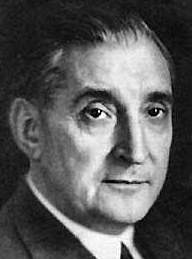
A. Salazar |
Salazar, António de Oliveira (b. April 28, 1889, Vimieiro, Portugal - d. July 27, 1970, Lisbon, Portugal), prime minister of Portugal (1932-68). Having helped form the Catholic Centre Party, he was elected to the Cortes (parliament) in January 1921 but resigned after one session. In May 1926, when the parliamentary regime was replaced by a military dictatorship, he was offered the post of finance minister, but he resigned after a few days when the generals would not give him a free hand. In 1928 Gen. António Óscar de Fragoso Carmona became president and gave him the finance ministry with control over income and expenditure. In this role, he reversed the old tradition of deficits and made budgetary surpluses. He came to be in virtual control of the government, and was officially named prime minister by Carmona in 1932, a post he would hold for 36 years. The 1933 constitution of his Estado Novo ("New State") reorganized Portugal's political system along authoritarian lines. The National Assembly was composed solely of government supporters, political freedoms were curtailed, and attention was concentrated on economic recovery. He retained the post of finance minister until 1940, and owing to the crises occasioned by the Spanish Civil War and World War II, he also served as minister of war (1936-44) and of foreign affairs (1936-47). In 1949 he led the country into the North Atlantic Treaty Organization. His insistence on maintaining Portugal's colonies could only be sustained with difficulty when the other colonial empires were being dismantled. He carried out numerous public works projects, but poverty remained widespread. He suffered a stroke in 1968 and was replaced as prime minister by Marcelo Caetano, a change that the disabled Salazar was never told had taken place.
Salazar (del Valle), Jesús M(elquiades) (b. 18..., Jauja, Junín, Peru - d. March 3, 1931, Lima, Peru), interior minister of Peru (1924-26, 1928-29). He was also president of the Chamber of Deputies (1922-23, 1926-28).
Salazar (y Carrillo), Juan (b. Lima, Peru - d. Sept. 30, 1844, Lima), finance minister (1825) and war and navy minister (1825-26, 1827-28, 1832, 1834, and [Salaverry government] 1835) of Peru. He was also minister to Chile (1823-25).
Salazar (Monroe), Julio (Rolando) (b. 1935, Arequipa department, Peru - d. May 8, 2024, Lima, Peru), defense minister of Peru (1998-99). He was also head of the National Intelligence Service (1991-98).
Salazar, Ken(neth Lee) (b. March 2, 1955, Alamosa, Colo.), U.S. secretary of the interior (2009-13). He was also a U.S. senator from Colorado (2005-09) and ambassador to Mexico (2021-25).
Salazar (Miranda), Octavio (Edilberto) (b. Oct. 20, 1952, Cayalti, Lambayeque, Peru - d. Dec. 24, 2024, Lima, Peru), interior minister of Peru (2009-10). He was also director-general of the National Police (2008).
Salazar, Raúl (d. Oct. 9, 2020, Miami, Fla.), defense minister of Venezuela (1999-2000).
Salazar (y Cabal), Vicente Lucio (b. Dec. 20, 1832, Quito, Ecuador - d. Feb. 14, 1896, Quito), finance minister (1873, 1883-88, 1893), foreign and interior minister (1893), vice president (1894-95), and acting president (1895) of Ecuador. He was also president of the Chamber of Deputies (1873-74) and Senate (1892-93).
Salazar (Vélez), Víctor Manuel (b. Sept. 24, 1869, Salamina, Antioquia [now in Caldas], Colombia - d. March 7, 1943, Bogotá, Colombia), interior minister of Colombia (1921-22). He was also mayor of Medellín (1893-96), governor of Panamá (1902-03), and minister of public works (1921).
Salazar Adame, Florencio (b. April 5, 1948, Chilpancingo, Guerrero, Mexico), Mexican politician. He was mayor of Chilpancingo (1987-89), minister of agrarian reform (2003-06), and ambassador to Colombia (2008-13).
Salazar Crespo, Jorge, interior and justice minister of Bolivia (1981). He was also minister secretary-general of the presidency (1981).
Salazar Ferro, Julio Roberto (b. Oct. 3, 1903, Chiquinquirá, Boyacá, Colombia - d. July 17, 1972, Bogotá, Colombia), Colombian politician. He was president of the Senate (1943) and minister to Uruguay (1945-46).
Salazar Gómez, Roberto (b. July 4, 1916, Medellín, Colombia - d. 1995), Colombian politician. He was mayor of Bogotá (1954-55) and minister of public works (1957-58).
Salazar Jaramillo, Félix (María) (b. June 17, 1870, Manizales, Colombia - d. June 8, 1950, Bogotá, Colombia), finance minister of Colombia (1906, 1922-23). He was also president of the Chamber of Representatives (1919) and the Senate (1921) and minister of public works (1922).
Salazar Manrique, Roberto (b. March 22, 1936 - d. Jan. 24, 1999, Quito, Ecuador), justice minister of Colombia (1989-90).
Salazar Martínez, Florencio (b. Dec. 31, 1931 - d. Aug. 1, 2023), governor of San Luis Potosí (1985-87).
Salazar Navarrete, Fernando (b. April 22, 1930, San José, Costa Rica), Costa Rican diplomat. He was ambassador to Colombia (1970-72) and Argentina (1987-90) and permanent representative to the United Nations (1974-78).
Salazar Paredes, Fernando (b. Dec. 18, 1943, La Paz, Bolivia - d. June 19, 2024, Santa Cruz, Bolivia), Bolivian politician. He was minister of economic integration (1980) and permanent representative to the United Nations (1983).
Salazar Villanueva, (Julio) Javier (b. March 15, 1916, Huaraz, Áncash, Peru - d. May 24, 1980, Lima, Peru), finance minister of Peru (1963-64).
Salazar y Oyarzábal, Juan de Dios (Fidel) (b. April 24, 1875, Concepción, Junín, Peru - d. March 8, 1923, Valencia, Spain), interior minister of Peru (1911). He was also prefect of Puno (1903-05) and Cajamarca (1905-06) and president of the Chamber of Deputies (1912-13, 1919-21).
Salazkin, Sergey (Sergeyevich) (b. March 10 [Feb. 26, O.S.], 1862, Doshchatoye, Vladimir province [now in Nizhny Novgorod oblast], Russia - d. Aug. 4, 1932, Leningrad, Russian S.F.S.R. [now St. Petersburg, Russia]), education minister of Russia (1917). A biochemist, he was also rector of the Crimean University (1923-25).
Salcedo, Juan José, finance minister of Peru (1858-61).
Salcedo Bastardo, José Luis (b. March 15, 1926, Carúpano, Sucre, Venezuela - d. Feb. 16, 2005, Caracas, Venezuela), Venezuelan politician. He was ambassador to Ecuador (1959-61), Brazil (1961-63), France (1974-76), the United Kingdom (1984-87), and East Germany (1987-90) and secretary-general of the presidency (1976-77).
Saldanha, Álvaro Jansen Serra Lima (b. July 25, 1879 - d. Dec. 23?, 1965), federal interventor in Maranhão (1933).
Saldanha, Ivar Figueiredo (b. March 8, 1921, Rosário, Maranhão, Brazil - d. [automobile accident] Feb. 2, 1999, São Luís, Maranhão), acting governor of Maranhão (1982-83). He was also mayor of São Luís (1956, 1959-62, 1977-78).
Saldanha, João Carlos Gregório Domingues Vicente Francisco de Saldanha Oliveira e Daun, (1º) duque, (1º) marquês e (1º) conde de (b. Nov. 17, 1790, Lisbon, Portugal - d. Nov. 20, 1876, London, England), governor of Rio Grande do Sul (1821-22) and prime minister of Portugal (1835, 1846-49, 1851-56, 1870); grandson of Sebastião José de Carvalho e Mello, marquês de Pombal. He was also minister of war (1835, 1846, 1847-48, 1851-56, 1870), foreign affairs (1846, 1847-48, 1870), interior (1848-49, 1851, 1870), finance (1870), justice (1870), marine and colonies (1870), and public works (1870) and minister to Austria (1841-45), the Papal State (1862-64, 1866-69), France (1869), and the United Kingdom (1870-76). He became count in 1827, marquess in 1834, and duke in 1846.
Saldanha, Sinval (b. Oct. 3, 1886, Caçapava [now Caçapava do Sul], Rio Grande do Sul, Brazil - d. Aug. 2, 1963), acting federal interventor in Rio Grande do Sul (1930).
Saldías (Maninat), Roque A(ugusto) (b. May 5, 1892, Valencia, Venezuela - d. May 16, 1974, Lima, Peru), prime minister of Peru (1947-48, 1954-56). He was also minister of health, labour, and social welfare (1936-37), navy and aviation (1937-39), finance and commerce (1948, 1955-56), and navy (1948-55).
Saldívar (Molinas), Carlos Augusto (b. Sept. 25, 1927, Asunción, Paraguay - d. Sept. 25, 2018), foreign minister of Paraguay (1983-88).
Saldo, Vladimir (Vasilyevich), Ukrainian Volodymyr (Vasylovych) Saldo (b. June 12, 1956, Zhovtneve, Nikolayev [Mykolayiv] oblast, Ukrainian S.S.R.), Russian governor of Kherson oblast (2022- ). He was also mayor of Kherson (2002-12).
Saleem, Ahmed (b. May 26, 1949, Male, Maldives), secretary-general of the South Asian Association for Regional Cooperation (2012-14). He was also Maldivian high commissioner to Pakistan (2015-20) and ambassador to Nepal (2016-20).
Saleem, Mohammad Yunus (b. Sept. 26, 1912, Mohana, Lucknow district, United Provinces [now in Uttar Pradesh], India - d. Jan. 15, 2004, Delhi, India), governor of Bihar (1990-91).
Saleh, Abdul Rahman (b. April 1, 1941, Pekalongan, Netherlands East Indies [now in Jawa Tengah, Indonesia] - d. July 4, 2025, Jakarta, Indonesia), Indonesian official. He was attorney-general (2004-07) and ambassador to Denmark and Lithuania (2008-11).
A.A. Saleh |
Saleh (al-Hashidi), Ali Abdullah, Arabic `Ali `Abd Allah Salih, original surname Afash (b. March 21, 1942 [later officially March 21, 1947], Bayt al-Ahmar village, Sana governorate, Yemen - d. Dec. 4, 2017, Sana, Yemen), president of Yemen (Sana) (1978-90) and of Yemen (1990-2012). As a sergeant, he took part in the army coup that replaced the Islamic monarchy of Sana with a civilian republican government in 1962. Royalists subsequently engaged the revolutionaries in eight years of civil war, which also involved Egyptian and Saudi Arabian troops. After the negotiated settlement of the conflict, Saleh continued to distinguish himself, advancing to the rank of colonel. He helped to bring Ibrahim al-Hamadi to power in a 1974 coup. The assassination of Hamadi in 1977 and of his successor, Ahmad al-Ghashmi, the following year resulted in Saleh's own elevation to the presidency in 1978. The country's relationship with neighbouring Yemen (Aden), the only avowed Marxist state in the Arab world, remained volatile. He favoured unification and pursued this aim through a variety of means. The two governments signed at least two unity treaties during the 1970s and '80s but failed to implement them as sporadic border fighting persisted. Ultimately, it was an economic breakthrough that set the course toward political reunification. He enlisted Aden's support for the establishment of a joint oil enterprise, thus laying the administrative groundwork for a full-scale merger. In 1990, the Yemen Arab Republic and the People's Democratic Republic of Yemen reunified under the name Republic of Yemen. The joint parliaments of the merging nations chose Saleh as president and the secretary-general of Aden's ruling Socialist Party, Ali Salim al-Baidh, as vice president. In 1994 civil war erupted and Baidh announced the secession of the south, but Saleh's northern forces inflicted a crushing defeat on those of Baidh. He won direct presidential elections in 1999 and 2006. In 2011 he was caught up in the wave of Arab uprisings. After being seriously wounded in a rocket attack on the presidential palace (or by a bomb placed inside) on June 3, he went to Saudi Arabia for treatment, returning in September. After long manoeuvring he finally agreed late in the year to a deal that saw him leaving office in February 2012, if only to be replaced by his vice president, Abdu Rabu Mansour Hadi. However, after Hadi was driven from the capital by Houthi rebels in February 2015, Saleh supported the latter and in July 2016 joined them in a formal alliance. This broke in late 2017; his supporters fought Houthi forces, and within days he was killed.
Saleh (Ahmat), Aziz Mahamat (b. Feb. 21, 1974, N'Djamena, Chad), Chadian politician; son of Mahamat Saleh Ahmat (Tibek). He was minister of economy, trade, and tourism development (2014-16), public health (2017-20), communication (2022-24), and infrastructure (2024-25) and governor of Moyen-Chari and Chari-Baguirmi regions (2016-17).
Saleh, Bakri Hassan (b. 1949, near Dongola, Sudan), interior minister (1995-98), defense minister (2000-05), first vice president (2013-19), and prime minister (2017-18) of Sudan. He was also minister of the presidency (1998-2000, 2005-13).
Saleh, Chaerul (b. Sept. 13, 1916, Sawahlunto, Netherlands East Indies [now in Sumatera Barat, Indonesia] - d. Feb. 8, 1967, Jakarta, Indonesia), a deputy prime minister of Indonesia (1963-66). He was also minister of veterans affairs (1957-59), development (1959-64), and basic industries and mining (1960-65) and chairman of the Provisional People's Consultative Assembly (1960-66).
Saleh, Ismail (b. Sept. 7, 1926, Pati, Netherlands East Indies [now in Jawa Tengah, Indonesia] - d. Oct. 21, 2008, Jakarta, Indonesia), justice minister of Indonesia (1984-93). He was also attorney general (1981-84).
Saleh, Jaime (Mercelino) (b. April 20, 1941, Bonaire), governor of the Netherlands Antilles (1990-2002). He was also chief justice of the Netherlands Antilles (1979-90) and Aruba (1986-90).
Saleh, Raymundo Pedro (b. Feb. 23, 1937 - d. July 8, 2021), administrator of Bonaire (1969-73).
Salehi, Ali Akbar (b. March 24, 1949, Karbala, Iraq), foreign minister of Iran (2010-13). He was also head of the Atomic Energy Organization of Iran (2009-10, 2013-21).

Salek |
Salek, Mustafa Ould (Mohamed), Arabic al-Mustafa walad Muhammad al-Salik (b. 1936, Kiffa, Mauritania - d. Dec. 18, 2012, Paris, France), head of state of Mauritania (1978-79). Commissioned as a second lieutenant in Mauritania in February 1961, he rose steadily through the ranks to lieutenant colonel (October 1974), with a colonelcy awaiting him in 1978. After serving as aide-de-camp to the president of Mauritania from October 1961 to November 1962, Salek was posted to the general secretariat of the African and Malagasy Defense Union at Ouagadougou, Upper Volta, became adjutant to the First Troop of the Mauritanian Guard in 1963, and was local commander in Atar (October 1964 to November 1965). Posted to the headquarters of the Mauritanian armed forces, he was appointed acting chief of staff in December 1965, a position he held until February 1967. Subsequently he was seconded to the Ministry of Defense and became an army inspector (July 1968 to July 1969). From Nov. 1, 1970, to 1975 he was assistant governor and then governor of an administrative region. In July 1977 he took military command of the Third Region (Adras) before being appointed chief of staff after the ministerial reshuffle of Jan. 26, 1978. As leader of the Military Committee for National Salvation (CMSN) that, on July 10, 1978, ousted Pres. Moktar Ould Daddah in a bloodless coup, Salek succeeded him as head of state. The coup sprang from the mounting dissatisfaction of military leaders with Daddah's conduct of the long-drawn-out war with Polisario guerrillas from the Western Sahara and with the grave economic difficulties arising from it. After the coup Polisario declared a ceasefire, and contacts were made with it. Salek resigned in 1979 apparently as the result of a crisis within the CMSN over government policy in Western Sahara.
Salem, Élie (Adib) (b. 1930, Bterram, Lebanon), deputy prime minister and foreign minister of Lebanon (1982-84).
Salem (Gallegos), Julio Teodoro (b. 1909, Riobamba, Ecuador - d. Sept. 3, 1962), Ecuadorian politician. In 1934 he became the first member of the country's Arab community to be elected to Congress. As a prominent leader of the Liberal Radical Party, he was arrested several times in the 1940s, but also served as minister of public works; on May 29-31, 1944, as chairman of the Politburo of the Alianza Democrática Ecuatoriana (which took power after Pres. Carlos Arroyo del Río was deposed), he was in charge of the executive power (until the arrival of José María Velasco Ibarra). In 1961-62 he was ambassador to Guatemala.
Salem, Mamdouh (Muhammad), Arabic Mamduh (Muhammad) Salim (b. 1918, Alexandria, Egypt - d. Feb. 25, 1988, London, England), prime minister of Egypt (1975-78). He rose to the rank of general in the Alexandria police force before becoming police commander there in 1964. He served Pres. Gamal Abdel Nasser as a security aide and as the provincial governor of Asyut (1967-70), Gharbiyah (1970), and Alexandria (1970-71). He joined Pres. Anwar al-Sadat's cabinet in 1971 as minister of the interior and as a member of the Central Committee of the Arab Socialist Union (the sole political party), but within a few months he was raised to deputy prime minister. When widespread violent protests against food shortages and rising inflation broke out in 1975, Salem was asked to form a new government as prime minister. He remained a loyal supporter of Sadat's peace initiatives, forming a new cabinet in 1977 as head of the first multiparty government. In 1978 Salem merged his Arab Socialist Party with Sadat's newly formed National Democratic Party, but he unexpectedly resigned his cabinet post when he discovered that Sadat wanted to install a new government. Salem later assisted Sadat's successor, Pres. Hosni Mubarak, as a presidential adviser.

Mohieddin Salem |
Salem (Ahmad Ibrahim), Mohieddin, foreign minister of The Sudan (2025- ). He was also ambassador to Kuwait (2015-22).
Salembere, Sibiri (b. Nov. 1, 1916, Comin-Yanga, Upper Volta [now Burkina Faso] - d. ...), interior and security minister of Upper Volta (1963-65). He was also minister of investments, commerce, industry, and mines (1957-59), agriculture and cooperation (1959-61), rural economy (1961), information and tourism (1961-62), and youth and sports (1962-63).
Salengro, Roger (b. May 30, 1890, Lille, France - d. [suicide] Nov. 18, 1936, Lille), mayor of Lille (1925-29, 1929-36) and interior minister of France (1936).
Salentiny, Nicolas (b. Nov. 26, 1826, Ettelbrück, Luxembourg - d. Nov. 24, 1898, Luxembourg, Luxembourg), interior minister (1870-78) and acting finance minister (1874-76) of Luxembourg. He was also commissioner of Mersch (1857) and Grevenmacher (1857-59) districts.
Saleumxay |
Saleumxay Kommasith (b. Oct. 31, 1968, Houaphan province, Laos), foreign minister (2016-24), a deputy prime minister (2022-26), and prime minister (2026- ) of Laos. He was also permanent representative to the United Nations (2012-13).
Salgado (Méndez), Elena (b. May 12, 1949, Orense, Spain), economy and finance minister of Spain (2009-11). She was also minister of health (2004-07) and public administration (2007-09), second deputy prime minister (2009-11), and first deputy prime minister (2011).
Salgado (Tamayo), Wilma (Josefina) (b. Oct. 20, 1952, Quito, Ecuador), finance minister of Ecuador (2008).
Salgado Pineda, Evelyn (Cecia) (b. Feb. 5, 1982, Iguala, Guerrero, Mexico), governor of Guerrero (2021- ).
Salgar (Moreno), Eustorgio (b. Nov. 1, 1831, Bogotá, Colombia - d. Nov. 25, 1885, Bogotá), president of the Executive Ministry (1863) and president (1870-72) of Colombia. He was also president of Santander (1859 [acting], 1861-64, 1868-70) and Cundinamarca (1874-75) and minister to the United States (1864-67).
Salgueiro, João (Maurício Fernandes) (b. Sept. 4, 1934, Braga, Portugal - d. Feb. 17, 2023), finance (and planning) minister of Portugal (1981-83).
Salgueiro, João Manuel Guerra (b. July 21, 1946), Portuguese diplomat. He was chargé d'affaires in Guinea-Bissau (1980) and South Africa (1983-84), ambassador to Cape Verde (1990-93), Japan (1993-95), the Netherlands (2002-05), and Brazil (2009-11), and permanent representative to the United Nations (2005-09).
Salhuana (Cavides), Eduardo (b. Sept. 1, 1962, Cusco, Peru), justice minister of Peru (2005). He was also president of Congress (2024-25).
Sali, Boyamo (d. Aug. 23, 2022), defense minister of Papua New Guinea (1983-85). He was also minister of local government (1972-75), commerce (1975), primary industry (1975-77), natural resources (1977-78), lands (1978-80), and broadcasting and information (1982-83).
Salia, Paata (b. June 6, 1972), justice minister of Georgia (2025- ).
Saliba, George B. (b. Jan. 27, 1944, Zurrieq, Malta), Maltese diplomat. He was ambassador to Saudi Arabia (1981-87), Libya (1987-93), Russia (1993-97), and the United States (1999-2003) and permanent representative to the United Nations (1997-99).
Saliceti, Antonio Cristoforo (b. Aug. 26, 1757, Saliceto, Corsica [now in France] - d. Dec. 23, 1809, Naples [now in Italy]), member of the Regency of Naples (1808). He was also Neapolitan police and war minister.
Saliceti, Pierre Jean André (b. March 6, 1893, Saliceto, Corsica, France - d. Oct. 21, 1946, Saliceto), acting governor of Dahomey (1940) and commissioner of French Togo (1942-43).
Salifou, André (b. 1942, Zinder, Niger - d. May 14, 2022, Niamey, Niger), foreign minister of Niger (1996). He was also chairman of the High Council of the Republic (1991-93) and minister of higher education and research (1996) and relations with the assemblies (1996-97).
Salifou, Ilia (b. Feb. 17, 1932, Madaoua, Niger), Nigerien diplomat. He was permanent representative to the United Nations (1974-76) and ambassador to the United States (1974-76) and the Soviet Union, Poland, Romania, Czechoslovakia, East Germany, Yugoslavia, and India (1976-79).
Salih, (Sayed) Ahmad Muhammad (b. 1896 - d. 1971), member of the Sovereignty Council of The Sudan (1956-58).
B. Salih | 
L. Salii |
Salih, Barham (Ahmad) (b. 1960, Sulaymaniyah, Iraq), prime minister of Kurdistan (2001-04 [Patriotic Union of Kurdistan government], 2009-12), deputy prime minister for national security (2004-05), planning minister (2005-06), deputy prime minister (2006-09), and president (2018-22) of Iraq, and United Nations high commissioner for refugees (2026- ).
Salih, Muhammad Mahdi (b. 1947, al-Anbar governorate, Iraq), finance minister of Iraq (1989-91). He was also minister of trade (1987-2003).
Salih Pasha, Haci (d. 1827), grand vizier of the Ottoman Empire (1821-22).
Salihaj, Adem (b. Dec. 25, 1950, Duraj village, Kosovo, Serbia), acting prime minister of Kosovo (2005).
Salihu, Abubakar (b. July 20, 1949, Arewa [now in Kebbi state], Nigeria - d. January 2020), governor of Gongola/Adamawa (1989-92).
Salii, Gloria, née Gibbons (b. Jan. 5, 1950), acting Ibedul of Palau (1973); sister of Yutaka Gibbons; sister-in-law (from 1983) of Lazarus Salii.
Salii, Lazarus (Eitaro) (b. Nov. 17, 1936, Angaur, Palau - d. [suicide] Aug. 20, 1988, Koror, Palau), president of Palau (1985-88).
Saliji, Bilen (b. June 23, 1975, Dobri Dol, Macedonia [now North Macedonia]), justice minister of Macedonia (2017-18).
Salikhov, Makhmadnazar (b. June 20, 1957, in or near Kurgan-Tyube, Tadzhik S.S.R. [now Bokhtar, Tajikistan] - d. [suicide] June 17, 2009, Dushanbe, Tajikistan), interior minister of Tajikistan (2006-09). He was also prosecutor-general (1992-95) and chairman of the Constitutional Court (2000-03).
Salikhov, Murat (b. 1905 - d. [executed] November 1938, near Tash-Debe, Kirgiz S.S.R.), chairman of the Council of People's Commissars (1937-38) and acting chairman of the Presidium of the Supreme Soviet (1938) of the Kirgiz S.S.R.
Salim, Agus (b. Oct. 8, 1884, Kota Gadang, Bukittinggi, Netherlands East Indies [now in Sumatera Barat, Indonesia] - d. Nov. 4, 1954, Jakarta, Indonesia), foreign minister of Indonesia (1947-49).
E. Salim |
Salim, Ezzedine, original name Abdul Zahraa Othman Muhammad, Arabic `Izz al-Din Salim (`Abd al-Zahra´ `Uthman Muhammad) (b. 1940, Basra, Iraq - d. [car bomb attack] May 17, 2004, Baghdad, Iraq), president of the Governing Council of Iraq (2004).
S.A. Salim |
Salim, Salim Ahmed (b. Jan. 23, 1942, Zanzibar), Tanzanian politician. He served as Tanzania's (originally Zanzibar's) ambassador to Egypt (1964-65), then as high commissioner to India (1965-68) and ambassador to China (1969-70). In 1970, he was appointed permanent representative to the United Nations in New York, where he remained for ten years. During this period, he was concurrently accredited as ambassador to Cuba and high commissioner to Guyana and (from 1971) Barbados, Jamaica, and Trinidad and Tobago. He was elected as president of the UN Security Council in January 1976 and went on to serve as president of the 34th Session of the UN General Assembly in September 1979. During his one-year tenure of office, he also presided over the 6th and 7th Emergency Special Sessions of the General Assembly in January and July 1980 respectively. In September 1980, he equally presided over the 11th Special Session of the General Assembly. In 1971-79, he chaired the UN Special Committee on Decolonization (Committee of 24). Serving as foreign minister in 1980-84, he was president of the International Conference on Sanctions against South Africa in 1981 as well as the Paris International Conference Against Apartheid in 1984. He became prime minister in 1984 but had to yield the post due to a constitutional technicality after the election of a fellow Zanzibari to the presidency of Tanzania in 1985. Subsequently he continued to serve as deputy prime minister and minister for defense and national service until his election as secretary-general of the Organization of African Unity (OAU), a post he held from 1989 to 2001. He also held a number of key positions within the Chama Cha Mapinduzi, Tanzania's ruling party.

Salim Abdullah |
Salim Abdullah Al Jabir Al Sabah, Sheikh (b. Sept. 24, 1957, Kuwait), foreign minister of Kuwait (2022-24). He was also ambassador to the United States (2001-22).
Salim Al Sabah |
Salim Al Sabah Al Salim Al Sabah, Sheikh (b. June 18, 1937, Kuwait city, Kuwait - d. Oct. 8, 2007), defense minister (1978-88, 1996-2001), interior minister (1988-91), and foreign minister (1991-92) of Kuwait; son of Sheikh Sabah Al Salim Al Sabah. Earlier he was ambassador to the United Kingdom (1965-71; from 1968 also non-resident ambassador to Sweden, Norway, and Denmark) and the United States (1971-75; also non-resident ambassador to Canada and Venezuela). In 1975-78 he was minister of social affairs and labour.
Salima Machamba (bint Saidi Hamadi Makadara), (Ursule) (b. November 1874 - d. August 1964, Pesmes, Haute-Saône, France), sultan of Mohéli (1888-1909); daughter of Jumbe Fatima bint Abderremane. She met Camille Paule, a French gendarme, in Réunion and fell in love. The French government let her know that she could not reign and be a gendarme's wife at the same time (which undoubtedly served its intentions of annexing the island). It became necessary for her to choose and, without hesitation, she married him in August 1901. Showing no interest for the throne, she never came to the island (leaving the throne to regents), and the French government provided her a yearly allowance of 3,000 gold francs and facilitated the couple's departure to France in 1902. They then became simple farmers in Haute-Saône.
Salimei, Jorge Néstor (b. Aug. 3, 1926, Buenos Aires, Argentina - d. July 10, 1975, Buenos Aires), economy minister of Argentina (1966-67). He was also minister of labour (1966).
Salimi, Mohammad (b. 1937, Mashhad, Iran - d. Jan. 30, 2016), defense minister of Iran (1981-84). He was also commander of the army (2000-05).
Salimov, Akil (Umurzakovich) (b. Dec. 24, 1928, Tashkent, Uzbek S.S.R.), chairman of the Presidium of the Supreme Soviet of the Uzbek S.S.R. (1983-86). He was also rector of the Tashkent Institute of Irrigation and Agricultural Mechanization Engineers (1986-92) and Tashkent State Technical University (1993-94) and minister of higher and secondary specialized education of Uzbekistan (1994-98). He was arrested on corruption charges in 1988 in the so-called "cotton scandal" but was later released.
Salimov, Yakub (b. May 20, 1958, Vakhsh district, Tadzhik S.S.R. [now in Khatlon viloyat, Tajikistan), interior minister of Tajikistan (1992-95). He was also ambassador to Turkey (1995-96). In 2005 he was sentenced to 15 years in jail on charges of treason for attempting to mount a coup in 1997; he was released in 2016.
Salinas, Basilio, foreign and interior minister of Nicaragua (1865).
Salinas, Emilio (b. 1859, Cuatro Ciénegas, Coahuila, Mexico - d. 1927, Laredo, Texas), governor of Querétaro (1917) and Chihuahua (1920).
Salinas (González), Manuel (b. June 12, 1855, Santiago, Chile - d. 1917), finance minister (1899-1900, 1903, 1909-10) and foreign minister (1914-15) of Chile. He was also minister to Bolivia (1897-99).
Salinas Aramayo, Carlos (b. June 6, 1901, La Paz, Bolivia - d. [executed] Nov. 20, 1944, Chuspipata, La Paz department, Bolivia), foreign minister of Bolivia (1943). He was also prefect of La Paz (1938), agriculture minister (1939-40), and minister to Paraguay (1940-41).
Salinas de G. |
Salinas de Gortari, Carlos (b. April 3, 1948, Mexico City, Mexico), president of Mexico (1988-94). He joined the Institutional Revolutionary Party (PRI) at age 18 and from 1971 on he held successively more important economic-affairs posts in the government. His first government job was an economic analyst at the Ministry of Finance, and he went on to win eight promotions in eight years, in 1979 becoming general director of economic and social policy in the Budget and Planning Ministry. In 1981 he campaigned behind the scenes to secure Miguel de la Madrid, then budget minister, the presidential nomination. Madrid was elected in 1982 and made Salinas his minister of planning and the budget. In that position, he began the economic liberalization program that he hoped to complete as president, and from mid-1986 he was in firm charge of economic policy. He held the post until 1987, when Madrid designated him to be his successor and he became the PRI presidential candidate for the 1988 election. During the election campaign he appeared to have a limited capacity to inspire his followers. In 60 years no PRI candidate for the presidency had won less than 70% of the popular vote, but in 1988 Salinas won a bare 50.4%, according to the official tallies. The opposition contended that his real support was even lower and that the PRI had resorted to vote fraud; there were wild and violent scenes in Congress when he was officially declared president-elect. As president, he continued the program of economic retrenchment and privatization. In 1991-92 his government negotiated with the United States and Canada the North American Free Trade Agreement (NAFTA), which went into effect Jan. 1, 1994. Months after leaving office he went into a self-imposed exile (mostly in Dublin, Ireland) after his brother Raúl was arrested on various charges. Both became deeply reviled by the Mexican public.
Salinas Izaguirre, Abel (Hernán) (b. May 12, 1930, Supe Puerto, Peru - d. Aug. 1, 2012, Lima, Peru), interior minister (1985-87) and economy and finance minister (1988) of Peru. He was also minister of energy and mines (1987-88) and a minor presidential candidate (2000).
Salinas Leal, Bonifacio (b. May 14, 1900, General Bravo, Nuevo León, Mexico - d. Oct. 9, 1982, Mexico City, Mexico), governor of Nuevo León (1939-43) and Baja California Sur (1959-65).
Salinas Rivas, Abel (Hernán Jorge) (b. 1959), Peruvian politician; son of Abel Salinas Izaguirre. He was minister of health (2018, 2020).
Salisbury, James Cecil, (1st) Marquess of (b. Sept. 4, 1748, Hatfield, Hertfordshire, England - d. June 13, 1823, Hatfield), British postmaster-general (1816-23). He was created marquess in 1789.
Salisbury, James (Brownlow William Gascoyne-)Cecil, (2nd) Marquess of (b. April 17, 1791, London, England - d. April 12, 1868, Hatfield, Hertfordshire, England), British politician; son of James Cecil, (1st) Marquess of Salisbury. He was lord privy seal (1852) and lord president of the council (1858-59). He succeeded as marquess in 1823.
Salisbury, James (Edward Hubert) Gascoyne-Cecil, (4th) Marquess of (b. Oct. 23, 1861, London, England - d. April 4, 1947, London), British politician; son of Robert Arthur Talbot Gascoyne-Cecil, Marquess of Salisbury. He was lord privy seal (1903-05, 1924-29), president of the Board of Trade (1905), chancellor of the Duchy of Lancaster (1922-23), and lord president of the council (1922-24). He succeeded as marquess in 1903.
Salisbury, Robert (Arthur James) Gascoyne-Cecil, (5th) Marquess of (b. Aug. 27, 1893, Hatfield, Hertfordshire, England - d. Feb. 23, 1972, Hatfield), British politician; son of James Gascoyne-Cecil, Marquess of Salisbury. He was paymaster-general (1940), secretary of state for dominion affairs (1940-42, 1943-45), colonies (1942), and Commonwealth relations (1952), lord privy seal (1942-43, 1951-52), and lord president of the council (1952-57). He was known as Viscount Cranborne before succeeding as marquess in 1947.
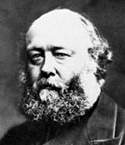
(3rd) M. of Salisbury |
Salisbury, Robert Arthur Talbot Gascoyne-Cecil, (3rd) Marquess of, (9th) Earl of Salisbury, (9th) Viscount Cranborne, (9th) Baron Cecil of Essendon (b. Feb. 3, 1830, Hatfield, Hertfordshire, England - d. Aug. 22, 1903, Hatfield), British prime minister (1885-86, 1886-92, 1895-1902) and foreign secretary (1878-80, 1885-86, 1887-92, 1895-1900); son of James Cecil, (2nd) Marquess of Salisbury. He was offered a seat in Parliament for Stamford in 1853, and was elected. In 1865 his elder brother died and he took the courtesy title of Viscount Cranborne as heir to his father. He briefly held government office in 1866-67 as secretary of state for India. In 1868 he succeeded to his father's title and entered the House of Lords. He became deeply suspicious of the new Conservative leader, Benjamin Disraeli, but in 1874 was persuaded to join Disraeli's ministry and once more became secretary of state for India. Overcoming his earlier prejudice, he came to regard Disraeli with admiration and affection. Becoming foreign secretary for the first time in 1878, at a time of great crisis in the Balkans, he averted war with Russia over the control of Constantinople. For their diplomatic success Disraeli and Salisbury were granted the Order of the Garter. After Disraeli's death (1881), Salisbury became leader of the Conservative Party. He opposed Home Rule for Ireland and three times (1886, 1895, 1900) won the electoral support necessary to become prime minister. The partition of Africa largely preoccupied his second ministry (1886-92). His foreign policy aimed at expansion of the British colonial empire and avoided entangling alliances with other powers. He was the last aristocratic statesman to head a British government from the House of Lords and not the elected Commons. His retirement in 1902 marked, politically, the end of the Victorian Age.
Salisbury, Robert Michael James Gascoyne-Cecil, (7th) Marquess of, Baron Gascoyne-Cecil (b. Sept. 30, 1946), British lord privy seal (1994-97); grandson of Robert Gascoyne-Cecil, Marquess of Salisbury. He was known as Viscount Cranborne before succeeding as marquess in 2003; he was also made a life peer in 1999.
Sall, Abdoul Aziz (b. Jan. 1, 1924, M'Bout, Mauritania), interior minister of Mauritania (1968-71). He was also minister of state for national orientation (1975-76) and president of the National Assembly (1976-78).
Sall, Amadou Clédor (b. Oct. 21, 1915, Rufisque, Senegal - d. March 29/30, 2015), interior minister (1968-71), justice minister (1971-74), and defense minister (1974-81) of Senegal. He was also governor of Sine-Saloum (1962-63) and Cap-Vert (1963-68) regions and mayor of Dakar (1980-84).
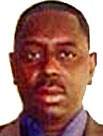
Macky Sall |
Sall, Macky (b. Dec. 11, 1961, Fatick, Senegal), interior minister (2003-04), prime minister (2004-07), and president (2012-24) of Senegal. He was also mayor of Fatick (2002-08, 2009-12), president of the National Assembly (2007-08), chairman of the Economic Community of West African States (2015-16), and chairman of the African Union (2022-23). He is not to be confused with Chérif Macky Sall (b. Dec. 6, 1948, Nioro, Senegal - d. May 9, 2011, Dakar, Senegal), minister-delegate in charge of decentralization (1998-2002) and mayor of Guédiawaye (2009-11).
Sall, Malick (b. April 2, 1956, Danthiady, Senegal), justice minister of Senegal (2019-22).
Sallah, Abdoulie Momodou (b. Aug. 24, 1944, Sambang, Gambia), Gambian politician. He was high commissioner/ambassador to Sierra Leone, Liberia, Guinea, and Côte d'Ivoire (1995-97), permanent representative to the United Nations (1997-98), and minister of health and social welfare (1999-2001), higher education, research, science, and technology (2007-08), and presidential affairs (2014).
Sallah, Abdramane, interior minister of Chad (1997-98).
Sallah, Ousman Ahmadou (b. July 26, 1938, Kudang, Gambia - d. Jan. 29, 2023), Gambian diplomat. He was acting high commissioner to the United Kingdom (1971), ambassador to Saudi Arabia, Kuwait, Qatar, United Arab Emirates, Egypt, Somalia, Ethiopia, and Iran (1974-79) and the United States (1979-82, 1987-94), and permanent representative to the United Nations (1979-82, 1987-94).
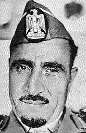
A. al-Sallal |
Sallal, Abdullah al-, Arabic in full `Abd Allah Yahya al-Sallal (b. 1917, Sana, Yemen - d. March 5, 1994, Sana), president of Yemen (1962-67). As a youth he was selected by the imamate for special military training in Iraq. On his return to Yemen in 1939, he was briefly jailed for political reasons. He later spent seven years in prison (1948-55), but he was released by Crown Prince Muhammad al-Badr, who made him governor of Hodeida (1959-61) and promoted him to brigadier. When Badr succeeded to the throne on Sept. 19, 1962, he appointed Sallal chief of staff. On September 27, however, Sallal led a military coup that overthrew the monarchy, proclaimed the Yemen Arab Republic, and made him president, with Egyptian military, political, and economic aid. The imams were seen as having resisted the country's modernization. Sallal was credited with paving roads, building modern buildings and airports, and establishing modern communications. But his rule became increasingly tenuous as royalist forces, supported by Saudi Arabia, continued to resist his rule. When Egypt withdrew its backing, moderate republicans led by Abdul Rahman al-Iryani staged a bloodless coup (Nov. 5, 1967) while Sallal was on a visit to Iraq. He then lived in exile in Egypt, only returning to Yemen in 1981, after being pardoned. At the time of his death he was a member of a committee that was mediating an end to a months-long political crisis between leaders of the former Yemen Arab Republic and People's Democratic Republic of Yemen (which had united in 1990).

J.A. al-Sallal |
Sallal, Jamal Abdullah al- (b. Jan. 1, 1960, Sana, Yemen), foreign minister of Yemen (2014). He was also ambassador to Iran and Azerbaijan (2006-11) and permanent representative to the United Nations (2011-14).

Sallé | 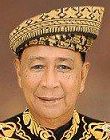
Sallehuddin |
Sallé, Michel (b. Oct. 12, 1952, Ndele, Oubangui-Chari [now Central African Republic]), foreign minister (1983-84) and interior minister (2004-07) of the Central African Republic. He was also minister of energy and mines (1986-89) and water, forests, and fisheries (2003-04).
Sallehuddin ibni al-Marhum Sultan Badlishah, Tuanku (b. April 30, 1942, Alor Star, Kedah, Malaya [now in Malaysia]), sultan of Kedah (2017- ).
Saller, (Michel) Raphaël (Antoine) (b. Sept. 29, 1899, Le Marin, Martinique - d. Aug. 17, 1976), governor of French Somaliland (1943-44). He was also planning minister (1957-59) and economy, finance, and planning minister (1959-66) of Ivory Coast.
Salles, Apolônio Jorge de Faria (b. Aug. 24, 1904, Altinho, Pernambuco, Brazil - d. Oct. 12, 1982, Rio de Janeiro, Brazil), Brazilian politician. He was minister of agriculture (1942-45, 1954) and acting president of the Senate (1956-58).
Salles, Colombo Machado (b. May 20, 1926 - d. Nov. 14, 2023, Florianópolis, Santa Catarina, Brazil), governor of Santa Catarina (1971-75).
Salles, Ephigênio Ferreira de (b. Aug. 16, 1877, Serro do Frio, Minas Gerais, Brazil - d. Oct. 12, 1939, Rio de Janeiro, Brazil), governor of Amazonas (1926-29).
Salles, Eurico de Aguiar (b. Aug. 24, 1910, Vitória, Espírito Santo, Brazil - d. Sept. 1, 1959, Rio de Janeiro, Brazil), justice and interior minister of Brazil (1957-58).
Salles, Francisco Antonio de (b. Jan. 29, 1864, Lavras do Funil, Minas Gerais, Brazil - d. Jan. 16, 1933, Rio de Janeiro, Brazil), president of Minas Gerais (1902-06) and finance minister of Brazil (1910-13). He was also mayor of Belo Horizonte (1899).
Salles, Francisco de Paula (b. March 13, 1838, Pernambuco province [now state], Brazil - d. July 22, 1902, Natal, Rio Grande do Norte, Brazil), president of Rio Grande do Norte (1883-84).
Salles, Henrique de Magalhães (b. Aug. 21, 1848, Arraial do Cágado [now Mar de Espanha], Minas Gerais, Brazil - d. Oct. 24, 1913, Juiz de Fora, Minas Gerais), president of Alagoas (1883-84).
Salles, José Rogério (b. June 18, 1953, Francisco Beltrão, Paraná, Brazil), governor of Mato Grosso (2002-03). He was also mayor of Rondonópolis (1994-97).
Salles, Manuel Ferraz de Campos (b. Feb. 13, 1841, Campinas, São Paulo, Brazil - d. June 28, 1913, Guarujá, São Paulo), president of Brazil (1898-1902). He was also justice minister (1889-91) and president of São Paulo (1896-97).
Salles, Walther Moreira (b. May 28, 1912, Pouso Alegre, Minas Gerais, Brazil - d. Feb. 27, 2001, Petrópolis, Rio de Janeiro, Brazil), finance minister of Brazil (1961-62). He was also ambassador to the United States (1952-53, 1959-61).
Salling, Augusta (b. 1954), finance minister of Greenland (2001-02, 2003).
Salloukh | 
Salman |
Salloukh, Fawzi, Arabic Fawzi Sallukh (b. 1931, Qammatieh, Aley district, Lebanon), foreign minister of Lebanon (2005-09). Earlier he was chargé d'affaires in Liberia (1962-64) and Sierra Leone (1964-71) and ambassador to Nigeria (1978-85), Algeria (1985-87), Austria (1990-94), and Belgium and Luxembourg (1994-95).
Salman, Arabic in full Salman ibn `Abd al-`Aziz Al Sa`ud (b. Dec. 31, 1935, Riyadh, Saudi Arabia), king (2015- ) and prime minister (2015-22) of Saudi Arabia; son of Abdul Aziz; half-brother of Abdullah; brother of Fahd. He was governor of Riyadh (1955-60, 1963-2011), defense minister (2011-15), and crown prince and deputy prime minister (2012-15).
Salman, Salah (b. Jan. 24, 1936, Beirut, Lebanon), interior minister of Lebanon (1976-79). He was also minister of health (1972).
Salman ibn Hamad Al Khalifa, Sheikh (b. Oct. 10, 1894 - d. Nov. 2, 1961), ruler of Bahrain (1942-61).

Salman ibn
H. (1969- ) |
Salman ibn Hamad Al Khalifa, Sheikh (b. Oct. 21, 1969), prime minister of Bahrain (2020- ). He was appointed crown prince shortly after his father, Sheikh Hamad, became emir in 1999. At the time Salman was undersecretary of defense and chairman of the Bahrain Centre for Studies and Research. He speaks English and is a graduate of the American University in Washington, D.C., and Cambridge University. He is married and has three children. He collects sports cars and has been seen in central Manama driving his McLaren F-1. The single-seat car costs about $1 million.
Salman ibn Sultan (ibn Abdul Aziz Al Saud) (b. Feb. 2, 1976, Dhahran, Saudi Arabia), Saudi prince; son of Sultan; son-in-law of Ahmad (ibn Abdul Aziz Al Saud). He is governor of Madinah (2023- ).
Salmerón, Modesto (b. 1885?, León, Nicaragua - d. Nov. 15, 1963), interior minister of Nicaragua (1945-56).
Salmon, Charles Spencer (b. 1832 - d. June 17, 1896, England), acting governor of Gold Coast (1872), chief commissioner of the Seychelles (1874-79), and president of Nevis (1879-82).
Salmon, Thomas (Paul) (b. Aug. 19, 1932, Cleveland, Ohio - d. Jan. 14, 2025, Brattleboro, Vt.), governor of Vermont (1973-77).

Salmond |
Salmond, Alex(ander Elliot Anderson) (b. Dec. 31, 1954, Linlithgow, Scotland - d. Oct. 12, 2024, Ohrid, North Macedonia), first minister of Scotland (2007-14). He was leader of the Scottish National Party (1990-2000, 2004-14) and founder and leader of the Alba Party (2021-24).
Salnais, Voldemars (b. May 20, 1886, Lubana parish, Russia [now in Latvia] - d. Aug. 4, 1948, Stockholm, Sweden), foreign minister of Latvia (1933-34). He was also minister of labour (1925) and ambassador to Sweden and Norway (1937-40) and Denmark (1937-39).
Salnave, Sylvain (b. Feb. 7, 1826, Cap-Haïtien, Haiti - d. [executed] Jan. 15, 1870, Port-au-Prince, Haiti), president of Haiti (1867-69).
Salogor, Nikita (Leontyevich) (b. Aug. 15 [Aug. 2, O.S.], 1901, Konstantinovka, Kherson province, Russia [now in Ukraine] - d. June 24, 1981, Kishinev, Moldavian S.S.R. [now Chisinau, Moldova]), acting first secretary of the Communist Party of the Moldavian S.S.R. (1942-46). He was also chairman of the Supreme Soviet (1941-47).
Salolainen, Pertti (Edvard) (b. Oct. 19, 1940, Helsinki, Finland), deputy prime minister of Finland (1991-95). He was also minister of foreign trade (1987-95), chairman of the National Coalition Party (1991-94), and ambassador to the United Kingdom (1996-2004).
Salomón (Osorio), Alberto (b. Nov. 15, 1879, Callao, Peru - d. April 7, 1959, Lima, Peru), foreign minister of Peru (1920-25). He was also minister of justice, education, and worship (1919-20) and finance and commerce (1920).
Salomon, Edward P. (b. Aug. 11, 1828, Ströbeck [now part of Halberstadt], Prussia [now in Sachsen-Anhalt, Germany] - d. April 21, 1909, Frankfurt am Main, Germany), governor of Wisconsin (1862-64).
Salomon, Edward S(elig) (b. Dec. 25, 1836, Slesvig, Duchy of Schleswig [now Schleswig, Schleswig-Holstein, Germany] - d. July 18, 1913, San Francisco, Calif.), governor of Washington (1870-72); cousin of Edward P. Salomon.
Salomon, (J.J. Antoine Philippe) Georges (b. Port-au-Prince, Haiti - d. 1998, Port-au-Prince), foreign minister of Haiti (1979-81, 1985-86). He was also ambassador to the United States (1975-79).
Salomon, Lysius, jeune, in full Louis Étienne Félicité Lysius Salomon, duc de Saint-Louis-du-Sud (b. June 30, 1815, Les Cayes, Haiti - d. Oct. 19, 1888, Paris, France), president of Haiti (1879-88). He was also minister of foreign affairs (1848-49, 1879), finance and commerce (1848-59, 1879), and justice and education (1851-59).
Salomoni (Dernas), Tomás Andrés (b. April 10, 1884, Asunción, Paraguay - d. 1951), foreign minister of Paraguay (1940). He was also minister to Cuba (1930-34), Mexico and Colombia (1931-34), and Bolivia (1943) and ambassador to Bolivia (1943-44).
Salong, John Dahmasing (b. Oct. 12, 1966), finance minister of Vanuatu (2022-23, 2023-24). He was also minister of climate change (2024-25).
Salonga, Jovito (Reyes) (b. June 22, 1920, Pasig, Rizal, Philippines - d. March 10, 2016, Quezon City, Philippines), Philippine politician. He was chairman of the Presidential Commission on Good Government (1986-87), president of the Senate (1987-91), and a presidential candidate (1992).
Salonia, Antonio (Francisco) (b. Oct. 12, 1927, General Alvear, Mendoza, Argentina), justice minister (1989-91) and education minister (1989-92) of Argentina.
Salopuka, Oliver, Solomon Islands politician. He has been minister of lands, housing, and survey (2026- ).

Salote |
Salote (Mafile'o Pilolevu Veiongo) Tupou III (b. March 13, 1900, Nuku'alofa, Tonga - d. Dec. 16, 1965, Auckland, N.Z.), queen of Tonga (1918-65). She was the eldest legitimate child of King George Tupou II and his wife, Lavinia Veiongo (great-granddaughter of Fatafehi Laufilitonga, the last Tu'i Tonga). She was educated in Auckland, New Zealand, where she remained until she was 15. On Sept. 19, 1917, she married Uiliami Tupoulahi Tungi. She succeeded her father Tupou II on his death on April 5, 1918, and was crowned on October 11. Contrary to earlier expectation, her husband became not king but prince consort; he would later serve as her prime minister. With the fear of British annexation limiting how far her inherited enemies would attempt to destabilize the dynasty, Salote's strategy was to avoid confrontation with the dissidents while cultivating the next generation. This she did by arranging strategic marriages which bound them more closely to the dynasty, and by offering educational opportunity. Both her surviving sons were sent to Australia for secondary schooling, like selected other well-born Tongans, but the princes alone went on to tertiary education. This strategy also had the purpose of freeing the monarchy from reliance on expert advice from expatriate employees. The last serious challenge to her authority was made by a new chief justice, W.H. Stuart, in 1939 and 1940. The unwavering support and guidance of the British consuls confirmed in Salote's outlook a firm loyalty to the British crown, a sentiment reinforced by her appointment to honorary knighthoods (D.B.E. 1932, G.B.E. 1945, G.C.V.O. 1953, G.C.M.G. 1965). On the outbreak of war in 1939 she pledged Tonga's support for Britain, placing all Tonga's resources at British disposal. The queen and her consort took an active part in organizing a Tongan defense force and nursing training in case battle casualties should occur in or be brought to Tonga. She came to international notice most prominently during her attendance at the coronation of Elizabeth II in London in 1953. She was tremendously popular with the British press and public, and travelled extensively in Britain and Europe before returning home.
Salovaara, Jukka (b. 1968, Helsinki, Finland), Finnish diplomat. He was permanent representative to the United Nations (2019-22). In 2026 he was appointed European Union ambassador to the United Kingdom.
Saltonstall |
Saltonstall, Leverett (A.) (b. Sept. 1, 1892, Chestnut Hill, Mass. - d. June 17, 1979, Dover, Mass.), U.S. politician. He astutely used his old New England family name and inherited wealth to surround himself with an aura of integrity and thereby win a succession of elective offices in Massachusetts. He first was elected a Republican alderman of Newton, a community west of Boston. In 1923 he entered the Massachusetts House of Representatives and served as speaker from 1929 to 1936. Two years later he defeated James M. Curley for the first of three terms (1939-45) in the governor's chair. From 1945 to 1967 "Old Lev" was a U.S. senator known for his strong support of antidiscrimination legislation and foreign aid, despite his reticence and distaste for controversy. At the time of his retirement in 1967 Saltonstall was the ranking Republican on two powerful Senate bodies, the Appropriations and Armed Services committees.
Saltykov, Aleksandr (Aleksandrovich) (b. 1865 - d. af. 1921), governor of Tambov (1913-17) and Voronezh (White government, 1919); great-great-great-grandson of Mikhail Saltykov.
Saltykov, Aleksey (Ivanovich), governor of Tambov (1779-80); brother of Knyaz Nikolay Saltykov; great-grandson of Pyotr (Samoylovich) Saltykov.
Saltykov, Aleksey (Petrovich), governor of Moscow (1713-16) and Kazan (1719-24).
Saltykov, Boris (Georgiyevich) (b. Dec. 27, 1940, Moscow, Russian S.F.S.R. - d. July 4?, 2025), a deputy prime minister of Russia (1992-93). He was also minister of science and technical policy (1991-96).
Saltykov, Mikhail (Mikhailovich) (b. 1706 - d. af. 1785), Russian official; brother of Pyotr (Mikhailovich) Saltykov; grandson of Aleksey (Petrovich) Saltykov. He was president of the Collegium of Estates (1776-77).
Saltykov, Knyaz Nikolay (Ivanovich) (b. Oct. 23, 1736 - d. May 16, 1816, St. Petersburg, Russia), acting grand master of the Sovereign Military Order of Malta (1801-03); great-grandson of Pyotr (Samoylovich) Saltykov. He was also president of the Collegium of War (1796-1802) and chairman of the Committee of Ministers and of the Imperial State Council (1812-16) of Russia. He was made Graf (count) in 1790 and Knyaz (prince) in 1814.
Saltykov, Nikolay (Petrovich) (b. 1704 - d. May 15, 1755), Russian official; son of Pyotr (Samoylovich) Saltykov. He was president of the Collegium of Manufacturing (1753-55).
Saltykov, Pyotr (Mikhailovich) (d. Feb. 26, 1783), governor of Belgorod (1742-62); grandson of Aleksey (Petrovich) Saltykov.
Saltykov, Pyotr (Samoylovich) (d. 1719/20), governor of Smolensk (1711-13) and Kazan (1713-19).
Saltykov, Sergey (Vasilyevich) (b. 1726 - d. af. 1767), Russian diplomat; grandnephew of Aleksey (Petrovich) Saltykov. He was minister to Hamburg (1755-60), France (1762-63), and Saxony (1764).
Saltykov, Vasily (Fyodorovich) (b. 1672 - d. Oct. 5, 1730), governor-general of Moscow (1730); cousin of Pyotr (Samoylovich) Saltykov; brother-in-law of Ivan V; son-in-law of Knyaz Grigory Dolgoruky.
Saltza, Ludvig friherre von (b. Oct. 8, 1685, Livonia [in present Estonia or Latvia] - d. May 29, 1763, Jönköping, Sweden), governor of Jönköping (1751-62). He became friherre (baron) in 1755.
Salum, Saada Mkuya (b. 1975), finance minister of Tanzania (2014-15).
Saluzzo, Marco Antonio (b. Oct. 7, 1834, Cumaná, Venezuela - d. Dec. 20, 1912, Caracas, Venezuela), foreign minister of Venezuela (1877-78, 1890-91). He was also minister of development (1889) and minister to Spain (1892).
Salvador, Luis, acting president (1878-79) and foreign and interior minister (1895) of Ecuador.
M.I. Salvador | 
P. Salvatori |
Salvador (Crespo), María Isabel (b. Jan. 28, 1962, Quito, Ecuador), foreign minister of Ecuador (2007-08); daughter of Jorge Salvador Lara. She was also minister of tourism (2005-07), president of the Governing Council of Galápagos (2013-15), and UN special representative for Haiti (2023-25).
Salvador Carreras, Miguel (b. Nov. 4, 1881 - d. Jan. 11, 1955, Madrid, Spain), Spanish diplomat; son of Amós Salvador Rodrigáñez. He was chargé d'affaires in Denmark (1937-38).
Salvador Lara, Jorge (b. Sept. 4, 1926, Quito, Ecuador - d. Feb. 8, 2012, Quito), foreign minister of Ecuador (1966, 1976-77). He was also chargé d'affaires in Peru (1954-55) and ambassador to the Vatican (1983-84).
Salvador Rodrigáñez, Amós (b. March 31, 1845, Logroño, La Rioja, Spain - d. Nov. 4, 1922, La Rioja), finance minister of Spain (1894, 1905-06). He was also minister of agriculture, industry, commerce, and public works (1902), education and fine arts (1911), and development (1915-16).
Salvaterra, Homero Jerónimo (b. Nov. 25, 1957), foreign minister of São Tomé and Príncipe (1996-99). In 2013-17 he was ambassador to Equatorial Guinea.
Salvatori, Pedro (b. Nov. 22, 1933, Plottier, Neuquén, Argentina - d. March 24, 2017, Neuquén, Neuquén), federal interventor (1972-73) and governor (1973, 1987-91) of Neuquén.
Salvatori, Reves (b. Feb. 24, 1963), captain-regent of San Marino (1988-89).
Salvini, Matteo (b. March 9, 1973, Milan, Italy), interior minister of Italy (2018-19). He joined the Northern League in 1990 and was elected to the European Parliament (2004-06, 2009-18). When the party was near collapse after Umberto Bossi was forced out by a funding scandal, he took over as leader in 2013. He converted the northern separatist party into a nationwide right-populist force known simply as the League. The man who used to call Italy "the worst of the worst" and went as far as supporting Germany over Italy in the 2006 World Cup now adopted an "Italians first" ideology, transparently yet successfully appealing to base instincts, stoking xenophobia and racism, and flirting with neo-Fascists. In 2018 the League emerged as the biggest party (about 17% of the vote) within the centre-right coalition, which formed a government together with the Five Star Movement, under a neutral prime minister, Giuseppe Conte. As interior minister, Salvini soon overshadowed both Conte and the Five Star leader, Luigi Di Maio. He dominated headlines by blocking a rescue ship with 600 migrants on board from landing in Italy and by his unconstitutional plan to create a census of the Roma community. In 2019 he ended the alliance with the Five Star Movement, hoping to benefit from new elections, but instead Five Star formed a government with the Democratic Party. When a right-wing coalition government was formed in 2022, he became a deputy prime minister and minister of infrastructure and sustainable mobility.

Salwai |
Salwai (Tabimasmas), Charlot (b. April 24, 1963), prime minister of Vanuatu (2016-20, 2023-25). He was also minister of trades and industries (2004), lands and natural resources (2004), education (2007, 2008-10, 2010-11, 2011, 2011), finance and economic management (2012-13), and internal affairs (2014-15).
Saly Khamsy (b. Feb. 13, 1931, Ban Khon, Laos), Laotian diplomat. He was ambassador to Japan (1980-82) and India (1983-88) and permanent representative to the United Nations (1988-92).
Salykov, Kakimbek (Salykovich) (b. Jan. 22, 1932, Kazgorodok, Kazakh A.S.S.R., Russian S.F.S.R. [now Syrymbet, Severo-Kazakhstan oblast, Kazakhstan] - d. Nov. 27, 2013), first secretary of the Communist Party committee of the Karakalpak A.S.S.R. (1984-89). A noted poet, he was also first secretary of the party committee of Dzhezkazgan city (1969-73).

Sam Hou Fai |
Sam Hou Fai, Pinyin Cen Haohui (b. May 1962, Zhongshan, Guangdong, China), chief executive of Macau (2024- ).
Sam Rainsy, also spelled Sam Rangsi (b. March 10, 1949, Phnom Penh, Cambodia), economy and finance minister of Cambodia (1993-94); son of Sam Sary; son-in-law of Nhiek Tioulong. Expelled from the FUNCINPEC party in 1995, he founded the Khmer Nation Party; after a split in 1997, his faction was renamed Sam Rainsy Party in 1998 and became part of the Cambodian National Rescue Party in 2012. From 2015, when an arrest warrant was issued relating to his conviction in 2011 for defamation of Foreign Minister Hor Namhong, he lived in exile in France. In 2021 he was sentenced in absentia to 25 years' imprisonment over an alleged plot to overthrow Prime Minister Hun Sen's government in 2019.
Sam Sary (b. March 6, 1917, Kompong Speu province, Cambodia - d. [probably killed] 1962?), Cambodian politician. He was minister of conferences and education (1953-55) and economic and financial affairs, sports, and fine arts (1955), deputy prime minister (1955), and ambassador to the United Kingdom (1958).
Sama, Koffi (b. 1944, Amoutchou, Togo), prime minister of Togo (2002-05). He was also minister of youth, sports, and culture (1981-84), health (1996-99), and national education and research (1999-2002).
Sama Lukonde Kyenge, (Jean-Michel) (b. Aug. 4, 1977, Paris, France), prime minister of Congo (Kinshasa) (2021-24). He has also been minister of youth, sports, and recreation (2014-15) and president of the Senate (2024- ).
Samadikun, R(aden) (b. March 8, 1902, Jombang, Netherlands East Indies [now in Jawa Timur, Indonesia] - d. Aug. 28, 1971, Surabaya, Jawa Timur, Indonesia), governor of Jawa Timur (1949-58).
Samadov, Abdujalil (Akhadovich) (b. Nov. 4, 1949 - d. March 18, 2004), prime minister of Tajikistan (1993-94). He was also a deputy premier (1990-93).
Samadzade, Ziyad (Aliabbas oglu) (b. June 25, 1940, Baku, Azerbaijan S.S.R.), a first deputy prime minister of Azerbaijan (1992).
Samak Sundaravej (b. June 13, 1935, Bangkok, Siam [now Thailand] - d. Nov. 24, 2009, Bangkok), interior minister (1976-77) and prime minister and defense minister (2008) of Thailand. He was also minister of communications (1983-86, 1990-91), a deputy prime minister (1992, 1995-96, 1996, 1996-97), governor of Bangkok (2000-04), and leader of the People's Power Party (2007-08). Aside from politics, he was known as a television chef; in fact he had to step down as prime minister when the Supreme Court ruled that his paid appearance on cookery shows while in office was a conflict of interest.
Samamé Boggio, Mario (b. Sept. 6, 1910, Ferreñafe, Lambayeque, Peru - d. Sept. 22, 1994, Lima, Peru), Peruvian politician. He was a minor presidential candidate (1963) and minister of energy and mines (1989-90).
Samana, Utula (Utuoc) (b. 1948, Lae, Papua and New Guinea [now Papua New Guinea] - d. Oct. 2, 2011, near Lae), premier of Morobe (1980-87). He was also Papua New Guinean minister of public service (1987-88), agriculture (1988), and education (1990-92) and permanent representative to the United Nations (1994-98).
Samanez Ocampo (y Sobrino), David (b. 1866, Huambo, Peru - d. July 13, 1947, Lima, Peru), chairman of the National Junta of Peru (1931).
Sámano (y Uribarri de Rebollar y Mazorra), Juan (José Francisco) de (b. 1753, Selaya, Cantabria, Spain - d. 1821, Panamá, Great Colombia [now in Panama]), viceroy of New Granada (1818-19).
Samaranch |
Samaranch (Torelló), Juan Antonio, marqués de Samaranch (b. July 17, 1920, Barcelona, Spain - d. April 21, 2010, Barcelona), president (1980-2001) of the International Olympic Committee (IOC). In 1954 he became a member of the Spanish Olympic Committee and was also elected to the Barcelona city council. He served as Spain's chef de mission at the 1956 Winter Games and the 1960 and 1964 Summer Games. In 1967-70 he was president of the Spanish Olympic Committee. Elected to the IOC in 1966, he became head of protocol (1968-75, 1979-80), member of the Executive Board (1970-2001), and vice president (1974-78) and was elected president in 1980. Meanwhile he served as president of the Barcelona provincial government in 1973-77 and as Spain's ambassador to the Soviet Union (the first since 1939) in 1977-80. He healed bruised feelings after the boycotts of the Moscow (1980) and Los Angeles (1984) Olympics to attract a record 160 countries to the 1988 Summer Games, rising to 199 in 2000. He worked out a compromise that permitted both China and Taiwan to enter teams. He also welcomed professional athletes to Olympic sports such as tennis and basketball. In 1993 he opened the Olympic Museum in Lausanne, Switzerland. Critics described him as arrogant and autocratic. In December 1998 allegations surfaced of widespread corruption among IOC members, and several were expelled or resigned. While he was not personally implicated, he was criticized for his failure to thoroughly investigate earlier complaints. He succeeded in passing a 50-point reform package to address the issue. He was very successful in increasing the IOC's revenues; in 1980 it reportedly had only $500,000 in its treasury; in 2001, $350 million. In 1992 he was made marqués de Samaranch by King Juan Carlos. After stepping down as president in 2001, the IOC named him honorary president for life.

Samaras |
Samaras, Antonis (Konstantinou) (b. May 23, 1951, Athens, Greece), finance minister (1989), foreign minister (1989-90, 1990-92), and prime minister (2012-15) of Greece. He was also minister of culture (2009). In 2009-15 he was leader of the New Democracy party.
Samaraweera, G.M.S. (b. 1937? - d. May 18, 2006, Colombo, Sri Lanka), governor of North Central province (1998-2003).

M. Samaraweera |
Samaraweera, Mangala (Pinsiri) (b. April 21, 1956, Matara, Ceylon [now Sri Lanka] - d. Aug. 24, 2021, Colombo, Sri Lanka), foreign minister (2005-07, 2015-17) and finance minister (2017-18, 2018-19) of Sri Lanka. He was also minister of posts and telecommunications (1994-2000), information (1997-2000, 2004-07), urban development, housing, and construction (2000-01), ports and aviation (2004-07), and mass media (2017-18, 2018-19).
Samaraweera, (Polwatte Samaraweera Aratchilage) Percy (b. March 8, 1929 - d. March 1999), chief minister of Uva (1988-98).
Samaraweera, Ravindra (b. Nov. 1, 1956), Sri Lankan politician; nephew of Percy Samaraweera. He was minister of social welfare (2001-04), wildlife and sustainable development (2018), and labour and trade union relations (2018).
Samardzic, Nikola (J.) (b. Oct. 24, 1935, Ledenice, near Kotor, Yugoslavia [now in Montenegro] - d. Dec. 24, 2005, Sydney, Australia), foreign minister of Montenegro (1991-92).
Samarin, Aleksandr (Dmitriyevich) (b. Jan. 30, 1868, Moscow, Russia - d. Jan. 30, 1932, Kostroma, Russian S.F.S.R.), Russian official. He was chief procurator of the Holy Synod (1915).
Samarin, Pavel (Yakovlevich) (b. Dec. 1 [Nov. 19, O.S.], 1895, Bolshiye Koshelei, Kazan province [now Komsomolskoye, Chuvashia republic], Russia - d. Dec. 4, 1964, Perovo, Moscow oblast, Russian S.F.S.R.), chairman of the Council of People's Commissars of the Chuvash A.S.S.R. (1930-31). He was also people's commissar of local industry (1937-38).
Samary, Paul (b. Feb. 7, 1848, Sète, France - d. May 31, 1911, Cayenne, French Guiana), governor of Saint-Pierre and Miquelon (1900-01), Réunion (1901-05), and French Guiana (1910-11).
Samassekou, Nouhoum (b. 1943?), Malian diplomat. He was ambassador to the United States (1987-90) and permanent representative to the United Nations (1992-95).
Samatar, Muhammad Ali, also spelled Samantar, Somali Maxamed Cali Samatar (b. 1931, Chisimaio [Kismayo], Somalia - d. Aug. 19, 2016, Virginia, U.S.), vice president (1976-87, 1990), defense minister (1976-81, 1982-89), and prime minister (1987-90) of Somalia. In 2010 the U.S. Supreme Court said that Samatar, then living in Virginia, could be sued in U.S. courts over claims he oversaw killings and torture in Somalia; a judge in 2012 awarded $21 million to his accusers.
Samawi, Ahmad Abdul Rahman al- (b. 1946, Utuma, Yemen), finance minister of Yemen (Sana) (1978-79). He was also governor of the central bank of Yemen (1997-2010).
Samba | 
Samba-Panza |
Samba Kaputo, Guillaume (b. April 13, 1946, Baudouinville, Katanga, Belgian Congo [now Moba, Tanganyika, Congo (Kinshasa)] - d. Aug. 1, 2007, Johannesburg, South Africa), governor of Bandundu (1988-90) and Orientale (1990-91).
Samba-Panza, Catherine, née Souga (b. June 26, 1956, Fort-Lamy [now N'Djamena], Chad), transitional head of state of the Central African Republic (2014-16). She was mayor of Bangui in 2013-14 and a minor presidential candidate in 2020.
Sambi |
Sambi, Ahmed Abdallah (Mohamed) (b. June 5, 1958, Mutsamudu, Anjouan, Comoros), president of Comoros (2006-11). In 2022 he was given a life sentence for high treason after being convicted of selling passports to stateless people living in the Gulf.
Sambo, (Mohammed) Namadi (b. Aug. 2, 1954, Zaria [now in Kaduna state], Nigeria), governor of Kaduna (2007-10) and vice president of Nigeria (2010-15).
Sambou, Youba (b. 1944, Mlomp, Bignona département, Senegal), defense minister of Senegal (2000-02).
Sambú |
Sambú, Soares, foreign minister (2004-05, 2016), deputy prime minister (2020-23), and interior minister (2023) of Guinea-Bissau. He has also been minister of natural and environment resources (2007-09), economy and regional integration (2013-14, 2025- ), and parliamentary affairs (2020-23).
Sambuu, Jamsrangiyn (b. June 27, 1895, in present Töv province, Mongolia - d. May 21, 1972, Ulaanbaatar, Mongolia), chairman of the Presidium of the State/People's Great Khural of Mongolia (1954-72). He was also minister to the Soviet Union (1937-46) and ambassador to North Korea (1950-52).
Sambwa Pida Nbagui, (Jules Fontaine) (b. Nov. 12, 1940, Coquilhatville, Belgian Congo [now Mbandaka, Congo (Kinshasa)] - d. March 4, 1998, Brussels, Belgium), prime minister (1988) and finance minister (1997) of Zaire. He was also governor of the Bank of Zaire (1970-77, 1980-85) and minister of economy and industry (1985) and planning (1985-87).

Samdhong |
Samdhong Rinpoche, ceremonial title of Lobsang Tenzin (bLo bsang bstan 'zin) (b. Nov. 5, 1939, Nagdug, Kham province, Tibet), chairman of the cabinet of Tibet in exile (2001-11).
Samecki, Pawel (b. March 12, 1958, Lódz, Poland), Polish politician. He was EU commissioner for regional policy (2009-10).
Samedinov, Abduraim (Abduramanovich) (b. 1900, Limany, Tavrida province, Russia - d. [executed] April 17, 1938, Simferopol, Crimean A.S.S.R., Russian S.F.S.R.), chairman of the Council of People's Commissars of the Crimean A.S.S.R. (1929-37).
Samford |
Samford, William J(ames) (b. Sept. 16, 1844, Greenville, Ga. - d. June 11, 1901, Tuscaloosa, Ala.), governor of Alabama (1900-01). In 1862 he joined the Confederate army. He served in the 46th Alabama Infantry Regiment and fought in campaigns in Tennessee, Kentucky and Mississippi. In May 1863 he was captured at the battle of Baker's Creek in Mississippi and imprisoned at Johnson's Island, Lake Erie, for eighteen months. Lieutenant Samford was released in 1864 and returned to his regiment until the war ended. His political career began in 1872 when he served as an alderman in Opelika. Also in 1872 he was a delegate to the state Democratic convention and an alternate elector on the Horace Greeley ticket. He assisted with the gubernatorial campaign of George S. Houston in 1874. The following year he was a member of the constitutional convention and a presidential elector in 1876. From 1879 until 1881 he represented the state in the U.S. Congress. He represented Lee county in the state legislature from 1882 until 1896, including two years as president of the Senate. He was appointed to the University of Alabama Board of Trustees in 1896. In 1900 he was elected governor of the state of Alabama but held the office for only six months before he died while attending a university board of trustees meeting. Two major events occurred during his short time as governor. First and foremost was the 1901 Constitutional Convention which produced a constitution that remained in place until "recompiled" in 2022. Samford's other accomplishment was the creation of the Alabama Department of Archives and History. Because the office of lieutenant governor did not exist in 1901, the president of the Senate, William D. Jelks, succeeded as governor upon Samford's death.
Samhan, Muhammad Jassim (Saleh) (b. 1950, Ras al-Khaimah, Trucial States [now United Arab Emirates]), United Arab Emirates diplomat. He was ambassador to Tunisia (1988-92) and permanent representative to the United Nations (1992-2001).
Sami, Kazem (b. 1935, Mashhad, Iran - d. Nov. 25, 1988, Tehran, Iran), Iranian politician. He was minister of health (1979) and a minor presidential candidate (1980). He was critically wounded in a stabbing attack on Nov. 23, 1988, and died two days later.
Sami, Mohammed Sani (b. Oct. 24, 1943, Zuru [now in Kebbi state], Nigeria - d. Aug. 16, 2025, London, England), governor of Bauchi (1984-85). He was also, as Sami Gomo II, emir of Zuru (1995-2025).
Sami Pasha, Salib, until 1941 Salib Sami Bey (b. 1885 - d. af. 1957), foreign minister (1933, 1941-42) and war minister (1933-34) of Egypt. He was also minister of supplies (1940), commerce and industry (1940-41, 1946, 1949-50, 1952), and agriculture (1952).
Samite, Indra (Omula), née Lielkaja (b. April 24, 1959, Philadelphia, Pa.), finance minister of Latvia (1995).
Samkalden, Ivo (b. Aug. 10, 1912, Rotterdam, Netherlands - d. May 11, 1995, Amsterdam, Netherlands), justice minister (1956-58, 1965-66) and acting interior minister (1966) of the Netherlands. He was also mayor of Amsterdam (1967-77).

Sammad |
Sammad, Saleh (Ali) al- (b. Jan. 1, 1979, Bani Maaz, Sahar district, Saada governorate, Yemen [Sana] - d. [airstrike] April 19, 2018, Hodeida governorate, Yemen), president of the Supreme Political Council of Yemen (2016-18).
Sammy-Mackfoy, Pierre (b. Feb. 13, 1935, Bangassou, French Equatorial Africa [now in Central African Republic] - d. July 31, 2014, Créteil, Val-de-Marne, France), Central African Republic politician. Also known as a writer, he was education minister (1980-81).
Samojlik, Bazyli (b. Nov. 5, 1943, Józefowo, Poland - d. April 8, 2019), finance minister of Poland (1986-88).
Samoplavsky, Valeriy (Ivanovych) (b. Feb. 28, 1952, Radomyshl, Zhitomir oblast, Ukrainian S.S.R. [now Zhytomyr oblast, Ukraine]), a first deputy prime minister of Ukraine (1994). He was also minister of forestry (1987-97) and chairman of the State Committee for Forestry (1997-2002).
Samoylov, Aleksey (Nikolayevich) (b. Jan. 29, 1983), prime minister of the Lugansk People's Republic (2026- ).

Samozhenkov | 
Jorge Sampaio |
Samozhenkov, Vladimir (Mikhailovich) (b. March 19, 1950), prime minister of Adygeya (2007-08).
Sampaio, António Rodrigues (b. July 25, 1806, São Bartolomeu do Mar, Esposende, Portugal - d. Sept. 13, 1882, Sintra, Portugal), interior minister (1870, 1871-77, 1878-79, 1881) and prime minister (1881) of Portugal.
Sampaio, Carlos César de Oliveira (b. Sept. 13, 1861, Rio de Janeiro, Brazil - d. Sept. 18, 1930, Paris, France), prefect of Distrito Federal (1920-22).
Sampaio, Cid Feijó (b. Dec. 7, 1910, Recife, Pernambuco, Brazil - d. Sept. 30, 2010, Recife), governor of Pernambuco (1959-63).
Sampaio, Francisco Leite (de) Bittencourt (b. Feb. 1, 1834, Laranjeiras, Sergipe, Brazil - d. Oct. 10, 1895, Rio de Janeiro, Brazil), president of Espírito Santo (1867-68).
Sampaio, Jorge (Fernando Branco de) (b. Sept. 18, 1939, Lisbon, Portugal - d. Sept. 10, 2021, Carnaxide, Portugal), president of Portugal (1996-2006). He was also secretary-general of the Socialist Party (1989-92) and mayor of Lisbon (1990-95).
Sampaio, José Matheus da Graça Leite (b. 17... - d. Jan. 26, 1829), president of the provisional junta of Sergipe (1822-24).
Sampaio, Manoel Ventura de Barros Leite (b. 1850 - d. 1901), president of Paraíba (1882).
Sampebogo, Salif, justice minister of Burkina Faso (1987-89). He was also minister of labour, social security, and civil service (1989-91).
Samper (Brush), Joaquín (b. 1869 - d. Oct. 22, 1941), finance minister of Colombia (1909); son of Miguel Samper Agudelo.
Samper Agudelo, Miguel (b. Oct. 24, 1825, Guaduas, Cundinamarca, Colombia - d. March 16, 1899, Anapoima, Cundinamarca), finance minister of Colombia (1868, 1882). He was a presidential candidate in 1898.
Samper Gnecco, Armando (b. April 9, 1920, Bogotá, Colombia - d. Sept. 14, 2010, Bogotá), Colombian politician; great-grandson of Miguel Samper Agudelo; great-great-grandson of José María Ortega y Nariño. He was agriculture minister (1966-67, 1969-70).
Samper Ibáñez, Ricardo (b. Aug. 25, 1881, Valencia, Spain - d. Sept. 24, 1938, Leysin, Switzerland), prime minister of Spain (1934). He was also minister of labour and social welfare (1933), industry and trade (1933-34), and foreign affairs (1934).
Samper Madrid, Francisco (b. Sept. 22, 1889 - d. May 21, 1942), foreign minister of Colombia (1930).
E. Samper |
Samper Pizano, Ernesto (b. Aug. 3, 1950, Bogotá, Colombia), president of Colombia (1994-98); great-great-grandson of Miguel Samper Agudelo; great-grandnephew of Joaquín Samper. He ran the 1982 presidential campaign of Alfonso López Michelsen. López lost, but Samper was named ambassador to the United Nations by the new president, Belisario Betancur. In 1984 he was elected to the provincial assembly in Cundinamarca, and in 1986 to Congress. In 1989 he narrowly escaped death when an assassin opened fire, killing José Antequera, a member of the left-wing Patriotic Union who was standing next to him, and putting 11 bullets into Samper. The attack ended his plans for running in the 1990 presidential election, but he recovered and was included in Pres. César Gaviria's cabinet as minister of economic development (1990-91). He served as ambassador to Spain (1991-93) and then became leader of the Liberal Party. He won the 1994 presidential election over Conservative candidate Andrés Pastrana. Days later, rumours of the Liberal Party's involvement with the Cali drug cartel were supported by the release of tape recordings of telephone conversations between the cartel's leaders, discussing campaign contributions to the party and meetings with campaign treasurer Santiago Medina. In 1995 Attorney General Alfonso Valdivieso announced the beginning of a large-scale investigation, and a number of party officials were indicted, including Medina and Defense Minister Fernando Botero Zea, who had also served as Samper's campaign manager. In 1996, as more evidence surfaced, calls arose for Samper's resignation. In June the Chamber of Deputies voted to clear him of the charge of knowingly receiving funds from drug traffickers; the opposition labeled his acquittal "the farce of the century." The U.S. revoked Samper's visitor visa in July. He maintained his innocence and served out his term. In 2006 his nomination as ambassador to France sparked outrage, and he withdrew. In 2014-17 he was secretary-general of the Union of South American Nations.
Samper Sordo, Juan (b. March 12, 1893, Bogotá, Colombia - d. Aug. 2, 1957), Colombian politician; grandnephew of Miguel Samper Agudelo; son-in-law of Félix Salazar Jaramillo. He was governor of Cundinamarca (1930-31).
Samphan Boonyanan (b. 1943), defense minister of Thailand (2004-05).
Sampson, Flem(on) D(avis) (b. Jan. 25, 1875, near London, Ky. - d. June 25, 1967, Louisville, Ky.), governor of Kentucky (1927-31).

N. Sampson |
Sampson, Nikos, byname of Nikolaos Sampson Georgiadis (b. Dec. 16, 1934, Famagusta, Cyprus - d. May 9, 2001, Nicosia, Cyprus), president of Cyprus (1974). He was a key member of the underground EOKA movement that fought for unity with Greece during the 1955-59 struggle against British colonialists. Once known as the "executioner of Murder Mile" - the name British troops gave to the Nicosia street where more than a dozen Britons were shot and killed - Sampson was twice sentenced to be executed on weapons charges. He was included in an amnesty proclaimed with the 1959 agreement granting Cyprus independence from colonial rule. Soon after independence and his release from prison, he launched a daily newspaper, Machi. During ethnic clashes that erupted in 1964, he led a militia that battled Turkish Cypriots. In 1970 he was elected to parliament. He briefly assumed power on the east Mediterranean island in July 1974 after the military, guided by the junta then ruling Greece, ousted Archbishop Makarios from power. He became known as the "eight-day president," resigning after Turkish forces launched an invasion on July 20, 1974. The Turkish invasion split the island into a Greek Cypriot south and a Turkish Cypriot north. He was tried and sentenced to 20 years imprisonment for crimes against the state in 1976. He maintained he was not involved in the coup and only agreed to accept the presidency offered to him by the Greek junta. He was subsequently allowed to leave Cyprus for medical treatment and spent 11 years in exile in Paris. On his return to Cyprus in 1990 he was jailed to serve the rest of his sentence. In 1993 his prison sentence was suspended for health reasons.
Sampurnanand (b. Jan. 1, 1889, Benares [now Varanasi, Uttar Pradesh], India - d. Jan. 10, 1969), chief minister of Uttar Pradesh (1954-60) and governor of Rajasthan (1962-67).
Samsonov, Aleksandr (Petrovich) (b. May 15 [May 3, O.S.], 1811 - d. May 27 [May 15, O.S.], 1882), governor of Smolensk (1859-61) and Vladimir (1861-65); son-in-law of Pyotr Ozerov (1778?-1843).
Samsonov, Aleksandr (Vasilyevich) (b. Nov. 14 [Nov. 2, O.S.], 1859, Andreyevka village, Kherson province, Russia - d. Aug. 30 [Aug. 17, O.S.], 1914, Willenberg, East Prussia, Germany [now Wielbark, Poland]), governor-general of Turkestan (1909-14). He was also ataman of the Don Cossack Host (1907-09).
Samsonov, Boris (Ivanovych) (b. April 21, 1938, Pavlovskoye, Altay kray, Russian S.F.S.R. - d. Sept. 21, 2014), prime minister of Crimea (1993-94). He was also first deputy prime minister (1991-92).
Samsonovici, Nicolae (b. Aug. 7, 1877, Stefanesti, Dorohoi county, Romania - d. [in prison] Sept. 16, 1950, Sighet [now Sighetu Marmatiei], Romania), war minister of Romania (1932-33). He was also chief of the General Staff (1927-32, 1934-37).
Samsudin (bin) Osman, Tan Sri (b. March 3, 1947, Johor Bahru, Johor, Malaya [now in Malaysia]), president of Putrajaya Corporation (2004-12).
Samudio (Ávila), David (Francisco) (b. March 20, 1910, Panama City, Panama - d. ...), finance minister of Panama (1964-67). He was a presidential candidate in 1968.
Samudio, David, Jr., Panamanian diplomat; son of David Samudio. He was permanent representative to the United Nations (1985-87) and ambassador to West Germany (1987-88).
Samudio Molina, Rafael, defense minister of Colombia (1986-88). He was also army commander (1985-86) and ambassador to Chile (1989-90).
Samuel, Herbert Louis Samuel, (1st) Viscount (b. Nov. 6, 1870, Liverpool, England - d. Feb. 5, 1963, London, England), British home secretary (1916, 1931-32) and high commissioner of Palestine (1920-25). He was also chancellor of the Duchy of Lancaster (1909-10, 1915-16), postmaster-general (1910-14, 1915-16), president of the Local Government Board (1914-15), and leader of the Liberal Party (1931-35). He was knighted in 1920 and created viscount in 1937.

Samuels | 
Anders Samuelsen |
Samuels, Gordon (Jacob) (b. Aug. 12, 1923, London, England - d. Dec. 10, 2007, Sydney, N.S.W.), governor of New South Wales (1996-2001).
Samuelsen, Anders (b. Aug. 1, 1967, Horsens, Denmark), foreign minister of Denmark (2016-19).
Samuelsen, Andrass (b. July 1, 1873, Vík, Faeroe Islands - d. June 30, 1954, Fuglafjørdur, Faeroe Islands), prime minister of the Faeroe Islands (1948-50).
Samuelson, Don W(illiam) (b. July 27, 1913, Woodhull, Ill. - d. Jan. 20, 2000, Seattle, Wash.), governor of Idaho (1967-71). He was a state senator from Sandpoint in 1966 when he was elected governor. Despite a legislative majority of his own Republican Party, Samuelson set a record in 1967 when he vetoed 39 bills sent to him by lawmakers. He served only one term.
Samuelson, Karl G(eorg) (b. Feb. 12, 1911, Lidingö, Stockholm county, Sweden - d. Oct. 8, 1993), governor of Västerbotten (1965-71).
Samuelsson |
Samuelsson, (Birgit) Marianne (b. Sept. 12, 1945, Alingsås, Älvsborg [now in Västra Götaland], Sweden), Swedish politician. She sat in parliament in 1988-91 and 1994-2002 and was co-speaker (with Birger Schlaug) of the Green Party (1992-99). In 2004 she became governor of Gotland, but she was forced to resign in 2009 after she was taped arguing that a local businessman should receive preferential treatment for plans to extend his property in a protected beachside area.
Samuil, secular name Simeon (Grigoryevich) Mislavsky (b. June 4 [May 24, O.S.], 1731, Poloshky, Russia [now in Sumy oblast, Ukraine] - d. Jan. 16 [Jan. 5, O.S.], 1796, Kiev, Russia [now in Ukraine]), Locum Tenens of Moscow (1771-75). He was bishop of Belgorod (1768-71) and Krutitsy (1771-76), bishop (1776-77) and archbishop (1777-83) of Rostov, and metropolitan of Kiev (1783-96).
Samursky, Nazhmutdin (Panakhovich) (b. 1891, Kurush, Dagestan oblast [now republic], Russia - d. [executed] Aug. 1, 1938), chairman of the Central Executive Committee (1921-28) and first secretary of the Communist Party committee (1934-37) of the Dagestan A.S.S.R. He was also people's commissar of the interior (1921).
San, Alisan (b. June 22, 1978, Nicosia, Cyprus), finance minister of North Cyprus (2022-23).
San, Eugène van der, justice and police minister of Suriname (2017).
San Bernardo, Manuel Mariátegui y Vinyals, conde de (baptized May 23, 1852, Madrid, Spain - d. Jan. 28, 1905, Madrid), foreign minister of Spain (1903). He was also mayor of Madrid (1892-93).
San Carlos, José Miguel de Carvajal Vargas y Manrique (de Lara), (II) duque de (b. May 8, 1771, Lima, Peru - d. July 17, 1828, Paris, France), first secretary of state of Spain (1814). He was also ambassador to the United Kingdom (1817-20). He succeeded as duke in 1797.
San Fernando de Quiroga, Joaquín José Melgarejo Saurín (y Ruiz Dávalos), (I) duque de (b. Jan. 23, 1780, Cox [now in Alicante province, Valencia], Spain - d. April 26, 1835, Madrid, Spain), first secretary of state of Spain (1819-20). He was made duke in 1815.
San Giuliano, Antonino Paternò-Castello, marchese di (b. Dec. 10, 1852, Catania, Two Sicilies [now in Italy] - d. Oct. 16, 1914, Rome, Italy), foreign minister of Italy (1905-06, 1910-14). He was also mayor of Catania (1879-82), minister of posts (1899-1900), and ambassador to the United Kingdom (1906-10) and France (1910).
San Luis, Luis José Sartorius (y Tapia), conde de (b. 1820, Sevilla, Spain - d. Feb. 22, 1871, Madrid, Spain), prime minister of Spain (1853-54). He was also minister of the interior (1847-49, 1849-51, 1853-54) and commerce, education, and public works (1847). He was created conde de San Luis in 1848.
San Martín (y Matorras), José (Francisco) de (b. Feb. 25, 1778, Yapeyú, Viceroyalty of Río de la Plata [now in Argentina] - d. Aug. 17, 1850, Boulogne-sur-Mer, France), general-in-chief (1821) and protector (1821-22) of Peru. Serving in the Spanish army from 1789, he became a lieutenant colonel in 1808 and participated in campaigns on the Portuguese frontier, in Africa, and in the Peninsular War. In 1812 he resigned his commission and embarked for Argentina, where he tendered his services to the revolutionary government and independence movement. On Feb. 3, 1813, he defeated the Spanish forces at San Lorenzo on the Paraná. In 1814 he superseded Manuel Belgrano in command of the army against royalist forces in Upper Peru (modern Bolivia) and decided, after some experience, that the attack on the royalist stronghold could best be made through Chile. He raised an army in Argentina (1814-16), which in January 1817 he led across the Andes into Chile - a feat that caused him to be ranked with Hannibal and Napoléon - and with Bernardo O'Higgins defeated the Spanish at Chacabuco (1817) and took Santiago, where he refused the offer of the governorship of Chile in favour of O'Higgins. He routed the principal remaining armies at Maipú (1818), thus securing independence for Chile. After creating a Chilean navy with Thomas Cochrane, he set sail for Peru in 1820. In 1821 he entered Lima and declared Peru's independence. He became protector of Peru but resigned in 1822 after a meeting with Simón Bolívar, leaving the latter to complete the conquest of Peru. He retired from public life and in 1824 went into voluntary exile in Europe. Having played a large part in winning independence for Argentina, Chile, and Peru, he is remembered as the "Liberator of the South."
San Miguel, Evaristo (José) Fernández San Miguel y Valledor, (I) duque de (b. Oct. 26, 1785, Gijón, Spain - d. May 29, 1862, Madrid, Spain), first secretary of state of Spain (1822-23). He was also minister of war, navy, commerce, and overseas administration (1837). He was made duke in 1855.
San Miguel (Rodríguez), Walker (Sixto) (b. Aug. 6, 1963, La Paz, Bolivia), defense minister of Bolivia (2006-10) and secretary-general of the Andean Community (2016-18).
San Rafael, José Malcampo y Monge, marqués de, conde de Joló, vizconde de Mindanao (b. Jan. 13, 1828, San Fernando, Cádiz province, Spain - d. May 23, 1880, Sanlúcar de Barrameda, Cádiz province), prime minister of Spain (1871) and governor-general of the Philippines (1874-77). He was also navy minister (1871-72). He was made marquess in 1870 and count and viscount in 1877.
San Román (Cáceres), Máximo (b. April 14, 1946, Yaucat, Cusipata district, Cusco, Peru), Peruvian politician. He was president of the Senate (1990-91), first vice president (1990-92), and a minor presidential candidate (2000). After Pres. Alberto Fujimori's coup in 1992, he was sworn in as "constitutional president" by the dissolved Congress in a symbolic act of defiance.
San Román (y Meza), Miguel (de) (b. May 17, 1802, Puno, Peru - d. April 3, 1863, Chorrillos, Peru), war and navy minister (1845, 1848, 1855, 1858-59), prime minister (1858-59), and president (1862-63) of Peru.
San Souci, Emery J(ohn) (b. July 24, 1857, Saco, Maine - d. Aug. 10, 1936, Providence, R.I.), governor of Rhode Island (1921-23).
San Yu (b. March 3, 1918, Prome, Burma [now Pyay, Myanmar] - d. Jan. 28, 1996, Yangon, Myanmar), president of Burma (1981-88). He was minister of finance (1963-72), planning (1969-72), and defense (1972-74) and deputy premier (1971-74) before taking over as president from strongman Ne Win in 1981. From 1985 he was vice chairman of the ruling Burma Socialist Program Party. He finally stepped down from the presidency during the pro-democracy upheavals of 1988. San Yu was valued by Ne Win more for his loyalty than any marked ability. He was a member of Ne Win's Revolutionary Council when it seized power in a 1962 coup, and both men were of Sino-Burmese descent.
San Yun (b. June 15, 1905 - d. March 3, 1974), prime minister of Cambodia (1956-57); son-in-law of Pho Proeung. He was also governor of Takeo (1948-49), Phnom Penh (1949-53), and Kompong Cham (1953-55) and minister of interior (1955-56, 1956-57), foreign affairs (1956-57), defense (1956-57), and finance (1957).
Sana, François Sylvestre (b. Sept. 8, 1934, Bangassou, French Equatorial Africa [now in Central African Republic] - d. July 31, 2008, Bangui, Central African Republic), justice minister of the Central African Republic (1981). He was also ambassador to Iraq (1973-79).
Sanabria (Vollmer), Gustavo J. (b. April 12, 1865, Caracas, Venezuela - d. Oct. 1, 1938, Caracas), foreign minister of Venezuela (1903-05).

E. Sanabria | 
Sanader |
Sanabria Arcia, Edgar (b. Oct. 3, 1911, Caracas, Venezuela - d. April 24, 1989, Caracas), chairman of the Government Junta of Venezuela (1958-59).
Sanabria Ortiz, Alberto (Marcelo) (b. June 18, 1943, Lima, Peru), interior minister of Peru (2003).
Sanader, Ivo (b. June 8, 1953, Split, Croatia), prime minister of Croatia (2003-09). He resigned in the middle of his second term, saying only that he had decided to leave politics. His successor Jadranka Kosor later removed him from her governing conservative Croatian Democratic Union, but he returned to parliament as an independent lawmaker in November 2010. In December he was arrested in Austria on an international warrant a day after he left Croatia amid a corruption probe. In November 2012 he was convicted of taking millions of dollars in bribes from a Hungarian energy company and an Austrian bank and was sentenced to 10 years in prison.

David Sanakoyev |
Sanakoyev, David (Georgiyevich) (b. Dec. 14, 1976, Tskhinvali, South Ossetian autonomous oblast, Georgian S.S.R.), foreign minister of South Ossetia (2012-15).
Sanakoyev, Dmitry (Ivanovich) (b. 1969, Tskhinvali, South Ossetian autonomous oblast, Georgian S.S.R.), prime minister (2001), president of an alternative government (2006-07), and (Georgia-appointed) head of the provisional administration (2007-22) of South Ossetia.
Sanakoyev, Feliks (Sergeyevich) (b. 1939), chairman of the Executive Committee (1972-73) and first secretary of the Communist Party committee (1973-88) of the South Ossetian autonomous oblast.
Sanakoyev, Grigory (Georgiyevich) (b. 1914, Dzhava, Tiflis province, Russia [now in Georgia] - d. ...), chairman of the Executive Committee (1953-54) and first secretary of the Communist Party committee (1954-59) of the South Ossetian autonomous oblast.
Sanakoyev, Igor (Viktorovich) (b. Feb. 20, 1947), prime minister of South Ossetia (2003-05).
Sanakoyev, Vladimir (Arzhevanovich) (b. Jan. 12, 1884, Dzau, Tiflis province, Russia [now in South Ossetia, Georgia] - d. 1937), chairman of the Revolutionary Committee (1921-...) and executive secretary of the Communist Party committee (1922-24) of South Ossetia.
Sanan Kachornprasart (b. Sept. 7, 1935, Phichit province, Siam [now Thailand] - d. Feb. 15, 2013, Bangkok, Thailand), a deputy prime minister (1990, 1998-2000, 2008-11) and interior minister (1994-95, 1997-2000) of Thailand. He was also minister of agriculture and cooperatives (1988-90) and industry (1992-94).
Sanatescu, Constantin (b. Jan. 14, 1885, Craiova, Romania - d. Nov. 8, 1947, Bucharest, Romania), prime minister of Romania (1944). He was also acting minister of national economy and finance (1944), war (1944), and interior (1944).
Sancar, (Mehmet) Ilhami (b. 1909, Gördes, Ottoman Empire [now in Turkey] - d. Dec. 13, 1986, Istanbul, Turkey), defense minister of Turkey (1961-65, 1973-74, 1974-75).
Sanches, Caetano da Silva (b. 17..., Cascais, Portugal - d. March 15, 1800, Natal, Rio Grande do Norte, Brazil), governor of Rio Grande do Norte (1791-1800).
Sánchez (Banard), Álex (Salomón) (b. Dec. 22, 1955 - d. Nov. 15, 2020, San Felipe, Yaracuy, Venezuela), governor of Yaracuy (2008).
A.M. Sánchez |
Sánchez (Vargas de Ríos), Ana María (Liliana) (b. Jan. 28, 1959, Lima, Peru), foreign minister of Peru (2015-16). She was also ambassador to Ireland (2019-24).
Sánchez (Pérez), Arnaldo (Javier) (b. 1987, Mérida, Venezuela), governor of Mérida (2025- ).
Sánchez (Muñoz), Beatriz (de Jesús) (b. Dec. 24, 1970, Viña del Mar, Chile), Chilean presidential candidate (2017). She was appointed ambassador to Mexico in 2022.
Sánchez (Reyes), Fernando (b. 1848, Jinotepe, Nicaragua - d. 1926, León, Nicaragua), foreign minister of Nicaragua (1899-1903).
Sánchez (Roig), J(osé) Jesús, finance minister of Nicaragua (1938-40).
Sánchez, Joana (Norelis) (b. April 25, 1987, Maracay, Aragua, Venezuela), governor of Aragua (2025- ).
Sánchez, José Eusebio (b. Aug. 14, 1823, Lima, Peru - d. 1903, Lima), prime minister of Peru (1873-75). He was also minister of justice and education (1872-75) and interior, police, and public works (1885-86).

L.A. Sánchez |
Sánchez (Sánchez), Luis Alberto (Félix) (b. Oct. 12, 1900, Lima, Peru - d. Feb. 6, 1994, Lima), Peruvian politician. Also a prolific man of letters, he was politically prominent as a longtime member of the centre-left American Popular Revolutionary Alliance (APRA), which was founded by Víctor Raúl Haya de la Torre to combat imperialism in Latin America. He founded the party's newspaper, Tribuna, in 1931, the same year he was elected to Congress. Imprisoned briefly by the military government of Luis Sánchez Cerro in 1932, he spent most of the next 25 years in exile in the United States, France, and Latin America. He was elected to the Senate in 1963, 1980, 1985, and 1990, was its president in 1966-67 and 1985-86, and he served as the chairman of the 1978-79 Constituent Assembly that drafted a new constitution. When APRA first came to power in 1985 under Pres. Alan García, Sánchez was given the post of vice president, and - aged 88 and nearly blind - he served briefly as prime minister in 1989. In 1990 García's term in office expired amidst hyperinflation and allegations of corruption, but Sánchez emerged unscathed due to the respect he built up with the public and among all mainstream political parties.

P. Sánchez |
Sánchez (Pérez-Castejón), Pedro (b. Feb. 29, 1972, Madrid, Spain), prime minister of Spain (2018- ). He became secretary-general of the Spanish Socialist Workers' Party in 2014 and president of the Socialist International in 2022.
Sánchez (Suárez), Pedro (Arnulfo) (b. July 6, 1972, Boavita, Boyacá, Colombia), defense minister of Colombia (2025-26).
P.A. Sánchez |
Sánchez (López), Pedro Antonio (b. Jan. 30, 1976, Puerto Lumbreras, Murcia, Spain), president of Murcia (2015-17).
Sánchez (Palomino), Roberto (Helbert) (b. Feb. 3, 1969, Huaral, Lima department, Peru), Peruvian presidential candidate (2026). He was also minister of foreign trade and tourism (2021-22).
Sánchez-Albornoz y Menduiña, Claudio (b. April 7, 1893, Madrid, Spain - d. July 8, 1984, Ávila, Spain), foreign minister (1933) and prime minister (in exile 1962-71) of Spain. A noted historian, he was also ambassador to Portugal (1936).
Sánchez Amaya, Rafael (b. June 23, 1904, Bogotá, Colombia - d. ...), war minister of Colombia (1949-50). He was also ambassador to the United Kingdom (1950-52).
Sánchez Arango, Aureliano (b. 1907 - d. April 23, 1976, Miami, Fla.), foreign minister of Cuba (1951-52). He was also minister of education (1948-51).
Sánchez Barquero, Heberto (b. Dec. 31, 1923, Boaco, Nicaragua - d. Oct. 2, 2007, Hialeah, Fla.), defense minister of Nicaragua (1972-77).
Sánchez Bella, Alfredo (b. Oct. 2, 1916, Tordesilos, Guadalajara province, Spain - d. April 24, 1999, Madrid, Spain), Spanish politician. He was ambassador to the Dominican Republic (1957-59), Colombia (1959-62), and Italy (1962-69) and minister of information and tourism (1969-73).
Sánchez Berzaín, (José) Carlos (b. Sept. 11, 1959, Cochabamba, Bolivia), interior minister (1995-96, 1997) and defense minister (2003) of Bolivia. He was also minister of the presidency (1993-95, 2002-03).
Sánchez Bueno (Ferrer), Armando (b. June 2, 1922, Aragua de Maturín, Monagas, Venezuela), justice minister of Venezuela (1975-77). He was also governor of Monagas (1961-63), minister of communications (1974-75), and president of the Chamber of Deputies (1980-84).
Sánchez Bustamante Vásquez, Daniel (b. April 10, 1870, La Paz, Bolivia - d. Aug. 5, 1933, Buenos Aires, Argentina), foreign minister of Bolivia (1909-10, 1931). A distinguished writer and educator, he was also minister of education (1908-09, 1917-19), justice (1908-09), and agriculture (1917-19).
Sánchez Bustillo, Cayetano (b. Feb. 22, 1839, Llanes, Asturias, Spain - d. Sept. 19, 1908, Madrid, Spain), finance minister of Spain (1908). He was also minister of overseas (1880-81), mayor of Madrid (1890), and governor of the Bank of Spain (1890-91).
Sánchez Calderón, José, finance minister of Bolivia (1980-81). He was also minister of housing and urban planning (1981).
Sánchez Carrión, José (Faustino) (b. Feb. 13, 1787, Huamachucho, Trujillo, Peru - d. June 2, 1825, Lurín [now part of Lima], Peru), foreign and interior minister of Peru (1824-25).
Sánchez Celis, Leopoldo (b. Feb. 14, 1916, Cosalá, Sinaloa, Mexico - d. Aug. 7, 1989, Cuernavaca, Morelos, Mexico), governor of Sinaloa (1963-68).

Sánchez Cerén | 
Sánchez Cerro |
Sánchez Cerén, Salvador (b. June 18, 1944, Quezaltepeque, El Salvador), president of El Salvador (2014-19). He was also vice president (2009-14) and education minister (2009-12).
Sánchez Cerro, Luis M(iguel) (b. Aug. 18, 1889, Piura, Peru - d. [assassinated] April 30, 1933, Lima, Peru), president of Peru (1930-31, 1931-33).
Sánchez Colín, Salvador (b. May 14, 1912, Atlacomulco, México state, Mexico - d. May 14, 2002, Mexico City, Mexico), governor of México (1951-57).
Sánchez Cordero (Dávila), Olga (María del Carmen) (b. July 16, 1947, Mexico City, Mexico), interior minister of Mexico (2018-21).
Sánchez de Lozada (Sánchez Bustamante), Antonio (b. June 5, 1932, La Paz, Bolivia), finance minister of Bolivia (1969-70); brother of Gonzalo Sánchez de Lozada; son of Enrique Sánchez de Lozada; grandson of Daniel Sánchez Bustamante Vásquez.
Sánchez de Lozada (Irigoyen), Enrique (b. Jan. 11, 1901, Cochabamba, Bolivia - d. Jan. 27, 1979, Cochabamba), Bolivian diplomat; son-in-law of Daniel Sánchez Bustamante Vásquez. He was ambassador to Venezuela (1959-61), Peru (1962-63), and the United States (1963-65).

G. Sánchez de L. |
Sánchez de Lozada (Sánchez Bustamante), Gonzalo (Daniel), byname Goni (b. July 11, 1930, La Paz, Bolivia), president of Bolivia (1993-97, 2002-03); son of Enrique Sánchez de Lozada; grandson of Daniel Sánchez Bustamante Vásquez. He was also president of the Senate (1985-86) and minister of planning and coordination (1986-88). A millionaire mining magnate, the main legacy of his first presidential term was a capitalization program that partially privatized many of the country's state-owned industries. He also increased public financing for Bolivia's impoverished cities. He took office again in August 2002 after a bitter and contentious race against his top rival, Evo Morales, a leftist leader of indigenous coca growers. Sánchez de Lozada won just 22.5% of the vote, throwing the election into the Congress, where lawmakers chose him over Morales. During his first days in office he promised to deliver speedy results for a country beaten down by crushing poverty that had ensnared a majority of the country's 8.8 million population. But it did not take long before his government was seriously shaken. In February 2003, protests over a government austerity plan led to two days of riots that left 31 people dead amid a hail of tear gas in downtown La Paz. Striking police officers clashed with soldiers in a groundswell of anger over proposed tax increases and salary reductions that sparked demonstrations, widespread looting, and the blocking of roads - a traditional Bolivian protest action. After escaping from the besieged presidential palace, Sánchez de Lozada gave a nationally televised speech appealing for calm and announcing he would suspend the tax increases. But it laid the foundation for another crisis, as politicians in his coalition government began to distance themselves from him. Long-simmering tensions exploded into deadly street riots in mid-September that quickly overwhelmed his government, forcing him to resign. He then went into exile in the U.S.; in 2007 he was charged with genocide in relation to the 2003 unrest, but in 2012 the U.S. government refused Bolivia's extradition request.
Sánchez de Toca (y) Calvo, Joaquín (b. Sept. 24, 1852, Madrid, Spain - d. July 13, 1942, Pozuelo, Madrid province [now autonomous community], Spain), prime minister of Spain (1919). He was also mayor of Madrid (1896-97, 1907) and minister of agriculture, industry, commerce, and public works (1900-01), navy (1902-03), and justice (1903-04).
Sánchez Díaz Martell, Raúl (b. April 15, 1915, Guadalajara, Mexico - d. April 17, 2011, Mexicali, Mexico), governor of Baja California (1965-71).
Sánchez Fontecilla, Evaristo (Marcos) (b. April 25, 1836 - d. March 20, 1908, Santiago, Chile), war and marine minister of Chile (1886, 1888). He was also intendant of Santiago (1886-87).
Sánchez Fontecilla, Mariano (Elías) (b. Feb. 12, 1840, Santiago, Chile - d. Jan. 5, 1914, Santiago), Chilean politician; brother of Evaristo Sánchez Fontecilla. He was intendant of Atacama (acting, 1864), Llanquihue (1865-67), and Concepción (1881-82), minister of war and marine (1875), foreign affairs, worship, and colonization (1889, 1894), interior (1889-90, 1900), and justice and education (1895), and minister to Spain (1901-05).
Sánchez García, Julio César (b. July 13, 1932, La Mesa, Cundinamarca, Colombia - d. Dec. 29, 1999, Anapoima, Cundinamarca), interior minister of Colombia (1990). He was also governor of Cundinamarca (1982-84), mayor of Bogotá (1986-88), and ambassador to Mexico (1991-92).
Sánchez García de la Huerta, (Luis) Renato (b. Jan. 13, 1869, Washington, D.C. - d. Jan. 13, 1935, Santiago, Chile), foreign minister of Chile (1912). He was also minister to Belgium (1915-19).
Sánchez García de la Huerta, Roberto (b. Nov. 18, 1879, Santiago, Chile - d. Aug. 23, 1947, Santiago), foreign minister of Chile (1924). He was also minister of finance (1911), justice and education (1916, 1921-22), and war and navy (1922).
Sánchez Guerra y Martínez, José (b. June 30, 1859, Cabra, Córdoba province, Spain - d. Jan. 2, 1935, Madrid, Spain), prime minister of Spain (1922). He was also minister of interior (1903-04, 1913-15, 1917), development (1908-09), and war (1922) and president of the Congress of Deputies (1919-22).
Sánchez Guerra y Sáinz, Luis (b. Aug. 16, 1888, Madrid, Spain - d. Dec. 1, 1971), governor-general of Spanish Guinea (1935-36); son of José Sánchez Guerra y Martínez.
Sánchez Hernández, Fidel (b. July 7, 1917, El Divisadero, Morazán department, El Salvador - d. March 1, 2003, San Salvador, El Salvador), president of El Salvador (1967-72). Sánchez, an army general, served as military attaché in Paris and Washington and in 1962 became interior minister. As National Conciliation Party candidate he was easily elected president in 1967. He was credited with successfully leading Salvadoran troops from the field in the brief but bloody war with Honduras in July 1969. The 100-hour war, which left thousands dead, came about due to border delineations and migration issues. The conflict is often referred to as the "Soccer War" as the tensions that led up to it coincided with a football rivalry between El Salvador and Honduras that played out in a three-game elimination match to get into the World Cup. The war was brought to an end under an Organization of American States ceasefire. His final year of government was marked by a coup attempt.
Sánchez Pontón, Luis (b. Aug. 5, 1889, Puebla, Puebla, Mexico - d. June 19, 1969, Mexico City, Mexico), governor of Puebla (1920-21). He was also Mexican education minister (1940-41), minister to Ecuador (1942) and Switzerland (1946), and ambassador to the Soviet Union (1946-47).
Sánchez Quell |
Sánchez Quell, Hipólito (b. April 25, 1907, San Roque, Asunción, Paraguay - d. Oct. 3, 1986, Asunción), foreign minister of Paraguay (1954-56). He was ambassador to Mexico (1949-50), the United Nations (1954), Brazil (1956-59), France (1959-64), and Portugal (1961-64).
Sánchez Salazar, Gustavo (A.), byname El Chino (b. July 10, 1928, Totora, Cochabamba, Bolivia - d. Feb. 2, 2016, Cochabamba, Bolivia), interior and justice minister of Bolivia (1985). He was also prefect of Cochabamba (1970-71).
Sánchez Salinas, Eloy (b. 1895? - d. Jan. 2, 1952, Managua, Nicaragua), Nicaraguan diplomat; son of Fernando Sánchez. He was ambassador to El Salvador (1948-...).
Sánchez Sotomayor, Raúl (Alberto) (b. April 20, 1932, Callao province, Peru - d. July 24, 2010), foreign minister of Peru (1991). He was also minister of fisheries (1990-91).
Sánchez Taboada, Rodolfo (b. May 7, 1895, Acatzingo, Puebla, Mexico - d. May 2, 1955, Mexico City, Mexico), governor of Baja California (1937-44). He was also president of the Institutional Revolutionary Party (1946-52) and minister of marine (1952-55).
Sánchez Unzueta, Horacio (b. April 17, 1949, San Luis Potosí, Mexico - d. Feb. 5, 2024), governor of San Luis Potosí (1993-97). He was also ambassador to the Vatican (1998-2000).
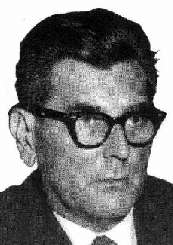
Sánchez Vilella |
Sánchez Vilella, Roberto (b. Feb. 19, 1913, Mayagüez, Puerto Rico - d. March 25, 1997, San Juan, Puerto Rico), governor of Puerto Rico (1965-69). In 1948, Puerto Rico, a U.S. territory since 1898, gained the right to elect its own governor and it chose Luis Muñoz Marín, who later tapped Sánchez as his successor. During his 40-year political career, Sánchez occupied many important positions. He served as San Juan's city manager in 1945; as transportation secretary from 1951 to 1954, and as secretary of state and public works secretary at the same time from 1962 to 1964. In 1964 he was elected governor. In 1968, he defected from his Popular Democratic Party (PDP) after losing the party's nomination for governor to Luis Negron López, and formed the People's Party. Under the slogan "Let the People Decide," Sánchez ran for governor that same year under the People's Party, taking 100,000 votes from the PDP, which helped Luis A. Ferré, the candidate of the pro-statehood New Progressive Party (NPP), win the election. Sánchez later dissolved his fledgling party, and in the 1996 elections urged voters to choose the PDP over the NPP of incumbent Gov. Pedro Rosselló. Sánchez ran unsuccessfully for a legislative seat in 1972, and decided to retire from politics. He also helped promote Puerto Rico as a world contender in baseball, among other sports. His support was critical in persuading then governor Muñoz Marín to allow Puerto Rico to send a separate team to the 1948 Olympic Games in London.
Sánchez Vite, Manuel (b. March 17, 1915, Molango, Hidalgo, Mexico - d. Oct. 6, 1994), governor of Hidalgo (1969-70, 1972-75). He was also president of Mexico's Institutional Revolutionary Party (1970-72).
Sánchez y Sánchez, Carlos (b. Nov. 4, 1895, Santo Domingo, Dominican Republic - d. April 19, 1974, Santo Domingo), Dominican Republic diplomat/politician. He was minister to Argentina, Uruguay, and Bolivia (1944-45) and Portugal (1947-48), ambassador to Peru (1948-50), president of the Chamber of Deputies (1956-58), and chargé d'affaires at the United Nations (1961-62).
Sancho, Carlos (Alberto) (b. 1964), governor of Santa Cruz (2006-07).
Sancho (y Cubertorer), Vicente (b. April 5, 1784, Petrés, Valencia province, Spain - d. May 29, 1860, Madrid, Spain), interior minister (1840) and prime minister and foreign minister (1840) of Spain. He was also president of the Congress of Deputies (1837) and ambassador to the United Kingdom (1841-43).
Sanclemente (Sanclemente), Manuel Antonio (b. Sept. 19, 1814, Buga, Cauca, New Granada [now in Valle del Cauca, Colombia] - d. March 19, 1902, Villeta, Cundinamarca, Colombia), interior and war minister (1857-61) and president (1898-1902) of Colombia.
Sanclemente (Cabal), Manuel María (b. April 1848, Buga, Cauca, New Granada [now in Valle del Cauca, Colombia] - d. Sept. 24, 1923, Buga), war minister of Colombia (1906-08).
Sandakabatu, Connelly (b. June 11, 1956), Solomon Islands politician. He was minister of agriculture and livestock (2010-12), development planning and aid coordination (2012-14), and public service (2017-19).
Sandalov, Mikhail (Anatolyevich) (b. June 30, 1970, Kirov, Russian S.F.S.R.), chairman of the government of Kirov oblast (2025- ).
Sandberg, Per (b. Feb. 6, 1960, Levanger, Nord-Trøndelag [now in Trøndelag], Norway), acting justice minister of Norway (2018). He was also minister of fisheries (2015-18).
Sandberg van Essenburg, Samuel Johannes baron (b. Jan. 22, 1778, Zwolle, Overijssel, Netherlands - d. May 16, 1854, Nunspeet, Gelderland, Netherlands), Dutch politician. He was chairman of the Second Chamber (1823-24, 1825-26) and governor of Luik (1828-30). He was made baron in 1841.
Sandborgh, Björn (Hugo) (b. March 15, 1948, Östmark, Värmland, Sweden), acting governor of Värmland (2002).
Sande, Daniel, Solomon Islands politician. He was minister of natural resources (1984-86), agriculture and lands (1986-88), and education and training (1988-89).
Sandelhielm, Paul, original surname (until 1826) Öhrvall (b. March 10, 1776, Varberg fortress, Halland, Sweden - d. Oct. 17, 1850, Vänersborg, Älvsborg [now in Västra Götaland], Sweden), governor of Norrbotten (1821-25) and Älvsborg (1825-50).
Sandeman, Sir Robert Groves (b. Feb. 25, 1835, Perth, Scotland - d. Jan. 29, 1892, Las Bela, Baluchistan, India [now in Pakistan]), chief commissioner of Baluchistan (1887-92); knighted 1879.
Sandene, Erling (b. April 7, 1921, Bærum, Akershus, Norway - d. March 5, 2015), governor of Møre og Romsdal (1966-72). He was also chief justice of the Norwegian Supreme Court (1984-91).
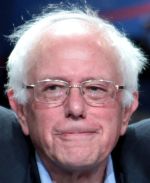
B. Sanders |
Sanders, Bernie, byname of Bernard Sanders (b. Sept. 8, 1941, Brooklyn, New York City), U.S. politician. He was mayor of Burlington, Vt. (1981-89), then became a member of the U.S. House of Representatives (1991-2007) and Senate (2007- ), running as an independent socialist (though he caucused with the Democrats). He was believed to be the only socialist mayor in the U.S. at the time, and was the first socialist in Congress since 1929, also becoming the longest-serving independent in congressional history. In 2015 he entered the race for the 2016 Democratic presidential nomination. Though his "democratic socialism" was no more radical than traditional European social democracy (he often cited Scandinavian countries as positive examples), he was one of the most progressive viable presidential candidates in U.S. history (also the first Jewish candidate to win a presidential primary). He provided a strong challenge to early favourite Hillary Clinton, winning 22 state contests, and polls consistently showed he would fare better than Clinton against any Republican in the general election. He attracted huge crowds, being in some respects a mirror image to Republican Donald Trump, as a mobilizer of anti-establishment spirit among Democrats and left-leaning independents. Calling for a "political revolution," he attacked the influence of money in politics - unlike Clinton who was backed by "super-PACs," he was funded only by millions of small donations, averaging $27 - and denounced the extreme inequalities in income and wealth distribution in the U.S.; he called for the breakup of big banks, single-payer health care, and free tuition at public colleges and universities. His foreign-policy views could be symbolized by the fact that he had not only opposed the 2003 war against Iraq, but already that of 1991, although he did agree with all other candidates that the "Islamic State" in Iraq and Syria would have to be destroyed (in his view, however, by ground troops from Muslim countries, only aided by the U.S. in various ways); he also broke the traditional bipartisan policy of uncritical support for Israel by speaking up about the suffering of Palestinians. On July 12, 2016, he endorsed Clinton, giving up plans to take his candidacy to the convention. In February 2019 he announced his run for the 2020 Democratic nomination. He was leading the field in early 2020, prompting the establishment candidates to unite behind Joe Biden, who then achieved a 300-delegate lead, and Sanders dropped out in April. In 2021-25 he was chairman of the Senate Budget Committee.
Sanders, Carl E(dward) (b. May 15, 1925, Augusta, Ga. - d. Nov. 16, 2014, Atlanta, Ga.), governor of Georgia (1963-67).
Sanders, Jared Y(oung) (b. Jan. 29, 1869, near Morgan City, La. - d. March 23, 1944, Baton Rouge, La.), governor of Louisiana (1908-12); cousin of Murphy J. Foster.
Sanders, Jerry, byname of Gerald Robert Sanders (b. July 14, 1950, San Pedro, Calif.), mayor of San Diego (2005-12).
J. Sanderson |
Sanderson, John (Murray) (b. Nov. 4, 1940, Geraldton, W.Aus.), governor of Western Australia (2000-05). Lieutenant General Sanderson was Australian chief of general staff (1995-97) and army chief (1997-98).
K. Sanderson |
Sanderson, Kerry (Gaye), née Smith (b. Dec. 21, 1950, Subiaco, W.Aus.), governor of Western Australia (2014-18).
Sandford, Sir George (Ritchie) (b. Nov. 9, 1892 - d. Sept. 17, 1950), governor of the Bahamas (1950); knighted 1947.
Sandgren, (Carl) Lennart (b. April 25, 1926, Kalmar, Sweden - d. Feb. 15, 2009), governor of Kristianstad (1979-84) and Stockholm (1985-91).
Sandhawalia, S(urjit) S(ingh) (b. July 27, 1925, Lyallpur, India [now Faisalabad, Pakistan] - d. Nov. 16, 2007, Panchkula, Haryana, India), governor of Haryana (1979-80) and Punjab (1983). He was chief justice of Punjab and Haryana High Court (1978-83) and Patna High Court (1983-87).
Sandhu, Reenat (b. June 7, 1964), Indian diplomat; wife of Taranjit Singh Sandhu. She was ambassador to Italy and San Marino (2017-20) and the Netherlands (2022-24).
T.S. Sandhu |
Sandhu, Taranjit Singh (b. Jan. 23, 1963), lieutenant governor of Delhi (2026- ). He was also Indian high commissioner to Sri Lanka (2017-20) and ambassador to the United States (2020-24).
Sandhurst, William Mansfield, (1st) Viscount (b. Aug. 21, 1855 - d. Nov. 2, 1921), governor of Bombay (1895-1900); nephew of Samuel Mansfield. He succeeded as (2nd) Baron Sandhurst in 1876 and was created viscount in 1916.
Sandiford, Sir Lloyd (Erskine), before knighthood (2000) known as Erskine Sandiford (b. March 24, 1937, St. James parish, Barbados - d. June 26, 2023, Bridgetown, Barbados), prime minister of Barbados (1987-94). He entered politics in 1966 as personal assistant to Prime Minister Errol Barrow. Appointed to parliament as a senator in 1967, he became minister of education (1967-75, 1986-87), youth affairs, community development, and sports (1971-75), health and welfare (1975-76), and culture (1986-87). In the 1976 general elections, he retained his seat in parliament by only 12 votes, but in 1981 he increased his majority. During the years in opposition (1976-86), he acted as deputy parliamentary opposition leader. In May 1986 the Democratic Labour Party (DLP) gained a sweeping majority in general elections, and he was selected as deputy prime minister in preference to other contenders, including Branford Taitt and Richie Haynes. The sudden death of Barrow on June 1, 1987, brought Sandiford into the post of prime minister. In September 1987 Sandiford's leadership was criticized by Haynes, who resigned from his post as finance minister, accusing the prime minister of failure to consult him on key financial appointments and other matters. Sandiford took over the finance portfolio himself (until 1993) in addition to that of economic affairs and civil service. He pledged to continue Barrow's policies, but his approach to government was more technocratic than that of his flamboyant predecessor. One political difference between them had emerged in 1983 when Sandiford led the DLP in support of the U.S. invasion of Grenada, while Barrow, who opposed it, was out of Barbados. Sandiford led the DLP to victory in the 1991 elections, but the party lost those of September 1994; prior to those elections, in July, he had been succeeded as DLP leader by David Thompson. In 2010-14 he was ambassador to China.
Sandiko (y Santa Ana), Teodoro (b. March 31, 1860, Manila, Philippines - d. Oct. 19, 1939, San Juan, Rizal [now in National Capital Region], Philippines), interior secretary of the Philippine Republic (1899). He was also governor of Bulacan (1906-09).
Sandino |
Sandino, Augusto César, original name Augusto Nicolás Calderón Sandino (b. May 18, 1895, Niquinohomo, Nicaragua - d. Feb. 21, 1934, Managua, Nicaragua), Nicaraguan guerrilla leader. In 1926 he took up arms in support of Vice Pres. Juan Bautista Sacasa's claim to the presidency. After the U.S. intervened in 1927, Sandino refused to lay down his arms and with several hundred men withdrew to the mountains of northern Nicaragua. His success in eluding capture by the U.S. Marines and the Nicaraguan National Guard attracted widespread sympathy for him throughout Latin America, where many viewed him as a fighter against "Yankee imperialism" (in the U.S. view he was simply a "bandit"). This anti-U.S. feeling was partly responsible for Pres. Franklin D. Roosevelt's "Good Neighbor Policy" (1933), a reformulation of U.S. relations with Latin America. Following the withdrawal of the Marines and the inauguration of Sacasa as president in January 1933, Sandino made a peace agreement with Sacasa. However, conflicts arose between his followers and the National Guard, and in February 1934 he went to Managua to discuss means of ending the friction. Upon leaving a dinner with the president, he and several aides were abducted and shot by National Guardsmen. He remained a popular hero and later gave his name to the Sandinistas, a revolutionary group that formed the government from 1979 to 1990.
Sandler, Rickard (Johannes) (b. Jan. 29, 1884, Torsåker, Sweden - d. Nov. 12, 1964, Hägersten, Stockholm, Sweden), finance minister (1920), prime minister (1925-26), and foreign minister (1932-36, 1936-39) of Sweden and governor of Gävleborg (1941-50). He was also minister of commerce (1924-25).
Sandomil, Pedro Mascarenhas, conde de (b. Nov. 9, 1670 - d. Aug. 3, 1745, Lisbon, Portugal), viceroy of Portuguese India (1732-41).
Sándor de Csíkszentmihály, János (b. Nov. 14, 1860, Marosvásárhely, Hungary [now Târgu Mures, Romania] - d. July 16, 1922, Budapest, Hungary), interior minister of Hungary (1913-17); nephew-in-law of Kálmán and Lajos Tisza de Borosjenö et Szeged.
Sandoungout, Marcel (A.) (b. Oct. 25, 1927, N'Gobounda, near Franceville, Gabon - d. Jan. 28, 2015, Libreville, Gabon), Gabonese politician. He was minister of health and social affairs (1962) and public works and tourism (1963-64), ambassador to West Germany, Belgium, Netherlands, Norway, Denmark, Sweden, and Luxembourg (1964-66), Ivory Coast, Dahomey, and Senegal (1969-71), the Vatican (1971-72, 1975-79), and France (1972-79), and permanent representative to the United Nations (1967-68).
Sandov, Borislav (Dimitrov) (b. Dec. 16, 1982, Madan, Bulgaria), Bulgarian politician. He was a deputy prime minister and minister of environment and water (2021-22).
Sandoval, Brian (Edward) (b. Aug. 5, 1963, Redding, Calif.), governor of Nevada (2011-19).
Sandoval, José León (b. 1789 - d. Oct. 19, 1847), director of Nicaragua (1845-47).
Sandoval Alarcón, Mario (Augusto) (b. May 18, 1923, Guatemala City, Guatemala - d. April 17, 2003, Guatemala City), Guatemalan politician. He was president of Congress (1970-74), vice president (1974-78), and a presidential candidate (1982, 1985).
Sandoval Castañeda, Roberto (b. Nov. 15, 1969, Tepic, Nayarit, Mexico), governor of Nayarit (2011-17). He was also mayor of Tepic (2008-10).
Sandoval Cojulún, José Alberto, Guatemalan diplomat. He was ambassador to Japan, South Korea, the Philippines, Bangladesh, India, Australia, and Thailand (1984-86), Spain and Morocco (1996-2002), and the United Kingdom (2003-05) and permanent representative to the United Nations (2015-16).
Sandoval Díaz, Jorge Aristóteles (b. Jan. 22, 1974, Guadalajara, Jalisco, Mexico - d. [assassinated] Dec. 18, 2020, Puerto Vallarta, Jalisco), governor of Jalisco (2013-18). He was also mayor of Guadalajara (2009-12).
Sandoyan, Edvard (Martini) (b. June 4, 1961, Yerevan, Armenian S.S.R.), finance minister of Armenia (1998-99).
Sandoz, André (b. Sept. 18, 1911, La Chaux-de-Fonds, Neuchâtel, Switzerland - d. May 16, 2006, La Chaux-de-Fonds), president of the Council of State of Neuchâtel (1957-58).
Sandström, Gustaf (b. March 11, 1865, Högsby, Kalmar, Sweden - d. May 3, 1930, Stockholm, Sweden), justice minister of Sweden (1911-14).
Sandströmer, Anders Peter (b. Oct. 4, 1804, Linköping, Östergötland, Sweden - d. Dec. 1, 1857, Leksberg, Skaraborg [now in Västra Götaland], Sweden), governor of Jämtland (1844-48) and Skaraborg (1851-57) and finance minister of Sweden (1848-51).
Sandu |
Sandu, Maia (b. May 24, 1972, Risipeni, Moldavian S.S.R.), prime minister (2019) and president (2020- ) of Moldova. She was also education minister (2012-15). She was an unsuccessful presidential candidate in 2016 before winning in 2020.
Sandvik, Tore O(nshuus) (b. Aug. 31, 1969, Trondheim, Norway), defense minister of Norway (2025- ).
Sandwall, (Sven) Peter (Tore) (b. July 25, 1963, Borås, Älvsborg [now in Västra Götaland], Sweden), governor of Kalmar (2020- ).
Sandwith, John Hartley (b. Sept. 15, 1846 - d. Jan. 27, 1895, London, England), administrator of Saint Vincent (1893-95).
Sandys, Samuel Sandys, (1st) Baron (b. Aug. 10, 1695 - d. April 21, 1770), British chancellor of the exchequer (1742-43). He was also first lord of trade (1761-63). He was created baron in 1743.
Sané, Samba, Guinea-Bissau diplomat. He has been permanent representative to the United Nations (2022- ).
Saner |
Saner, Hamza Ersan (b. 1966, Famagusta, Cyprus), prime minister of North Cyprus (2020-21). He has also been minister of tourism, environment, and culture (2009-10), public works and communications (2010-13), and labour and social security (2016-18) and leader of the National Unity Party (2020-21).
Sanford, Francis (Ariioehau) (b. May 11, 1912, Papeete, Tahiti - d. Dec. 21, 1996, Faaa, Tahiti), French Polynesian politician. He was elected mayor of Faaa in 1965 and two years later he became a deputy in the French territory's assembly, a post he held until 1978. As president of the Polynesian government's council, he founded Aia Api, a political party opposed to French president Charles de Gaulle's watchful rule over French Polynesia. Sanford helped write a 1977 autonomy statute in France's National Assembly that gave the South Pacific territory greater leeway in managing its daily affairs. His push for greater independence made him known as French Polynesia's "father of autonomy." He retired from politics in 1985.
Sanford, John (b. c. 1607, England - d. 1653, Portsmouth, Providence Plantations [now R.I.]), president of Providence Plantations (in Newport and Portsmouth) (1653).

M. Sanford |
Sanford, Mark, byname of Marshall Clement Sanford, Jr. (b. May 28, 1960, Fort Lauderdale, Fla.), governor of South Carolina (2003-11). A Republican and something of a maverick, he ran for the U.S. House in 1994. Campaigning as an outsider, he called for term limits; said citizen-legislators needed to replace career politicians; and pledged to serve only three terms, to take no PAC money, to vote for no tax increases, and to refuse any salary increase until the budget was balanced. He finished second in the primary and then won the runoff 52%-48%. He carried the general election with 66%. In the House he voted more often than almost any other member against spending increases. But he took moderate positions on some issues and often bucked the Republican leadership. He campaigned for John McCain in 1999-2000, even though most state Republican insiders backed George W. Bush. In 2001 he started running for governor. Capitalizing on his ties in the business world and from the McCain campaign, he raised more money and ran more ads than his two primary opponents. He finished first with 39% of the vote, just ahead of Lt.Gov. Bob Peeler's 38%; Attorney General Charlie Condon won only 16%. In the runoff Sanford defeated Peeler 60%-40%. In the November 2002 election he defeated Gov. Jim Hodges 53%-47%. In office, he instituted an "open door at four" policy, allowing citizens to line up to get five-minute audiences with the governor. From the legislature he asked some pretty major changes, including abolishing the elective offices of secretary of state, treasurer, comptroller, adjutant general, superintendent of education, and agriculture commissioner, and putting their functions under the governor. He was reelected in 2006, defeating Democratic state senator Tommy Moore 55%-45%. In 2009, after a mysterious week-long disappearance, he admitted to an extramarital affair and resigned as head of the Republican Governors Association. He was again elected to the U.S. House in 2013 but lost the primary in 2018 after not sufficiently worshipping Pres. Donald Trump whose personality cult the Republican Party had become. In September 2019 he announced a quixotic run for the 2020 Republican presidential nomination, ending it already in November.
Sanford, Peleg (b. May 10, 1639, Portsmouth, Providence Plantations [now R.I.] - d. 1701, Newport, Rhode Island), governor of Rhode Island (1680-83); son of John Sanford; son-in-law of William Coddington.
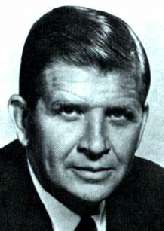
T. Sanford | 
Sangare |
Sanford, (James) Terry (b. Aug. 20, 1917, Laurinberg, N.C. - d. April 18, 1998, Durham, N.C.), U.S. politician. He served as North Carolina governor from 1961 to 1965, championing education reform and promoting racial equality at a time when it was unpopular to do so. He ran for president in 1972 and 1976, when he lost the Democratic nomination to Georgia governor Jimmy Carter. Sanford was elected to the Senate in 1986 but lost his bid for a second term to Republican Lauch Faircloth in 1992.
Sanfuentes (Andonaegui), Enrique Salvador (b. July 15, 1848, Santiago, Chile - d. Nov. 25, 1939, Santiago), finance minister (1888) and interior minister (1890) of Chile; son of Salvador Sanfuentes. He was also minister of industry and public works (1888, 1889).
Sanfuentes (Andonaegui), Juan Luis (b. Dec. 27, 1858, Santiago, Chile - d. July 16, 1930, Santiago), president of Chile (1915-20); son of Salvador Sanfuentes; brother of Enrique Salvador Sanfuentes. He was also finance minister (1901) and president of the Senate (1906-07).
Sanfuentes (Torres), Salvador (b. Feb. 2, 1817, Santiago, Chile - d. June 17, 1860), justice (and education) minister (1847-49, 1857-58) and acting finance minister (1847) of Chile.
Sanfuentes Velasco, Aníbal (Ismael) (b. April 21, 1855 - d. Sept. 30, 1908, Santiago, Chile), justice (and education) minister of Chile (1903).
Sanga, Joses (Wawari) (b. Feb. 17, 1956 - d. May 1, 2007, Honiara, Solomon Islands), Solomon Islands politician. He was minister of public service (2006-07).
Sangare, Abou Drahamane (b. March 9, 1946, M'Bahiakro, Ivory Coast [now Côte d'Ivoire] - d. Nov. 3, 2018, Abidjan, Côte d'Ivoire), foreign minister of Côte d'Ivoire (2000-03).
Sangayev, Erenzhen (Agildzhanovich) (b. January 1910 - d. March 1980), chairman of the Executive Committee/Council of Ministers (1957-62) and of the Presidium of the Supreme Soviet (1962-74) of Kalmyk autonomous oblast/A.S.S.R.
Sangheli, Andrei (Nicolae) (b. July 20, 1944, Grinauti, Romania [now in Moldova]), prime minister of Moldova (1992-97). He was also first deputy premier of the Moldavian S.S.R. (1986-89), a first deputy prime minister and minister of agriculture and food (1990-92), and a presidential candidate (1996).

C. Sangma |
Sangma, Conrad (Kongkal) (b. Jan. 27, 1978, Tura, Meghalaya, India), chief minister of Meghalaya (2018- ).

M.M. Sangma |
Sangma, Mukul M(anda) (b. April 20, 1965), chief minister of Meghalaya (2010-18).
Sangma, Purno Agitok (b. Sept. 1, 1947, Chapahati village, Assam [now in South West Garo Hills district, Meghalaya], India - d. March 4, 2016, New Delhi, India), chief minister of Meghalaya (1988-90). He was also Indian minister of labour (1995) and information and broadcasting (1995-96) and speaker of the Lok Sabha (1996-98).
Sangma, Williamson A(mpang) (b. Oct. 18, 1919, Baghmara, Garo Hills, Assam [now in Meghalaya], India - d. Oct. 25, 1990), chief minister of Meghalaya (1970-78, 1981-82, 1983-88) and governor of Mizoram (1989-90).
Sangqu, Baso (b. April 21, 1968, Idutywa, Transkei [now in Eastern Cape], South Africa), South African diplomat. He was ambassador to Ethiopia (2002-06) and Belgium (2016-19) and permanent representative to the United Nations (2009-13).
Sangrà Font, Estanislau (b. Nov. 14, 1927, Escaldes-Engordany, Andorra - d. March 17, 2022), general syndic of Andorra (1978-82).
Sangster, Sir Donald (Burns) (b. Oct. 26, 1911, Kingston, Jamaica - d. April 11, 1967, Montreal, Que.), finance minister (1953-55, 1962-67) and prime minister (1967) of Jamaica; knighted 1967. He was also minister of social welfare (1950-53).
Sanguinetti, Alexandre (Antoine) (b. March 27, 1913, Cairo, Egypt - d. Oct. 9, 1980), French veterans minister (1966-67).
Sanguinetti, Frederick Shedden (b. Sept. 13, 1847 - d. Oct. 25, 1906, London, England), commissioner of the Turks and Caicos Islands (1883-85) and Cayman Islands (1898-1906) and acting governor of the Falkland Islands (1891).
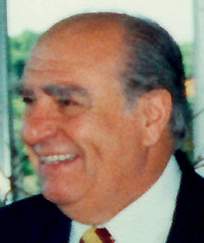
J.M. Sanguinetti |
Sanguinetti Coirolo, Julio María (b. Jan. 6, 1936, Montevideo, Uruguay), president of Uruguay (1985-90, 1995-2000). He joined the Colorado Party at an early age and became a deputy for the department of Montevideo in 1962, a seat he continued to hold through congressional elections of 1966 and 1971. During this period he was also a member of several delegations and commissions, and he was appointed to the Ministry of Industry and Trade in 1969-71 and the Ministry of Education for six months in 1972. In 1980 he strongly opposed the armed forces' intention to legalize their control of power through a plebiscite. This action quickly boosted his political standing, and in 1982 he became secretary-general of the Colorado Party, following his appointment the previous year as leader of "Unidad y Reforma," the largest faction within the party. He played a leading role in the negotiations for the country's return to democracy. Campaigning under the slogan "changes under peace," he led his party to victory in the Nov. 25, 1984, elections by defeating his immediate opponent, Alberto Zumarán of the National Party, with 39% against 33% of the vote. A skilled orator, Sanguinetti was crucial in passing an amnesty law which pacified the military but kept the newly liberated unions under control during the tough times. Barred by law from seeking two consecutive terms, he returned to the private sector in 1990 only to win elections again in 1994. He spent much of his second term attempting to place Uruguay on the international map and continued some of the free-market reforms started by his predecessor, Luis Lacalle of the National Party. He left office in 2000, proud to have tamed inflation to its lowest levels in decades and stabilized the country's currency.
Sanhá, (António) Artur (b. 1965?), interior minister (2000-01), prime minister (2003-04), and justice minister (2019; Imbali government) of Guinea-Bissau.
M.B. Sanhá |
Sanhá, Malam Bacai (b. May 5, 1947, Darsalame, southern Portuguese Guinea [now Guinea-Bissau] - d. Jan. 9, 2012, Paris, France), acting president (1999-2000) and president (2009-12) of Guinea-Bissau. He was an unsuccessful presidential candidate in 2000 and 2005. In 1994-99 he was president of the National People's Assembly.
Sanhueza Cruz, Manuel (Augusto) (b. July 9, 1925, Concepción, Chile - d. Jan. 31, 2000, Concepción), justice minister of Chile (1972).
Sanhueza Herbage, Fernando (Humberto Andrés) (b. Feb. 16, 1929, Santiago, Chile - d. Sept. 12, 2001, Puerto Ordaz, Venezuela), Chilean politician. He was president of the Chamber of Deputies (1971-73).
Sani (Yerima), (Alhaji) Ahmed (b. July 22, 1960, Anka [now in Zamfara state], Nigeria), governor of Zamfara (1999-2007).
Sani, (Chaidir) Anwar (b. Feb. 19, 1918, Padang, Netherlands East Indies [now Indonesia]), Indonesian diplomat. He was ambassador to Belgium and Luxembourg (1970-72), Trinidad and Tobago (1974-79), and The Bahamas (1977-79) and permanent representative to the United Nations (1972-79).
Sani, Muhammad (b. May 11, 1942, Kundur, Netherlands East Indies [now in Kepulauan Riau, Indonesia] - d. April 8, 2016, Jakarta, Indonesia), governor of Kepulauan Riau (2010-15, 2016).

U. Sani |
Sani, Uba (b. Dec. 31, 1970, Zaria local government area [now in Kaduna state], Nigeria), governor of Kaduna (2023- ).
Sani`i, Asadollah (b. 1904, Tehran, Persia [now Iran] - d. ...), war minister of Iran (1963-71). He was also minister of agricultural products and consumer goods (1971).
Sanín | 
Sanjabi |
Sanín (Posada), (Marta) Noemí (del Espíritu Santo), former married name Noemí Sanín de Rubio (b. June 5, 1949, Medellín, Colombia), foreign minister of Colombia (1991-94). She was also minister of communications (1983-86), ambassador to Venezuela (1990-91), the United Kingdom (1994-95, 2007-09), and Spain (2003-07), and a presidential candidate (1998, 2002, 2010).
Sanit Vorapanya (b. June 3, 1939, Siam [now Thailand]), Thai politician. He was speaker of the Senate (2000-01).
Saniuta, Marian Florian (b. Oct. 26, 1960, Moreni, Dîmbovita [now Dâmbovita] county, Romania), interior minister of Romania (2004). He was also prefect of Prahova county (2001-02).
Sanjabi, Karim (b. 1904, western Iran - d. July 4, 1995, Carbondale, Ill.), foreign minister of Iran (1979). He was also education minister (1951-53). The leader of Iran's principal opposition party, the National Front, he fled Iran in 1982 for the U.S.
Sanjinés Eguino, Víctor Enrique (b. Sept. 4, 1857, La Paz, Bolivia - d. June 10?, 1928, La Paz), foreign minister of Bolivia (1915-16). He was also minister to Chile (1913-15).
Sanjivayya, Damodaram (b. Feb. 14, 1921, Peddapadu village, Kurnool district, Madras [now in Andhra Pradesh], India - d. May 7, 1972, New Delhi, India), chief minister of Andhra Pradesh (1960-62). He was also president of the Indian National Congress (1962-64, 1971-72) and union minister of labour and employment (1964-66), industry (1966-67), and labour and rehabilitation (1970-71).
Sanjuán (Rodríguez), Miguel (Sabino) (b. Dec. 27, 1897, Ocaña, Norte de Santander, Colombia - d. 1963?, Bogotá, Colombia), justice minister of Colombia (1949-50). He was also minister to Switzerland (1950-52) and ambassador to the Dominican Republic (1953-58).
Sanjurjo Sacanell (Bonrostro y Desojo), José, marqués del Riff (b. March 28, 1872, Pamplona, Spain - d. [plane crash] July 20, 1936, Estoril, Portugal), high commissioner of Spanish Morocco (1925-28, 1931). He was created marqués de Monte Malmusi in 1926 and marqués del Riff in 1927.

Sankara |
Sankara, Thomas (Isidore Noël) (b. Dec. 21, 1949, Yako, Upper Volta - d. Oct. 15, 1987, Ouagadougou, Burkina Faso), head of state (1983-87) of Burkina Faso (until 1984 Upper Volta). He served briefly as secretary of state for information under Col. Saye Zerbo in 1981 but resigned from that post following a dispute with Zerbo. A captain of paratroops, Sankara was believed to have set up the coup that ousted Zerbo on Nov. 7, 1982, and brought Maj. Jean-Baptiste Ouedraogo to power. It was thought that in 1980 Sankara had already planned to overthrow Zerbo's predecessor, Maj.Gen. Sangoulé Lamizana, but had been preempted by Zerbo. He served as premier under Ouedraogo during January-May 1983 and then was purged from the ruling People's Salvation Council on suspicion of subversive activity, including the cultivation of close links with Libya. He was held in custody for two weeks and afterward placed under house arrest. With the support of a company of paratroopers, Captain Sankara took power on Aug. 4, 1983; the takeover cost some 15 lives. He aimed to make his country agriculturally self-sufficient and to improve public health and the position of women. He was responsible for changing Upper Volta's name to Burkina Faso ("land of the upright people") and made a serious effort to reduce official extravagance and corruption. One of the third world's more charismatic leaders, his undoubted popularity owed not a little to a talent probably possessed by few other heads of state: the ability to accompany his own songs - on revolutionary themes - on the electric guitar. He was ousted on Oct. 15, 1987, in a military coup led by Capt. Blaise Compaoré. Sankara and 12 of his aides who had been executed were buried the following day.

Sankaranarayanan | 
Sankawulo |
Sankaranarayanan, K(atteekal) (b. Oct. 15, 1932, Shornur, Madras province [now in Palakkad district, Kerala state], India - d. April 24, 2022, Palakkad, Kerala), governor of Nagaland (2007-09), Arunachal Pradesh (2007-08), Assam (2009), Jharkhand (2009-10), Maharashtra (2010-14), and Goa (2011-12).
Sankawulo, Wilton (Gbakolo Sengbe) (b. July 26, 1937, Haindi, Bong county, Liberia - d. Feb. 21, 2009, Monrovia, Liberia), chairman of the Council of State of Liberia (1995-96). He left Liberia for the U.S. in 2003.
Sankey, John Sankey, (1st) Viscount (b. Oct. 26, 1866, Moreton-in-Marsh, Gloucestershire, England - d. Feb. 6, 1948, London, England), British lord chancellor (1929-35). He was knighted in 1914 and created Baron Sankey in 1929 and viscount in 1932.
Sankoh |
Sankoh, Foday (Saybana) (b. Oct. 17, 1937, Tonkolili district, northern Sierra Leone - d. July 29, 2003, Freetown, Sierra Leone), Sierra Leonean rebel. He joined the army and rose to the rank of corporal in 1962. In 1973 he was arrested with other officers and charged with plotting against Pres. Siaka Stevens. He served just over six years of a seven-year jail term. After his release, he organized a cell of student activists in the southern town of Bo, laying the foundations for the Revolutionary United Front (RUF), which started a rebellion in 1991. He spent years deep in the jungles of Sierra Leone, training and guiding his rebels in a brutal bush war in which hundreds of thousands of civilians were killed, raped, or mutilated in hopes of terrorizing Sierra Leone into ceding control of its government and diamond fields. Emerging from the bush in March 1996 after a surprise truce offer, he held talks with newly elected president Ahmad Tejan Kabbah that led to a peace accord eight months later. The euphoria that greeted the peace accord was hardly over when clashes resumed. With both sides trading accusations of ceasefire violations, disgruntled soldiers staged a violent coup in Freetown in May 1997, forcing Kabbah to flee to Guinea. Sankoh, who was then in detention in Nigeria on charges of carrying firearms, ordered his guerrillas to support the coup. While still in detention, he was named number two in the junta that supplanted Kabbah's government for 10 months. In July 1998, Nigeria flew Sankoh to Sierra Leone to stand trial after Nigerian-led regional troops had evicted the junta from Freetown and reinstated Kabbah. He was charged with treason in September and sentenced to death on October 23. Provisionally released in April 1999, he signed a ceasefire agreement with Kabbah on May 18 and a peace accord on July 7. As clashes broke out again in May 2000, he briefly disappeared but was soon captured. He was replaced as RUF leader on August 21. Indicted for war crimes, he died in UN custody.
Sanmarco |
Sanmarco, Louis (Marius Pascal) (b. April 7, 1912, Martigues, France - d. Oct. 9, 2009), governor (1954-57) and high commissioner (1957-58) of Oubangui-Chari and high commissioner of Gabon (1958-59).
Sanneh, Amadou, finance and economic affairs minister of The Gambia (2017-18). He was also minister of trade, regional integration, and employment (2018-19).

S.M. Sanneh |
Sanneh, Sidi Moro, Moro also spelled Morro (b. Dec. 2, 1947, Bathurst [now Banjul], Gambia), foreign minister of The Gambia (2004-05). He entered public service in 1977 and worked at the ministries for education and economic development. He was a director at the African Development Bank in 1992-2002. Until his appointment as foreign minister he was also an advisor for the United Nations Development Programme. In a 2005 reshuffle he was named minister of trade and industry, but the appointment was rescinded days later. In 2006 he briefly became ambassador to Senegal, being soon recalled, apparently because of concerns by Pres. Yahya Jammeh that he might be working with the Gambian opposition and/or too closely with the Senegalese. He did not return to The Gambia, ultimately moving to the United States.
Sanner, Jan Tore (b. May 6, 1965, Bærum, Norway), finance minister of Norway (2020-21). He was also minister of local government (2013-18), education and research (2018-20), and Nordic cooperation (2018-21).
Sannon, (Horace) Pauléus (b. April 7, 1870, Les Cayes, Haiti - d. Aug. 27, 1938, Pétionville, Haiti), foreign minister of Haiti (1906-07, 1915, 1930-31). He was also minister to the United States (1909-11) and minister of education (1915).

Sanogo |
Sanogo, Amadou Haya (b. 1972?), chairman of the National Committee for the Restoration of Democracy and State of Mali (2012).
Sanoh Thienthong, also spelled Snoh (b. April 1, 1934, Watthana Nakhon district, Prachin Buri province [now in Sa Kaeo province], Siam [now Thailand]), interior minister of Thailand (1996-97). He was also minister of agriculture (acting, 1988) and public health (1995-96).
Sanoh Unakul, also spelled Snoh (b. July 24, 1931, Chonburi province, Siam [now Thailand]), a deputy prime minister of Thailand (1991-92). He was also governor of the Bank of Thailand (1975-79).
Sanon, Thomas (b. Sept. 8, 1947, Kokorowé village, Houet province, Upper Volta [now Burkina Faso]), foreign minister of Burkina Faso (1992-94). He was also ambassador to Austria (1998-2002).
Sanoussi, Zainoul Abidine, byname Bapou (b. Aug. 31, 1944, Gaoual, French Guinea [now Guinea] - d. April 25, 2001, Conakry, Guinea), interior minister (1997-99) and foreign minister (1999-2000) of Guinea. He was also minister of technical education and vocational training (1984), minister-delegate of information and culture (1986-89) and tourism (1988-89), and permanent representative to the United Nations (1990-92).
Sansaricq, Antoine (Constantin) (b. March 17, 1868 - d. June 19, 1941, Port-au-Prince, Haiti), member of the Council of Secretaries (during presidential vacancy 1912) and foreign minister (1929-30) of Haiti. He was also minister-resident to the United Kingdom (1912-15?).
Sansón Balladares, Justino (b. Dec. 12, 1906, León, Nicaragua - d. 1991), Nicaraguan diplomat; nephew of Angélica Balladares de Argüello. He was chargé d'affaires in the Dominican Republic (1945-50) and ambassador to Brazil (1950-71) and Spain (1971-76).
Sansores Pérez, Carlos (b. Sept. 25, 1918, Champotón, Campeche, Mexico - d. Dec. 21, 2005, Campeche, Campeche), governor of Campeche (1967-73). He was also president of Mexico's Institutional Revolutionary Party (1976-79).
Sansores San Román, Layda (Elena) (b. Aug. 7, 1945, Campeche, Campeche, Mexico), governor of Campeche (2021- ); daughter of Carlos Sansores Pérez; wife of Romeo Ruiz Armento.
Sansovini |
Sansovini, Glauco (b. May 20, 1938, Rocca San Casciano, Forlì province, Italy - d. May 21, 2019), captain-regent of San Marino (2010).
A. Sant |
Sant, Alfred (b. Feb. 28, 1948, Sliema, Malta), prime minister of Malta (1996-98). In 1970, he served as second and then as first secretary at the Malta Mission to the European Community in Brussels. He resigned from the Maltese diplomatic service early in 1975. In 1977-78, he served as adviser on general and financial management at the Ministry of Parastatal and People's Industries in Valletta. Between 1980 and 1982, he was executive deputy chairman of the Malta Development Corporation. His active political career started in 1982 when he was appointed chairman of the Department of Information for the Malta Labour Party (MLP), an office he held until 1984. In the latter year, he was elected president of the MLP and served in that position until 1988. He was elected member of parliament in 1987 and leader of the MLP in 1992. In 1984-88, he served as chairman of the Guze' Ellul Mercer Foundation, an educational joint venture between the MLP and the General Workers Union. During 1988-89, he chaired an MLP working group evaluating the options for future relations between Malta and the European Community from the economic and social perspectives. He was elected prime minister in 1996. A firm believer in Malta's neutrality, he acted swiftly to deliver his election promises of scrapping the island's bid for European Union membership and pulling it out of NATO's Partnership for Peace Programme. Instead, he offered a "special relationship" with Europe through a free trade zone. In 1998 he called new elections three years early because his one-seat parliamentary majority was wiped out by his quarrel with former prime minister Dom Mintoff who broke ranks with the MLP leadership to protest Sant's austerity measures. His party was defeated by the Nationalist Party. After losing two more elections in 2003 and 2008, he resigned as party leader.
Sant, Lorry (b. Dec. 26, 1937, Paola, Malta - d. Oct. 5, 1995), home affairs minister of Malta (1981-83). He was also minister of public building and works (1971-76), works and sport (1976-81), and works and housing (1983-87).
Santa |
Santa, Thierry (b. Aug. 29, 1967, Papeete, French Polynesia), president of the government (2019-21) and finance minister (2025-26) of New Caledonia.
Santa Anna |
Santa Anna (y Pérez de Lebrón), Antonio (de Padua María Severino) López de (b. Feb. 21, 1794, Xalapa, Mexico - d. June 21, 1876, Mexico City, Mexico), president of Mexico (1833-37, 1841-44, 1844, 1847, 1853-55). He fought on both sides of nearly any issue. After serving in the Spanish colonial army, he supported Agustín de Iturbide and the war for Mexican independence in 1821, but in 1823 he helped overthrow Iturbide. In 1828 he emerged again to support Vicente Guerrero for president, only to help depose him later. He won much prestige by defeating an invading Spanish force at Tampico in 1829. Gaining the presidency in 1833 as a Federalist, he soon renounced that party and eventually established a centralized state. In 1836, he marched into Texas to quell a rebellion by U.S. settlers (who subsequently declared the independence of Texas). He defeated Texan forces at the Alamo and Goliad, but was defeated and captured at San Jacinto on April 21. He was sent to Washington, D.C., for an interview with Pres. Andrew Jackson, who returned him to Mexico after he agreed to a treaty recognizing Texan independence. The treaty was repudiated by Mexico and he was forced into retirement. Losing a leg while repelling a French assault on Veracruz in 1838, he gained new prestige and seized power in 1841, but was banished in 1845. After war with the U.S. broke out in 1846, he made a secret agreement with U.S. president James Polk, who arranged for a ship to take him to Mexico. He assumed the presidency again and led his men against the U.S. until he was routed by U.S. forces under Gen. Winfield Scott. He again retired and left the country in 1848. In 1853 he was recalled and again elected president, but revolution broke out in 1854 and he had to go into exile in 1855. In 1874 he was allowed to return to his country.
Santa Apollonia, Francisco Pereira de (b. April 8, 1743, Queluz, São Paulo, Brazil - d. July 10, 1831, Mariana, Minas Gerais, Brazil), president of the Provisional Government (1822-24) and acting president (1826, 1827, 1828, 1829) of Minas Gerais.
Santa Clara de Avedillo, José (María) de Yanguas Messía, vizconde de (b. Feb. 25, 1890, Linares, Spain - d. June 30, 1974, Madrid, Spain), foreign minister of Spain (1925-27). He was also president of the National Assembly (1927-29) and ambassador to the Vatican (1938-42). He succeeded as viscount in 1929.
Santa Comba Dão, José Maria de Sousa Macedo Almeida e Vasconcelos, barão de (b. June 25, 1787, Santa Comba Dão, Portugal - d. Sept. 4, 1872, Santa Comba Dão), governor of Angola (1829-34). He was made baron in 1825.
Santa Cristina, Fulco (Giordano) Ruffo di Calabria, principe di Scilla, duca di (b. July 11, 1773 - d. April 18, 1852), foreign minister of the Two Sicilies (1840-48).
Santa Cruz (y Villavicencio y Cala[h]umana), (José) Andrés de (b. Nov. 30, 1792, Huarina, Viceroyalty of Río de la Plata [now in La Paz department, Bolivia] - d. Sept. 25, 1865, Saint-Nazaire, Loire-Atlantique, France), acting president of Peru (1827), president of Bolivia (1829-39), and supreme protector of the Peru-Bolivian Confederation and of North Peru and South Peru (1836-39). In the Spanish army he rose to the rank of colonel, but in 1820 he was captured and persuaded to join the revolutionists against Spain. As Simón Bolívar's chief of staff, he participated in the decisive liberating battles of Junín and Ayacucho. To achieve his one great aim of a Peru-Bolivia confederation, Santa Cruz, elected president shortly after the resignation of Antonio José de Sucre, energetically set about establishing Bolivia on a sound footing. At the same time he carried on intrigues to foster trouble in Peru and Chile so that his confederation might be realized. When the opportunity came with internal disorder in Peru in 1835, Santa Cruz invaded and established himself as protector. However, at the battle of Yungay (1839) he was defeated by a coalition of his enemies under Manuel Bulnes of Chile and barely escaped to spend the remainder of his life in Europe in exile.
Santa Cruz, António Manuel de Noronha, (1º) visconde de (b. Dec. 6, 1772, Lisbon, Portugal - d. April 24, 1855), governor-general of Angola (1839). He became visconde de Santa Cruz on Oct. 15, 1851.
Santa Cruz (Barceló), Hernán (b. Feb. 8, 1906, Santiago, Chile - d. May 7, 1999, Santiago), Chilean diplomat. He was permanent representative to the United Nations (1946-53).
Santa Cruz, José Gabriel de Silva Bazán (y Waldstein), (X) marqués de (b. 1782, Vienna, Austria? - d. Nov. 4, 1839, Madrid, Spain), first secretary of state of Spain (1822). He was also ambassador to France (1820-21) and mayor of Madrid (1822).
Santa Cruz (Vargas), Vicente (b. March 29, 1850, Melipilla, Chile - d. Dec. 5, 1910, Santiago, Chile), interior minister of Chile (1906-07). He was also minister to Germany and Italy (1888), Uruguay and Paraguay (1895-96), and Peru (1896-98).
Santa María (González), Domingo (b. Aug. 4, 1824, Santiago, Chile - d. July 16, 1889, Santiago), finance minister (1863-64), foreign minister (1879), interior minister (1879-80), and president (1881-86) of Chile. He was also president of the Senate (1888-89).
Santa María, Manuel, interior, police, and public works minister of Peru (1870-72).
Santa María Cerveró, Álvaro (b. March 8, 1887, Valparaíso, Chile - d. Oct. 5, 1940), justice (and education) minister of Chile (1926).
Santa Tecla, Joaquim da Silva Tavares, barão de (b. Nov. 28, 1830, Herval, Rio Grande do Sul, Brazil - d. Nov. 17, 1900, Bagé, Rio Grande do Sul), acting president of Rio Grande do Sul (1888). He was made baron in 1886.
Santaella (Hernández), Yelitze (de Jesús) (b. Aug. 1, 1960, Clavellina, Delta Amacuro, Venezuela), governor of Delta Amacuro (2000-08) and Monagas (2012-21). She has also been Venezuelan minister of education (2021-24) and women and gender equality (2025- ).
Santamaría, Eustacio (b. March 29, 1829, Nemocón, Colombia - d. ...), foreign minister of Colombia (1880-81).
Santamaría, Francisco Javier (b. Sept. 10, 1886, Cacaos, Tabasco, Mexico - d. March 1, 1963, Veracruz, Veracruz, Mexico), governor of Tabasco (1947-52).
Santamaría (Jaimes), Óscar Alfredo (b. March 13, 1942), justice minister (1989-91) and foreign minister (1994-95) of El Salvador.
Santamaria Nicolini, Francesco (b. July 1, 1830, Naples, Two Sicilies [Italy] - d. Aug. 22, 1918, Naples), justice minister of Italy (1893).
Santamarina (Irasusta), Enrique (b. Feb. 8, 1870, Tandil, Argentina - d. April 19, 1937, Buenos Aires, Argentina), vice president of Argentina (1930).
Santamarina (Irasusta), Jorge (Alejandro) (b. Jan. 17, 1891, Buenos Aires, Argentina - d. Aug. 8, 1953, Olivos, Buenos Aires province, Argentina), finance minister of Argentina (1943); brother of Enrique Santamarina. He was also president of the Banco de la Nación Argentina (1933-43).
Santana, Camilo Sobreira de (b. June 3, 1968, Crato, Ceará, Brazil), governor of Ceará (2015-22). He was also Brazilian minister of education (2023-26).
Santana, Jerônimo Garcia de (b. Oct. 29, 1934, Jataí, Goiás, Brazil - d. Sept. 11, 2014, Brasília, Brazil), governor of Rondônia (1987-91). He was also mayor of Porto Velho (1986).
Santana, João Turíbio Monteiro de (b. Oct. 13, 1911, Teresina, Piauí, Brazil - d. Feb. 10, 1971, Teresina), acting governor of Piauí (1970).
Santana (Familias), Pedro, (from 1862) marqués de las Carreras (b. June 29, 1801, Hinche, Saint-Domingue [now in Haiti] - d. June 14, 1864, Santo Domingo, Santo Domingo [now Dominican Republic]), president of the Dominican Republic (1844-48, 1849, 1853-56, 1858-61) and governor and captain-general of Santo Domingo (1861-62). He joined the uprising against Haiti in February 1844, made himself supreme chief in July, and had Congress elect him president in November. He was forced to retire in 1848 but was recalled to repel the Haitian invasion of 1849. After defeating the enemy, he reassumed dictatorial powers, but permitted the inauguration of his political associate, Buenaventura Báez, to the presidency. He continued to alternate in power with Báez, but the republic did not fare well under their repressive rule. Convinced that security was possible only with foreign protection, Santana in 1861 placed his country again under Spanish rule, converting it into an overseas province of which he became governor. Disappointed at the puny authority he was allowed to exercise, he resigned in 1862 and was granted a title of nobility. When the rebellion of 1863 broke out, he returned to accept a commission as general but was unable to overcome the resistance. Ultimately he protested against Spanish methods so passionately that he was on the point of being deported. Before this could take place he died, possibly by suicide.
Santana, Pedro Neiva de (b. Sept. 27, 1907, Nova Iorque, Maranhão, Brazil - d. Jan. 19, 1984, São Luís, Maranhão), governor of Maranhão (1971-75). He was also mayor of São Luís (1937-45).
Santander (y Omaña), Francisco (José) de Paula (b. April 2, 1792, Rosario de Cúcuta, New Granada [now in Colombia] - d. May 6, 1840, Bogotá, New Granada), vice president of Colombia (1821-27) and president of New Granada (1832-37).
Santandreu Herrera, Sebastián (b. Nov. 26, 1896, Santiago, Chile - d. Jan. 29, 1973, Viña del Mar, Chile), Chilean politician. He was president of the Chamber of Deputies (1944-45).
Sant'Anna, Joaquim José de (b. c. 1805 - d. April 18, 1890, Ouro Preto, Minas Gerais, Brazil), acting president of Minas Gerais (1866, 1878-79, 1879-80, 1881-82).
Santarelli, Giulio (b. Nov. 22, 1935, Marino, Lazio, Italy), president of Lazio (1977-83).
Santarém, Miguel Antonio Pinto Guimarães, barão de (b. Jan. 8, 1808, Santarém, Grão-Pará [now Pará], Brazil - d. Aug. 16, 1882, Santarém), acting president of Pará (1855, 1869, 1872-73). He was made baron in 1871.
Santelices (Cuevas), Ramón E(ufrasio) (b. Jan. 14, 1848, Santiago, Chile - d. 1936), finance minister of Chile (1900, 1904, 1906, 1915-16).

Santelli |
Santelli, Jole (b. Dec. 28, 1968, Cosenza, Italy - d. Oct. 15, 2020, Cosenza), president of Calabria (2020).
Santer |
Santer, Jacques (b. May 18, 1937, Wasserbillig, Luxembourg), prime minister of Luxembourg (1984-95) and president of the European Commission (1995-99). He served the Christian Social People's Party as its parliamentary secretary (1966-72), secretary-general (1972-74), and ultimately president (1974-82). In 1972 he made his debut in the government as secretary of state for social and cultural affairs. He was a member of the European Parliament in 1975-79. He was elected Luxembourg's prime minister in 1984 and was also finance minister (1979-89) and held other portfolios. In 1987-90 he also was leader of the European People's Party, the coalition that united European Christian Democratic and Christian Social parties. He chaired the negotiations in 1985 leading to the Single European Act, creating the EU single market. During his country's six-month presidency of the European Community in 1991, much of the groundwork was done for the Maastricht treaty on political and monetary union. He came to the presidency of the European Commission as a compromise choice, following Britain's veto of Belgian prime minister Jean-Luc Dehaene (whose candidacy had been advanced by France and Germany) and the subsequent dropping out of better-known, stronger candidates. He was selected for a five-year term by the European Council (the heads of government of the member nations of the European Union) on July 15, 1994, and confirmed by a majority of only 22 votes in the 567-seat European Parliament one week later. His vision was of a federalized, "non-Napoleonic" Europe ("The more Europe is decentralized, the stronger it is," he said). In 1999 the whole Commission resigned after a damning report on their handling of fraud and corruption. He was again a member of the European Parliament in 1999-2004.
Santhanam, K(asturi Ranga) (b. July 14, 1895, Kummattithidal, Tanjore district, Madras [now Thanjavur district, Tamil Nadu], India - d. Feb. 28, 1980), lieutenant governor of Vindhya Pradesh (1952-56).
Santiago y Díaz de Mendivil, Fernando de (b. July 23, 1910, Madrid, Spain - d. Nov. 6, 1994, Madrid), governor-general of Spanish Sahara (1971-74). He was also a deputy prime minister (1975-76) and first deputy prime minister (1976) of Spain.
Santillán Osorno, Manuel (Ismael) (b. Sept. 29, 1894, Hacienda de Xalostoc, Tlaxcala, Mexico - d. Oct. 12, 1982, Mexico City, Mexico), governor of Tlaxcala (1941-44). He was also director of Mexico's National Petroleum Administration (1937-38).
Santilli |
Santilli, Diego (César) (b. April 6, 1967, Buenos Aires, Argentina), interior minister (2025-26) and cabinet chief (2026- ) of Argentina.
Santillo, Henrique (Antônio) (b. Aug. 23, 1937, Ribeirão Preto, São Paulo, Brazil - d. June 25, 2002, Anápolis, Goiás, Brazil), governor of Goiás (1987-91). He was also mayor of Anápolis (1970-73) and Brazilian minister of health (1993-95).
Santín del Castillo (y Barroeta), Miguel (b. San Vicente de Lorenzana, El Salvador - d. Dec. 17, 1880, San Miguel, El Salvador), president of El Salvador (1858-60).
Santini, Ange (b. June 10, 1959, Calvi, Corse, France), president of the Executive Council of Corse (2004-10).
Santiphab Phomvihane, finance minister (2023- ) and a deputy prime minister (2026- ) of Laos; son of Kaysone Phomvihane. He was also governor of Savannakhet (2016-23).
Santiváñez (Antúnez), Juan José (b. Nov. 21, 1977, Lima, Peru), interior minister (2024-25) and justice minister (2025) of Peru.
Santo, Akiko (b. May 11, 1942, Tokyo, Japan), Japanese politician. She was director-general of the Science and Technology Agency (1990-91) and president of the House of Councillors (2019-22).
Santo Amaro, José Egydio Alvares de Almeida, barão, visconde e marquês de (b. Sept. 1, 1767, Santo Amaro, Bahia, Brazil - d. Aug. 12, 1832, Rio de Janeiro, Brazil), foreign minister of Brazil (1825-26). He was also president of the Senate (1826-27). He was made baron (in Portugal) in 1818, viscount in 1825, and marquess in 1826.
Santodomingo Vila, Ramón (b. 18... - d. 1908, Panama), president of Bolívar (1864-65 [acting], 1870-72) and Panamá (1885, 1886) and war minister (1874-75) and acting foreign minister (1874) of Colombia. He was also minister to the United States (1880-81).
Santofimio Botero, Alberto (Rafael) (b. June 17, 1942, Ibagué, Colombia), justice minister of Colombia (1974-75). He was also president of the Chamber of Representatives (1975-78). Arrested in 2005, he was in 2007 sentenced to 24 years in prison for ordering the killing in 1989 of Luis Carlos Galán, his leading rival for the Liberal Party nomination for the 1990 presidential election. He supposedly hired a team of assassins from cocaine cartel leader Pablo Escobar. The verdict was overturned in 2008 but reinstated by the Supreme Court in 2011. He was granted conditional release in 2020.

Santokhi |
Santokhi, Chandrikapersad, byname Chan Santokhi (b. Feb. 3, 1959, Lelydorp, Suriname - d. March 30, 2026, Paramaribo, Suriname), president of Suriname (2020-25). He was justice minister in 2005-10.

Santolini | 
António Santos |
Santolini, Luca (b. Feb. 22, 1985, Borgo Maggiore, San Marino), captain-regent of San Marino (2018-19).
Santorum, Rick, byname of Richard John Santorum (b. May 10, 1958, Winchester, Va.), U.S. politician. He was a representative (1991-95) and senator (1995-2007) from Pennsylvania and a candidate for the 2012 and 2016 Republican presidential nominations.
Santos, Adalberto Pereira dos (b. April 11, 1905, Taquara, Rio Grande do Sul, Brazil - d. April 2, 1984, Rio de Janeiro, Brazil), vice president of Brazil (1974-79). He was also chief of the General Staff (1968-69) and president of the Superior Military Court (1973).
Santos, Alejo (Santos) (b. July 17, 1911, Bustos, Bulacan, Philippines - d. Feb. 18, 1984, Quezon City, Philippines), defense secretary of the Philippines (1959-61). He was also governor of Bulacan (1945-46, 1951-57).
Santos, António de Almeida (b. Feb. 15, 1926, Cabeça, Portugal - d. Jan. 18, 2016, Oeiras, Portugal), Portuguese politician. He was minister of inter-territorial coordination (1974-75), social communication (1975-76), justice (1976-78), and state and parliamentary affairs (1983-85) and president of the Assembly of the Republic (1995-2002).
Santos, Antonio Ricardo dos (b. Sept. 22, 1819, Morretes, São Paulo [now in Paraná], Brazil - d. Nov. 17, 1888, Curitiba, Paraná), president of Paraná (1887-88).
Santos, Armanda Berta dos (b. Oct. 11, 1974, Maloa, Dili district, Portuguese Timor [now Timor-Leste]), a deputy prime minister of Timor-Leste (2020-23). She was also minister of social solidarity and inclusion (2018-23) and a presidential candidate (2022).
Santos, Arthur Carlos Gerhardt (b. Oct. 6, 1928, Vitória, Espírito Santo, Brazil), governor of Espírito Santo (1971-75).
Santos, Benedito Augusto Carvalho dos, byname Beni Carvalho (b. Jan. 3, 1886, Aracati, Ceará, Brazil - d. Jan. 22, 1959, Rio de Janeiro, Brazil), federal interventor in Ceará (1945-46).
Santos, Carlos José Oliveira (b. Nov. 12, 1951, Salvaterra, Pará, Brazil), governor of Pará (1994-95).
Santos, Carlos Maximiliano Pereira dos (b. April 24, 1873, São Jerônimo, Rio Grande do Sul, Brazil - d. Jan. 2, 1960, Rio de Janeiro, Brazil), justice and interior minister of Brazil (1914-18). He was also acting minister of agriculture, industry, and commerce (1916) and prosecutor-general (1934-36).
Santos, Corentino Virgílio (b. Dec. 12, 1946, São Vicente, Cape Verde [now Cabo Verde] - d. May 29, 2022, Washington, D.C.), Cape Verdean official. He was governor of the central bank (1975-84), permanent representative to the United Nations (1984-87), and ambassador to the United States (1995-97).
Santos (y Salcié), Emilio de los (b. Oct. 12, 1903, San Juan de la Maguana, central Dominican Republic - d. June 10, 1986), chairman of the Triumvirate of the Dominican Republic (1963).
Santos, Ernesto Francisco de Lima (b. Oct. 13, 1835, São Salvador da Bahia [now Salvador], Brazil - d. Feb. 29, 1902, Rio de Janeiro, Brazil), president of Santa Catarina (1882).

Dias dos Santos |
Santos, Fernando da Piedade Dias dos, byname Nandó (b. March 5, 1952, Luanda, Angola - d. Dec. 18, 2025, Luanda), interior minister (1999-2002), prime minister (2002-08), and vice president (2010-12) of Angola. He was also president of the National Assembly (2008-10, 2012-22).
Santos, Fernando Matoso dos (b. 1849, Campo Maior, Portugal - d. April 22, 1921, Lisbon, Portugal), finance minister (1900-03) and foreign minister (1901-03) of Portugal.
Santos, Francelino Pereira dos (b. July 2, 1921, Angical do Piauí, Piauí, Brazil - d. Dec. 21, 2017, Belo Horizonte, Minas Gerais, Brazil), governor of Minas Gerais (1979-83).
Santos, Francisco das Chagas (b. Sept. 17, 1763, Rio de Janeiro, Brazil - d. Oct. 12, 1840, Rio de Janeiro), president of Rio Grande do Sul (1837).
Santos, Francisco de Paula Lupério (b. 1898, Ouro Preto, Minas Gerais, Brazil - d. Nov. 1, 1977, Petrópolis, Rio de Janeiro, Brazil), acting governor of Rio de Janeiro (1947).
Santos, Generoso Marques dos (b. Jan. 13, 1844, Curitiba, São Paulo [now in Paraná], Brazil - d. March 8, 1928, Curitiba), governor of Paraná (1891).
Santos (Rivera), Gonzalo N(atividad) (b. Jan. 10, 1897, Tampamolón Corona, San Luis Potosí, Mexico - d. Oct. 17, 1979, Mexico City, Mexico), governor of San Luis Potosí (1943-49). He was also Mexican minister to Belgium (1934-36).
Santos (Guerrero), Gregorio (b. Oct. 9, 1966, Cajamarca, Peru), Peruvian politician. He was president of Cajamarca region (2011-14) and a minor presidential candidate (2016).
Santos, Humberto Bettencourt (b. Feb. 17, 1940, Santo André, Santo Antão island, Cape Verde [now Cabo Verde] - d. Aug. 10, 2023, Mindelo, São Vicente island, Cabo Verde), Cape Verdean diplomat. He was ambassador to Belgium, the Netherlands, and Luxembourg (1982-87) and permanent representative to the United Nations (1987-91).
Santos, Jaime Araújo dos (b. June 27, 1898 - d. ...), governor of Rondônia (1956-58).
Santos, José, war minister of Colombia (1899-1900).
Santos, José Domingues dos (b. Aug. 5, 1885, Lavra, Matosinhos, Portugal - d. Aug. 16, 1958, Porto, Portugal), prime minister of Portugal (1924-25). He was also minister of labour and social welfare (1919-20, 1920-21), commerce and communications (1920), justice (1923-24), interior (1924-25), and navy (1924-25).
Santos, José Ferreira Rodrigues de Figueiredo dos, acting governor-general of Angola (1943).
Santos, José Guiomard dos (b. March 23, 1907, Perdigão, Minas Gerais, Brazil - d. March 14, 1983, Rio de Janeiro, Brazil), governor of Acre (1946-50).
Santos, José Orcírio Miranda dos, byname Zeca do PT (b. Feb. 24, 1950, Murtinho, Mato Grosso [now in Mato Grosso do Sul], Brazil), governor of Mato Grosso do Sul (1999-2007).

J.M. Santos |
Santos (Calderón), Juan Manuel (b. Aug. 10, 1951, Bogotá, Colombia), president of Colombia (2010-18); grandnephew of Eduardo Santos Montejo. Entering politics in the 1970s, he was minister of foreign trade (1991-94) and in 1994 was part of a team of negotiators who attempted to reach a peace agreement with the Marxist guerrilla group FARC. He was a leader of the Liberal Party in the late 1990s and served as finance minister (2000-02) in the government of Pres. Andrés Pastrana. In 2005 he helped found the Social Party of National Unity (which came to be known as Party of the U), a coalition of lawmakers and officials from various parties who supported Pres. Álvaro Uribe's agenda, which included austerity measures and strong anti-terrorism laws. Santos was president of the party in 2005-06 and 2010. He joined Uribe's cabinet as defense minister in 2006, and he escalated the military campaign against the FARC. A strike against FARC leaders in Ecuadorian territory in March 2008 caused a diplomatic rift with Colombia's western neighbour. Four months later he supervised Operation Checkmate, which led to the dramatic rescue of 15 hostages held by FARC, including politician Íngrid Betancourt. Later that year, it was revealed that paramilitary, police, and army units had killed hundreds of civilians and disguised them as rebels to inflate body counts during anti-guerrilla campaigns. Santos sacked dozens of officers over the matter, but human rights groups criticized the delay in bringing those responsible to trial. He resigned his cabinet post in 2009 to run for the presidency in 2010. He strongly defeated Antanas Mockus in the runoff. His ties to the popular outgoing president made him appealing to voters, and he vowed to continue Uribe's policies. However, Uribe became his staunchest opponent when Santos launched peace talks with FARC in Havana, Cuba, in 2012. In 2014 he won a second term, defeating Uribe protégé Óscar Iván Zuluaga. A final peace deal was signed by Santos and FARC leader Rodrigo Londoño on Sept. 26, 2016, but Santos put it to a referendum in which it was unexpectedly rejected (October 2). Still, days later he was awarded the Nobel Peace Prize "for his resolute efforts to bring the country's more than 50-year-long civil war to an end." A revised peace agreement was signed November 24, without a referendum.
Santos, Luciana Barbosa de Oliveira (b. Dec. 29, 1965, Recife, Brazil), Brazilian politician. She has been mayor of Olinda (2001-09), president of the Communist Party of Brazil (2015- ), and minister of science, technology, and innovation (2023- ).
Santos, Luis T(oribio) (b. Jan. 14, 1924, Cabanatuan, Nueva Ecija, Philippines - d. Aug. 3, 2011, Davao City, Philippines), Philippine politician. He was mayor of Davao City (1972-81) and secretary of local government (1987-91).
Santos, Manoel Zeferino dos, president of Pernambuco (1832-33).
Santos, Marcos José Rocha dos (b. Aug. 3, 1968, Rio de Janeiro, Brazil), governor of Rondônia (2019- ).
Santos, Miguel de Almeida, acting governor-general of Angola (1923-24).
Santos, Nelson (b. 1968, Liquiça, Portuguese Timor [now Timor-Leste]), Timor-Leste diplomat. He was permanent representative to the United Nations (2007-10) and ambassador to Belgium, Germany, and Austria (2011-15).
Santos, Paulo de Tarso (b. Jan. 12, 1926, Araxá, Minas Gerais, Brazil - d. July 13, 2019, São Paulo, Brazil), prefect of the Distrito Federal (1961) and education and culture minister of Brazil (1963).
Santos, Raimundo Nonato Pires dos, byname Raimundo Boi (b. Aug. 31, 1946, Miracema do Tocantins, Goiás [now in Tocantins], Brazil), governor of Tocantins (1998-99).
Santos, Roberto Figueira (b. Sept. 15, 1926, Salvador, Bahia, Brazil - d. Feb. 9, 2021, Salvador), governor of Bahia (1975-79). He was also rector of the Federal University of Bahia (1967-71), president of the Brazilian National Council for Scientific and Technological Development (1985-86), and minister of health (1986-87).
Santos, Rui Costa dos (b. Jan. 18, 1963, Salvador, Bahia, Brazil), governor of Bahia (2015-23). He has also been chief of staff of the presidency of Brazil (2023- ).
Santos (López), Samuel (b. Dec. 13, 1938, Managua, Nicaragua), foreign minister of Nicaragua (2007-17). He was mayor of Managua in 1980-85.
Santos, Sérgio de Oliveira Cabral, Filho (b. Jan. 27, 1963, Rio de Janeiro, Brazil), governor of Rio de Janeiro (2007-14).
Santos, Theophilo Fernandes dos (b. Oct. 23, 1840, Penedo, Alagoas, Brazil - d. June 8, 1897, Rio de Janeiro, Brazil), president of Sergipe (1879-80) and Piauí (1889).
Santos, Tristão Pio dos (b. 1773, Colônia do Sacramento, Brazil [now Colonia del Sacramento, Uruguay] - d. Feb. 24, 1841, Belém, Pará, Brazil), president of Pará (1840-41). He was also Brazilian navy minister (1837).
Santos Calderón, Francisco (b. Oct. 14, 1961, Bogotá, Colombia), vice president of Colombia (2002-10); cousin of Juan Manuel Santos. He was also ambassador to the United States (2018-21).
Santos Castañeda, José, finance minister of Peru (1856-57, 1862-63). He was also acting president of the National Convention (1855).
Santos Fraga, (Jesús) Marcelo de los (b. Dec. 15, 1940, San Luis Potosí, San Luis Potosí, Mexico), governor of San Luis Potosí (2003-09). He was also mayor of San Luis Potosí (2000-02) and director-general of the Mexican Mint (2010-13).
Santos Maraver, Agustín (b. Aug. 21, 1955, Los Angeles, Calif.), Spanish diplomat. He was permanent representative to the United Nations (2018-23).

E. Santos |
Santos Montejo, Eduardo (b. Aug. 28, 1888, Bogotá, Colombia - d. March 27, 1974, Bogotá), president of Colombia (1938-42). A famous journalist, he was publisher of the liberal newspaper El Tiempo. Becoming active in Liberal Party politics in 1917, he served as foreign minister (1930), governor of Santander (1931), head of the Colombian delegation to the League of Nations (1931-33), and senator (1935-37). He was elected president without opposition in 1938 as leader of the right wing of the Liberal Party; as president he moderated the reforming pace of the previous Liberal administration. Though hampered by wartime conditions, he introduced programs that set important precedents for subsequent governments, including the development of public housing, credit reforms, and highway construction. Another accomplishment was the conclusion in 1941, after many years of negotiation, of a border treaty with Venezuela. He also signed a new pact with the Vatican which ended clerical control of education and laid down that bishops had to be Colombian citizens. Even before taking office, he had urged that the countries of the Americas stand together, and after the Pearl Harbor attack in December 1941 he broke relations with the Axis powers and took over the German-owned national airline. After his term expired, he remained a leader of the Liberal Party and was first designate (vice president) of Colombia in 1948-50. He criticized Gustavo Rojas Pinilla's dictatorship (1953-57) in El Tiempo, which was shut down for 22 months. He was told he could, under certain conditions, start the presses up again, but he refused to subject himself to Rojas Pinilla's censors and the paper only reappeared after the dictator's ouster.
Santos Vera, Marcelo (b. Aug. 26, 1938, Bahía de Caráquez, Manabí province, Ecuador - d. Sept. 1, 2010, Guayaquil, Ecuador), interior minister of Ecuador (1993-94). He was also ambassador to the Vatican (1995-96).
Santovenia (y Echaide), Emeterio (Santiago) (b. May 23, 1889, Mantua, Cuba - d. Nov. 18, 1968, Miami, Fla.), foreign minister of Cuba (1943-44).

Sanusi |
Sanusi (bin) Junid, Tan Sri (Dato' Seri) (b. July 10, 1943, Yan, Kedah [now in Malaysia] - d. March 9, 2018, Kuala Lumpur, Malaysia), chief minister of Kedah (1996-99). He was also Malaysian minister of national and rural development (1981-86) and agriculture (1986-95). He received the titles Dato' (Jan. 17, 1982), Datuk Seri (July 18, 1984), Dato' Seri (Feb. 23, 1997), Tan Sri (June 7, 1997), and Datuk (Feb. 2, 2002).

Sanya |
Sanya Thammasak, Thammasak also spelled Dharmasakti (b. April 5, 1907, Bangkokyai district, Thonburi [now part of Bangkok], Siam [now Thailand] - d. Jan. 6, 2002, Bangkok, Thailand), prime minister of Thailand (1973-75). Before his political career, he was president of the Supreme Court (1968-73) and rector of Thammasat University (1971-73). After student-led demonstrations toppled a military regime in October 1973, King Bhumibol Adulyadej named Sanya interim prime minister to lead a transition to democracy. He ushered in a brief period of democracy at a time when the military dominated Thai politics. He accelerated efforts to normalize ties with China and other Communist nations, sought to reduce U.S. military presence in Thailand as the Vietnam War ended, and improved relations with Hanoi. In October 1976, the military assumed control in another bloody coup. Civilian rule took root in Thailand in 1992. Sanya was president of the Privy Council in 1975-98.
Sanyang, Abdoulie (b. Jeffin, Lower River, The Gambia), interior minister of The Gambia (2024- ). He was also inspector general of police (2021-24).
Sanyang, Kebba, justice minister and attorney general of The Gambia (2006-07).
Sanyang, Kukoi Samba (b. 1952, Djiragone, Senegal - d. June 18, 2013, Bamako, Mali), chairman of the National Revolutionary Council of The Gambia (1981). After his abortive rebellion in The Gambia, the bloodiest in the country's history, he fled across the border into Guinea-Bissau from where he made his way to Cuba. He later resurfaced in several rebel wars in West Africa, most notably in Liberia where he was reputed to have been one of warlord Charles Taylor's most trusted aides. He reportedly led a shadowy life in Burkina Faso, Guinea-Bissau, and Libya where he was a close aide to Muammar al-Qaddafi. He was also accused by the Gambian government of being the main orchestrator of the Farafenni barracks attack in 1996 in which several Gambian soldiers were killed. In later years efforts to reconcile with the government failed after the fugitive returned to The Gambia on two occasions and held talks with Pres. Yahya Jammeh. Efforts to extradite him from Guinea-Bissau to The Gambia for treason in 2006 ended in failure.
Sanz, Mariano José (b. 1810 - d. 1868), acting foreign minister of Peru (1848, 1849). He was also chargé d'affaires in Bolivia (1849-51) and minister to Ecuador (1853-55).
Sanz Briz, Ángel (b. Sept. 28, 1910, Zaragoza, Spain - d. June 11, 1980, Rome, Italy), Spanish diplomat. He was chargé d'affaires in Egypt (1939-41) and Hungary (1944) and ambassador to Guatemala (1960-62), Peru (1964-67), the Netherlands (1967-72), Belgium (1972-73), China (1973-76), and the Vatican (1977-80). He is noted for his significant assistance to persecuted Jews during his posting in Hungary.
Sanz de Santamaría, Carlos (b. April 23, 1905, Bogotá, Colombia - d. Nov. 5, 1992, Bogotá), foreign minister of Colombia (1957-58). He was also mayor of Bogotá (1942-44), minister of national economy (1944-45), finance and public credit (1945, 1962-64), and war (1946-47), ambassador to the United States (1945-46, 1960-62) and Brazil (1958-60), and permanent representative to the United Nations (1982-83).
Sanz y Posse, José Laureano, marqués de San Juan de Puerto Rico (b. March 19, 1822, Alcalá de Henares [now in Madrid autonomous community], Spain - d. Dec. 22, 1898, Madrid), acting governor-general of the Philippines (1866) and governor of Puerto Rico (1868-70, 1874-75).
São Diogo, Diogo Teixeira de Macedo, barão de (b. Dec. 23, 1813, Rio de Janeiro province [now state], Brazil - d. Nov. 19, 1882, Rio de Janeiro, Brazil), president of Rio de Janeiro (1869-70). He was made baron in 1873.
São Domingos, Domingos Monteiro Peixoto, barão de, president of Piauí (acting, 1870), Amazonas (1872-75), and Espírito Santo (1875). He was made baron in 1876.
São Francisco, Antonio de Araujo de Aragão Bulcão, (3º) barão de (b. Aug. 6, 1832, São Francisco, Bahia, Brazil - d. June 8, 1913, Salvador, Bahia), president of Sergipe (1867-68) and Bahia (1879-81). He became baron in 1881.
Sao Hkun Hkio (b. Aug. 19, 1912, Möngmit, Burma [now Myanmar] - d. October 1990, near Cambridge, England), ruler of Möngmit (1937-52) and foreign minister of Burma (1948 [acting], 1950-58, 1960-62). He was also a deputy prime minister (1956-58) and minister of Shan State affairs (1960-62).
São Januário, Januário Correia de Almeida, conde de (b. March 31, 1829, Paço de Arcos parish, Oeiras municipality [now part of Lisbon Metropolitan Area], Portugal - d. May 27, 1901, Paço de Arcos), governor of Cape Verde (1860), governor-general of Portuguese India (1870-71), and governor of Macau (1872-74). He was also civil governor of Funchal (1862) and Braga (1862-64), Portuguese minister to China, Japan, and Siam (1874-75), and minister of navy and colonies (1880-81) and war (1886-88). He became barão (Feb. 10, 1866), visconde (Sept. 9, 1867), and conde (April 27, 1889) de São Januário.
São João da Palma, Francisco de Assis Mascarenhas, marquês de (b. Sept. 30, 1779, Lisbon, Portugal - d. March 6, 1843, Rio de Janeiro, Brazil), president of Goiás (1804-09), Minas Gerais (1810-14), São Paulo (1814-19), and Bahia (1818-21). He was (6º) conde de Palma in the Portuguese nobility before he was created marquês in 1825.
São João Nepomuceno, Pedro de Alcantara Cerqueira Leite, barão de (b. June 28, 1807, Barbacena, Minas Gerais, Brazil - d. April 24, 1883, Simão Pereira, Minas Gerais), president of Minas Gerais (1864-65). He was made baron in 1881.
São Leopoldo, José Feliciano Fernandes Pinheiro, visconde de (b. May 9, 1774, Santos, Brazil - d. July 6, 1847, Porto Alegre, Brazil), principal minister of Brazil (1825-26). He was also president of Rio Grande do Sul (1824-26) and justice minister (1827). He was made viscount in 1826.
São Lourenço, Francisco Gonçalves Martins, barão e visconde de (b. March 12, 1807, Santo Amaro, Bahia, Brazil - d. Sept. 10, 1872, Salvador, Bahia), president of Bahia (1848-52, 1868-71) and interior minister of Brazil (1852-53). He was made baron in 1860 and viscount in 1871.
São Luiz, Leopoldo Antunes Maciel, barão de (b. Nov. 24, 1849, Pelotas, Rio Grande do Sul, Brazil - d. May 5, 1904, Pelotas), acting president of Rio Grande do Sul (1882). He was made baron in 1884.
São Luiz do Maranhão, Antonio Marcellino Nunes Gonçalves, visconde de (b. April 6, 1823, Sant'Anna [now part of Rosário], Maranhão, Brazil - d. May 31, 1899, Rio de Janeiro, Brazil), president of Rio Grande do Norte (1858-59), Ceará (1859-61), and Pernambuco (1861-62). He was made viscount in 1888.
São Marcellino, Marcellino de Assis Tostes, barão de (b. June 2, 1838, João Gomes [now Santos Dumont], Minas Gerais, Brazil - d. May 13, 1913, Juiz de Fora, Minas Gerais), president of Espírito Santo (1880-82). He was made baron in 1889.
Sao Shwe Thaike (b. 1896 - d. Nov. 21, 1962, Rangoon, Burma [now Yangon, Myanmar]), president of Burma (1948-52). He was also ruler of Yawnghwe state (1927-52) and speaker of the Chamber of Nationalities (1952-60).
São Vicente, José Antonio Pimenta Bueno, (visconde e) marquês de (b. Dec. 4, 1803, Santos, Brazil - d. Feb. 19, 1878, Rio de Janeiro, Brazil), foreign minister (1848, 1870-71) and chairman of the Council of Ministers (1870-71) of Brazil. He was also president of Mato Grosso (1836-38) and Rio Grande do Sul (1850), chargé d'affaires in Paraguay (1844-46), and justice minister (1848). He was made viscount in 1867 and marquess in 1872.
Saomasi, Lester (Huckle) (b. 1969), police and national security minister of Solomon Islands (1997-98). He was also minister of indigenous business development (1998).
Saouma, Édouard (Victor) (b. Nov. 6, 1926, Beirut, Lebanon - d. Dec. 1, 2012, Beirut), director-general of the Food and Agriculture Organization (1976-93). He was also minister of agriculture, fisheries, and forestry of Lebanon (1970).
Sap, Gustave (Charles) (b. Jan. 21, 1886, Kortemark, Belgium - d. March 18, 1940, Brussels, Belgium), finance minister of Belgium (1934). He was also minister of public works (1932-34) and economic affairs (1939-40).
Sapag (Jalil), Felipe (b. Feb. 14 or 17, 1917, Zapala, Neuquén, Argentina - d. March 14, 2010, Neuquén, Neuquén), governor of Neuquén (1963-66, 1970-72, 1973-76, 1983-87, 1995-99).
Sapag (Cavallo), Jorge (Augusto) (b. July 18, 1951, Zapala, Neuquén, Argentina), governor of Neuquén (2007-15); nephew of Felipe Sapag.
Saparbayev, Berdibek (Mashbekovich) (b. Feb. 9, 1953, Besaryk, Kzyl-Orda [now Kyzylorda] oblast, Kazakh S.S.R. - d. June 10, 2023), head of Kyzylorda oblast (1995-99), Yuzhno-Kazakhstan oblast (1999-2002), Vostochno-Kazakhstan oblast (2009-14), Aktobe oblast (2015-19), and Zhambyl oblast (2020-22). He was also Kazakh minister of labour and social protection (2007-09, 2019) and a deputy prime minister (2014-15, 2019-20).
Saparliyev, Khydyr (Mukhammetberdiyevich), Turkmen Hydyr (Muhammetberdiýewiç) Saparlyýew (b. 1958, Mary, Turkmen S.S.R.), a deputy prime minister of Turkmenistan (2007-11). He was also rector of the Turkmen Technical Institute (2001-04, 2011-12), minister of education (2004-05, 2007), and ambassador to Armenia (2005-07).
Saparov, Aydarbek (Seypellovich) (b. June 12, 1966, Krasnoye, Severo-Kazakhstan oblast, Kazakh S.S.R.), head of Severo-Kazakhstan oblast (2022-23). He has also been Kazakh minister of agriculture (2023- ).
Saparov, Rejep, Turkmen Rejep Saparow (b. 1947, Isrik-Kara, Tashauz oblast, Turkmen S.S.R. [now Dashoguz velayat, Turkmenistan]), a deputy prime minister of Turkmenistan (1992-2002). He was also minister of agriculture (2001-02).

Sapena |
Sapena Pastor (Guerín), Raúl (b. Oct. 9, 1908, San Pedro de Ycuamandiyú, Paraguay - d. June 15, 1989, Asunción, Paraguay), foreign minister of Paraguay (1956-76). He was minister to Bolivia (1940-41) and Uruguay (1941-44) and ambassador to Argentina (1948-49) and Brazil (1955-56).
Sapieha, Eustachy (Kajetan) (b. Aug. 2, 1881, Bialka Szlachecka, Poland - d. Feb. 20, 1963, Nairobi, Kenya), foreign minister of Poland (1920-21). He was also minister to the United Kingdom (1919-20).
Sapin, Michel (b. April 9, 1952, Boulogne-Billancourt, Seine [now in Hauts-de-Seine], France), finance minister of France (1992-93, 2014-17) and president of the Regional Council of Centre (1998-2000, 2004-07). He was also minister of economy (1992-93, 2016-17), civil service and reform of the state (2000-02), and labour, employment, vocational training, and social dialogue (2012-14).
Sapir, Pinhas, original surname Koslowski (b. Oct. 15, 1906, Suwalki, Poland - d. Aug. 12, 1975, Nevatim, Israel), finance minister of Israel (1963-68, 1969-74). He was also minister of trade and industry (1955-65, 1970-72) and minister without portfolio (1968-69).
Sapoka, Vilius (b. Dec. 14, 1978, Barnaul, Russian S.F.S.R.), finance minister of Lithuania (2016-20).
Sapountzakis, Vasilios (b. 1811, Rethymno, Crete, Ottoman Empire [now in Greece] - d. 1896, Athens, Greece), military minister of Greece (1878).
Sapozhnikov, Nikolay (Ivanovich) (b. Aug. 5, 1949, Staro-Nikolsk, Tatar A.S.S.R., Russian S.F.S.R.), first secretary of the Communist Party committee of the Udmurt A.S.S.R. (1990-91). He was also first secretary of the party committee of Izhevsk city (1988-90).
Sapucahy, Candido José de Araujo Vianna, visconde e marquês de (b. Sept. 15, 1793, Congonhas de Sabará [now Nova Lima], Minas Gerais, Brazil - d. Jan. 23, 1875, Rio de Janeiro, Brazil), principal minister of Brazil (1841-43). He was also president of Alagoas (1828) and Maranhão (1829-32), minister of finance (1832-34) and justice (1833), and president of the Chamber of Deputies (1837-40) and the Senate (1851-54). He was made viscount in 1854 and marquess in 1872.
Saqr ibn Sultan al-Qasimi, Sheikh (b. 1925 - d. 1993), ruler of Sharjah (1951-65). He was deposed in 1965 and went into exile in Cairo; he was allowed to spend his last years in Abu Dhabi.
Saquicela (Rodas), Iván (Patricio) (b. March 3, 1975, Cuenca, Ecuador), Ecuadorian politician. He was president of the National Court of Justice (2021-24) and a minor presidential candidate (2025).
Sar Kheng, Samdech (Krala Hoam) (b. Jan. 15, 1951, Prey Veng province, Cambodia), interior minister of Cambodia (1992-2023; 1993-2006 co-minister). He was also a deputy prime minister (1992-2023). He was given the Samdech title in 2015.
Sar Sokha, Abhisantibindit (b. June 4, 1981), interior minister and a deputy prime minister of Cambodia (2023- ); son of Samdech Sar Kheng. He was given the title Abhisantibindit in 2023.
L. Sarabia |
Sarabia (Torres), Laura (Camila) (b. March 20, 1994, Bogotá, Colombia), foreign minister of Colombia (2025). She was also chief of staff of the president (2022-23) and ambassador to the United Kingdom (2025-26).
Sarabia Better, Arturo, Colombian politician. He was governor of Atlántico (1990-91), minister of education (1994-95), and ambassador to Uruguay (1999-2002) and Portugal (2009-11).
Saracco, Giuseppe (b. Oct. 9, 1821, Bistagno, Kingdom of Sardinia [now in Alessandria province, Piemonte, Italy] - d. Jan. 19, 1907, Bistagno), prime minister and interior minister of Italy (1900-01). He was also minister of public works (1887-89, 1893-96) and president of the Senate (1898-1904).
Saracevic, Izudin (b. 1957, Bihac [now in Federation of Bosnia and Herzegovina]), premier of Una-Sana (2015-16).
Saracho, Juan Misael (b. Jan. 27, 1857, Tarija, Bolivia - d. Oct. 14, 1915, Tupiza, Bolivia), foreign minister of Bolivia (1911, 1912-13, 1914-15). He was also second vice president (1909-13), first vice president (1913-15), and minister of education and justice (1903-06) and interior and development (1910-11).
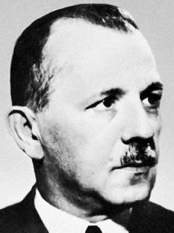
Saracoglu |
Saracoglu, (Mehmet) Sükrü, before 1935 Sükrü Bey (b. 1887, Ödemis, near Smyrna, Ottoman Empire [now in Turkey] - d. Dec. 27, 1953, Istanbul, Turkey), prime minister of Turkey (1942-46). After World War I he joined the nationalist movement of Mustafa Kemal (later Atatürk). Elected to the Grand National Assembly as deputy for Izmir in 1923, he was minister of education for a short period in 1925. Thereafter he became chairman of the Turkish delegation to the Greco-Turkish Population Exchange Commission. In 1927-30 he served as minister of finance. In 1931 he was sent on a financial mission to the United States, and on his return he prepared a report which served as the basis for reorganizing Turkey's cotton industry. As minister of justice (1933-38) he fostered Atatürk's Westernization program. As foreign minister (1938-42, 1944) he concluded a treaty of alliance with Great Britain and France (1939), as a prerequisite of which France ceded to Turkey Hatay province with the Mediterranean port of Alexandretta (Iskenderun); during World War II, however, he followed a policy of strict neutrality. Appointed prime minister on the death of Refik Saydam in 1942, he maintained Turkish neutrality, though with some anti-Axis bias, until Turkey declared war on the Axis powers in February 1945, just before the war's end. Two major measures of his government were the Varlik Vergisi (1942), a tax on capital imposed on the commercial classes, and a land reform law (1945), which redistributed state lands and large private estates to the landless peasants. In 1948 he was elected president of the Assembly, but, like other prominent members of the People's Party, he lost his seat in the election of 1950.
Sarafov, Mikhail (Konstantinov) (b. Feb. 14, 1854, Turnovo, Ottoman Empire [now Veliko Turnovo, Bulgaria] - d. Dec. 13, 1924, Sofia, Bulgaria), finance minister (1884, 1902-03) and interior minister (1901-02) of Bulgaria. He was also minister of education (1880-81), diplomatic agent in Austria-Hungary (1904-09), and minister to the Ottoman Empire (1909-13).
Saragat |
Saragat, Giuseppe (b. Sept. 12, 1898, Turin, Italy - d. June 11, 1988, Rome, Italy), president of Italy (1964-71). He joined the Socialist Party in 1922 and became secretary of its Turin branch. As an opponent of the Fascists, he was exiled from 1926 to 1943, living in Vienna to 1935 and then in Paris. He returned to Italy to join the partisans who were fighting the Germans after the fall of the Fascists. He was imprisoned by the Nazi forces occupying Rome but escaped in 1944 and, after Rome's liberation later that year, served as minister without portfolio in the cabinet of Ivanoe Bonomi. In 1945-46 he was ambassador to Paris and in 1946 he was elected president of the assembly which drew up postwar Italy's constitution. At the Socialist Party congress in 1947, he opposed the idea of cooperation with the Communist Party and led those who walked out to form the Socialist Party of Italian Workers. Shortly thereafter, he became vice-premier under Alcide De Gasperi (1947-48). Elected to the Chamber of Deputies (1948), he again became vice-premier and minister of the merchant marine, but he resigned (1949) to devote himself to his party. It changed its name to the Italian Social Democratic Party in 1951 in an effort to reaffirm its independence from the Communists and the other Socialist group. He served as the party's secretary in 1947-64 and 1975-83, then was elected president of the party for life. In 1954-57 he again served as vice-premier but resigned in opposition to the government's position on NATO. About this time, he suggested the idea of an "opening to the left," a coalition government including the leftist Socialists, which he saw materialize in 1963. He was foreign minister in 1959-60 and 1963-64, then was elected to the (largely ceremonial) presidency.
Saraiva, José Antonio, dito o conselheiro (b. March 1, 1823, Santo Amaro, Bahia, Brazil - d. July 21, 1895, São Salvador da Bahia [now Salvador], Brazil), foreign minister (1865-66) and chairman of the Council of Ministers (1880-82, 1885) of Brazil. He was also president of Piauí (1850-53), Alagoas (1853-54), São Paulo (1854-56), and Pernambuco (1859) and minister of navy (1857-58, 1865), war (1858), interior (1861), finance (1880-82, 1885), and agriculture (1881-82).
Saraki, Bukola, in full Olubukola Abubakar Saraki (b. Dec. 19, 1962), governor of Kwara (2003-11). In 2015-19 he was president of the Nigerian Senate.
Saralinov, Marat (Urazaliyevich) (b. May 19, 1941, Frunze, Kirgiz S.S.R. [now Bishkek, Kyrgyzstan] - d. Oct. 3, 2021), acting foreign minister of Kyrgyzstan (1992). He was also ambassador to China (1996-2001).
Sarandji |
Sarandji, Simplice (Mathieu) (b. April 4, 1955, Baoro, Oubangui-Chari [now Central African Republic]), prime minister of the Central African Republic (2016-19). He has also been president of the National Assembly (2021- ).
Saranovic, Danilo (b. 1988, Titograd [now Podgorica], Montenegro), interior minister of Montenegro (2023- ).
Sarao, B(hupinder) S(ingh) (b. May 2, 1929, Ambala, Punjab [now in Haryana], India), chief commissioner of Chandigarh (1980-82).
Sarasty (Montenegro), (José) Domingo (Néstor) (b. Nov. 10, 1906, Pupiales, Colombia - d. May 15, 1976, Bogotá, Colombia), interior minister of Colombia (1950-51). He was also president of the Supreme Court (1950) and ambassador to Mexico (1953-54) and Ecuador (1971-73).
Sarateanu, Constantin (b. June 18, 1862, Buzau, Romania - d. May 23, 1935, Bucharest, Romania), interior minister (1918) and member of the Regency (1929-30) of Romania.
Saratov, Valeriy (Vladimirovich) (b. July 31, 1953, Roshal, Moscow oblast, Russian S.F.S.R. - d. Dec. 9, 2015, Moscow, Russia), mayor of Sevastopol (2010-11).
Saravas, Dimitrios (b. 1820, Ano Doloi, Ottoman Empire [now in Greece] - d. July 11 [June 29, O.S.], 1885, Athens, Greece), justice minister of Greece (1870). He was also minister of ecclesiastical affairs and public education (1869-70).
Sarazin, Bernard (b. Aug. 3, 1929), prefect of Guadeloupe (1987-89). He was also prefect of Hautes-Pyrénées département (1985-87).

K. Sarbayev | 
R. Sarbayev |
Sarbayev, Kadyrbek (Telmanovich) (b. Dec. 9, 1966, Frunze, Kirgiz S.S.R. [now Bishkek, Kyrgyzstan]), foreign minister of Kyrgyzstan (2009-10). He was ambassador to China in 2007-09.
Sarbayev, Rail (Salikhovich) (b. Jan. 11, 1962, Abzanovo, Bashkir A.S.S.R., Russian S.F.S.R.), prime minister of Bashkortostan (2008-10). He was also minister of land and property relations (2005-08).
Sarbini, in full Mas Sarbini Martodihardjo (b. June 10, 1914, Indrosari, Netherlands East Indies [now in Jawa Tengah, Indonesia] - d. Aug. 21, 1977, Jakarta, Indonesia), defense minister of Indonesia (1966). He was also minister of veterans and demobilization (1964-66, 1966-68), transmigration (1967-71), and cooperatives (1968-71).
Sarda-Garriga, Joseph Napoléon (Sébastien) (b. Dec. 13, 1808, Blanes hamlet, Pezilla-la-Rivière commune, Pyrénées-Orientales, France - d. Sept. 8, 1877), governor of Réunion (1848-50) and French Guiana (1852-53).
Sardenberg, Ronaldo Mota (b. Oct. 8, 1940, Itu, São Paulo, Brazil), Brazilian diplomat/politician. He was ambassador to the Soviet Union (1985-88) and Spain (1989-90), permanent representative to the United Nations (1990-94, 2003-07), minister of special projects (1999) and science and technology (1999-2002), and president of the National Telecommunications Agency (2007-11).
Sardinha |
Sardinha, Francisco (b. April 15, 1946, Curtorim, Salcete district, Goa, Portuguese India [now in India]), chief minister of Goa (1999-2000).
Sardjoe, Ram(dien) (b. Oct. 10, 1935, Suriname district, Dutch Guiana [Suriname]), vice president of Suriname (2005-10). He was also speaker of the National Assembly (2001-05).
Sardo, Modesto (b. Sept. 1, 1929, Mineo, Sicilia, Italy - d. Aug. 7, 1991, Catania, Sicilia), president of Sicilia (1984-85).
Sardon (bin Haji) Jubir, Tun (Haji) (b. March 19, 1917, Sungai Kluang, Rengit, Johor [now in Malaysia] - d. Dec. 14, 1985), head of state of Penang (1975-81). He was also Malayan/Malaysian minister of works (1955-59), posts and telecommunications (1957-59), transport (1959-62, 1962-69), agriculture and cooperatives (1962), health (1969-72), and communications (1972-74) and permanent representative to the United Nations (1974-75). He received the titles Dato' (October 1972), Tun (June 1976), and Dato' Seri (1976).
Säre, Karl (b. July 2, 1903 - d. March 14, 1945, Neuengamme concentration camp, Germany), first secretary of the Communist Party of the Estonian S.S.R. (1940-43).
Sarec |
Sarec, Marjan (b. Dec. 2, 1977, Ljubljana, Slovenia), prime minister (2018-20) and defense minister (2022-24) of Slovenia.
Sareer, Ahmed (b. Aug. 28, 1965), Maldivian diplomat. He was chargé d'affaires (1992-93) and permanent representative (2012-17) to the United Nations, high commissioner to Bangladesh (2009-12), ambassador to the United States (2013-17), and chairman of the Alliance of Small Island States (2015-17). In 2024 he was appointed ambassador to Saudi Arabia.
Sarei, Sir Alexis (Holyweek) (b. March 25, 1934, Buka, Bougainville, New Guinea [now in Papua New Guinea] - d. Sept. 22, 2014, Gagan, Bougainville), premier of North Solomons province (1975-80, 1984-87); knighted 1987. He was also Bougainville district commissioner (1973-75) and Papua New Guinean high commissioner to the United Kingdom (1980-83).
Sarel, Henry Andrew (b. Nov. 1, 1823, London, England - d. Jan. 2, 1887, Rollesby Hall, Norfolk, England), lieutenant governor of Guernsey (1883-85).
Sargent, Francis W(illiam) (b. July 29, 1915, Hamilton, Mass. - d. Oct. 22, 1998, Dover, Mass.), governor of Massachusetts (1969-75). Before he became lieutenant governor of Massachusetts in 1966, he headed several state agencies including a 10-year stint as state commissioner of natural resources. An avid fisherman, he had gotten interested in the environment because he was frustrated by overfishing and the use of illegal nets when he lived on Cape Cod after serving in World War II. Sargent, a Republican, ran for lieutenant governor in 1966 with the campaign slogan "Put Sarge in Charge." In 1969, Sargent succeeded Gov. John Volpe when Volpe was named U.S. secretary of transportation. In 1970, he defeated Boston mayor Kevin White to win the governor's office in his own right. His tenure was marked by the tumultuous racial tensions prompted by school busing in the 1970s. He refused to repeal a law that recognized racial imbalance, but proposed a "freedom of choice" plan - a one-way busing program for black children only, rather than busing for both black and white students. Sargent took the reins of the state when the budget was in turmoil because of spending increases on welfare and other benefits. He tightened rules for qualifying for Medicaid and introduced a new corporate tax. During his tenure, Sargent also worked to build several public housing projects. He supported the state's first no-fault insurance law and a statute challenging the legality of the Vietnam War. In 1974 he ran for a second term, but was defeated by Democrat Michael Dukakis.
Sargent, John G(aribaldi) (b. Oct. 13, 1860, Ludlow, Vt. - d. March 5, 1939, Ludlow), U.S. attorney general (1925-29).
Sargent, Winthrop (b. May 1, 1753, Gloucester, Massachusetts - d. Jan. 3, 1820, near New Orleans, La.), governor of Mississippi (1798-1801).
Sargsyan: see under Sarkisyan.
Saric, Mirsad (b. June 27, 1951, Mostar, Bosnia and Herzegovina), premier of Herzegovina-Neretva (2000).
Sarim Pasha, Ibrahim (b. 1801, Constantinople, Ottoman Empire [now Istanbul, Turkey] - d. Aug. 30, 1854, Constantinople), foreign minister (1841-43), finance minister (1847-48), and grand vizier (1848) of the Ottoman Empire; son-in-law of Mustafa Resid Pasha (1800-1858). He was also ambassador to the United Kingdom (1837-38, 1844-45) and Persia (1839-41), minister of commerce (1841, 1845-46), and governor of Bursa (1849-51) and Trabzon (1853).
Sarin Chhak, original name Khin Kaing (b. Jan. 2, 1922, Krangsla village, Prey Kabass district, Takeo province, Cambodia - d. ...), foreign minister of Cambodia (1975-76). He was Cambodian ambassador to the United Arab Republic (Egypt) in 1968-70. He denounced the 1970 coup and was made a member of the Political Bureau and Central Committee of the National United Front of Kampuchea (FUNK) and foreign minister in the Beijing-based Royal Government of National Union of Kampuchea (GRUNK). After the FUNK forces won the civil war in 1975, the GRUNK was transferred to Phnom Penh. However, the royalist elements had lost influence within the FUNK in favour of the Khmer Rouge, and Sarin Chhak soon disappeared from the scene. What further happened to him is a mystery. Some have said that after the Vietnamese invasion in 1979 he was taken to an unknown destination by Vietnamese soldiers. His children have suggested that the Vietnamese kept him under house arrest until his death in the 1990s. A reason for Vietnam's interest in him is supposed to be the fact that he was an expert on Cambodia's borders and might have supported Cambodian territorial claims against Vietnam.
Sarinic, Hrvoje (b. Feb. 17, 1935, Susak, Yugoslavia [now in Croatia] - d. July 21, 2017, Zagreb, Croatia), prime minister of Croatia (1992-93).
Sarino, Cesar N(avarette), interior secretary of the Philippines (1991-92).
Sarit |
Sarit Thanarat (b. June 16, 1908, Bangkok, Siam [now Thailand] - d. Dec. 8, 1963, Bangkok), defense minister (1957) and prime minister (1958-63) of Thailand. He was also commander-in-chief of the army (1954-63).
Sariyev, Akmamed (b. 1907, Ata, Zakaspiyskaya oblast, Russia [now in Turkmenistan or Kazakhstan]), chairman of the Presidium of the Supreme Soviet of the Turkmen S.S.R. (1948-59). He was also people's commissar of agriculture (1937-43) and a deputy premier (1943-44).
Sariyev, Kakhraman (Ramatullayevich) (b. 1980), chairman of the Council of Ministers of Karakalpakstan (2016-22). He was also economy minister (2014-16).

T. Sariyev | 
A.H. Sarkar |
Sariyev, Temir (Argembayevich) (b. June 17, 1963, Tosh-Bulak, Kirgiz S.S.R.), finance minister and a deputy prime minister (2010) and prime minister (2015-16) of Kyrgyzstan. He was also a presidential candidate (2009, 2017) and minister of economy and anti-monopoly policy (2011-15).
Sarjala, (Vihtori) Wiljam (b. Dec. 18, 1901, Laitila, Finland - d. May 6, 1977, Espoo, Finland), finance minister of Finland (1959-62). He was also minister of transport and public works (1957).
Sarjayev, Batyr (b. 1945, Tashauz, Turkmen S.S.R.), defense minister of Turkmenistan (1999-2001). He was also first secretary of the party committee (1990-91) and mayor (1992-93) of Ashgabat, a deputy prime minister (1993-2001), and minister of oil and gas industry and mineral resources (1997-98).
Sarkar, Abu Hossain (b. 1894, Rangpur, Bengal, India [now in Bangladesh] - d. April 17, 1969, Dacca, East Pakistan [now Dhaka, Bangladesh]), chief minister of East Pakistan (1955-56, 1958, 1958). He was also health minister of Pakistan (1955).
M. Sarkar |
Sarkar, Manik (b. Jan. 22, 1949, Radhakishorepur, South Tripura district, Tripura, India), Indian politician. He came into the limelight for his role in the "food movement" in 1967 when he was a student of MBB College. He became a member of the Communist Party of India-Marxist (CPI-M) in 1968. He was the general secretary of the MBB College council and later became secretary of the state unit of the Student Federation of India. He also became the joint secretary of the SFI all-India body. He became a member of the party's state committee in 1972 and state secretariat member in 1978. He was twice elected to the Tripura assembly and was the chief whip of the ruling CPI-M. He became the secretary of its state unit and convener of the Left Front in 1993. The firebrand Marxist leader became Tripura's youngest chief minister in 1998 when he steered the Left Front to power for the fourth successive term in the assembly elections. He kept the office for 20 years before being defeated by the Bharatiya Janata Party in the 2018 elections.
Sarkinas, Reinoldijus (b. July 16, 1946, Toliunai, Lithuanian S.S.R.), finance minister of Lithuania (1995-96). He was also chairman of the Bank of Lithuania (1996-2011).
Sarkis |
Sarkis, Elias (Youssef), Arabic Ilyas (Yusuf) Sarkis (b. July 20, 1924, ash-Shabaniyah, Lebanon - d. June 27, 1985, Paris, France), president of Lebanon (1976-82). A Maronite Christian, he was legal adviser to different Lebanese governments, president (1967) of the Intra Bank, and governor (1968-76) of the Bank of Lebanon before standing for the presidency in 1970, when he lost by one vote to Suleiman Franjieh. In May 1976, as a recognized moderate, he was elected by a parliament under Syrian "protection" at the height of the civil war. Franjieh refused at first to leave office; when Sarkis finally took power four months after his election, he faced the hopeless task of establishing his authority over a country internally divided and under constant threat from its neighbours. His designated successor, Bashir Gemayel, was assassinated on Sept. 14, 1982, before taking office, and Israeli forces entered West Beirut. Sarkis eventually handed over power to Bashir's brother, Amin Gemayel, after obtaining the entry of a multinational peacekeeping force to the Lebanese capital.
Sarkisov, Babken (Yesayevich) (b. Dec. 8 [Nov. 25, O.S.], 1913, Shusha, Russia [now in Artsakh, Azerbaijan] - d. Feb. 4, 1999), chairman of the Presidium of the Supreme Soviet of the Armenian S.S.R. (1975-85). He was also minister of automobile transport (1966-70) and chairman of the State Committee for Prices (1970-75).
Sarkisyan, Agasi (Solomonovich) (b. Jan. 15, 1905, Yekhegnadzor, Erivan province, Russia [now in Armenia] - d. February 1985, Moscow, Russian S.F.S.R.), chairman of the Council of People's Commissars/Ministers of the Armenian S.S.R. (1943-47). He was also chairman of the Supreme Soviet (1943-44).
Sarkisyan, Aram (Gaspari), Sarkisyan also spelled Sargsyan, Russian Aram (Gasparovich) Sarkisyan (b. Aug. 14, 1949, Yerevan, Armenian S.S.R.), Armenian politician. In 1976 he headed the Department for Propaganda and Cultural Work with Youth of the Central Committee of Komsomol of Armenia. Starting from 1974, he was affiliated to Komsomolskaya Gazeta. In 1978 he worked as an instructor of the organizational department of the Central Committee of the Communist Party of Armenia (CPA). In November 1990 at the 29th Congress of the CPA, Sarkisyan was elected a secretary of the Central Committee, and in May 1991 he became first secretary. In September 1991 the party terminated its activities; he then initiated the establishment of the Democratic Party of Armenia and became its chairman.
Aram (S.) Sarkisyan |
Sarkisyan, Aram (Saveni), Sarkisyan also spelled Sargsyan (b. Jan. 2 or July 22, 1961, Ararat, Armenian S.S.R.), prime minister of Armenia (1999-2000). Despite membership in the ruling Miasnutyun (Unity) bloc, he was not involved in active politics before 1999, when Pres. Robert Kocharyan named him prime minister. He took over the Armenian government exactly one week after his older brother, Vazgen Sarkisyan, and seven other officials were gunned down in a bloody attack on parliament unleashed by five gunmen. Sarkisyan was nominated for the top post by the Miasnutyun bloc, which was co-headed by Vazgen Sarkisyan and Karen Demirchyan, who was also among the victims of the shooting. The bloc controlled the parliament and key ministerial posts in the government. He founded the Republic party in 2001 and was a minor presidential candidate in 2003.

Armen Sarkisyan | 
S. Sarkisyan |
Sarkisyan, Armen (Vardani), Sarkisyan also spelled Sargsyan (b. June 23, 1953, Yerevan, Armenian S.S.R.), prime minister (1996-97) and president (2018-22) of Armenia. He was also ambassador to Belgium, the Netherlands, Luxembourg, and the Vatican (1995-96) and the United Kingdom (1998-2000, 2013-18).
Sarkisyan, Arpine (Ashoti) (b. April 14, 1994, Vedi, Armenia), interior minister of Armenia (2024- ).
Sarkisyan, David (Rafaelovich), Armenian Davit (Rrafayeli) Sargsyan (b. July 14, 1977, Yerevan, Armenian S.S.R.), finance minister of Armenia (2013-14). He was also chief of government staff (2008-13).
Sarkisyan, Fadey (Tachatovich) (b. Sept. 18, 1923, Erivan [now Yerevan], Armenian S.S.R. - d. Jan. 10, 2010, Yerevan), chairman of the Council of Ministers of the Armenian S.S.R. (1977-89). He was also president of the National Academy of Sciences of Armenia (1993-2006).
Sarkisyan, Hrachya (b. Feb. 13, 1985, Yerevan, Armenian S.S.R.), Armenian politician. He was mayor of Yerevan (2021-23).
Sarkisyan, Serzh (Azati), Sarkisyan also spelled Sargsyan (b. June 30, 1954, Stepanakert, Nagorno-Karabakh autonomous oblast, Azerbaijan S.S.R.), defense minister (1993-95, 2000-07), interior minister (1996-99), prime minister (2007-08, 2018), and president (2008-18) of Armenia.

T. Sarkisyan |
Sarkisyan, Tigran (Sureni), Sarkisyan also spelled Sargsyan (b. Jan. 29, 1960, Kirovakan, Armenian S.S.R. [now Vanadzor, Armenia]), prime minister of Armenia (2008-14). He has also been chairman of the Central Bank of Armenia (1998-2008), ambassador to the United States (2014-16), and chairman of the Eurasian Economic Commission (2016-20).
Vazgen Sarkisyan |
Sarkisyan, Vazgen (Saveni), Sarkisyan also spelled Sargsyan (b. March 5, 1959, Ararat, Armenian S.S.R. - d. Oct. 27, 1999, Yerevan, Armenia), Armenian politician. He embarked upon full-time Komsomol work in 1983. He devoted much of his life to the Armenian fight with Azerbaijan for control of the Nagorno-Karabakh enclave and helped found the Karabakh Committee. He was elected a deputy to Armenia's first post-Communist parliament in 1990, and was later appointed to head the parliament's defense committee. He assumed responsibility in 1991 for creating an Armenian national army and served as defense minister for a brief period in 1992, helping to organize the defenses of the Armenian population of Nagorno-Karabakh. In 1992, he was replaced as defense minister and appointed an adviser to Pres. Levon Ter-Petrosyan. He was reappointed to head the defense ministry in 1995 and rapidly acquired a reputation as one of the most powerful men in the country. He then turned against Ter-Petrosyan, who was forced to resign in 1998. In 1997, the Yerkrapah union of veterans of the Karabakh war, which Sarkisyan headed, formed a political party. The party then effectively took over the tiny Republican Party in 1998 to form what Sarkisyan said would be a powerful centrist base for Pres. Robert Kocharyan. With the People's Party headed by Soviet-era leader Karen Demirchyan he formed the Miasnutyun (Unity) alliance. It won the May 1999 parliamentary election, and he became prime minister in June. He had far from universal appeal among ordinary Armenians. Many remembered him for wheeling out tanks in 1996 at the behest of Ter-Petrosyan, after a disputed election. After five months in office, Sarkisyan was shot and killed during an armed attack on parliament.
Sarkisyan, Vigen (Aleksandri) (b. May 10, 1975, Yerevan, Armenian S.S.R.), defense minister of Armenia (2016-18). He was also chief of the presidential administration (2011-16).
Sarkowicz, Ryszard (b. Nov. 2, 1952, Rzeszów, Poland - d. Jan. 15, 2021, Kraków, Poland), Polish diplomat. He was permanent representative to the United Nations (2012-14) and ambassador to Ireland (2015-18).

Sarkozy |
Sarkozy, Nicolas, in full Nicolas Paul Stéphane Sarközy de Nagy-Bocsa (b. Jan. 28, 1955, Paris, France), president of France (2007-12). In 1983 he was elected mayor of Neuilly-sur-Seine, a post he held until 2002. In 1993 he entered national politics as budget minister under Prime Minister Édouard Balladur. He helped lead an internal revolt to propel Balladur as candidate of the neo-Gaullist Rally for the Republic (RPR) for the 1995 French presidential election instead of party leader Jacques Chirac. Both men ran but Chirac alone made it to the runoff round in which he beat Socialist Lionel Jospin for the presidency. The future of Sarkozy, once a Chirac personal protégé, was unanimously predicted to be nil since Chirac refused to speak to him and his every appearance in party assemblies set off howls of anger and derision. He lay low for two years but then began a comeback, becoming deputy party leader thanks to his recognized intellect but also to an apparently innate talent for backroom dealings. Sarkozy, whose self-confidence and burning ambition were mercilessly lampooned by the French press, was appointed interim head of the RPR in April 1999, just hours after the surprise resignation of Philippe Séguin. He became interior minister (2002-04) and economy and finance minister (2004). In November 2004 he was elected president of Chirac's Union for a Popular Movement (UMP), successor of the RPR, with 81% of the vote cast by party members. He then left the government to concentrate on leading the party. He indicated that he coveted the head-of-state role. In 2005 he was again named interior minister, while remaining head of the UMP. He took a hardline stance against rioters in Paris suburbs. He won the 2007 presidential election, defeating Socialist Ségolène Royal in the runoff, 53%-47%. He lost his bid for reelection in 2012 to Socialist François Hollande, who won 52%-48%. In 2014 he was again elected president of the UMP (later renamed The Republicans), though with only 64.5% of the vote. In 2016 he declared his candidacy for the 2017 presidential election, but he only came third in the Republican primary, behind François Fillon and Alain Juppé. In 2021 he was found guilty of corruption and influence peddling and sentenced to a year in prison; he was allowed to serve his time at home wearing a tag. In 2025 he was sentenced to 5 years after being found guilty of criminal conspiracy in relation to illicit funds for his 2007 campaign received from Libyan leader Muammar al-Qaddafi.
Sarles, Elmore Y(ocum) (b. Jan. 15, 1859, Wonewoc, Wis. - d. Feb. 14, 1929, Hillsboro, N.D.), governor of North Dakota (1905-07).
Sarlin, Bruno (Gustaf Willehad) (b. Nov. 9, 1878, Viitasaari, Finland - d. Jan. 6, 1952, Helsinki, Finland), governor of Vaasa (1920-30). He was also Finnish minister of social affairs (1935-36).
Sarlós, István (b. Oct. 30, 1921, Budapest, Hungary - d. June 19, 2006, Budapest), a deputy premier of Hungary (1982-84). He was also chief editor of Népszabadság (1970-74) and president of the National Assembly (1984-88).

Sarma |
Sarma, Himanta Biswa (b. Feb. 1, 1969, Jorhat, Assam, India), chief minister of Assam (2021- ).

Sarmas |
Sarmas, Ioannis (b. March 21, 1957, Kos island, Greece), interim prime minister of Greece (2023). He was president of the Court of Audit (2019-23).
Sarmento, Casimiro José de Moraes (b. Aug. 13, 1813, Oeiras, Piauí, Brazil - d. Feb. 1, 1860, Angra dos Reis, Rio de Janeiro, Brazil), president of Rio Grande do Norte (1845-47) and Ceará (1847-48).
Sarmento, Domingos Maria (b. May 7, 1955, Ermera, Portuguese Timor [now Timor-Leste]), justice minister of Timor-Leste (2003-07).
Sarmento, Joaquim José Paes da Silva (b. Oct. 7, 1845, Manaus, Amazonas, Brazil - d. March 10, 1914, Manaus), acting president of Amazonas (1884).
Sarmento, Siseno Ramos (b. June 3, 1907, Manaus, Amazonas, Brazil - d. Nov. 16, 1983, São Paulo, Brazil), federal interventor in Amazonas (1946-47).
Sarmento, Tiago Amaral (b. Nov. 19, 1974, Fahi Berek, Viqueque district, Portuguese Timor [now Timor-Leste]), justice minister of Timor-Leste (2022-23).

D.F. Sarmiento |
Sarmiento (Albarracín), Domingo Faustino, originally Faustino Valentín de Quiroga Sarmiento Albarracín (b. Feb. 14, 1811, San Juan, Viceroyalty of the Río de la Plata [now in Argentina] - d. Sept. 11, 1888, Asunción, Paraguay), president of Argentina (1868-74). He entered public life as a provincial legislator. His outspokenness provoked the rage of the military dictator Juan Manuel de Rosas, who exiled him to Chile in 1840. There he was active in politics, became an important figure in journalism through his articles in the Valparaíso newspaper El Mercurio, and wrote his most famous book, Facundo, an impassioned denunciation of Rosas' dictatorship in the form of a biography of Juan Facundo Quiroga, Rosas' tyrannical gaucho lieutenant. He returned to Argentina in 1852 to participate in the overthrow of Rosas. He was governor of San Juan (1862-64) and minister to the United States (1864-68), returning to Argentina after being elected president. He applied his belief in democratic principles and civil liberties to the building of a new Argentina. An ongoing war with Paraguay was brought to a successful conclusion in 1870, allowing him to concentrate on his domestic policies, which laid the foundations for national progress by stimulating the growth of commerce and agriculture and the development of rapid transportation and communication. To a largely illiterate country the former schoolmaster, whose motto was "to govern is to educate," brought primary and secondary schools, normal schools, and schools for professional and technical training, as well as libraries and museums. After his presidential term ended, he continued to be active in public life, becoming director-general of schools in Buenos Aires province and then holding a similar post on the national level, also serving as interior minister (1879) and acting foreign minister (1879).
Sarmiento (Ramírez), Fernando (b. Nov. 26, 1874, Lima, Peru - d. Oct. 18, 1939, Lima), prime minister and war minister of Peru (1930).
Sarmiento, Mel Senen (Sevilla) (b. Aug. 11, 1962), interior secretary of the Philippines (2015-16). He was also mayor of Calbayog (2001-10).
Sarmiento Olarte, Javier Augusto (b. June 21, 1982, Bucaramanga, Colombia), acting justice minister of Colombia (2020). He was also acting mayor of Bucaramanga (2025).
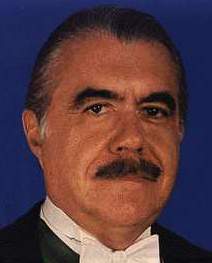
J. Sarney |
Sarney (Costa), José (de Araújo), original name José Ribamar Ferreira de Araújo Costa (b. April 24, 1930, Pinheiro, Maranhão, Brazil), president of Brazil (1985-90). He entered politics in 1950 as assistant to the governor of Maranhão; he switched political party allegiance three times during his career. He first represented his state in Congress in 1954, and he was reelected in 1958 and 1962. He was associated with congressional reformist groups during the late 1950s and early 1960s and was always considered a liberal despite active participation in military-backed governments between 1964 and 1985. He was elected governor of Maranhão in 1965. His record was one of encouraging modernization, sponsoring literacy programs, and building roads, bridges, and sewerage and water systems. He was elected state senator for Maranhão in 1970 and 1978 under the banner of the pro-government National Renewal Alliance (Arena) party, which changed its name to the Social Democratic Party (PDS) in 1979. As PDS president he tried during 1981-84 to reorganize the party to help it gain increased popular support. When this failed, he became leader of the PDS faction that broke with the government in June 1984 to ally itself with the main opposition grouping, the Brazilian Democratic Movement (PMDB), and form the Liberal Front Party (PFL). In the 1985 presidential election the PFL votes in the electoral college were considered essential for the victory of Tancredo de Almeida Neves, and so they demanded concessions, one of which was that Sarney should become vice-president. President-elect Neves died before assuming office, and Sarney was sworn in as the first civilian president of Brazil in 21 years. He failed in a number of attempts to halt the nation's economic and financial slide. He did not run for reelection in 1989. Later he served as president of the Senate (1995-97, 2003-05, 2009-13).
R.M. Sarney |
Sarney Murad, Roseana Macieira (b. July 1, 1953, São Luís, Maranhão, Brazil), governor of Maranhão (1995-2002, 2009-14); daughter of José Sarney. She was the first woman to be elected governor of a Brazilian state.
Sarno, Luigi de' Medici, principe di Ottajano, duca di (b. April 22, 1759, Naples, Two Sicilies [now in Italy] - d. Jan. 25, 1830, Madrid, Spain), finance minister (1822-30) and prime minister and foreign minister (1823-30) of the Two Sicilies.
Saroj Chavanaviraj (b. May 11, 1942), foreign minister of Thailand (2008). He was ambassador to France in 2000-02.
Sarovic |
Sarovic, Mirko (b. Sept. 16, 1956, Rogatica, Bosnia and Herzegovina), Bosnian politician. He was secretary of the New Sarajevo municipality, executive board president of the municipal assembly of New Sarajevo, president of the municipal assembly of New Sarajevo, and president of the assembly in the town of Serb Sarajevo. From September 1996 to 1998, he was the deputy in two convocations of the National Assembly and was president of the judicial commission. He served as vice president of the Republika Srpska since the end of 1998 and was elected president in 2000. In 2002 he was elected to the three-member Bosnian presidency and served as its first chairman. He resigned in 2003 over illegal arms sales to Iraq.
Sarper, Selim (Rauf) (b. 1899 - d. Oct. 12, 1968, Ankara, Turkey), foreign minister of Turkey (1960-62). Earlier he was ambassador to the Soviet Union (1944-46) and Italy (1946-47) and permanent representative to the United Nations (1947-57).
Sarr, Samsudeen (b. 1950s, Serrekunda, Gambia), Gambian diplomat. He was acting permanent representative to the United Nations (2016-17).
Sarraf, Yacoub (Riad) (b. 1961, Minyara, Lebanon), defense minister of Lebanon (2016-19). He was also environment minister (2005-08).
Sarrail, Maurice (Paul Emmanuel) (b. April 6, 1856, Carcassonne, Aude, France - d. March 23, 1929, Paris, France), high commissioner of Syria and Lebanon (1925).
Sarraj, Abdullah (ibn Abdul Rahman) al-, also spelled Siraj (b. 1863, Mecca, Ottoman Empire [now in Saudi Arabia] - d. 1948), deputy prime minister (1916-24) and prime minister (1924-25) of Hejaz and prime minister and interior and finance minister of Transjordan (1931-33).
F. al-Sarraj |
Sarraj, Fayez (Mustafa) al- (b. Feb. 20, 1960, Tripoli, Libya), chairman of the Presidential Council and prime minister of Libya (2016-21). He was also minister of housing and utilities (2014, Matiq government) and defense (acting, 2018-20).

Sarraut |
Sarraut, Albert (Pierre) (b. July 28, 1872, Bordeaux, France - d. Nov. 26, 1962, Paris, France), French statesman. A member of the Chamber of Deputies from 1902 to 1924, he was undersecretary of state (1906-09), undersecretary of war (1909-10), minister of education (1914-15), and twice governor-general of French Indochina (1911-13, 1917-19). He was noted for his liberal rule in Indochina, where he increased the proportion of natives in the civil service, recognized the use of local languages and local law, and continued the public-works policy of his predecessor, Paul Doumer. As minister for the colonies (1920-24, 1932-33), he sought to promote the development of the overseas possessions. He published La mise en valeur des colonies françaises (1923; "The Improvement of French Colonies") and Grandeur et servitude coloniales (1931; "Colonial Grandeur and Slavery"). In 1925-26 he was ambassador to Turkey. A senator from 1926 to 1940, he was minister of the interior (1926-28, 1934, 1936, 1938, 1938-40), marine (1930, 1930-31, 1933-34), and education (1940), minister of state (1937-38, 1938), and twice premier (1933, 1936). His first premiership lasted only a month. His second government, appointed January 1936, secured the approval of the Chamber of Deputies for the Franco-Soviet mutual assistance treaty but failed to deal effectively with the German remilitarization of the Rhineland; he resigned in June. Playing little part in politics during World War II, he became editor of the newspaper owned by his family, Dépêche de Toulouse, in 1943 after his brother Maurice had been murdered by a pro-Nazi gang. He was arrested by the Gestapo in 1944 and liberated in 1945. In 1947 he became a member of the Assembly of the French Union, of which he was president in 1949-58.
Sarraz, James Albert Henry de la (b. Nov. 23, 1787, Grave, Staats-Brabant [now Noord-Brabant], Netherlands - d. May 1, 1877, The Hague, Netherlands), foreign minister of the Netherlands (1843-48).
Sarré, Massamba (b. Oct. 6, 1935, Saint-Louis, Senegal - d. Nov. 24, 2024, Dakar, Senegal), Senegalese diplomat. He was ambassador to Morocco (1968-72), Iran, Turkey, Pakistan, Afghanistan, Bahrain, and Qatar (1972-79), Tunisia (1979-80), and France, Spain, and Portugal (1988-96) and permanent representative to the United Nations (1980-88).
Sarria (Arana), Pablo (b. 1843, Lima, Peru - d. 19...), finance minister of Peru (1902-03).
Sarrien, (Jean Marie) Ferdinand (b. Oct. 15, 1840, Bourbon-Lancy, Saône-et-Loire, France - d. Nov. 28, 1915, Paris, France), prime minister of France (1906). He was also minister of posts and telegraphs (1885-86), interior (1886, 1887-88, 1896), justice (1886-87, 1898, 1906), and worship (1898).
Sarris, Michalis (b. April 14, 1946, Nicosia, Cyprus), finance minister (2005-08, 2013) and acting defense minister (2007) of Cyprus.
Sarsembayev, Yerlan (Zhaksylykovich) (b. 1975, Alma-Ata oblast, Kazakh S.S.R. [now Almaty oblast, Kazakhstan]), justice minister of Kazakhstan (2025- ).
Sarsenbayuly, Altynbek, originally Altynbek (Sarsenbayevich) Sarsenbayev (b. Sept. 12, 1962, Kaynar, Alma-Ata oblast, Kazakh S.S.R. [now Almaty oblast, Kazakhstan] - d. [assassinated] Feb. 11, 2006, Talgar district, Almaty oblast), Kazakh politician. He was minister of press and mass media (1993-95), information and public accord (1997-2001), culture (1999-2001), and information (2004), chairman of the National Agency for Press and Mass Media (1995-97), secretary of the Security Council (2001), and ambassador to Russia (2002-03).
Sarti, Adolfo (b. June 19, 1928, Turin, Italy - d. March 3, 1992, Rome, Italy), defense minister (1980) and justice minister (1980-81) of Italy. He was also minister of tourism and entertainment (1974-76), relations with parliament (1979-80), and education (1980).
Sartor (Gómez), Daniel (Alberto) (b. 1961), minister of social development of Argentina (2001).
Sartori, José Ivo (b. Feb. 25, 1948, Farroupilha, Rio Grande do Sul, Brazil), governor of Rio Grande do Sul (2015-19). He was also mayor of Caxias do Sul (2005-13).
Sartzetakis |
Sartzetakis, Christos (Antoniou) (b. April 6, 1929, Salonika [now Thessaloniki], Greece - d. Feb. 3, 2022, Athens, Greece), president of Greece (1985-90). It was while serving as a judge of first instance that he first achieved prominence. Appointed magistrate to investigate the death of left-wing deputy Gregorios Lambrakis in Thessaloniki in May 1963, he disproved the police version that it had occurred in a traffic accident and boldly exposed collusion between the police and right-wing hooligans in a political assassination. His courage, integrity, and determination inspired the novel Z by Vasilis Vasilikos, which later became a prizewinning film. After the military coup in Greece in 1967, Sartzetakis was posted to Volos, in central Greece, as a misdemeanours judge. Barely a year later he was dismissed from the judiciary during a wholesale liquidation of senior judges hostile to the military regime. He was twice arrested and held without charge. He himself said he was tortured during his detention. He was set free during an amnesty in 1971 and, after the restoration of democracy in 1974, was reinstated and promoted to appeal court judge. In 1982 he was elected to the Supreme Court. He was installed as president of Greece in 1985 for a five-year term following his election by the Greek parliament. He succeeded Konstantinos Karamanlis, the conservative statesman who resigned after the Panhellenic Socialist Movement (Pasok) majority, in a surprise move, withdrew its support for his reelection. Sartzetakis was elected on the third round with the help of the Communist Party. Greece's president was stripped of nearly all executive powers in March 1986, when the Socialists amended the constitution and transferred power to the premier and the majority party in parliament.
Sarufa, Fred, Papua New Guinean diplomat. He has been chargé d'affaires (2015-16, 2024) and permanent representative (2024- ) to the United Nations.
Sarundajang, Sinyo Harry (b. Jan. 16, 1945, Kawangkoan, Netherlands East Indies [now in Sulawesi Utara, Indonesia] - d. Feb. 13, 2021, Jakarta, Indonesia), acting governor of Maluku Utara (2002) and Maluku (2002-03) and governor of Sulawesi Utara (2005-10, 2010-15). He was also Indonesian ambassador to the Philippines (2018-21).
Sarwar, (Chaudhry) Mohammad (b. Aug. 18, 1952, Roda, Lyallpur [now Faisalabad] district, Punjab, Pakistan), governor of Punjab (Pakistan) (2013-15, 2018-22). He moved to Britain in 1976 and became Labour MP for Glasgow Govan (1997-2005) and Glasgow Central (2005-10), Britain's first Muslim MP. In 2013 he gave up his British citizenship to return to Pakistan and take up the post of Punjab governor on the invitation of Prime Minister Nawaz Sharif. In 2015 he was apparently asked to resign after he made remarks critical of the federal government. He then defected from the Pakistan Muslim League (Nawaz) to Pakistan Tehreek-e-Insaf and was reappointed governor when that party came to power in 2018.
Sarychev, Sergey (Mikhailovich) (b. Aug. 1, 1959, Vikulovo, Tyumen oblast, Russian S.F.S.R.), acting governor of Tyumen oblast (2018). He was deputy governor (1997-2001, 2004-05) and vice governor (2005-22) of Tyumen oblast and deputy prime minister of Khanty-Mansi autonomous okrug (2001-03).
Sarzedas, Bernardo José (Maria) de Lorena (e Silveira), (5º) conde de (b. April 20, 1756, Campo Grande, Brazil - d. 1818, Rio de Janeiro, Brazil), governor of São Paulo (1788-97) and Minas Gerais (1797-1803) and viceroy of Portuguese India (1807-16).
Sasako, Alfred (Salomon) (b. May 26, 1953), Solomon Islands politician. He was minister of agriculture and livestock (2004-05) and infrastructure development (2005-06).
Sasin, Jacek (Robert) (b. Nov. 6, 1969, Warsaw, Poland), Polish politician. He was governor of Mazowieckie województwo (2007), a deputy prime minister (2019-23), and minister of state assets (2019-23).
Sassen, Maan, byname of Emmanuel Marie Joseph Antony Sassen (b. Sept. 11, 1911, 's-Hertogenbosch, Netherlands - d. Dec. 20, 1995, 's-Hertogenbosch), Dutch politician. He was minister of overseas territories (1948-49) and European commissioner for competition (1967-70).
Sassine, Michel (Georges) (b. 1928, Beirut, Lebanon - d. Aug. 2, 2014), deputy prime minister of Lebanon (1974-75, 1990). He was also minister of tourism (1972-73), housing and cooperatives (1973-75), and labour (1990).
D. Sassou-Nguesso |
Sassou-Nguesso, Denis (also appearing unhyphenated) (b. 1943, Edou village, northern Middle Congo [now Congo (Brazzaville)]), president (1979-92, 1997- ) of Congo (Brazzaville); nephew of Aimé Emmanuel Yoka; cousin of Maurice Méthot. In 1975 the paratroop colonel became defense minister under Pres. Marien Ngouabi. He was a founder member of the Congolese Labour Party (PCT) in 1969 and during the 1970s fulfilled several important party functions. He came to power in 1979, when a PCT party congress appointed him president to replace the stridently anti-Marxist Joachim Yhombi-Opango, who lost control by alienating the left. Sassou conformed to the party line in public while firmly anchoring Congo's economy to the West. After a wave of strikes and street protests, he was forced to approve a national conference to chart the country's path to multiparty elections, with the PCT forced to fight for its political life after an unbroken rule of over 20 years. The conference gradually undermined Sassou's authority, electing an interim prime minister and reducing Sassou to a figurehead; all executive powers were transferred to the premier and he was removed from command of the armed forces. His presidency came to an end when he was knocked out in the first round of the 1992 election. His Cobra militia fought loyalists of Pres. Pascal Lissouba in 1993-94 clashes. Sassou subsequently left for France, returning home in January 1997 planning to contest presidential elections due to be held in July. The poll was derailed and fighting began after government soldiers surrounded his home on June 5 as part of a pre-poll crackdown on private militia. He emerged victorious in October and became president again. He was confirmed in elections in 2002, which his main opponents were barred from contesting. He was chairman of the Organization of African Unity in 1986-87 and of the African Union in 2006-07.
Sassou-Nguesso, Denis Christel (also appearing unhyphenated) (b. Jan. 14, 1975, Brazzaville, Congo), Congo (Brazzaville) politician; son of Denis Sassou-Nguesso. He has been minister of international cooperation and promotion of public-private partnership (2021- ).
Sastrawidagda, Samsi (b. March 13, 1894, Surakarta, Netherlands East Indies [now Indonesia] - d. 1963), finance minister of Indonesia (1945).
Sastroamidjojo, Ali (b. May 21, 1903, Grabag, near Magelang, Netherlands East Indies [now in Jawa Tengah, Indonesia] - d. March 13, 1975, Jakarta, Indonesia), prime minister of Indonesia (1953-55, 1956-57). He was also minister of education and culture (1947-49) and defense (1956-57), ambassador to the U.S., Canada, and Mexico (1950-53), and permanent representative to the United Nations (1957-60).

Sata |
Sata, Michael (Chilufya), byname King Cobra (b. July 6, 1937, Mwikulu village, Mpika district, Northern Rhodesia [now Zambia] - d. Oct. 28, 2014, London, England), president of Zambia (2011-14); nephew of Alexander Chikwanda. He entered politics as a municipal councillor for the ruling United National Independence Party in the 1960s, rising to become governor of the capital Lusaka before Pres. Kenneth Kaunda elevated him to a cabinet position. In 1991, weeks before Zambia's first multiparty elections, Sata broke with Kaunda and helped Frederick Chiluba of the Movement for Multiparty Democracy (MMD) to clinch the presidency. He held various cabinet posts during Chiluba's 10-year rule (local government 1991-93, labour 1993-94, health 1994-96, minister without portfolio 1996-2001), but Chiluba bypassed him and picked Levy Mwanawasa as his preferred successor in 2001. Sata then established the Patriotic Front party, which played an immaterial role in the 2001 elections. In 2006, however, Sata looked set to sweep Mwanawasa from power on the back of strong support from Zambia's poor, who were angry that economic reforms had not improved their lives. Mwanawasa was reelected, prompting Sata to claim fraud. During the campaign, Sata threatened to expel Chinese investors, whom he accused of exploiting Zambian workers. He later changed his tune, saying that he would welcome more Chinese investment in the mining industry. He ran again in 2008, when he lost to Rupiah Banda by just 35,000 votes (2%), and in 2011, when he defeated Banda, thus ending 20 years of MMD rule. His presidency was marred by a crackdown on political opposition and a decline in the economy; he died in office.
Satake, Norihisa (b. Nov. 15, 1947), governor of Akita (2009-25).
Satarawala, Kershasp Tehmurasp (b. Feb. 15, 1916, Satara [now in Maharashtra], India - d. Aug. 20, 2001, Pune, Maharashtra, India), lieutenant governor of Goa (1983-84) and governor of Punjab (1984-85). He was also Indian ambassador to Mexico, Guatemala, and El Salvador (1985-88).
Satcher |
Satcher, David (b. March 2, 1941, Anniston, Ala.), U.S. surgeon general (1998-2002). In 1970 he became the first African-American to earn both an M.D. and a Ph.D. at Case Western Reserve University in Cleveland, Ohio. He served as president (1982-93) of Meharry Medical College in Nashville, Tenn., one of the nation's leading predominantly black medical schools. In late 1993 he was appointed director of the Centers for Disease Control and Prevention (CDC). During his tenure the CDC instituted initiatives that increased childhood immunization rates from 55% in 1992 to 78% in 1996 and improved the nation's ability to respond to emerging infectious diseases. Congress welcomed the 1997 nomination of the low-key, uncontroversial Satcher for surgeon general after the flap over Pres. Bill Clinton's first surgeon general, Dr. Joycelyn Elders, who had to quit after comments about masturbation, and Clinton's next nominee, Dr. Henry Foster, derailed because of discrepancies in his accounts of the number of abortions he had performed. However, Satcher aroused the ire of Sen. John Ashcroft and other conservatives, mainly because of his agreement with Clinton on partial birth abortion. Congress wanted to ban that controversial late-term abortion procedure except when a woman's life is in danger, while Clinton wanted to allow exceptions when a woman's health is at risk. Nevertheless Satcher was confirmed by a wide margin (65-35) on Feb. 10, 1998, and sworn in three days later. Until January 2001 he also served as assistant secretary of health. He issued a report on tobacco use (focusing on the health risks to minorities and minority teenagers), called for a strategy to prevent suicide, and sought to eliminate race-based health care disparities.
Sathasivam |
Sathasivam, Palanisamy (b. April 27, 1949, Kadappanallur village, Madras province [now in Tamil Nadu state], India), governor of Kerala (2014-19). He was also chief justice of India (2013-14).
Sathe, Ram(chandra Dattatraya) (b. April 15, 1922, Guntur [now in Andhra Pradesh], India), Indian diplomat. He was chargé d'affaires in China (1966-69) and ambassador to Iran (1972-76), France (1976-78), China (1978-79), and West Germany (1982-84) and foreign secretary (1979-82).
Satheesan |
Satheesan, V(adassery) D(amodara Menon) (b. May 31, 1964, Kochi, Kerala, India), chief minister of Kerala/Keralam (2026- ).
Satin, Vyacheslav (Alekseyevich) (b. Dec. 3, 1960, Rasskazovo, Tambov oblast, Russian S.F.S.R. - d. Jan. 9, 2018), chairman of the government of Penza oblast (2007-08).
Satir, (Ismail) Kemal (b. 1911, Adana, Ottoman Empire [now in Turkey] - d. May 23, 1991, Istanbul, Turkey), a deputy prime minister of Turkey (1963-65, 1973-74). He was also minister of communications (1949-50).
Satlykov, Satlyk (Baydzhanovich), Turkmen Satlyk (Baýjanowiç) Satlykow (b. 1965, Bereket, Turkmen S.S.R. [now in Balkan velayat, Turkmenistan]), a deputy prime minister of Turkmenistan (2013-17). He was also head of Balkan velayat (2010-13, 2017-18) and minister of communal services (2013).

E. Sato |
Sato, Eisaku (b. March 27, 1901, Tabuse, Yamaguchi prefecture, Japan - d. June 3, 1975, Tokyo, Japan), prime minister of Japan (1964-72). He entered the Ministry of Railways and rose to become chief of its bureau of control and vice minister for transportation. In 1948 he joined the Liberal Party and became chief cabinet secretary. In 1949 he was first elected to the lower house of the Diet (parliament). Becoming minister of telecommunications and postal services in 1951 and of construction in 1952, he resigned in 1953 to become chief secretary of the Liberal Party, which in 1955 merged with the Democratic Party to form the Liberal-Democratic Party. In 1958-60 he served as finance minister in the cabinet of his older brother and political mentor, Nobusuke Kishi. Subsequently he served in the cabinet of Hayato Ikeda as minister of international trade and industry (1960-62) and minister in charge of the 1964 Tokyo Olympic Games (1963-64). In 1964 the Diet chose Sato as Ikeda's successor. He presided over continued economic growth and the improvement of relations with other Asian countries. In 1969 he reached an agreement with U.S. president Richard M. Nixon for the return of the Ryukyu Islands to Japan, the removal of all nuclear weapons from the area, and the continued maintenance of the U.S.-Japanese Security Treaty of 1951. He came under heavy criticism for provisions in the agreement that allowed U.S. military forces to remain on Okinawa after its return to Japan. When he resigned after a record tenure of almost eight years in 1972 he was unable to ensure the election of his chosen successor. For his policies that led to Japan's signing the Treaty on the Non-proliferation of Nuclear Weapons, he was, somewhat surprisingly, awarded the Nobel Peace Prize in 1974 (jointly with Seán MacBride).
Sato, Eisaku (b. June 24, 1939 - d. March 19, 2025, Koriyama, Fukushima prefecture, Japan), governor of Fukushima (1988-2006).
Sato, Gisen (b. June 3, 1899, Mie prefecture, Japan - d. Jan. 9, 1985), governor of Osaka (1959-71). He was also director-general of the Defense Agency of Japan (1958).
Sato, Kanju (b. Jan. 29, 1942, Aichi prefecture, Japan), home affairs minister of Japan (1993-94).
Sato, Kiichiro (b. Nov. 28, 1957, Oita, Japan), governor of Oita (2023- ). He was also mayor of Oita (2015-23).
Sato, Megumu (b. Feb. 28, 1924, Osaka, Japan - d. Jan. 9, 2021), justice minister of Japan (1990-91); son of Gisen Sato. He was also minister of posts and telecommunications (1984-85) and director-general of the National Land Agency (1994).
Sato, Naotake (b. Oct. 30, 1882, Osaka, Japan - d. Dec. 18, 1971, Tokyo, Japan), foreign minister of Japan (1937). He was also minister to Poland (1923-27), ambassador to Belgium (1930-33), France (1933-37), and the Soviet Union (1942-45), and president of the House of Councillors (1949-53).
Sato, Tsutomu (b. June 20, 1952, Mibu, Tochigi, Japan), internal affairs minister of Japan (2009).
Sato, Yuhei (b. Dec. 13, 1947), governor of Fukushima (2006-14).
Sato, Yukio (b. Oct. 6, 1939), Japanese diplomat. He was ambassador to the Netherlands (1994-96) and Australia (1996-98) and permanent representative to the United Nations (1998-2002).
Sattam (ibn Abdul Aziz Al Saud) (b. Jan. 21, 1941, Riyadh, Saudi Arabia - d. Feb. 12, 2013), Saudi prince; son of Abdul Aziz. He was governor of Riyadh (2011-13).
Abdul Sattar |
Sattar, Abdul (b. 1931 - d. June 23, 2019), foreign minister of Pakistan (1993, 1999-2002). He joined Pakistan's foreign service in 1953 and was foreign secretary in 1986-88. He was ambassador to Austria (1975-78) and the Soviet Union (1988-90), served in Pakistani missions in Washington and Jidda, and worked twice as Pakistan's high commissioner to New Delhi (1978-82, 1990-92), earning a reputation of being a hardliner on pivotal relations with arch-rival India. He was also an uncompromising supporter of Islamabad's nuclear deterrent. He was foreign minister in the caretaker government of Moeen Qureshi in 1993 after Nawaz Sharif abruptly ended his government under military pressure. After Nawaz Sharif was ousted again in 1999, Pakistan's new military leader, Gen. Pervez Musharraf, appointed Sattar foreign minister in a new-look team of technocrats and experts to steer the nation out of bankruptcy and isolation. Sattar faced formidable challenges, including the normalization of ties with India, resolution of the flashpoint Kashmir dispute, and allaying western fears on nuclear issues. He was charged with restoring Pakistan's international credibility, which was battered by the 1998 infiltration of India's Kargil heights by what the ousted government said were Kashmiri freedom fighters and India said were Pakistani troops. Western states said they too believed regular troops were involved in what came close to being the fourth Indo-Pakistani war in 52 years. Sattar was critical of Prime Minister Nawaz Sharif's government over its handling of the "Kargil debacle" when the two countries came close to war in the disputed Himalayan region. Sattar resigned for health reasons in 2002.
Abdus Sattar |
Sattar, Abdus (b. March 1, 1906, Birbhum, India - d. Oct. 5, 1985, Dhaka, Bangladesh), president of Bangladesh (1981-82). He entered politics in 1954, when he campaigned for election to the Constituent Assembly of Pakistan and won. In 1956 he was interior minister of Pakistan. The following year he was appointed a judge of the High Court. Subsequently he was chosen as a judge of the Supreme Court of Pakistan (1968). Appointed chief election commissioner of Pakistan in 1969, he conducted the 1970 general election in which the pro-independence Awami League of Sheikh Mujibur Rahman emerged as the majority party of East Pakistan, ultimately leading to the establishment of Bangladesh as an independent nation in 1971. In 1975 he was appointed minister of law and parliamentary affairs and special assistant to the president, Abu Sadat Mohammad Sayem. After Gen. Ziaur Rahman took over as president in 1977, Sattar retained his advisory post and later was appointed vice president of the republic. The acting president after the assassination of Zia on May 30, 1981, Sattar was elected president by a wide margin on November 15. He quickly earned the reputation of being an able administrator as he took full control of the government machinery, but his ill health combined with the country's daunting economic and political troubles led to a gradual loss of control, and in March 1982 effective power was assumed by Gen. Hossain Mohammad Ershad as chief martial-law administrator, with A.F.M. Ahsanuddin Chowdhury replacing Sattar as president. Sattar continued as a leading figure in the opposition coalition, but its strength was never tested in elections during his lifetime.
Sattori Ribera, Fernando (d. April 11, 2005, Santa Cruz de la Sierra, Bolivia), member of the military junta of Bolivia (1970).

Satyanand | 
Satybaldiyev |
Satyanand, Sir Anand (b. July 22, 1944, Auckland, New Zealand), governor-general of New Zealand (2006-11); knighted 2009.
Satybaldiyev, Zhantoro (Zholdoshevich) (b. Jan. 6, 1956, Mirza-Aki, Uzgen district, Osh oblast, Kirgiz S.S.R.), prime minister of Kyrgyzstan (2012-14). He was also minister of transport and communications (1997-2000), mayor of Osh (2000-03), governor of Osh oblast (2006-07), a deputy prime minister (2010-11), and chief of staff of the president (2011-12).
Satybaldy, Darkhan (Amangeldyuly) (b. March 26, 1974, Abay, Keles rayon, Chimkent [now Turkestan] oblast, Kazakh S.S.R.), head of Turkestan oblast (2022-25) and Almaty city (2025- ). He was also mayor of Shymkent (2013-15) and Kazakh ambassador to Uzbekistan (2019-22).
Saucedo (Sánchez), César (Enrique) (b. Sept. 23, 1941, Chocope, La Libertad, Peru), interior minister (1997, 1999-2000) and defense minister (1997-98) of Peru. He was also armed forces commander (1998-99).
Saud |
Saud (ibn Abdul Aziz Al Faysal Al Saud), Arabic Sa`ud ibn `Abd al-`Aziz Al Faysal Al Sa`ud (b. Jan. 15, 1902, Kuwait - d. Feb. 23, 1969, Athens, Greece), king of Saudi Arabia (1953-64). After Abdul Aziz had conquered the Hejaz (1925), he made his two eldest living sons, Saud and Faysal, his deputies in Nejd and Hejaz, respectively, Saud's primary responsibility being for the Bedouins. He was named crown prince in 1933, and he and Faysal led a successful campaign against Yemen in 1934. When Abdul Aziz established a Council of Ministers in October 1953, Saud became its president, and on Abdul Aziz's death in November he became king, with the support of all his brothers. He expanded his father's program of modernization, with special emphasis on increased medical facilities and education, the first secular university being established in 1957. In foreign affairs he maintained good relations with the United States but firm opposition to Israel. Large-scale petroleum royalties made financial and administrative affairs too complex to be conducted simply on the personal authority of the king, but Saud had neither the ability nor the inclination to cope with these problems, and he was forced to reorganize the Council of Ministers and give full executive powers to Faysal as its president in 1958 to restore financial stability. Saud resumed his powers in 1960. During 1963 he had to spend months abroad for medical treatment, and in his absence dissension developed between him and Faysal, who was supported by certain dissident elements. In March 1964 all powers were transferred to Faysal as viceroy of the kingdom, and in November Saud was deposed as king in favour of Faysal. Saud formally abdicated in January 1965 and later went to live abroad.
N.P. Saud |
Saud, Narayan Prakash (b. Aug. 9, 1962, Dadeldhura, Nepal), foreign minister of Nepal (2023-24). He was also minister of irrigation (2014-15).
Saud Al Faysal, Arabic in full al-Amir (Prince) Sa`ud ibn Faysal ibn `Abd al-`Aziz Al Sa`ud (b. 1940, al-Ta´if [other sources say 1941 or 1942, Riyadh], Saudi Arabia - d. July 9, 2015), foreign minister of Saudi Arabia (1975-2015); son of King Faysal.
Saud ibn Abdul Muhsin (ibn Abdul Aziz Al Saud) (b. 1947), Saudi prince; son of Abdul Muhsin; grandson of Abdul Aziz. He was governor of Makkah (1992-99, acting for Majid) and Ha´il (1999-2017) and ambassador to Portugal (2021-26).
Saud ibn Nayef (ibn Abdul Aziz Al Saud) (b. 1956), Saudi prince; son of Nayef; grandson of Abdul Aziz. He has been ambassador to Spain (2003-11), head of the Crown Prince Court (2011-13), and governor of Eastern province (2013- ).

Saudabayev | 
Saudargas |
Saudabayev, Kanat (Bekmurzayevich) (b. July 18, 1946, Zhetigen, Alma-Ata oblast, Kazakh S.S.R.), foreign minister of Kazakhstan (1994, 2009-11). He was ambassador to Turkey (1992-94, 1994-96), the U.K. (1996-99), and the U.S. (2001-07, also accredited to Canada).
Saudargas, Algirdas (b. April 17, 1948, Kaunas, Lithuanian S.S.R.), foreign minister of Lithuania (1990-92, 1996-2000). He was also ambassador to the Vatican (2004-08).
Sauer, Kai (Jürgen Mikael) (b. March 3, 1967, Hamburg, West Germany), Finnish diplomat. He was ambassador to Indonesia and Timor-Leste (2010-14) and permanent representative to the United Nations (2014-19).
Sauk, Jimson (b. Jan. 1, 1950), home affairs minister of Papua New Guinea (1997). He was also minister of rural development (1998-99), police (2000-01), and provincial and local-level government (2001-02).
Saukham Khoy (b. Feb. 2, 1915 - d. Nov. 14, 2008, Stockton, Calif.), acting president of Cambodia (1975). He was governor of Kompong Cham (1950-51) and president of the Senate (1972-75). He figured among the evacuees airlifted from a football field near the U.S. embassy to U.S. Navy ships off the coast of Cambodia on April 12, 1975 (Operation Eagle Pull); he went to exile in Thailand and then in the United States, where he was known as Peter Khoy Saukam.
Saul, Bruno (Eduardovich) (b. Jan. 8, 1932, Narva, Estonia - d. March 3, 2022), chairman of the Council of Ministers of the Estonian S.S.R. (1984-88). He was also minister of communications (1969-75) and a deputy premier (1975-83).
Saul, David (John) (b. Nov. 27, 1939, Warwick parish, Bermuda - d. May 15, 2017, Devonshire parish, Bermuda), finance minister (1989-95) and premier (1995-97) of Bermuda.
Saul, Zamani (b. March 7, 1972), premier of Northern Cape (2019- ).
Saulces de Freycinet, Louis Charles de (b. Nov. 14, 1828, Foix, Ariège, France - d. May 14, 1923, Paris, France), prime minister of France (1879-80, 1882, 1886, 1890-92). He was also minister of public works (1877-79), foreign affairs (1879-80, 1882, 1885-86), and war (1888-93, 1898-99) and minister of state (1915-16).
Saulsays, René Arnous des (b. July 13, 1778, Lorient, Morbihan, France - d. 18...), governor of Guadeloupe (1831-37).
Saulsbury, Gove (b. May 29, 1815, Sussex county, Del. - d. July 31, 1881, Dover, Del.), governor of Delaware (1865-71).
Saulsbury, Willard, Jr. (b. April 17, 1861, Georgetown, Del. - d. Feb. 20, 1927, Wilmington, Del.), president pro tempore of the U.S. Senate (1916-19); nephew of Gove Saulsbury.
Saunana, John Selwyn (b. 1945, Arosi, Makira, Solomon Islands - d. April 30, 2013), Solomon Islands politician. He was minister of education and training (1978-80).
Saunders, Alvin (b. July 12, 1817, Flemingsburg, Ky. - d. Nov. 1, 1899, Omaha, Neb.), governor of Nebraska (1861-67).
Saunders, Charles Burslem (b. 1821 - d. Dec. 22, 1888), acting commissioner (1861-62) and chief commissioner (1876-78) of Mysore and Coorg.
Saunders, E(rwin) Jay, finance minister of the Turks and Caicos Islands (2021-24); son of Norman B. Saunders. He has also been deputy premier (2021-24) and minister of health, agriculture, sports, and human services (2021) and innovation, technology, and information (2025- ).

Saunders |
Saunders, Norman B(enjamin) (b. Oct. 27, 1943, South Caicos island, Turks and Caicos Islands), chief minister of the Turks and Caicos Islands (1980-85).
Saunier-Seïté, Alice (Louise), née Saunier (b. April 26, 1925, Saint-Jean-le-Centenier, Ardèche, France - d. Aug. 4, 2003, Paris, France), French minister of universities (1978-81).
Sauranbayev, Nurlan (Yermekovich) (b. May 20, 1967, Dzhambul, Kazakh S.S.R. [now Taraz, Kazakhstan]), Kazakh politician. He has been mayor of Shymkent (2017-18) and minister of transport (2025- ).
Sauri Riancho, Dulce María (b. Aug. 14, 1951, Mérida, Yucatán, Mexico), governor of Yucatán (1991-93). She was also president of the Institutional Revolutionary Party (1999-2002).
Sausmarez, Lindsay de (b. 1978?), president of the Policy and Resources Committee of Guernsey (2025- ).
Sautot, Henri (Camille) (b. May 5, 1885, Bourbonne-les-Bains, Haute-Marne, France - d. March 23, 1963, Nouméa, New Caledonia), governor of Saint-Pierre and Miquelon (1929-30), French Polynesia (1935-37), New Caledonia (1940-42), and Oubangui-Chari (1942-46) and resident commissioner of the New Hebrides (1933-35, 1937-40). He was also mayor of Nouméa (1947-53).
Sautter, Christian (b. April 9, 1940, Autun, Saône-et-Loire, France), prefect of Paris département (1991-93) and French minister of economy, finances, and industry (1999-2000).
Sauvage, Étienne Noël Joseph, chevalier (from 1855, comte) de (b. Dec. 24, 1789, Liége, Bishopric of Liége [now Liège, Belgium] - d. Aug. 24, 1867, Brussels, Belgium), governor of Liége (1830-31) and cabinet chief and interior minister of Belgium (1831).
Sauvagnargues, Jean (Victor) (b. April 2, 1915, Paris, France - d. Aug. 6, 2002, Paris), foreign minister of France (1974-76). He was taken prisoner by the Germans in 1940 but escaped and subsequently joined the foreign service. By 1943 he was at the French embassy in Bucharest, from where he was summoned home by the Vichy regime, but he instead joined the Free French in Syria and was a member of Charles de Gaulle's cabinet after the liberation of France. For almost a decade he worked at the commission for German and Austrian affairs, where his sympathy for Germany and its people found room for expression. In 1955 his career suddenly took a new turn; after a period in charge of relations with Morocco and Tunisia, he was appointed ambassador to Ethiopia (1956). On returning to Paris in 1960 he worked briefly on desks dealing with Africa before eight years as ambassador to Tunisia. In 1970 he arrived in Bonn as ambassador. He earned the enmity of some Israelis as the first Western foreign minister to shake the hand of Yasir Arafat, whom he described as a moderate leader with the stature of a statesman. When Valéry Giscard d'Estaing was elected president in 1974, one of his priorities was to strengthen links with West Germany; so, for his foreign minister he turned logically to the Germanophile Sauvagnargues. When relations between Giscard and Jacques Chirac broke down in 1976 and Raymond Barre was drafted as the new premier, Sauvagnargues was a casualty of the reshuffle. He resumed his diplomatic career and served as ambassador to Britain (1977-81) before retiring.
Sauvé |
Sauvé, Jeanne (Mathilde), née Benoît (b. April 26, 1922, Prud'homme, Sask. - d. Jan. 26, 1993, Montreal, Que.), governor general of Canada (1984-90). Trailblazing a path for women in government, the respected journalist launched a political career in 1972, urged by her husband, Maurice Sauvé (1923-1992), who was a member of parliament in 1962-68 and forestry minister in the cabinet of Lester Pearson in 1964-68. In 1972 she was one of the founders of the Institute of Political Research, a government-sponsored agency formed to advise the federal cabinet. After being elected to parliament (representing the Montreal riding of Ahuntsic in 1972-79 and the riding of Laval-des-Rapides in 1979-84), she became the first Quebec woman to serve in the federal cabinet (minister of state in charge of science and technology, 1972-74; minister of the environment, 1974-75; minister of communications, 1975-79). She then assumed the role as adviser to the secretary of state for external affairs, before she was elected as the first woman speaker of the House of Commons (1980-84). She had a superb command of both English and French. During her years in the House of Commons, she was both popular and powerful. As speaker, she was taken to task by some members for not being familiar with its many rules and procedures, yet she managed to completely reform the corruption-ridden administration of the House. On Dec. 23, 1983, she was appointed as the first woman governor general of Canada; her swearing in was postponed for some months because of illness. In the largely ceremonial post, she adopted a more formal approach than her predecessor. Her order to close to the public the gardens and lawns of Rideau Hall, her official residence, angered some and was revoked by her successor.
Sava Pasha, Greek Ioannis Savvas (b. 1832, Ioannina, Ottoman Empire [now in Greece] - d. 1904, Paris, France), foreign minister of the Ottoman Empire (1879-80). He was also governor of the Archipelago (1877-78) and Crete (1885-87) and minister of public works (1878-79).
Savadogo, Boukary, Burkinabe politician. He has been minister of urban planning, land affairs, and housing (2022) and ambassador to Saudi Arabia (2023- ).
Savage, Sir Alfred William Lungley (b. May 5, 1903 - d. March 5, 1980), governor of Barbados (1949-53) and British Guiana (1953-55); knighted 1951.
Savage, Ezra Perin (b. April 3, 1842, Connorsville, Ind. - d. Jan. 8, 1920, Tacoma, Wash.), governor of Nebraska (1901-03).
F. Savage |
Savage, Frank, byname of Francis Joseph Savage (b. Feb. 8, 1943, Preston, Lancashire, England), governor of Montserrat (1993-97) and of the British Virgin Islands (1998-2002).

J. Savage |
Savage, John (Patrick) (b. May 28, 1932, Newport, Wales - d. May 13, 2003, Dartmouth, N.S.), premier of Nova Scotia (1993-97). He immigrated to Canada in 1967. Defeated in the 1972 and 1979 federal elections, he was elected mayor of Dartmouth, N.S., in 1985, 1988, and 1991. In 1992 he was elected Liberal leader in Nova Scotia and in May 1993 he returned the Liberals to power after 15 years of Conservative rule in the province. Savage, who led the province through drastic health-care reforms, introduction of the blended sales tax, and a wage freeze on the civil service, stepped down as premier on March 20, 1997. He acknowledged it has been a difficult time for Nova Scotia. "Over the past four years the task of reshaping government was an imperative that I could not ignore," he said. In recent months, he had been plagued by reports of dissent in his caucus and growing public anger. Savage's personal popularity had plummeted since 1993, and polls showed the Liberals trailing the Tories. He insisted he was not pushed out of the job. "My decision to step down was my decision," he said. "It wasn't taken lightly and it definitely was not an easy one to make."

M.J. Savage |
Savage, Michael Joseph (b. March 23, 1872, Rothesay, near Benalla, Victoria [Australia] - d. March 27, 1940, Wellington, N.Z.), prime minister of New Zealand (1935-40). Having already been a labour organizer in Australia, he immigrated to New Zealand in 1907 and became active in the Auckland trade union movement. He joined the Labour Party on its formation in 1916, becoming its deputy leader in 1923 and leader in 1933. In 1919 he was elected to parliament for Auckland West, retaining the seat for the rest of his life. He greatly contributed to his party's victory in the 1935 elections. He became the first Labour prime minister and also headed the ministries of external affairs, native affairs, and (1936-38) broadcasting. He gained passage of the anti-depression economic measures of his finance minister, Walter Nash, and of the educational and social legislation of his education and health minister, Peter Fraser. In 1937 he headed the New Zealand delegation to London for the coronation of King George VI and to the Imperial Conference of the same year. His personal sincerity and practical policy earned him the respect and confidence of an overwhelming majority of New Zealanders, and he led Labour to one of its greatest electoral victories in 1938. He supported early mobilization for war in 1939, but by this time his health was declining rapidly, and Fraser became acting prime minister. He died in office.

M. Savage |
Savage, Mike, byname of Michael John Savage (b. May 13, 1960, Belfast, Northern Ireland), mayor of Halifax (2012-24) and lieutenant governor of Nova Scotia (2024- ).
Savage, Wallace H(amilton) (b. Nov. 21, 1912, Houston, Texas - d. June 19, 2000, Dallas, Texas), mayor of Dallas (1949-51).
Savandeyev, Georgy (Stepanovich) (b. Nov. 17, 1889, Chuvashskiye Kishchaki, Simbirsk province [now in Tatarstan republic], Russia - d. April 25, 1949, Kazan, Tatar A.S.S.R., Russian S.F.S.R.), executive secretary of the Communist Party committee of Chuvash autonomous oblast (1921).
Savané, Landing (b. Jan. 10, 1945, Bignona, Senegal), Senegalese politician. He was a minor presidential candidate (1988, 1993, 2007), minister of mines (2000-01) and crafts and industry (2000-05), a minister of state (2002-05), and senior minister to the president (2005-07).
Savang |
Savang Vatthana (b. Nov. 13, 1907, Luang Prabang, Laos - d. May 13, 1978? [others suggest 1980], Houaphan province, Laos), king of Laos (1959-75). He succeeded to the throne after the death of his father, King Sisavang Vong. He was forced to abdicate by the Communist Pathet Lao in 1975, and the monarchy was abolished. He then lived quietly in the royal palace as a private citizen with the meaningless title of adviser to President Souphanouvong until March 1977, when, apparently due to his refusal to cooperate with the new regime, he was suddenly spirited away by helicopter to Houaphan along with Queen Khamphoui and Crown Prince Say Vongsavang and imprisoned in Camp 01 (near Sop Hao village). His subsequent fate is not known with certainty. By one account the crown prince died on May 2, 1978, the king eleven days later of starvation, and the queen on Dec. 12, 1981, all being buried in unmarked graves outside the camp's perimeter. The first reports of his death emerged in January 1981, when refugees reported he died in December 1980. It was only on Dec. 15, 1989, during a visit to France, that Prime Minister Kaysone Phomvihane officially confirmed reports of the king's death, attributing it to old age.

Savarin |
Savarin, Charles (Angelo) (b. Oct. 2, 1943, Portsmouth, Dominica), foreign minister (2005-07) and president (2013-23) of Dominica. He was also minister without portfolio (1983-85), permanent representative to the European Union and ambassador to Belgium, Luxembourg, and Switzerland (1986-93), and minister of tourism (2000-05), industry and enterprise development (2002-05), trade and labour (2005-07), public utilities, energy, and ports (2007-09), and national security, immigration, and labour (2010-13).
Savary |
Savary, Alain (François) (b. April 25, 1918, Algiers, Algeria - d. Feb. 17, 1988, Paris, France), French politician. He joined the Resistance in 1940 and led the group that liberated (1941) the French dependency of Saint-Pierre and Miquelon. He served as governor there (1941-43) before fighting with Gen. Charles de Gaulle's forces in Europe. Savary represented Saint-Pierre in the postwar government, but he soon broke with de Gaulle and joined the Socialist Party. He served as minister of Moroccan and Tunisian affairs in the 1956 Socialist government but resigned to protest the hijacking of a plane carrying Algerian nationalist leader Ahmed Ben Bella and Ben Bella's subsequent arrest. Savary's opposition to French colonialism led him to quit the Socialists (1958) in favour of a small leftist party, but in 1969 he was named first secretary of the reorganized Socialist Party, a position he held until François Mitterrand ousted him two years later. In 1973-81 he was president of the Regional Council of Midi-Pyrénées. In 1981 President Mitterrand appointed Savary minister of education with a mandate to merge all public and private schools into a unified secular school system. Savary presented a bill in 1984 giving local authorities greater control over private schools, but protests by Roman Catholic educators and parent associations, backed by a mass demonstration of more than one million people who came from all over France to Paris on June 24, 1984, prompted Mitterrand to abandon the proposed legislation. Savary retired from politics the following month.
Savchenko, Oleg (Vitalyevich) (b. Jan. 15, 1948), head of the administration of Kaluga oblast (1996).
Savchenko, Yevgeny (Stepanovich) (b. April 8, 1950), head of the administration of Belgorod oblast (1993-2020).
Savelyev, Gennady (Petrovich) (b. Nov. 11, 1945), head of the administration of Komi-Permyak autonomous okrug (2000-05).

Viktor Savelyev |
Savelyev, Viktor (Alekseyevich) (b. Jan. 24, 1963, Almetyevsk, Tatar A.S.S.R., Russian S.F.S.R.), prime minister of Udmurtia (2014-17). He was also minister of fuel, energy, and communications (1999-2000) and deputy prime minister (2000-06).
Savelyev, Vitaly (Gennadiyevich) (b. Jan. 18, 1954, Tashkent, Uzbek S.S.R.), a deputy prime minister of Russia (2024-26). He was also minister of transport (2020-24).

Savi de Tové |
Savi de Tové, Jean-Lucien (Kwassi Lanyo) (b. May 7, 1939, Lomé, Togo), president of Togo (2025- ). He was also minister of trade, industry, and handicrafts (2005-07).
Savidor, Menachem, original surname Khodorovsky (b. Aug. 20, 1917, Bakhmut, Russia [now in Ukraine] - d. Nov. 2, 1988, Tel Aviv, Israel), Israeli politician. He was speaker of the Knesset (1981-84).
Savignac, (Georges) Gabriel (Joseph) (b. March 17, 1917 - d. Jan. 13, 1987), acting administrator-superior of the Comoros (1959-60).

Savikataaq |
Savikataaq, Joe (b. 1960?), premier of Nunavut (2018-21).
Savill, Louise (Margaret) (b. 1946), administrator of the British Indian Ocean Territory (1996-2002).
Savimbi |
Savimbi, Jonas (Malheiro) (b. Aug. 3, 1934, Munhango, Ovimbundu territory, Angola - d. Feb. 22, 2002, Lucusse, Moxico province, Angola), Angolan rebel leader. In 1961 he joined Holden Roberto's Popular Union of Angola (UPA), which was the rival of the Popular Movement for the Liberation of Angola (MPLA). He broke with Roberto on May 13, 1966, and formed the National Union for the Total Independence of Angola (UNITA). Savimbi, who returned to Angola in the mid-1960s, was the only Angolan guerrilla leader who remained fighting within Angola until the nation reached independence from Portugal in 1975; by this time he had built a guerrilla army numbering in the thousands. The Alvor agreement, under which the three liberation movements were to form a coalition government at independence, was not honoured; instead, the rival movements fought for power. UNITA, based in southeastern Angola, relied for its support on the Ovimbundu people, the largest tribal group in the country. During the 1980s, he obtained support from South Africa and the United States as a counter to the Marxist MPLA, supported by the Soviets and Cubans, which controlled the central government; in 1986 he was welcomed to the White House by Pres. Ronald Reagan. His connection with the Pretoria regime turned many, though not all, African governments against him. Although strongly opposed to apartheid, he maintained that it was necessary to accept help from any source for the sake of survival. In 1991 he signed a peace agreement with the government that halted the civil war and resulted in free, multiparty elections in 1992. When they were won by the ruling party, Savimbi and UNITA resumed their military struggle. In 1998 a split in UNITA reduced his influence. He was killed in a gun battle with government troops.
Savin, Valery (Aleksandrovich) (b. June 17, 1963, Penza, Russian S.F.S.R.), acting chairman of the government of Penza oblast (2012, 2015).
Savino, Adolfo Mario (b. May 2, 1918, Remedios de Escalada, Buenos Aires province, Argentina - d. March 10, 1978, Rome, Italy), defense minister of Argentina (1974-75). He was also ambassador to Italy (1973-74).
Edgar Savisaar |
Savisaar, Edgar (b. May 31, 1950, Harjumaa, Estonian S.S.R. - d. Dec. 29, 2022, Tallinn, Estonia), prime minister of Estonia (1990-92). A member of the Communist Party from 1982, he was head of the planning commission in Tallinn (1980-85) and a department head in the Planning Committee of the Estonian S.S.R. (1985-88). Leader of the nationalist Estonian Popular Front formed in 1988, he was named deputy premier and chairman of the Planning Committee in July 1989, when he promised rapid moves towards economic independence. He then became premier after the Popular Front's March 1990 victory in the republic's Supreme Soviet elections. One of the more radical Popular Front leaders, he left the Communist Party in January 1990, and was prominent in the Congress of Estonia, a revival of the parliament of prewar independent Estonia set up in parallel to the Supreme Soviet. But although he supported the restitution of Estonian independence in August 1991, his authoritarian style led to him being increasingly perceived as a check to further steps toward liberalization. In October 1991 the Estonian Centre Party was founded as an offshoot of the Popular Front and he became its chairman. He resigned as prime minister in January 1992, following the failure of his government to win enough votes in the legislature to support a state of emergency that had been proposed to cope with food and energy shortages. In 1995 he entered a coalition with the Estonian Coalition Party and became interior minister, but his involvement in a phone-tapping scandal caused the collapse of the government the same year. He later was mayor of Tallinn (2001-04, 2007-17) and minister of economy and communications (2005-07). From 2015 he was suspended from the mayor's office; he was charged in 2016 with corruption, money laundering, embezzlement, and accepting illegal party donations. He stepped down as Centre Party leader in 2016.
Savisaar, Erki (b. June 16, 1978, Vastse-Kuuste, Estonian S.S.R.), Estonian politician; son of Edgar Savisaar. He was environment minister (2021-22).
Savoye-Rollin, Jacques Fortunat, baron (b. Dec. 18, 1754, Grenoble, France - d. Aug. 1, 1823, Paris, France), French politician. He was prefect of the départements of Eure (1805-06), Seine-Inférieure (1806-12), and Deux-Nèthes (1813-14). He was created baron in 1809.
Savoyen(-Carignan), (Franz) Eugen Prinz von, French François Eugène, prince de Savoie-Carignan, in English commonly Prince Eugene of Savoy (b. Oct. 18, 1663, Paris, France - d. April 24, 1736, Vienna, Austria), Austrian general. He left France after his mother, a niece of Jules Cardinal Mazarin, had fallen into disgrace at the court of Louis XIV and he was refused a commission in the army. In 1683 he entered the service of Holy Roman emperor Leopold I against the Ottoman Turks, fighting in the relief of Vienna and then in Hungary, advancing to the rank of field marshal by 1693. He distinguished himself in the War of the Grand Alliance (1689-97) against Louis XIV in Italy, and his defeat of the Turks at Zenta (1697) put an end to their power in Hungary. Taking a more active part in political affairs, he became a member of the emperor's privy council (1700) and president of the imperial war council (1703). The War of the Spanish Succession (1701-14) recalled him to Italy, but Louis, duc de Vendôme, defeated him there (1702). In command of the imperial army he helped the Duke of Marlborough at Blenheim in Bavaria (1704). At Turin (1706) he gained northern Italy; at Oudenaarde (1708) and Malplaquet (1709), the Netherlands. But his defeat by Claude, duc de Villars, at Denain (1712) was followed by other disasters, until the Peace of Rastatt (1714) ended the war. He was made governor of Milan (1707-16), then Statthalter of the Austrian Netherlands (1716-24), but continued to fight the Turks, taking Belgrade and making possible the Austrian triumph marked by the Treaty of Passarowitz (1718). Finally he fought the French in the War of the Polish Succession (1733-35), but with little success. He is ranked as one of the greatest commanders in modern history.
Savov, Dimitur (Stefanov) (b. Sept. 5, 1887, Vratsa, Bulgaria - d. Aug. 18, 1951, Belene, Bulgaria), finance minister of Bulgaria (1944).
Savov, Mihail (Popov) (b. Nov. 26 [Nov. 14, O.S.], 1857, Eski Zagra, Ottoman Empire [now Stara Zagora, Bulgaria] - d. July 21, 1928, Saint-Vallier-de-Thiey, Alpes-Maritimes, France), army minister of Bulgaria (1891-94, 1903-07). He was also minister to France (1920-23) and Belgium (1922-23).
Savov, Stefan (Dimitrov) (b. Jan. 8, 1924, Sofia, Bulgaria - d. Jan. 8, 2000, Sofia), Bulgarian politician; son of Dimitur Savov. He was president of the National Assembly (1991-92).
Savua, Isikia (Rabici) (b. March 31, 1952 - d. May 30, 2011), Fijian diplomat. He was permanent representative to the United Nations (2003-08).
Savulescu, Traian (b. Feb. 2, 1889, Râmnicu Sarat, Buzau county, Romania - d. March 29, 1963, Bucharest, Romania), Romanian politician. Also known as a botanist, he was minister of agriculture (1946-47), second deputy premier (1948-49), and president of the Academy of the Romanian People's Republic (1948-59).
Saw, calling himself Galon U Saw (b. 1900, Tharrawaddy, Burma [now Myanmar] - d. May 8, 1948, Rangoon, Burma [now Yangon, Myanmar]), deputy chairman of the Executive Council of Burma (1940-42). He was executed for the assassination of Aung San and several of his cabinet colleagues.
Saw Hlaing (b. 1929, Thaton, Burma [now Myanmar]), Burmese diplomat. He was ambassador to France, Spain, and Portugal (1978-79) and permanent representative to the United Nations (1981-85).
Saw Maung (b. May 12, 1928, Mandalay, Burma [now Myanmar] - d. July 24, 1997, Yangon, Myanmar), head of state of Myanmar (1988-92). He joined the Army as a private in 1945, was made sergeant in 1946, and was commissioned in 1952. An infantryman, he rose steadily over the next 30 years in field-command and state-security positions. He became a battalion commander with the rank of major in 1967. In 1975-76 he fought against Communist insurgents and ethnic rebels along the border with Thailand. In 1976, he became a brigadier general, and in 1981 an adjutant-general. He became army vice chief of staff in 1983 and chief of staff in April 1985 and was promoted to general in 1986. He was known for his loyalty to Ne Win, who was the autocratic ruler of Burma for 26 years until his resignation as chairman of the Burma Socialist Program Party (BSPP) on July 23, 1988. Three days later Ne Win handed over power to his longtime hardline associate Sein Lwin; Saw Maung became defense minister. He seized power in a military coup on September 18, abolished the whole apparatus of state, including parliament, and announced a nine-member cabinet with only one civilian. Dissidents were ruthlessly suppressed in a bloody street massacre. To replace Ne Win's BSPP, the National Unity Party was established. Elections were held in 1990 but never recognized after Aung San Suu Kyi's National League for Democracy won them by a landslide. He gave up his defense portfolio in March 1992 and stepped down as chairman of the State Law and Order Restoration Council (SLORC) on April 23, 1992, because of ill health. He was replaced by his former assistant, Gen. Than Shwe. Saw Maung had behaved erratically in public following the 1991 awarding of the Nobel Peace Prize to Suu Kyi and the international condemnation that followed.
Sawada, Renzo (b. October 1888, Tottori prefecture, Japan - d. 1970), Japanese diplomat. He was ambassador to France (1939-40) and Burma (1943-44) and permanent observer to the United Nations (1953-55).
Sawadogo, Abdoulaye (b. Feb. 17, 1933, Kayes, French Sudan [now Mali]), Ivorian politician. He was minister of agriculture (1968-77).
Sawai Man Singh II (b. Aug. 21, 1911 - d. [polo accident] June 24, 1970, Cirencester, England), maharaja of Jaipur (1922-47). He was also Indian ambassador to Spain (1965-68).
Sawai Pattano (b. Oct. 1, 1934 - d. Nov. 8, 2018, Hat Yai district, Songkhla province, Thailand), justice minister of Thailand (1993-95).
Sawant, Pramod (Pandurang) (b. April 24, 1973), chief minister of Goa (2019- ).
Saward, Michael Henry (b. Dec. 22, 1840, London, England - d. Feb. 13, 1928), lieutenant governor of Guernsey (1899-1903).
Sawat Khamprakorb (b. Oct. 23, 1919 - d. Sept. 27, 2014), justice minister of Thailand (1992). He was also minister of agriculture and cooperatives (1975) and public health (1976) and a minister attached to the Prime Minister's Office (1979-80, 1983-86, 1990-91).
Sawat Sawatdikiart, a deputy prime minister of Thailand (1951). He was also minister of education (1949-51) and transport (1951).
Sawej, Toke, finance minister of the Marshall Islands (1982-83).
Sawers, Sir (Robert) John (b. July 26, 1955), British diplomat; knighted 2007. He was ambassador to Egypt (2001-03), permanent representative to the United Nations (2007-09), and chief of the Secret Intelligence Service (2009-14).
Sawet Piamphongsan (b. Feb. 26, 1909 - d. Oct. 3, 2002), finance minister and a deputy prime minister of Thailand (1975, 1976).

A. Sawyer |
Sawyer, Amos (Claudius) (b. June 15, 1945, Greenville, Liberia - d. Feb. 16, 2022, Baltimore, Md.), president of the Interim Government of National Unity of Liberia (1990-94).
Sawyer, Charles (W.) (b. Feb. 10, 1887, Cincinnati, Ohio - d. April 7, 1979, Palm Beach, Fla.), U.S. politician. In 1911 he was elected to the Cincinnati city council. He served as lieutenant governor of Ohio beginning in 1933, and won the Democratic nomination for governor in 1938, but he was defeated in the election by John W. Bricker. In 1944-45 he was U.S. ambassador to Belgium and minister to Luxembourg. He became secretary of commerce on May 6, 1948, in the cabinet of Harry S. Truman (until 1953). In 1952 Sawyer, a staunch conservative and ardent defender of free enterprise, was ordered by Truman to manage the nation's steel mills, which had been seized by the government to avert a strike. In a landmark decision, the Supreme Court ruled 6-3 that the seizure violated the constitution because it usurped the legislative powers of Congress. Sawyer then happily released the properties to their private owners and the United Steelworkers of America went on strike.
Sawyer, Charles H(enry) (b. March 30, 1840, Watertown, N.Y. - d. Jan. 18, 1908, Dover, N.H.), governor of New Hampshire (1887-89).
Sawyer, (Frank) Grant (b. Dec. 14, 1918, Twin Falls, Idaho - d. Feb. 19, 1996, Las Vegas, Nev.), governor of Nevada (1959-67).
Sax, Jean-Baptiste, byname Batty Sax (b. Oct. 12, 1876 - d. May 7, 1950, Luxembourg, Luxembourg), interior and justice minister of Luxembourg (1915-16).
Saxbe, William B(art) (b. June 24, 1916, Mechanicsburg, Ohio - d. Aug. 24, 2010, Mechanicsburg), U.S. attorney general (1974-75).
Saxena, Girish Chandra, byname Gary Saxena (b. 1928, Agra, India - d. April 14, 2017, New Delhi, India), governor of Jammu and Kashmir (1990-93, 1998-2003). He was also secretary of the Research and Analysis Wing (India's external intelligence agency) (1983-86).
V.K. Saxena |
Saxena, Vinai Kumar (b. March 23, 1958), lieutenant governor of Delhi (2022-26) and Ladakh (2026- ).
Say, (Jean Baptiste) Léon (b. June 6, 1826, Paris, France - d. April 22, 1896, Paris), prefect of Seine département (1871-72) and finance minister of France (1872-73, 1875-77, 1877-79, 1882). An economist and grandson of the more famous economist Jean-Baptiste Say, he was also ambassador to the United Kingdom (1880) and president of the Senate (1880-82).
Say Chhum, Samdech (Vibol Sena Pheakdey) (b. Feb. 5, 1945, Koh Soutin, Kompong Cham province, Cambodia), Cambodian politician. He was minister of agriculture (1986-90), a deputy prime minister (1987-93), and president of the Senate (2015-24). He was given the Samdech title in 2015.
Say Sam Al (b. May 15, 1980), a deputy prime minister of Cambodia (2023- ); son of Samdech Say Chhum. He has also been minister of environment (2013-23) and land management, urban planning, and construction (2023- ).
Saya San, Saya also spelled Hsaya, original name Ya Gyaw (b. Oct. 24, 1876, East Thayet-kan, Shwebo district, Burma [now Myanmar] - d. Nov. 29, 1931, Tharrawaddy, Burma), Burmese rebel leader. He was involved in the nationalist Buddhist movement throughout the 1920s, ultimately joining the radical faction of the General Council of Burmese Associations led by Soe Thein. He secretly organized the "Galon Army" (the Galon, a fabulous bird of Hindu mythology, was supposed to destroy the Naga, or snake, which symbolized the foreigner) and on Oct. 28, 1930, was proclaimed "king" at Insein, near Rangoon. Achieving complete surprise, he launched a rebellion on December 22 in the Tharrawaddy district; it soon spread to other Irrawaddy delta districts. Like the Boxers of China, the rebels carried charms and tattoos supposed to make them invulnerable to British bullets. Fighting with swords and spears against British troops with machine guns, the revolt was bound to collapse, and Saya San fled to the Shan Plateau in the east. On Aug. 2, 1931, he was captured at Hokho and brought back to Tharrawaddy, where he was tried by a special tribunal. He was sentenced to death and, after futile appeals, was hanged at Tharrawaddy jail. The revolt was crushed, more than 10,000 peasants being killed in the process. It was the last genuine attempt to restore the Burmese monarchy extinguished by the British in 1885. Despite its political and religious characteristics, its causes may have been economic. It has been noted that the peasants of southern Burma had been dispossessed by Indian moneylenders, were burdened with heavy taxes, and were left penniless by a drop in the price of rice. In any case, the support for Saya San betrayed the unpopularity of British rule in Burma.
Sayán Álvarez, Carlos (María Bernardo) (b. Nov. 21, 1899, Miraflores, Lima province, Peru - d. Feb. 13, 1965, Lima, Peru), justice and education minister of Peru (1932); son of Samuel Sayán Palacios. He was also president of the Chamber of Deputies (1939-41, 1943-45) and of the Supreme Court (1957-58).
Sayán Palacios, Samuel (Alfredo) (b. 1876, Lima, Peru - d. April 24, 1966, Miraflores, Lima province, Peru), interior minister of Peru (1918).
Saydam, Refik (Ibrahim), before 1935 Refik Bey (b. Sept. 8, 1881, Constantinople, Ottoman Empire [now Istanbul, Turkey] - d. July 8, 1942, Istanbul), interior minister (1938-39) and prime minister (1939-42) of Turkey. He was also minister of health (1921, 1923-24, 1925-37) and education (1933, acting).
Sayed, El Wali Mustafa, also spelled al-Wali Mustafa al-Sayyid (b. 1947? - d. [assassinated] June 9, 1976), chairman of the Revolutionary Council of the Saharan Arab Democratic Republic (1976).
Sayed-Khaiyum, Aiyaz (b. Sept. 24, 1965), finance/economy minister of Fiji (2014-22). He was also attorney general (2007-14, 2014-22) and minister of public enterprises (2008, 2014-22).
Sayeed |
Sayeed, Mufti Mohammad (b. Jan. 12, 1936, Bijbehara, Anantnag district, Jammu and Kashmir - d. Jan. 7, 2016, New Delhi, India), home affairs minister of India (1989-90) and chief minister of Jammu and Kashmir (2002-05, 2015-16). He was also tourism minister of India (1986-87).
Sayem, Abu Sadat Mohammad (b. March 29, 1916, Rangpur, Bengal, India [now in Bangladesh] - d. July 8, 1997, Dhaka, Bangladesh), president and foreign minister of Bangladesh (1975-77). He became the first chief justice of the High Court of Bangladesh in 1971 and then of the Supreme Court of Bangladesh in 1972, and held the office until he assumed office as president in 1975.
Sayers, Joseph D(raper) (b. Sept. 23, 1841, Grenada, Miss. - d. May 15, 1929, Austin, Texas), governor of Texas (1899-1903). He was also a U.S. representative from Texas (1885-99).
Sayin, Abdurrahman Vefik, until Jan. 1, 1935, Abdurrahman Vefik Bey (b. March 1856, Yevpatoriya, Crimea, Russia - d. Sept. 15, 1956, Istanbul, Turkey), finance minister of the Ottoman Empire (1912-13, 1918-19).
Saykin, Valery (Timofeyevich) (b. Aug. 3, 1937, Moscow, Russian S.F.S.R. - d. June 8, 2024), a deputy premier of the Russian S.F.S.R. (1990). He was also director-general of Likhachev Automobile Plant (1982-86, 1992-95) and mayor of Moscow (1986-90).
Sayman, Ahmed Nesimi, until Jan. 1, 1935, Ahmed Nesimi Bey (b. 1876 - d. Feb. 7, 1958, Istanbul, Turkey), foreign minister of the Ottoman Empire (1917-18). He was also minister of commerce (1914-17).
Sayoud, Said, interior minister of Algeria (2025-26). He has also been wali of Saïda (2020-21) and Oran (2021-24) and minister of transport (2024- ).
Sayre, Francis B(owes) (b. April 30, 1885, South Bethlehem, Pa. - d. March 29, 1972, Washington, D.C.), U.S. high commissioner to the Philippines (1939-42); son-in-law of Woodrow Wilson.
Saysomphone Phomvihane, also spelled Xaysomphone (b. Oct. 10, 1954, Viengxay district, Houaphan province, Laos - d. Aug. 8, 2026), finance minister of Laos (1995-98); son of Kaysone Phomvihane. He was also chairman of the Lao Front for National Construction (2016-21) and chairman of the National Assembly (2021-26).
Sayuti, Rosiady (Husaenie) (b. June 8, 1961, Kotaraja, Nusa Tenggara Barat, Indonesia), acting governor of Nusa Tenggara Barat (2018).
Sazhych, Jazep (b. Sept. 5, 1917, Gorodechno [now Haradziecna], Novogrudok [now Navahradak] district, Russia [now in Belarus] - d. Nov. 19, 2007, Detroit, Mich.), chairman of the Rada of the Belorussian People's Republic in exile (1982-97).
Sazonov, Sergey (Dmitriyevich) (b. Aug. 10 [July 29, O.S.], 1860, Ryazan province, Russia - d. Dec. 25, 1927, Nice, France), foreign minister of Russia (1910-16); brother-in-law of Pyotr Stolypin. He was also minister to the Vatican (1906-09) and deputy foreign minister (1909-10). He was appointed ambassador to the United Kingdom in January 1917, but due to the February Revolution he did not take up the post. In 1919 he was foreign minister in the "White" government of Aleksandr Kolchak.