Rulers
Index Ch
Chaâbane, Sadok (b. Feb. 23, 1950, Sfax, Tunisia), justice minister of Tunisia (1992-97). He was also minister of higher education (1999-2004).
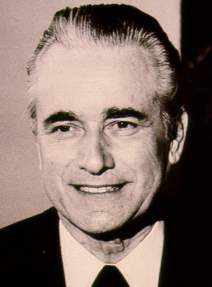
Chaban-Delmas |
Chaban-Delmas, Jacques (Pierre Michel), original surname Delmas (b. March 7, 1915, Paris, France - d. Nov. 10, 2000, Paris), prime minister of France (1969-72). As one of the early members of the Résistance (joined December 1940), he used Chaban as his code name, which he later legally added to his own. He was extremely active in the Résistance, joined the Free French government (October 1943) and rose to become the main liaison officer between the Résistance and the Free French general staff. In that capacity he was able to persuade the Allies to enter Paris rather than bypass it and to persuade the other Résistance leaders to defer any Parisian uprising until the Allies were close enough to be of help. Owing in large part to his efforts, the city was taken with a minimum loss of life. As a reward, Gen. Charles de Gaulle promoted him to general (1944). He ran for deputy to the National Assembly as a Radical Socialist (1946). His war record and affable personality won him easy victories in this and successive elections, and from 1947 to 1995 he also served as mayor of Bordeaux. In 1947 the Gaullist party was founded, and he had to choose between the radicals and the Gaullists. He chose the Gaullists, becoming a major force in their left wing. He was minister of public works (1954-55), minister of state (1956-57), and defense minister (1957-58). He served as general secretary of the (Gaullist) Union of Republicans of Social Action in 1954-58 and became a leader of the (Gaullist) Union for the New Republic. He was president of the National Assembly (1958-69) before he became premier. He became inspector general of finances in 1973, ran unsuccessfully for president in 1974, and served as president of the Regional Council of Aquitaine (1974-79, 1985-88) and again as president of the National Assembly (1978-81, 1986-88). He retired from politics in 1997.
Chabannes-Curton (La Palice), Octave Pierre Antoine Henri, vicomte de (b. May 16, 1803, Paris, France - d. March 7, 1889, Paris), governor of French Guiana (1851-52).
Chabaud-Latour, François (Henri Ernest), baron de (b. Jan. 25, 1801, Nîmes, Gard, France - d. June 10, 1885, Paris, France), interior minister of France (1874-75).
Chabdarov, Boris (Kasimovich) (b. May 9, 1936, Belaya Rechka, Kabardino-Balkar autonomous oblast, Russian S.F.S.R. [now Kabardino-Balkariya republic, Russia] - d. March 2, 2001), chairman of the Presidium of the Supreme Soviet of the Kabardino-Balkar A.S.S.R. (1979-90).
Chabi Kao, Pascal (b. March 10, 1935, Parakou, Dahomey [now Benin] - d. Aug. 5, 2024), finance minister of Dahomey (1967-68, 1970-72). He was also minister of civil service and labour (1965-67).
Chabod, Federico, French Frédéric Chabod (b. Feb. 23, 1901, Aosta, Italy - d. July 13, 1960, Rome, Italy), president of Valle d'Aosta (1946). He was also known as a historian.
Chabrol de Crouzol, Christophe, comte de (b. Nov. 16, 1771, Riom [now in Puy-de-Dôme département], France - d. Oct. 7, 1836, Chabannes, Puy-de-Dôme, France), finance minister of France (1829-30). He was also prefect of Rhône département (1814-15, 1815-17) and minister of marine and colonies (1824-28). He was created comte (count) in 1810.
Chabrol de Volvic, Gilbert Joseph Gaspard, comte de (b. Sept. 25, 1773, Riom [now in Puy-de-Dôme département], France - d. April 30, 1843, Paris, France), prefect of Seine département (1812-15, 1815-30); brother of Christophe, comte de Chabrol de Crouzol.
Chacaltana Reyes, Césareo (b. Feb. 25, 1845, Lima, Peru - d. Nov. 14, 1906, Lima), foreign minister (1886-87, 1893, 1901-02), prime minister (1894, 1901-02), and interior minister (1894) of Peru. He was also acting mayor of Lima (1886), minister to Argentina, Paraguay, and Uruguay (1888-90), Bolivia (1898-1900), and Chile (1900-01), and second vice president (1894-95).
Chacón, Gustavo (b. Aug. 30, 1913, La Paz, Bolivia - d. Oct. 7, 1999), foreign minister of Bolivia (1944-45). He was also economy minister (1943-44).
Chacón (Escamillo), Jesse (Alonso) (b. Nov. 9, 1965, Caracas, Venezuela), interior and justice minister of Venezuela (2004-07). He was also minister of communication and information (2003-04, 2008-09), telecommunications and informatics (2007-08), the secretariat of the presidency (2008), science, technology, and intermediate industries (2009), and electric energy (2013-15) and ambassador to Austria (2016-24).
Chacón (Sánchez de Sotomayor Rodríguez de Rivera), José María, governor of Trinidad (1784-97).
Chacon (Cavalcanti de Albuquerque), Trajano Alipio de Hollanda (b. 1815?, Pilar, Paraíba, Brazil - d. [assassinated] Sept. 5, 1849, Areia, Paraíba), acting president of Paraíba (1839-40).
Chacón Camargo, Alejandro Carlos (b. Oct. 2, 1972, Cúcuta, Norte de Santander, Colombia), Colombian politician. He was president of the Chamber of Representatives (2018-19).
Chacón Málaga, Walter (Gaspar Segundo) (b. June 23, 1944, Ayabaca, Piura, Peru), interior minister of Peru (2000). He was also armed forces commander (2000).
Chacón Piqueras, Carme (María) (b. March 13, 1971, Esplugues de Llobregat, Barcelona province, Spain - d. April 9, 2017, Madrid, Spain), defense minister of Spain (2008-11). She was also minister of housing (2007-08).
Chadayev, Yakov (Yermolayevich) (b. Dec. 10, 1904, Omutninsky zavod, Vyatka province [now Omutninsk, Kirov oblast], Russia - d. Dec. 30, 1985, Moscow, Russian S.F.S.R.), Soviet politician. He was chairman of the State Planning Commission (1938-39, 1950-57) and a deputy premier (1938-39, 1955-57) of the Russian S.F.S.R.

Chaderton |
Chaderton (Matos), Roy (b. Aug. 17, 1942, Caracas, Venezuela), foreign minister of Venezuela (2002-04). He has been ambassador to Gabon (1985-87), Norway (1987-90), Canada (1993-94), the United Kingdom (1996-2000), Colombia (2001-02), France (2004-07), Mexico (2007-08), the Organization of American States (2008-15), and Switzerland (2022- ).
Chadwick (Piñera), Andrés (Pío Bernardino) (b. Jan. 2, 1956, Santiago, Chile), interior minister of Chile (2012-14, 2018-19); cousin of Sebastián Piñera; brother-in-law of José Viera-Gallo Quesney. He was also minister secretary-general of government (2011-12).
Chadwick, Stephen F(owler) (b. Dec. 25, 1825, Middletown, Conn. - d. Jan. 15, 1895, Salem, Ore.), governor of Oregon (1877-78).

J.H. Chafee |
Chafee, John (Lester) H(ubbard) (b. Oct. 22, 1922, Providence, R.I. - d. Oct. 24, 1999, Bethesda, Md.), U.S. politician. He served in the U.S. Marine Corps in World War II. He took part in the invasion of Guadalcanal, one of the largest of the Solomon Islands in the South Pacific. He returned to the military in 1951 to serve during the Korean conflict, and reached the rank of captain. He served in the Rhode Island House (including four years as minority leader) and was elected governor in 1962 by 398 votes. He was reelected in 1964 and 1966. Chafee was appointed secretary of the navy in January 1969, and served in that post for three and a half years. His career in the Senate began in 1976, and he was reelected to a fourth term in 1994. He was the first Republican in decades to be elected to the Senate from Rhode Island. Chafee, a moderate Republican, was one of 10 members of his party in the Senate to vote against impeaching Pres. Bill Clinton in the Monica Lewinsky case. Chafee had a strong environmental record. He was a leading voice in crafting the Clean Air Act of 1990, and later he led successful efforts to enact oil spill prevention and response legislation. He also worked, as a senior member of the Senate Finance Committee, to expand health care coverage for women and children; he was responsible in the 1980s for the huge expansion of Medicaid, the health program for the poor. In March 1999 Chafee announced that he would not seek a fifth term. After his death his son Lincoln was appointed to his seat in November 1999.
Chafee, Lincoln (Davenport) (b. March 26, 1953, Warwick, R.I.), governor of Rhode Island (2011-15); son of John H. Chafee. He was mayor of Warwick in 1992-99 and a U.S. senator in 1999-2007. Originally a Republican, he left the party in 2007, was elected governor as an Independent, joined the Democrats in 2013, and in June-October 2015 was a candidate for the 2016 Democratic presidential nomination.
Chagas, Carlos Pinheiro (b. Feb. 15, 1887, Passa Tempo [then part of Oliveira], Minas Gerais, Brazil - d. June 25, 1932, Belo Horizonte, Minas Gerais), president of Goiás (1930).
Chagas, João Pinheiro (b. Sept. 1, 1863, Rio de Janeiro, Brazil - d. May 28, 1925, Estoril, Portugal), prime minister of Portugal (1911). He was also interior minister (1911, 1915), foreign minister (1911), and minister to France (1912-23).
Chagas, Marcelo Déda (b. March 11, 1960, Simão Dias, Sergipe, Brazil - d. Dec. 2, 2013, São Paulo, Brazil), governor of Sergipe (2007-13). He was also mayor of Aracaju (2001-06).
Chagayev, Igor (Olegovich) (b. June 19, 1987, Labinsk, Krasnodar kray, Russian S.F.S.R.), acting chairman of the government of Yevreyskaya autonomous oblast (2025).
Chagin, Pyotr (Ivanovich), original surname Boldovkin (b. June 9 [May 28, O.S.], 1898, Moscow, Russia - d. Oct. 28, 1967), chairman/executive secretary of the Communist Party committee of the Volga German Workers' Commune (1919-20).

Chagla |
Chagla, Mahomedali Currim (b. Sept. 30, 1900, Bombay [now Mumbai], India - d. Feb. 9, 1981, Bombay), Indian politician. He was chief justice of the Bombay High Court from 1947 to 1958 and a judge to the International Court of Justice at The Hague from 1957 to 1960. He served as ambassador to the U.S., Cuba, and Mexico from 1958 to 1961 and was high commissioner to Britain and ambassador to Ireland from 1962 to 1963. Chagla then became minister of education (1963-66), leader of the Indian delegation to the UN Security Council during the debates on Kashmir (1964-65), and minister for external affairs (1966-67). Serving under Prime Minister Indira Gandhi, he became highly critical of her increasingly authoritarian government. In 1978 he received a National UNESCO Award for Distinguished Service to Human Rights.
Chagula, Wilbert (Kumalija) (b. Feb. 3, 1926, Shinyanga, Tanganyika [now in Tanzania] - d. 2020?), Tanzanian politician. He was minister of water development and power (1970-72), economic affairs and development planning (1972-75), and water, energy, and minerals (1975-77), minister of finance and administration of the East African Community (1977), and permanent representative to the United Nations (1986-89).
Chahed, Youssef (b. Sept. 18, 1975, Tunis, Tunisia), prime minister of Tunisia (2016-20).
Chai Chidchob (b. April 5, 1928, Ban Phia Ram village, Surin province, Siam [now Thailand] - d. Jan. 24, 2020, Buri Ram province, Thailand), Thai politician. He was speaker of the House of Representatives and president of the National Assembly (2008-11).
Chaibo, Mahamat Ismail, Chadian politician. He was minister of territorial administration and autonomous communities (2019-21).
Chaichanok Chidchob (b. July 14, 1990, Buri Ram province, Thailand), Thai politician; grandson of Chai Chidchob; nephew of Saksayam Chidchob. He has been secretary-general of the Bhumjaithai Party (2024- ) and minister of digital economy and society (2025- ).

Chaika |
Chaika, Yury (Yakovlevich) (b. May 21, 1951, Nikolayevsk-na-Amure, Russian S.F.S.R.), plenipotentiary of the president in Severo-Kavkazsky federal district (2020- ). He was also Russian justice minister (1999-2006) and prosecutor general (2006-20).
Chaikasem Nitisiri (b. Aug. 26, 1948), justice minister of Thailand (2013-14).

Chainani | 
Chakhansuri |
Chainani, H(ashmatrai) K(hubchand) (b. Feb. 29, 1904 - d. [following car accident] Nov. 28, 1965, Bombay [now Mumbai], India), acting governor of Maharashtra (1962, 1963). He was chief justice of the Bombay High Court (1958-65).
Chaiyawat Wibulswasdi (b. Sept. 19, 1946), acting finance minister of Thailand (1996). He was also governor of the Bank of Thailand (1997-98).
Chaiyotsombat, Phya, also spelled Jaiyos Sompati, original name Serm Krishnamra (b. 1897 - d. 1978), finance minister of Siam (1936-38).
Chak Sarik (b. 1936, Svay Rieng province, Cambodia), Cambodian politician. He was governor of Kandal (1993-95).
Chaker, Mohamed (b. Dec. 31, 1930, Sfax, Tunisia - d. Nov. 24, 2024), justice minister of Tunisia (1980-84). He was also secretary of state for administrative reform (1979-80).
Chaker, Slim (b. Aug. 24, 1961, Sfax, Tunisia - d. Oct. 8, 2017, Tunis, Tunisia), finance minister of Tunisia (2015-16); son of Mohamed Chaker. He was also minister of youth and sports (2011) and health (2017).
Chakhansuri, (Mohammad) Haroon (b. 1980), acting foreign minister of Afghanistan (2020). He was also minister of mines and petroleum (2020-21).
Chakraborty, Nripen (b. April 4, 1904, Bikrampur, Dacca district, East Bengal [now in Bangladesh] - d. Dec. 25, 2004, Kolkata, West Bengal, India), chief minister of Tripura (1978-88).
Chakraborty, Phani Bhusan (b. Oct. 15, 1898 - d. ...), acting governor of West Bengal (1956). He was chief justice of Calcutta High Court (1952-58).
Chakravarty, Birendra Narayan (b. Dec. 20, 1904, Bogra, India [now in Bangladesh] - d. March 26, 1976, Calcutta [now Kolkata], India), governor of Haryana (1967-76). He was also Indian chargé d'affaires in China (1948), ambassador to the Netherlands (1952-54), high commissioner to the United Kingdom (acting, 1954), Ceylon (1955-56), and Canada (1960-62), and permanent representative to the United Nations (1962-65).
Chakuamba (Phiri), Gwanda(nguluwe Chimkazi) (b. April 5, 1935, Nsanje district, Nyasaland [now Malawi] - d. Oct. 24, 2016, Blantyre, Malawi), Malawian politician. He was minister of community and social development (1964-66), works and supply (1966-67), local government (1967), education (1967-68), natural resources (1968-69), the southern region (1969-73, 1978-80), youth and culture (1973-80), home affairs (1993-94), agriculture, irrigation, and food security (2005), and irrigation and water development (2005) and a presidential candidate (1999, 2004). In 1980 he was imprisoned on political grounds. Released in 1993, he joined the United Democratic Front but months later defected to his old party, the long-ruling Malawi Congress Party. He became vice president of the party and Pres. Hastings Kamuzu Banda's running mate in Malawi's first multiparty elections in 1994. But the MCP lost, although Chakuamba himself was elected member of parliament and became leader of opposition. In 1999 he led the MCP and Alliance for Democracy coalition in the country's second multiparty general elections. The coalition lost narrowly to the UDF. As the next elections approached, leadership wrangles in the MCP with John Tembo led Chakuamba to break away from the party in January 2004 to form his own Republican Party; he came third in the May election. In 2005 he joined the Democratic Progressive Party formed by Pres. Bingu wa Mutharika and served in his cabinet but then broke with him and formed the New Republican Party.

Chakwera |
Chakwera, Lazarus (McCarthy) (b. April 5, 1955, Lilongwe, Nyasaland [now Malawi]), president (2020-25) and defense minister (2020-23) of Malawi. He was an unsuccessful presidential candidate in 2014 and 2019; after the latter vote was annulled, he won in a new election in 2020, but was defeated for reelection in 2025.
Chakyev, Mammetkhan (Berdimyradovich) Turkmen Mämmethan (Berdimyradowiç) Çakyýew (b. 1977, Akkel, Krasnovodsk oblast, Turkmen S.S.R. [now Balkan velayat, Turkmenistan]), interior minister of Turkmenistan (2019-21). He was also chairman of the State Customs Service (2016-17) and a deputy prime minister (2018-19, 2025-26).
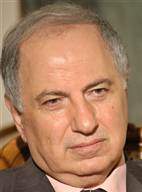
Chalabi |
Chalabi, Ahmad, Arabic in full Ahmad `Abd al-Hadi al-Jalabi (b. Oct. 30, 1944, Baghdad, Iraq - d. Nov. 3, 2015, Baghdad), president of the Governing Council of Iraq (2003); son-in-law of Adel Osseiran. His father and brother served as ministers under the Hashemite monarchy, which was overthrown by a military coup in 1958, prompting his family to leave Iraq. Chalabi lived in the United States and Lebanon before moving to Jordan, where he established the Petra Bank in 1977. After he was deposed from the bank in 1989 by military decree, a Jordanian court in 1992 sentenced him in absentia to 22 years in jail for allegedly absconding with funds estimated at $22 million. Chalabi claimed this was a political sentence, the result of King Hussein's desire to improve relations with Iraqi president Saddam Hussein. Chalabi had become more and more involved with the Iraqi opposition in exile. After leaving Jordan, Chalabi resided in London and became a British citizen. He became head of the Iraqi National Congress (INC), an umbrella organization of exiled opposition groups, which was established in 1992 and received heavy funding from the U.S. When a U.S.-led coalition occupied Iraq in 2003, Chalabi returned to Baghdad and was installed as a member of the Governing Council. A raid by U.S. forces on Chalabi's Baghdad home in May 2004 indicated that the U.S. was giving up on its formerly close partner. U.S. funding for the INC was abruptly cut. In June the U.S. accused Chalabi of having told an Iranian intelligence officer that the U.S. had cracked the secret signals code used by Tehran's intelligence service. Chalabi denied the charge. On Sept. 1, 2004, he survived an assassination attempt while on his way to the inaugural meeting of the country's new interim National Council. He was deputy prime minister (2005-06) and acting oil minister (2005) in Ibrahim al-Jaafari's government.
Chalandon, Albin (b. June 11, 1920, Reyrieux, Ain, France - d. July 29/30, 2020), justice minister of France (1986-88). He was also general secretary of the Union for the New Republic (1959) and minister of industry (1968) and housing and equipment (1968-72).
Chalbaud Cardona (Dávila), Antonio (b. June 4, 1888, Mérida, Venezuela - d. July 6, 1987, Caracas, Venezuela), war and navy minister of Venezuela (1935-36, 1941-42). He was also ambassador to France (1950-53).
Chalbaud Zerpa, Reinaldo (José) (b. Jan. 25, 1935, Mérida, Venezuela), justice minister of Venezuela (1981-84). He was also governor of Mérida (1979-81).
Chalerm Yubamrung, also spelled Yoobamrung (b. June 10, 1947, Bangkok, Thailand), justice minister (1995-96), interior minister (2008), and a deputy prime minister (2011-13) of Thailand. He was also a minister attached to the Prime Minister's Office (1988-90) and minister of public health (2008) and labour (2013-14).
Chalermphan Srivikorn (b. Nov. 10, 1936, Nakhon Ratchasima, Siam [now Thailand] - d. May 20, 2011, Bangkok, Thailand), a deputy prime minister of Thailand (1990-91).
Chalghoum, (Mohamed) Ridha (b. Jan. 17, 1962, Gafsa, Tunisia), finance minister of Tunisia (2010-11, 2017-20). He was also acting minister of development, investment, and international cooperation (2019-20).
Chalid, (Kiai) Idham (b. Aug. 27 [by other sources Jan. 5], 1922 [or 1921], Satui, Netherlands East Indies [now in Kalimantan Selatan, Indonesia] - d. July 11, 2010, Jakarta, Indonesia), a deputy prime minister of Indonesia (1956-59, 1966). He was also first minister (1966-67) and coordinating minister (1967-71) for people's welfare, acting minister of social affairs (1970-71), speaker of the People's Representative Council and People's Consultative Assembly (1971-77), and chairman of the Supreme Advisory Council (1978-83).
Chalk, Alex(ander John Gervase) (b. Aug. 8, 1976, London, England), British justice secretary (2023-24).
Chalkiopoulos, Panagiotis (d. 1880), justice minister of Greece (1873-74).
Challemel-Lacour, Paul Armand (b. May 19, 1827, Avranches, Manche, France - d. Oct. 26, 1896, Paris, France), foreign minister of France (1883). He was also prefect of Rhône département (1870-71), ambassador to Switzerland (1879-80) and the United Kingdom (1880-82), and president of the Senate (1893-96).
Challet-Venel, Jean-Jacques (b. May 11, 1811, Geneva, France [now in Switzerland] - d. Aug. 6, 1893, Geneva), president of the Council of State of Genève (1861-62, 1863-64) and finance minister of Switzerland (1864-67, 1869). He was also minister of posts (1868, 1870-72).
Chalmers, Frederick Roydon, Roydon also spelled Royden (b. Jan. 4, 1881, Brighton, Tasmania - d. [executed by Japanese occupation authorities] March 25, 1943, Nauru [now Naoero]), administrator of Nauru (1938-42).
Chalmers, René (b. May 30, 1909, Port-au-Prince, Haiti - d. Jan. 9, 1980, Port-au-Prince), foreign minister of Haiti (1961-71). He was also ambassador to the United States (1971-73).
Chalmers, Robert Chalmers, (1st) Baron (b. Aug. 18, 1858 - d. Nov. 17, 1938), governor of Ceylon (1913-15). He was knighted in 1908 and created baron in 1919.
Chalobah, Melvin (Humpah) (b. June 9, 1943 - d. March 25, 2019, California), foreign minister of Sierra Leone (1996). He was also ambassador to Ethiopia (2001-06) and high commissioner to the United Kingdom (2006-10).
Chalongphob Sussangkarn (b. April 10, 1950, Bangkok, Thailand - d. Aug. 23, 2024), finance minister of Thailand (2007-08).
Chalvet, Jean (Victor Louis Joseph) (b. June 15, 1893, Tours, Indre-et-Loire, France - d. July 28, 1975), acting governor of Mauritania (1942-44) and governor of French Somaliland (1944-46) and Oubangui-Chari (1946-48).
Chaly, Aleksey (Mikhailovich) (b. June 13, 1961, Sevastopol, Crimea oblast, Ukrainian S.S.R.), mayor (2014) and acting governor (2014) of Sevastopol.
Cham, Momodou Cadi (b. Aug. 19, 1938, Basse, Gambia - d. Nov. 28, 2025), finance and trade minister of The Gambia (1978-81). He was also minister of education, youth, and sports (1972-77), economic planning and industrial development (1977-78), and works and communications (1987-90).
Chamant, Jean (b. Nov. 23, 1913, Chagny, Saône-et-Loire, France - d. Dec. 22, 2010, Paris, France), French minister of transports (1967-69, 1971-72) and president of the Regional Council of Bourgogne (1974-78).
Chamba, Samson (Yakovlevich) (b. June 18 [June 6, O.S.], 1886, Atara, Sukhumi okrug, Kutaisi province, Russia [now in Abkhazia, Georgia] - d. 1937), chairman of the Central Executive Committee of Abkhazia (1925-30). He was also people's commissar of education (1922-25, 1930-32).
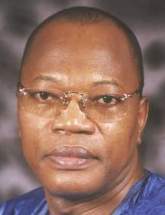
Chambas | 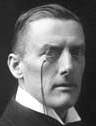
Austen Chamberlain |
Chambas, Mohamed Ibn (b. Dec. 7, 1950, Ghana), executive secretary (2002-06) and president of the Commission (2007-10) of the Economic Community of West African States and secretary-general of the African, Caribbean and Pacific Group of States (2010-13). He was also UN special representative for Darfur (2012-14) and West Africa and the Sahel (2014-21).
Chamberlain, Abiram (b. Dec. 7, 1837, Colebrook, Conn. - d. May 15, 1911, Meriden, Conn.), governor of Connecticut (1903-05).
Chamberlain, Sir (Joseph) Austen (b. Oct. 16, 1863, Birmingham, Warwickshire, England - d. March 16, 1937, London, England), British chancellor of the exchequer (1903-05, 1919-21), foreign secretary (1924-29), and first lord of the Admiralty (1931); knighted 1925; son of Joseph Chamberlain. He was also postmaster general (1902-03), secretary of state for India (1915-17), leader of the Conservative Party (1921-22), and lord privy seal (1921-22). He won the 1925 Nobel Peace Prize jointly with Charles G. Dawes.
Chamberlain, Daniel H(enry) (b. June 23, 1835, West Brookfield, Mass. - d. April 13, 1907, Charlottesville, Va.), governor of South Carolina (1874-76).
Chamberlain, George E(arle) (b. Jan. 1, 1854, Natchez, Miss. - d. July 9, 1928, Washington, D.C.), governor of Oregon (1903-09). He was also a U.S. senator from Oregon (1909-21).
Chamberlain, Joseph, byname Joe Chamberlain (b. July 8, 1836, London, England - d. July 2, 1914, London), British politician. He was mayor of Birmingham (1873-76), president of the Board of Trade (1880-85) and of the Local Government Board (1886), and secretary of state for the colonies (1895-1903).
Chamberlain, Joshua L(awrence) (b. Sept. 8, 1828, Brewer, Maine - d. Feb. 24, 1914, Portland, Maine), governor of Maine (1867-71). He was renowned as a hero of the Battle of Gettysburg (1863).
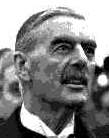
N. Chamberlain |
Chamberlain, (Arthur) Neville (b. March 18, 1869, Birmingham, Warwickshire, England - d. Nov. 9, 1940, Heckfield, near Reading, Hampshire, England), British prime minister (1937-40). The younger half-brother of Sir Austen Chamberlain, he was chosen lord mayor of Birmingham in 1915. In December 1916 he joined David Lloyd George's government as director general of national service but resigned in August 1917. A Conservative member of the House of Commons from December 1918, he served as postmaster general (1922-23), paymaster general of the armed forces (1923), minister of health (1923, 1924-29, 1931), and chancellor of the exchequer (1923-24, 1931-37). He became prime minister on May 28, 1937. On three occasions in September 1938, he went to Germany in efforts to prevent the outbreak of a general European war over Adolf Hitler's demand that Czechoslovakia cede the Sudetenland to Germany. By the Munich Agreement of September 30, he and French premier Édouard Daladier granted almost all of Hitler's demands and left Czechoslovakia defenseless. When Hitler seized the rest of Czechoslovakia (March 10-16, 1939), Chamberlain definitely repudiated appeasement and soon published Anglo-French guarantees of armed support for Poland, Romania, and Greece in the event of similar attacks. When the Germans attacked Poland (Sept. 1, 1939), he countered with a British declaration of war (September 3). After the failure of a British expedition to Norway in April 1940, he lost the support of many Conservatives in the Commons, and he resigned on May 10. In Winston Churchill's government he served loyally as lord president of the council until Sept. 30, 1940, when ill health forced him to resign that office and the Conservative Party leadership. He died a few weeks later.
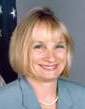
Chamberlin |
Chamberlin, Wendy (Jean) (b. Oct. 12, 1948, Bethesda, Md.), acting UN high commissioner for refugees (2005). She was U.S. ambassador to Laos (1996-99) and Pakistan (2001-02).
Chambers, Anne Cox, née Cox (b. Dec. 1, 1919, Dayton, Ohio - d. Jan. 31, 2020, Atlanta, Ga.), U.S. diplomat; daughter of James M. Cox. She was ambassador to Belgium (1977-81).
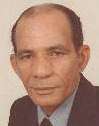
G. Chambers |
Chambers, George (Michael) (b. Oct. 4, 1928, Trinidad - d. Nov. 4, 1997, Port-of-Spain, Trinidad), prime minister of Trinidad and Tobago (1981-86). After entering politics in 1966, he held at different times the portfolios of finance, public utilities and housing, national security, education, industry and commerce, and agriculture, lands, and fisheries. Though his political career was not always smooth - Prime Minister Eric Williams once removed him from office as minister of finance - he never lost support within the party. Chambers was appointed to the top post after Williams died in office in March 1981. Not associated with the racial politics that had in the past been a divisive influence in Trinidad, Chambers typified the nationalistic yet broadly socialist approach of his party, the People's National Movement (PNM), by offering every encouragement to private enterprise while maintaining social welfare programs and a substantial state sector. Unlike his predecessor, he was eager to convene a Caribbean heads-of-government meeting to try to solve major regional differences of opinion. Using his self-effacing style to brilliant effect, he won a startling election victory on Nov. 9, 1981, but he suffered a landslide defeat in 1986 after suggesting the country seek aid from the International Monetary Fund to diversify the economy. "The fete is over," he often warned of the oil boom that transformed Trinidad and Tobago into by far the Caribbean's richest country in the 1970s, but led to its decline in the early 1980s. Two years after Chambers' party was defeated, his successor secured loans from the IMF for more than $200 million. By then, the price of a barrel of oil had plummeted and the country was deeply in debt.
Chambers, Jack (b. 1990, Galway, Ireland), finance minister of Ireland (2024-25). He has also been minister of public expenditure, infrastructure, public service reform, and digitalisation (2025- ).
Chambers, John (b. Oct. 6, 1780, Bromley Bridge, N.J. - d. Sept. 21, 1852, Paris, Ky.), governor of Iowa (1841-45). He was also a U.S. representative from Kentucky (1828-29, 1835-39).
Chambon, Jean (Georges) (b. Oct. 1, 1896, Nantiat, Haute-Vienne, France - d. June 3, 1965, Paris, France), governor of Dahomey (1948), commissioner of French India (1949-50), and lieutenant governor of Middle Congo (1952-53).
Chami, Saade, Arabic Saadeh al-Shami, deputy prime minister of Lebanon (2021-25).
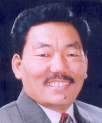
Chamling | 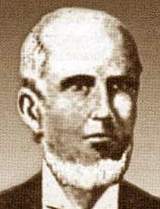
P.J. Chamorro |
Chamling, Pawan (Kumar) (b. Sept. 22, 1950, Yangang, Sikkim [now in India]), chief minister of Sikkim (1994-2019).
Chamlong Srimuang (b. July 5, 1935, Thonburi, Siam [now part of Bangkok, Thailand]), a deputy prime minister of Thailand (1994-95). He was also governor of Bangkok (1985-92) and leader of the Palang Dharma Party (1988-92, 1994-95).
Chammas, Souheil (b. 1929, Lebanon), Lebanese diplomat. He was chargé d'affaires at the United Nations (1965-66, 1966-67, 1968) and ambassador to (West) Germany (1985-93).
Chamnannitikasetra, Luang, also called Uthai Saengmanee, justice minister of Thailand (1946). He was also ambassador to West Germany (1953-59).
Chamorro (Barrios), Claudia (Lucía) (b. March 7, 1953, Rivas, Nicaragua), Nicaraguan diplomat; daughter of Violeta Barrios de Chamorro; sister of Pedro Joaquín Chamorro Barrios; wife of Edmundo Jarquín. She was ambassador to Costa Rica (1986-88).
Chamorro (Pérez), Fruto, original name Fruto Pérez (b. Oct. 20, 1804, New Spain [in present Guatemala] - d. March 12, 1855, Granada, Nicaragua), director (1853-54) and president (1854-55) of Nicaragua.
Chamorro (Alfaro), Pedro Joaquín (b. June 29, 1818, Granada, New Spain [now in Nicaragua] - d. June 7, 1890, Granada), president of Nicaragua (1875-79); half-brother of Fruto Chamorro.
Chamorro (Oreamuno), Rosendo (b. 1862 - d. 1947), interior and justice minister (1922-23) and acting president (1923) of Nicaragua; brother-in-law of Carlos José Solórzano.

V.B. de Chamorro |
Chamorro, Violeta Barrios (Torres) (viuda) de (b. Oct. 18, 1929, Rivas, Nicaragua - d. June 14, 2025, San José, Costa Rica), president of Nicaragua (1990-97). Doña Violeta, as she was respectfully called, was catapulted into politics on Jan. 10, 1978, when her husband, Pedro Joaquín Chamorro Cardenal, was assassinated by henchmen of dictator Anastasio Somoza. Chamorro Cardenal was a prominent Conservative opposition figure and editor of the family-owned daily La Prensa. His murder galvanized moderate forces in Nicaragua against Somoza and thus helped lead to the triumph of the Sandinistas in 1979. Violeta Chamorro served on the post-Somoza five-person revolutionary junta from July 1979. Citing ill health, she resigned in April 1980 and quickly turned La Prensa into a voice for those opposed to the government of Daniel Ortega. From then on, the paper was at the centre of controversy about the press, the contra rebels, and efforts to overthrow the Nicaraguan government. She became the official presidential candidate of the 14-party anti-Sandinista coalition, the National Opposition Union (UNO), on Sept. 2, 1989. She and UNO were closely identified with the U.S. and the contras. She belonged to no political party and had never run for political office, yet she carried the mantle of her late husband. The U.S. having made clear that it would continue contra funding if the result were otherwise, she handily defeated Ortega in the Feb. 25, 1990, election.
Chamorro Barrios, Pedro Joaquín (b. Sept. 24, 1951, Managua, Nicaragua), defense minister of Nicaragua (1998-99); son of Violeta Barrios de Chamorro. He was also ambassador to Taiwan (1990-92) and minister of tourism (1997-98).
Chamorro Bolaños, Diego Manuel (b. Aug. 9, 1861, Nandaime, Granada department, Nicaragua - d. Oct. 17, 1923, Managua, Nicaragua), president of Nicaragua (1921-23); son of Pedro Joaquín Chamorro. He was also foreign minister (1911-17), education minister (1912-17), and minister to the United States (1918-21).
Chamorro Mora, Javier (b. Oct. 7, 1945), Nicaraguan diplomat. He was ambassador to the Dominican Republic (1979) and Costa Rica (1980-81) and permanent representative to the United Nations (1981-85).
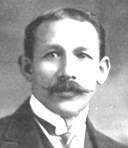
E. Chamorro |
Chamorro Vargas, Emiliano, original name Emiliano Vargas, byname Lion of Nicaragua, Spanish León de Nicaragua (b. May 11, 1871, Acoyapa, Nicaragua - d. Feb. 26, 1966, Managua, Nicaragua), president of Nicaragua (1917-21). He early became an opponent of the regime of José Santos Zelaya. From 1893 on, he organized and was active in many of the revolts against this regime. He served as representative in Washington (1913-16 and 1921-23) and signed the Bryan-Chamorro Treaty (1914), which, in part, gave the United States the right in perpetuity to build an interoceanic canal across Nicaragua in exchange for foreign aid amounting to $3,000,000. In 1926 Chamorro seized the government from Pres. Carlos Solorzano but was forced to resign when neither the United States nor other Central American countries recognized his government. In 1949 Chamorro returned from exile and, having lost the 1950 presidential election to Anastasio Somoza, worked with Somoza on the writing of a new constitution that guaranteed a percentage of government positions to Conservatives. Chamorro also prevented the incumbent president from succeeding himself. Somoza's threatened repudiation of the pact, as well as his increasingly dictatorial rule, brought about an assassination attempt in 1954. Chamorro was convicted of complicity and temporarily exiled. He was president for life of Nicaragua's Conservative Party.
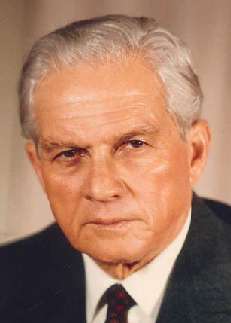
C. Chamoun |
Chamoun, Camille (Nimer), Chamoun also spelled Sham'un (b. April 3, 1900, Dayr al-Qamar, Lebanon - d. Aug. 7, 1987, Beirut, Lebanon), president of Lebanon (1952-58). He was a member of a political faction known as the Constitutional Bloc, a predominantly Christian group that emphasized its Arabic heritage in an attempt to establish a rapport with the Muslim groups. By the late 1940s he had emerged as one of the bloc's most prominent members. He was minister of finance (1938, 1946-47), interior (1943-44, 1947-48), posts and telegraphs (1943-44), and public health (1947-48), minister to the United Kingdom (1944-46), and representative to the United Nations (1948). When his expectations of succeeding Béchara El-Khoury as president of Lebanon were denied in 1948 by a renewal of Khoury's term, he began to organize a parliamentary opposition. By the summer of 1952 he had made an alliance with Kamal Jumblatt, leader of the Progressive Socialist Party, and had won extensive support throughout the country. That September a general strike forced Khoury's resignation, and Chamoun was elected president. He reorganized governmental departments in an attempt to realize a more efficient administration. He faced a crisis in 1956 when Muslim leaders demanded that he break relations with Britain and France, which had just attacked Egypt over rights to the Suez Canal. He not only refused to do this but also named a pro-Western foreign minister. In May 1958 armed rebellion broke out in Beirut, supported mostly by Muslim elements. He appealed to the United States for aid, and U.S. marines landed near Beirut in July, ending the military threat to the government. Demands persisted that he resign; he refused but did not seek a second term. After a brief retirement he was elected to parliament in 1960. When civil war erupted in 1975, he became involved in defending Lebanon against Syrian intervention and held again a succession of ministerial posts, including interior (1975-76), foreign affairs (1976), and finance, housing, and cooperatives (1984-87).
Chamoun, Tracy (Patricia) (b. Oct. 22, 1960), Lebanese diplomat; granddaughter of Camille Chamoun. She was ambassador to Jordan (2017-20).

Champagne |
Champagne, François-Philippe (b. June 25, 1970, Greenfield Park, Que.), foreign minister (2019-21) and finance minister (2025- ) of Canada. He has also been minister of international trade (2017-18), infrastructure and communities (2018-19), innovation, science, and industry (2021-25), and national revenue (2025- ).
Champion, Herbert William (b. Aug. 8, 1880, Kaiapoi, Canterbury, N.Z. - d. May 12, 1972, Sydney, N.S.W.), acting lieutenant governor of Papua (1940).
Champion, John Stuart (b. May 17, 1921 - d. April 18, 1994), British resident commissioner of the New Hebrides (1975-78); son of Sir Reginald Champion.
Champion, Sir Reginald (Stuart) (b. March 21, 1895 - d. Oct. 9, 1982), governor of Aden (1945-50); knighted 1946.
Champon, Michel (b. March 18, 1952, Lyon, France), administrator-superior of the French Southern and Antarctic Lands (2005-07).
Champy, Aimé (Ernest Justin) (b. April 13, 1837, Pointe-à-Pitre, Guadeloupe - d. ...), commandant of Nossi-Bé (1869-70).
Chamran (Savehi), Mostafa (b. March 8, 1933, Tehran, Persia [now Iran] - d. [killed in war with Iraq] June 21, 1981, Khuzestan, Iran), defense minister of Iran (1979-80). He was also deputy prime minister (1979).
Chamras Mangkalarat (b. July 9, 1921, Ratchaburi province, Siam [now Thailand]), justice minister of Thailand (1988-90). He was also a minister attached to the Prime Minister's Office (1990-91).
Chamroon Netisatr, Luang, also called Chamroon Poshyananda (b. April 7, 1902, Bangkok, Siam [now Thailand] - d. 1975), justice minister of Thailand (1969-71). He was also president of Thammasat University (1957-60) and president of the Supreme Court (1959-62).
Chan, (James) Byron (b. June 13, 1969), Papua New Guinean politician; son of Sir Julius Chan. He was minister of mining (2011-17).

J. Chan |
Chan, Sir Julius (b. Aug. 29, 1939, Tanga island, New Ireland district, New Guinea [now in New Ireland province, Papua New Guinea] - d. Jan. 30, 2025, Huris, New Ireland), prime minister (1980-82, 1994-97) and foreign minister (1994-96) of Papua New Guinea. He joined the Australian administration that ran Papua New Guinea until 1975. He was first elected to the Legislative Council in 1968. He was finance minister in 1972-77. In July 1977, he contested the first post-independence election as leader of the People's Progress Party and became deputy prime minister and minister of primary industry. But in 1978 he withdrew his party from the government after a dispute with Prime Minister Sir Michael Somare. In 1980, Chan was made a knight commander of the civil division by Britain's Queen Elizabeth for his work in administering his country. Ignoring the hint that knighthood implied retirement from active politics, in March 1980 he defeated Somare on the floor of parliament and became prime minister. Chan was defeated by Somare in a general election in 1982. Later he was deputy prime minister (1985-88, 1992-94) and minister of finance and planning (1985-86, 1992-94) and trade and industry (1986-88). He was reelected prime minister in August 1994 on a dual platform - ensuring national security and ending economic mismanagement. In 1997 he hired Sandline International mercenary soldiers to fight on Bougainville in order to end the long-running secessionist crisis. Disgruntled Papua New Guinean soldiers, who had been fighting in Bougainville for 9 years and who were fed up with low pay and poor conditions, triggered civil unrest. Although he survived a vote asking him to stand aside, Chan did so after politicians were blockaded inside Parliament House by protesters. He called elections and set up a commission of inquiry. When the commission cleared Chan of corrupt practices and illegal actions, he resumed office, but in the ensuing elections, he lost his seat and was succeeded as prime minister by Bill Skate. In 2007 he became governor of New Ireland.
Chan, Kenneth (b. March 12, 1944), administrator of the Cocos Islands (1983-85).
Chan, Laurie (Hok Si) (b. April 6, 1965), finance minister (2002), foreign minister (2002-06), and justice minister (2009-10) of the Solomon Islands; son of Sir Thomas Chan. In 2011-14 he was ambassador to Taiwan.
Chan, Sir Thomas (Koh), byname Sir Tommy Chan, Solomon Islands politician; knighted 2004. He was minister of forestry, environment, and conservation (2000-01).
Chan Choong Tak, Tan Sri (b. May 2, 1933, Seremban, Negeri Sembilan, Federated Malay States [now in Malaysia] - d. Sept. 3, 2018), Malaysian politician. He was president of the Dewan Negara (1990-92). He was awarded the titles Dato' (1989) and Tan Sri (1992).
Chan Chun Sing (b. 1969), defense minister of Singapore (2025- ). He was also army chief (2010-11), minister of community development, youth, and sports (acting, 2011-12), social and family development (2012-15), trade and industry (2018-21), and education (2021-25), minister in the prime minister's office (2015-18), and secretary-general of the National Trades Union Congress (2015-18).
Chan Heng Chee (b. April 19, 1942, Singapore), Singaporean diplomat. She was permanent representative to the United Nations (1989-91) and ambassador to the United States (1996-2012).
Chan Nak (b. May 27, 1892, Phnom Penh, Cambodia - d. Nov. 7, 1954, Paris, France), prime minister of Cambodia (1953-54). He was also minister of justice (1945, 1945-46, 1950), interior (1953-54), and information (1953-54). He led the Cambodian delegation to the Paris conference between France and the three states of Indochina which was opened in August 1954 to revise their relationships.
Chan Phin (b. 1930, Svay Rieng province, Cambodia), finance minister of Kampuchea (1979-86). He was also minister of industry (1991-93).
Chan Sy (b. 1932, Kompong Chhnang province, Cambodia, French Indochina - d. Dec. 26, 1984, Moscow, U.S.S.R.), prime minister of Cambodia (1981-84). Chan Sy, who joined the Khmer Viet Minh forces in 1950, left Cambodia in 1954 after the Geneva Conference of that year recognized Prince Norodom Sihanouk's government as the sole legitimate authority in independent Cambodia. A member of the Communist Party from 1960, Chan Sy was believed to have returned in 1970 after the coup that ousted Sihanouk and placed the pro-U.S. Lon Nol in power. Chan Sy, who was opposed to the ultranationalist Pol Pot, by whose partisans he was detained in 1973, next appeared on the scene in 1978, with the forces of the Kampuchean United Front for National Salvation that with Vietnamese support penetrated into eastern Cambodia in December of that year. After some months' military training in the U.S.S.R., in 1980 he was appointed deputy defense minister and the following year defense minister and vice-president of the Council of Ministers; the same year he also became a member of the Politburo of the People's Revolutionary (Communist) Party of Kampuchea. When his predecessor, Pen Sovan, was dismissed from office in December 1981, Chan Sy became acting premier and he was confirmed in February 1982. Considered a steadfast adherent of Vietnam's Kampuchean policy, Chan Sy made visits to Bulgaria and East Germany as well as to the U.S.S.R. In the National Assembly he represented his native province.
Chan Valverde, Maritza, Costa Rican diplomat. She was permanent representative to the United Nations (2022-26).
Chana, Pindi (Hazara) (b. Jan. 24, 1974), Tanzanian politician. She was minister of natural resources and tourism (2022-23, 2024-25), culture, arts, and sports (2023), and constitution and legal affairs (2023-24).
Chance, Leo A(lphons) I(gnatius) (b. Nov. 8, 1932, Saba), acting prime minister of the Netherlands Antilles (1977). He was minister of communications and transport (1969-73, 1986-88, 1993-94), justice (1976-79, 1986-88), development cooperation (1982-84), and labour and social affairs (1984-85) and deputy prime minister (1976-79, 1986-88, 1993-94).
Chancellor, Sir John Robert (b. Oct. 20, 1870, Edinburgh, Scotland - d. July 31, 1952, Shieldhill, Lanarkshire, Scotland), governor of Mauritius (1911-16), Trinidad and Tobago (1916-21), and Southern Rhodesia (1923-28) and high commissioner of Palestine (1928-31); knighted 1913.
Chanchai Likhitjitta (b. April 25, 1946 - d. Jan. 17, 2017, Bangkok, Thailand), justice minister of Thailand (2006-08). He was also president of the Supreme Court (2005-06).
Chand, Jayant, Nepalese politician; son of Lokendra Bahadur Chand. He was minister of commerce (2016) and supplies (2017-18).
Chand, Krishan (b. 1918? - d. [suicide] July 9, 1978, New Delhi, India), lieutenant governor of Delhi (1974-77).

L.B. Chand |
Chand, Lokendra Bahadur (b. Feb. 15, 1940, Kurkutia village, Baitadi district, Far Western region, Nepal), prime minister of Nepal (1983-86, 1990, 1997, 2002-03). He was also chairman of the National Panchayat (1980-81).
Chanderli, Abdelkader (b. 1915, N'Gaous, Algeria - d. 1993), Algerian diplomat. He was permanent representative to the United Nations (1962-64).
Chandernagor, André (b. Sept. 19, 1921, Civray, Vienne, France - d. Nov. 18, 2025, Aubusson, Creuse, France), president of the Regional Council of Limousin (1974-81). He was also first president of the Court of Accounts of France (1983-90).
Chandisingh, Ranji (b. Jan. 5, 1930 - d. June 15, 2009, North Cummingsburg, Guyana), Guyanese politician. He was minister of labour, health, and housing (1961-64), higher education (1980-82), and education, social development, and culture (1982-84), vice president for national development and a deputy prime minister (1984-89), and ambassador to the Soviet Union (1989-91).
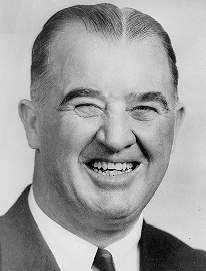
A.B. Chandler |
Chandler, A(lbert) B(enjamin), byname Happy Chandler (b. July 14, 1898, Corydon, Ky. - d. June 15, 1991, Versailles, Ky.), governor of Kentucky (1935-39, 1955-59). The Democrat served in his native state as senator, lieutenant governor, and governor before moving to the U.S. Senate (1939-45). He then was baseball commissioner (1945-51). When he was unable to secure the necessary votes for reelection as commissioner, he returned to politics. In 1948 he embraced the Dixiecrats, a Southern splinter group that broke with the Democratic Party and supported a segregationist presidential nominee, Strom Thurmond. In his second term as governor, though, he used National Guard troops to enforce integration in schools in two Kentucky towns. In 1968, in another apparent turnabout, he sought the vice presidential nomination on George Wallace's third-party presidential ticket even though Wallace was an avowed segregationist. He was inducted into the National Baseball Hall of Fame in 1982.
Chandler, Edward Barron (b. Aug. 22, 1800, Amherst, Nova Scotia - d. Feb. 6, 1880, Fredericton, N.B.), lieutenant governor of New Brunswick (1878-80).

S. Chandler |
Chandler, Steven (Clive) (b. March 16, 1968), administrator of Ascension (2019-20). He was also acting British high commissioner to Fiji (2013).
Chandler, William E(aton) (b. Dec. 28, 1835, Concord, N.H. - d. Nov. 30, 1917, Concord), U.S. secretary of the navy (1882-85); son-in-law of John Parker Hale. He was also a U.S. senator from New Hampshire (1887-89, 1889-1901).
Chandler, Zachariah (b. Dec. 10, 1813, Bedford, N.H. - d. Nov. 1, 1879, Chicago, Ill.), mayor of Detroit (1851-52) and U.S. secretary of the interior (1875-77). He was also a U.S. senator from Michigan (1857-75, 1879) and chairman of the Republican National Committee (1876-79).
Chandra (Saxena), Naresh (b. Aug. 1, 1934, Allahabad, United Provinces [now Prayagraj, Uttar Pradesh], India - d. July 9, 2017, Dona Paula, Goa, India), governor of Gujarat (1995-96); brother of Girish Chandra Saxena. He was also Indian defense secretary (1989-90), home secretary (1990), cabinet secretary (1990-92), and ambassador to the United States (1996-2001).
Chandra, Satish (b. Sept. 1, 1924, Bulandshahr, United Provinces of Agra and Oudh [now in Uttar Pradesh], India), acting governor of West Bengal (1984). He was chief justice of Allahabad High Court (1978-83) and Calcutta High Court (1983-86).
Chandrakanthan, Sivanesathurai, byname Pillayan (b. Aug. 18, 1975, Pethalai, Kalkuda, Batticaloa district, Sri Lanka), chief minister of Eastern province, Sri Lanka (2008-12).
Chandran, Tumkur Ramaiya Satish (b. April 14, 1929, Mysore state [now Karnataka], India - d. Sept. 10, 2009, Bangalore [now Bengaluru], India), governor of Goa (1998). He was also principal secretary to the prime minister of India (1996-97).
Chandrawati (b. Sept. 3, 1928, Dalavas village [now in Bhiwani district, Haryana], India - d. Nov. 15, 2020, Rohtak, Haryana, India), lieutenant governor of Pondicherry (1990).
Chandy, Kizhakeyil Mathai (b. Aug. 6, 1921, Palai [now in Keralam], India - d. Sept. 7, 1998, Kochi, Kerala), lieutenant governor of Pondicherry (1982-83) and governor of Gujarat (1983-84) and Madhya Pradesh (1984-89).

O. Chandy |
Chandy, Oommen (b. Oct. 31, 1943, Kumarakom [now in Keralam], India - d. July 18, 2023, Bengaluru, India), chief minister of Kerala (2004-06, 2011-16).
Chanel, Marc Émile (Charles Jean) (b. Sept. 6, 1882, Bourg-en-Bresse, Ain, France - d. Jan. 14, 1943, Paris, France), governor of French Guiana (1923-26).
Chaney, Sir Fred(erick Charles) (b. Oct. 12, 1914, Fremantle, Western Australia - d. Dec. 17, 2001, Perth, Western Australia), administrator of the Northern Territory (1970-73) and lord mayor of Perth (1978-82); knighted 1982.
Chanfi, Issimail (b. 1962), Comorian diplomat. He has been permanent representative to the United Nations (2020- ).
Chang, John H.: see Chiang, John H.
J.A. Chang | 
S. Chang | 
Chang Chun-hsiung |
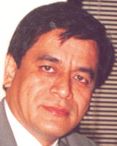
Chang (Escobedo), José Antonio (b. May 19, 1958, Lima, Peru), prime minister of Peru (2010-11). He has also been minister of education (2006-11, 2026- ).
Chang, Simon, or Chang San-cheng, Pinyin Zhang Shanzheng (b. June 24, 1954, Taipei, Taiwan), premier of Taiwan (2016). He has also been minister without portfolio (2012-14), minister of science and technology (2014), vice premier (2014-16), and mayor of Taoyuan (2022- ).
Chang Chun-hsiung, Pinyin Zhang Junxiong (b. March 23, 1938, Chiayi, Taiwan - d. Sept. 27, 2025), premier of Taiwan (2000-02, 2007-08). He resigned as Pres. Chen Shui-bian's second premier in 2002 after opposition lawmakers forced him to cancel plans to scrap construction of a nuclear power plant. He later (2005-07) chaired Taiwan's quasi-official Straits Exchange Foundation, which handles relations with China such as visitor permits. In 2007 Chen (for whom he was twice campaign manager) put him in the premier's seat for a second time. He was also vice-premier (2000), secretary-general to the president (2000), and secretary-general of the Democratic Progressive Party (2002-05).
Chang Dae Whan |
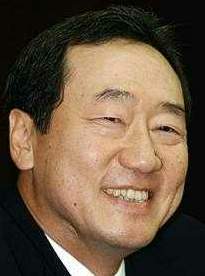
Chang Dae Whan (b. March 21, 1952, Seoul, South Korea), acting prime minister of South Korea (2002). He became the second prime minister to be rejected by parliament in a month, after the earlier rejection of Chang Sang (no relation). The vote came after a grueling two-day confirmation hearing in which he acknowledged that he had evaded taxes but said it was an oversight.
Chang Do Yung (b. Jan. 23, 1923, Yongchun, Korea [now in South Korea] - d. Aug. 3, 2012, Florida), chief cabinet minister and defense minister of South Korea (1961). He was army chief of staff and became head of government after the military coup of 1961. He was sentenced to death in January 1962 on charges of attempting to block the coup but was released in May and then moved to the U.S.
Chang Feng-hsu (b. Aug. 5, 1928, Wandan township, Pingtung county, Taiwan - d. June 1, 2014, Taipei, Taiwan), interior minister of Taiwan (1976-78). He was also mayor of Taipei (1972-76), a minister without portfolio (1978-90), and president of the Chinese Taipei Olympic Committee (1987-98).
Chang Myon, also called John M(yun) Chang (b. Aug. 28, 1899, Seoul, Korea [now in South Korea] - d. June 4, 1966, Seoul), prime minister (1950-52, 1960-61) and vice president (1956-60) of South Korea. He was also ambassador to the United States (1949-50).
Chang Po-ya |
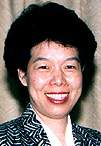
Chang Po-ya, Pinyin Zhang Boya (b. Oct. 5, 1942, Chiayi, Taiwan), interior minister of Taiwan and governor of Taiwan province (2000-02). She earlier served as mayor of Chiayi city (1983-89, 1997-2000), legislator, and health minister (1990-97).

Chang Sang |
Chang Sang (b. Oct. 9, 1939, Yongch'on, P'yongan-bukto province [now in North Korea]), acting prime minister of South Korea (2002). Her nomination on July 11 signified a big leap for female society in Korea as the first woman to be tapped for the post. This was also the first time that a prime minister candidate was put through a confirmation hearing, a new step for the political community. But she soon fell victim to a vitriolic opposition campaign that accused her of faking her academic background in the United States, engaging in speculative investment in real estate, and being disloyal to her homeland because of her son's U.S. citizenship. The career educator and women's rights activist denied any wrongdoing during the two-day confirmation hearing which ended on July 30. But lawmakers pressed on, alleging that Chang helped her son get U.S. citizenship so he can drop South Korean nationality to dodge mandatory military service in Korea (Chang's son was born in the United States in 1973). On July 31 the National Assembly rejected her appointment.
Chang Wanquan (b. January 1949, Nanyang, Henan, China), defense minister of China (2013-18).
Chang Yinhuai, Wade-Giles Ch'ang Yin-huai (b. 1889, Licheng [now part of Jinan], Shandong, China - d. Jan. 11, 1929), acting transport minister of China (1927-28) and governor of Heilongjiang (1928-29); cousin of Wu Junsheng. He served for Zhang Zuolin's army for a long time. As a senior commander, he despised and disrespected Zhang Xueliang, Zhang Zuolin's son, who was 25 years younger than him and was thought less experienced. After Zhang Zuolin's death in 1928, he and Gen. Yang Yuting plotted a rebellion against Zhang Xueliang, by whom they both were executed.
Changarnier, Nicolas Anne Théodule (b. April 26, 1793, Autun, Saône-et-Loire, France - d. Feb. 14, 1877, Paris, France), governor-general of Algeria (1848). He was a candidate in the 1848 presidential election, won by Louis-Napoléon Bonaparte.
Changufu, Lewis (Mutale) (b. Oct. 5, 1927, Kasama, Northern Rhodesia [now Zambia] - d. April 27, 2016, Lusaka, Zambia), home affairs minister of Zambia (1967, 1970-73). He was also minister of information and postal services (1965-67), labour and health (1967-68), labour and social services (1968-69), and power, transport, and works (1969-70).
Chankov (Ivanov), Georgi (b. Dec. 24, 1909, Mokren, Bulgaria - d. 2004), a deputy premier (1950-56) and a first deputy premier (1956-57) of Bulgaria. He was also chairman of the Commissions for State Control (1947-49) and State Planning (1952-56), minister of transport (1949-50), minister to Brazil (1966-67), and ambassador to Belgium and Luxembourg (1970-73).

Channi |
Channi, Charanjit Singh (b. March 1, 1963, Bhajauli village, Punjab, India), chief minister of Punjab (2021-22).
Chanoine, Charles (Sulpice Jules) (b. Dec. 18, 1835, Dijon, France - d. Jan. 9, 1915, Baudement, Marne, France), war minister of France (1898).
Chanot, George (Marie Roger), interim governor of Saint-Pierre and Miquelon (1932-33).
Chantelat, Pierre (b. Sept. 20, 1925, Besançon, Doubs, France - d. Oct. 13, 2011, Vesoul, Haute-Saône, France), president of the Regional Council of Franche-Comté (1988-98).
Chanthaburi Narunat, Prince, formerly Prince Kitiyakara Voralaksana (b. June 8, 1874 - d. May 27, 1931), finance minister of Siam (1907, 1908-22); son of Chulalongkorn. He was also minister of commerce (1920-25).
Chanthaburi Suranat, Prince, formerly Prince Nakkhatra Mangala Kitiyakara (b. Jan. 4, 1898, Bangkok, Siam [now Thailand] - d. Feb. 11, 1953), Thai diplomat; son of Prince Chanthaburi Narunat. He was minister to the United Kingdom (1946-47), Denmark (1947-50), and France (1947-48) and ambassador to the United Kingdom (1948-50).
Chanturia, Lado (b. April 14, 1963, Dzhvari, Tsalendzhikha rayon, Georgian S.S.R.), justice minister of Georgia (1998-99). He was also chairman of the Supreme Court (1999-2004) and ambassador to Germany (2014-18).
Chanzy, Antoine (Eugène Alfred) (b. March 18, 1823, Nouart village, Ardennes, France - d. Jan. 4, 1883, Châlons-sur-Marne [now Châlons-en-Champagne], Marne, France), governor-general of Algeria (1873-79). He was also French ambassador to Russia (1879-81).
E. Chao |
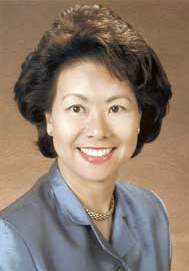
Chao, Elaine (Lan), original Chinese name Zhao Xiaolan (b. March 26, 1953, Taipei, Taiwan), U.S. labor secretary (2001-09) and transportation secretary (2017-21); wife of Mitch McConnell. She was also director of the Peace Corps (1991-92).
Chao Shou-po, Pinyin Zhao Shoubo (b. March 1, 1941, Changhua county, Taiwan), governor of Taiwan province (1998-2000).
Chaouch, Ali (b. June 26, 1948, Bou Arada, Tunisia - d. Aug. 17, 2020), interior minister of Tunisia (1997-99). He was also governor of Médenine (1987-89), minister of public works and housing (1993-97) and social affairs, solidarity, and Tunisians abroad (2005-10), and ambassador to Austria (2010-11).
Chapaprieta Torregrosa, Joaquín (b. Oct. 26, 1871, Torrevieja, Alicante province, Spain - d. Oct. 15, 1951, Madrid, Spain), finance minister (1935) and prime minister (1935) of Spain. He was also minister of labour, trade, and industry (1922-23).
Chapchayev, Arashi (b. 1890 - d. [executed] 1938, Stalingrad, Russian S.F.S.R. [now Volgograd, Russia]), chairman of the Central Executive Committee (1920-21, 1921-24) and executive secretary of the Communist Party committee (1921) of Kalmyk autonomous oblast.
Chapleau, Sir Joseph Adolphe (b. Nov. 9, 1840, Sainte-Thérèse, Lower Canada [now Que.] - d. June 13, 1898, Montreal, Que.), lieutenant governor of Quebec (1892-98); knighted 1896.
Chaplin, Alan Geoffrey Tunstall (b. Sept. 27, 1908, Southern Africa - d. April 20, 1967), acting governor of Bermuda (1955) and resident commissioner of Basutoland (1956-61).
Chaplin, Sir (Francis) Drummond (Percy) (b. Aug. 10, 1866, Twickenham, Middlesex [now part of London], England - d. Nov. 16, 1933, Noordhoek [now part of Cape Town], South Africa), administrator of Southern Rhodesia (1914-23) and Northern Rhodesia (1921-23); knighted 1917.
Chapman (Nyaho), Daniel (Ahmling) (b. July 5, 1909, Keta, Gold Coast [now in Ghana] - d. July 13, 2001), Ghanaian diplomat. He was permanent representative to the United Nations and ambassador to the United States (1957-59).
Chapman, John Lionel (b. Jan. 9, 1910, Jarvis Brook, Sussex, England - d. 1997, Gloucestershire, England), administrator of Saint Vincent (1966-67).
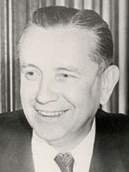
O.L. Chapman |
Chapman, Oscar L(ittleton) (b. Oct. 22, 1896, Omega, Va. - d. Feb. 8, 1978), U.S. secretary of the interior (1949-53). He was chairman of the Colorado State Child Welfare Committee and later president of the Colorado State Board of Control. In May 1933 he was appointed assistant secretary of the interior, and served for a dozen years as a member of Pres. Franklin D. Roosevelt's so-called "little cabinet." In December 1949 he became secretary of the interior. Chapman's function under the defense mobilization plans announced Sept. 9, 1950, by Pres. Harry S. Truman was to control petroleum, gas, solid fuels, and electric power. In October he set up a new Petroleum Administration for Defense, whose first task was to increase the output of aviation gasoline. Earlier, in a report to Congress, he said that oil could be extracted from shale and coal cheaply enough to compete with petroleum.
Chapman, Reuben (b. July 15, 1799, Bowling Green, Va. - d. May 16, 1882, Huntsville, Ala.), governor of Alabama (1847-49). He was also a U.S. representative from Alabama (1835-47).
Chapman Waugh, Inés María (b. Sept. 9, 1965), a vice premier of Cuba (2018- ).

Chapo |
Chapo, Daniel (Francisco) (b. Jan. 6, 1977, Inhaminga, Sofala, Mozambique), president of Mozambique (2025- ). He was also governor of Inhambane (2016-24).
Chapola-Chimombo, Callista (b. May 24, 1959), Malawian diplomat; widow of Bingu wa Mutharika. She has been high commissioner to Kenya (2022- ).
Chapon-Baissac, Pierre Amable, original surname Chapon (b. May 12, 1876, Domeyrat, Haute-Loire, France - d. af. 1934), governor of French Somaliland (1924-32).
Chaponda |
Chaponda, George (T.) (b. Nov. 1, 1942, Mendulo village, Mulanje district, Nyasaland [now Malawi]), foreign minister of Malawi (2004-05, 2014-16, 2025- ). He was also minister of local government and rural development (2005-09), education (2009-10, 2011-12), justice (2010-11), and agriculture, irrigation, and water development (2016-17).
Chapple, Sir John (Lyon) (b. May 27, 1931 - d. March 25, 2022, Salisbury, Wiltshire, England), governor of Gibraltar (1993-95); knighted 1985. He was also British chief of the General Staff (1988-92).
Chaptynov, Valery (Ivanovich) (b. June 11, 1945 - d. Aug. 10, 1997), chairman of the Executive Committee (1988-90), first secretary of the party committee (1990-91), chairman of the Supreme Council (1990-94) and of the State Council (1994-97) of Gorno-Altay autonomous oblast/Altay republic.
Char Abdala, Fuad (Ricardo) (b. Oct. 5, 1937, Lorica, Córdoba, Colombia), Colombian politician. He was governor of Atlántico (1984-87), minister of economic development (1987-88), and ambassador to Portugal (2008-09).
Char Chaljub, Alejandro (b. April 16, 1966, Barranquilla, Colombia), Colombian politician. He has been governor of Atlántico (2003-04), mayor of Barranquilla (2008-12, 2016-20, 2024- ), and president of the Radical Change party (2012-13).
Char Chaljub, Arturo (b. Nov. 5, 1967, Barranquilla, Colombia), Colombian politician; son of Fuad Char Abdala; brother of Alejandro Char Chaljub. He was president of the Senate (2020-21).
Charalampis, Anastasios (b. Oct. 4 [Sept. 22, O.S.], 1862, Kalavryta, Greece - d. March 11, 1949, Athens, Greece), prime minister of Greece (1922). He was also minister of interior (1916 and [provisional] 1922) and military (1917, 1922) and chief of the Army General Staff (1917-20).
Charalampis, Dimitrios (b. 1796, Kalavryta, Ottoman Empire [now in Greece] - d. Feb. 20, 1879), finance minister of Greece (1863).
Charalampopoulos, Ioannis, also spelled Charalambopoulos (b. 1919, Psari, Greece - d. Oct. 16, 2014), foreign minister (1981-85) and defense minister (1986-89) of Greece. He was also a deputy prime minister (1985-88).
Charanville, (François) Michel (Marschalck) Desbordes, sieur de (b. c. 1675 - d. July 1730), governor of Île Bourbon (1709-10) and French Guiana (1729-30).
Charbonniaud, Claude (Jean) (b. Jan. 22, 1925, Limoges, France - d. Oct. 17, 2020, Bayonne, France), governor of New Caledonia (1978-81). He was also prefect of Tarn-et-Garonne (1971-74), Eure-et-Loir (1974-76), and Hauts-de-Seine (1976-78).
Charbonnier, Robert (Maxime), resident of Wallis and Futuna (1944-46).
Chardouvelis, Gkikas (A.) (b. Oct. 8, 1955, Poulithra, Arkadia, Greece), finance minister of Greece (2014-15).
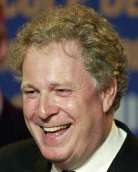
Charest |
Charest, Jean, byname of John James Charest (b. June 24, 1958, Sherbrooke, Que.), Canadian politician. First elected to the House of Commons in 1984, he was appointed minister of state for youth in June 1986 and became the youngest person to ever serve in cabinet. Two years later, he also assumed the portfolio of minister of state for fitness and amateur sport. In 1989, the role of deputy leader of the government in the House of Commons was added to his other responsibilities. In 1990, he was appointed chairman of the special House of Commons committee to study a proposed companion resolution to the Meech Lake constitutional accord. In April 1991, he was appointed environment minister. In June 1993, he finished second at the Progressive Conservative leadership convention. Shortly after, he was appointed deputy prime minister, minister of industry and science, and minister responsible for the Federal Office of Regional Development (Quebec). He was reelected for a third consecutive mandate on Oct. 25, 1993, as one of only two Conservatives elected. On Dec. 14, 1993, he was appointed interim leader of the PC, and on April 29, 1995, he was elected leader by 96% of the delegates attending the 1995 National Meeting in Hull, Quebec. In March 1998 he resigned as PC leader to seek the leadership of the Quebec Liberal Party and challenge the separatist Parti Québécois in the next provincial election. Polls showed the Liberals under Charest would enjoy a 17-point lead over the PQ. By the time he was acclaimed as Liberal leader in May, however, the party's surge in the polls had abated to an eight-point lead, and it ultimately lost the November 1998 election, and Charest became opposition leader. In the next elections (April 2003), he won a decisive majority and became premier. Reelected in 2007 and 2008, his government was defeated in 2012, when he also lost his own riding of Sherbrooke; he then resigned as Liberal leader.

Charette | 
M.B.B.A. Charif |
Charette (de la Contrie), Hervé (Marie Joseph) de (b. July 30, 1938, Paris, France), foreign minister of France (1995-97); great-great-great-great-grandson of Charles X. He was also minister of housing (1993-95).
Charfeddine, Taoufik (b. Nov. 24, 1968, Menzel Mhiri, Kairouan, Tunisia), interior minister of Tunisia (2020-21, 2021-23).
Charfi, Mohamed (b. Oct. 15, 1946, Oued Zenati, Guelma, Algeria), justice minister of Algeria (2002-03, 2012-13). He was also president of the Independent National Authority of Elections (2019-24).
Charif, Mohamed Bakri Ben Abdoulfatah, foreign minister of Comoros (2011-13).
Charif, Mouhtar Ahmed (b. 1945, Itsandr Mdjini, Comoros - d. May 21, 2017, Moroni, Comoros), foreign minister of Comoros (1997). He was also minister of production (1978-80) and education, youth, and sports (1980-82).
Charitsis, Alexandros, byname Alexis Charitsis (b. Aug. 10, 1977, Kalamata, Greece), interior minister of Greece (2018-19). He has also been president of the New Left (2023- ).
Chariyarov, Serdar (Chariyarovich) (b. 1943, Yasman-Salyk, Ashkhabad oblast, Turkmen S.S.R. [now in Akhal velayat, Turkmenistan]), interior minister of Turkmenistan (1990-93).
Chariyev, Begench (Shadurdiyevich), justice minister of Turkmenistan (2012-13). He was also chairman of the Supreme Court (2013-17).
Charkviani, Gela (b. March 1, 1939, Tbilisi, Georgian S.S.R. - d. Nov. 9, 2021, Tbilisi), Georgian diplomat; son of Kandid Charkviani. He was ambassador to the United Kingdom and Ireland (2006-11).
Charkviani, Kandid (Nestorovich) (b. Feb. 12, 1907, Tsageri, Russia [now in Georgia] - d. 1994, Tbilisi, Georgia), first secretary of the Communist Party of the Georgian S.S.R. (1938-52). He was also first secretary of the party committee of Tbilisi city (1938-52).
Charles |
Charles (Théodore Henri Antoine Meinrad), prince de Belgique, comte de Flandre, Dutch Karel Theodoor Henrik Antoon Meinrad, prins van België, graaf van Vlanderen (b. Oct. 10, 1903, Brussels, Belgium - d. June 1, 1983, Ostend, Belgium), regent of Belgium (1944-50). He spent World War II in seclusion and in hiding with the Belgian resistance before serving as acting head of state from 1944 to 1950. He was unanimously elected to the regency during this transitional period because of the accusations of collaboration leveled against his brother, King Léopold III; the latter abdicated in favour of his son Baudouin in 1951, thus ending the constitutional crisis. Charles, a retiring man who had nevertheless made an important contribution to the successful resumption of national affairs after the war, was happy to withdraw to his home near Ostend. His support for his brother's abdication, however, may have helped to cause some bitterness in his relations with the rest of the family. In his later years Prince Charles gained notoriety as a result of disputes with his entourage and mismanagement of his financial affairs.

Charles III |
Charles III, in full Charles Philip Arthur George, until 2022 Prince of Wales (and Earl of Chester, Duke of Cornwall, Duke of Rothesay, Earl of Carrick and Baron of Renfrew, Lord of the Isles and Great Steward of Scotland, [from 2021:] Duke of Edinburgh, Earl of Merioneth, Baron Greenwich) (b. Nov. 14, 1948, Buckingham Palace, London, England), king of the United Kingdom (2022- ). He was the eldest child of Queen Elizabeth II and Prince Philip, Duke of Edinburgh. In 1967 he entered Trinity College, Cambridge, and in 1971 took a bachelor's degree, the first ever by an heir to the British crown. He also spent a term at the University College of Wales at Aberystwyth, learning Welsh in preparation for his investiture as Prince of Wales on July 1, 1969, at Caernarvon Castle. He then attended the Royal Air Force College (becoming an excellent flyer) and the Royal Naval College, Dartmouth, and, from 1971 to 1976, took a tour of duty with the Royal Navy. Later he became an outspoken critic of modern architecture. He expressed his views on the topic in his book A Vision of Britain (1989). He also founded the Prince of Wales's Institute of Architecture in 1992. On July 29, 1981, Charles married Lady Diana Frances Spencer, daughter of the 8th Earl Spencer (grandson of James Albert Edward Hamilton, Duke of Abercorn). Their first child, Prince William of Wales (b. June 21, 1982, London), became at his birth second in line of succession to the throne. Their second child was Prince Henry Charles Albert David ("Harry") (b. Sept. 15, 1984, London). By the late 1980s strains in the marriage had become apparent, and they were increasingly widely reported in the media, especially the tabloid press. In December 1992 their separation was announced; they were divorced Aug. 28, 1996. By this time both had admitted that they had committed adultery during their marriage, in Charles's case with Camilla Parker Bowles (great-great-great-granddaughter of Sir Allan Napier MacNab), whom he married on April 9, 2005. He became the longest-serving Prince of Wales in history before succeeding as king at the age of 73. He was crowned on May 6, 2023.
Charles X, also called (until 1824) Charles-Philippe de France, comte (count) d'Artois, byname (1795-1824) Monsieur (b. Oct. 9, 1757, Versailles, France - d. Nov. 6, 1836, Görz, Austria [now Gorizia, Italy]), lieutenant-general of the kingdom (1814) and king (1824-30) of France; brother of Louis XVI and Louis XVIII; son-in-law of Vittorio Amedeo III.
Charles, Eden, Trinidad and Tobago diplomat. He was chargé d'affaires at the United Nations (2014-16).
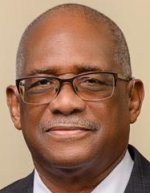
Errol Charles |
Charles, Sir (Cyril) Errol (Melchiades) (b. Dec. 10, 1942, Castries, Saint Lucia), governor-general of Saint Lucia (2021-26); knighted 2025; son of Sir George Charles.
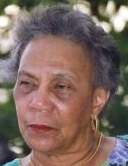
Eug. Charles |
Charles, Dame (Mary) Eugenia (b. May 15, 1919, Pointe Michel, Dominica - d. Sept. 6, 2005, Fort-de-France, Martinique), prime minister (1980-95) and foreign minister (1980-90) of Dominica. Her first involvement in active politics came in 1968, when she and a broad-based group known as "Freedom Fighters" came together to oppose legislation curtailing freedom of the press. Eventually the group formed itself into the Dominica Freedom Party and, initially against her wishes, Charles became party leader. She was elected to the then House of Assembly in 1970, once wearing a bathing suit underneath her black lawyer's gown in the House to protest a dress code for legislators. From 1975 she served as leader of the opposition. She was a strict constitutionalist and a skilled debater in parliament. She provoked much anger when she spoke courageously against the government's excesses and especially its business dealings in 1979 with the South African government. In Dominica's first post-independence election, on July 21, 1980, the Freedom Party won a landslide victory, and Charles became the Caribbean's first female prime minister. Politically, she was most commonly described as a conservative, but in reality she was probably more of a centrist. She favoured social welfare programs and limited state intervention but was a firm anti-Communist. She refused to accept scholarships offered by the government of Fidel Castro to Dominican students. "I am not going to allow my students to study in Cuba where they will learn revolution," she said shortly after taking power. She survived two early coup attempts and had one man hanged for treason. In 1983 she backed the U.S. invasion of Grenada. She won a second and third term in 1985 and 1990. She was knighted in 1991.
Charles, Sir George (Frederick Lawrence) (b. June 7, 1916 - d. June 26, 2004, Castries, Saint Lucia), chief minister of Saint Lucia (1960-64); knighted 1998.
Charles, Hochoy (b. 1946 - d. Dec. 31, 2023, Scarborough, Tobago), chief secretary of the Tobago House of Assembly (1996-2001).
Charles, Jean (François Eugène), resident-superior of Annam (1913-20) and acting governor-general of French Indochina (1916-17).
Charles, Joseph D(arcius) (b. Nov. 15, 1907, Le Limbé, Haiti - d. Nov. 15, 1966, Cap-Haïtien, Haiti), foreign minister of Haiti (1955-56). He was also minister of education (1940-41, 1952-53) and ambassador to the United States (1946-50).

K. Charles | 
N. Charles |
Charles, Kelvin (Victor) (b. Nov. 4, 1957, Black Rock, Tobago), chief secretary of the Tobago House of Assembly (2017-20).
Charles, Norris (Michael) (b. May 26, 1954), foreign minister of Dominica (1998-2000).
Charles, P(iencia) S(arojinidevi) M(anmatharajah), governor of Northern province, Sri Lanka (2019-21, 2023-24).

P. Charles |
Charles, Pierre (b. June 30, 1954, Grand Bay village, southern Dominica - d. Jan. 6, 2004, Roseau, Dominica), prime minister (2000-04), foreign minister (2000-01), and finance minister (2001-04) of Dominica. He began as part of the political opposition and criticized the 1983 U.S. invasion of nearby Grenada, which was supported by Dominica's prime minister at the time, Eugenia Charles. He became prime minister following the death of Prime Minister Rosie Douglas in 2000, having previously served as minister of communications and works. In 2001, he was critical of the United States when its troops invaded Afghanistan; he accused them of killing innocents as he urged a halt to the conflict. He also called on the United States to lift its trade embargo against Cuba. One of his first acts as prime minister was to establish diplomatic ties with Libya. At home, Charles defended austerity measures as necessary to improve the economy of one of the Caribbean's poorest countries. Like his predecessor, he died in office.
Charles, Rodney (b. March 16, 1949, San Fernando, Trinidad and Tobago), Trinidad and Tobago diplomat. He was permanent representative to the United Nations (2010-14).
Charles, Serge Élie (b. Aug. 19, 1941, Port-au-Prince, Haiti), foreign minister of Haiti (1988-89). He was also permanent representative to the United Nations (1977-80, 1983-87) and ambassador to the United States (1980-81) and West Germany (1981-83).
Charlier, Élie (Adrien Édouard) (b. Feb. 27, 1864, Caumont-l'Éventé, Calvados, France - d. Aug. 24, 1937, Geneva, Switzerland), acting governor of the French Settlements in Oceania (1907-08).
Charlone (Rodríguez), César (b. Oct. 5, 1896, Montevideo, Uruguay - d. May 8, 1973, Montevideo), finance minister (1934-40, 1967-70, 1970-71), vice president (1938-42), and foreign minister (1949-50) of Uruguay. He was also labour minister (1933-34).
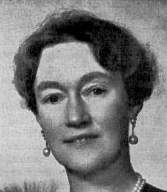
Charlotte |
Charlotte (Aldegonde Élise Marie Wilhelmine) (b. Jan. 23, 1896, Château de Berg, Luxembourg - d. July 9, 1985, Château de Fischbach, Luxembourg), grand duchess of Luxembourg (1919-64). The second daughter of Grand Duke Guillaume IV, Charlotte succeeded her sister Marie-Adélaïde, who abdicated in January 1919 after acquiring a pro-German reputation during World War I. Charlotte immediately called for a referendum, and in September three-quarters of the voters preferred her continued reign to a republic. Six weeks later she married Prince Félix of Bourbon-Parma (1893-1970). They had six children: Jean, Élisabeth, Marie-Adélaïde, Marie-Gabrielle, Charles, and Alix. When Nazi Germany overran Luxembourg in May 1940, Charlotte fled with the government, settling in Montreal for the duration of the war. Her frequent radio messages of encouragement were never forgotten by a grateful people. In April 1961 she granted Prince Jean all of her ducal responsibilities in preparation for abdicating in November 1964. Charlotte's popular reign provided stability during a time of sweeping change. Luxembourg's constitution was twice rewritten (1919 and 1948), providing universal suffrage and abolishing the country's much-violated disarmed neutrality. Labour laws and social-security schemes were passed, and through the Benelux Economic Union, NATO, and the EEC, Luxembourg was integrated into post-World War II western Europe. During this time Charlotte's steadfast patriotism and democratic sympathies made her a symbol of Luxembourg's sovereignty and prosperity. After her 45-year reign she continued to play a role in Luxembourg's political life, though her official appearances became increasingly rare.
Charmasson de Puylaval, (Pons) Guillaume (Basile) (b. April 12, 1780, Villeneuve-les-Avignon, Gard, France - d. 18...), governor of Senegal (1839-41) and French Guiana (1841-43).
Charme (Fernández), Eduardo (b. Oct. 8, 1854, Talca, Chile - d. Oct. 10, 1920, Santiago, Chile), interior minister of Chile (1909, 1914). He was also minister of industry and public works (1904-05, 1906) and president of the Senate (1915-18).
Charner, Léonard Victor Joseph (b. Feb. 13, 1797, Saint-Brieuc, Côtes-du-Nord [now Côtes-d'Armor], France - d. Feb. 7, 1869, Paris, France), governor of Cochinchina (1861).
Charon, (Edme) Viala, baron (b. July 29, 1794, Paris, France - d. Nov. 26, 1880, Paris), governor-general of Algeria (1848-50).
Charpentier, (Gustaf) Reinhold (b. June 28, 1817, Sjösås socken, Kronoberg, Sweden - d. Feb. 24, 1886, Stockholm, Sweden), governor of Västmanland (1869-83).
Charpín Rival, Pedro (José) (b. June 29, 1876, Santiago, Chile - d. March 17, 1958, Santiago), war minister of Chile (1930-31). He was also inspector-general (1930) and commander-in-chief (1931) of the army.
Charras, Jean-Baptiste Adolphe (b. Jan. 7, 1810, Phalsbourg, Moselle, France - d. Jan. 23, 1865, Basel, Switzerland), interim war minister of France (1848).
Charritte, Jean-Pierre (de Casamajor) de (b. 1658 - d. Oct. 17, 1723), governor of Saint-Domingue (1705-07, 1710-11) and Martinique (1711-16).
Charry Samper, Héctor (b. Aug. 18, 1930, Barranquilla, Colombia - d. Sept. 7?, 2003, Bogotá, Colombia), justice minister of Colombia (1962-63). He was also ambassador to Argentina (1963-67), Venezuela (1970-73), Trinidad and Tobago (1970-75), Austria (1999-2003), and Turkey (2000-03).
Charubutr Ruangsuwan (b. 1920 - d. March 19, 1984, Chiang Rai, Thailand), Thai politician. He was speaker of the Senate and president of the National Assembly (1983-84).
Charumbira, Fortune Z(ephania) (b. June 10, 1962), president of the Pan-African Parliament (2021-24, 2024-26).
Charún (Espinosa), Agustín Guillermo (b. Feb. 9, 1794, Lima, Peru - d. Feb. 22, 1857, Huanchaco, Peru), foreign and interior minister of Peru (1841-43). He was also minister of education and ecclesiastical affairs (1839-40, 1852-53) and justice (1852-53) and bishop of Trujillo (1853-57).
Charunphan Isarangkun Na Ayuthaya (b. March 14, 1914, Thonburi, Siam [now part of Bangkok, Thailand] - d. Aug. 12, 1991), foreign minister of Thailand (1973-75). He was also ambassador to Laos (1961-65), Spain and Tunisia (1965-70), and Austria and Turkey (1971).
Charupong Ruangsuwan (b. Aug. 15, 1946), interior minister of Thailand (2012-14). He was also minister of transport (2012) and leader of the Pheu Thai Party (2012-14).
Charvein, Camille (b. Jan. 1, 1834, Fort-de-France, Martinique - d. ...), governor of French Guiana (1893-95).
Charyev, Ata, Turkmen Ata Çaryýew (b. 1932, Rakhat, Turkmen S.S.R. [now in Mary velayat, Turkmenistan]), a deputy prime minister of Turkmenistan (1990-92). He was also chairman of the State Committee for Water and Rural Construction (1977-90) and ambassador to Iran (1992-93).
Charykov, Ivan (Matveyevich) (b. Sept. 9 [Aug. 27, O.S.], 1902, Yefremovo-Zykovo, Samara province [now in Orenburg oblast], Russia - d. Aug. 25, 1965, Moscow, Russian S.F.S.R.), first secretary of the Communist Party committee of the Chuvash A.S.S.R. (1940-48). He was also first secretary of the party committee of Novgorod city (1953-54).
Charykov, Nikolay (Valeryevich) (b. January 1855, Novaya Grigoryevka, Yekaterinoslav province, Russia [now in Ukraine] - d. Sept. 12, 1930, Istanbul, Turkey), Russian diplomat; son of Valery Charykov. He was political agent in Bukhara (1886-90), chargé d'affaires in Germany (1894-95), diplomatic agent in Bulgaria (1896-97), minister resident to the Vatican (1897-1900), minister to Serbia (1900-04) and the Netherlands (1905-07), ambassador to the Ottoman Empire (1909-12), and education minister of Crimea (1918).
Charykov, Valery (Ivanovich) (b. Sept. 20 [Sept. 8, O.S.], 1818, Penza, Russia - d. March 6 [Feb. 23, O.S.], 1884, Moscow, Russia), governor of Vyatka (1869-75) and Minsk (1875-79).
Chase, Ira J(oy) (b. Dec. 7, 1834, Monroe county, N.Y. - d. May 11, 1895, Lubec, Maine), governor of Indiana (1891-93).
Chase, Salmon P(ortland) (b. Jan. 13, 1808, Cornish, N.H. - d. May 7, 1873, New York City), governor of Ohio (1856-60) and U.S. secretary of the treasury (1861-64) and chief justice (1864-73). He was also a U.S. senator from Ohio (1849-55, 1861).
Chasikos, Sokratis, English Socrates Hasikos (b. April 12, 1956, Nicosia, Cyprus - d. April 5, 2021, Cologne, Germany), defense minister (1999-2003, 2014) and interior minister (2013-17) of Cyprus.
Chasme, Louis Joseph (b. May 8, 1929, Ouidah, Dahomey [now Benin] - d. Aug. 10, 1994), justice minister of Dahomey (1967-68).

Chastanet |
Chastanet, Allen (Michael) (b. Nov. 20, 1960), prime minister, foreign minister, and finance minister of St. Lucia (2016-21). He was also minister of tourism and civil aviation (2006-11).
Chastenet de Géry, (Frédéric Marie) Jean (Baptiste) (b. May 5, 1889, La Rochelle, France - d. Sept. 8, 1976, Tourtoirac, Dordogne, France), governor of the French Settlements in Oceania (1937-40).
Chatah, Mohammad (Baha) (b. March 1951, Tripoli, Lebanon - d. [bomb attack] Dec. 27, 2013, Beirut, Lebanon), finance minister of Lebanon (2008-09). He was ambassador to the U.S. in 1997-99.
Chataigneau, Yves (b. Sept. 22, 1891, Vouillé, Vienne, France - d. March 4, 1969, Paris, France), governor-general of Algeria (1944-48). He was also French minister to Afghanistan (1940-42), Free French delegate-general in the Levant (1943-44), and ambassador to the Soviet Union (1948-52).
Chatardová, Marie (b. March 6, 1963, Znojmo, Czechoslovakia [now in Czech Republic]), Czech diplomat. She was ambassador to Sweden (2002-07), France (2010-16), and the United Kingdom (2021-25) and permanent representative to the United Nations (2016-21).
Chatchai Sarikulya (b. Aug. 5, 1955), a deputy prime minister of Thailand (2017-19). He was also minister of commerce (2014-15) and agriculture and cooperatives (2015-17).
Chateaubriand, François René, vicomte de (b. Sept. 4, 1768, Saint-Malo, France - d. July 4, 1848, Paris, France), foreign minister of France (1822-24). A leading French writer of his time, he was also minister to Prussia (1821) and ambassador to the United Kingdom (1822) and the Papal State (1828-29).
Chatel, Yves (Charles) (b. March 24, 1885, Rennes, Ille-et-Vilaine, France - d. Oct. 13, 1944, Lisbon, Portugal), resident-superior of Laos (1931), Annam (1931-34), and Tonkin (1937-40) and governor-general of Algeria (1941-43).
Châtelain, Yrech (b. Dec. 3, 1884, Gonaïves, Haiti - d. Feb. 12, 1962, Port-au-Prince, Haiti), foreign minister of Haiti (1935-36). He was also minister of finance and commerce (1934-35) and worship (1935-36).
Chatenet, Pierre (b. March 6, 1917, Paris, France - d. Sept. 4, 1997, Tavers, Loiret, France), interior minister of France (1959-61) and president of the Commission of the European Atomic Energy Community (1962-67).
Chater, Arthur Reginald (b. Feb. 7, 1896 - d. Jan. 3, 1979), governor of British Somaliland (1941-43).
Chatfield, (Alfred) Ernle (Montacute) Chatfield, (1st) Baron (b. Sept. 27, 1873, Southsea, England - d. Nov. 15, 1967, Farnham Common, Buckinghamshire, England), British admiral. He was first sea lord (1933-38) and minister for the coordination of defence (1939-40). He was knighted in 1919 and created baron in 1937.
Chatham, John Pitt, (2nd) Earl of (b. Oct. 9, 1756, Hayes, Kent, England - d. Sept. 24, 1835, London, England), governor of Jersey (1807-20) and Gibraltar (1820-35); son of William Pitt the Elder. He was also first lord of the Admiralty (1788-94), lord privy seal (1794-98), lord president of the council (1796-1801), and master-general of the ordnance (1801-06, 1807-10). He succeeded as earl in 1778.
Chatichai |
Chatichai Choonhavan (b. April 25, 1922, Bangkok, Siam [now Thailand] - d. May 6, 1998, London, England), foreign minister (1975-76), prime minister (1988-91), and defense minister (1988-90, 1990-91) of Thailand. He was the only son of Phin Choonhavan, a prominent army general who led the 1947 coup that brought Field Marshal Pibulsongkram to power. Pin served as deputy prime minister and Chatichai also held a cabinet post, but the government was ousted in 1957. Chatichai's part in an unsuccessful coup to return Pibulsongkram led to his being sent abroad to a string of unimportant diplomatic posts - tantamount to exile. After being ambassador to Argentina (1960-63), Austria and Turkey (1963-68), Switzerland (1968-72), and the Vatican (1971-72), he returned to Thailand. He helped found the Chart Thai (Thai Nation) party in 1974, rebuilding his family's old coalitions in preparation for the 1975 elections. No party won a majority, and a succession of temporary governments followed, in which the charismatic, popular Chatichai was often prominent, holding a number of cabinet posts. The unexpected refusal of Prime Minister Prem Tinsulanonda to continue in office after the July 1988 general election led to the appointment of Chatichai to take his place. Chart Thai had gained more seats than any other party. He became the first elected MP to become prime minister since 1976. His six-party coalition promoted private enterprise at a time when Thailand's economy was doing better than ever before. He was overthrown by the military in a bloodless coup in February 1991. He maintained a base of power, however, by forming the Chart Pattana, a major opposition party. A quintessential wheeler-dealer whose popularity was unaffected by the taint of corruption that attended his entire political career, his trademark "no problem" catchphrase, which he used repeatedly to answer his many critics, remained in popular use.
Chatrnúch, Róbert, Slovak diplomat. He was chargé d'affaires at the United Nations (2022-23).
Chatterton, Fenimore (b. July 21, 1860, Oswego, N.Y. - d. May 9, 1958, Shreveport, La.), acting governor of Wyoming (1903-05).
Chattopadhyaya, Debi Prasad (b. Nov. 5, 1933, Barisal, Bengal, India [now in Bangladesh] - d. Feb. 13, 2022), governor of Rajasthan (1990-91). He was also Indian minister of commerce (1976-77).
Chatty, Habib (b. Aug. 9, 1916, M'saken, Tunisia - d. March 6, 1991, Paris, France), foreign minister of Tunisia (1974-77) and secretary-general of the Organization of the Islamic Conference (1980-84). He was also ambassador to Lebanon and Iraq (1957-59), Turkey and Iran (1959-62), the United Kingdom (1962-64), Morocco (1964-70), and Algeria (1970-72).
Chaturon Chaisang (b. Jan. 1, 1956, Mueang Chachoengsao district, Chachoengsao province, Thailand), a deputy prime minister of Thailand (2002-05). He was also a minister attached to the Prime Minister's Office (2001-02), minister of justice (2002) and education (2005-06, 2013-14), and acting leader of Thai Rak Thai party (2006-07).
Chaturonrasmi, Prince (b. 1856 - d. 1900), finance minister of Siam (1886-92); son of Mongkut.
Chaturvedi, T(riloki) N(ath) (b. Jan. 18, 1928, Tirwa [now in Uttar Pradesh], India - d. Jan. 5, 2020, Noida, Uttar Pradesh, India), chief commissioner of Chandigarh (1976-78) and governor of Karnataka (2002-07) and Kerala (2004). He was also home secretary (1981-84) and comptroller and auditor general (1984-90) of India.
Chatzakos, Matthaios (b. 1861 - d. 1941), justice minister of Greece (1916).
Chatzianargyrou, Anargyros (Andreou) (b. 1814 - d. 1885), interior minister of Greece (1865). He was also president of the Vouli (1861).
Chatzidakis, Konstantinos, byname Kostis Chatzidakis (b. April 20, 1965, Rethymno, Crete, Greece), economy and finance minister (2023-25) and deputy prime minister (2025- ) of Greece. He was also minister of transport and communications (2007-09), development (2009, 2012-14), competitiveness (2012-14), infrastructure, transport, and networks (2012-13), environment and energy (2019-21), and labour and social affairs (2021-23).
Chatzigakis, Sotiri(o)s (b. Sept. 15, 1944, Trikala, Greece), justice minister of Greece (2007-09). He was also minister of labour (1989), agriculture (1991-92), and agricultural development and food (2009).
Chatzikyriakos, Alexandros (N.) (b. 1874, Syros island, Greece - d. 1958), foreign minister of Greece (1925 and [provisional] 1925). He was also minister of marine (1924, 1925-26, 1932-33, 1933-35) and aviation (provisional, 1932-33).
Chatzimichalis, Platon (b. 1884, Smyrna, Ottoman Empire [now Izmir, Turkey] - d. August 1964), provisional finance minister of Greece (collaborator government, 1941). He was also minister of national economy (1941).
Chatzipanos, Panagiotis (b. 1885, Chalkis, Greece - d. Jan. 8, 1972, Athens, Greece), interior minister of Greece (1948-49). He was also minister of education (1944-45), political coordination (1946-47, 1947), justice (provisional, 1946-47), posts, telegraphs, and telephones (1947), and transport (1947-48, 1949-50).
Chatziskos, Dimitrios (Konstantinou) (b. Sept. 14, 1805, Patratziki, Ottoman Empire [now Ypati, Greece] - d. Oct. 7, 1877, Athens, Greece), Greek politician. He was president of the Vouli (1848-49, 1871-72) and minister of ecclesiastical affairs and public education (1862).
Chatziskos, Nikolaos (Dimitriou) (b. 1850, Athens, Greece - d. 1917, Athens), Greek politician; son of Dimitrios Chatziskos. He was president of the Vouli (1903-04).
Chatzopoulos, Ioannis (b. 1847 - d. 1930), military minister of Greece (1916-17).
Chau Sen Cocsal Chhum, Samdech (b. Sept. 1, 1905, Tri Ton, southern Vietnam - d. Jan. 22, 2009, Phnom Penh, Cambodia), prime minister of Cambodia (1962). He was also governor of Phnom Penh (1945), Kompong Cham (1945), and Kandal (1947-49), chargé d'affaires in Thailand (1951-53), and president of the National Assembly (1958-60, 1961-63, 1966-69).
Chau Xeng Ua (b. Aug. 5, 1927, Chaudoc, Cochinchina, French Indochina [now Chau Doc, Vietnam] - d. March 11, 2019), Cambodian politician. He was minister of labour and social action (1970-72).
Chaudet, Paul (b. Nov. 17, 1904, Rivaz, Vaud, Switzerland - d. Aug. 7, 1977, Lausanne, Vaud), president of Switzerland (1959, 1962). He was also president of the Council of State of Vaud (1949) and military minister (1955-66).

A. Chaudhary |
Chaudhary, Amarsinh (Bhilabhai) (b. July 31, 1941, Dolvan, Vyara taluk, Surat district, Bombay province [now in Gujarat state], India - d. Aug. 15, 2004, Ahmedabad, Gujarat, India), chief minister of Gujarat (1985-89).
F.E. Chaudhry |
Chaudhry, Fazal Elahi (b. Jan. 1, 1904, Gujrat, Punjab, India - d. June 1, 1982, Lahore, Pakistan), president of Pakistan (1973-78). He was elected to the Punjab Legislative Assembly in 1945 as a member of the All-India Muslim League. He became successively a member of the Punjab provincial government, speaker of the provincial assembly, and, in 1972-73, speaker of the National Assembly. He was a supporter of Zulfikar Ali Bhutto's Pakistan People's Party. When Bhutto relinquished his position of chief of state in 1973 under the new constitution enacted by the directly elected National Assembly, Chaudhry became president. When Bhutto was ousted as prime minister by the military regime of Gen. Mohammad Zia-ul-Haq in 1977, Chaudhry remained in office but resigned in the following year, reportedly after differences with the new regime.

M. Chaudhry | 
S.M. Chaudhry |
Chaudhry, Mahendra (Pal) (b. Sept. 2, 1942, Tavua, Fiji), prime minister of Fiji (1999-2000). A founding member of the Fiji Labour Party, Chaudhry was its assistant secretary-general from 1985 to 1994. First elected to the House of Representatives in 1987, he served as finance and economic minister for one month before the coup of that year. He became party leader after the death of Timoci Bavadra in 1989 and two years later, he was reelected to the House of Representatives. He became the first ethnic Indian prime minister of Fiji; this became possible with the country's new constitution adopted in 1997. On May 19, 2000, he was taken hostage when rebels led by George Speight stormed the parliament building. He was released on July 13 but did not regain office. In 2007-08 he was finance minister again.
Chaudhry, Sultan Mahmood (b. Aug. 9, 1955, Chechian, Mirpur district, Azad Kashmir - d. Jan. 31, 2026, Islamabad, Pakistan), president of Azad Kashmir (2021-26).
Chaudhuri, Sachindra (b. Feb. 24, 1903 - d. June 12, 1992), finance minister of India (1966-67).
Chaudié, Jean Baptiste Émile Louis Barthélemy (b. Aug. 28, 1853, Salernes, Var, France - d. 19...), governor-general of French West Africa and governor of Senegal (1895-1900).
P. Chauhan |
Chauhan, Phagu, Phagu also spelled Fagu (b. Jan. 1, 1948, Shekhupur, Azamgarh district, United Provinces [now in Uttar Pradesh], India), governor of Bihar (2019-23) and Meghalaya (2023-24).
Chauhan, Shivraj Singh, also spelled Chouhan (b. March 5, 1959, Jait village, Sehore district, Madhya Pradesh, India), chief minister of Madhya Pradesh (2005-18, 2020-23). He has also been Indian minister of agriculture, farmers' welfare, and rural development (2024- ).
Chaumié, Joseph (b. March 17, 1849, Agen, Lot-et-Garonne, France - d. July 19, 1919, Clermont-Dessous, Lot-et-Garonne), justice minister of France (1905-06). He was also minister of public instruction and fine arts (1902-05).
Chauncy, Frederick Charles Leslie (b. Dec. 22, 1904 - d. June 4, 1986), British consul-general in Muscat and Oman (1949-58).
Chaurasiya, Ajay Kumar (b. Feb. 3, 1965, Amarpatti, Parsa district, Nepal), justice minister of Nepal (2024-25).
Chaus, Petr (b. Jan. 7, 1939), defense minister of Belarus (1991-92).
Chaussebourg, Fernand (Clovis François) (b. May 6, 1921, Paris, France - d. Feb. 20, 2004, Paris), president of the Regional Council of Poitou-Charentes (1980-81).
Chautala |
Chautala, Om Prakash (b. Jan. 1, 1935, Chautala, Punjab [now in Haryana], India - d. Dec. 20, 2024, Gurugram, Haryana), chief minister of Haryana (1989-90, 1990, 1991, 1999-2005); son of Devi Lal.
Chautaria, Fateh Jang (b. 1805 - d. [killed during the Kot massacre] Sept. 14, 1846, Kathmandu, Nepal), prime minister of Nepal (1840-43, 1845-46).
Chautemps, Camille (b. Feb. 1, 1885, Paris, France - d. July 1, 1963, Washington, D.C.), prime minister of France (1930, 1933-34, 1937-38); son of Émile Chautemps. He was also mayor of Tours (1919-25), minister of interior (1924-25, 1925-26, 1926, 1930, 1932-34), justice (1925), public instruction and fine arts (1930-31), and public works (1936), minister of state (1936-37, 1940), and deputy prime minister (1938-40).
Chautemps, (François) Émile (b. May 2, 1850, Valleiry, Haute-Savoie, France - d. Dec. 10, 1918, Paris, France), French politician. He was president of the Municipal Council of Paris (1889) and minister of colonies (1895) and marine (1914).
Chauvel, Jean (Michel Henri) (b. April 16, 1897, Paris, France - d. May 31, 1979, Paris), French high commissioner of Austria (1954-55). He was also permanent representative to the United Nations (1949-52) and ambassador to Switzerland (1952-54) and the United Kingdom (1955-62).
Chauvet, Paul (Louis Gabriel) (b. Jan. 19, 1904 - d. Jan. 19, 2007), governor-general (1951-57) and high commissioner (1957-58) of French Equatorial Africa and acting governor-general of French West Africa (1951-52).

Chavalit |
Chavalit Yongchaiyudh (b. May 15, 1932, Nonthaburi province, Thailand), prime minister of Thailand (1996-97). He began his career as a professional soldier on entering Chulachomklao Royal Military Academy in 1953. In the 1960s, he was operations and training officer for Thai troops fighting with the U.S.-backed forces in South Vietnam. He built his reputation on a successful "hearts and minds" campaign which brought Thai Communist insurgents of the 1970s and early 1980s out of the jungle. As a powerful army chief and supreme commander of the armed forces in 1986, General Chavalit wielded political power traditionally held by the military while at the same time stressing a vision of a democratic country in which soldiers would no longer hold sway over civilian rule. He also attacked corruption among politicians and businessmen. He founded the New Aspiration Party (NAP) in 1990 after retiring from the military. He served as deputy prime minister (1990, 1994, 1995-96, 2001-05, 2008) and was defense minister (1990, 1995-97, 2001-02) and interior minister (1992-94). Since being named defense minister after the July 1995 election, he was often touted as a candidate for prime minister. He used the defense portfolio to strengthen his own power base, by dabbling in military reshuffles to place loyal officers in key positions and supporting big-budget military procurement to satisfy the armed forces. In the 1996 election campaign, he wooed many strong politicians from other parties to defect to his NAP. Some opposition parties accused the cash-rich NAP of enticing them with money, but Chavalit denied the charge. The NAP won a slim two-seat victory in the Nov. 17, 1996, election and formed a six-party coalition government. He was forced to resign because the middle class was dissatisfied with his government's handling of the 1997 economic crisis.
A. Chavan | 
P. Chavan |
Chavan, Ashok (Shankarrao) (b. Oct. 28, 1958), chief minister of Maharashtra (2008-10); son of Shankarrao Chavan.
Chavan, Prithviraj (Dajisaheb) (b. March 17, 1946, Indore [now in Madhya Pradesh], India), chief minister of Maharashtra (2010-14).

S. Chavan |
Chavan, Shankarrao (Bhaurao) (b. July 14, 1920, Paithan [now in Maharashtra], India - d. Feb. 26, 2004, Mumbai, Maharashtra, India), chief minister of Maharashtra (1975-77, 1986-88) and defense minister (1984), home affairs minister (1984-86, 1991-96), and finance minister (1988-89) of India. He was active in the "Quit Court" movement against the Nizam of Hyderabad, and entered state politics when he joined the Bombay legislative council in 1956. One of the last surviving Congress leaders from the Jawaharlal Nehru era, he switched loyalties midway through his career to align with Sharad Pawar's People's Democratic Front, but returned to the Congress fold in 1980 when he entered national politics, becoming minister of education (1980-81) and planning (1981-84). He is remembered for his controversial role during the Babri Masjid demolition in 1992, when he was home minister in the Narasimha Rao cabinet. He was nicknamed "Headmaster" because of his insistence on discipline in administrative and other matters.
Chavan, Yashwantrao Balwantrao (b. March 12, 1913, Satara, near Bombay [now Mumbai], India - d. Nov. 25, 1984, New Delhi, India), Indian politician. A determined nationalist, he favoured Communism and increasingly despised Mohandas Gandhi's policy of civil disobedience. Chavan became a guerrilla fighter in 1942 but was arrested and imprisoned in 1944. Elected to the Bombay Legislative Assembly (1946), he became the province's chief minister (1956) and was chief minister of the new state of Maharashtra (1960-62). He was federal minister of defense (1962-66), of home affairs (1966-70), of finance (1970-74), and of external affairs (1974-77). When he was defense minister, his modernization of the Army and Air Force contributed to India's success in the 1965 and 1971 wars with Pakistan. Uneasy about the state of emergency declared by Indira Gandhi (1975), he nevertheless remained in her cabinet, breaking with her only when, shortly before the election of 1977, he became leader of the official Congress parliamentary party. Chavan briefly served as deputy prime minister and home affairs minister (1979-80), but he failed to form a government (July 1979) when invited to do so. He barely retained his seat in the 1980 election and further lost face by finally joining Indira Gandhi's Congress (I) party.
Chavanne |
Chavanne, André (b. July 2, 1916, Paris, France - d. Sept. 25, 1990, Geneva, Switzerland), president of the Council of State of Genève (1966-67, 1974-75, 1980-81).
Chavannes, (Fortunes) Charles de (b. May 29, 1853, Lyon, France - d. 1940), resident of Middle Congo (1886-89), acting commissioner-general of Gabon and Congo (1886-87) and French Congo (1891-92, 1892-93, 1893-94), and lieutenant governor of Gabon and chief administrator of Middle Congo (1889-94).
Chavarat |
Chavarat Charnvirakul, also spelled Chaovarat Chanweerakul (b. June 7, 1936), acting prime minister (2008) and interior minister (2008-11) of Thailand. He was also minister of social development and human security (2008) and public health (2008), a deputy prime minister (2008), and leader of the Bhumjaithai Party (2009-12).
Chávarry Estrada, Alfonso (Gilberto), interior minister of Peru (2022).
Chavassieux, Léon Jean Laurent (b. July 29, 1848, Montbrison, Loire, France - d. June 7, 1895, Hanoi, French Indochina [now in Vietnam]), resident-superior of Annam (1889) and Tonkin (1891-93) and acting governor-general of French Indochina (1894).
Chaves, Alexandre Rodrigues da Silva (b. 1824, Rio de Janeiro, Brazil - d. Sept. 1, 1885), president of Sergipe (1863-64), Santa Catarina (1864-65), and Espírito Santo (1865-67).
Chaves, Alfredo Rodrigues Fernandes (b. Jan. 16, 1844, Rio de Janeiro, Brazil - d. May 16, 1894, Aparecida, Rio de Janeiro, Brazil), war minister of Brazil (1886-87). He was also navy minister (1885-86).
Chaves, Antônio Augusto de Carvalho (b. March 26, 1875, Macaíba, Rio Grande do Norte, Brazil - d. May 3, 1949, Curitiba, Paraná, Brazil), federal interventor in Paraná (1947).
Chaves, Antonio Gonçalves (b. Sept. 16, 1840, Vila de Montes Claros de Formigas [now Montes Claros], Minas Gerais, Brazil - d. Nov. 28, 1911, Montes Claros), president of Santa Catarina (1882-83) and Minas Gerais (1883-84).
Chaves (de Mendonça), (Antônio) Aureliano (b. Jan. 13, 1929, Três Pontas, Minas Gerais, Brazil - d. April 30, 2003, Belo Horizonte, Minas Gerais), governor of Minas Gerais (1975-78) and vice president (1979-85) and acting president (1981, 1983) of Brazil. A veteran politician from the important southeastern state of Minas Gerais, he was vice president under Pres. João Figueiredo, the last of five generals to rule Brazil during a 1964-85 dictatorship. In 1985, Chaves led a dissident wing of the government's Social Democratic Party that refused to back Paulo Maluf, the generals' choice to succeed Figueiredo. Maluf lost in the electoral college vote to Tancredo Neves, hastening Brazil's return to democracy. Chaves became minister of mines and energy (1985-88) and ran unsuccessfully for president in 1989, then retired from politics.
Chaves, Elias Antonio Pacheco e (b. May 28, 1842, Itu, São Paulo, Brazil - d. April 14, 1903, São Paulo, Brazil), acting president of São Paulo (1885).
Chaves, Ernesto Adolpho de Vasconcellos (b. 1847 - d. ...), president of Amazonas (1885-87).

F. Chaves |
Chaves (Careaga), Federico (b. Feb. 15, 1882, Paraguarí, Paraguay - d. April 24, 1978, Asunción, Paraguay), president of Paraguay (1949-54). He was a longtime leader of the right-of-centre Colorado (National Republican) Party. When his party served in a coalition government in 1946, Chaves was appointed to the Supreme Court. He served as Paraguay's foreign minister (1947, 1949) and as ambassador to France and Spain. The Democratic wing of the Colorado Party secured his assumption of the presidency (Sept. 11, 1949) following a period of great political instability. He was officially elected on July 15, 1950, for a three-year term and was reelected in 1953. During Chaves' tenure in office he tried to build a managed economy by increasing nationalization of industry and placing controls on production, trade, prices, and wages. For this he faced growing opposition from the conservative wing of the Colorado Party, who denounced not only his economic policies but his close association with Argentina. In 1954, when Chaves tried to strengthen his regime by arming the national police, Gen. Alfredo Stroessner, commander in chief of the armed forces, led the coup (May 5) that deposed Chaves. He became ambassador to France (1955-59), Belgium (1958-59), and Spain (1959-62). When Chaves died, he was buried with full state honours; Stroessner attended the services.
Chaves, Francisco Clementino de Vasconcellos (d. March 6, 1890, Curitiba, Paraná, Brazil), acting president of Rio Grande do Norte (1872-73).
Chaves, Francisco da Cunha Rego (b. Sept. 19, 1881, Lisbon, Portugal - d. Feb. 6, 1941), governor-general of Angola (1925-26). He was also Portuguese minister of finance (1919-20) and colonies (1921-22).
Chaves, Franklin Gondim (b. Feb. 10, 1908, Fortaleza, Ceará, Brazil - d. Dec. 5, 1992, Fortaleza), acting governor of Ceará (1966).
Chaves, João Rodrigues (d. March 27, 1899), president of Santa Catarina (1880-82), Pará (acting, 1882), Bahia (1884), and Pernambuco (1885).
Chaves, Joaquim Ferreira, Filho (b. Oct. 15, 1852, Recife, Pernambuco, Brazil - d. March 12, 1937, Rio de Janeiro, Brazil), member of the Governing Junta (1891-92) and governor (1896-1900, 1914-20) of Rio Grande do Norte. He was also Brazilian minister of the navy (1920-21) and justice and interior (1921-22).
Chaves, Osvaldo (b. 1918, Caazapá, Paraguay - d. 1991, Buenos Aires, Argentina), Paraguayan diplomat. He was permanent delegate to the United Nations (1950-54) and ambassador to the United States (1956-58).
R. Chaves |
Chaves (Robles), Rodrigo (Alberto de Jesús) (b. June 10, 1961, San José, Costa Rica), finance minister (2019-20, 2026- ) and president (2022-26) of Costa Rica. He has also been minister of the presidency (2026- ).
Chaves González, Manuel (María) (b. July 7, 1945, Ceuta, Spain), president of the Junta of Andalucía (1990-2009). He was also Spanish minister of labour and social security (1986-90) and territorial policy (2009-11) and third (2009-11) and second (2011) deputy prime minister.
Chávez (Frías), Adán (Coromoto) (b. April 11, 1953, Sabaneta, Barinas, Venezuela), governor of Barinas (2008-17, 2025- ). He was also Venezuelan ambassador to Cuba (2004-06, 2019-23) and minister of the secretariat of the presidency (2006-07), education (2007-08), and culture (2017).
Chávez, Antonio José, war and navy minister of Colombia (1863-64).
Chávez (Frías), Argenis (de Jesús) (b. July 3, 1958, Sabaneta, Barinas, Venezuela), governor of Barinas (2017-21); brother of Adán Chávez and Hugo Chávez.
Chávez (Jiménez), Asdrúbal (José) (b. May 18, 1954), Venezuelan politician; cousin of Adán, Argenis, and Hugo Chávez. He was minister of oil and mining (2014-16).

B. Chávez |
Chávez (Chino), Betssy (Betzabet) (b. June 3, 1989, Tacna, Peru), prime minister of Peru (2022). She was also minister of labour and employment promotion (2021-22) and culture (2022). In 2025 she was sentenced to 11.5 years in prison for conspiracy to commit a rebellion in 2022, when Pres. Pedro Castillo tried to dissolve Congress as lawmakers prepared to impeach him. She was earlier granted asylum by Mexico (which led Peru to sever diplomatic relations) and remained inside the Mexican embassy in Lima. In 2026 Peru agreed to grant her safe conduct to travel to Mexico.
Chavez, Cesar (Estrada) (b. March 31, 1927, North Gila Valley, near Yuma, Ariz. - d. April 23, 1993, San Luis, Ariz.), U.S. labour leader. His family lost their Arizona ranch during the Depression in 1939 and then joined the migrant labourers streaming into California. His work in a voter registration drive in Sal Si Puedes, a notorious San Jose barrio, was so effective that he was hired as an organizer by the Community Service Organization. He rose to become its national director in 1958, but when his proposal to start a farm workers' union was rejected (1962), he quit the organization and himself founded the National Farm Workers Association. In 1966 it merged with the Agricultural Workers Organizing Committee of the AFL-CIO to become the United Farm Workers Organizing Committee; in 1971 this organization became the United Farm Workers (UFW). During the struggle to organize the vineyards Chavez initiated an international boycott of California table grapes that brought such pressure to bear on local grape growers that most eventually signed with his union. The boycott ended in September 1970. Soon after this victory, Chavez again employed the boycott strategy, this time against lettuce growers who used non-union labour. Chavez became the first man ever to organize a viable farm workers' union in California that obtained signed contracts from the agricultural industry. By the late 1960s the Teamsters union had recognized an opportunity in Chavez's success. It entered the fields as a rival organizer, signing up farm workers for its own union. In 1972 Chavez sought assistance from the AFL-CIO, which offered help against the Teamsters' inroads. After much conflict - both in the fields and in the courts - the UFW signed a peace pact with the Teamsters in 1977, giving the UFW the sole right to organize farm and field workers. Chavez remained president of the union until his death. In recognition of his nonviolent activism and support of working people, he was awarded the Presidential Medal of Freedom posthumously in 1994.
Chávez (Martínez), Francisco Gerardo (b. Oct. 10, 1855, Trujillo, Peru - d. Nov. 7, 1901, Lima, Peru), minister of justice, education, and worship (1890-91) and interior, police, and public works (1891) of Peru. He was also minister to Bolivia (1892-94).

H. Chávez |
Chávez (Frías), Hugo (Rafael) (b. July 28, 1954, Sabaneta, Barinas, Venezuela - d. March 5, 2013, Caracas, Venezuela), president of Venezuela (1999-2013); son of Hugo de los Reyes Chávez; brother of Adán Chávez. In 1975 he became a paratrooper in the army. By 1990 he had risen to the rank of lieutenant colonel. He led a failed rebellion on Feb. 4, 1992. Despite mobilizing thousands of troops and taking over key installations in several cities, the coup foundered after 12 hours of sporadic fighting in which dozens of people died. Known as "El Comandante" by his supporters, he was a complete unknown when he appeared in military uniform taking full responsibility for the uprising. But his enigmatic phrase, that the battle was over "for now," haunted Venezuelans and ensured that he was a cult figure by the time he was pardoned by Pres. Rafael Caldera in March 1994 after two years in jail. A few months after walking free, he was welcomed in Havana by Cuba's Fidel Castro as a fellow revolutionary. Together with allies from the army, he established the Fifth Republic Movement (MVR) as the electoral heir to the Bolivarian Revolutionary Movement (MBR-200) that organized the 1992 coup attempt. In April 1997 he announced his candidacy for president. He ran on a populist anti-establishment platform which struck a chord with Venezuelans frustrated with falling living standards and rampant corruption. He promised to transform the democratic constitution, making it the centrepiece of his presidency. He scored a landslide victory in the December 1998 election. In December 1999 voters overwhelmingly approved his new constitution that gave him sweeping powers and a license to refashion the country's political and social structure. He won reelection in 2000. In 2002 the military high command ousted him, but he was reinstated two days later on the wings of a popular uprising. In 2004 he survived a recall referendum and in 2006 he was elected to another six-year term. In 2007 the MVR merged with a number of other parties to form the United Socialist Party of Venezuela. He was reelected in 2012 despite serious illness and was unable to take the oath for his new term beginning in January 2013; he died two months later.
Chávez, Hugo de los Reyes (b. Jan. 6, 1933 - d. April 9, 2024), governor of Barinas (1998-2008).
Chávez (Cresta), Jorge (Luis) (b. May 11, 1961, Pueblo Libre, Lima province, Peru), defense minister of Peru (2020, 2022-24).
Chavez, Martin (Joseph) (b. March 2, 1952, Albuquerque, N.M.), mayor of Albuquerque (1993-97, 2001-09).
Chávez (Cruz), Walter (Fernando) (b. 1958?), defense minister of Peru (2020).
Chávez (Serrano), Wilfredo (Franz David) (b. June 26, 1969, La Paz, Bolivia), interior minister of Bolivia (2011-12). He was also attorney general (2020-23).
Chávez Cabello, Julio, interior minister of Peru (1932-33). He was also prefect of Lima (1932).
Chávez Carrillo, Rodolfo (b. May 11, 1923, Colima, Colima, Mexico - d. Aug. 31, 1993, Tijuana, Baja California, Mexico), governor of Colima (1955-61). He was also mayor of Colima (1952-54).
Chávez Hernández, (José) Servando (b. Oct. 23, 1936, San Lucas, Michoacán, Mexico - d. Nov. 11, 2014, Guadalajara, Jalisco, Mexico), governor of Michoacán (1970-74). He was also Mexican ambassador to Honduras (1992-98).
Chavinis, Theodoros (b. 1886 - d. February 1960), military minister (1932) and interior minister (1946) of Greece. He was also minister of public works (1945-46, 1946 [provisional], 1950, 1951-52) and housing and reconstrution (1950).
Chavis |
Chavis, Benjamin (Franklin, Jr.) (b. Jan. 22, 1948, Oxford, N.C.), executive director (1993-94) of the National Association for the Advancement of Colored People (NAACP). He became active in the Southern Christian Leadership Conference. Then, as a field agent for the Commission for Racial Justice, he was sent to Wilmington, N.C., to organize high school students protesting racial discrimination in the city's public schools. In early 1971 several racial incidents occurred, a black student and an elderly white man were killed, and a white-owned grocery store was firebombed; about 600 National Guardsmen were called in to restore order. Chavis and nine others - called the "Wilmington Ten" - were convicted of the firebombing and spent more than four years in prison. The convictions were overturned by a federal appeals court in 1980. From 1986 to 1993 he was executive director of the Commission for Racial Justice. As head of the NAACP from April 1993, Chavis was criticized by some for paying heed to growing black nationalist sentiments instead of holding exclusively to the NAACP's historic integrationist platform. He was dismissed as executive director by the NAACP board on Aug. 20, 1994, amid controversy over alleged financial and administrative mismanagement.
Chaykovsky, Andrey (Petrovich) (b. 1841 - d. 1920), governor of Fergana oblast (1898-1901); cousin of the composer Pyotr Chaykovsky (Peter Tchaikovsky).
Chazal, Pierre Emmanuel Félix, baron (b. Jan. 1, 1808, Tarbes, Hautes-Pyrénées, France - d. Jan. 25, 1892, Pau, Basses-Pyrénées [now Pyrénées-Atlantiques], France), war minister of Belgium (1847-50, 1859-66).
Chazelas, (Jean-Baptiste) Victor (b. April 23, 1885, Bussière-Galant, Haute-Vienne, France - d. Dec. 29, 1953, Nice, France), acting lieutenant governor of Mauritania (1934, 1935) and Niger (1938-39).
Chea Chinkoc (b. June 29, 1904, Kandal province, Cambodia - d. [killed] April 17, 1975), interior and surface defense minister of Cambodia (1956). He was also governor of Svay Rieng (1947-48) and Takeo (1948-50) and minister of industry and trade (1950-51) and national education and fine arts (1961-62).
Chea San (b. Sept. 19, 1930, Phnom Penh, Cambodia - d. [executed] May 27, 1978, Phnom Penh), Cambodian minister; son of Chea Chinkoc. He was ambassador to the Soviet Union (1969-70) and minister of justice and judicial reform (royal government, 1970-74).
Chea Sim |
Chea Sim, Samdech (Akka Moha Thamma Pothisal) (b. Nov. 15, 1932, Romeas Hek district, Svay Rieng province, Cambodia - d. June 8, 2015, Phnom Penh, Cambodia), chairman of the Council of State of Cambodia (1992-93). He was president of the National Assembly (1981-93, 1993-98) and of the Senate (1999-2015). He was given the honorary title of Samdech in 1993 and of Samdech Akka Moha in 2007. He became acting head of state on several occasions (especially in 1993-94, 1994-95, and in 2004) when King Norodom Sihanouk was out of the country and briefly after his abdication until the newly-chosen king, Norodom Sihamoni, returned to Cambodia on Oct. 20, 2004.
Chea Sophara, a deputy prime minister of Cambodia (2018-23). He was also governor of Phnom Penh (1997-2003) and minister of rural development (2008-16) and land management, urban planning, and construction (2016-23).
Chea Soth (b. Aug. 15, 1928, Prey Veng province, Cambodia - d. Jan. 21, 2012, Phnom Penh, Cambodia), Cambodian politician. He was ambassador to Vietnam (1979-80), a deputy premier (1981-92), and minister of planning (1981-86).
Chea Urruela, José Luis (b. 1954), Guatemalan politician. He was a presidential candidate (1995, 2019), ambassador to St. Lucia (1997), Costa Rica (2004-07), El Salvador (2007-08), and Mexico (2008-10), and minister of culture and sports (2016-18).
Chebbi, Lazhar Karoui (b. Oct. 7, 1927, Chebbia, Tozeur, Tunisia), justice minister of Tunisia (2011). He was also minister-personal representative of the president (2015-19).
Chebrikov, Viktor (Mikhailovich) (b. April 27, 1923, Dnepropetrovsk, Ukrainian S.S.R. [now Dnipro, Ukraine] - d. July 1, 1999, Moscow, Russia), Soviet KGB chief. He began his career in the Communist Party in Ukraine after serving in the Soviet army from 1941 to 1950. In 1961-64 he was first secretary of the party committee of Dnepropetrovsk city. He joined the KGB in 1967 and became its deputy chairman in 1968. The lifelong staunch Communist was promoted to head the KGB in 1982 by his ally, then Soviet leader Yury Andropov. He skillfully presided over a period of great success against the U.S., only to lose power when his ideological opponent, General Secretary Mikhail Gorbachev, instituted a new era of glasnost (openness) in the 1980s. Gorbachev promoted Chebrikov to the Politburo in 1985, sacked him in 1988, and a year later had him pensioned off. In retirement, Chebrikov became increasingly critical of Gorbachev's reforms and remained distrustful of the West.
Chechelashvili, Valeri, Russian Valery (Karlovich) Chechelashvili (b. March 17, 1961, Tbilisi, Georgian S.S.R.), finance minister of Georgia (2005). He was also ambassador to Ukraine and Moldova (1994-98), Russia (2004-05), and Switzerland (2005) and secretary-general of the Organization for Democracy and Economic Development-GUAM (2007-16).
Chechenov, Anuar (Akhmatovich) (b. May 31, 1950, Don-Aryk, Frunze oblast, Kirgiz S.S.R.), acting prime minister of Kabardino-Balkariya (2006). He was deputy prime minister (2004-09) and chairman of parliament (2009-14).

Cheema |
Cheema, Omer Sarfraz (b. July 24, 1969, Wazirabad tehsil, Gujranwala district, West Pakistan [now in Punjab], Pakistan), governor of Punjab (2022).

Cheeseman |
Cheeseman, Joseph James (b. 1843, Edina, Grand Bassa county, Liberia - d. Nov. 12, 1896), president of Liberia (1892-96).
Cheetham, Sir (Joshua) Milne (Crompton) (b. July 9, 1869, Preston, Lancashire, England - d. Jan. 6, 1938, Denham, Buckinghamshire, England), acting British high commissioner of Egypt (1914-15); knighted 1915; son-in-law of Nikolay (Valerianovich) Muravyov. He was also British minister to Peru and Ecuador (1919-20), Switzerland (1922-24), Greece (1924-26), and Denmark (1926-28).
Cheetham, Sir Nicolas (John Alexander) (b. Oct. 8, 1910 - d. Jan. 14, 2002), British diplomat; knighted 1964; son of Sir Milne Cheetham. He was minister to Hungary (1959-61) and ambassador to Mexico (1964-68).
F. Chehab |
Chehab, (Emir) Fouad (Abdallah), Arabic Amir Fu´ad `Abd Allah Shihab (b. 1902, Ghazir, Lebanon - d. April 25, 1973, Beirut), president of Lebanon (1958-64). He served with French mandatory forces in Syria after World War I. In 1945 he became commander of the Lebanese army. He first became prominent in Lebanon's internal affairs in 1952, when violent opposition emerged to Pres. Béchara El-Khoury. Chehab believed that his role as commander required him to defend the country against external threats but not to maintain politicians in office, and he refused to give Khoury military support. Khoury was forced to resign and was succeeded by Camille Chamoun. In 1958, when open rebellion broke out against Chamoun, Chehab prevented it from spreading but again refused to give positive support. Chamoun's term ended that September and Chehab was elected president. He was considered to be the one person who could ease the tensions that accompanied the end of Chamoun's term. He maintained a balance between the myriad sectarian, economic, and geographic interests that filled the political scene. Working harmoniously with the cabinet, he kept basic power in his own hands and exercised direct control of the defense and interior ministries. He saw that the 1960 elections for the Chamber of Deputies were carried out with fairness. Taking the successful elections as an indication that the country had returned to normal, he announced his intention to resign, but was widely felt to be indispensable and, bowing to popular pressure, agreed to remain in office. He easily suppressed a 1961 coup attempt by the Syrian Social Nationalist Party, a small group trying to realize pan-Syrian unity. Despite a proposal in the Chamber of Deputies for a constitutional amendment to allow him a second term, he left office when his term ended.
Chehab, (Emir) Khaled (Najib), Arabic Amir Khalid Najib Shihab (b. 1892, Hasbeya, southern Lebanon - d. 1978), prime minister of Lebanon (1938, 1952-53). He was first elected to the Lebanese parliament in 1922. A member of Béchara El-Khoury's Constitutional Bloc, he was finance minister in 1927-28. Following a tenure as speaker of parliament (1935-37), he was appointed prime minister. Although he was one of the most influential Lebanese politicians under the French mandate, he is best remembered for the seven months during which he served as Pres. Camille Chamoun's first prime minister (1952-53). As head of a four-man cabinet, he wielded emergency powers and issued several dozen decrees that modernized the administration. Other significant accomplishments of his cabinet included giving women the right to vote, changing the electoral system in a way that weakened the power of traditional patrons, substantially reforming the judiciary, and liberalizing the press law. Well-established persons who had been hurt by his policies acted in coordination with radical critics to force his resignation.
Chehade (Moya), Omar (Karim) (b. Nov. 8, 1970, Miraflores, Lima province, Peru), second vice president of Peru (2011-12).
Chehem, Mohamed Moussa (b. 1949), foreign minister of Djibouti (1995-99). He was also minister of agriculture and rural development (1987-93) and planning and cooperation (1993-95) and ambassador to Belgium (2000-11) and Sweden (2002-11).
Chehin, Marcel (Joseph Badwie) (b. July 4, 1939, Paramaribo, Suriname - d. July 12, 2022), finance minister of Suriname (1980, 1984). He was also minister of economic affairs (1980).
Cheiffou |
Cheiffou, Amadou (b. Dec. 1, 1942, Kornaka, Niger), prime minister and defense minister of Niger (1991-93). He was a presidential candidate in 2004, 2011, and 2016. In 2011-15 he was médiateur (ombudsman).
Cheikh (Ahmed Mahmoud), Mohamed Ould (b. 1928, Boutilimit, Mauritania - d. July 18, 2013), foreign and defense minister of Mauritania (1965-66).
Cheikh, Moumin Ahmed, justice minister (2016-19) and interior minister (2019-21) of Djibouti.

S.M. Cheikh |
Cheikh, Said Mohamed (b. July 1, 1904, Mitsamiouli, Grande Comore, Comoros - d. March 16, 1970, Soavinandriana, Antananarivo province, Madagascar), president of the Government Council of the Comoros (1962-70).
Cheka, Stephen (b. 1946, Wanderer Bay, Guadalcanal, Solomon Islands), Solomon Islands politician. He was minister of health and welfare (1974-75), education and cultural affairs (1975), and natural resources (1975).
Chekharin, Yevgeny (Mikhailovich) (b. Nov. 22, 1924 - d. April 27, 2001), Soviet politician. He was rector of the Higher Party School (1972-78) and a deputy premier of the Russian S.F.S.R. (1983-89).
Chekhivsky, Volodymyr (Musiyovych) (b. July 19, 1876, Gorokhuvatka village, Kiev province, Russia [now in Ukraine] - d. [shot] Nov. 3, 1937), chairman of the Council of Ministers and foreign minister of the non-Communist Ukraine (1918-19).
Chekhoyev, Anatoly (Georgiyevich) (b. April 20, 1950), first secretary of the Communist Party committee of the South Ossetian autonomous oblast (1988-90).

Chekin |
Chekin, Yevgeny (Alekseyevich) (b. Aug. 24, 1973, Yaroslavl rayon, Yaroslavl oblast, Russian S.F.S.R.), prime minister of Sakha (2016-18) and chairman of the government of Kamchatka kray (2021-25).
Chekinov, Anatoly (Petrovich) (b. 1909, Tula, Russia - d. 1986), first secretary of the Communist Party committee of the Udmurt A.S.S.R. (1940-48). He was also first secretary of the party committee of Kerch city (1937-40).
Chekunkov, Aleksey (Olegovich) (b. Oct. 3, 1980, Minsk, Belorussian S.S.R.), Russian politician; son of Oleg Chekunkov. He has been minister of development of the Far East and Arctic (2020- ).
Chekunkov, Oleg (Fyodorovich) (b. 1958), Belarusian diplomat. He was ambassador to Vietnam (1998-2001).
Chelchowski, Hilary (b. Jan. 10, 1908, Mosaki-Stara Wies, Poland - d. Dec. 10, 1983, Warsaw, Poland), a deputy premier of Poland (1950-52). He was also minister of state farms (1951-54) and chairman of the Presidium of the People's Council of Wroclaw województwo (1954-56).
Cheli, Giovanni Cardinal (b. Oct. 4, 1918, Turin, Italy - d. Feb. 8, 2013, Rome, Italy), Vatican diplomat. He was permanent observer to the United Nations (1978-86). He was created cardinal in 1998.
Chelkowski, August (b. Feb. 27, 1927, Telkwitz, Germany [now Telkwice, Poland] - d. Oct. 31, 1999), Polish politician. He was rector of the University of Silesia (1981-82) and marshal of the Senate (1991-93).
Chelmis, Dimitrios (Evangelou) (b. 1894, Arta, Greece - d. 1967), finance minister of Greece (1946-47, 1947-50). He was also minister of railroads and automobiles (in exile, 1944), supply (1947), national economy (provisional, 1947), and coordination (1947 [provisional], 1956-58).
Chelmsford (of Chelmsford), Frederic John Napier Thesiger, (1st) Viscount, (3rd) Baron Chelmsford (of Chelmsford) (b. Aug. 12, 1868, London, England - d. April 1, 1933, London), British colonial administrator; grandson of Frederick Thesiger, Baron Chelmsford. In 1905 he succeeded his father as Baron Chelmsford and was appointed governor of the state of Queensland. In 1909 he became governor of New South Wales, where he was active and popular despite political conflict and labour unrest. Knighted in 1912, he left Australia the next year to serve in India as a captain in the Dorsetshire regiment. During the early part of World War I he received quick promotions, to the surprise of many, and was viceroy of India in 1916-21, in a time of surging Indian nationalism. As a result of the Montagu-Chelmsford reforms, based on the joint report of the secretary of state for India, Edwin Samuel Montagu, and of Chelmsford himself, the central and provincial legislatures were increased in size and given elected majorities. The number of Indians on the viceroy's executive council of seven was increased from one to three. Implemented in 1919, the reforms were preceded by serious riots in Gujarat and the Punjab. Chelmsford thus sought to enforce the Rowlatt Acts (1919), designed to give certain emergency powers to the executive, such as the internment of persons accused of subversion, but he met strong Indian opposition. Widespread disturbances led to imposition of martial law in the Punjab and questioning of Chelmsford's competence. Mahatma Gandhi's non-cooperation campaigns led the Congress Party in 1920 to boycott the first elections to the reformed councils. On his retirement in 1921 Chelmsford was created a viscount and in 1924 became first lord of the Admiralty in Ramsay MacDonald's Labour government.
Chelmsford, Frederick Thesiger, (1st) Baron (b. July 15, 1794, London, England - d. Oct. 5, 1878, London), British lord chancellor (1858-59, 1866-68). He was also solicitor general (1844-45) and attorney general (1845-46, 1852). He was knighted in 1844 and created baron in 1858.
Chelnokov, Mikhail (Vasilyevich) (b. Jan. 17 [Jan. 5, O.S.], 1863, Moscow, Russia - d. Aug. 16, 1935, Pancevo, Yugoslavia [now in Vojvodina, Serbia]), Russian official. He was a member of the Russian State Duma (1907-17) and mayor of Moscow (1914-17).
Chem Snguon (b. 1926 - d. June 13, 1999, New York), justice minister of Cambodia (1993-98). He was also ambassador (for Sihanouk government) to Algeria and Egypt (1970-75).
Chem Widhya (b. Dec. 6, 1958, Phnom Penh, Cambodia), Cambodian diplomat; son of Chem Snguon. He has been permanent representative to the United Nations (2004-06), ambassador to Germany (2007-14) and France (2016-20), and secretary-general of the ASEAN Inter-Parliamentary Assembly (2026- ).
Chembulatov, Mikhail (Andreyevich) (b. 1897, Standrovo, Tambov province [now in Mordovia republic], Russia - d. Jan. 10, 1977, Standrovo), chairman of the Central Executive Committee (1937-38) and of the Presidium of the Supreme Soviet (1938-47) of the Mordovian A.S.S.R.
Chemnitz, Lars (Hans Jens Josva) (b. Oct. 26, 1925, Godthåb [Nuuk], Greenland - d. Nov. 18, 2006), chairman of the Landsråd of Greenland (1971-79). He was also chairman of Inatsisartut (parliament) (1989-91).
Chemodurov, Trofim (Nikolayevich) (b. Sept. 30 [Sept. 17, O.S.], 1917, Shalygino, Russia [now Shalyhyne, Sumy oblast, Ukraine] - d. May 20, 1997), chairman of the Executive Committee of Crimea oblast (1966-79).
S. Chen |
Chen, Sean (C.), or Chen Chun (b. Oct. 13, 1949, Taiwan), premier of Taiwan (2012-13). He was also vice premier (2010-12).

Chen Bijun |
Chen Bijun, Wade-Giles Ch'en Pi-chün (b. Nov. 5, 1891, Penang, Straits Settlements [now in Malaysia] - d. June 17, 1959, Suzhou, Jiangsu, China), Chinese politician; wife of Wang Jingwei. She joined the Chinese Revolutionary Alliance together with Wang in Japan in 1908, participating in the movements against the imperial government in China. In December 1938, she, together with Wang, turned to the Japanese invaders and was nominated as the "Political Guide" in Guangdong province. As Guangzhou fell to the Japanese in 1939, Chen became de facto Guangdong governor. In September 1949, she was arrested by the Kuomintang secret agent leader Zheng Jiemin, and was sentenced to life imprisonment.
Chen Bingkun, Wade-Giles Ch'en Ping-k'un (b. Nov. 11, 1868, Liujiang, Guangxi, China - d. Sept. 1, 1927), military (1916-17) and civil (1916) governor of Guangxi and military governor of Guangdong (1917). He started serving as a general in the late Qing period. He also held the post of commander of the 1st Division of the Guangxi provincial army. Being a supporter of the Beijing government, he launched a war against the southern government led by Sun Yat-sen in 1921, but was soon defeated.

Ch'en Ch'eng |
Ch'en Ch'eng (Wade-Giles), Pinyin Chen Cheng (b. Jan. 4, 1898, Qingtian, Zhejiang, China - d. March 5, 1965, Taipei, Taiwan), chairman of the government of Hubei (1938-39, 1940-43), governor of Taiwan province (1949), and premier (1950-54, 1958-63) and vice president (1954-65) of Taiwan. Having graduated from Baoding Military Academy in 1922, he was sent to the Guangdong provincial army. In 1924, he became a drillmaster of Huangpu Academy (the Chinese West Point in the 1920s) and participated in the Northern Expedition. He was promoted to commander of the 18th Army, moonlighting as head of the Nanjing garrison. In 1932 he married the daughter of Tan Yankai, who was the first premier of the Nationalist government. During World War II, he was appointed commander-in-chief of the 4th Group Army (in Hubei) and the 9th War Zone. Later he also became commander of the 6th and 1st War Zone, as well as commander-in-chief of the Expeditionary Army. He became minister of war in 1944. He went to Taiwan at the beginning of 1949 for stabilizing the province to prepare it as a refuge for Chiang Kai-shek's government. Ch'en was one of the closest generals, and an everlasting loyalist, to Chiang (they first met in 1923); as such, he continued to hold top posts after the Nationalist government fled to Taiwan and was regarded as Chiang's heir apparent.
Chen Chi-mai (b. Dec. 23, 1964, Taiwan), vice premier of Taiwan (2019-20). He has also been a minister without portfolio (2004-05), mayor of Kaohsiung (2005 [acting], 2020- ), and chairman of the Democratic Progressive Party (2022-23).
Chen Chien-jen
(1939- ) | 
Chen Chien-jen
(1951- ) |
Chen Chien-jen, Pinyin Chen Jianren (b. Aug. 11, 1939, Chongqing, China - d. Sept. 26, 2025), foreign minister of Taiwan (1999-2000). He was also director-general of the Government Information Office (1998-99) and representative to the United States (2000-04) and the European Union (2004-06).
Chen Chien-jen, Pinyin Chen Jianren (b. June 6, 1951, Qishan, Taiwan), vice president (2016-20) and premier (2023-24) of Taiwan. He was also health minister (2003-05) and minister of the National Science Council (2006-08).
Chen Chu, Wade-Giles Ch'en Ch'u (b. 1917, Rongcheng, Shandong, China - d. Jan. 27, 1996, Beijing, China), Chinese diplomat. He was ambassador to Ghana (1966) and Japan (1973-76) and permanent representative to the United Nations (1977-80).
Chen Deming (b. March 1949), governor of Shaanxi (2004-06). He was also Chinese minister of commerce (2007-13).
Chen Diaoyuan, Wade-Giles Ch'en Tiao-yüan (b. Nov. 12, 1886, Anxin, Hebei, China - d. Dec. 8, 1943, Chongqing, China), civil governor (1923), military governor in rebellion (1925-27), and chairman of the government (1927-29, 1930-32) of Anhui and chairman of the government of Shandong (1929-30). A graduate of the Baoding College of Army Commanders, he served as a general under the central government until 1927, when he turned to Chiang Kai-shek, being the commander of the 5th Army before that. Chiang named him commander of the 33rd Army within the Revolutionary Forces, as well as chairman of Anhui when that province was not yet completely controlled by Chiang. After he completed his term in Shandong, he was named commander-in-chief of all anti-Communist forces of the five provinces in the central-southeastern region (Jiangxi, Guangdong, Fujian, Hunan, and Hubei) and acting president of the Military Senate. He was detained together with Chiang in December 1936 in Xian by the northeastern army led by Zhang Xueliang, but was released soon.
Chen Duxiu (Wade-Giles Ch'en Tu-hsiu), original name Chen Qingtong, courtesy name Zhongfu, literary name Shi'an (b. Oct. 9, 1879, Huaining county [now part of Anqing], Anhui, China - d. May 27, 1942, Jiangjin, Sichuan [now part of Chongqing], China), Chinese political leader. He was co-founder in 1921 of the Communist Party of China and held its top position under various titles until 1928; in 1929 he was expelled as a Trotskyist.
Chen Gongbo, Wade-Giles Ch'en Kung-po (b. Oct. 19, 1892, Nanhai, Guangdong, China - d. June 3, 1946, Suzhou, Jiangsu, China), Chinese politician. He was an everlasting supporter of Wang Jingwei. He joined the Chinese Communist Party in July 1921, upon its founding, but left it the next year. Returning to China from the U.S. in 1925, he turned to the Kuomintang (KMT), being nominated as the head of the Department of Peasants as a KMT leftist. Having turned right together with Wang Jingwei in 1927, he was named minister of enterprises of the National Government in 1932. He was also a director of the KMT's Sichuan branch. In 1938, he and Wang started to cooperate with the Japanese invaders, and he became the Japanese-backed speaker of the Legislative Yuan (parliament) and mayor of Shanghai. When Wang was abroad in Japan, he acted as the president of Wang's government and became president of the Executive Yuan (premier). After the end of World War II, he was sentenced to death as a traitor and was executed.
Chen Guangyi (b. Aug. 7, 1933, Putian, Fujian, China), governor of Gansu (1983-86). He was also secretary of the Communist Party committee of Fujian (1986-93) and director of the Civil Aviation Administration of China (1993-98).
Chen Guangyuan, Wade-Giles Ch'en Kuang-yüan (b. Oct. 8, 1873, Wuqing, Hebei [now in Tianjin municipality], China - d. Aug. 6, 1939, Tianjin), governor of Suiyuan (1917) and military governor of Jiangxi (1917-22). His military life started in Rehe; he stationed his troops in Chifeng city (now in Inner Mongolia). He was later named the commander of the 12th Division. Before going to Suiyuan, he was a deputy chief commander of the capital military garrison.

Chen Guofu |
Chen Guofu, Wade-Giles Ch'en Kuo-fu (b. Oct. 27, 1892, Wuxing, Zhejiang, China - d. Aug. 25, 1951, Taipei, Taiwan), chairman of the government of Jiangsu (1933-37). Having joined the Chinese Revolutionary Alliance in 1911, he participated in both the revolution (against the Qing dynasty) and the "second revolution" (against Yuan Shikai). He restarted his political career in 1924, being nominated as member of the Kuomintang Central Audit, as well as head of the Department of Organization and president of the Central Financial Committee. Together with his younger brother Chen Lifu (1899-2001), he organized the famous "Central Club" (CC) Kuomintang faction. He left for Taiwan in December 1948.
Chen Huan, Wade-Giles Ch'en Huan (b. March 16, 1870, Anlu, Hubei, China - d. Oct. 24, 1939, Tianjin, China), governor of Sichuan (1915-16) and Hunan (1916). A graduate of Hubei Military College, he was made a brigade commander at the end of the Qing dynasty. He was a deputy minister of staff in the Beijing government. In his term as the governor of Sichuan, he was a supporter of Yuan Shikai's imperial attempt. However, in early 1916, he was forced to declare independence against Yuan together with another Yuan supporter, Hunan governor Tang Xiangming. Depressed by the loss of these two key supporters, Yuan died in June that year. Chen was expelled from office by Gen. Liu Cunhou in May 1916.
Chen Huanyou (b. January 1934, Nantong, Jiangsu, China), governor (1989-94) and secretary of the party committee (1993-2000) of Jiangsu.
Chen Jintao, Wade-Giles Ch'en Chin-t'ao (b. June 20, 1871, Nanhai, Guangdong, China - d. June 12, 1939, Shanghai, China), finance minister of China (1916-17, 1925-26). He attended both Columbia and Yale University in the U.S. where he got a doctor's degree in economics. He worked as a senior financial officer already in Qing times, being a supervisor of the Great Qing Bank, later director of the department of budget of the finance ministry. He was also the director of the Bureau of Statistics. In 1912, he was named the finance minister of the Nanjing government (January-March 1912) as well as head of the Audit Bureau. He turned to the south in the 1920s, where he went on leading the finance ministry after Chiang Kai-shek took power; he was named the director of the Currency Research Committee in Nanjing. He took up the finance ministry once again in 1938 in Nanjing, under the leadership of Wang Jingwei, a puppet of the Japanese invaders.
Chen Jiongming |
Chen Jiongming, Wade-Giles Ch'en Chiung-ming (b. Jan. 13, 1878, Haifeng, Guangdong, China - d. Sept. 22, 1933, Hong Kong), military (1911-12, 1913, 1920-23) and civil (1920-22) governor of Guangdong and military governor of Guangxi (1921-22). He joined the Chinese Revolutionary Alliance in 1909 and obtained the post of commander-in-chief of the Guangdong Army. Under the temptation of Wu Peifu, he unexpectedly betrayed Sun Yat-sen and the revolution in 1922, leading his forces to attack Sun's residence as well as office. Sun escaped on a ship. Chen fled to Huizhou, eastern Guangdong, after Sun's army defeated him. During 1923-25, the Guangdong government organized two wars eastward against him; he fled to Hong Kong as his remaining forces were completely wiped out in 1925.

Chen Jitang |
Chen Jitang, Wade-Giles Ch'en Chi-t'ang (b. Feb. 12, 1890, Fangcheng [now Fangchenggang], Guangxi, China - d. Nov. 3, 1954, Taiwan), chairman of the government of Guangdong (1931). He joined the Chinese Revolutionary Alliance in 1908 and began serving in the Guangdong Army in 1920, rising from battalion to brigade commander. He was designated commander of the 11th Division within the 4th Army in 1925 and took up the garrison of Qinzhou city, Guangxi, in 1926, thus staying in the south during the Northern Expedition. He turned against Chiang Kai-shek in the south in 1931 and allied with Guangxi army commanders; another civil war might have broken out as a result if there had been no September 18 Incident in Shenyang, which reminded all sides of the necessity to unite. During World War II, he was a member of the National Government, Supreme National Defense Commission, and Strategic Commission, also taking up the agriculture and forestry ministry of the cabinet. He was named governor of Hainan island (within Guangdong province) after the war. He fled to Taiwan in April 1950, when Hainan came under Communist control, and was named a "Strategic Adviser of the President."
Chen Liangyu (b. October 1946, Ningbo, Zhejiang, China), mayor of Shanghai (2001-03). In 2002 he also became Communist Party secretary of Shanghai. In September 2006 he was dismissed from this post and removed from the central party's Politburo for allegedly misusing the city's social security fund.
Chen Lu (b. May 5, 1877, Fuzhou, Fujian, China - d. Feb. 19, 1939, Nanjing, China), acting foreign minister of China (1918-19). He studied abroad in Germany and France and started his career in the foreign ministry after the republic was founded. He held the post of deputy foreign minister for a long time and became acting minister when the post was vacant. He was appointed minister to Mexico in 1913 but did not assume office in consequence of his subsequent appointment as minister to the conference for the solution of affairs in Outer Mongolia (1914). He then became resident-general in Mongolia (1915-17) and minister to France (1920-27). He was named a foreign policy adviser in the National Government of Chiang Kai-shek. In March 1938, he accepted the post of foreign minister of the "Nanjing government" (led by Wang Jingwei as a puppet of the Japanese invaders). He was assassinated as a traitor by Kuomintang secret agents.
Chen Mingshu |
Chen Mingshu, Wade-Giles Ch'en Ming-shu (b. Oct. 15, 1889, Hepu, Guangxi, China - d. May 15, 1965, Beijing, China), chairman of the government of Guangdong (1928-31) and acting premier of China (1931). Having graduated from Baoding Military Academy, he served in the Guangdong army as a regiment commander from 1920 to 1925, when he became commander of the 10th Division within the 4th Army of the National Revolutionary Army. Participating in the Northern Expedition, he was named vice commander of the 4th Army in 1926, and also took up the Wuhan garrison and the leadership of the 11th Army. On Jan. 28, 1932, the Japanese invaded Shanghai. Chen, together with the 19th Route Army, helped in the defense of the city. Chen took part in the Fujian Incident in 1933 and joined the Kuomintang Revolutionary Committee, becoming a member of its Standing Committee in 1948. After the civil war, he was named a councillor of the Central People's Government as well as vice-chairman of the Administrative Council of Central and South China. He was a member of the Standing Committee of both the National People's Congress and the Chinese People's Political Consultative Conference.
Chen Mingyi (b. August 1940, Fuzhou, Fujian, China), governor (1994-96) and secretary of the Communist Party committee (1996-2000) of Fujian.
Chen Qimei |
Chen Qimei, Wade-Giles Ch'en Ch'i-mei (b. Jan. 17, 1878, Wuxing, Zhejiang, China - d. May 18, 1916, Shanghai, China), Chinese revolutionary activist. He went to Japan for studies in 1906, and there joined the Chinese Revolutionary Alliance. In 1911, after the famous Wuchang Uprising, his forces occupied Shanghai. He was then made military governor of the city. He fled to Japan on the failure of the "Second Revolution" against Yuan Shikai's dictatorship. He subsequently joined the Chinese Revolutionary Party. Yuan had him assassinated in 1916. The assassination is believed to have been carried out by Zhang Zongchang, a general loyal to Yuan.
Chen Shaokuan |
Chen Shaokuan, Wade-Giles Ch'en Shao-k'uan (b. Oct. 7, 1889, Fuzhou, Fujian, China - d. July 30, 1969, Fujian), Chinese admiral. Having graduated from the Mawei Naval Academy (in Fujian) in 1907, he started to serve in the navy. He joined the Paris Conference in 1919 as Chinese navy delegate, when holding the post of commander of the 2nd Fleet. He turned to the South with his fleet in 1927 and was nominated as minister, as well as commander-in-chief, of the navy. In 1945, he, together with Song Ziwen, went to New York to participate in the founding of the United Nations. After World War II, Chiang Kai-shek sacked him as commander-in-chief. In 1946, he was forced to retire. After that, he started to connect with the Communist underground organizations. He refused to go to Taiwan in 1949. After the Communist victory, he was named vice-governor of Fujian as well as vice-chairman of the Chinese People's Political Consultative Conference and the Kuomintang Revolutionary Committee.
Chen Shineng (b. July 1938, Jiaxing, Zhejiang, China), governor of Guizhou (1993-96).
Chen Shufan, Wade-Giles Ch'en Shu-fan (b. Nov. 20, 1885, Ankang, Shaanxi, China - d. Nov. 2, 1949, Hangzhou, Zhejiang, China), military (1916-21) and civil (1916, 1917-18) governor of Shaanxi. He joined the Chinese Revolutionary Alliance as a participant in the revolution in 1911, turning to Duan Qirui after taking office as Shaanxi governor. For collecting money to improve his armed forces, he encouraged local people to grow opium during his term as governor. In 1921, his forces were defeated by the united army led by Liu Zhenhua and Feng Yuxiang; as a result he was expelled from office and moved to Tianjin. Hearing that the Japanese authorities invited him to hold posts, he hid himself in Sichuan for eight years, not caring for political business.
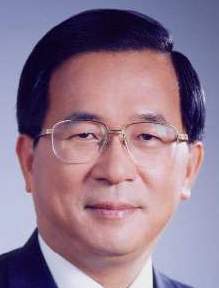
Chen Shui-bian |
Chen Shui-bian (name for foreign use), Wade-Giles Ch'en Shui-pien, Pinyin Chen Shuibian (b. October/November 19501, Kuantien, Tainan county, Taiwan), president of Taiwan (2000-08). He got involved in politics defending political dissidents during Taiwan's repressive martial law era, which ended after 38 years in 1987. He was imprisoned for eight months in 1986-87 for accusing a Nationalist politician of plagiarism. He became a leading figure in the Democratic Progressive Party, which was founded in 1986. Elected as Taipei's first opposition mayor in 1994, he held the DPP's top government office in Taiwan before he lost a close race to Nationalist Party challenger Ma Ying-jeou in 1998. The defeat is credited with prompting Chen to adopt a more moderate political style, giving him an image as a consensus builder that won him several important endorsements from intellectuals, who questioned whether Nationalist presidential candidate Lien Chan could clean up Taiwan's money politics and corruption. His election in 2000 ended the Nationalist Party's 51-year rule on the island. He swept to power on a split within the Nationalists and against their repeated warnings that his victory could provoke a war with China, which regards Taiwan as a breakaway province to be reunited with the mainland by force if necessary. Until 2000, Taiwanese had been wary about letting the DPP take control of state affairs because the party's platform called for formal independence from China - a step that Beijing said would lead to war. To win trust, Chen had to back down from his early vocal support of independence. He promised during the campaign he would not raise tensions with China but also said he would not compromise Taiwan's democracy and way of life in seeking reconciliation with China. He was shot and wounded in an assassination attempt on March 19, 2004, one day before he was narrowly reelected. He was chairman of the DPP in 2002-05 and 2007-08. After leaving office he was charged with corruption, money laundering, and embezzlement; he resigned from the DPP in August 2008. He was found guilty and sentenced to life in prison in September 2009 (reduced to 20 years in June 2010).
1 Because he was very weak as an infant, the family did not register his birth with the local census bureau until 1951. Thus, his identification certificate shows his date of birth as Feb. 18, 1951.
Chen Shyh-kwei, also called Steven S.K. Chen (b. 1952), Taiwanese governor of Fujian (2013).

Chen Tang-shan |
Chen Tang-shan, also called Chen Tan-sun or Mark Chen, Pinyin Chen Tangshan (b. Sept. 16, 1935, Tainan county, Taiwan), foreign minister of Taiwan (2004-06). He was also secretary-general to the president (2006-07, 2008).
Chen Wing Sum, Tun Michael (b. June 26, 1932, Chenderiang, Perak, Federated Malay States [now in Malaysia]), Malaysian politician. He was minister of housing and new villages (1974-76), housing and village development (1976-78), and housing and local government (1978-79) and president of the Dewan Negara (2000-03). He was awarded the titles Dato' (1977), Tan Sri (2002), and Tun (2017).
Chen Wu (b. November 1954 - d. Aug. 24, 2026, Beijing, China), chairman of the government of Guangxi (2013-20). He was also secretary of the Communist Party committee of Nanning city (2011-13).
Chen Xilian, Wade-Giles Ch'en Hsi-lien (b. Jan. 4, 1915, Hong'an county, Hubei, China - d. June 10, 1999, Beijing), Chinese politician. He joined the Red Army at the age of 14. Before the 1949 Communist victory, he served for 20 years under military commanders who would become some of China's most influential politicians. Promoted to general in 1955, Chen oversaw military operations in China's northeast (Manchuria) and then in Beijing. He was chairman of the Revolutionary Committee of Liaoning in 1968-73. He was named vice premier in 1975 and resigned five years later to make way for economic reformers favoured by paramount leader Deng Xiaoping.
Chen Xiru, Wade-Giles Ch'en Hsi-ju (b. 1859, Honolulu, Hawaii - d. 1937), civil governor of Guangdong (1922-23). A graduate of Yale University, he set up an English school especially for Chinese in the U.S. He and his father returned to China in 1890, running business in Hong Kong and Macau, holding the post of president of the Sino-Japan Bank seated in Hong Kong, and being a shareholder of the Guangdong-Hankou railway. He was a support of Sun Yat-sen's revolutionary movements, donating 270,000 yuan to Sun for his reshuffle of the Guangdong government. He was elected Guangdong governor by the provincial council in 1922, but was removed the next year, after which he returned to doing business in Hong Kong and Macau.
Chen Xitong (b. June 1930, Anyue county, Sichuan, China - d. June 2, 2013, Beijing, China), mayor of Beijing (1983-93). In December 1992 he became Communist Party secretary of Beijing but rumours began to fly that he and his staff were demanding major bribes in return for construction contracts and in 1995 he was removed from his post. He was sentenced to 16 years in prison in 1998 and released in 2006 on medical parole.
Chen Yaobang (b. December 1935), Chinese politician. He was minister of forestry (1997-98) and agriculture (1998-2001).
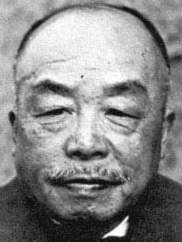
Chen Yi
(1883-1950) |
Chen Yi, Wade-Giles Ch'en Yi (b. May 5, 1883, Shaoxing, Zhejiang, China - d. June 18, 1950, Taiwan), civil governor (1926-27) and chairman of the government (1948-49) of Zhejiang, chairman of the government of Fujian (1933-41), and governor of Taiwan (1945-47). He studied abroad in Japan in 1902 and participated in the Chinese revolution a decade later. Having been a division commander in the Zhejiang Provincial Army, he went to Japan again in 1917 for further study, and became commander of the 1st Army, moonlighting as head of the garrison of Xuzhou city, Jiangsu. He turned to Chiang Kai-shek in December 1926, taking the leadership of the 19th Army. He was also the secretary-general of the Executive Yuan (premier's office). He was sent to Taiwan after the end of World War II, holding the governor's post as well as that of head of garrison. In early 1949, he tried to persuade Gen. Tang Enbo to turn to the Communist Party, but was sold out by Tang and executed the following year.

Chen Yi
(1901-72) |
Chen Yi, Wade-Giles Ch'en I (b. Aug. 26, 1901, Lochi, near Chengdu, Sichuan, China - d. Jan. 6, 1972, Beijing, China), mayor of Shanghai (1949-58) and foreign minister of China (1958-72).
Chen Yonggui, Wade-Giles romanization Ch'en Yung-kuei (b. Feb. 14, 1915, Xiyang, Shanxi, China - d. March 26, 1986, Beijing, China), Chinese politician. In 1950 he set up the Dazhai (Ta-chai) agricultural commune and gained national prominence by touting its accomplishments, by receiving delegations of admirers, and by traveling to other communes to promote Dazhai work methods. Mao Zedong made Dazhai a national symbol, and the slogan "In agriculture, learn from Dazhai!" was emblazoned on walls throughout the country in an effort to stimulate workers into emulating the commune. Chen reportedly mobilized 83 families to carve granite slabs out of the hillsides and to construct terraces and reservoirs. In 1973 he was elected a member of the Politburo of the Chinese Communist Party, and in 1975 he was appointed vice-premier. He also headed friendship delegations to Mexico (1975) and Cambodia (1977) and was elected (1978) deputy for Shanxi province. After the entire operation was exposed as a sham in 1978, it was revealed that battalions of army labourers had terraced the hills and dug irrigation ditches and that grain output had actually decreased year after year, with peasants going hungry. Deng Xiaoping scrapped Mao's system of agricultural communes, and though Chen remained in the Politburo and the Central Committee until 1982, he was later posted to the Dongjiao farm and was not heard from again until his death.
Chen Youren (Wade-Giles Ch'en Yu-jen), also known as Eugene Chen (b. 1878, San Fernando, Trinidad [now in Trinidad and Tobago] - d. May 20, 1944, Shanghai, China), foreign minister of China (1931-32). He was named a legal adviser of the transport ministry upon the founding of the Beijing government in 1912, later becoming an adviser of Sun Yat-sen on foreign affairs and taking up the foreign ministry after Chiang Kai-shek took power. As a Kuomintang leftist, Chen participated in the Fujian Incident against Chiang in 1932, holding the foreign ministry in the Fujian People's Revolutionary Government led by Li Jishen. He fled abroad upon their defeat and then moved to Hong Kong in 1937; he lived in Shanghai from 1941.
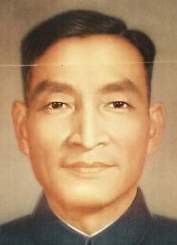
Chen Yun |
Chen Yun, Wade-Giles romanization Ch'en Yün, original name Liao Ch'eng-yün (b. June 13, 1905, Qingpu, Jiangsu, China - d. April 10, 1995, Beijing, China), a vice premier of China (1949-75, 1979-82). He joined the Communist Party in 1924 under the tutelage of Zhou Enlai (later premier). He took part in the Long March (1934-35) and spent 1935-37 in the Soviet Union. During World War II he was active in organizational work for the party and from 1945 to 1949 he played important roles in political and economic developments in Manchuria. He then directed China's economy after the defeat (1949) of the Nationalist government, becoming minister of heavy industry (1949-50) and commerce (1956-58) and chairman of the State Commission for Capital Construction (1958-61). As vice premier (he also acted as premier during Zhou's absence), and as a member of the all-powerful Standing Committee of the party Politburo, Chen stressed sound planning and prudent policies. This approach put him at odds with Mao Zedong, who launched the disastrous Great Leap Forward (1958-59) in the hope that China could be transformed into an instant superpower by forcing labourers into communes and installing backyard blast furnaces throughout the land. As a consequence of his differences with Mao, Chen lost administrative posts and power. His return to prominence, believed to have been engineered by Deng Xiaoping, began late in 1978 with election to the Politburo and appointment as a vice chairman of the Communist Party. His designation as a vice premier and head of the new State Finance and Economic Commission in July 1979 seemed to confirm his role as undisputed czar of China's economy during the critical years that lay ahead. Chen quickly established his authority by redesigning China's plans for modernizing the economy. Evidently feeling that the original goals were too ambitious and probably unattainable, he opted for less frantic development and more emphasis on light industry.
Chen Zhaochang, Wade-Giles Ch'en Chao-ch'ang (b. 1867, Xinhui, Guangdong, China - d. Oct. 24, 1914, Shanghai, China), governor of Jilin (1908-13). He was appointed the secretary of the ministry of personnel affairs in the early 1900s, and subsequently governor. He continued his term as governor despite the fall of the imperial government. He resigned for failing health in 1913.
Chen Zhenggao (b. March 1952, Haicheng, Liaoning, China - d. June 16, 2024, Beijing, China), governor of Liaoning (2007-14). He was also mayor (2000-05) and secretary of the party committee (2005-07) of Shenyang and Chinese minister of housing and urban-rural development (2014-17).
Chenaux-Repond, Dieter (Eric) (b. July 22, 1934, Bombay [now Mumbai], India - d. Oct. 18, 2000, Basel, Switzerland), Swiss diplomat. He was ambassador to Turkey (1980-83), Japan (1983-87), and Germany (1992-99) and permanent observer to the United Nations (1987-92).
Cheney, Person C(olby) (b. Feb. 25, 1828, Holderness [now Ashland], N.H. - d. June 19, 1901, Dover, N.H.), governor of New Hampshire (1875-77). He was also a U.S. senator from New Hampshire (1886-87) and minister to Switzerland (1892-93).
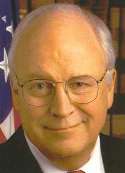
R. Cheney |
Cheney, Richard (Bruce), byname Dick Cheney (b. Jan. 30, 1941, Lincoln, Neb. - d. Nov. 3, 2025), U.S. vice president (2001-09). In Washington, D.C., on a congressional fellowship in 1968, he caught the eye of Donald Rumsfeld, director of the Office of Economic Opportunity, and became Rumsfeld's special assistant in 1969. He was on the White House staff in 1970-71 and served as an assistant director of the Cost of Living Council from 1971 to 1973, when Rumsfeld was director. When Rumsfeld became assistant to the president and chief of staff of the White House in 1974, Cheney became his deputy. From 1975 to 1977 Cheney himself was chief of staff. He won the first of six consecutive terms as U.S. representative from Wyoming in 1978. He served on the Select Committee on Intelligence and became chairman of the Republican Conference in 1987 and minority whip in December 1988. On March 9, 1989, the U.S. Senate rejected Pres. George Bush's nomination of John Tower as defense secretary, and the next day, Bush nominated the respected Cheney. He took office on March 17 after having been confirmed by the Senate by a vote of 92-0. He presided over reductions in the military following the breakup of the Soviet Union and oversaw the U.S. military invasion of Panama (1989) and the U.S. participation in the Persian Gulf War (1991). After President Bush lost his reelection bid in 1992, Cheney became a fellow at the American Enterprise Institute, a conservative think tank. On July 25, 2000, Republican presidential candidate George W. Bush announced that Cheney was his running mate. What he brought to the ticket was experience in national government and in foreign affairs, both of which Bush lacked. He became one of the most active and influential vice presidents in the history of that office.
Cheng Andong (b. October 1936, Huainan, Anhui, China), governor of Shaanxi (1994-2002). He was also mayor of Nanchang (1984-90) and secretary of the party committee of Xi'an (1990-94).
Cheng Dequan |
Cheng Dequan, Wade-Giles Ch'eng Te-ch'üan (b. July 22, 1860, Yunyang, Sichuan, China - d. April 29, 1930, Shanghai, China), military governor of Jiangsu (1911-12, 1912-13). He was civil governor of Heilongjiang in Qing times, and then was sent to Fengtian (now Liaoning) and later to Jiangsu. In 1911 the Jiangsu Military Government was founded in opposition to the Qing dynasty, and he was forced to declare independence. With the support of the constitutional monarchists as well as some bureaucrats, he and his other monarchist colleagues managed to maintain their posts, only breaking some bricks of the old provincial government hall into pieces so as to show that a revolution was necessary. As a leader of the Republican Party of China, which held about 20 seats in the first-ever Congress of China, he was a supporter of Yuan Shikai, fleeing from office to Shanghai as revolutionary forces gained control over the Jiangsu capital Nanjing during the "Second Revolution" in 1913-14. In Shanghai, he cancelled the independence of Jiangsu claimed by the Kuomintang, in order to show his support to President Yuan.
Cheng Heng |
Cheng Heng (b. Jan. 10, 1910, Samlong, Takeo province, Cambodia - d. March 15, 1996), head of state of Cambodia (1970-72); son-in-law of Ung Hy. He was also president of the National Assembly (1968-70). He lived in exile in the United States in 1975-92.
Cheng Ke, Wade-Giles Ch'eng K'e (b. 1878, Kaifeng, Henan, China - d. March 28, 1936, Tianjin, China), governor-general of Altay (1915-18) and justice minister (1923-24) and interior minister (1924) of China. He joined the Chinese Revolutionary Alliance in Japan and later became an advisor in the president's office. Before he took office in Altay, he had been a magistrate in Hanzhong city, Shaanxi. His top-official career started after Duan Qirui took power. He was first elected a member of the House of Representatives and then seated himself in the cabinet. He resigned in September 1924 and then moved to Tianjin, where he was nominated as mayor in 1934.
Cheng Kejie |
Cheng Kejie (b. Nov. 13, 1933, Shanglin, Guangxi, China - d. Sept. 14, 2000, Beijing, China), chairman of the government of Guangxi (1989-98). He joined the Chinese Communist Party in February 1984. He held a series of leading party and government positions in the Guangxi autonomous region until 1998 when he became a vice chairman of the Standing Committee of the National People's Congress. In 2000 he was executed on charges of bribery.
Cheng Li-chiun (b. June 19, 1969, Taiwan), vice premier of Taiwan (2024- ). He was also chairman of the National Youth Commission (2004-08) and minister of culture (2016-20).
Cheng Weigao (b. September 1933, Suzhou, Jiangsu, China - d. Dec. 28, 2010, Changzhou, Jiangsu), governor of Henan (1987-90) and Hebei (1990-93) and party secretary of Hebei (1993-98).
Cheng Wen-tsan (b. July 6, 1967, Taiwan), vice premier of Taiwan (2023-24). He was also director-general of the Government Information Office (2006-07) and mayor of Taoyuan (2014-22).
Chengappa, Diwan Bahadur Ketoli (b. March 3, 1878 - d. 1963), chief commissioner of Coorg (1943-47).
Chenik | 
Chepik |
Chenik, M'Hamed, Arabic Muhammad Shiniq (b. May 1889, Tunis - d. Nov. 20, 1976, Radès, Tunisia), prime minister of Tunisia (1943, 1950-52). He was arrested on March 26, 1952, and exiled to Remada (in the south) until May 1953.
Chenot, Bernard (Marie Émile) (b. May 20, 1909, Paris, France - d. June 5, 1995, Paris), justice minister of France (1961-62). He was also minister of public health and population (1958-61).
Chentsov, Vsevolod (Valeriyovych) (b. April 10, 1974, Drogobych, Lvov oblast, Ukrainian S.S.R. [now Drohobych, Lviv oblast, Ukraine]), a deputy prime minister of Ukraine (2026- ). He was also ambassador to the Netherlands (2017-21).
Chepelevsky, Ivan (Ilich) (b. 1842 - d. 19...), governor of Vilna (1896-99) and Vitebsk (1899-1904).
Chepik, Aleksandr (Yevgenyevich) (b. July 13, 1974, Rybnoye, Ryazan oblast, Russian S.F.S.R.), prime minister of Karelia (2017-25) and chairman of the government of Kursk oblast (2025- ). He was also a deputy prime minister of Buryatia (2008-17).
Cheplakov, Pyotr (Fyodorovich) (b. 1906, Baku, Russia [now in Azerbaijan] - d. 1985), first secretary of the Communist Party committees of Grozny oblast (1944-49) and Sakhalin oblast (1951-60).
Cherdabayev, Ravil (Tazhigariyevich) (b. May 26, 1940, Dossor, Guryev [now Atyrau] oblast, Kazakh S.S.R.), head of Atyrau oblast (1994-99). He was also Kazakh minister of oil and gas industry (1994) and ambassador to Ukraine and Moldova (1999-2003).
Cherdchai Chaivaivid, Thai diplomat. He has been permanent representative to the United Nations (2024- ).
Cheremovsky, Viktor (Borisovich) (b. July 16, 1944, Sumposad, Karelo-Finnish S.S.R. [now Karelia, Russia]), acting chairman of the Presidium of the Supreme Soviet of the Karelian A.S.S.R. (1985-86).

Chérestal |
Chérestal, Jean-Marie (Antoine Polénus), byname Pompon (b. June 18, 1947, Port-Salut, Haiti), finance minister (1995-96) and prime minister (2001-02) of Haiti. He was a presidential candidate in 2006, winning 0.3% of the vote.
Cherian, P(alathnikal) V(arkey) (b. July 9, 1893 - d. Nov. 9, 1969, Bombay [now Mumbai], India), governor of Maharashtra (1964-69). He was also mayor of Madras (1949-50).
Cherkaoui, Mohamed (b. March 5, 1921, Oued Zem, Morocco - d. Dec. 31, 2022, Rabat, Morocco), foreign minister of Morocco (1966-67); brother-in-law of Hassan II. He was also minister of posts, telegraphs, and telephones (1960-61), economy and finance (1964-65), and development (1965-66) and ambassador to France (1961-64).
Cherkaoui, Taib, also spelled Taïeb (b. 1949, Boujaad, Morocco), interior minister of Morocco (2010-12). He was also president of the Supreme Court (2008-10).
Cherkassky, Knyaz (Prince) Aleksey (Mikhailovich) (b. Oct. 8 [Sept. 28, O.S.], 1680, Moscow, Russia - d. Nov. 15 [Nov. 4, O.S.], 1742, Moscow), president of the Collegium of Foreign Affairs and chancellor of Russia (1740-42); son-in-law of Knyaz Yury Trubetskoy and Lev Naryshkin; brother-in-law of Knyaz Yakov Dolgoruky. He was also governor of Siberia (1719-24) and a cabinet minister (1731-41).
Cherkassky, Knyaz (Prince) Pyotr (Borisovich) (d. August 1768), governor of Novgorod (1743-60) and governor-general of Moscow (1760-62); son-in-law of Graf Pyotr (Matveyevich) Apraksin.
Cherkassky, Knyaz (Prince) Vladimir (Aleksandrovich) (b. Feb. 14 [Feb. 2, O.S.], 1824, Chernsky uyezd, Tula province, Russia - d. March 3 [Feb. 19, O.S.], 1878, San Stefano, Ottoman Empire [now Yesilköy, part of Bakirköy, Istanbul province, Turkey]), Russian official; brother-in-law of Graf Pavel Baranov. He was mayor of Moscow (1869-71).
Cherkesov, Georgy (Mashtayevich) (b. Nov. 10, 1938, Kashkhatau, Kabardino-Balkar A.S.S.R., Russian S.F.S.R. - d. Dec. 3, 2015), prime minister of Kabardino-Balkariya (1991-97).
Cherkesov, Ishu (Ortabayevich) (b. 1900, Kashkhatau, Terek oblast [now in Kabardino-Balkariya republic], Russia - d. March 16, 1944), chairman of the Executive Committee (from 1937 Executive Committee of Soviets) of the Kabardino-Balkar autonomous oblast/A.S.S.R. (1934-38).
Cherkesov, Viktor (Vasilyevich) (b. July 13, 1950, Leningrad, Russian S.F.S.R. [now St. Petersburg, Russia] - d. Nov. 8, 2022, St. Petersburg), plenipotentiary of the president in Severo-Zapadny federal district (2000-03). He was also director of the Federal Drug Control Service (2003-08) and head of the Federal Agency for the Procurement of Armaments, Military and Special Equipment, and Material Resources (2008-10).
Cherkeziya, Otar (Yevtikhiyevich) (b. Sept. 26, 1933 - d. October 2004), chairman of the Council of Ministers (1986-89) and chairman of the Presidium of the Supreme Soviet (1989) of the Georgian S.S.R. He was also a deputy premier (1973-85) and first deputy premier (1985-86).
Chermont, Abel (de Abreu) (b. June 21, 1887, Belém, Pará, Brazil - d. Sept. 19, 1962, Rio de Janeiro, Brazil), member of the Governing Junta of Pará (1930); nephew of Justo Leite Chermont.
Chermont, Antônio de Lacerda, barão de Acary (b. Oct. 16, 1806, Chaves, Pará, Brazil - d. Aug. 5, 1879, Belém, Pará), acting president of Pará (1866, 1867, 1868).
Chermont, Jayme Sloan (b. April 5, 1903, London, England - d. Oct. 15, 1983, Rio de Janeiro, Brazil), Brazilian diplomat; son-in-law of Afrânio de Mello Franco. He was ambassador to the United Kingdom (1966-68).
Chermont, Justo (Pereira) Leite (b. June 27, 1857, Belém, Pará, Brazil - d. April 2, 1926), president of Pará (1889-91) and foreign minister of Brazil (1891); son of Antônio de Lacerda Chermont.
Chermont, Mário Midosi (b. Sept. 28, 1889 - d. May 6, 1951, Rio de Janeiro, Brazil), member of the Governing Junta of Pará (1930, 1930); nephew of Justo Leite Chermont.
Chermont, (Dominique) Prosper de (b. Nov. 24, 1741, Toul [now in Meurthe-et-Moselle département], France - d. Sept. 13, 1798, Pondicherry, French India), acting governor-general of the Mascarene Islands (1790) and governor of Île Bourbon (1790-92) and French India (1792-93).
Chermside, Sir Herbert Charles (b. July 31, 1850, Wilton, near Salisbury, Wiltshire, England - d. Sept. 24, 1929, London, England), governor of Queensland (1902-04); knighted 1897.

Chernenko |
Chernenko, Konstantin (Ustinovich) (b. Sept. 24 [Sept. 11, O.S.], 1911, Bolshaya Tes, Yeniseysk [now in Krasnoyarsk kray], Russia - d. March 10, 1985, Moscow, Russian S.F.S.R.), general secretary of the Communist Party of the Soviet Union (1984-85). He joined the Communist Party in 1931. Trained as a party propagandist, he held several administrative posts before becoming head of agitation and propaganda (agitprop) in Moldavia (1948-56), where he was first noticed by Leonid Brezhnev and brought to Moscow to head a similar department for the party's Central Committee (1956-60). When Brezhnev took over the party in 1964, he made Chernenko his chief of staff. Chernenko was a full member of the Central Committee from 1971 and a candidate from 1977 and full member from 1978 of the Politburo. An old-line conservative, Chernenko traveled extensively with Brezhnev and was considered his aide, confidant, and, by some observers, his heir apparent. After Brezhnev's death, however, he was unable to rally a majority of the party factions behind his candidacy to be head of the party and lost out to Yury Andropov, the former KGB chief, who became general secretary on Nov. 12, 1982. However, Andropov had become mortally ill by the following August, and after his death six months later, Chernenko succeeded him as general secretary of the Communist Party of the Soviet Union on Feb. 13, 1984. On April 12 he became chairman of the Presidium of the Supreme Soviet. Like his predecessor, Chernenko began showing signs of deteriorating health shortly after taking office. His frequent absences from official functions because of illness left little doubt that his election had been an interim measure, and upon his death he was succeeded by Mikhail Gorbachev.
Chernitsov, Aleksandr (Ivanovich) (b. Oct. 15, 1952, Semivrazhki, Penza oblast, Russian S.F.S.R.), chairman of the government of Penza oblast (2008-09).
Chernogorov, Aleksandr (Leonidovich) (b. July 13, 1959, Vozdvizhenka village, Stavropol kray, Russian S.F.S.R.), governor of Stavropol kray (1996-2008).

Chernomyrdin |
Chernomyrdin, Viktor (Stepanovich) (b. April 9, 1938, Cherny Ostrog, Orenburg oblast, Russian S.F.S.R. - d. Nov. 3, 2010, Moscow, Russia), prime minister of Russia (1992-98). He joined the Communist Party in 1961 and worked his way up to join the Central Committee's industry department. He became gas industry minister in 1985 under Soviet leader Mikhail Gorbachev. Chernomyrdin won an international business reputation as chairman (1989-92) of Gazprom, the natural-gas monopoly. He left the party in 1991. In December 1992 he was named prime minister. His prestige rose in mid-1994 when he played a crucial role in gaining the release of Russian citizens held hostage by rebel forces in Chechnya and in bringing about negotiations to end the Chechen war. In mid-1995, he formed a political party, tacitly backed by Pres. Boris Yeltsin, named Our Home is Russia. In parliamentary elections held in mid-December 1995, he led the party to capture slightly over 10% of the vote. On March 23, 1998, Yeltsin sacked him without explanation, replacing him with Sergey Kiriyenko. Yeltsin later said the sacking was due to Chernomyrdin's lack of reformist stamina. But some Kremlin sources said the growing political weight of the premier was the real reason. Yeltsin, they said, feared Chernomyrdin had become too powerful. Chernomyrdin, abandoned by the Kremlin chief, announced plans to run for president in 2000, revealing an ambition he had long denied harbouring. But on August 23 Yeltsin removed Kiriyenko and recalled Chernomyrdin as acting premier and even endorsed him as his heir apparent. However, this time he failed to retain his reputation as politically "unsinkable." The Duma rejected him, although like Chernomyrdin, many of the Duma members were former Communists and Soviet-era managers and had backed him on many previous occasions. In 2001-09 he was ambassador to Ukraine.
Chernousov, Boris (Nikolayevich) (b. 1908 - d. Jan. 2, 1978), chairman of the Council of Ministers of the Russian S.F.S.R. (1949-52).
A. Chernov | 
P. Chernov |
Chernov, Alex (b. May 12, 1938, Lithuania), governor of Victoria (2011-15).
Chernov, Pavel (Viktorovich) (b. Jan. 7, 1950, Malo-Makatelen, Gorky [now Nizhny Novgorod] oblast, Russian S.F.S.R.), prime minister of Karelia (2003-10). He was also chairman of the State Committee for Construction, Construction Industry, and Architecture (1998-2002), a deputy prime minister (2000-01, 2002-03), and acting first deputy prime minister (2001-02).
Chernov, Viktor (Mikhailovich) (b. Dec. 1 [Nov. 19, O.S.], 1873, Kamyshin, Saratov province [now in Volgograd oblast], Russia - d. April 15, 1952, New York City), Russian politician. Founder of the Social Revolutionary Party, he was minister of agriculture (1917) and president of the Constituent Assembly (1918). During his revolutionary career he used a number of pseudonyms, including Boris Olenin and Yury Gardenin.
Chernov, Vyacheslav (Fyodorovich) (b. June 30, 1939, Chistoozernoye, Novosibirsk oblast, Russian S.F.S.R.), head of Semey oblast (1992-94). He was also chairman of the Executive Committee of Zhambyl oblast (1990-92).
Chernovetskyi, Leonid (Mykhailovych) (b. Nov. 25, 1951, Kharkov [Kharkiv], Ukrainian S.S.R.), Ukrainian politician. He was a minor presidential candidate (2004) and mayor of Kiev (2006-12).
Chernyavsky, Andrey (Gavrilovich) (b. July 2, 1867 - d. [executed] Dec. 11, 1937), governor of Tiflis (1911-14), Vyatka (1914-15), Minsk (1915-16), and Yekaterinoslav (1916-17).
Chernyayev, Mikhail (Grigoryevich) (b. Nov. 3 [Oct. 22, O.S.], 1828 - d. Aug. 16 [Aug. 4, O.S.], 1898, in present Mahilyow voblasts, Belarus), governor-general of Turkestan (1882-84). He was also governor of Turkestan oblast (1865-66).
Chernyshenko, Dmitry (Nikolayevich) (b. Sept. 20, 1968, Saratov, Russian S.F.S.R.), a deputy prime minister of Russia (2020- ).
Chernyshev, Knyaz Aleksandr (Ivanovich) (b. Jan. 10, 1786 [Dec. 30, 1785, O.S.], Moscow, Russia - d. June 20 [June 8, O.S.], 1859, Castellammare di Stabia, Two Sicilies [now in Italy]), war minister of Russia (1827-52); son of Ivan Chernyshev; son-in-law of Knyaz Aleksandr Beloselsky-Belozersky. He was also chairman of the Imperial State Council and of the Committee of Ministers (1848-56). He was made Graf (count) in 1826 and Knyaz (prince) in 1841.
Chernyshev, Aleksey (Andreyevich) (b. March 29, 1939), head of the administration of Orenburg oblast (1999-2010).
Chernyshev, Graf Grigory (Petrovich) (b. Jan. 31 [Jan. 21, O.S.], 1672 - d. Aug. 10 [July 30, O.S.], 1745), governor of Voronezh (1725-26) and Riga (1727-29) and governor-general of Moscow (1730-35). He was made Graf (count) in 1742.
Chernyshev, Graf Ivan (Grigoryevich) (b. Dec. 5 [Nov. 24, O.S.], 1726, St. Petersburg, Russia - d. 1797), Russian official; son of Graf Grigory Chernyshev; brother of Graf Pyotr Chernyshev and Graf Zakhar Chernyshev. He was ambassador to Great Britain (1768-70) and president of the Admiralty Collegium (1796-97).
Chernyshev, Ivan (Lvovich) (b. Oct. 22, 1736 - d. Feb. 3, 1793), governor of Kostroma (1781-84).
Chernyshev, Graf Pyotr (Grigoryevich) (b. April 4 [March 24, O.S.], 1712 - d. August 1773), Russian diplomat; son of Graf Grigory Chernyshev. He was minister to Denmark (1741), Prussia (1741-44, 1744-46), and Great Britain (1746-55) and ambassador to France (1760-62).
Chernyshev, Graf Zakhar (Grigoryevich) (b. March 29 [March 18, O.S.], 1722, St. Petersburg, Russia - d. Sept. 9 [Aug. 29, O.S.], 1784, Moscow, Russia), governor-general of Pskov and Mogilyov (1773-76), Polotsk and Mogilyov (1776-82), and Moscow (1782-84); son of Graf Grigory Chernyshev; brother of Graf Pyotr Chernyshev. He was also president of the Russian Collegium of War (1773-74).
Chernyshov, Oleksiy (Mykhailovych) (b. Sept. 4, 1977, Kharkov, Ukrainian S.S.R. [now Kharkiv, Ukraine]), a deputy prime minister of Ukraine (2024-25). He was also governor of Kyiv oblast (2019-20), minister of community and territorial development (2020-22) and national unity (2024-25), and head of Naftogaz (2022-24).
Chero Medina, Félix (Inocente) (b. June 22, 1970, Castilla, Piura, Peru), justice minister of Peru (2022).
Chéron, Henry (Frédéric) (b. May 11, 1867, Lisieux, Calvados, France - d. April 14, 1936, Lisieux), finance minister of France (1928-30, 1932-33). He was also minister of labour and social security provisions (1913), agriculture (1922-24), commerce, industry, posts and telegraphs (1928), and justice (1930-31, 1934).
Cherry, Francis (Adams) (b. Sept. 5, 1908, Fort Worth, Texas - d. July 15, 1965, Washington, D.C.), governor of Arkansas (1953-55).
Cherry, R(obert) Gregg (b. Oct. 17, 1891, Catawba Junction, York county, S.C. - d. June 25, 1957, Gastonia, N.C.), governor of North Carolina (1945-49).
Chertkov, Andrey (Gennadyevich) (b. April 9, 1969, Shatki, Gorky oblast, Russian S.F.S.R. [now Nizhny Novgorod oblast, Russia]), prime minister of the Donetsk People's Republic (2025- ). He was also acting mayor of Nizhny Novgorod (2015) and minister of coal and energy (2022-23), a deputy prime minister (2022-23), and first deputy prime minister (2023-25) of the Donetsk People's Republic.
Chertkov, Mikhail (Ivanovich) (b. Aug. 14 [Aug. 2, O.S.], 1829, St. Petersburg, Russia - d. October 1905), governor of Voronezh (1861-64) and Volyn (1864-66), ataman of the Don Cossack Host (1868-74), and governor-general of Kiev, Podolia, and Volyn (1878-81) and Warsaw (1901-05); grandson of Graf Grigory Stroganov; brother-in-law of Graf Pyotr Shuvalov.
Chertorivski Woldenberg, Salomón (b. Sept. 28, 1974, Mexico City, Mexico), Mexican politician. He was minister of health (2011-12).
Chervenkov, Chavdar (Velyov) (b. May 31, 1941, Sofia, Bulgaria), interior minister of Bulgaria (1994-95). He was also ambassador to Tunisia (1993-99).
V. Chervenkov |
Chervenkov, Vulko (Velyov) (b. Sept. 6, 1900, Zlatitsa, Bulgaria - d. Oct. 21, 1980, Sofia, Bulgaria), Bulgarian politician. He joined the Bulgarian Workers' Party in 1919 and was (1920-25) a member of the Central Committee of the Communist Youth League. In September 1923 he took part in an unsuccessful Communist uprising. He was editor of the legal crypto-Communist newspaper Budashte ("Future") and the underground Voinishki Glas ("Soldier's Voice"). In October 1925 he fled to Moscow, where he studied at the Marx-Lenin School of which he eventually became director. In 1941, shortly after the German aggression against the U.S.S.R., he was appointed director of the Khristo Botev radio station, which broadcast to Bulgaria. In September 1944 Georgi Dimitrov, head of the Comintern and Chervenkov's brother-in-law, sent him to Bulgaria where he was elected a member of the Central Committee of the Bulgarian Communist Party (BCP). In September 1947, he was a Bulgarian delegate at the conference in Poland at which the Cominform was created. On Dec. 12, 1947, he was appointed minister of culture and on July 20, 1949, first deputy prime minister. After the death of Vasil Kolarov in January 1950, he was named premier, and in November 1950 also secretary-general of the party, having been unofficial party leader already since the death of Dimitrov in 1949. His position was seriously weakened after the death of Iosif Stalin in 1953 and became precarious with Khrushchev's denunciation (1956) of the Stalin personality cult. On April 17, 1956, Chervenkov was replaced as premier, but for five years he remained in office as one of the deputy premiers (and minister of education and culture in 1957-58). In 1962 he was expelled from the BCP, but he was silently rehabilitated seven years later.
Chervenyakov, Mladen (Petrov) (b. Aug. 22, 1954, Sofia, Bulgaria), justice minister of Bulgaria (1995-97). He was also ambassador to Montenegro (2014-18) and Slovenia (2019-23).
Chervyakov, Aleksandr (Grigoryevich), Belorussian Alyaksandr (Ryhoravich) Charvyakou (b. March 8 [Feb. 25, O.S.], 1892, Dukorki, Minsk province, Russia [now in Belarus] - d. June 16, 1937, Minsk, Belorussian S.S.R.), chairman of the Council of People's Commissars (1920-24) and chairman of the Central Executive Committee (1920-37) of the Belorussian S.S.R. and co-chairman of the Central Executive Committee of the U.S.S.R. (1922-37).
Cheshire, Sir John (Anthony) (b. Sept. 4, 1942), lieutenant governor of Jersey (2001-06); knighted 1995.

Chesnais-Girard |
Chesnais-Girard, Loïg (b. March 25, 1977, Lannion, Côtes-d'Armor, France), president of the Regional Council of Bretagne (2017- ).
Chesnokov, Nikolay (Yermolayevich) (b. August 1905, Vyazniki, Vladimir province [now in Vladimir oblast], Russia - d. March 20, 1982, Moscow, Russian S.F.S.R.), Soviet politician. He was a deputy premier (1943-47, 1955-57), minister of local industry (1953, 1954-55) and local and fuel industry (1953-54), and a minister without portfolio (1957-58) of the Russian S.F.S.R. and minister of light industry of the U.S.S.R. (1947-48).
Chessé, Henri Isidore (b. May 20, 1839, Le Marin, Martinique - d. 1912), commandant of the French Settlements in Oceania (1880-81) and governor of French Guiana (1883-84).
Chesterfield, Philip Dormer Stanhope, (4th) Earl of (b. Sept. 22, 1694, Westminster, Middlesex [now part of London], England - d. March 24, 1773, Westminster), lord lieutenant of Ireland (1745-47). He succeeded as earl in 1726.
Chetta Thanajaro (b. Aug. 23, 1938), defense minister of Thailand (2004).

Chettiar | 
Chevallaz |
Chettiar, Angidi (Veeriah) (b. April 29, 1928, Madurai [now in Tamil Nadu], India - d. Sept. 15, 2010, Moka, Mauritius), vice president (1997-2002, 2007-10) and acting president (2002) of Mauritius.
Chetty, (Medason) Chamery (b. April 14, 1927, Pondicherry [now Puducherry], India - d. 1992, England), finance minister of Seychelles (1975-77). He was also minister of agriculture (1970-75).
Chetty, Sir R.K. Shanmukham (b. Oct. 17, 1892, Coimbatore [now in Tamil Nadu], India - d. May 5, 1953, Coimbatore), finance minister of India (1947-48); knighted 1933. He was also president of the Indian Legislative Assembly (1933-34) and dewan of Cochin (1935-41).
Chevalier, (Louis Antoine) Jacques (b. March 13, 1882, Cérilly, Allier, France - d. April 19, 1962, Cérilly), French politician. He was minister of public instruction and youth (1940-41) and family and health (1941).
Chevallaz, Georges-André (b. Feb. 7, 1915, Lausanne, Vaud, Switzerland - d. Sept. 8, 2002, Lausanne), Swiss politician. He was mayor of Lausanne in 1957-73. Elected to the Swiss parliament in 1959 for the centrist Liberal Democrats, he became a minister in the seven-member coalition cabinet in 1973. As finance minister (1974-79, 1983), he was tasked with getting Switzerland through the oil crisis of the 1970s. He implemented a number of austerity measures, including a tax on gas and tobacco products, a freeze on hiring of government staff and on government subsidies of health insurance. However, his attempts to introduce value-added tax were twice rejected by the Swiss people in referendums. Chevallaz was president in 1980 under Switzerland's rotating system, and in the same year moved to head the Defense Ministry, a position he held until he retired in 1983.
Chevallier, Harvey (b. March 31, 1861, Rushmere, Suffolk, England - d. Sept. 2, 1923, Suffolk), British resident in Brunei (1907, 1909-13) and Pahang (acting, 1908-09).
Chevallier, Jacques (b. Nov. 15, 1911, Bordeaux, France - d. April 13, 1971, El Biar, Algeria), defense minister of France (1955).
Chevallier, Victorin, byname of Victor Jean-Marie Eustache Chevallier (b. Dec. 9, 1815, Port-au-Prince, Haiti - d. Dec. 28, 1869, Fort Bizoton, west of Port-au-Prince), member of the Provisional Government of Haiti (1867).
Chevance, Jean (Paul Charles) (b. June 22, 1929, Achères, Seine-et-Oise [now in Yvelines], France - d. May 13, 2021, Neuilly-sur-Seine, Hauts-de-Seine, France), prefect of Martinique (1981-85). He was also prefect of the French département of Loire-Atlantique (1985-86).
Chevandier de Valdrôme, Jean-Pierre Napoléon Eugène (b. Aug. 17, 1810, Saint-Quirin, Moselle, France - d. Dec. 1, 1878, Paris, France), interior minister of France (1870).
Chevènement |
Chevènement, Jean-Pierre (b. March 9, 1939, Belfort, France), French politician. He began his administrative career as a commercial attaché in the Ministry of Economy and Finance. After joining the SFIO (Section Française de l'Internationale Ouvrière) in 1964, he was secretary-general (1965-71) of the Centre d'Études, de Recherches et d'Éducation Socialistes (CERES). In 1971, at the congress on Socialist unity at Épinay-sur-Seine, he became the ally of François Mitterrand. He was appointed national secretary of the Socialist Party that year and was one of the main negotiators of the joint program with the Communists and other left-wing parties. He was first elected a deputy for Belfort in 1973. In 1975, at the Socialist Party's Pau congress, he was removed from the party leadership and went into a four-year "exile." But at the Metz congress in 1979 he supported Mitterrand, and the Socialist Party Committee extended the National Secretariat to members of the CERES. He was the main editor of the "Socialist Plan" on which Mitterrand based his presidential manifesto. He became minister for research and technology (1981-83) and industry (1982-83), thus gaining the means to carry out his plans to make France a major power in advanced technology. He was education minister in 1984-86. In 1988 he became defense minister, resigning in 1991 to protest France's involvement with the U.S.-led alliance in the Gulf War against Iraq. He was president of the Movement of Citizens party in 1993-2001. In 1997 he became interior minister. His heart stopped Sept. 2, 1998, after he suffered an allergic reaction to curare, a muscle relaxant, just before gallbladder surgery. He spent eight days in a coma. He returned to work on Jan. 4, 1999. He resigned in 2000 and was a presidential candidate in 2002, winning 5% of the vote. In 2002-04 he was president of the Republican Pole, and in 2008-10 of the Republican and Citizen Movement, which he left in 2015.
Chevigné |
Chevigné, Pierre (Gabriel Adhéaume, comte) de (b. June 16, 1909, Toulon, France - d. Aug. 4, 2004, Biarritz, Pyrénées-Atlantiques, France), high commissioner of Madagascar (1948-50) and armed forces minister of France (1958).
Chevkin, Konstantin (Vladimirovich) (b. May 8 [April 26, O.S.], 1803, Kamenets-Podolsky, Russia [now Kamyanets-Podilskyi, Ukraine] - d. Nov. 15, 1875, Nice, France), Russian official; son of Vladimir Chevkin. He was head of the Chief Administration of Communications and Public Buildings (1855-62).
Chevkin, Vladimir (Ivanovich) (b. 1754 - d. Jan. 30 [Jan. 18, O.S.], 1831), governor of Podolia (1801-08).
Chevreau, (Julien Théophile) Henri (b. April 28, 1823, Paris, France - d. May 26, 1903, Yerres, Seine-et-Oise [now in Essonne], France), interior minister of France (1870). He was also prefect of Ardèche (1849-52), Loire-Inférieure (1853-64), Rhône (1864-70), and Seine (1870) départements.
Chevreau, Théophile Léon (b. Oct. 24, 1827, Saint-Mandé, Seine [now in Val-de-Marne], France - d. March 16, 1910, Paris, France), French administrator; brother of Henri Chevreau. He was prefect of the départements of Ardèche (1853-57), Sarthe (1857-60), and Oise (1860-70).
Chevrier, Lionel (b. April 2, 1903, Cornwall, Ont. - d. July 8, 1987, Montreal, Que.), Canadian politician. He was minister of transport (1945-54) and justice (1963-64) and high commissioner to the United Kingdom (1964-67).
Chew Tai Soo (b. Nov. 4, 1940, Singapore), Singaporean diplomat. He was permanent representative to the United Nations and high commissioner to Canada (1991-95) and ambassador to Mexico (1991-95), Japan (1998-2004), France (2004-07), and Iran (non-resident, 2011-14).

Cheysson |
Cheysson, Claude (b. April 13, 1920, Paris, France - d. Oct. 15, 2012, Paris), foreign minister of France (1981-84). He joined the Foreign Ministry in 1948 and became head of the liaison service with the West German authorities the following year. Subsequently, he served as counselor to the president of the government of Vietnam in 1952, chef de cabinet to Premier Pierre Mendès-France (1954-55), general secretary of the Commission for Technical Cooperation in Africa (1957-62), director of the Organisme Saharien (1962-65), ambassador to Indonesia (1966-69), and a member of the European Communities (EC) Commission in Brussels (in charge of development policy, cooperation, budgets, and financial control, 1973-77; development, 1977-81; and Mediterranean policy and North-South relations, 1985-89). He was one of the architects of the Lomé Convention linking the European Economic Community to 60 countries in Africa, the Caribbean, and the Pacific, and a man who believed that third world development was an absolute necessity. He was appointed foreign minister in the Socialist government formed on May 22, 1981, following the election of Pres. François Mitterrand. Cheysson recalled that Mitterrand would surely wish to make the area of foreign relations his particular province, but the natural alignment of Cheysson's views with those of Mitterrand gave Cheysson a different status from that of his predecessors. Once in office he undertook an intense program of foreign visits (including attendance at the North-South summit at Cancún, Mexico).
Chhann Sokhum (b. Dec. 22, 1924, Phnom Penh, Cambodia - d. [executed?] 1975?), interior (and religious affairs, general mobilization, pacification, and national concord) minister of Cambodia (1973-74). He was also minister of education (1970-71), industry, mineral resources, and fisheries (1971-72), and justice (1972-73).
Chhatari, Sir Muhammad Ahmad Said Khan, Nawwab of (b. Dec. 12, 1888, Baghpat, North-Western Provinces [now in Uttar Pradesh], India - d. Jan. 6, 1982, Aligarh, Uttar Pradesh, India), governor of the United Provinces (1928 [acting], 1933) and prime minister of Haydarabad (1947); knighted 1928.
Chhay Than (b. Oct. 21, 1947, Takeo, Cambodia), finance minister of Kampuchea/Cambodia (1986-93). He was also minister of planning (1998-2023).
Chhean Vam (b. April 16, 1916, Battambang, Cambodia - d. Jan. 19, 2000, Paris, France), prime minister of Cambodia (1948). He was also national education minister (1946-48) and defense minister (1948-49). He was granted asylum in France in 1974.
Chhibber, B(akshi) K(rishan) N(ath) (b. Feb. 10, 1936, India [in present Pakistan]), governor of Punjab (India) (1994-99).
Chhibber, S(ri) K(rishan) (b. April 3, 1920, Sialkot, India [now in Pakistan] - d. Feb. 24, 2016), lieutenant governor of Mizoram (1974-77).
Chhut Chhoeur (b. Oct. 10, 1932, Battambang, Cambodia), Cambodian diplomat. He was ambassador to Australia and New Zealand (1973-74) and permanent representative to the United Nations (1974-75).
Chi | 
J.H. Chiang |
Chi Haotian (b. July 1929, Zhaoyuan, Shandong, China), defense minister of China (1993-2003).
Chiaberashvili, Zurab (b. June 6, 1972, Tbilisi, Georgian S.S.R.), Georgian politician. He was chairman of the Central Election Commission (2003-04), mayor of Tbilisi (2004-05), ambassador to Switzerland (2011-12), minister of health, labour, and social affairs (2012), and governor of Kakheti (2012-13).
Chiabra (León), Roberto (Enrique) (b. July 15, 1949, Bellavista district, Callao, Peru), defense minister of Peru (2003-05). He was also general commander of the army (2002-03) and a minor presidential candidate (2026).
Chiang, John H. (Chiang Hsiao-yen), Pinyin Jiang Xiaoyan (b. May 2, 1941, Guilin, Guangxi, China), Taiwanese politician. A grandson of Chiang Kai-shek and an illegitimate son of Chiang Ching-kuo, he went by his mother's surname, Chang (Pinyin Zhang), until changing to Chiang in March 2005. He was foreign minister in 1996-97, vice premier in 1997, and secretary-general of the Kuomintang in 1997-99. He quit as secretary-general of the president (chief of staff) in 1999 after confessing to an extramarital affair but attempted a political comeback in 2001.
Chiang Ching-kuo |
Chiang Ching-kuo, Pinyin Jiang Jingguo (b. March 18, 1910, Xikou, Zhejiang [Chekiang] province, China - d. Jan. 13, 1988, Taipei, Taiwan), president of Taiwan (1978-88); son of Chiang Kai-shek. He was arrested several times during his youth for involvement with revolutionary activities. During the war with the Japanese, Chiang Ching-kuo held various military and administrative posts in the Nationalist government. After 1941 his father came to rely increasingly on his advice, and when the Communists gained control of mainland China in 1949, father and son moved to Taiwan, where they reestablished the headquarters of the Nationalist government. There Chiang Ching-kuo was given control of the military and security agencies of the Nationalist government, and in 1965 he became defense minister, with command of the army. In 1972 he was appointed prime minister by his father. His father's death in 1975 was followed by a caretaker presidency until March 21, 1978, when Chiang Ching-kuo was formally elected by the National Assembly to a six-year presidential term; he was reelected to a second term in 1984. He moved to eliminate governmental corruption and favouritism and to broaden the government's base by bringing more native-born Taiwanese into the legislative and executive branches, which were dominated by former mainland Chinese officials of the Nationalist Party. He tried to maintain Taiwan's vital foreign-trade relationships as well as its political independence, since many members of the international community, including the United States, broke diplomatic relations with his country in the 1970s in order to establish ties with China. In the 1980s he remained opposed both to Taiwanese recognition of the Communist regime and to negotiations for a reunification with the mainland.

Chiang Kai-shek |
Chiang Kai-shek, Wade-Giles romanization Chiang Chieh-shih, Pinyin Jiang Jieshi, official name Chiang Chung-cheng (Jiang Zhongzheng) (b. Oct. 31, 1887, Fenghua, Zhejiang, China - d. April 5, 1975, Taipei, Taiwan), head of the Nationalist government in China (1928-49), and subsequently head of the Chinese Nationalist government on Taiwan (1949-75). In 1911 Chiang helped in the sporadic fighting that led to the overthrow of the Manchus. In 1918 he joined Sun Yat-sen, the leader of the Nationalist Party, or Kuomintang. Shortly after Sun Yat-sen had begun to reorganize the Nationalist Party along Soviet lines, Chiang visited the Soviet Union in 1923 to study Soviet institutions, especially the Red Army. Moscow supported him until 1927, when he finally broke with the Communists. Commander in chief of the revolutionary army since 1925, he had meanwhile launched a massive Nationalist campaign against the northern warlords. This drive ended only in 1928, when his forces entered Beijing, the capital. A new central government under the Nationalists, with Chiang at its head, was then established at Nanjing, farther south. War with Japan broke out in 1937, and Chiang was compelled to end his military campaigns against the Communists and form an alliance with them against the Japanese invaders. He resumed the struggle against the Communists after the Japanese surrendered to the United States in 1945. Civil war recommenced in 1946; by 1949 Chiang had lost continental China to the Communists. Chiang moved to Taiwan with the remnants of his Nationalist forces and established a relatively benign dictatorship over the island. After his death in 1975 he was succeeded temporarily by Yen Chia-kan, who was in 1978 replaced by Chiang's son Chiang Ching-kuo.
Chiang Yen-shih, also spelled Tsiang Yien-si, Pinyin Jiang Yanshi (b. 1915, Zhejiang [Chekiang] province, China - d. July 2, 1998), foreign minister of Taiwan (1978-79). He was also minister of education (1972-77), secretary-general to the president (1978, 1990-94), and secretary-general of the Kuomintang (1979-85).
Chiappe, Jean (Baptiste Pascal Eugène) (b. May 3, 1878, Ajaccio, Corse, France - d. Nov. 27, 1940, Mediterranean Sea, between Sardinia and the African coast), French administrator. He was prefect of police (1927-34) and president of the Municipal Council (1935-36) of Paris. He was appointed high commissioner of Syria and Lebanon in November 1940, but died on his flight to Beirut when his plane was shot down as it was crossing a locality where a naval engagement between British and Italians was taking place.
Chiaradía, Alfredo Vicente (b. Feb. 15, 1945, Bahía Blanca, Buenos Aires province, Argentina), Argentinian diplomat. He was chargé d'affaires at the United Nations (1992-93) and ambassador to Japan (1999-2001) and the United States (2010-12).
Chiari (Robles), Eduardo (b. Oct. 13, 1879, Aguadulce, Colombia [now in Panama] - d. 1950, Panama City, Panama), foreign minister of Panama (1912); brother of Rodolfo Chiari. He was also president of the National Assembly (1924-26) and third vice president (1928-30).
Chiari (Jiménez), Miguel (b. July 7, 1808, Penonomé, New Granada [now in Panama] - d. March 6, 1881, Bogotá, Colombia), foreign minister of New Granada (1840-41) and governor of Panamá (1842).
Chiari (Remón), Roberto F(rancisco) (b. March 2, 1905, Panama City, Panama - d. March 1, 1981, Panama City), president of Panama (1949, 1960-64); son of Rodolfo Chiari. He was also minister of health and public works (1945) and second vice president (1948-49).
Chiari (Robles), Rodolfo (E.) (b. Nov. 15, 1869, Aguadulce, Colombia [now in Panama] - d. Aug. 16, 1937, Los Angeles, Calif.), first vice president (1912-16, 1922-24) and president (1924-28) of Panama.

M. Chiaruzzi |
Chiaruzzi, Mauro (b. Oct. 13, 1952), captain-regent (2002-03) and interior minister (2008) of San Marino. He was also minister of health and social security (2007-08).
Chiaruzzi, Pietro (b. Aug. 16, 1938 - d. Dec. 27, 2014), captain-regent of San Marino (1980).
Chiasson, Herménégilde (b. April 7, 1946, Saint-Simon, N.B.), lieutenant governor of New Brunswick (2003-09).
Chiaves, Desiderato (b. Oct. 2, 1825, Turin, Kingdom of Sardinia [now in Italy] - d. June 29, 1895, Turin), interior minister of Italy (1865-66).
Chiayev, Iosif (Semyonovich) (b. 1907 - d. ...), chairman of the Executive Committee (1956-57) and first secretary of the Communist Party committee (1962-65) of South Ossetian autonomous oblast. He was also minister of the building materials industry of the Georgian S.S.R. (1965-...).
Chiba, Keiko (b. May 11, 1948, Kanagawa prefecture, Japan), justice minister of Japan (2009-10).
Chiba, Saburo (b. Jan. 25, 1894, Chiba prefecture, Japan - d. Nov. 29, 1979, Mexico City, Mexico), governor of Miyagi (1945-49). He was also Japanese minister of labour (1954-55).

Chibis |
Chibis, Andrey (Vladimirovich) (b. March 19, 1979, Cheboksary, Chuvash A.S.S.R., Russian S.F.S.R.), governor of Murmansk oblast (2019- ).
Chichagov, Pavel (Vasilyevich) (b. July 8 [June 27, O.S.], 1767, St. Petersburg, Russia - d. Sept. 1, 1849, Paris, France), Russian minister of sea forces (1803-11).
Chichele-Plowden, Sir Trevor John Chichele (b. 1846 - d. Nov. 5, 1905), British resident in Jammu and Kashmir (1886-89); knighted 1898.
Chicherin, Boris (Nikolayevich) (b. June 6 [May 25, O.S.], 1828, Tambov, Russia - d. Feb. 16 [Feb. 3, O.S.], 1904, Moscow, Russia), mayor of Moscow (1882-83).
Chicherin, Georgy (Vasilyevich) (b. Nov. 24, 1872, Tambov province, Russia - d. July 7, 1936, Moscow, Russian S.F.S.R.), Soviet foreign minister (1918-30); nephew of Boris Chicherin; great-grandson of Baron Kazimir Meyendorf. He entered the imperial diplomatic service but became involved in the Russian revolutionary movement, and in 1904 resigned his post, renounced title to his estates, and went to Berlin, where he joined the Menshevik faction of the Russian Social Democratic Party (1905). For the next 12 years he devoted himself to party activities, working closely with the French Socialists and the British labour movement. During World War I he took part in pacifist and relief activities in London. After the Bolsheviks seized power in Russia (November 1917), the British arrested him and, in exchange for their ambassador, Sir George Buchanan, released him on Jan. 3, 1918. He returned to Russia and joined the Bolshevik Party. He then resumed his diplomatic career, participating in the final stage of negotiating the Brest-Litovsk peace treaty with Germany and subsequently becoming people's commissar for foreign affairs (May 1918). After negotiating treaties resolving territorial and commercial disputes, Chicherin headed the Soviet delegation to the conference of European nations held at Genoa to consider reconstruction of the European economy (1922). There he secretly negotiated the Treaty of Rapallo with Germany (signed April 16, 1922), which established normal commercial and diplomatic relations between the two countries and thereby ended the diplomatic and economic isolation that had been imposed on Russia and Germany after World War I. Although he had little influence in determining the foreign policies of the Soviet Union, he continued to carry them out skillfully until illness prevented him from performing his duties in 1928.
Chichester, Thomas Pelham, (2nd) Earl of (b. April 28, 1756, London, England - d. July 4, 1826, London), British home secretary (1801-03). He was also chief secretary for Ireland (1783-84, 1795-98), chancellor of the Duchy of Lancaster (1803-04), and postmaster-general (1807-26; jointly until 1823). He succeeded as earl in 1805.
Chichikin, Pyotr (Andreyevich) (b. June 20, 1916, Kozhurovo, Tula province, Russia - d. Nov. 9, 1994, Cheboksary, Chuvashia, Russia), acting first secretary of the Communist Party committee of the Chuvash A.S.S.R. (1973-74).
Chichinadze, Konstantin (Georgiyevich) (b. 1902, Lesichine, Kutaisi province, Russia [now in Georgia] - d. September 1960, Georgian S.S.R.), chairman of the Council of People's Commissars of the Abkhaz A.S.S.R. (1938-43).
Chichinadze, Parmen, also called Nikoloz Chichinadze (b. Nov. 18, 1873, Godogan, Kutaisi province, Russia [now in Georgia] - d. Sept. 30, 1921, Tiflis [now Tbilisi], Georgia), war minister of Georgia (1920-21).
Chichkanov, Valery (Petrovich) (b. July 25, 1937, Otradnovo, Sverdlovsk oblast, Russian S.F.S.R. - d. Sept. 18, 2023), Soviet politician. He was a deputy premier of the Russian S.F.S.R. (1990).

Chicu |
Chicu, Ion (b. Feb. 28, 1972, Pîrjolteni, Moldavian S.S.R.), finance minister (2018-19) and prime minister (2019-20) of Moldova. He was a minor presidential candidate in 2024.

Chidambaram |
Chidambaram, Palaniappan (b. Sept. 16, 1945, Kandanur, near Karaikudi, Madras province [now in Tamil Nadu state], India), Indian politician. A staunch free-market reformer, he was minister of state for personnel, public grievances, and pensions (1986-89) and minister of state (independent charge) for commerce (1991-92, 1995-96) in Congress party governments. He joined the breakaway regional Tamil Maanila Congress (TMC) in April 1996 when Prime Minister P.V. Narasimha Rao entered into a controversial political alliance in Tamil Nadu. He was finance minister in the United Front governments of H.D. Deve Gowda (1996-97) and Inder Kumar Gujral (1997-98) and during his tenure launched an ambitious tax reform programme to tackle an unwieldy fiscal deficit, a voluntary disclosure of income scheme to halt tax evasion, and capital market reforms. He also unveiled a "dream budget" in 1997 in which he lowered import tariffs and slashed tax rates to boost tax compliance. He left the TMC in 2001 and formed his own party, the Congress Jananayaka Peravai (CJP). However, in the April 2004 elections he ran on the Congress ticket; the party backed him because he was regarded as one of the sharpest economists in the country. He again became finance minister after Congress won the election. In November 2004 the CJP formally merged with the Congress. In 2008 he was shifted from the finance to the home ministry, but in 2012 he became finance minister a fourth time (until 2014). He was also minister of law, justice, and company affairs (1996) and personnel, public grievances, and pensions (2009-12).
Chidchai Vanasatidya, also spelled Chitchai Wannasathit (b. Aug. 13, 1946), a deputy prime minister (2005-06), interior minister (2005), justice minister (2005-06), and acting prime minister (2006) of Thailand.
Chidumo, Filipe (b. May 9, 1957, Quissico, Mozambique), Mozambican diplomat. He was ambassador to Spain (1999-2003) and Egypt (2020-24), permanent representative to the United Nations (2003-09), and high commissioner to the United Kingdom (2016-20).
Chidyausiku, Boniface Guwa (b. Dec. 29, 1950, Salisbury, Southern Rhodesia [now Harare, Zimbabwe]), Zimbabwean diplomat. He was ambassador to China and North Korea and high commissioner to Pakistan (1990-96), ambassador to Angola (1996-99) and Russia (2011-15), and permanent representative to the United Nations (2003-10).
Chidzanja Nkhoma, Richard Beston (b. May 5, 1921 - d. April 9, 1978), home affairs minister of Malawi (1964-65). He was also minister of trade and industry (1964), the Central region (1964-67), local government (1965-67), agriculture and natural resources (1969-71), transport and communications (1972), and OAU affairs (1974-76), a minister without portfolio (1972-74), and minister at large (1976-78).

E. Chien | 
F.F. Chien |
Chien, Eugene (Chien You-hsin), Pinyin Jian Youxin (b. Feb. 4, 1946, Taipei, Taiwan), foreign minister of Taiwan (2002-04). He was also administrator of the Environmental Protection Administration (1987-91), transportation and communications minister (1991-93), and representative in the United Kingdom (1993-97).
Chien, Fredrick F(oo), Pinyin Qian Fu (b. Feb. 17, 1935, Hangzhou, Zhejiang, China), foreign minister of Taiwan (1990-96); brother of Robert Chien. He was also director-general of the Government Information Office (1972-75), chief representative in the United States (1983-88), chairman of the Council for Economic Planning and Development and a minister without portfolio (1988-90), speaker of the National Assembly (1996-98), and president of the Control Yuan (1999-2005).
Chien, Robert, Pinyin Qian Chun (b. Feb. 8, 1929 - d. March 2, 2014, Taipei, Taiwan), finance minister of Taiwan (1985-88).

Chieng | 
Chiepe |
Chieng, Charles S(igfred) (b. June 27, 1954, Bugol, Yap, Trust Territory of the Pacific Islands [now in Federated States of Micronesia] - d. May 22, 2025, Oklahoma), governor of Yap (2023-25).
Chiepe, Gaositwe K(eagakwa) T(ibe) (b. Oct. 20, 1922, Serowe, Bechuanaland [now Botswana] - d. Jan. 26, 2025), foreign minister of Botswana (1984-94). She was also high commissioner to the United Kingdom and ambassador to West Germany, France, Denmark, Norway, and Sweden (1970-74), high commissioner to Nigeria (1971-74), and minister of trade and industry (1974-77), mineral resources and water affairs (1977-84), and education (1994-99).

Chifley |
Chifley, Joseph Benedict, byname Ben Chifley (b. Sept. 22, 1885, Bathurst, New South Wales [Australia] - d. June 13, 1951, Canberra), prime minister of Australia (1945-49). He became a prominent figure in the Railway Locomotive Engine-Drivers Union. He first stood for parliament in 1925, but was not elected until three years later. Appointed defense minister in 1931, he lost his seat in the electoral debacle of that year and did not return to parliament until 1940. His participation on the royal commission on banking (1935-37) shaped his later financial policies. When the Labor Party regained control of the government under John Curtin in 1941, Chifley became federal treasurer and imposed strict wartime control over the economy, including expansion of federal taxing powers. In 1942 he also became minister for postwar reconstruction. He succeeded Curtin in 1945 and soon sponsored legislation governing the interrelations of state and private banks and the federal government. His government also nationalized Qantas (the Australian international airline) and established Trans-Australia Airlines (the government-owned domestic airline). Among other accomplishments of his government were public-health and labour-arbitration bills, agricultural and industrial development, and the founding of the Australian National University in Canberra as a centre for postgraduate research. In 1948-49 Chifley altered Australia's traditional hostility toward Asian nations by siding with the Indonesians against the Dutch in the Netherlands East Indies (now Indonesia). His moderate attitude toward the Australian Communist Party and his unsuccessful attempt to nationalize private banks led to his defeat in the elections of 1949. He continued as leader of the Labor opposition in parliament until his death.
Chigiyal, Jane J(immy) (b. April 3, 1967), Micronesian diplomat. She has been permanent representative to the United Nations (2011-22) and ambassador to Australia (2024- ).
Chigogidze, Guram (Yegorovich) (b. 1935), chairman of the Council of Ministers of the Adzhar A.S.S.R./Ajaria (1986-93).
Chigoyev, Merab (Ilich) (b. Feb. 15, 1950, Dzuarykhau, Leningor rayon, South Ossetian autonomous oblast, Georgian S.S.R. - d. [car accident] Jan. 9, 2016, Tskhinvali, South Ossetia, Georgia), prime minister of South Ossetia (1998-2001). He was also prosecutor-general (1996-98, 2001, 2012-16) and justice minister (2004-08).
Chigoyeva-Tsaboshvili, Maia (b. June 25, 1966, Leningor area, South Ossetian autonomous oblast, Georgian S.S.R.), foreign minister of the alternative government of South Ossetia (2006-07).
Chiguer, Messaoud (d. April 18, 1969, Salé, Morocco), interior minister of Morocco (1958).
Chiguer, Mohamed Haddou, also spelled Echiguer (b. 1932, Khemisset, Morocco - d. Feb. 15, 2022, Rabat, Morocco), defense minister (1967-68) and interior minister (1973-77) of Morocco. He was also minister of posts, telegraphs, and telephones (1964-67), agriculture and agrarian reform (1967), primary education (1970-72), education (1972-73), and relations with parliament (1977-81).
Chihana, Chakufwa (Tom) (b. March 11, 1939, Lubagha, Rumpi district, Nyasaland [now Malawi] - d. June 12, 2006, Johannesburg, South Africa), Malawian politician. A former trade unionist detained without trial for six years in the 1970s, he rallied opposition to the dictatorship of Hastings Kamuzu Banda. He fiercely criticized Banda during trips abroad and was arrested upon his return to Malawi in April 1992. His high-profile sedition trial fuelled a local and international campaign for change, forcing Banda to call a referendum in 1993 in which Malawians voted overwhelmingly for the restoration of multiparty democracy. Chihana, as leader of the Alliance for Democracy (AFORD), ran for president in 1994, but lost to Bakili Muluzi, a former Banda protégé. He twice served in Muluzi's government as second vice president (1994-96, 2003-04) and also held office as minister of agriculture and irrigation both under Muluzi and his successor, Bingu wa Mutharika.
Chik Mohamad Yusuf (bin) Sheikh Abdul Rahman, Tan Sri (b. March 3, 1907, Ipoh, Perak, Federated Malay States [now in Malaysia] - d. June 26, 1975), Malaysian politician. He was speaker of the Dewan Rakyat (1964-74). He was awarded the title Tan Sri in 1972.
Chikaidze, Aleksandre (b. June 6, 1985, Tbilisi, Georgian S.S.R.), interior minister of Georgia (2013-15).
Chikawe, Mathias (Meinrad) (b. May 30, 1951), home affairs minister of Tanzania (2014-15). He was also minister of justice and constitutional affairs (2008-10, 2012-14) and ambassador to Japan (2016-19).
Chikerema, James (Robert Dambaza) (b. April 2, 1925, Kutama mission, Zvimba, near Salisbury [now Harare], Southern Rhodesia [now Zimbabwe] - d. March 22, 2006, Indiana, U.S.), Zimbabwean nationalist leader. He played an important role in Zimbabwe's struggle for independence in the 1950s, '60s, and '70s. He helped organize a bus boycott in the then white-ruled Rhodesia in 1956. After being released from a detention in 1963, he went into exile until 1977. He was acting chairman of the Zimbabwe African Peoples Union (ZAPU) - a rival to Robert Mugabe's Zimbabwe African Nationalist Union (ZANU) - from 1964 to 1971 and later was a leader of the Front for the Liberation of Zimbabwe (Frolizi). In 1977 he became first vice president of Abel Muzorewa's United African National Council. He was joint minister of transport and power, mines, roads and traffic, and posts in the biracial government of 1978-79. In June 1979 he formed the Zimbabwe Democratic Party. He retired from active politics at independence in 1980 but continued to comment on national affairs, becoming a fierce critic of President Mugabe, to whom he was related.
Chikhachev, Nikolay (Matveyevich) (b. April 29 [April 17, O.S.], 1830, Dobryvichi [now in Pskov oblast], Russia - d. Jan. 15 [Jan. 2, O.S.], 1917, Petrograd [now St. Petersburg], Russia), Russian navy minister (1888-96).
Chikoti |
Chikoti, Georges Rebelo Pinto, also spelled Chicoti (b. June 16, 1955, Dondi, Huambo province, Angola), foreign minister of Angola (2010-17) and secretary-general of the Organization of African, Caribbean and Pacific States (2020-25). He was also ambassador to Belgium and Luxembourg (2018-19).
Chikovani, Irakli (b. Aug. 28, 1980, Zugdidi, Georgian S.S.R.), defense minister and a deputy prime minister of Georgia (2024- ).
Chikovani, Mikhail (Gerasimovich) (b. 1911, Kazandzhik, Zakaspiyskaya oblast, Russia [now Bereket, Turkmenistan] - d. ...), chairman of the Council of Ministers of the Abkhaz A.S.S.R. (1958-67). He was also first secretary of the party committee of Sukhumi city (1953-58).
Chikvaidze, Aleksandr (Davidovich) (b. Jan. 19, 1932, Tiflis, Georgian S.S.R. [now Tbilisi, Georgia] - d. c. May 4, 2012), foreign minister of Georgia (1992-95). He was Soviet/Russian ambassador to Kenya (1983-85) and the Netherlands (1988-92) and Georgian ambassador to Greece (1995-2003) and Switzerland (2003-05).
Chikwanda, Alexander (Bwalya) (b. Dec. 24, 1938, Kasama, Northern Rhodesia [now Zambia] - d. May 3, 2022, Lusaka, Zambia), finance minister of Zambia (1973-75, 2011-16). He was also minister of health (1972-73), planning (1973-75), local government and housing (1975-77), and agriculture (1977-80).
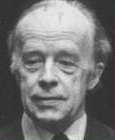
E.H. Childers |
Childers, Erskine H(amilton) (b. Dec. 11, 1905, London, England - d. Nov. 17, 1974, Dublin, Ireland), president of Ireland (1973-74). Childers was given the same Christian name as his father, Robert Erskine, who became a leading figure in the struggle for Irish independence, was minister for publicity in the Republican government of 1919, and was executed on Nov. 24, 1922. The son, following his political debut in 1938, became a junior minister in 1944 and was later minister for posts and telegraphs (1951-54), of lands, forestry, and fisheries (1957-59), and of transport and power (1959-69). He was minister for health and deputy leader of the Fianna Fáil party from 1969. He supported Prime Minister Jack Lynch's condemnation of the violence in Northern Ireland and Lynch's advocacy of a European role for the Irish Republic within the European Economic Community. After his election as president in 1973, Childers was not able to realize his hope of making the presidency a platform for noncontroversial pronouncements and intellectual debate. He was the second Protestant to hold the office (the first being Douglas Hyde, 1938-45).
Childers, Hugh Culling Eardley (b. June 25, 1827, London, England - d. Jan. 29, 1896, London), British first lord of the Admiralty (1868-71), war secretary (1880-82), chancellor of the exchequer (1882-85), and home secretary (1886). He was also chancellor of the Duchy of Lancaster and paymaster-general (1872-73).
Childers, William B(urr) (b. 1854 - d. March 3, 1908), mayor of Albuquerque (1887-88).

Chiles |
Chiles, Lawton (Mainor, Jr.) (b. April 3, 1930, Lakeland, Fla. - d. Dec. 12, 1998, Tallahassee, Fla.), governor of Florida (1991-98). The Democrat was elected to the state House in 1958, at 28, and to the state Senate in 1966. In 1970, he ran for U.S. senator by walking across the state, barely finishing second in the primary, beating a better-known Democrat in the runoff and then upsetting a Republican in the general. His demeanor and record were moderate, but well to the left of most Republicans. In 1990 he ran for governor, beat Congressman Bill Nelson in the primary and whipped Republican Bob Martinez 57%-43%. Chiles, part of the Democratic Leadership Council, promised to reform government. He reduced spending increases, called for "right-sizing" the bureaucracy, settling a federal suit on the Everglades. He was a late entry in 1990, brought in by his lieutenant governor, Buddy MacKay, a former congressman who nearly won the 1988 Senate race. He pushed through campaign finance reform with low contribution limits. He was proud of requiring "Healthy Start" to screen every pregnant woman and newborn for health risks and pushed a mandatory work program to cut state welfare rolls. He also called for $1.3 billion in new taxes in 1992, at which point his job rating plummeted. And in 1994 his healthcare reform plan was rejected by the legislature. In 1994 Jeb Bush, son of George Bush, won the Republican primary. Bush zoomed to a lead in polls and presented a program of thoroughgoing conservative reform, calling for fewer appeals for death row inmates and speedier executions, and more welfare cuts. The result was a 51%-49% Chiles victory. Blacks were 94% for Chiles, Jews 79% for Chiles, Cubans 74% for Bush. He did not seek reelection in 1998 and died before his term expired.
Chiligati, John (Zefania) (b. Oct. 14, 1950), home affairs minister of Tanzania (2006). He was also minister of labour, employment, and youth development (2006-08) and lands, housing, and human settlements development (2008-10).
Chilima, Saulos (Klaus) (b. Feb. 12, 1973, Blantyre, Malawi - d. [plane crash] June 10, 2024, Chikangawa forest, Malawi), vice president of Malawi (2014-19, 2020-24). He was a presidential candidate in 2019.
Chilingaryan, Artashes (Stepanovich), also known as Ruben Darbinyan (b. 1883, Akhalkalaki, Russia [now in Georgia] - d. 1968, Boston, Mass.), justice minister of Armenia (1920).

Chiliyev |
Chiliyev, Musa (Mazhitovich) (b. June 6, 1955, Frunze, Kirgiz S.S.R. [now Bishkek, Kyrgyzstan]), prime minister of Ingushetia (2011-13). He was also finance minister and deputy prime minister (2009-10).
Chilston, Aretas Akers-Douglas, (1st) Viscount, (1st) Baron Douglas, original name Aretas Akers (b. Oct. 21, 1851, West Malling, Kent, England - d. Jan. 15, 1926, London, England), British home secretary (1902-05). He was also first commissioner of works (1895-1902). He assumed the additional surname of Douglas in 1875 and was raised to the peerage in 1911.
Chilston, Aretas Akers-Douglas, (2nd) Viscount, (2nd) Baron Douglas (b. Feb. 17, 1876, London, England - d. July 25, 1947, Maidstone, Kent, England), British diplomat; son of the above. He was minister to Austria (1921-27) and Hungary (1928-33) and ambassador to the Soviet Union (1933-38). He succeeded as viscount in 1926.
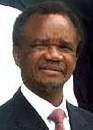
Chiluba |
Chiluba, Frederick (Jacob Titus) (b. April 30, 1943, Kitwe, Wusakili township, Copperbelt, Northern Rhodesia [now Zambia] - d. June 18, 2011, Lusaka, Zambia), president of Zambia (1991-2002). In 1968, he was elected shop steward of the National Union of Building Engineering and General Workers. In 1974 he was elected chairman-general of the 300,000-strong Zambia Congress of Trade Unions, a position he held for 17 years. As such he was the leader of the unofficial opposition to Pres. Kenneth Kaunda's one-party government. In 1981 Kaunda detained Chiluba and other labour leaders and accused them of plotting to overthrow the government, but after three months a court released the accused, saying their detention was illegal. In February 1991 he was elected leader of the new Movement for Multiparty Democracy (MMD), which was galvanized into a political party to contest and eventually wrestle power from Kaunda's United National Independence Party (UNIP). In the October 1991 election, the MMD won 125 seats and UNIP 25. Chiluba won just over 80% of the vote to force Kaunda from office. He quickly began Africa's most ambitious programme to reform a state-run economy. He removed price controls and subsidies, reduced regulations and trade barriers, and began to privatize state companies. Chiluba swept the November 1996 presidential elections with 69% of the vote. In October 1997 there was an attempted coup attempt by junior army officers. Kaunda and other opposition leaders were accused of collusion in the attempt. Kaunda was arrested on Christmas Day 1997, prompting international outrage. Following the coup attempt Chiluba imposed a state of emergency, which he lifted in March 1998. After leaving office in 2002, Chiluba on Feb. 24, 2003, was charged with stealing more than $40 million in public funds. He was arrested on Aug. 5, 2003, but freed on April 20, 2004, as the prosecution dropped the case. Although in 2007 the London High Court found him guilty in a civil case, in 2009 he was acquitted in a criminal trial in Zambia.
Chilyayev, Sergey (Gavrilovich) (b. 1803 - d. March 8 [Feb. 25, O.S.], 1864), governor of Shemakha (1850-57).
Chimay, Joseph (Philippe François) de Riquet, prince de Caraman, prince de (b. Aug. 20, 1808, Paris, France - d. March 12, 1886, London, England), Belgian official. He was minister to the Netherlands (1839-41), the German Confederation (1842-43), and the Papal State (1846-47) and governor of Luxembourg province (1841-42).
Chimayev, Ruslan (d. [assassinated] May 15, 1998, Shatoi district, Chechnya), foreign minister of Chechnya (1996-97).
Chimbindi, Albert Ranganai (b. 1964, Chirumanzu, Southern Rhodesia [now Zimbabwe]), Zimbabwean diplomat. He was chargé d'affaires in Belgium, the Netherlands, and Luxembourg (2009-10), ambassador to Ethiopia (2014-20), and permanent representative to the United Nations (2021-24).
Chimbiri-Molande, Agnes Mary (b. July 26, 1960), Malawian diplomat. She was permanent representative to the United Nations (2022-26).
Chime, Sullivan (Iheanacho) (b. April 10, 1959), governor of Enugu (2007-15).
Chimirri, Bruno (b. Jan. 24, 1842, Serra San Bruno, Two Sicilies [now in Vibo Valentia province, Italy] - d. Oct. 28, 1917, Amato, Catanzaro province, Italy), finance minister (1900-01) and treasury minister (1900-01) of Italy. He was also minister of agriculture, industry, and commerce (1891) and justice (1891-92).
Chimphamba, Brown (Beswick) (b. July 7, 1939, Ntcheu, Nyasaland [now Malawi]), Malawian diplomat. He was permanent representative to the United Nations (2004-06).
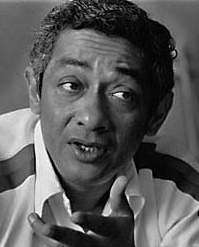
Chin A Sen |
Chin A Sen, Hendrick R(udolf), byname Henk Chin A Sen (b. Jan. 18, 1934, Albina, Marowijne district, Dutch Guiana [Suriname] - d. Aug. 11, 1999, Paramaribo, Suriname), prime minister (1980), foreign minister (1980), and president (1980-82) of Suriname.
Chin Iee Chong (b. Dec. 13, 1921, Kochang, Korea [now in South Korea] - d. May 1995, Seoul, South Korea), prime minister of South Korea (1983-85). He was also minister of health and social affairs (1979-81).
Chinaglia, Arlindo, (Júnior) (b. Dec. 24, 1949, Serra Azul, São Paulo, Brazil), Brazilian politician. He was president of the Chamber of Deputies (2007-09) and president of the parliament of MERCOSUR (2016-17).
Chinamasa, Patrick (Anthony) (b. Jan. 25, 1947, Inyanga, Southern Rhodesia [now Nyanga, Zimbabwe]), justice minister (2000-13) and finance minister (2009 [acting], 2013-17, 2017-18) of Zimbabwe. He was also attorney general (1989-2000) and minister of cyber security (2017).
Chinchilla (y Díez de Oñate), José (b. March 30, 1839, Marbella, Spain - d. March 11, 1899, Madrid, Spain), war minister of Spain (1888-90) and governor of Cuba (1890).

L. Chinchilla |
Chinchilla (Miranda), Laura (b. March 28, 1959, San José, Costa Rica), president of Costa Rica (2010-14). She was also minister of public security (1996-98) and justice (2006-08) and first vice president (2006-08).
Chinebuah, Isaac K(odwo) (b. Oct. 7, 1929, Tarkwa, Gold Coast [now Ghana] - d. June 8, 2006, Accra, Ghana), foreign minister of Ghana (1979-81). He was also minister of information (1965-66).
Chiodo, Barone Agostino (b. Aug. 18, 1791, Savona, Genoa [now in Italy] - d. Feb. 25, 1861, Turin, Kingdom of Sardinia [now in Italy]), war minister (1849), foreign minister (1849), and prime minister (1849) of Sardinia.
Chiossone (Villamizar), Tulio (b. Sept. 16, 1905, Rubio, Táchira, Venezuela - d. Dec. 26, 2001, Caracas, Venezuela), interior minister of Venezuela (1941-42) and president of Mérida (1942-44).
Chiou I-jen (b. May 9, 1950, Taiwan), vice premier of Taiwan (2007-08). He was also secretary-general of the Democratic Progressive Party (1995-98), secretary-general of the Executive Yuan (2000-02), a minister without portfolio (2002), secretary-general of the National Security Council (2002-03, 2004-07), and secretary-general of the president (2003-04, 2007).
Chipande, Alberto Joaquim (b. 1939, Mueda, Cabo Delgado province, Mozambique), defense minister of Mozambique (1975-94). He was also governor of Cabo Delgado (1983-86).
Chipaziwa, Chitsaka (b. 1953), Zimbabwean diplomat. He was ambassador to Malaysia, Indonesia, Thailand, Brunei, Cambodia, and Vietnam (1996-2003) and permanent representative to the United Nations (2010-14).
Chipev, Teodor (Antonov) (b. March 18, 1940, Sofia, Bulgaria), justice minister of Bulgaria (1994-95).
Chipp, Don(ald Leslie) (b. Aug. 21, 1925, Northcote, Vic. - d. Aug. 28, 2006, Melbourne, Vic.), Australian politician. In 1960 he was elected as Liberal MP for Higinbotham (renamed Hotham in 1968). He was appointed minister for the navy in 1966, then served as minister for customs and excise in 1969-72. Leaving the Liberal Party in March 1977, he founded the Australian Democrats in May 1977 "to keep the bastards honest" and in the party's first national election in December 1977, he and one other Democrat won Senate seats. He was the party's first leader in the Senate in 1978-86.
Chipungu, Chimwemwe, defense minister of Malawi (2025-26). He has also been minister of lands (2026- ).

Chirac |
Chirac, Jacques (René) (b. Nov. 29, 1932, Paris, France - d. Sept. 26, 2019, Paris), president of France (1995-2007). He was elected to the National Assembly as a Gaullist successively from 1967. After serving as minister for parliamentary relations (1971-72), agriculture (1972-74), and interior (1974), he was appointed prime minister by Pres. Valéry Giscard d'Estaing in 1974. Resigning in 1976 because of personal and political disputes with Giscard, the ambitious and energetic Chirac reconstituted the Gaullist party known as the Union of Democrats for the Republic into a neo-Gaullist group, the Rally for the Republic, which was firmly under his control. As the elected mayor of Paris (1977-95), he continued to build up his political base among the several conservative parties of France. His first campaign for the presidency in 1981 split the conservative vote with Giscard and thereby allowed the Socialist candidate, François Mitterrand, to win. In parliamentary elections in 1986, the right-wing coalition won a slim majority of seats in the National Assembly, and Chirac was appointed prime minister by Mitterrand. This power-sharing arrangement, known as cohabitation, was the first of its kind in the history of the Fifth Republic, in which previously the president and the prime minister had always belonged to the same party or the same electoral coalition. Chirac ran for the presidency against Mitterrand in 1988 and was soundly defeated in the runoff, whereupon he resigned as prime minister. He made his third run for the presidency in 1995 and this time defeated the Socialist candidate, Lionel Jospin. He was widely denounced in 1995 for his resumption of nuclear tests in the South Pacific. He was reelected in 2002, overwhelmingly defeating far-right leader Jean-Marie Le Pen in the runoff. In 2003 he led opposition to the U.S. war in Iraq. He did not run for a third term in 2007. In 2011 he was found guilty of embezzling public funds during his tenure as mayor of Paris and given a two-year suspended prison sentence.
Chirapravati Voradej, Prince, also called Nakhon Chaisi Suradet (b. Nov. 7, 1876 - d. Feb. 4, 1913), war minister of Siam (1910-13); son of Chulalongkorn. He was also commander of the Military Affairs Department (1901-10).
Chiriboga (Navarro), Ángel Isaac (b. Aug. 31, 1885, Quito, Ecuador - d. April 9, 1962, Quito), foreign minister of Ecuador (1935-36). He was also chargé d'affaires in France (1933-35) and ambassador to Argentina (1954-55) and Chile (1955-56).
Chiriboga (Zambrano), Galo (b. May 22, 1950, Cuenca, Ecuador), interim interior minister of Ecuador (2005). He was also minister of labour (2005-06) and mines and petroleum (2007-08), ambassador to Spain (2009-11), and attorney-general (2011-17).
Chiriboga (Borja), Pacífico (b. Sept. 23, 1810, San Juan hacienda, New Granada [now in Ecuador] - d. Aug. 20, 1886, Quito, Ecuador), vice-president (1852-54), foreign minister (1855), and member of the Provisional Government in rebellion (1859) of Ecuador. Earlier he was mayor of Quito and governor of Manabí and Pichincha provinces.
Chiriboga Villagómez, José Ricardo (b. 1911, Quito, Ecuador - d. March 6, 1981), foreign minister of Ecuador (1960-61). He served as mayor of Quito (1949-51) and ambassador to the United States (1952-56, 1956-60) and ran for the presidency in 1952 and 1956.
Chirikba, Vyacheslav (Andreyevich) (b. March 17, 1959, Gagra, Abkhaz A.S.S.R., Georgian S.S.R.), foreign minister of Abkhazia (2011-16).
Chirinos Calero, Patricio (b. July 27, 1937, Pánuco, Veracruz, Mexico), governor of Veracruz (1992-98). He was also Mexican minister of urban development and ecology (1988-92).
Chirkov, Afanasy (Mikhailovich) (b. 1887, Knyagino, Vologda province, Russia - d. af. 1943), executive secretary of the Communist Party committee of Komi autonomous oblast (1922-24).

Chirkunov |
Chirkunov, Oleg (Anatolyevich) (b. Nov. 15, 1958), acting governor of Perm oblast (2004-05) and governor of Perm kray (2005-12).
Chirtoaca, Dorin (b. Aug. 9, 1978, Colonita, Moldavian S.S.R.), Moldovan politician. He was mayor of Chisinau (2007-18; suspended from 2017).
Chiryayev, Gavriil (Iosifovich) (b. April 4, 1925, 1st Chochuysky nasleg [village], Yakut A.S.S.R., Russian S.F.S.R. [now Sakha republic, Russia] - d. May 9, 1982, Yakutsk, Yakut A.S.S.R.), first secretary of the Communist Party committee of the Yakut A.S.S.R. (1965-82).
Chisinevschi, Iosif, original surname Roitman (b. Dec. 26, 1905, Balti, Russia [now in Moldova] - d. 1962, Bucharest, Romania), Romanian politician. He was a deputy premier (1950-54) and a first deputy premier (1954-55).

Chissano |
Chissano, Joaquim (Alberto) (b. Oct. 22, 1939, Malehice, Chibuto district, Gaza province, Mozambique), prime minister (1974-75), foreign minister (1975-87), and president (1986-2005) of Mozambique. He was active in the anti-Portuguese liberation movement. In Paris, he represented the first leader of the Mozambique Liberation Front (Frelimo), Eduardo Mondlane. He became an active guerrilla fighter, but after the coup in Portugal in 1974 he supported negotiations with the Portuguese and became prime minister in a transitional government. Upon independence in 1975, he was given the rank of major general and became foreign minister. By temperament he was a diplomat rather than a militarist. Quiet-spoken and modest, he played a key role in reconciling the hardline Marxists with the more moderate pragmatists in the internal struggle within Frelimo after Mondlane's death. He supported Pres. Samora Machel's flexible foreign policies, which enabled Frelimo to retain its good relations with China and develop closer ties with both the U.S.S.R. and Western nations. On Nov. 3, 1986, he was chosen as president, following the death of Machel. He announced that he would abide by the March 1984 Nkomati accord, the nonaggression agreement with South Africa, and committed his government to fighting the rebel Mozambique National Resistance (Renamo), stating, "We will continue the war in order to finish the war." The war was ended in 1992, with Renamo becoming a regular political party. He won the multiparty elections that followed in 1994 and again in 1999, but opted not to run for a third term. In 2003-04 he was chairman of the African Union. After stepping down as president, he was appointed as UN special envoy to Guinea-Bissau on May 2, 2005. In 2007 he won the first Mo Ibrahim Prize for Achievement in African Leadership, the largest individual award in the world.
Chistyakov, Pyotr (Yegorovich) (b. 1790 - d. Feb. 12 [Jan. 31, O.S.], 1862, Koledino, Tver province, Russia), governor of Russian America (1825-30).
Chit Munsilpa Sinadyodharaksa (b. 1896 - d. 1988), defense minister (1945, 1946) and interior minister (1947-48) of Thailand.
Chitac, (Gheorghe) Mihai (b. Nov. 4, 1928, Suharau, Botosani county, Romania - d. Nov. 1, 2010, Bucharest, Romania), interior minister of Romania (1989-90).
Chitan, Valeriu (b. June 1, 1955, Fîntînita, Moldavian S.S.R.), finance minister of Moldova (1994-98).
Chitanava, Nodari (Amvrosiyevich) (b. March 10, 1935, Chkaduashi, Georgian S.S.R.), chairman of the Council of Ministers of the Georgian S.S.R. (1989-90). He was also agriculture minister (1974-79) and first deputy premier (1979-85).
Chiti, Vannino (b. Dec. 26, 1947, Pistoia, Toscana, Italy), president of Toscana (1992-2000).
Chitoiu, Daniel (b. July 11, 1967, Pausesti, Vâlcea county, Romania), finance minister and a deputy prime minister of Romania (2012-14). He was also minister of economy, trade, and business environment (2012).
Chittenden, Martin (b. March 12, 1769, Salisbury, Connecticut - d. Sept. 5, 1840, Williston, Vt.), governor of Vermont (1813-15); son of Thomas Chittenden. He was also a U.S. representative from Vermont (1803-13).
Chittenden, Thomas (b. Jan. 6, 1730, East Guilford, Connecticut - d. Aug. 25, 1797, Williston, Vt.), president of the Council of Safety (1777-78) and governor (1778-89, 1790-97) of Vermont.
Chitti Tingsabadh (b. 1908 - d. 1995), Thai politician. He was speaker of the Senate (1975-76).
Chitu, Gheorghe (b. Aug. 24, 1828, Oboga, Walachia [now in Romania] - d. Oct. 27, 1897, Mirila, Romania), finance minister (1881-82) and interior minister (1882-84) of Romania. He was also minister of worship and public instruction (1876-78, 1884-85) and justice (1882, 1883).
Chiu, Paul (Chiu Cheng-hsiung) (b. Feb. 19, 1942, Karenko prefecture [now Hualien county], Taiwan - d. July 22, 2025), finance minister (1996-2000) and vice premier (2008-09) of Taiwan.
Chiu Chuang-huan (b. July 25, 1925, Changhua county, Taiwan - d. July 2, 2020, Taipei, Taiwan), interior minister (1978-81) and vice premier (1981-84) of Taiwan and governor of Taiwan province (1984-90). He was also a minister without portfolio (1976-78) and president of the Examination Yuan (1993-96).

E. Chiume |
Chiume, Ephraim (Mganda) (b. 1953), foreign minister of Malawi (2012-14); cousin of Kanyama Chiume. He was justice minister in 2011-12.
Chiume, (Murray William) Kanyama (b. Nov. 22, 1929, Usisya, Nkhata Bay district, northern Nyasaland [now Malawi] - d. Nov. 21, 2007, New York City), foreign minister of Malawi (1964). He was also minister of education (1961-64). He was exiled in Tanzania in 1964-94.
Chiveri, Valeriu (b. Dec. 26, 1963, Floresti, Moldavian S.S.R. [now Moldova]), a deputy prime minister of Moldova (2025- ). He was also ambassador to Austria (2010-13), Slovakia (2011-13), Ukraine (2022-25), Armenia and Turkmenistan (2023-25), and Uzbekistan (2024-25).
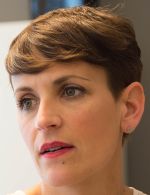
Chivite |
Chivite (Navascués), María (Victoria) (b. June 5, 1978, Cintruénigo, Navarra, Spain), president of the government of Navarra (2019- ).
Chiwenga, Constantino (Guvheya Dominic Nyikadzino), original name (until 2016) Constantine (Guveya) Chiwenga, nom de guerre (1970s-80s) Dominic Chinenge (b. Aug. 25, 1956, Wedza, Southern Rhodesia [now Zimbabwe]), a vice president (2017- ) and defense minister (2017-18) of Zimbabwe. He was also commander of the army (1994-2003) and of the Zimbabwe Defence Forces (2004-17) and minister of health and child care (2020-23).
Chkheidze, Petre (b. Oct. 22, 1941, Tbilisi, Georgian S.S.R.), Georgian diplomat. He was permanent representative to the United Nations (1992-2002) and ambassador to the United States (1993-94) and Turkmenistan and Afghanistan (2002-04).
Chkheidze, Zurab (Amvrosiyevich) (b. May 13, 1930, Shoropani, Georgian S.S.R. - d. November 2007), chairman of the Council of Ministers of the Georgian S.S.R. (1989). He was also first secretary of the party committee of Rustavi city (1970-72), minister of communications (1972-75), deputy premier and chairman of the State Planning Committee (1982-86), and first deputy premier (1986-89).
Chkhenkeli, Akaky (Ivanovich) (b. May 31 [May 19, O.S.], 1874, Khoni, Kutaisi province, Russia [now in Georgia] - d. Jan. 5, 1959, Paris, France), foreign minister of Georgia (1918). He was also a member of the Russian State Duma (1912-17), chairman of the Council of Ministers and foreign minister of Transcaucasia (1918), and Georgian minister to France (1921).
Chkhubianishvili, Zakhary (Nikolayevich) (b. 1903, Ruispiri, Russia [now in Georgia] - d. ...), chairman of the Council of Ministers (1946-52) and chairman of the Presidium of the Supreme Soviet (1952-53) of the Georgian S.S.R. He was also people's commissar/minister of forest industry (1937-40, 1954-57) and forest and paper industry (1953-54).
Chkuaseli, Mikheil (b. Sept. 10, 1970), finance minister of Georgia (1997-98). He was also governor of Guria region (1995-97).
Chloros, Georgios (b. 1884 - d. 1944), interior minister (1934-35) and justice minister (1935) of Greece. He was also minister of agriculture (1935).
Chmel, Rudolf (b. Feb. 11, 1939, Plzen, Czechoslovakia [now in Czech Republic]), a deputy prime minister of Slovakia (2010-12). He was also Czechoslovak ambassador to Hungary (1990-92) and Slovak minister of culture (2002-05, 2006).
Chnoupek, Bohuslav (b. Aug. 10, 1925, Petrzalka, near Bratislava, Czechoslovakia [now in Slovakia] - d. May 28, 2004, Prague, Czech Republic), foreign minister of Czechoslovakia (1971-88). He was also ambassador to the Soviet Union (1970-71).
Cho Chung Hwan (b. Dec. 10, 1892 - d. 19...), foreign minister of South Korea (1955-60).
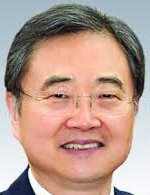
Cho Hyun |
Cho Hyun (b. Nov. 30, 1957, Iksan, South Korea), foreign minister of South Korea (2025- ). He was also ambassador to Austria (2011-14) and India (2015-17) and permanent representative to the United Nations (2019-22).

Cho Jung-tai | 
Cho Tae Yul |
Cho Jung-tai (b. Jan. 22, 1959, Taipei, Taiwan), premier of Taiwan (2024- ). He was also secretary-general of the Executive Yuan (2005-06, 2017-18), acting secretary-general to the president (2007), and secretary-general of the Democratic Progressive Party (2007-08).
Cho Tae Yul (b. Nov. 10, 1955), foreign minister of South Korea (2024-25). He was also ambassador to Spain (2008-11) and permanent representative to the United Nations (2016-19).
Chobanov, Petur (Pandushev) (b. July 20, 1976, Yambol, Bulgaria), finance minister of Bulgaria (2013-14).
Chobanov, Yordan (Nedelchev) (b. Sept. 15, 1905, Razgrad, Bulgaria - d. May 4, 1965, Sofia, Bulgaria), Bulgarian official. He was minister to Turkey (1949-54), chief prosecutor (1954-59), and permanent representative to the United Nations (1959-63).
Chochiyev, Alan (Rezoyevich) (b. Oct. 19, 1946, Staliniri [now Tskhinvali], South Ossetian autonomous oblast, Georgian S.S.R.), chairman of the Supreme Soviet of South Ossetia (1991).
Chochiyev, Boris (Eliozovich) (b. Nov. 1, 1957, Styrkom, South Ossetian autonomous oblast, Georgian S.S.R. - d. July 22, 2021, Vladikavkaz, North Ossetia-Alania, Russia), acting prime minister of South Ossetia (2008). He was minister of special assignments (2001-03) and special affairs (2003-05) and first deputy prime minister (2005-08).
Chochua, Andrey (Maksimovich) (b. 1879, Adzyubzha, Sukhumi okrug, Kutaisi province, Russia [now in Abkhazia, Georgia] - d. 1965), chairman of the Presidium of the Supreme Soviet of the Abkhaz A.S.S.R. (1948-58).
Choe Dok Sin, also written Choi Duk Shin (b. Sept. 17, 1914, North Pyongan province, Korea [now in North Korea] - d. Nov. 16, 1989, P'yongyang, North Korea), foreign minister of South Korea (1961-63). He was also minister (1956-58) and ambassador (1958-61) to South Vietnam and ambassador to West Germany (1963-67). He sought asylum in the United States in 1977 and lived in North Korea from 1986, the highest-ranking South Korean defector to the North.
Choe Kwang (b. July 17, 1918 - d. Feb. 21, 1997), defense minister of North Korea (1995-97). Choe, a former army officer and one of the first major appointments of Kim Jong Il, became Minister of the People's Armed Forces in October 1995. He headed a 1.1 million-strong armed force, backed by several million reservists, that was one of the most feared in Asia. Choe was believed to be ranked fifth or sixth in the North Korea leadership and was regarded as a key figure in maintaining Kim Jong Il in power. He was a close comrade of North Korea's founder Kim Il Sung, father of Kim Jong Il.

Choe R.H. |
Choe Ryong Hae (b. Jan. 15, 1950, Sinchon county, Hwanghae [now in South Hwanghae] province, North Korea), chairman of the Presidium of the Supreme People's Assembly of North Korea (2019-26).

Choe S.H. |
Choe Son Hui (b. Aug. 10, 1964, P'yongyang, North Korea), foreign minister of North Korea (2022- ); adopted daughter of Choe Yong Rim.
Choe Yong Rim (b. Nov. 20, 1930, in present Ryanggang province, North Korea), premier of North Korea (2010-13).
Chogovadze, Giorgi (Irakliyevich) (b. Jan. 10, 1907 [Dec. 28, 1906, O.S.], Shorapani, Russia [now in Georgia] - d. 1996), foreign minister of the Georgian S.S.R. (1969-70). He was also a deputy premier (1956-58), chairman of the Council of National Economy (1958-63), and first deputy premier (1963-70).
Chogovadze, Gocha (Giorgis dze) (b. Jan. 11, 1941, Kutaisi, Georgian S.S.R. - d. June 13, 2022), Georgian diplomat; son of Giorgi Chogovadze. He was ambassador to France (1994-2004).
Choi Doo Sun (b. Nov. 1, 1894, Seoul, Korea [now in South Korea] - d. Sept. 9, 1974, Seoul), prime minister of South Korea (1963-64). He was also president of the Korean Red Cross (1971-73).
Choi Ho Joong (b. Sept. 22, 1930 - d. Feb. 19, 2015), foreign minister of South Korea (1988-90). He was also ambassador to Malaysia (1979-83), Belgium (1983-84), and Saudi Arabia and Yemen (Sana) (1985-88) and minister of national unification and a deputy prime minister (1990-92).
Choi Kwang Soo (b. Feb. 29, 1935, Seoul, Korea [now in South Korea] - d. Feb. 15, 2021), foreign minister of South Korea (1986-88). He was also minister without portfolio (1980-81), minister of communications (1981-82), ambassador to Saudi Arabia (1983-85), and permanent observer to the United Nations (1985-86).
Choi Kyu Hah, Revised Romanization Choe Gyu-ha (b. July 16, 1919, Wonju, Gangwon province, Korea [now in South Korea] - d. Oct. 22, 2006, Seoul, South Korea), foreign minister (1967-71), prime minister (1975-79), and president (1979-80) of South Korea. He was also ambassador to Malaysia (1964-67).
Choi Kyung Hwan (b. Feb. 27, 1955, Kyongsan, South Korea), finance minister (2014-16) and acting prime minister (2015) of South Korea. He was also minister of knowledge economy (2009-10) and a deputy prime minister (2014-16).

Choi S.M. |
Choi Sang Mok (b. June 7, 1963, Seoul, South Korea), deputy prime minister and economy and finance minister (2023-25), acting prime minister (2024-25), and acting president (2024-25) of South Korea.

Choi S.H. |
Choi Sung Hong (b. Dec. 24, 1938 - d. Sept. 17, 2020), foreign minister of South Korea (2002-03). He was also ambassador to Hungary (1993-96) and the United Kingdom (1999-2001).
Choi Yong Kun (b. June 21, 1900, North Pyongan province, Korea [now in North Korea] - d. Sept. 19, 1976), defense minister (1953-57) and chairman of the Presidium of the Supreme People's Assembly (1957-72) of North Korea.
Choi Young Jin (b. March 29, 1948, Seoul, Korea [now in South Korea]), South Korean diplomat. He was ambassador to Austria and Slovenia (2002) and permanent representative to the United Nations (2005-07).
Choiseul, Étienne François, duc de, comte de Stainville (b. June 28, 1719, Lorraine, France - d. May 8, 1785, Paris, France), foreign minister of France (1758-61, 1766-70); cousin of César Gabriel de Choiseul-Chevigny, duc de Praslin. He was also ambassador to the Papal State (1753-57) and Austria (1757-58) and minister of war (1761-70) and marine and colonies (1761-66). He was made duc de Choiseul in 1758.
Choisuren, Baatar (b. 1950, Arkhangai province, Mongolia), Mongolian diplomat. He was ambassador to the United Kingdom (1991-95) and permanent representative to the United Nations (2003-07).
Cholakov, Stancho (Grigorov) (b. Jan. 25, 1900, Nikyup, Bulgaria - d. May 18, 1981, Sofia, Bulgaria), finance minister of Bulgaria (1945-46). He was also education minister (1944-45) and governor of the Bulgarian National Bank (1946).
Chombo, Ignatius (Morgan Chiminya) (b. Aug. 1, 1952), home affairs minister (2015-17) and finance minister (2017) of Zimbabwe. He was also minister of higher education (1995-2000) and local government, public works, and national housing (2000-15).
Chomón Mediavilla, Faure (b. Jan. 15, 1929, Manatí, Oriente [now in Las Tunas], Cuba - d. Dec. 5, 2019, Havana, Cuba), Cuban politician. He was ambassador to the U.S.S.R. (1960-62), Vietnam (1980-86), and Ecuador (1989-94), minister of communications (1962-63) and transport (1963-70), and first secretary of the party committee of Las Tunas province (1976-80).
Chona, (Mathias) Mainza, original name (until 1950s) Sikaye Chingula Namukamba (b. Jan. 21, 1930, Nampeyo, Monze district, Northern Rhodesia [now Zambia] - d. Dec. 11, 2001, Johannesburg, South Africa), prime minister of Zambia (1973-75, 1977-78). He was also minister of justice (1964), home affairs (1964-67), and presidential affairs (1967), minister without portfolio (1967-68, 1969), minister for Central province (1968-69), minister of provincial and local government (1969), ambassador to the United States (1969-70), China (1984-89), and France (1989-92), vice president (1970-73), minister of national guidance and culture (1973-75), minister of legal affairs and attorney-general (1975-78), and secretary-general of the United National Independence Party (the equivalent to vice president) (1978-81).
Chong (You Fook), Charles (b. June 24, 1953, Singapore), Singaporean politician. He was acting speaker of parliament (2012-13, 2017).

Chong | 
Chopin |
Chong Kah Kiat, Tan Sri (b. June 2, 1948, Kudat, British North Borneo [now Sabah, Malaysia]), chief minister of Sabah (2001-03). He was also president of the Liberal Democratic Party (1991-2006) and a minister in the prime minister's department (1995-99) of Malaysia. He received the titles Datuk (1994) and Tan Sri (June 5, 2004).
Choo Kyung Ho (b. July 29, 1960, Daegu, South Korea), finance minister and a deputy prime minister (2022-23) and acting prime minister (2022) of South Korea. He was also minister of government policy coordination (2014-16).
Chopin, Philippe (b. Nov. 1, 1958, Paris, France), prefect of Saint-Barthélemy and Saint-Martin (2011-15). He was also prefect of the French départements of Creuse (2015-18), Pyrénées-Orientales (2018-20), Puy-de-Dôme (2020-23), and Maine-et-Loire (2023-25).
Choquehuanca (Céspedes), David (b. May 7, 1961, Cota Cota Baja, La Paz department, Bolivia), foreign minister (2006-17) and vice president (2020-25) of Bolivia. In 2017-19 he was executive secretary of the Bolivarian Alliance for the Peoples of Our America.
Chornovil, Andriy (Vyacheslavovych) (b. June 21, 1962, Lvov [Lviv], Ukrainian S.S.R.), Ukrainian politician; son of Vyacheslav Chornovil. He was a minor presidential candidate in 2004.
V. Chornovil |
Chornovil, Vyacheslav (Maksymovych) (b. Dec. 24, 1937, Erki, Ukrainian S.S.R. - d. March 25, 1999, Boryspil, near Kiev, Ukraine), Ukrainian politician. He was active in the Soviet human rights movement and was ousted from a newspaper in 1966 for refusing to testify at a political trial. He was arrested in 1967 for his dissident activities and sentenced to three years in prison, a term later cut in half. In 1972 he was again arrested, this time as publisher of an underground newsletter, and sentenced to six years in prison and three years in exile. He served his term in exile in Siberia. In April 1980, Communist authorities again sentenced Chornovil to five years in prison, but he was released in 1983. In the late 1980s he became the leading advocate of Ukrainian independence and was instrumental in forming the pro-independence Ukrainian Popular Movement (Rukh) in 1989. He was a prominent member of the country's parliament; he ran for the presidency in 1991, but finished second. He was killed when his car collided with a truck.
Chosiyah, Ratu Atut (b. May 16, 1962, Serang, Jawa Barat [now in Banten], Indonesia), acting governor (2005-07) and governor (2007-15) of Banten.
Chot-Plassot, Robert Paul (b. March 9, 1897 - d. ...), governor of French Guiana (1938-42).
Choteau, Alphonse (Paul Albert) (b. May 28, 1883, Marly, Nord, France - d. May 29, 1936, Saint-Denis, Réunion), lieutenant governor of Mauritania (1928-29) and Niger (1929-30) and governor of Guadeloupe (1931-33) and Réunion (1934-36).
Choti Kunakasem (b. Aug. 2, 1903 - d. Jan. 3, 1967), finance minister of Thailand (1959). He was also governor of Bank of Thailand (1958-59).
Choua, Lol Mahamat (b. June 15, 1939, Mao, Chad - d. Sept. 15, 2019, N'Djamena, Chad), president of the Transitional Government of National Union of Chad (1979). He was also transport minister (1982-85), mayor of N'Djamena (1991-92), president of the Higher Transitional Council (1993-94), and a presidential candidate in 1996 (receiving 5.7% of the votes).

Choudhary |
Choudhary, Samrat, original name Rakesh Kumar (b. Nov. 16, 1968, Lakhanpur, Munger district, Bihar, India), chief minister of Bihar (2026- ).

A. Choudhury |
Choudhury, Anwar (b. June 15, 1959, Sunamganj, East Pakistan [now Bangladesh]), governor of the Cayman Islands (2018). He was also British high commissioner to Bangladesh (2004-08) and ambassador to Peru (2014-18).
Choudhury, Mahendra Mohan (b. April 12, 1908, Nagaon, Assam, India - d. Dec. 27, 1982, Gauhati [now Guwahati], Assam), chief minister of Assam (1970-72) and governor of Punjab (1973-77).
Choueri, Chawki (b. June 6, 1930, Kfarhata, Lebanon), Lebanese diplomat. He was chargé d'affaires in the United States (1978) and at the United Nations (1990, 1994) and ambassador to Greece (1983-87).
Choufi, Hammoud al-, or Hammoud Elchoufi (b. Aug. 10, 1938, Salkhad, southern Syria - d. April 13, 2011, Augusta, Ga.), Syrian diplomat. He was ambassador to Indonesia (1965-70) and India (1970-72) and permanent representative to the United Nations (1978-79).
Chouliarakis, Giorgos (b. 1966), finance minister of Greece (2015).
Choummaly | 
Chovanec |
Choummaly Sayasone (b. March 6, 1936, Vat Neua village, Saysetha district, Attapeu province, southeastern Laos), defense minister (1991-2001), vice president (2001-06), and president (2006-16) of Laos and general secretary of the Lao People's Revolutionary Party (2006-16).
Chovanec, Milan (b. Jan. 31, 1970, Plzen, Czechoslovakia [now in Czech Republic]), governor of Plzenský kraj (2010-14) and interior minister of the Czech Republic (2014-17).
Chow, Olivia (b. March 24, 1957, Hong Kong), mayor of Toronto (2023- ); widow of Jack Layton.
Chow Shu-kai (b. Aug. 21, 1913, Hubei province, China - d. Aug. 1, 1992, Taipei, Taiwan), foreign minister of Taiwan (1971-72). He was also chargé d'affaires in the Phillippines (1953-55) and ambassador to Spain (1963-65), the United States (1965-71), and the Vatican (1978-91).
A.F.M.A. Chowdhury |
Chowdhury, A(bul) F(azal) M(ohammad) Ahsanuddin (b. July 1, 1915, Bokainagar, Mymensingh district, Bengal, India [now in Bangladesh] - d. Aug. 30, 2001), president of Bangladesh (1982-83). He joined the judicial service in 1942 under the British and was promoted to justice of the Bangladesh Supreme Court in 1973. He was appointed president by a military regime after an army coup in 1982. He stayed in office as a figurehead until he was sacked in 1983.

A.Q.M.B. Chowdhury |
Chowdhury, A(bdul) Q(asim) M(ohammad) Badruddoza (b. Nov. 1, 1932, Comilla, Bengal, India [now in Bangladesh] - d. Oct. 5, 2024, Dhaka, Bangladesh), foreign minister (2001) and president (2001-02) of Bangladesh. He was also minister of health and family planning (1978-79) and senior deputy prime minister (1979). He resigned as president after the governing Bangladesh Nationalist Party asked him to quit for showing disrespect to the party's late founder, Ziaur Rahman, by not visiting his grave on the 21st anniversary of his death.

A.S. Chowdhury |
Chowdhury, Abu Sayeed (b. Jan. 31, 1921, Nagbari, Bengal, India [now in Tangail district, Bangladesh] - d. Aug. 1, 1987, London, England), president of Bangladesh (1972-73). In 1971 Chowdhury was in Geneva, representing Pakistan in the UN Commission on Human Rights, when the events leading to the establishment of Bangladesh occurred; he announced his support of the new country and established himself as its high commissioner in London. Although unanimously elected president of Bangladesh for a five-year term in April 1973, Chowdhury resigned at the end of the year because of disagreements with Prime Minister Sheikh Mujibur Rahman. In 1975 he served briefly as foreign minister under Pres. Khundaqar Mushtaq Ahmed. Thereafter he was based in Geneva, where he coordinated foreign aid for Bangladesh, became chairman of the UN Commission on Human Rights in 1985, and was a member (1978-87) of the UN Sub-Commission on Prevention of Discrimination and Protection of Minorities.
Chowdhury, Amir Khasru Mahmud (b. Feb. 20, 1950, Chittagong, Pakistan [now Chattogram, Bangladesh]), finance minister of Bangladesh (2026- ). He was also minister of commerce (2001-04).
Chowdhury, Anwarul Karim (b. Feb. 5, 1943), Bangladeshi diplomat. He was permanent representative to the United Nations (1996-2001) and UN high representative for the least developed countries, landlocked developing countries, and small island developing states (2002-07).

H.H. Chowdhury | 
H.R. Chowdhury |
Chowdhury, Hamidul Huq (b. 1901, Ramnagar village, Bengal, India [now in Feni district, Bangladesh] - d. Jan. 18, 1992, Dhaka, Bangladesh), foreign minister of Pakistan (1955-56).
Chowdhury, Humayun Rasheed (b. Nov. 11, 1928, Sylhet, Bengal, India [now in Bangladesh] - d. July 10, 2001, Dhaka, Bangladesh), foreign minister of Bangladesh (1984-88), president of the UN General Assembly (1986-87), and speaker of the parliament of Bangladesh (1996-2001). He was also ambassador to West Germany (1972-76), Saudi Arabia (1976-81), and the United States (1982-84).
Chowdhury, Iftekhar Ahmed (b. Oct. 25, 1946, India), foreign affairs adviser of Bangladesh (2007-09). He was ambassador to Qatar (1994-96) and permanent representative to the United Nations (2001-07).
Chowdhury, Mizanur Rahman (b. Oct. 19, 1928, Chandpur, Bengal, India [now in Bangladesh] - d. Feb. 2, 2006, Dhaka, Bangladesh), prime minister of Bangladesh (1986-88). He was also minister of information and broadcasting (1972-73), relief and rehabilitation (1973), and post and telecommunications (1985-88).
Chowdhury, Mohabbat Jan (b. March 1934, Faridpur, Bengal, India [now in Bangladesh] - d. Aug. 24, 2026, Dhaka, Bangladesh), home affairs minister of Bangladesh (1982-83). He was also minister of establishment and reorganization (1983-85) and food (1985-86).
Chowdhury, Salahuddin Noman (b. Aug. 29, 1969, Dacca, East Pakistan [now Dhaka, Bangladesh]), Bangladeshi diplomat. He was ambassador to Nepal (2021-25) and permanent representative to the United Nations (2025-26).
Choybalsan, Khorloogiyn (b. Feb. 8, 1895, Tsetsen Khan aymag, Mongolia - d. Jan. 26, 1952), chairman of the Presidium of the State Little Khural (1929-30), foreign minister (1930-32, 1939-50), and chairman of the Council of People's Commissars/Ministers (1939-52) of Mongolia. Originally trained as a lamaist monk, he went to Siberia, where he made contact with Russian revolutionaries. He became leader of a revolutionary organization, opposed to the Chinese occupation of Mongolia, in October 1919. The Chinese were forced from the capital by a White Russian force in October 1920, and Choybalsan continued to fight for independence. He joined up with Damdiny Sükhbaatar in 1921 to establish the Mongolian People's Party (from 1924 Mongolian People's Revolutionary Party). When Russian Red Army units entered Urga, the capital of Outer Mongolia, in 1921 and sponsored the creation of a pro-Soviet government, Choybalsan became a deputy war minister. In succeeding years he became the dominant leader of the Mongolian People's Republic, established in 1924. He served as commander in chief of the army in 1924-28. He and Premier Peljidiyn Genden negotiated a military alliance between Mongolia and the Soviet Union in November 1934. In 1936 Choybalsan was given the rank of marshal and became interior minister. Genden was executed in Moscow as a Japanese spy in 1937, and Choybalsan, premier from 1939, had eliminated all his rivals by 1941. He signed a Soviet-Mongolian mutual assistance treaty in 1939 and Soviet troops assisted Mongolia in a series of battles against the Japanese during World War II. In October 1945 a plebiscite was held confirming independence, and China recognized the Mongolian People's Republic on Jan. 5, 1946. Choybalsan remained premier until his death. His policies were modelled on those of Iosif Stalin, including the cultivation of a personality cult and harsh treatment of landowners. He was also responsible for the execution of thousands of lamaist monks.
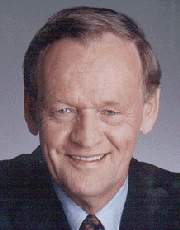
J. Chrétien |
Chrétien, (Joseph Jacques) Jean (b. Jan. 11, 1934, Shawinigan, Que.), prime minister of Canada (1993-2003). As a child he joined his father in political activities, and as a university student he was vice president of the Liberal Students of Canada (1957-58). He first won election to the House of Commons in 1963 and was reelected successively thereafter through 1984, representing the Quebec riding of Saint Maurice. In the successive administrations of Lester B. Pearson and Pierre Elliott Trudeau, Chrétien became a parliamentary secretary to the prime minister in 1965, parliamentary secretary to the minister of finance in 1966, a minister of state in 1967, and minister of national revenue in 1968. He served as minister of Indian affairs and northern development (1968-74) and became the first French Canadian ever to hold the post of minister of finance (1977-79). A committed federalist, he campaigned hard against the sovereignty option in the 1980 Quebec referendum. He served as minister of justice and attorney general (1980-82), minister of energy (1982-84), and then as foreign minister and deputy prime minister (1984). After the defeat of the Liberal government in 1984, he became official opposition critic for external affairs. After losing to John Turner in a contest to succeed Trudeau as head of the Liberal Party in 1984, Chrétien resigned his seat in the House of Commons in 1986. He took over the leadership of the Liberals on June 23, 1990, and was reelected to parliament in December of that year, taking the French-speaking riding of Beauséjour, New Brunswick. He led his party to a landslide victory over the governing Progressive Conservative Party in national elections on Oct. 25, 1993, and won again in 1997 and 2000. He retired in 2003.
Chrétien, Raymond (A.J.) (b. May 20, 1942, Shawinigan, Que.), Canadian diplomat; nephew of Jean Chrétien. He was ambassador to Mexico (1985-88), Belgium (1991-94), the United States (1994-2000), and France (2000-03).
Christakopoulos, Vasilios, finance minister of Greece (1848).
Christen, Alois (b. Oct. 16, 1948), Landammann of Schwyz (2006-08).

J. Christen |
Christen, Joe (b. March 18, 1964), Landammann of Nidwalden (2022-23).
Christensen, Ingolf E(lster) (b. March 28, 1872, Førde, Nordre Bergenhus amt [now in Vestland fylke], Norway - d. May 3, 1943, Førde), justice minister (1926), defense minister (1926-28), and chairman of the Administration Council (1940) of Norway and governor of Oslo and Akershus (1930-43).
Ione Christensen |
Christensen, Ione (Jean), née Cameron (b. Oct. 10, 1933, Dawson Creek, B.C. - d. Sept. 15, 2025), commissioner of the Yukon Territory (1978-79). She was also mayor of Whitehorse (1976-78). Prime Minister Jean Chrétien appointed her as senator on Sept. 2, 1999; she retired in 2006.
Christensen, Jens Christian, also called Christensen-Stadil (b. Nov. 21, 1856, Påbøl, Denmark - d. Dec. 19, 1930, Hee, Denmark), prime minister (1905-08), defense minister (1905-08, 1909), and finance minister (1908) of Denmark. He was also minister of education and ecclesiastical affairs (1901-05), speaker of the Folketing (1912-13), minister without portfolio (1916-18), and minister of ecclesiastical affairs (1920-22).
Christensen, Peter (b. April 23, 1975, Sønderborg, Denmark - d. Feb. 6, 2025), defense minister of Denmark (2015-16). He was also minister of taxation (2011) and Nordic cooperation (2015-16).
Christensen, Søren (b. Oct. 31, 1940, Gentofte, Denmark), high commissioner of the Faeroe Islands (2005-08).
Christian VI (b. Nov. 30, 1699, Copenhagen, Denmark - d. Aug. 6, 1746, Hørsholm, Denmark), king of Denmark (1730-46); son of Frederik IV.
Christian VII (b. Jan. 29, 1749, Copenhagen, Denmark - d. March 13, 1808, Rendsburg, Schleswig [now in Schleswig-Holstein, Germany]), king of Denmark (1766-1808); son of Frederik V.
Christian VIII, in full (and as king of Norway always) Christian Frederik (b. Sept. 18, 1786, Copenhagen, Denmark - d. Jan. 20, 1848, Amalienborg, Denmark), king of Norway (1814) and Denmark (1839-48); son of Frederik VI.

Christian IX |
Christian IX, in full Christian Frederik (b. April 8, 1818, Gottorp castle, Schleswig [now in Schleswig city, Schleswig-Holstein, Germany] - d. Jan. 29, 1906, Copenhagen, Denmark), king of Denmark (1863-1906). He was the fourth son of Duke William of Schleswig-Holstein-Sonderburg-Beck (and after 1825 Duke of Glücksburg). He entered the Danish army in 1835 and served in the Schleswig War (1848-50). In 1842 he married Louise of Hesse-Kassel (1817-98), cousin of the childless Danish king, Frederik VII, and he was named successor to the throne of Denmark, Schleswig-Holstein, and Lauenburg in the London protocol of 1852. When Christian came to the throne at Frederik's death in November 1863, he was forced by popular feeling in Denmark to sign the November constitution, which incorporated Schleswig into the state and made war with the German states inevitable. In the years after the disastrous war of 1864, Christian IX supported conservative minority governments against the ever-expanding democratic forces in Denmark. He finally submitted to them in 1901 by appointing a majority cabinet. This change brought full parliamentary government to Denmark.

Christian X |
Christian X, in full Christian Carl Frederik Albert Alexander Vilhelm (b. Sept. 26, 1870, Charlottenlund, Denmark - d. April 20, 1947, Copenhagen, Denmark), king of Denmark (1912-47) and Iceland (1918-44). He was the eldest son of the future King Frederik VIII and Louise of Sweden and Norway. In 1898 Christian became chief of the royal guard and married Alexandrine of Mecklenburg-Schwerin (1879-1952). Becoming crown prince in 1906, Christian led the opposition to the sale of the Danish West Indies to the United States in 1911. He assumed the throne on his father's death the following year. Christian attended the first in a series of meetings of Scandinavian kings during World War I at Malmö in December 1914. In June 1915 he signed the new constitution that provided for a two-chamber parliament with equal suffrage for men and women; he also gave his assent to the federal act of 1918 making Iceland an independent kingdom. In July 1920 he received a warm welcome in North Schleswig, the part of Schleswig-Holstein ceded to Denmark by Germany under the Treaty of Versailles (1919). During World War II, after the German occupation of Denmark began in 1940, Christian rode frequently on horseback through the streets of Copenhagen, showing that he had not abandoned his claim to national sovereignty. He rejected the Nazi demand for anti-Jewish legislation in September 1942 but was forced in May 1943 to condemn Danish sabotage of munitions works and railways. His speech against the occupation forces in August 1943, after fighting had broken out between the Germans and Danish resistance fighters, led to his imprisonment until the end of the war. He was succeeded on his death by his elder son, who became Frederik IX.

A. Christian |
Christian, Arnold (b. Feb. 28, 1977), Landammann of Uri (2024-26).

B. Christian |
Christian, Brenda (Vera Amelia Lupton-) (b. Feb. 25, 1953, Pitcairn Island), mayor of Pitcairn Island (2004); daughter of Ivan Christian; sister of Steve Christian.
Christian, Charles, III (b. 1818, Pitcairn Island - d. May 22, 1886, Norfolk Island), chief magistrate of Pitcairn Island (1847); grandson of Fletcher Christian; brother of Fletcher Christian II and Isaac Christian; cousin of Thursday October Christian II.
Christian, Edgar Allen (b. Jan. 1, 1879, Pitcairn Island - d. Jan. 29, 1960, Pitcairn Island), chief magistrate of Pitcairn Island (1923-24, 1932); grandson of Thursday October Christian II; cousin of Gerard Bromley Robert Christian.
Christian, Fletcher (b. Sept. 25, 1764, Moorland Close, Cumberland, England - d. Sept. 20, 1793, Pitcairn Island), leader of Pitcairn Island (1790-93). He had already served some years in the British navy when, in 1787, he became master's mate on the Bounty, a discovery ship sailing (Dec. 23, 1787) from Spithead to the South Seas to collect breadfruit trees for the West Indies. Despite some tensions between the two, Captain William Bligh nonetheless promoted Christian acting lieutenant in March 1788. The ship arrived in Tahiti on Oct. 26, 1788, and remained more than five months, providing apparently an idyllic life for the crew. On April 4, 1789, it set sail for the West Indies. On the morning of April 28, Christian, at the head of 25 petty officers and seamen, seized the ship, reacting to Bligh's alleged tyranny and insults. Bligh and 18 of the crew were set adrift in a lifeboat, and the mutineers attempted to establish themselves on Tubuai in the Austral Islands. This attempt was abandoned, and 16 crewmen who requested to stay on Tahiti were permitted to do so. Christian and eight others, together with some Tahitian men and women (including Mauatua, who became Christian's wife), sailed away. Apparently, the group landed at uninhabited Pitcairn Island in 1790, stripped and burned the Bounty, but later fell out among themselves and with the Tahitians, and were largely wiped out - Christian included. This story in any case was told when a lone survivor (John Adams, who called himself Alexander Smith) and the mutineers' descendants were found on Pitcairn in 1808. (Another story had Christian somehow escaping the island and making his way back to England, where Peter Heyward, one of his companions on the Bounty, claimed to have seen him about 1808.)
Christian, Fletcher, II (b. 1812, Pitcairn Island - d. April 5, 1852, Pitcairn Island), chief magistrate of Pitcairn Island (1842); grandson of Fletcher Christian; brother of Charles Christian III and Isaac Christian; cousin of Thursday October Christian II.
Christian, Frederick Martin, byname Fred Christian (b. Dec. 18, 1883, Pitcairn Island - d. Dec. 17, 1971, Pitcairn Island), (chief) magistrate of Pitcairn Island (1921, 1942-43); grandson of Thursday October Christian II; brother of Edgar Allen Christian; cousin of Parkin Christian and Gerard Bromley Robert Christian.
Christian, Gerard Bromley Robert (b. Feb. 19, 1870, Pitcairn Island - buried June 26, 1919, Pitcairn Island), chief magistrate of Pitcairn Island (1910-19); grandson of Thursday October Christian II.
Christian, Isaac (b. April 26, 1825, Pitcairn Island - d. Oct. 31, 1877, Norfolk Island), chief magistrate of Norfolk Island (1858); grandson of Fletcher Christian; brother of Fletcher Christian II and Charles Christian III.
Christian, Ivan (Roa) (b. May 31, 1919, Pitcairn Island - d. 1991), magistrate of Pitcairn Island (1976-84); brother of Warren Clive Christian; nephew of Parkin Christian.
Christian, John Lorenzo (b. July 15, 1895, Pitcairn Island - d. June 28, 1984, Pitcairn Island), magistrate of Pitcairn Island (1952-54, 1959-66); son of Gerard Bromley Robert Christian.
Christian, Leslie Kojo (b. 1951, London, England), Ghanaian diplomat. He was permanent representative to the United Nations (2007-11).
Christian, (Charles Richard) Parkin (b. Nov. 27, 1883, Pitcairn Island - d. Sept. 15, 1971, Auckland, New Zealand), (chief) magistrate of Pitcairn Island (1919-20, 1922, 1925, 1933-34, 1944-45, 1949, 1955-57); grandson of Thursday October Christian II; cousin of Edgar Allen Christian and Gerard Bromley Robert Christian.

P.M. Christian |
Christian, Peter M(artin) (b. Oct. 16, 1947, Pohnpei, Micronesia [now in Federated States of Micronesia]), president of the Federated States of Micronesia (2015-19). He was also speaker of Congress (2003-07).
Christian, Richard Edgar (b. Aug. 14, 1882, Pitcairn Island - d. June 20, 1940, Pitcairn Island), chief magistrate of Pitcairn Island (1926-29, 1935-38, 1940); grandson of Thursday October Christian II; son-in-law of James Russell McCoy; cousin of Edgar Allen Christian.
Christian, Shawn (Brent) (b. Sept. 14, 1975, Pitcairn Island), mayor of Pitcairn Island (2014-19, 2026- ); son of Steve Christian.
Christian, (John) Stephen (b. Oct. 5, 1843, Pitcairn Island - d. May 16, 1918, Norfolk Island), chief magistrate of Norfolk Island (1886-87, 1889-90, 1893); son of Fletcher Christian II.

S. Christian |
Christian, Steve(n Raymond) (b. June 26, 1951, Pitcairn Island), mayor of Pitcairn Island (2000-04); son of Ivan Christian; nephew of Warren Clive Christian. He went on trial on Sept. 30, 2004, accused of leading "the boys," a group of seven men who allegedly spent 30 years sexually abusing underage girls on the tiny Pacific island. He faced six charges of rape, including of two victims aged only 12 years, and four of indecent assaults against women and underage girls between 1964 and 1975. On October 25 he was convicted of five rapes and acquitted of the four indecent assaults and one rape. He was sentenced to three years in prison, but remained free on bail pending further litigation in the case involving British jurisdiction in Pitcairn. He was removed from office as mayor on October 30. In November 2006 he began his sentence, after the final appeal was rejected by the Privy Council in London, but after just nine months behind bars he was paroled.
T.O. Christian |
Christian, Thursday October, II (b. 1820, Pitcairn Island - d. May 27, 1911, Pitcairn Island), chief magistrate of Pitcairn Island (1844, 1851, 1864, 1867, 1873, 1876, 1880, 1882); grandson of Fletcher Christian; cousin of Fletcher Christian II and Charles Christian III. He was the son of Thursday October Christian (1790-1831), who was the first child to be born on Pitcairn. He was among those Pitcairners who left for Norfolk Island in 1856 but returned in 1863-64. He had 17 children, so that many of today's Pitcairners are descended from him.
Christian, Titi (d. Nov. 27, 2024, Port Moresby, Papua New Guinea), premier of Morobe (1992, 1994-95).
Christian, Warren Clive (b. Aug. 17, 1914, Pitcairn Island - d. Jan. 19, 2003, Pitcairn Island), magistrate of Pitcairn Island (1950-51, 1958-59); brother of Ivan Christian; nephew of Parkin Christian.
Christiansen, Ragnar (Karl Viktor) (b. Dec. 28, 1922, Drammen, Buskerud, Norway - d. Feb. 18, 2019), finance minister of Norway (1971-72) and governor of Buskerud (1979-89). He was also minister of transport and communications (1976-78).
Christianson, Theodore (b. Sept. 12, 1883, Lac qui Parle Township, Minn. - d. Dec. 9, 1948, Dawson, Minn.), governor of Minnesota (1925-31).
Christidis, Dimitrios (b. 1799 - d. 1877), secretary of state (1832-33), interior minister (1832-33, 1841-43, 1849), foreign minister (1841), and finance minister (1850-53, 1864, 1865, 1865, 1866, 1870, 1872-74) of Greece. He was also ambassador to the Ottoman Empire (1840-41), president of the Vouli (1869-70), and provisional justice minister (1872).
Christie, Chris(topher James) (b. Sept. 6, 1962, Newark, N.J.), governor of New Jersey (2010-18). He became involved in managing and fund-raising for the campaigns of Republican candidates, including the 1992 reelection campaign of Pres. George Bush and in 1999 the successful first presidential campaign of his son George W. Bush. In 2001 Bush appointed Christie U.S. attorney for the district of New Jersey. He received accolades for clamping down on corruption, prosecuting more than 130 public officials without losing a case. In 2009 he ran for governor of New Jersey and in November defeated the Democratic incumbent Jon Corzine by a comfortable margin. Although a Republican candidate in a staunchly Democratic state, he connected with a wide spectrum of voters, projecting a more approachable regular-man image than Corzine, a former Goldman Sachs CEO. He was soon considered by many to be a strong potential presidential candidate. However, he decided not to run in 2012. He was widely praised for his leadership during and after Superstorm Sandy, which devastated parts of New Jersey in October 2012. He was popular with conservatives for cutting government expenditure and fighting labour unions. He endorsed Mitt Romney in the 2012 campaign, but some blamed Christie for being friendly with Romney's opponent, Pres. Barack Obama, during Sandy relief efforts. In 2013 he was reelected as governor, easily defeating Democratic challenger Barbara Buono. In 2014 he became embroiled in controversy when communications between two of his aides surfaced indicating that they had participated in a scheme to close two of the three local lanes of traffic between Fort Lee, N.J., and the George Washington Bridge, which connects New Jersey to New York City. The scheme had been designed to punish the mayor of Fort Lee for not endorsing Christie's reelection campaign. Christie denied any knowledge of the scheme and dismissed the two aides. In June 2015 he joined the race for the 2016 Republican presidential nomination; he dropped out after a disappointing result in the New Hampshire primary in February 2016 and then endorsed Donald Trump, the eventual winner of the presidential election. In 2017 Trump appointed him to serve as chair of a President's Commission on Combating Drug Addiction and the Opioid Crisis. Because of term limits, he was unable to run for reelection as governor in 2017. In 2020 he still supported Trump, coaching him for a presidential debate, but after Trump's denial of his reelection loss, Christie turned against him. In June 2023 he announced a run for the 2024 nomination, sharply attacking Trump ("a self-consumed, self-serving mirror hog is not a leader"); he dropped out in January 2024.

P. Christie |
Christie, Perry (Gladstone) (b. Aug. 21, 1943, Nassau, Bahamas), prime minister of The Bahamas (2002-07, 2012-17). He served as a senator in 1974-77 and was first elected to the House of Assembly for the Centreville constituency in 1977. He served in the Progressive Liberal Party (PLP) government as minister of health and national insurance from 1977 to 1982, minister of tourism from 1982 to 1984, and minister of agriculture, trade, and industry from 1990 to 1992. He served as interim leader of the PLP in 1996 while party leader Lynden O. Pindling was recovering from prostate surgery in Baltimore. He served as Pindling's lawyer in January 1997, when a government commission condemned Pindling for accepting more than $750,000 in loans from Bahamas developers. When Pindling stepped down as leader in April 1997, he was succeeded by Christie, who was the overwhelming favourite in his party's elections. He pledged to revive the party's reputation as the party of the people. In 2002 he led it to victory. In the campaign he charged the ruling Free National Movement (FNM) of ignoring the needs of the smaller islands and poorer people in the sprawling archipelago of more than 700 islands. The tourism sector was the driving force for strong economic expansion under Christie's leadership. But in the 2007 elections his government was defeated by the FNM, which campaigned on the issue of trust, criticizing Christie's government for a series of scandals (including that of Immigration Minister Shane Gibson, who fast-tracked a residency permit for U.S. model Anna Nicole Smith and had to resign) and accusing it of selling too much land to foreign investors. He returned to power in 2012 when the PLP won a landslide victory, but was defeated likewise in the 2017 elections, when he lost his own seat. The long-delayed opening of the Baha Mar mega-resort and the spectacular failure of a music festival which stranded rich partygoers were factors in the vote.
Christie, Wilhelm Frimann Koren (b. Dec. 7, 1778 - d. Oct. 10, 1849), governor of Bergen and Søndre Bergenhus (1815-25). He was also president of the Norwegian Storting (1814-16, 1818).
Christie, Sir William (b. Feb. 29, 1896 - d. Oct. 15, 1983), chief commissioner of Delhi (1945-47); knighted 1947.
Christmas, Joseph R. (b. Feb. 7, 1940, St. Kitts - d. July 28, 2011), St. Kitts and Nevis diplomat. He was permanent representative to the United Nations (2000-06).
Christmas Møller, (Guido Leo) John (b. April 3, 1894, Copenhagen, Denmark - d. April 13, 1948, Copenhagen), foreign minister of Denmark (1945). In 1920 he became a Conservative member of the Folketing. Energetic and determined, he soon became a leading member of his party and from 1932 was its chairman. Under him Conservative policy became more active and independent and the party cooperated with the Social Democratic-Radical government in an attempt to modify the suffrage laws and the structure of parliament. When the measure was rejected in a referendum in 1939, he resigned as party chairman. After the German occupation of Denmark in April 1940, he entered the coalition government and, in July, became minister of commerce. A bold critic of the Germans, he was forced to withdraw from the government in October 1940 and from the Folketing in January 1941. He soon became a leader of the Danish resistance and helped to found an underground newspaper. In May 1942 he fled to London where, as chairman of the Danish Council, he tried to explain and justify developments in Denmark to the Allies, while actively backing the resistance movement. In May 1945 he became foreign minister in the first postwar government. He again became chairman of the Conservative Party, but his insistence that Denmark's frontier with Germany remain unchanged brought him into conflict with the party majority, and he resigned in October 1947. He failed to secure reelection as an independent in 1947.
Christnacht, Alain (b. Dec. 30, 1946, Bois-Colombes, Seine [now in Hauts-de-Seine], France), high commissioner of New Caledonia (1991-94). He was also prefect of Côtes-d'Armor département (1994-97).
Christodoulakis, Nikos, byname of Nikolaos (M.) Christodoulakis (b. Oct. 27, 1952, Chania, Crete, Greece), finance minister of Greece (2001-04). He was also minister of development (2000-01), economy (2001-04, 2015), and infrastructure, shipping, and tourism (2015).
Christodoulidis | 
Christofias |
Christodoulidis, Nikos (b. Dec. 6, 1973, Paphos, Cyprus), foreign minister (2018-22) and president (2023- ) of Cyprus.
Christodoulou, Christodoulos (C.) (b. April 13, 1939, Avgorou, Famagusta district, Cyprus), finance minister (1994-99) and interior minister (1999-2002) of Cyprus. He was also governor of the Central Bank (2002-07).
Christofias, Dimitris (Christofi) (b. Aug. 29, 1946, Dikomo, Kyrenia district, Cyprus - d. June 21, 2019, Nicosia, Cyprus), president of Cyprus (2008-13). He was president of the House of Representatives in 2001-08.

G. Christopher |
Christopher, George, original name George Christopheles (b. Dec. 8, 1907, Arcadia, Greece - d. Sept. 14, 2000, San Francisco), mayor of San Francisco (1956-64). He was brought to San Francisco when he was 2 years old. He became a citizen of the United States in 1930, whereupon he changed his surname. He began his political career serving on the San Francisco Board of Supervisors in 1945. Ten years later he was elected the city's 34th mayor by the largest majority in the city's history at that time, defeating George Reilly; he was reelected in 1959, winning over Russell L. Wolden. Christopher's tenure as mayor was highlighted when he convinced the New York Giants to move to San Francisco after the 1957 season. He was also instrumental in getting Candlestick Park built amid the chilly, swirling winds along the San Francisco Bay. He retired from the politics arena after finishing behind Ronald Reagan in the 1966 California governor's race.
Christopher, Rupert (Laurence) (b. Feb. 2, 1956, Berbice region, British Guiana [now Guyana] - d. [apparent suicide] March 15, 2007, Paramaribo, Suriname), defense minister of Suriname (1991). He was also ambassador to Brazil (1996-2000).
W. Christopher |
Christopher, Warren (Minor) (b. Oct. 27, 1925, Scranton, N.D. - d. March 18, 2011, Los Angeles, Calif.), U.S. secretary of state (1993-97). He served as deputy attorney general (1967-69) during the presidency of Lyndon B. Johnson. During the Jimmy Carter administration he served as deputy secretary of state. Four days before Carter left office in January 1981, he gave Christopher the Medal of Freedom in recognition of his work on the Iran hostage problem, which bore fruit barely hours after Carter left office when the 52 remaining hostages were released. His roles as secretary of state under Bill Clinton included negotiations to settle disputes between warring sides in Bosnia; he also tirelessly traveled to the Middle East on peace missions, including some two dozen to Syria alone in a futile effort to promote a settlement with Israel. In October 1996, he set a new mark for miles traveled by a secretary of state over four years, the normal length of a presidential term: 704,487. In 2000, he represented Vice President Al Gore's presidential campaign as an observer of vote recounts in Florida. The outcome of the election was in doubt for weeks because it was not clear which candidate had carried Florida. Texas governor George W. Bush was eventually declared the winner in Florida, and so Gore lost the election.

H. Chistophersen |
Christophersen, Henning (b. Nov. 8, 1939, Copenhagen, Denmark - d. Dec. 31, 2016, Brussels, Belgium), foreign minister (1978-79) and deputy prime minister and finance minister (1982-84) of Denmark. He was also a vice president of the European Commission (1985-95).
Christophersen, Wilhelm Christopher (b. Dec. 15, 1832, Brevik [now part of Porsgrunn], Bratsberg amt [now Telemark fylke], Norway - d. July 26, 1913, Kristiania [now Oslo], Norway), foreign minister of Norway (1908-10). He was also Swedish consul-general in Buenos Aires (1870-78).
Christophidis, Ioannis (b. 1924 - d. Dec. 9, 2001, Nicosia, Cyprus), foreign minister of Cyprus (1972-74, 1974-78).
Christophle, Albert (Silas Médéric Charles) (b. July 13, 1830, Domfront, Orne, France - d. Jan. 23, 1904, Paris, France), French politician. He was prefect of Orne département (1870) and public works minister (1876-77).
Christopoulos, Asimakis (b. 18... - d. 1909), justice minister of Greece (1905).
Christopoulos, Charalampos (Chr.) (b. 1814, Andritsaina, Ottoman Empire [now in Greece] - d. 1871), interior minister (1861-62) and foreign minister (1865, 1870-71) of Greece. He was also minister of ecclesiastical affairs and public education (1855-59, 1866-68).
Christopoulos, Konstantinos, justice minister of Greece (1973).
Christou, Andreas (b. 1948, Limassol, Cyprus), interior minister of Cyprus (2003-06). He was also mayor of Limassol (2007-16).
Chrysostomis, Giannakis, defense minister of Cyprus (1999). A former Supreme Court judge, he was appointed defense minister in January 1999 following the resignation of Giannakis Omirou in the wake of the government's cancellation of plans to have Russian S-300 missiles deployed on Cyprus. In July Chrysostomis threatened to resign after allegations that he was wined and dined by an international arms manufacturer in Paris in June in order to secure a discount on the purchase of Italian-made Aspide missiles. He described the allegations as a campaign to hound him out of office. During his term of office Chrysostomis also managed to upset senior officials in the Greek army and came under fire when it was revealed that the National Guard's Russian T-80 tanks had been running on the wrong fuel. He was also accused of allowing the army to run out of ammunition.
Chrzanowski, Wieslaw (Marian) (b. Dec. 20, 1923, Warsaw, Poland - d. April 29, 2012, Warsaw), justice minister and prosecutor-general of Poland (1991). He was also chairman of the Christian National Union (1989-94) and marshal of the Sejm (1991-93).
Chu, Eric (Chu Li-luan) (b. June 7, 1961, Taoyuan county, Taiwan), vice premier of Taiwan (2009-10). He was also mayor of New Taipei City (2010-18) and chairman of the Kuomintang (2015-16, 2021-25).
Chu, Steven (b. Feb. 28, 1948, St. Louis, Mo.), U.S. energy secretary (2009-13). He won the 1997 Nobel Prize for Physics with two other scientists for developing methods to cool and trap atoms with laser light. From 2004 he headed the Lawrence Berkeley National Laboratory in California, which is attached to the Energy Department.
Chu Fu-sung (b. Jan. 15, 1915, Xiangyang county, Hubei, China - d. June 14, 2008), foreign minister of Taiwan (1979-87). He was also ambassador to Spain (1965-71), Brazil (1971-74), and South Korea (1975-79).
Chu Fucheng, Wade-Giles Chu Fu-ch'eng (b. May 27, 1873, Jiaxing, Zhejiang, China - d. March 29, 1948, Shanghai, China), civil governor of Zhejiang (1911-12). He joined the Chinese Revolutionary Alliance when studying abroad in Japan and was elected a member of parliament after the revolution. He turned to the south against Duan Qirui in the 1917 constitutional movement and was elected vice-speaker of the Extraordinary Congress (only somewhat more than 100 MPs turned to the south with Sun Yat-sen, which was lower than the quorum, so that the congress was named the Extraordinary Congress). In 1927, Chu was named chairman of the provisional government of Zhejiang (in rebellion against Meng Zhaoyue). He presided over Shanghai Law University after his term while remaining a member of the Senate.
Chu Huy Man, original name Chu Van Dieu (b. March 17, 1913, Yen Luu commune, Hung Nguyen district [now part of Vinh city], Nghe An province, Annam [now in Vietnam] - d. July 1, 2006, Hanoi, Vietnam), a vice chairman of the State Council of Vietnam (1981-87).
Chu Minyi, Wade-Giles Chu Min-i (b. 1884, Zhejiang province, China - d. [executed] Aug. 23, 1946), foreign minister of China (Nanjing government) (1940, 1941-45); brother-in-law of Wang Jingwei. He was also ambassador to Japan (1941).
Chu Tam Thuc, also known as Pham Long (b. Aug. 12, 1932), finance minister of Vietnam (1982-86).
Chu Van Tan (b. May 1909, Phu Thuong, Vo Nhai district, Thai Nguyen province, Tonkin [now in Vietnam] - d. May 22, 1984, Hanoi, Vietnam), defense minister of North Vietnam (1945-46).
Chu Xichun, Wade-Giles Ch'u Hsi-ch'un (b. 1896, Li county, Hebei, China - d. Sept. 12, 1966, Beijing), chairman of the government of Hebei (1947-49). Having graduated from Baoding Military Academy, he was named commander of the Beijing Gendarmerie as well as the Beijing garrison, later taking up the leadership of the 25th Division. During World War II, he was designated as deputy commander-in-chief of the 8th Group Army as well as chief of staff of the 2nd War Zone, commander-in-chief of the 2nd War Zone (North), and later commander of the 43rd Army. Chu revolted in Beijing together with Fu Zuoyi in January 1949. He was elected a member of the Chinese People's Political Consultative Conference upon the founding of the People's Republic. He was also deputy general secretary of the Kuomintang Revolutionary Committee.
Chu Yupu, Wade-Giles Chu Yü-p'u (b. 1887, Wenshang, Shandong, China - d. Sept. 4, 1929, Muping [now part of Yantai], Shandong), governor of Zhili (1926-28). He was a bandit gang member. After the founding of the republic, he sought refuge with Chen Qimei, and afterwards with Feng Guozhang and Zhang Zuolin, who made him Zhili governor after gaining control over the central government. He also became commander of the army in 1925. During his term as governor, he founded a coalition with Shandong Gov. Zhang Zongchang, to fight together against Chiang Kai-shek's northbound National Revolutionary Army. Their armies were called the "Zhili-Shandong Coalition Army" since then. His forces suffered a fatal defeat in Tianjin when battling against Chiang's "revolutionary army." He was later captured and killed by "King of Shandong East" Gen. Liu Zhennian, who then controlled eastern Shandong.
Chua, Albert (b. 1968, Singapore), Singaporean diplomat. He was high commissioner to Australia (2008-11) and permanent representative to the United Nations (2011-13).
Chua Sian Chin (b. Nov. 26, 1933, Malacca, Straits Settlements [now in Malaysia] - d. Feb. 26, 2014, Singapore), home affairs minister of Singapore (1972-85). He was also minister of health (1968-75) and education (1975-79).

Chuan |
Chuan Leekpai (b. July 28, 1938, Muang district, Trang province, Siam [now Thailand]), prime minister (1992-95, 1997-2001) and defense minister (1997-2001) of Thailand. He was once accused by the military and right-wing politicians of being a Communist which forced him to flee Bangkok after a bloody military coup in 1976. He was also minister of justice (1980-81), commerce (1981-82), agriculture and cooperatives (1982-83, 1990-91), education (1983-86), and public health (1988-89), speaker of the House of Representatives (1986-88, 2019-23), a deputy prime minister (1989-91), leader of the Democrat Party (1990-2003), leader of the opposition (1995-97, 2001-03), and president of the National Assembly (2019-23).
Chuang Chawengsaksongkram (b. 1899 - d. 1962), interior minister (1941-42, 1946-47) and a deputy prime minister (1944) of Thailand. He was also minister of health (1942-44) and agriculture (1947).
Chuard, Ernest (Louis) (b. July 31, 1857, Corcelles-près-Payerne, Vaud - d. Nov. 9, 1942, Lausanne, Vaud), president of the Council of State of Vaud (1915, 1919) and interior minister (1920-28) and president (1924) of Switzerland.
Chuayffet Chemor, Emilio (b. Oct. 3, 1951, Mexico City, Mexico), governor of México state (1993-95) and interior minister of Mexico (1995-98). He was also mayor of Toluca (1982-84), president of the Chamber of Deputies (2011), and minister of education (2012-15).
Chub, Vladimir (Fyodorovich) (b. July 24, 1948, Pinsk, Brest oblast, Belorussian S.S.R.), head of the administration of Rostov oblast (1991-2010). He was also mayor of Rostov (1989-91).

Chubais | 
Chubar |
Chubais, Anatoly (Borisovich) (b. June 16, 1955, Borisov, Belorussian S.S.R.), deputy prime minister (1992-94), first deputy prime minister (1994-96, 1997-98), and finance minister (1997) of Russia. He was also chairman of the State Committee for Management of State Property (1991-94) and head of the administration of the president (1996-97). Often called "the father of Russian capitalism," he masterminded the privatization of huge chunks of state property, often in murky circumstances. The schemes made a few people rich but left the vast majority of Russians stakeless. In 1998-2008 he was head of the Russian electricity monopoly UES. He survived an assassination attempt on March 17, 2005. In 2008-20 he was chairman of the executive board of the Russian Corporation of Nanotechnologies (from 2011 RUSNANO Corporation). He was special presidential envoy for relations with international organizations to achieve the Sustainable Development Goals (2020-22), then left Russia after the invasion of Ukraine in 2022.
Chubar, Vlas (Yakovlevich) (Russian), Ukrainian Vlas (Yakovych) Chubar (b. Feb. 22, 1891, Fyodorovka, Yekaterinoslav province, Russia [now Fedorivka, Ukraine] - d. [executed] Feb. 26, 1939), chairman of the Council of People's Commissars of the Ukrainian S.S.R. (1923-34) and people's commissar for finance of the Soviet Union (1937-38).
Chubin, Yakov (Abramovich) (b. 1893, Mstislavl, Mogilyov province, Russia [now in Belarus] - d. November 1956, Moscow, Russian S.F.S.R.), first secretary of the Communist Party of the Turkmen S.S.R. (1937-39).
Chubinidze, Miron (Dmitriyevich) (b. 1905, Vladikavkaz [now in North Ossetia-Alania], Russia - d. ...), chairman of the Presidium of the Supreme Soviet of the Georgian S.S.R. (1953-59). He was also minister of state control (1946-53) and social security (1959).
Chuchai Kasemsarn (b. Dec. 1, 1942, Chanthaburi, Thailand), Thai diplomat. He was ambassador to Vietnam (1986-88), Egypt (1988-90), South Korea (1991-94), and Austria (1995-98) and permanent representative to the United Nations (2001-03).
Chudinov | 
Chui |
Chudinov, Igor (Vitalyevich) (b. Aug. 21, 1961, Frunze, Kirgiz S.S.R. [now Bishkek, Kyrgyzstan]), prime minister of Kyrgyzstan (2007-09). He was also minister of industry, energy, and fuel resources (2007). In 2010 he was charged with squandering funds and property and abusing power when he served as director-general of state-owned gas company Kyrgyzgaz and prime minister.
Chugoshvili, Tamar (b. Aug. 11, 1984, Gurdzhaani, Georgian S.S.R.), Georgian politician. She was acting chairman of parliament (2019).
Chui Sai On, (Fernando), Pinyin Cui Shian (b. Jan. 13, 1957, Macau), chief executive of Macau (2009-19).
Chulalongkorn |
Chulalongkorn, also called Rama V (b. Sept. 20, 1853, Bangkok, Siam [now Thailand] - d. Oct. 23, 1910, Bangkok), king of Siam (1868-1910); son of Mongkut. He was educated by English teachers, acquiring Western linguistic and cultural skills, after which he went, as traditionally prescribed, to a Buddhist monastery. He succeeded as king at age 15 and travelled to Malaya, the Dutch East Indies, Burma, and India in 1871-72 before reaching his majority in 1873. He studied Western administrative practices and launched an ambitious modernization programme. He protected Siam from colonization by astutely playing off French and British interests, although he had to accept treaties with France weakening his power in Laos and Cambodia, and with Great Britain removing his rule over the Malay states of Kelantan, Terengganu, Kedah, and Perlis. He travelled to Europe in 1897. His wide-ranging reforms included the abolition of slavery, centralization of administration to check the power of local chiefs, and reorganization of court and educational systems. He freed his subjects from approaching him on hands and knees, proclaimed liberty of conscience, built schools, hospitals, roads, and railways, and followed his father in extending the armed forces. He standardized the coinage, introduced posts and telegraphs, and established a police force and sanitary and electrical systems in Bangkok.
Chullikatt, Francis Assisi (b. March 20, 1953, Bolghatty, India), Vatican diplomat. He has been apostolic nuncio to Jordan and Iraq (2006-10), Kazakhstan, Tajikistan, and Kyrgyzstan (2016-22), and Bosnia and Herzegovina and Montenegro (2022- ) and permanent observer to the United Nations (2010-14).
Chumakau, Alyaksandr (b. Nov. 26, 1941), defense minister of Belarus (1996-2001).
Chumpol Silpa-archa (b. June 6, 1940, Suphan Buri province, Thailand - d. Jan. 21, 2013, Bangkok, Thailand), a deputy prime minister of Thailand (2011-13); brother of Banharn Silpa-archa. He was also minister of education (1997-98) and tourism and sports (2008-13).
Chun |
Chun Doo Hwan, Revised Romanization Jeon Du-hwan (b. Jan. 18, 1931, Naechon-ri village, South Kyongsang province, Korea [now in South Korea] - d. Nov. 23, 2021, Seoul, South Korea), president of South Korea (1980-88). Chun commanded a South Korean division in South Vietnam during the Vietnam War. He rose rapidly through the ranks. After Park Chung Hee seized power in 1961, Chun served as domestic-affairs secretary for the junta (1961-62), then (1963) as chief of personnel of the Korean Central Intelligence Agency (KCIA). He served in various official posts and was made a general in 1978. After the assassination of Park in 1979, Chun took charge of the investigation of his death. He arrested several suspects and purged many rivals in a virtual coup by one military faction against another. Although the official president was Choi Kyu Hah, Chun emerged as the real authority, and in April 1980 Chun became head of the KCIA. In May the military dropped all pretense of civilian rule and declared martial law, brutally suppressing democratic opposition in the city of Kwangju. After Choi resigned in August, Chun resigned from the army and became president. With the country still under martial law, Chun pushed through a new constitution in late 1980 that allowed him to rule with a firm hand. Chun's rule was punctuated by several crises; a financial scandal in 1982 forced him to replace half his cabinet, and an assassination attempt by North Korean agents in 1983 resulted in the deaths of several other top aides and ministers. Chun devoted his efforts to maintaining economic growth and political stability. Unable to serve more than one 7-year term under his 1980 constitution, in 1987 he picked Roh Tae Woo to be the candidate of the ruling Democratic Justice Party. Political unrest forced Chun in 1988 to apologize for abuses of power during his presidency. Vowing to donate his personal wealth to the state, he entered a Buddhist monastery. In 1996 he was found guilty of charges in relation to his role in the 1979 coup and the suppression of the 1980 Kwangju uprising and was sentenced to death. The sentence was later reduced to life imprisonment, and he received a presidential pardon in December 1997.
Chundrigar, Ismail Ibrahim (b. Sept. 15, 1897, Ahmedabad, India - d. Sept. 26, 1960, London, England), governor of the North-West Frontier Province (1950-51) and Punjab (1951-53) and prime minister of Pakistan (1957). He was also member for commerce of the Indian interim government (1946-47) and Pakistani minister of commerce (1947-48) and law (1955-56) and ambassador to Afghanistan (1948-50).

A. Chung |
Chung, (Raymond) Arthur (b. Jan. 10, 1918, Windsor Forest, British Guiana [now Guyana] - d. June 23, 2008, Georgetown, Guyana), president of Guyana (1970-80).

Chung E.Y. | 
Chung H.W. |
Chung Eui Yong (b. April 14, 1946), foreign minister of South Korea (2021-22). He was also director of the National Security Office (2017-20).
Chung Ho Yong (b. Sept. 10, 1932, Daegu, Korea [now in South Korea] - d. Sept. 13, 2026), home affairs minister (1987) and defense minister (1987-88) of South Korea.
Chung Hong Won (b. Oct. 9, 1944, Hadong, Korea [now in South Korea]), prime minister of South Korea (2013-15).
Chung Il Hyung (b. Feb. 23, 1904, Seoul, Korea [now in South Korea] - d. April 23, 1982), foreign minister of South Korea (1960-61).
Chung Il Kwon (b. Nov. 21, 1917, North Hamgyong province, Korea [now in North Korea] - d. Jan. 17, 1994, Hawaii), foreign minister (1963-64, 1966-67) and prime minister (1964-70) of South Korea. Chung was a 1940 graduate of Tokyo's Military Academy and served in Japan's imperial army during World War II. He then joined the Chinese Nationalist army before entering the South Korean army. He was the commander of South Korean troops during some of the most intense fighting with North Korean and Chinese forces during the Korean War (1950-53), and he was hailed as a national hero for his brilliant tactical skills. He led the army during the September 1950 UN landing at Inch'on, which crippled the North Korean offensive. Chung retired from the military in 1957 as a four-star general. He then was ambassador to Turkey (1957-59), France (1959-60), the United States (1960, 1961-63), and several Latin American countries. He served as prime minister under Pres. Park Chung Hee, who had seized power in 1961. Afterwards he held a number of government posts before Chun Doo Hwan assumed the presidency in 1980.

Chung Ju Yung |
Chung Ju Yung (b. Nov. 15 or 25, 1915, Asan village, Gangwon province, Korea [now in North Korea] - d. March 21, 2001, Seoul, South Korea), South Korean presidential candidate (1992). He was the founder of Hyundai and played a central role in the revival of an economy that had been shattered by the 1950-53 Korean War. Chung's empire, which included dozens of subsidiaries, extended to oil refining, banking, and construction. Despite his business achievements, Chung's longtime collusion with South Korea's authoritarian rulers was a source of controversy. In 1992, he ended a distant third as a candidate in a presidential race. Chung was forced to stand trial for election law violations. He was found guilty of diverting $81 million in Hyundai money to his campaign and sentenced to three years in prison. Because of his advanced age, the jail sentence was suspended, but two dozen Hyundai officials were jailed for involvement. Chung retired in 2000 from management of his 170,000-employee group, but until his last months he retained significant influence over businesses, including the world's leading shipyard and a computer memory chipmaker. Once a symbol of commercial might, Hyundai had been plagued by liquidity problems and inner-circle strife. The government, in turn, has faced criticism for repeatedly funneling loans to Hyundai, fearful the collapse of the conglomerate would devastate the economy. Chung also was a key player in Pres. Kim Dae Jung's efforts to engage Communist North Korea, launching a $942 million tourism project at a scenic mountain in the North in late 1998. On several occasions, Chung traveled to North Korea to discuss business ventures with the nation's leader, Kim Jong Il. But none of his projects were profitable, and depleted Hyundai's limited financial resources.
Chung Suk Mo (b. March 3, 1929, Kongyu, South Chungchong province, Korea [now in South Korea] - d. June 8, 2009), home affairs minister of South Korea (1985-86). He was also governor of Gangwon (1973) and South Chungchong (1973, 1976-78).

Chung Sye Kyun |
Chung Sye Kyun (b. 1950, Jinan, North Cholla [now Jeonbuk] province, South Korea), prime minister of South Korea (2020-21). He was also minister of commerce, industry, and energy (2006-07) and speaker of the National Assembly (2016-18).

Chung Un Chan |
Chung Un Chan (b. Feb. 29, 1946, Gongju, South Korea), prime minister of South Korea (2009-10).
Chuon Saodi (b. April 16, 1928, Battambang province, Cambodia - d. c. 1977), Cambodian politician. He was minister of agriculture (1964-66, 1968-70).
Chuop Hell (b. Nov. 18, 1909, Phnom Penh, Cambodia - d. early 1976), acting head of state of Cambodia (1960, 1960). He was agriculture minister (1951), president of the National Assembly (1959-61), and ambassador to Singapore (1965-69).
Chuop Samloth (b. Jan. 11, 1908, Phnom Penh, Cambodia - d. c. 1968), justice and worship minister of Cambodia (1955-56, 1956). He was also minister of education, fine arts, youth, and sports (1956) and president of the High Court of Justice (1960-68?).
Churakova, Tatyana (Yuryevna) (b. May 22, 1968), acting prime minister of Udmurtia (2026- ). She has been minister of social, family, and demographic policy (2017-21) and a deputy prime minister (2021- ).
Churbanov, Timofey (Ivanovich) (b. Jan. 21, 1895, Davydovka, Voronezh province [now in Lipetsk oblast], Russia - d. July 17, 1944), first secretary of the Communist Party committee of the Karakalpak autonomous oblast/Karakalpak A.S.S.R. (1930-33).
Church, Louis K(ossuth) (b. Dec. 11, 1846, Brooklyn [now part of New York City], N.Y. - d. Nov. 25, 1897, Juneau, Alaska), governor of Dakota (1887-89).
Churchill, Gordon Minto (b. Nov. 8, 1898, Cold Water, Ont. - d. Aug. 3, 1985, Vancouver, B.C.), defence minister of Canada (1963). He was also minister of trade and commerce (1957-60) and veterans affairs (1960-63).
Churchill, Lord Randolph (Henry Spencer[-]) (b. Feb. 12, 1849, London, England - d. Jan. 24, 1895, London), British chancellor of the exchequer (1886-87); son of John Churchill, (7th) Duke of Marlborough. He was also secretary of state for India (1885-86).
Churchill, Thomas J(ames) (b. March 10, 1824, near Louisville, Ky. - d. March 10, 1905, Little Rock, Ark.), governor of Arkansas (1881-83).
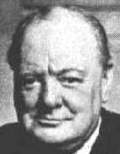
W. Churchill |
Churchill, Sir Winston (Leonard Spencer[-]1) (b. Nov. 30, 1874, Blenheim Palace, near Woodstock, Oxfordshire, England - d. Jan. 24, 1965, London, England), British prime minister (1940-45, 1951-55); son of Lord Randolph Churchill. First elected to Parliament in 1900 as a Conservative, he joined the Liberals in 1904. In 1906 he became undersecretary of state for the colonies. In 1908 he was promoted to president of the Board of Trade, with a seat in the cabinet, and in 1910 he became home secretary. He was transferred to the Admiralty in October 1911. After serving some months as chancellor of the Duchy of Lancaster, he resigned from the government in November 1915. He became minister of munitions in July 1917, and secretary of war and air in January 1919. In 1921 he moved to the Colonial Office. Defeated in the 1922 election, he won an easy victory under the thinly disguised Conservative label of "Constitutionalist" in 1924. Prime Minister Stanley Baldwin appointed him chancellor of the exchequer. When the government fell in 1929, he deplored Baldwin's decision to accept a minority Labour government. In 1930 he resigned from the shadow cabinet. In March 1939 he pressed for a truly national coalition, and public sentiment began to agitate for his return to office. On Sept. 3, 1939, the day Britain declared war on Germany, Prime Minister Neville Chamberlain appointed him to his old post in charge of the Admiralty. He became prime minister in 1940 when Chamberlain resigned. With Franklin D. Roosevelt and Iosif Stalin he shaped Allied strategy in World War II, and after the breakdown of the alliance he alerted the West to the expansionist threat of the Soviet Union. His government was defeated in the July 1945 elections, but he led the Conservatives back to office in 1951 and remained prime minister until ill health forced his resignation (April 5, 1955). He was also defence minister (1940-45, 1951-52). In 1953 he received the Nobel Prize for Literature. His widow Clementine was made a life peeress in May 1965 (Baroness Spencer-Churchill).
1 The full family name is not Churchill, but Spencer-Churchill, with or without hyphen (both forms occur on his birth and baptismal certificates).
Churin, Aleksandr (Anatolyevich) (b. March 11, 1975, Kirov, Russian S.F.S.R.), chairman of the government of Kirov oblast (2019-22).
Churión, Luis (b. Dec. 11, 1869, Caracas, Venezuela - d. May 23, 1945, Caracas), foreign minister of Venezuela (1906, 1907). He was also chargé d'affaires in the United States (1914, 1922) and minister to Cuba, the Dominican Republic, and Haiti (1936-37).
Churkin, Vitaly (Ivanovich) (b. Feb. 21, 1952, Moscow, Russian S.F.S.R. - d. Feb. 20, 2017, New York City), Russian diplomat. He was ambassador to Belgium (1994-98) and Canada (1998-2003) and permanent representative to the United Nations (2006-17).
Churmit-Dazhi, Sat (Sanaa-Shiri oglu) (b. Nov. 19 [Nov. 7, O.S.], 1894, Khayrakan, China [now in Tuva, Russia] - d. [executed] Oct. 16, 1938, at Mt. Kherbis, Tannu Tuva [now Tuva, Russia]), interior minister (1927-29) and chairman of the Council of Ministers (1936-38) of Tannu Tuva.
Chuter-Ede, James Chuter Chuter-Ede, Baron, original name James Chuter Ede (b. Sept. 11, 1882, Epsom, Surrey, England - d. Nov. 11, 1965, Ewell, Surrey), British home secretary (1945-51). He was made a life peer and changed his surname in 1964.
Chuychenko, Konstantin (Anatolyevich) (b. July 12, 1965, Lipetsk, Russian S.F.S.R.), justice minister of Russia (2020- ). He was also head of the Government Apparatus and a deputy prime minister (2018-20).
Chvalkovský, Frantisek (b. July 30, 1885, Jílové, Austria [now Jílové u Prahy, Czech Republic] - d. [Allied bombing] Feb. 25, 1945, Berlin, Germany), foreign minister of Czechoslovakia (1938-39). He was also ambassador to Japan (1921-23), the United States (1923-25), Germany (1927-32), and Italy (1932-38).
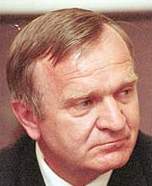
Chyhir |
Chyhir, Mikhail (Mikalayevich), Russian Mikhail (Nikolayevich) Chigir (b. May 24, 1948, Usovo, Belorussian S.S.R.), prime minister of Belarus (1994-96). He was also chairman of Belagroprombank (1991-94).
Chymba, Saryg-Dongak, later Aleksandr (Mangeyevich) Chimba (b. Jan. 24, 1908, Ergi-Barlyk, Russia - d. June 1984), chairman of the Council of Ministers and foreign minister of Tannu Tuva (1941-44). He was also minister of construction and industry (1938-41) and chairman of the Executive Committee of Tuvan autonomous oblast (1944-61).
Chyngyshev, Tursunbek (Chyngyshevich) (b. Oct. 15, 1942, Naryn district, Kirgiz S.S.R.), prime minister of Kyrgyzstan (1992-93). He was also mayor of Tokmok (1989-91).